Tattoo Ideas
Rib Tattoo Ideas
The ribs are one of the most requested placements we tattoo and one of the least forgiving. The skin is thin, it moves constantly with your breathing, and the design has to be drawn to the curve of your torso rather than dropped onto it flat. Good rib tattoo ideas start with what actually holds up there over ten or twenty years, not what photographs well on day one.
Book a consultationWhat the Ribs Actually Do to a Design
Your rib cage is a curved, hinged surface. It expands and contracts every few seconds and folds when you bend sideways. That means two things: a design has to be drawn on your body, not on paper, and it has to survive being seen from angles you never see in the mirror.
Skin over the ribs is thin, with bone close underneath and very little fat to cushion the needle. It takes ink readily, which is good, but it also holds trauma longer, which is why rib pieces are usually slower to work and slower to settle. Artists who tattoo ribs often will build in more rest, more stretch, and shorter passes than they would on a thigh or an outer arm.
Where the ribs are more forgiving
- Mid-side, between the underarm and the waist — the flattest zone, and where most large rib pieces are anchored.
- Toward the front, along the lower ribs — softer, slightly more padded, and easier to sit through.
- Wrapping toward the back — the muscle over the lats gives the needle something to work against.
Where it gets harder
- Directly over the floating ribs — bone right under thin skin, and the spot most people flinch at.
- High under the arm — sensitive, awkward to hold still for, and a common blowout zone if rushed.
- Across the sternum edge — beautiful placement, but it moves a lot and heals unevenly if you are a side sleeper.
Rib Tattoo Ideas That Work With the Body
Long vertical designs
Snakes, florals on a stem, dagger-and-serpent compositions, botanical panels, and single-line script all use the natural length of the rib cage. A vertical design has room to breathe and does not fight the curve. This is the most reliable structure for a first rib piece.
Sweeping horizontal or diagonal panels
Waves, clouds in a Japanese-influenced style, wings, and banner work read well when they follow the direction the ribs already run. Diagonals in particular flatter most torsos because they echo the line from underarm to hip.
Full side panels
If you want a large piece, the ribs are usually part of a bigger plan — a side panel that ties into a chest piece, back piece, or a sleeve. Designing the ribs in isolation and hoping to connect it later is the single most common regret we fix in cover-up and rework consults. If a full torso is anywhere in your future, say so at the first appointment.
Fine line and script
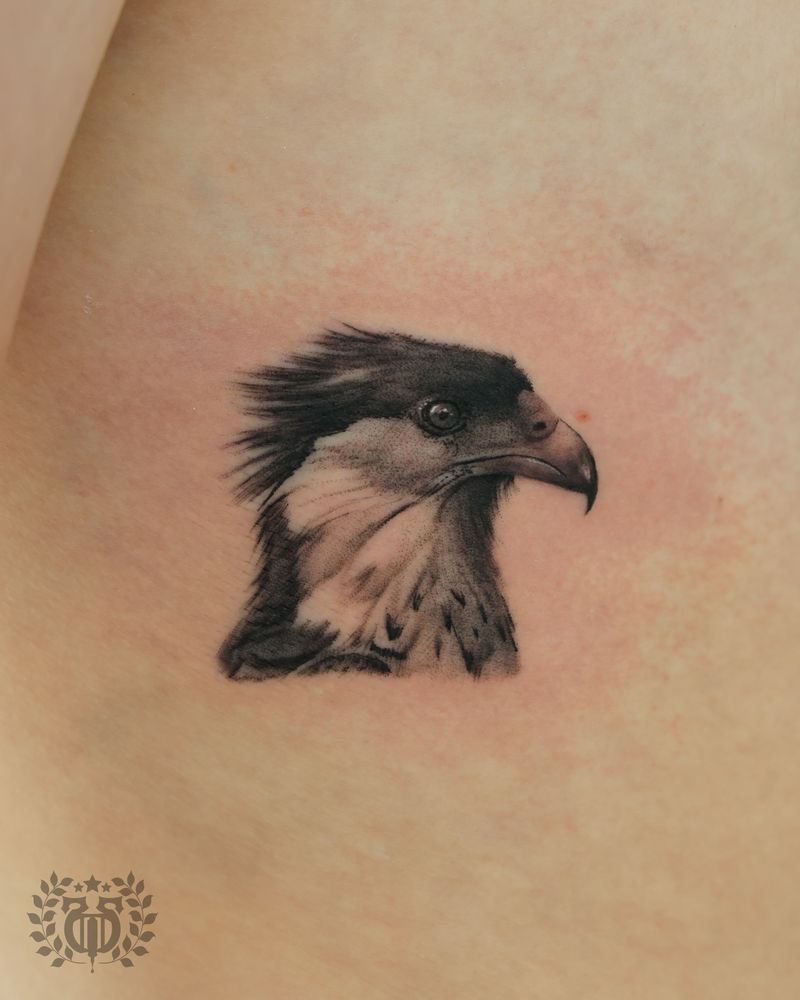
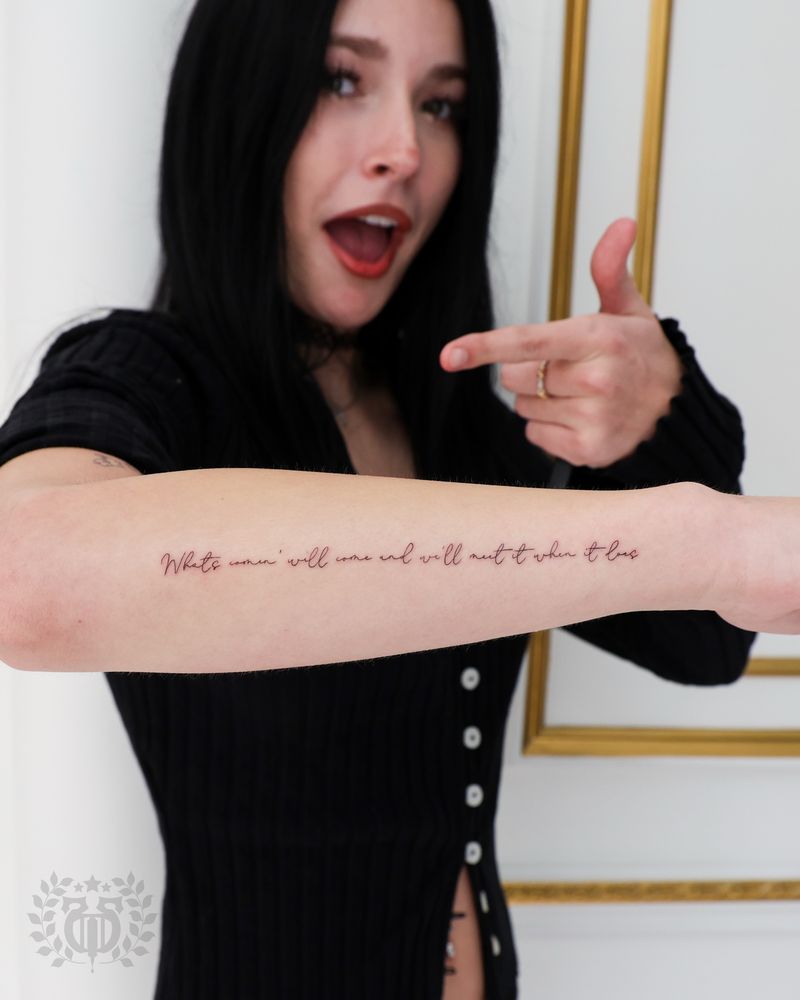
Delicate line work photographs beautifully on the ribs and is genuinely harder to keep clean there over time. Thin lines on thin, mobile skin spread more than they do on a forearm. We still do it, but honestly: expect a touch-up, keep the line weight a little heavier than you think you want, and avoid tiny lettering with closed counters that will fill in.
Black and gray versus color
Black and gray, especially with soft gradients, tends to age the most gracefully across the rib cage because the shading hides the subtle stretching that happens as bodies change. Color holds fine, but strong saturated color takes longer to pack in a high-sensitivity area — plan on more sessions. For more direction across placements and styles, browse our broader tattoo ideas library.
Pain, Honestly
Ribs rank near the top of the pain scale for most people, alongside the sternum and the inner bicep. That said, "top of the scale" does not mean unbearable — it means it demands preparation. What actually changes the experience:
- Eat a real meal within two hours of your appointment. Blood sugar is the biggest predictor of who taps out early.
- Sleep the night before. Tired clients are far more sensitive.
- No alcohol for 24 hours prior. It thins your blood and pushes ink out.
- Breathe evenly rather than holding your breath. Holding tension makes the skin harder to work and the session longer.
- Plan shorter sessions. Three to four hours on ribs beats an eight-hour push that ends with compromised skin.
Healing a Rib Tattoo
Rib pieces heal like any tattoo — around two to three weeks for the surface, a couple of months to fully settle — but the location adds friction. Bras, waistbands, seatbelts, and side sleeping all rub the exact area you need to leave alone. If the design wants to carry on past the ribs onto softer ground, the trade-offs change — see stomach tattoo ideas for how abdominal skin stretches and which designs survive it.
- Wear loose, soft clothing for the first week; a snug band across a fresh rib tattoo is the fastest way to lose ink.
- Sleep on the opposite side if you can, on clean sheets you are willing to stain.
- Skip the gym for the first several days — sweat plus twisting motion is a bad combination here.
- Keep it out of the sun. Santa Monica beach days are a real healing hazard in the first month, and long-term sun exposure is what fades a side piece faster than anything else.
Planning Yours
Bring reference, but bring the idea more than the image. The most useful thing you can tell an artist is what the piece is for, how big you want it to read from across a room, and whether it will eventually connect to anything else. We stencil on your body, have you stand, sit, and twist, and adjust before a single line goes down — a rib stencil that looks right while you lie flat can look wrong the moment you stand up.
Our artists work across black and gray, illustrative, Japanese-influenced, and fine line styles, and you can see the range of work in our tattoos portfolio. When you have a direction in mind, book a consultation at the studio on Main Street and we will talk through size, flow, session count, and what it will honestly cost before you commit.
Rib tattoo: straight answers
How much does a rib tattoo hurt compared to other placements?
Most people put the ribs in the top three most painful placements, alongside the sternum and inner bicep. The skin is thin with bone directly underneath and no fat to cushion the needle. It is very manageable in three to four hour sessions if you eat beforehand, sleep well, and skip alcohol for 24 hours.
How long does a rib tattoo take?
A small vertical piece or a line of script might take one to two hours. A detailed side panel usually runs multiple sessions of three to five hours each, spaced two to four weeks apart. We deliberately keep rib sessions shorter than we would elsewhere because the skin gets irritated faster.
Do rib tattoos fade or blur more than other tattoos?
They can, for two reasons: the skin is thin and mobile, and the side of the torso changes shape with weight fluctuations more than an arm does. Slightly heavier line weight, sensible spacing in the design, and diligent sun protection make far more difference than anything else. Expect that very fine line work may want a touch-up.
What rib tattoo designs age the best?
Long vertical or diagonal compositions with clear line weight and open space — botanicals, snakes, wave and cloud work, and black and gray shading. Designs that follow the natural direction of the rib cage stay readable as your body changes. Extremely dense micro-detail packed into a small area is what tends to muddy over the years.
Should I plan a rib tattoo around a future larger piece?
If there is any chance you will want a full side, back, or chest piece later, tell your artist at the first consult. Rib tattoos placed in isolation are one of the most common reasons people come to us for rework, because a standalone piece in the middle of the rib cage limits everything that could connect to it.
Can I go to the gym or the beach while a rib tattoo heals?
Give the gym at least five to seven days — sweat and twisting motion both work against a healing side piece. Keep it out of the sun entirely for the first month, which matters in Los Angeles where casual beach exposure adds up fast. After that, sunscreen on the piece is the single best long-term investment.
Do rib tattoos work with bras, waistbands, or seatbelts?
They heal fine, but the first two weeks require some planning. Anything with a snug band across a fresh rib tattoo will pull at healing skin and cost you ink. Loose clothing, softer bralettes, and a folded cloth under a seatbelt for the first week solve most of it.
How much does a rib tattoo cost in Los Angeles?
It depends entirely on size, style, and session count rather than a flat per-placement rate. A small piece is typically a single-session minimum; a full side panel is a multi-session project quoted after we see the design and your body. We give you an honest range at the consultation rather than a number over text.