Tattoo Ideas
Fine-Line Tattoo Ideas
Fine-line work is the most requested style walking through our door on Main Street, and it's also the style most often done badly. The difference between a fine-line piece that still reads cleanly at year ten and one that turns into a gray smudge is rarely the artist's steadiness — it's the design decisions made before the needle ever touches skin. Below is how we think about fine-line ideas at Apollo: what works, what we'll talk you out of, and why.
Book a consultationWhat "Fine-Line" Actually Means
Fine-line refers to tattoos built from thin, consistent lines — usually laid in with a single needle (1RL) or a tight three-round liner — with little or no black packing. There's no bold outline holding the image together. The line is the image. That's the appeal: it reads more like a drawing on paper than a traditional tattoo, and it sits quietly on the body instead of announcing itself.
It's also why the style is unforgiving. A traditional tattoo has a heavy outline that stays legible even after decades of ink spread. A fine-line piece has nothing in reserve. Every design choice — line spacing, detail density, placement, size — is a bet on how much room that ink has to migrate before the picture stops making sense.
Fine-Line Ideas That Hold Up
Botanicals and Single-Stem Florals
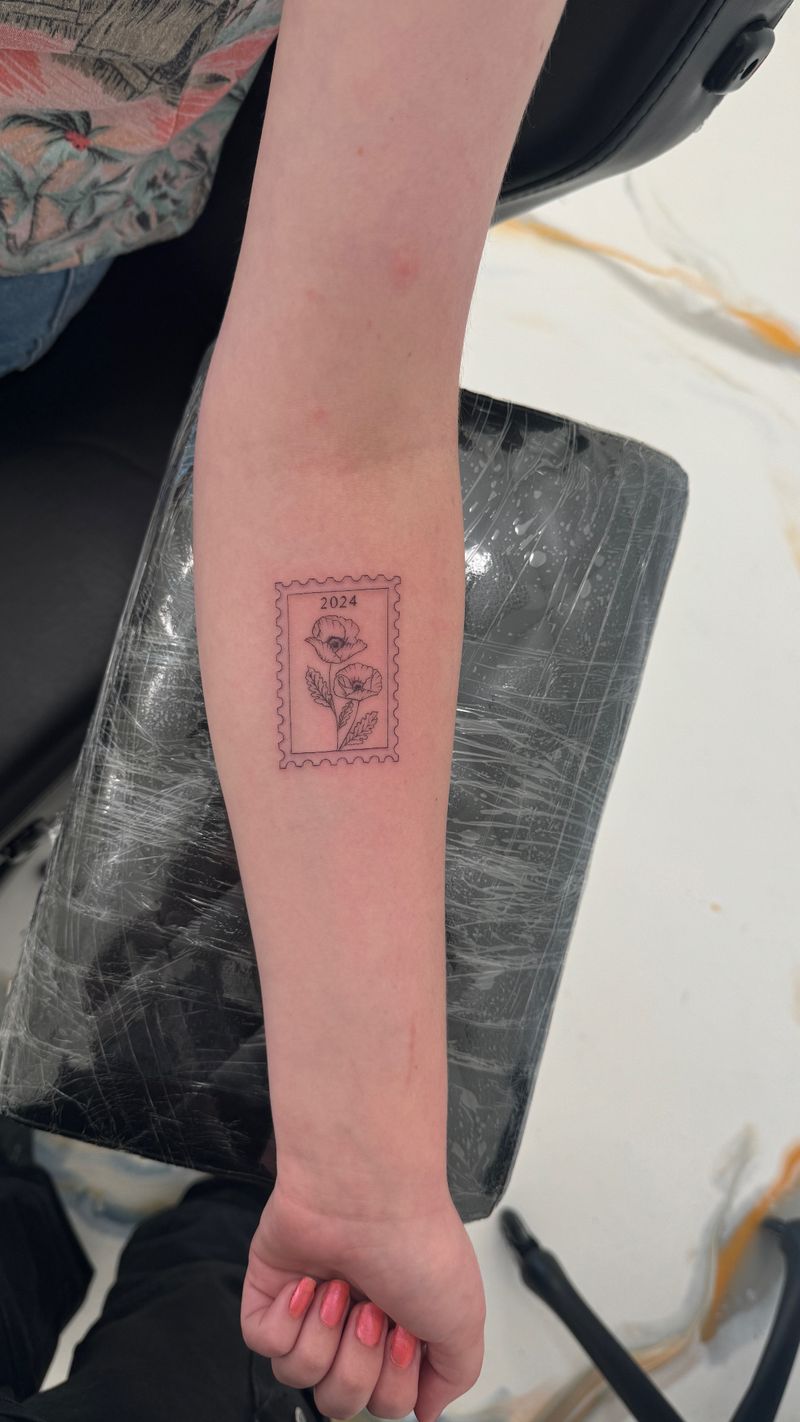
The most durable fine-line category, and for good reason. A single stem — olive branch, wildflower, fern frond, a sprig of lavender — is mostly open negative space with a handful of confident lines. Nothing is crowded, so a little spread over the years just softens the piece rather than closing it up. We usually scale these larger than clients expect: a stem that looks delicate at six inches on the forearm looks like a scribble at two.
Script and Lettering
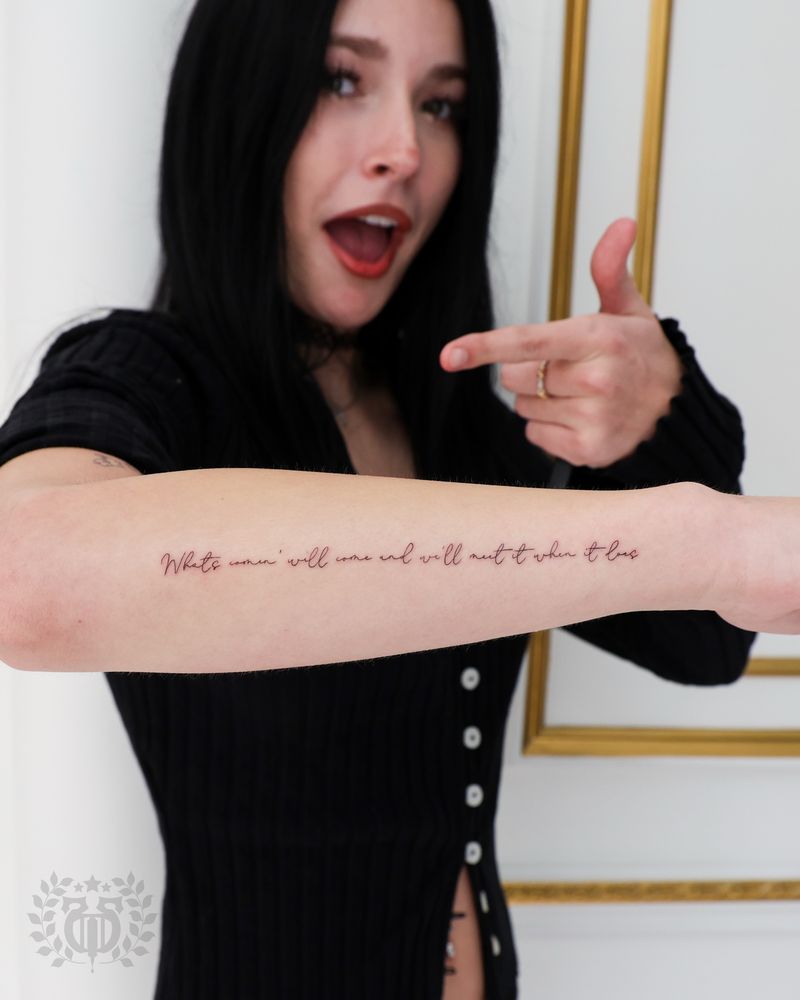
Fine-line script is beautiful and genuinely risky. Thin cursive with tight loops is the single most common thing we see people return to have reworked. If you want lettering, go bigger than feels necessary, choose a typeface with open counters (the enclosed spaces in letters like a, e, and o), and avoid stacking words tightly. A short phrase in clean, well-spaced letters will outlive a long paragraph in tiny italics every time.
Geometric and Ornamental Linework
Repeating geometry, mandala-adjacent ornament, and architectural line studies work well because they're built on structure rather than fine detail. The eye reads the overall pattern, so minor softening doesn't hurt. The trade-off is that geometry punishes sloppy execution — a wobble in a straight line or a mismatched arc is obvious forever. Ask to see healed photos, not just fresh ones, before you commit.
Single-Needle Portraits and Figures
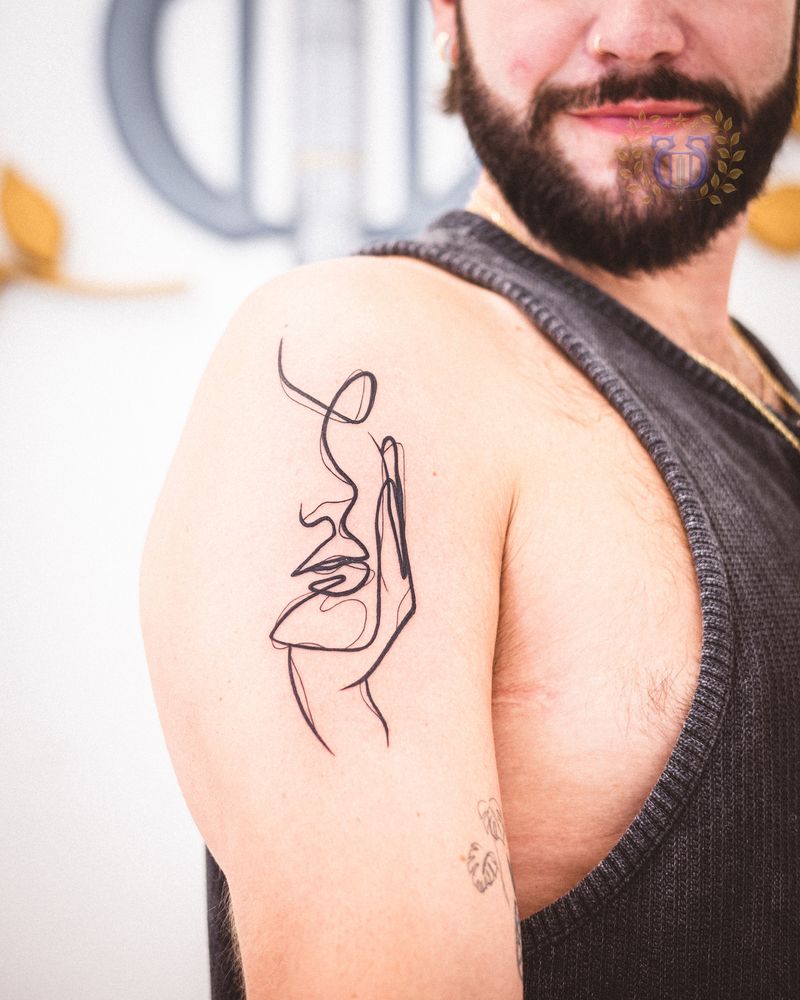
Small realistic faces, hands, statues, and animal studies in single-needle whip shading are some of the most impressive work in the style. They also age the fastest. Realism depends on subtle tonal gradients, and gradients are the first thing to go as ink settles. If you want a portrait, we'd rather do it at four to six inches with real value range than at two inches where it will read as a gray blob in eight years.
Jewelry-Inspired Line Pieces
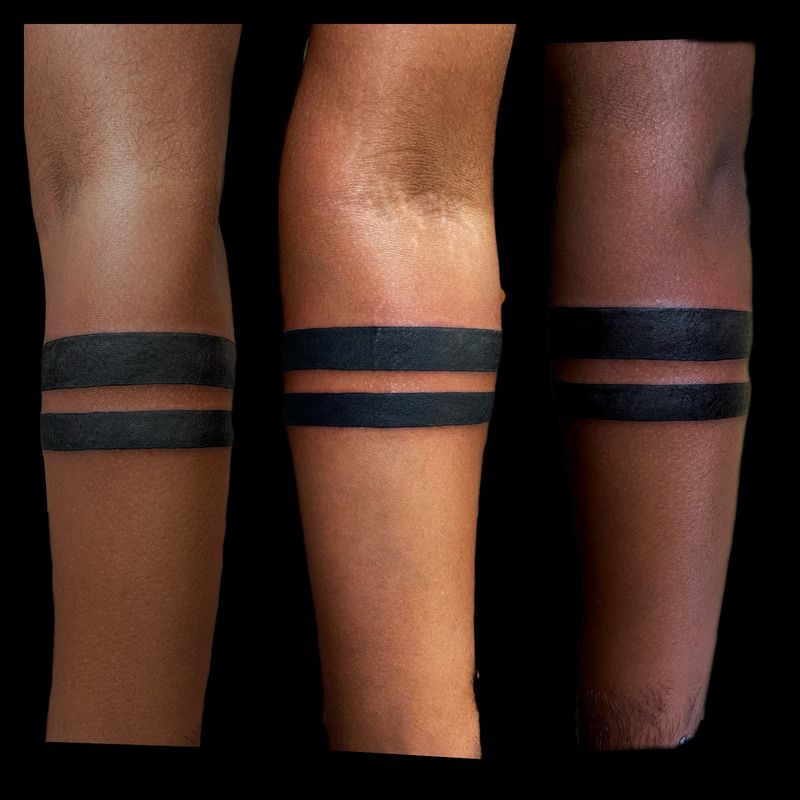
Anklets, wrist chains, arm bands, and collarbone drapes are a natural fit for a studio that also does tattoos alongside high-end body jewelry. They follow the body's contours, they're mostly line with occasional dot accents, and they're easy to extend later. Design them with the way that limb actually moves in mind — a band that looks even standing still can pull crooked when the arm bends.
Micro-Symbols and Small Marks
Tiny stars, initials, coordinates, a single line drawing of a mountain. These are the most-requested pieces and the ones we're most direct about. Anything under an inch with more than four or five lines will not stay legible. We'll often suggest simplifying the design instead of shrinking the canvas.
Placement Matters More Than the Design
Where you put a fine-line tattoo determines most of its lifespan. The skin isn't uniform, and neither is how ink behaves in it.
- Strongest placements: outer forearm, outer upper arm, calf, thigh, upper back, shoulder blade. Stable skin, moderate sun exposure, low friction, thicker dermis.
- Workable with realistic expectations: inner forearm, ribs, sternum, ankle. These hold, but expect softer lines sooner.
- Hardest placements: fingers, hands, feet, inner wrist, elbow and knee ditches. High friction, constant cell turnover, thin or highly mobile skin. Finger tattoos in particular often need touching up within a year or two, and some never hold cleanly regardless of who does them.
If you have a design you love and a placement we're concerned about, we'll say so during your consultation rather than after. Sometimes the answer is a different spot; sometimes it's the same spot with a simplified design and a slightly heavier line weight.
How Fine-Line Work Actually Ages
Ink spreads. That's not a defect — it's what happens in living tissue over years. A crisp 1RL line laid at the right depth will widen slightly and soften at the edges. In a well-spaced design, that's fine: at ten years the piece reads as a slightly gentler version of itself. In a crowded design, adjacent lines merge, negative space fills in, and detail collapses into a gray shape.
The practical rule we use: leave at least a line's width of clear space between any two parallel lines, and more in high-detail areas. If a design can't survive that spacing at your chosen size, the design needs to be simplified or the tattoo needs to be bigger. There's no third option, and any artist who tells you otherwise is selling you a touch-up appointment.
Southern California adds a variable. Sun exposure is the single biggest accelerator of fading, and thin lines have less pigment to lose. If your piece lives on a forearm or calf that sees Santa Monica beach days, daily SPF on healed work is not optional advice — it's the difference between a decade and half that.
Bringing an Idea to Us
The most useful thing you can bring isn't a Pinterest board of finished tattoos — it's reference for the subject. Photos of the actual plant, the actual building, the handwriting you want interpreted. That gives our artists room to design something that fits your body rather than tracing someone else's arm.
Come with a rough size and placement in mind, and be open to both changing. Browse more tattoo ideas if you're still narrowing things down, and when you're ready to talk specifics, book a consultation and we'll sketch through the trade-offs together before anything gets scheduled.
Common fine-line tattoo questions, answered
How long does a fine-line tattoo really last?
A well-designed, well-placed fine-line tattoo stays clearly legible for ten to twenty years, softening gradually rather than disappearing. Crowded or very small designs can lose detail in three to five years. Placement and sun exposure move that timeline more than anything else.
Do fine-line tattoos hurt less than traditional ones?
Generally yes, because there's less needle passing and no heavy black packing. Sessions are usually shorter too. That said, bony and thin-skinned areas — ribs, sternum, ankles, inner wrist — still hurt regardless of line weight.
What's the smallest a fine-line tattoo can be?
It depends entirely on the design's complexity, not a fixed number. A simple three-line symbol can work at three-quarters of an inch. A detailed floral or a portrait needs several inches to hold spacing. We'd rather scale a design up than watch it merge into a gray shape.
Will my fine-line tattoo need touch-ups?
Sometimes, and that's normal. Small gaps can appear during healing, especially on high-friction placements. We handle touch-ups on our own work after full healing. Fingers, hands, and feet may need periodic maintenance for the life of the tattoo.
Can fine-line tattoos be covered up later?
Fine-line work is actually among the easiest to cover, because there's minimal saturated black to hide. Most fine-line pieces can be absorbed into a larger design or lightened with a few laser sessions if you want more freedom in the cover-up.
Is fine-line a good choice for a first tattoo?
It can be, especially on a stable placement like the outer forearm. Just go in understanding it's a maintenance-aware style, not a set-and-forget one. If you want something you'll never think about again, a slightly bolder line weight is the more honest recommendation.
How should I care for a fresh fine-line tattoo?
Keep it clean and lightly moisturized, avoid soaking it, and don't pick at flaking. The biggest fine-line-specific risk is over-moisturizing, which can pull ink out of shallow lines. Once healed, daily SPF is the single highest-return habit for keeping lines sharp in Los Angeles sun.
Do you do fine-line work at your Santa Monica studio?
Yes — fine-line and single-needle work is one of the most common things we book at our Main Street location. Consultations are where we work out size, placement, and whether the design needs adjusting before it goes on skin.