
How to choose a chair
Five decisions route you to the right artist.
Apollo has four tattoo chairs and two piercing chairs. Not every chair runs every style. Walking through these five decisions lands you at the chair that matches your idea — not just the one with an opening this week.
Artist first or subject first?
Some clients arrive because they want work from a specific artist. Others arrive because they want a specific subject and need the right artist for it. Both are valid. Artist-first means you browse portfolios. Subject-first means you match a specialty to an idea.
Which style?
Fine line, realism, traditional, Japanese, ornamental. Apollo's four tattoo artists cover different categories. Raa runs photorealism and portraits. Blue Mason runs fine line through tribal. David DaVinci runs color realism and memorial. Hannah Newman runs fine line and script. Pick the style, the artist surfaces.
How much time do you have?
Popular specialists book two to six weeks out. Cover-ups, multi-session sleeves, and back pieces book further. If you need work this week, ask the studio which artist has a near-term opening that matches your brief — not whoever is free first.
First time with Apollo or returning?
First-time clients benefit from a consultation first — the artist reads the brief, the client reads the portfolio. Returning clients can often book directly. The booking form captures both paths.
Tattoo or piercing?
Apollo runs both disciplines. Two chairs dedicated to piercing (Bunny Vogt and the Blue Mason piercing chair — the same founder wears both hats for the piercing side), five for tattoo. The booking flow branches cleanly — pick the chair, pick the service.
Four chairs, one canon. Pick the style, the chair surfaces.
Fresh tattoos flatter every artist. Healed work tells the truth.
A realism piece without a reference is an inventory piece, and it shows.
The tattoo team
Four chairs, four styles, one canon.
Each chair has a specialty line, a scale ceiling, and a portfolio worth reading before you book. Click through for the full artist page.
Blue Mason
Founder & Master Artist
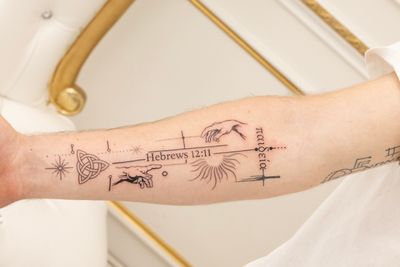


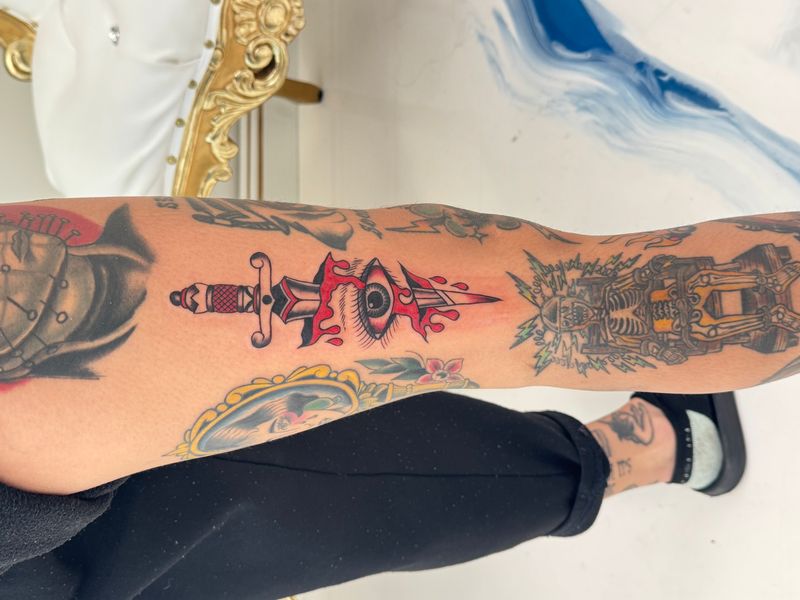
Blue Mason founded Apollo Studio with a vision to elevate tattoo artistry in Los Angeles. With over 20 years of experience, he specializes in fine line work, photorealistic portraits, bold tribal designs, traditional pieces, and stunning cover-ups.
Raa (Ramel El)
Artist


Raa is a master of photorealistic tattooing, bringing portraits and nature scenes to life with incredible detail. Clients travel from across the country for his signature hyper-realistic style.
David DaVinci
Artist
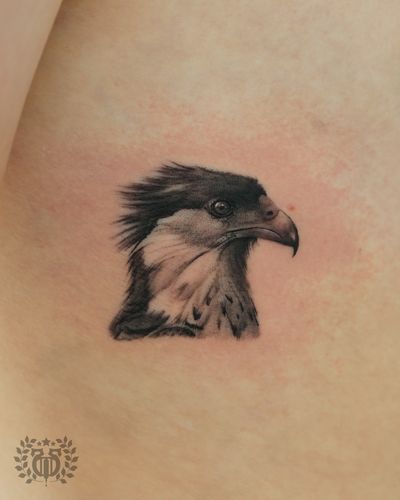


David brings classical artistry to modern tattooing. Trained in fine arts, he excels at capturing emotion and likeness in portrait work.
Hannah Newman
Jr. Artist


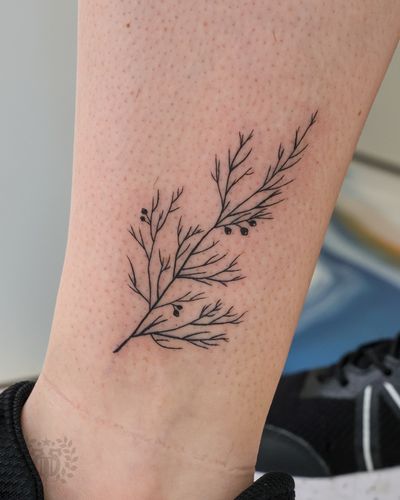
Hannah brings fresh energy and meticulous attention to detail. Specializing in delicate fine line work, script, and minimalist designs.
The piercing team
Two senior piercers. Needle-only. Titanium-only.
Apollo runs piercing as a parallel discipline, not an afterthought. Both piercers are senior practitioners; one holds Fakir certification, one leads the kids ear piercing calendar.
Bunny Vogt
Piercing Artist
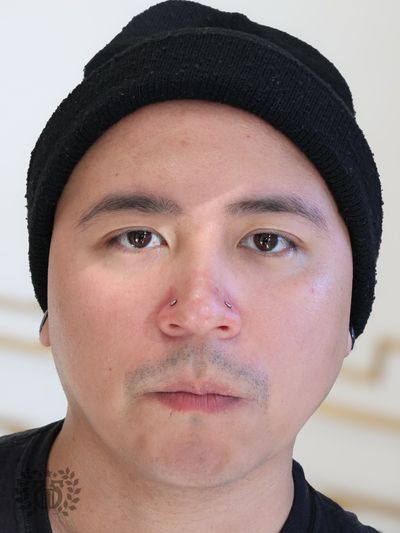

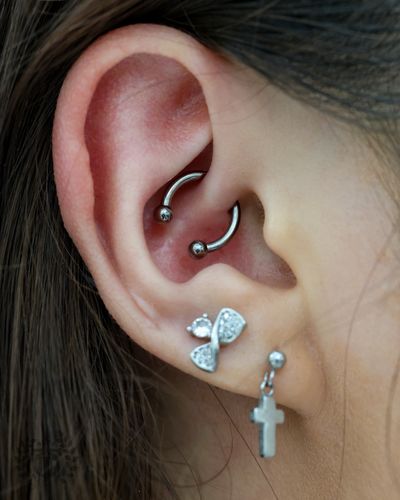
Bunny Vogt, a dedicated Piercing Artist at our studio since 2019, is known for her artistic eye and expertise in ear curation. She excels at creating beautifully balanced ear arrangements, from simple lobe piercings to complex cartilage compositions that reflect each client's unique style.
Blue Mason (Piercing)
Senior Piercing Artist


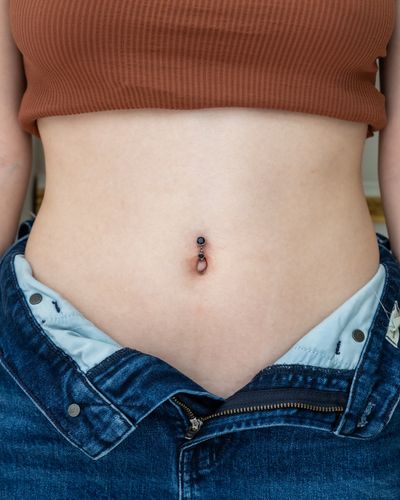
Blue Mason, our Senior Piercing Artist and studio founder since 2004, brings over two decades of ear piercing expertise. From delicate lobe piercings to complex cartilage arrangements and industrial piercings, Blue's technical mastery ensures perfect placement every time.
Specialty matrix
Six styles. Which chair runs which.
Cross-reference style to chair. Some styles overlap (fine line, realism, color realism); some are chair-specific (tribal, cover-ups). The matrix resolves the question.
Fine Line
Hannah Newman, Blue Mason
Two chairs run fine line at Apollo. Hannah Newman leads the micro and modern-style work — small script, behind-ear, wrist, single-needle botanicals. Blue Mason runs fine line at larger scale as part of his range. If you want the smallest, most modern style, start with Hannah. For fine line that anchors a larger piece, Blue.
Realism
Raa, David DaVinci, Blue Mason
Three chairs cover realism. Raa runs black-and-gray nature and portrait photorealism at mid-to-large scale. David DaVinci runs color realism with emphasis on memorial pieces and portrait work. Blue Mason runs realism as part of multi-style compositions. Pick the chair by palette and subject — photograph-reference work to Raa or David, integrated multi-style to Blue.
Traditional
Blue Mason
American Traditional is Blue Mason's oldest style. Bold 3/0-liner outline, flat fill, flash-lineage compositions. The right chair for flash-book Traditional work, first-tattoo Traditional roses, and Traditional cover-up scaffolding where the bold outline carries the composition forward.
Tribal
Blue Mason
Tribal work has lived in Blue Mason's range since the studio's earliest days. Polynesian-inspired blackwork, modern tribal ornament, solid-fill compositions that follow the contour of the body. Chair-specific skill — tribal done poorly reads as dated, tribal done well reads as architecture on skin.
Color Realism
David DaVinci · Blue Mason
Color realism lives primarily with David DaVinci, with Blue Mason as a secondary for multi-style integration. Built across two to four sessions. Reference-dependent — bring the photograph. Memorial color realism in particular benefits from David's chair-side process.
Cover-Ups
Blue Mason
Cover-up work requires an artist who can read old ink and design around it. Blue Mason runs the studio's cover-up chair — the combination of fine line, traditional, and blackwork range gives him the widest toolkit for covering old work without forcing the client into a single style. Cover-ups start with a consultation, not a direct booking.
Placement fit
Which chair handles which placement style.
Placement changes the chair as much as it changes the design. Five styles — each routes to a subset of the team.
Artist fit — classical
Shoulder blade · upper back · hip · inner thigh · ankle
Most artists on the team cover classical placements well. The design choice matters more than the chair at this category — pick by style, not by artist, unless you have a specific portrait or realism piece.
Artist fit — declarative
Bicep · chest over heart · outer forearm · calf
Traditional and Neo-Traditional declarative work routes to Blue Mason. Realism declarative work routes to Raa or David. Fine line declarative (modern script, small portraits on bicep) routes to Hannah.
Artist fit — modern
Inner forearm · ribcage · sternum · inside wrist · back of upper arm
The default 2020s style — most Apollo chairs run modern placements comfortably. Fine line and single-needle route to Hannah. Mid-scale illustrative routes to Blue. Realism at ribcage routes to Raa.
Artist fit — intimate
Inner bicep · underboob · inner thigh · behind ear · nape
Small and private work — Hannah Newman is the default chair. For larger intimate pieces (inner thigh realism, ribcage portraits) Raa or David. Intimate placements need an artist with a light hand and clear chair-side calibration.
Statement
Full back · full sleeve · dual chest panel · full thigh
Statement compositions route to Blue (multi-style integrated), Raa (black-and-gray realism anchors), or David (color realism portraits as centerpiece). Consultation required before booking — the design is half the work and it's done before the stencil goes on.
Session scales
Four tiers. Which chair handles which scale.
Scale determines chair assignment as much as style does. The right chair for 2 inches is not always the right chair for 12.
Working pairings
Eight booking flows the team handles.
The flow matters as much as the chair. Some work books walk-in. Some needs consultation. Some needs a multi-month project plan. Know which flow you're entering.
Consultation + day-of booking
Most custom work at Apollo runs this flow. Consultation first for brief, reference, and scale; booking window confirmed after. Some artists run consultation and booking in a single visit for simpler briefs.
Walk-in flash
Smaller flash work — simple single-element designs — can sometimes book walk-in at the chair. Ask at the front desk or check with Hannah for the smallest scale, Blue for traditional flash.
Multi-session project
Sleeves, back pieces, large portraits, cover-ups. Planned across multiple sessions with a defined design arc. Starts with one long consultation and builds from there.
Matching tattoos
Couples, siblings, best friends — the studio handles matching appointments regularly. Same artist, same day, same stencil is the rule. Book both clients on the same slot.
Memorial piece
Memorial work is a sensitive category. David DaVinci handles most memorial color realism; Raa handles memorial black-and-gray portraits; Blue handles memorial Traditional or fine line. Consultation first — always.
Cover-up project
Cover-ups route to Blue Mason. Needs a visual assessment of existing work before the artist can propose a design path — book a consultation with photos, not a direct session.
First tattoo
First-tattoo clients benefit from a chair-side read on placement and scale. Any Apollo artist handles first-tattoo work; pick by the style you want and the tone you need in the room.
Piercing appointment
Piercings book separately from tattoo. Bunny Vogt for kids and most adult scope; Blue Mason piercing chair for complex anatomy or specific placement planning. Needle-only, titanium-only, chair-based.
Consultation
Six questions to bring with you.
Walk into the consult with answers to these and the artist routes you faster, sketches more cleanly, and quotes more accurately.
Which artist, and why?
Artist-first or subject-first? If artist-first, which chair and what have you seen from their portfolio that matches your idea? If subject-first, bring the subject — the studio routes to the right chair.
What's the design brief?
A sentence. Not a Pinterest board. The sentence tells the artist what the tattoo is for. Everything else — style, scale, placement, reference — builds outward from the sentence.
Have you seen healed portfolio work?
Fresh tattoos flatter every artist. Healed tattoos tell the truth. Ask to see work at 1-year and 5-year marks from the chair you're considering — especially for fine line and watercolor, where aging matters most.
What scale can you commit?
Know your ceiling in time, budget, and sitting before you arrive. A 3-inch Traditional is 1–2 hours. A half-sleeve is two sessions. A full back is a multi-month project. The scale sets the conversation.
Custom or flash?
Custom work is drawn for your body. Flash is pre-designed, tattooed repeatedly. Some chairs run flash days. Ask which flow the artist prefers and pick accordingly.
First tattoo or adding on?
If adding on, bring photos of existing work. The artist thinks about composition, line weight match, and style consistency. If it's your first, say so — a good artist calibrates pace and chair-side tone.
The sentence is the tattoo. The images are only how it looks.
Match the chair to the idea, not the idea to this week's opening.
One working studio in Santa Monica. Needle-only, titanium-only on the piercing side. Healed-portfolio-first on the tattoo side.
Common mistakes
Eight booking patterns to watch for.
Most disappointing bookings fall into one of these eight categories. Catching it before the deposit prevents it in the chair.
The first-available-artist trap
Booking with whoever can get you in this week rather than matching a portfolio to your style. Fix: pick the specialist. Wait three weeks for the right chair rather than settling for this week's opening.
The cross-chair matching mistake
Booking matching tattoos with different artists because schedules didn't line up. The result is two tattoos that look approximately similar, not a matching pair. Fix: same chair, same day, same stencil, always.
The fresh-portfolio trap
Picking an artist based on the just-wrapped Instagram feed. Every tattoo looks like a 10 at day 1. Fix: ask for healed portfolio — 1-year and 5-year work — especially for fine line and watercolor where aging matters most.
The style-chair mismatch
Booking photorealism with a chair that runs fine line. Every artist specializes in a style or two. Fix: read the specialty line on the artist card, match it to the idea, and only cross-route if the artist recommends it.
The scope creep
Booking a consultation for a 3-inch rose and arriving with a half-sleeve concept. Fix: tell the artist the real scope before the consultation, or the brief, budget, and time allotment won't match the work.
The no-reference booking
Arriving at the chair without any reference material for custom realism or portrait work. Fix: bring the photograph. A realism piece without a specific reference is an inventory piece, and it shows.
The cover-up shortcut
Asking a non-cover-up-specialist chair to cover old work because the artist had a free slot. Fix: route to Blue for cover-ups. The design math is different from a fresh tattoo and needs the right toolkit.
The anniversary rush
Booking a tattoo to be ready for a specific date — wedding, anniversary, birthday. Fix: give the artist three to six weeks of runway, not three to six days. Rushed design is rushed ink.
First booking guide
Eight decisions the first booking should make on purpose.
A first-time booking at Apollo follows the same ladder every time. Run these eight steps and the chair is ready when you walk in.
Three layers of match
Three layers turn style-fit into chair-fit.
Picking an artist isn't one decision — it's three. Most clients stop at the first. The right chair is at the intersection of all three.
The base match
Pick the chair by style and specialty. This is the bones of the booking — fine line to Hannah, realism to Raa or David, traditional or cover-ups to Blue. Most clients start and stop here.
The portfolio match
Beyond style, match your idea to specific pieces in the artist's healed portfolio. The second layer is the difference between a generically appropriate artist and a specifically right one.
The chair-side match
Some clients need a quiet artist. Some need a talker. Some need a calm room for a first tattoo. The third layer is tone — what the consultation feels like, not what the portfolio shows.
Matching tattoos
Four working rules when booking matching work.
Matching tattoos are a common booking — and one of the most under-planned. Four rules keep the pieces actually matching.
Who books matching tattoos at Apollo
Couples most commonly, then siblings, then best friends, occasionally parent-and-adult-child. Different relationships invite different chair choices — Hannah for small sentimental, Blue for mid-scale narrative, David for color memorial.
Same chair, same day, same stencil
The only way matching tattoos actually match is if the execution is identical. Different chairs produce different line weights, different saturation, different proportion. Book both clients on the same slot.
Plan for the piece to outlive the pairing
If a breakup, estrangement, or death would destroy the piece, redesign it now so it works as a solo design too. Not pessimism — the same respect you'd pay any other permanent decision.
Variation is good, not bad
Matching doesn't mean identical. Small variations — different leaf count, different color, different placement — let each piece belong to the person wearing it. The rule is: match the design, vary the detail.
FAQ
The questions every first-time booking surfaces.
Eight questions covering chair selection, piercing team, booking windows, consultation, matching tattoos, and first-time flow.
How do I choose the right Apollo artist for my tattoo?
Read the specialty line on each artist card and match it to your idea. Blue Mason covers fine line, realism, tribal, traditional, and cover-ups — the widest range on the team. Raa covers photorealism, portraits, nature scenes, and black-and-gray. David DaVinci covers portraits, color realism, and memorial pieces. Hannah Newman covers fine line, script, minimalist, and small tattoos. Match the style to your idea and the chair surfaces.
Who does piercings at Apollo?
Two chairs. Bunny Vogt is the senior piercer and dedicated kids ear piercing specialist — the default chair for first-time appointments, sensory-sensitive clients, and full adult scope. Blue Mason also holds Fakir certification as a senior piercer and runs the chair for more complex anatomy planning alongside Bunny. Both are needle-only, titanium-only. The booking flow for piercings is separate from the tattoo flow — pick the service first, the chair second.
How far out do Apollo artists book?
Varies by chair and scope. Popular specialists (Raa for photorealism, Blue for cover-ups and sleeve anchors) book two to six weeks out. Smaller fine-line work with Hannah often books within one to three weeks, sometimes walk-in. Multi-session projects (sleeves, back panels, large portraits) plan across months, not weeks. The booking form shows live availability by chair.
Do I need a consultation before I can book a tattoo?
For custom work, yes. Consultation is where the design brief, reference, scale, placement, and style get decided before the artist starts sketching. It runs about 30 minutes and ends with a deposit if you're ready, or a no-deposit handoff if you need more time. For flash work (pre-designed pieces), you can book directly. Cover-ups and memorial pieces always start with a consultation.
Can I book matching tattoos with my partner, sibling, or friend?
Yes — matching tattoos are a common booking at Apollo. The rule is same chair, same day, same stencil. Booking with different artists, or on different days, produces tattoos that look approximately similar, not matching. Hannah Newman handles most small sentimental matching work. Blue Mason handles mid-scale and multi-style matching. David DaVinci handles color matching, particularly memorial matching. Book both clients on the same appointment slot.
What should I bring to my Apollo consultation?
Three things. First: a sentence describing what the tattoo is for — one or two lines, no manifesto. Second: three references, not thirty, each tagged with what specifically you like about it. Third: a rough scale and placement idea — inner forearm, outer bicep, thigh panel — so the artist can think about composition in context. If it's a cover-up, bring a clear photograph of the existing tattoo. If it's a memorial, bring the reference photograph.
Is Blue Mason a tattoo artist or a piercer?
Both. Blue is Apollo's founder and wears two hats — master tattoo artist and Fakir-certified senior piercer. The two practices run out of separate chairs on different schedules. When you book, pick the service first and the chair second. The tattoo chair and the piercing chair are treated as distinct bookings even though they share a practitioner.
How does Apollo handle first-time tattoo clients?
Any chair on the team works with first-time clients. The consultation is a little longer — the artist reads the brief, reads the room, and calibrates chair-side tone before the stencil goes on. Plan for 1–3 hours of chair time for a first tattoo at 3–4 inches. Bring water, a snack, something to read between needle breaks. The studio walks you through aftercare before you leave. Pricing is discussed at consultation — no dollar figures are published online.
Ready to pick a chair?
Bring the sentence. Bring three references. Bring the style that matches the chair you've been reading about.
Apollo bookings start with a clear chair-to-idea match. Book the consultation and walk out with a deposit, a timeline, and a design direction the specific artist signs off on before the stencil goes on.
