How to browse this portfolio
Five reading notes before you scroll the gallery.
Photorealism portfolios reward a trained eye. Five notes below help you read Raa's book for the grain, likeness, scale, and session commitment that matters for your piece.
Read grain first.
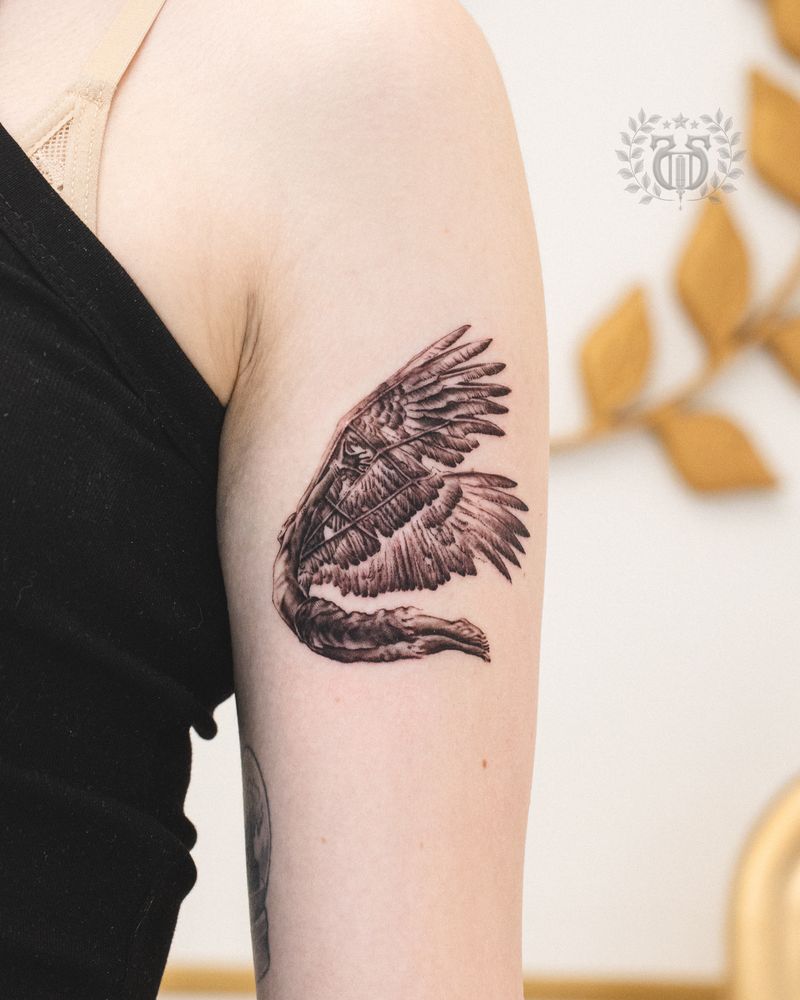
Photorealism lives or dies in the grain. Look at how the black-to-white gradient lands on the second pass — smooth transitions, no banding, no chalky whites. The grain is the tell. Raa's tiles show grain that reads like a photograph, not a stencil.
Check likeness at arm's length.
Zoom out on any portrait in the gallery. If the likeness holds at arm's length, the portrait was built correctly. If it only reads up close, the piece is a study, not a portrait. Raa's portraits are built to hold at 6 feet.
Scale is the floor, not the ceiling.
Photorealism has a minimum scale because detail compresses below it. Raa's floor for a face is 5 inches; for a full portrait with shoulders, 7 to 10 inches. If you want photorealism under 4 inches, that's not a Raa piece — it's a different artist or a different style.
Bring the original photo.
Not the Instagram crop. Not the mood-board screenshot. The original photograph, full resolution, with the light the day it was taken. Raa builds from source files — a filtered crop flattens the grayscale values and the piece flattens with it.
Plan for multi-session.
Most photorealism pieces are 2 to 4 sessions. One session does outline and first pass; subsequent sessions build the value and the saturation. Expect the portfolio to show pieces mid-process and fully healed — read the captions for the session count.
Grain is the tell. If the grain reads like a photograph, the piece reads like a photograph.
Bring the original photograph — not the Instagram crop. The source is half the design.
Photorealism has a floor. Below 4 inches, the detail compresses out and the piece fails.
12 pieces from the portfolio
Each tile, annotated.
Twelve specific pieces from Raa's working book. Each notes the style, the scale, the placement, and the session history. Use this catalog alongside the gallery below.
Piece 1 · Black-and-gray portrait
Family reference, full grayscale
A grayscale portrait built from a family photograph. Two-pass rendering: outline session, then value session. Reads at arm's length and holds at conversation distance. Shown healed at 8 months.
Piece 2 · Nature scene panel
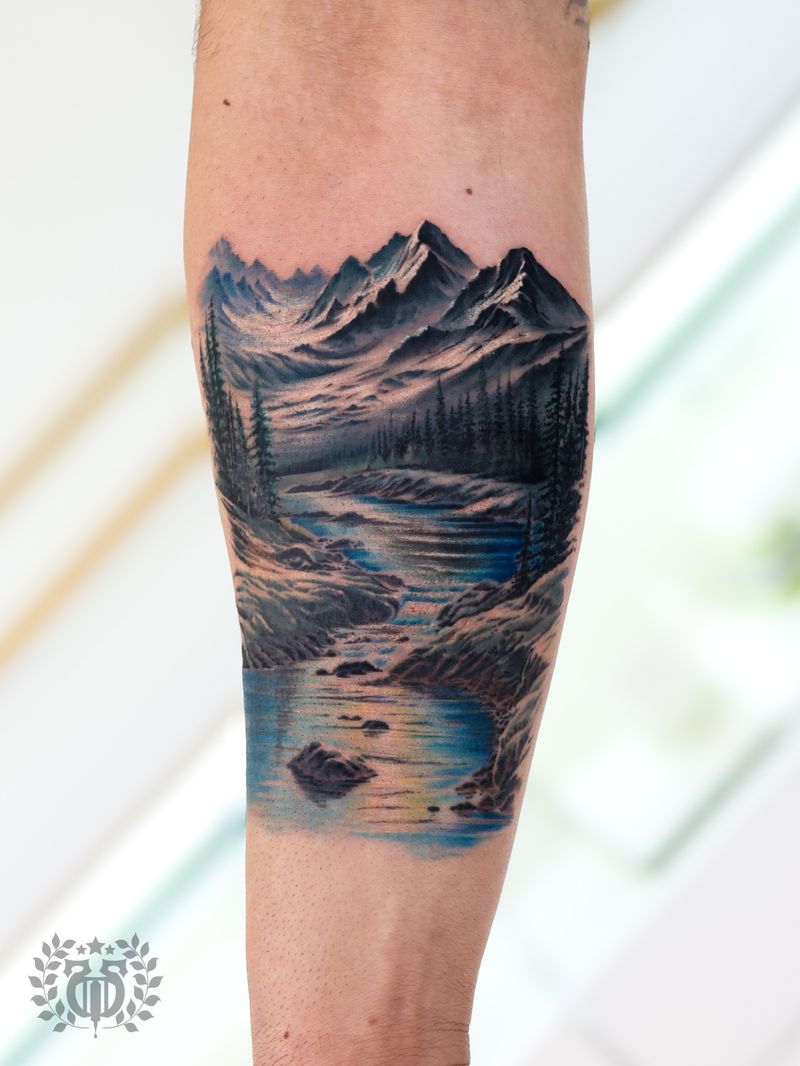
Architectural landscape, grayscale
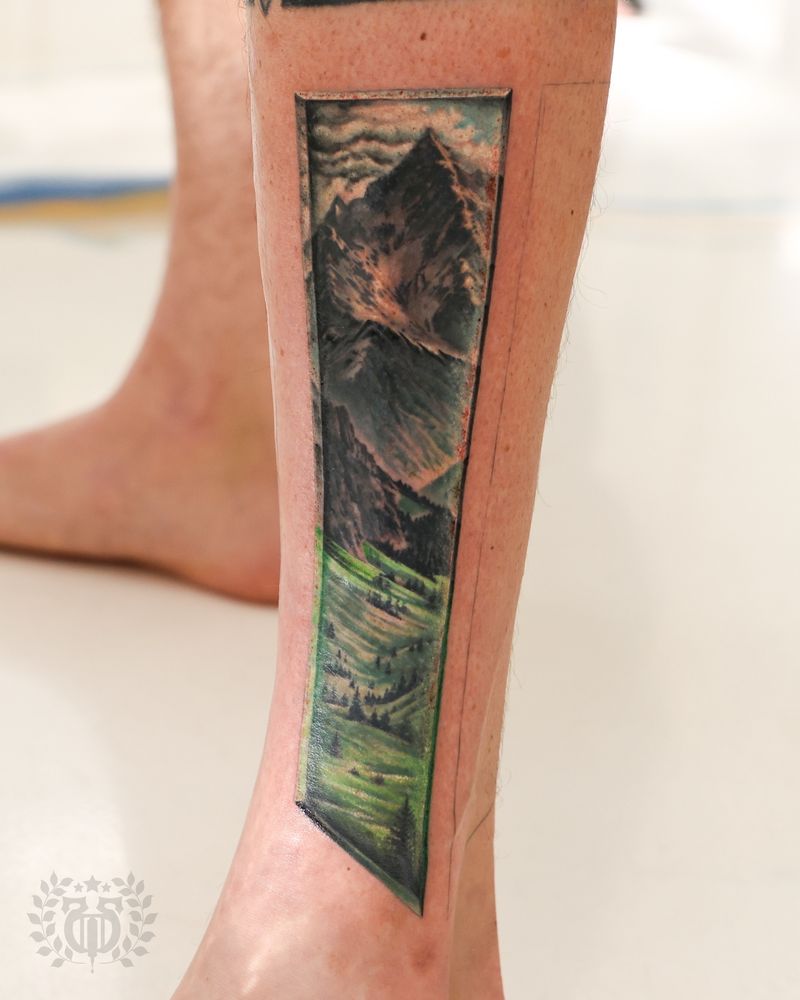
Mountains, water, and atmospheric depth rendered in pure grayscale. The grain work on the sky is where the piece earned its hours. Three sessions across 4 months. Shown fully healed.
Piece 3 · Hyper-real animal
Big cat portrait, full dimension
A big-cat portrait with full photorealistic detail — fur texture, eye reflection, nasal shadow. Two sessions; second pass re-saturated the blacks and pulled the highlights. Shown at the 6-month healed mark.
Piece 4 · Memorial portrait
Black-and-gray, chest placement
A chest-over-heart memorial portrait. Raa's memorial consultations run long — the design math for a subject who isn't here to see the piece is different. Three sessions; shown at the 1-year mark.
Piece 5 · Color realism portrait
Full-color portrait work
A full-color portrait — rarer in Raa's book than grayscale because color realism shifts palette across decades. When the client accepts the aging curve, color realism delivers a different read. Four sessions; shown fresh-to-healed comparison.
Piece 6 · Architectural study
Building or structure rendering
A photorealistic architectural piece — built from a reference photograph of a specific structure. Line-weight math matters: the structure's lines have to read as architecture, not as outline work. Two sessions, shown healed at 10 months.
Piece 7 · Hand or body-part study
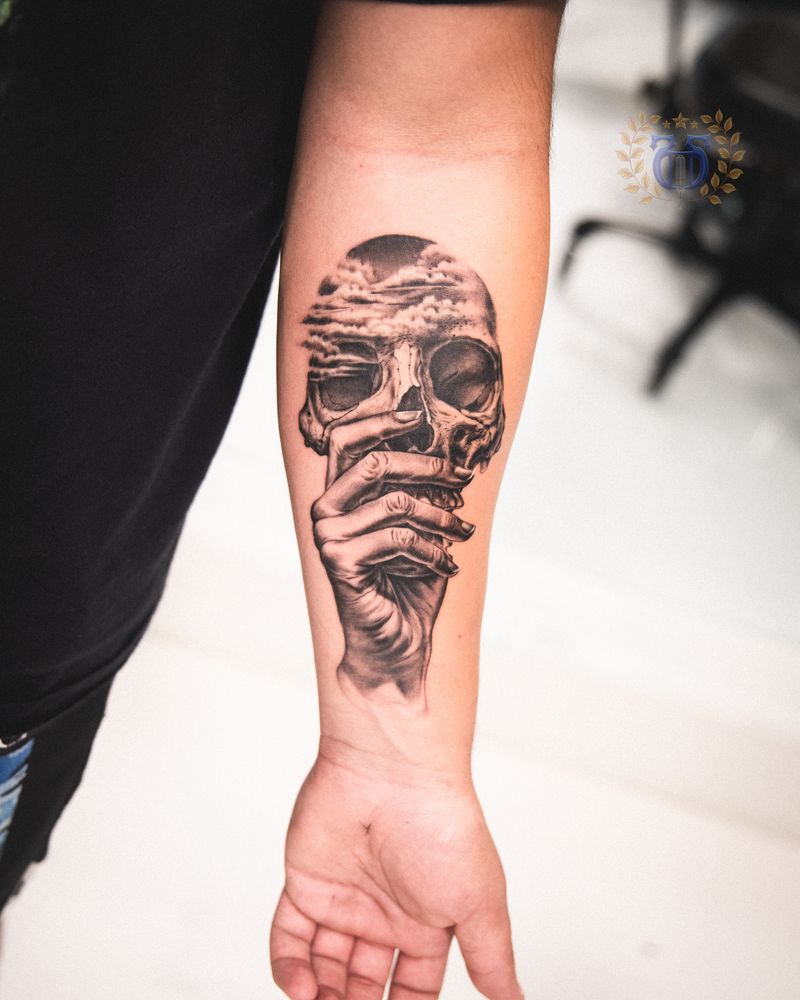
Anatomical grayscale rendering
A hand, a face fragment, an anatomical detail rendered as standalone subject. Raa's studio work includes these as commissions tied to specific meaning for the wearer. One session for outline, one for value.
Piece 8 · Ancestor portrait
Old-photograph grayscale reference
A portrait built from a hundred-year-old photograph. The grain of the original photograph is part of the design brief — the tattoo renders the photograph's grain, not the face directly. A specialty Raa consults on carefully.
Piece 9 · Composite memorial
Multi-subject, single composition
A memorial piece combining multiple subjects — a person, an object, a setting — into a single photorealistic composition. The longest-consulting Raa bookings. Four to six sessions planned from day one.
Piece 10 · Eye study
Hyper-real single eye
A single eye rendered hyper-realistically. Detail work lives in the iris reflection, lash line, and lid shadow. A short-list Raa piece — one session for the outline and highlight, one for saturation.
Piece 11 · Object portrait
Sentimental object, full dimension
A rendering of a specific object — a watch, a ring, a worn book — treated with the same photorealistic math as a face. The object becomes a portrait of the person who owned it. Two sessions.
Piece 12 · Long-timeline panel
Back or thigh realism statement
The longest-timeline piece Raa books. A full-back or full-thigh photorealistic composition — multiple subjects, extended value work, saturation-heavy. Six sessions across 8 months.
Six categories represented
Photorealism, portrait, nature, black-and-gray, color, memorial.
Raa's portfolio clusters around six sub-categories of photorealism. Pick the one your piece wants to live in. The category sets the rendering math before the design.
Photorealism
Value-first, grain-built rendering
The style that anchors Raa's book. Built from a specific source photograph — not from memory, not from mood boards. The value range, grain, and line weight all serve the illusion of photograph. Holds longer in grayscale than in color.
Portraits
Human likeness, specific reference
The portrait is the hardest subject in photorealism. The eyes, the mouth, and the shadow under the nose are where likeness lives or fails. Raa asks for the original photograph because filtered crops flatten the grayscale values portraits depend on.
Nature scenes
Landscape, water, sky, atmosphere
Mountains, water, sky, forest. Landscape photorealism built the same way as a portrait — value range, grain, depth. The atmosphere is the tell; landscapes that lack atmosphere read as flat illustrations, not photographs.
Black-and-Gray
No color, full dimension
Most of Raa's book lives here. Grayscale ages longer than color because there's no pigment shift across decades. For a piece you expect to live with for 20 to 30 years, black-and-gray is the honest default.
Color Realism
Full-palette photorealism
A rarer category for Raa because the aging curve is harder to predict. When the client accepts the palette shift, color realism delivers a different read. Requires a reference photograph with clean color — not filtered, not over-saturated.
Memorial work
Portraits and objects tied to loss
A category unto itself, though it draws from portrait and object realism. Raa's memorial consultations run longest because the piece has to honor the subject across decades. The first session is entirely about the photograph and what the wearer wants the piece to carry.
Selected work
Healed work, chronological.
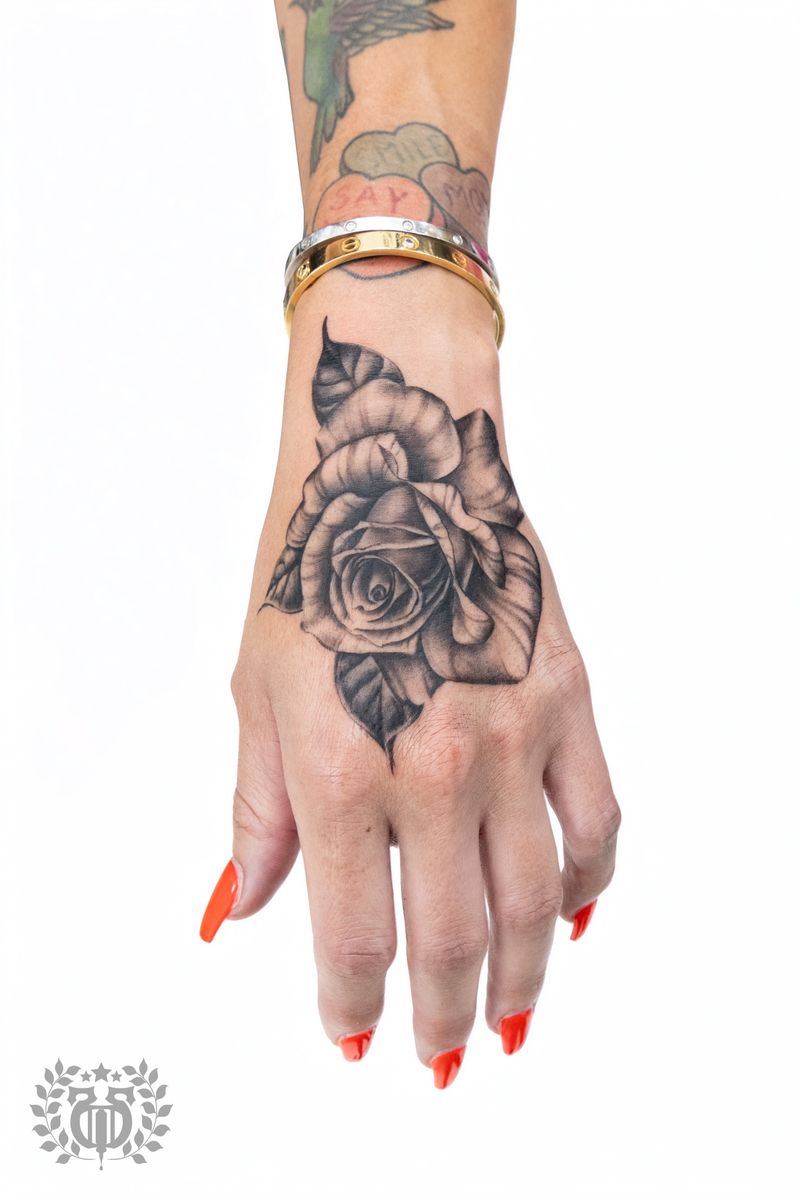
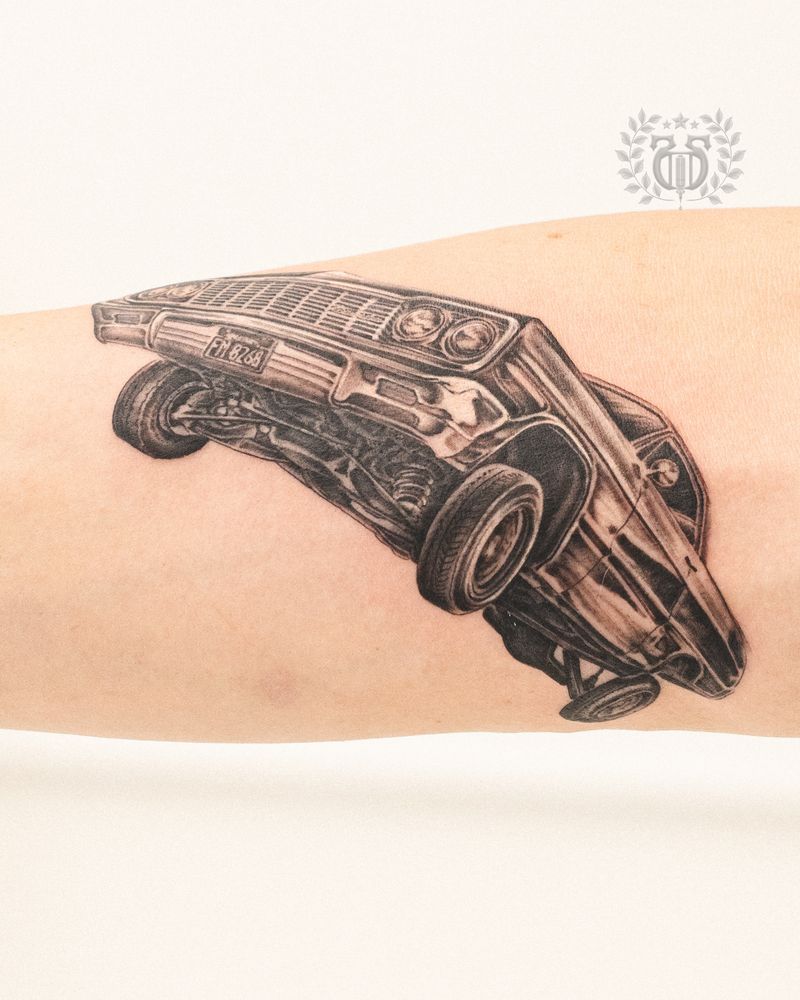
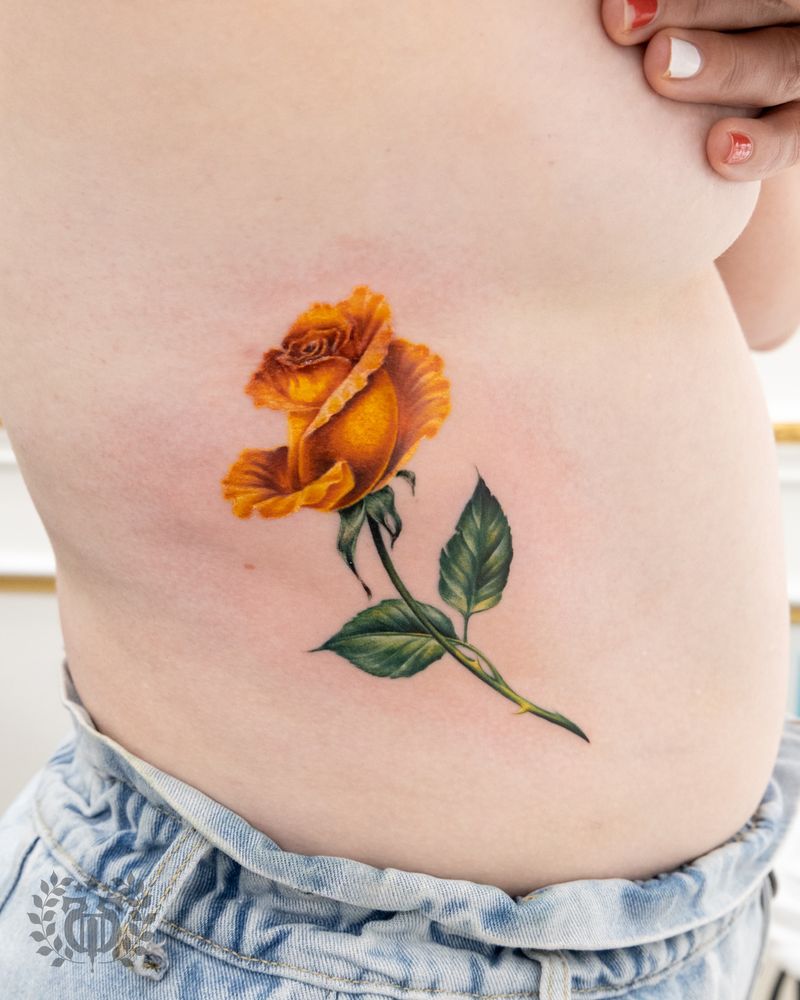
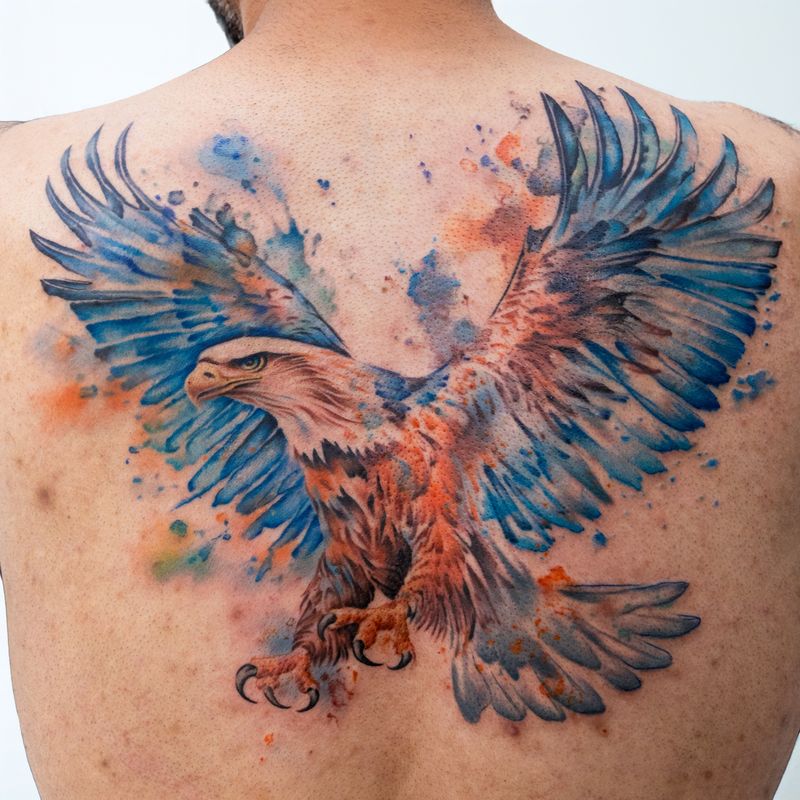
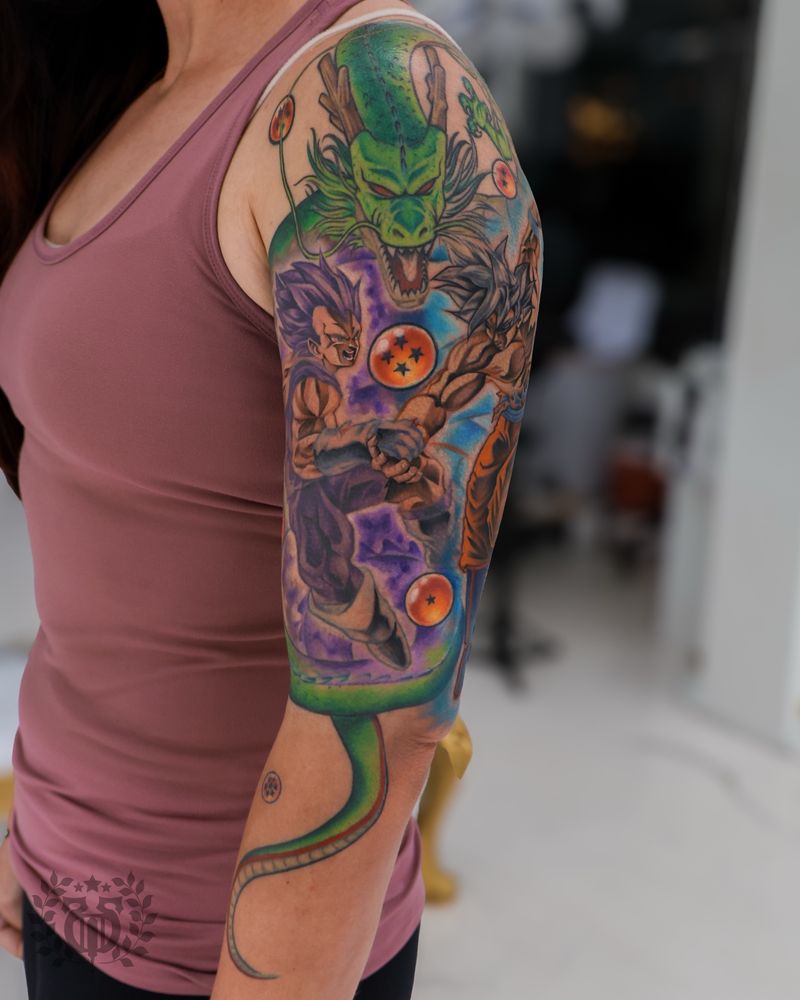
Each piece is a specific appointment — real source photograph, real placement, real healing. Tiles are sized to preserve the photograph's aspect ratio; see the 12-piece catalog for exact scale notes.
Five placements the portfolio clusters around
Where Raa's work actually lives on the body.
Photorealism asks specific things of placement. Five body zones below anchor 90% of Raa's book. Placement changes the scale, the grain math, and the aging curve.
Thigh
Outer · front · inner · full thigh
Raa's most-booked placement for large photorealism pieces. The thigh gives scale that arms can't hold without becoming full sleeves. Private placement, which shifts the piece toward the wearer rather than the room.
Upper arm / bicep
Bicep · outer upper arm · shoulder cap
Portrait territory. Raa's portrait book clusters here because the upper arm holds detail better than the forearm — it moves less, it ages cleaner. Visible when desired, private when sleeved.
Back / chest panel
Full back · upper back · chest over heart · full chest
Statement photorealism. Back pieces are multi-session commitments planned from day one. Chest-over-heart is the memorial placement. Full back accommodates composite compositions.
Ribs / sternum
Ribcage · sternum · underbust
Single-subject realism placement. Smaller portraits, object studies, anatomical pieces. More painful than thigh or arm, but the placement reads as intimate — a piece for the wearer.
Inner forearm
Inner · wrist-to-elbow
Memorial placement for Raa. Smaller portraits, objects, or meaningful subjects placed where the wearer sees the piece daily. Reads as a personal mark, not a statement.
Scale tiers represented
Four session counts cover everything in the gallery.
Raa's portfolio spans two-session studies through eight-session statements. Four tiers cover the working math of every piece in the book.
Eight pairing notes
Who this portfolio fits — and where to route when it doesn't.
Photorealism isn't for every piece. Eight notes below describe who Raa's bench is built for and where Apollo routes when another bench is the better match.
If classical portrait style is the priority
Route to David DaVinci for fine-arts-trained portrait work with a different rendering vocabulary. Compare David's portfolio to see how classical training reads differently from photorealism.
If cover-ups, tribal, or traditional is the priority
Route to Blue Mason, Apollo's founder bench. Blue's portfolio covers the categories outside Raa's specialty.
If small fine-line is the priority
Route to Hannah Newman, Apollo's junior artist, for small-scale fine-line work. Photorealism doesn't scale below Raa's floor; fine line does.
Photorealism-focused clientele
Clients who flew in specifically for the style. Many of Raa's bookings come from out of state. Realism as a category is one of Apollo's most-requested.
Memorial clientele
Raa's memorial bench is one of Apollo's longest-consulting. Portraits of lost family, pets, and anniversary pieces. The consultation runs long because the design math for memorial work is different.
Long-timeline clientele
Clients planning multi-session back or thigh pieces. Raa anchors these as compositions planned from day one. Most pull from black-and-gray realism.
Out-of-town clientele
Raa's calendar includes clients traveling in for specific sessions. The booking math flexes for travel — deposits hold dates weeks ahead, and sessions schedule tightly together when travel is part of the trip.
Second or third-piece clientele
Many Raa clients book photorealism as a second or third tattoo, not a first. The style rewards a client who already understands the chair time and healing commitment. First-time clients often route to a simpler style first.
Consultation
Six questions to answer before you bring the portfolio into the consult.
Photorealism consultations work best when the source photograph and the reference tiles are ready. Six questions below frame the design math.
Which tile from the portfolio is closest?
Pick three tiles from the gallery that come closest to your piece — the style, the grain, the scale. Bring those into the consult. Raa will use them as a reference for the rendering approach, not a template.
What's the source photograph?
Bring the original file. Full resolution, unfiltered, with the light the day it was taken. Raa builds from source — a filtered crop flattens the grayscale and the piece flattens with it.
Is this a portrait, a scene, or an object?
Three different rendering approaches. Portraits prioritize likeness. Scenes prioritize atmosphere. Objects prioritize texture. Pick one primary subject per piece — composite compositions are their own longer consultation.
Grayscale or color?
Most of Raa's book is grayscale because it ages longer. Color realism is available when the palette is significant to the piece. The consultation decides — Raa will lay out the aging curve honestly.
What scale can you commit to?
Photorealism has a minimum scale. Below 4 inches, detail compresses out. Blue's floor for a face is 5 inches; for a full portrait with shoulders, 7 to 10 inches. Be honest about what you can commit to.
How many sessions can you schedule?
Most Raa pieces are 2–4 sessions. Larger pieces run 5–8. Sessions schedule 4–6 weeks apart for healing. The consultation maps the full timeline before the first session.
Grayscale ages longer than color. For a piece you expect to live with for 30 years, grayscale is the honest default.
Most Raa pieces are 2 to 4 sessions. One session does outline; subsequent sessions build the value.
The portfolio is a catalog of rendered moments — not a menu. Every Raa piece is built new.
Common misconceptions
Eight patterns that mismatch a client to this portfolio.
Most mis-bookings with Raa trace to one of these eight. Catching them before the consultation routes the booking correctly on the first try.
"I brought the Instagram crop."
Filtered, compressed, color-shifted. Raa can't build photorealism from an Instagram crop. Fix: bring the original file, full resolution, unfiltered. If the original is lost, the piece may not be possible.
"I want a 2-inch photorealistic portrait."
Below 4 inches the detail compresses out. Fix: scale the piece to 5 inches or above for faces, 7 inches for portraits with shoulders. Or route to a different style that works at small scale.
"Can we finish it in one session?"
Photorealism is a multi-pass style. One session does outline and first value; subsequent sessions build the final render. Fix: plan for 2–4 sessions and schedule them 4–6 weeks apart.
"I want the portrait on my forearm."
The forearm moves too much to hold photorealistic detail cleanly over decades. Fix: route the portrait to thigh, upper arm, or chest. The inner forearm can hold smaller memorial portraits; the outer forearm cannot.
"Color will age like grayscale."
It won't. Color realism shifts palette across decades. Fix: choose grayscale unless the color itself carries significance. Raa will walk you through the aging curve at consultation.
"I'll book the same session as my partner."
Raa's sessions are long. Booking adjacent sessions means neither person sits at peak chair condition. Fix: schedule on different days. Photorealism rewards a fresh, alert sitter.
"The portfolio is a menu."
It isn't. Raa does not duplicate his own portfolio. Fix: reference a tile for style, scale, and placement feel. The design math will produce a new piece built for your specific reference.
"I want color and black-and-gray in the same piece."
Possible but rare, and the design math is tricky because the aging curves diverge. Fix: commit to one palette unless the piece specifically requires the contrast. Raa will tell you which applies.
First-session recipe
If the portfolio matches and this is your first Raa piece, here's the recipe.
Eight decisions a first photorealism session should make on purpose. Built around a first booking with Raa's bench.
Personalization
Three layers make a Raa piece actually yours.
Photorealism is a rendering. A photorealism tattoo is a photograph plus a rendering plus a private meaning. Use the gallery to lock the rendering style; the other two layers get built at consultation.
The photograph layer
The source image is the piece's foundation. Everything else is rendering. Raa treats the photograph selection as the single most important design decision — not the stencil, not the saturation, not the palette.
The rendering layer
How the value, grain, line weight, and saturation are built around the photograph. This is where Raa's hand shows up most. Two different artists rendering the same photograph produce two different pieces.
The private layer
What the piece marks for you. Nobody else needs to know. The photograph might be a grandmother's photograph; the piece might be about grief. Raa respects this layer without asking to see it.
Matching pieces
Family, partners, memorials, anniversaries — matching in photorealism.
Matching photorealism pieces are their own problem because the source photograph has to serve multiple wearers. Four notes below cover what Raa asks of matching groups before the stencil goes on.
Family matching
Siblings matching a portrait of a shared parent. Multi-generation matching of an ancestor photograph. Raa's family matchings are tight consultations — the photograph has to serve everyone in the room.
Partner matching
Couples with a shared reference — a location they visited together, a shared pet, a shared loss. Raa builds these as two pieces from one source rather than identical copies.
Memorial matching
Family members matching a piece honoring a lost relative. The longest-consulting Raa bookings. The photograph, the placement, and the palette all have to serve multiple wearers.
Anniversary matching
Couples marking milestones with shared imagery. Less common than memorial or family matching. Raa builds the piece around the shared subject rather than replicating the image.
FAQ
The questions every photorealism portfolio visit surfaces.
Eight questions covering booking, style coverage, source photographs, minimum scale, session counts, grayscale vs color, first-piece routing, and what to do when the portfolio doesn't match.
How do I book a consultation with Raa after seeing the portfolio?
Apollo consultations with Raa are booked through the studio's consultation form — describe the piece in a sentence, upload the source photograph at full resolution, note your placement and scale, and the studio routes the booking. New-client consultations run 6–10 weeks out. Come to the consult with the source image (the original file, not a filtered crop), the three portfolio tiles closest to your piece, and an honest sense of how many sessions you can commit to.
What styles does this portfolio cover?
Photorealism, primarily — portraits, nature scenes, architectural studies, objects, and memorial compositions. Both black-and-gray and color realism are represented, though most of Raa's book lives in grayscale because it ages longer. The gallery does not cover traditional, tribal, fine line, or cover-up work — those belong on other Apollo benches. If your piece is photorealism, Raa's bench is the match. If it isn't, the studio routes elsewhere.
Why does Raa need the original photograph?
Photorealism builds from value range — the grayscale gradient between pure black and pure white. A filtered, cropped, or compressed Instagram image has a flattened value range; the blacks are lifted, the whites are rolled off, and the mid-tones are crunched. Raa's rendering approach depends on the full range. Bringing the original file (TIFF, RAW, or full-resolution JPEG) gives the piece its foundation. If the original is lost, the piece may not be buildable at the quality Raa's portfolio sets.
What's the smallest photorealistic piece Raa will tattoo?
The floor for a face is 5 inches; for a portrait with shoulders, 7 to 10 inches; for an object or single eye, 4 inches. Below those scales, photorealistic detail compresses out and the piece reads as a smudge rather than a photograph. If you want a small photorealistic piece, the honest answer is usually: scale up, or choose a different style. Raa will tell you this at consultation rather than undersize a piece he knows will fail.
How many sessions will my piece take?
Most Raa pieces run 2–4 sessions. A small object or eye study: 2 sessions. A standard portrait: 2–3 sessions. A larger portrait with shoulders or a nature panel: 3–4 sessions. Composite compositions or full-back statements: 5–8 sessions. Sessions schedule 4–6 weeks apart for healing. The consultation maps the full timeline before the first session so the chair time, deposits, and healing windows are all honest from the start.
Should I choose grayscale or color?
Most of Raa's book is grayscale because it ages longer — there's no pigment shift to watch across decades. Color realism is available when the palette is significant to the piece (a specific flower, a specific sky, a sentimental color). Color realism shifts over 10–20 years and requires a client who accepts that aging curve. Raa will walk you through the trade at consultation. For a piece you expect to live with for 30 years, grayscale is the honest default.
Can I book a photorealism piece as my first tattoo?
Technically yes, but many first-time clients find the session length (4–6 hours) and multi-session commitment (2–4 sessions over 2–3 months) harder than expected. Raa's bench is common as a second or third booking, after a client has sat through a simpler first piece and knows how they handle chair time. If this is your first tattoo, Raa will be honest at consultation about whether to start here or route to a smaller first piece.
What if my piece isn't photorealism?
The studio routes you to the right bench. Apollo has Blue Mason for fine line, traditional, tribal, and cover-ups; David DaVinci for classical portraits and color realism; Hannah Newman for small fine-line and script; and two piercers for body work. If your piece isn't photorealism, Raa will tell you at consultation and route the booking. The match matters more than the bench.
Ready to bring the photograph into a consultation?
Pick three tiles. Bring the original file. Walk in prepared.
Apollo consultations with Raa work best when the source photograph is ready and three reference tiles are picked from this gallery. If the rendering, grain, and scale line up, his bench is the match. If they don't, the studio routes to the right bench.