Tattoo Ideas
Skull
Anatomy is the whole pass-fail. Zygomatic width, orbital depth, where the mandible hinges: miss those and the piece reads as a Halloween mask rather than bone. Twelve directions from Traditional Americana to calavera and realism, and why a design built from large tonal masses outlasts almost everything else we tattoo.
Book a consultationSix readings
Pick your reading before you pick your skull.
Six dominant readings live in the Western tattoo vocabulary, and each implies different composition, placement, and artist fit. Before we sketch anything, we ask you to pick one. A skull without a reading is a shape, and shapes age badly.
Memento mori
Classical Western · philosophical
The skull as a reminder of mortality. Often paired with an hourglass, a wilted rose, a burning candle, or a Latin banner. Philosophical, contemplative, not morbid. Translates into Realism, Dotwork, and Engraving styles. If you’ve lost someone, spent time with the Stoics, or think about death more than your friends do, this is probably your reading.
Rebellion · counterculture
Biker · punk · metal
The anti-authority style. Flames, daggers, snakes through eye sockets. Traditional and Neo-Traditional territory, bold-line, high-contrast, built to read at ten feet. If the skull is about refusing to be polite, this is the reading. The style for clients whose skull is declarative rather than contemplative.
Pirate & outlaw
Jolly Roger lineage
Nautical, crossed bones, rigging, tricorn hats, sabers. A specific historical and aesthetic pocket that overlaps with American Traditional but has its own iconography and crowd. For clients drawn to the treasure-island romance, the working-sailor lineage, or the freedom-from-law reading.
Día de los Muertos
Mexican Indigenous-Catholic tradition
Sugar skulls (calaveras), Catrina figures. NOT Halloween. A celebration of remembered ancestors with deep cultural weight. Comes with responsibilities the other five readings don’t. See the cultural-respect section before you book — recognizability is not the same as permission.
Medical & anatomical
Study object · scientific style
The skull as a study object. Think Vesalius, antique medical illustrations, Dotwork in a natural-history style. Popular with people in medicine, science, academia. Usually monochrome, usually precise, usually paired with botanical or anatomical elements. For clients who find the skull beautiful as an object.
Gothic & dark art
Aesthetic · not philosophy
An aesthetic style rather than a philosophy. Roses and candlelight, cathedral architecture, chiaroscuro. Honest when you claim it as aesthetic. Weaker when you pretend it’s philosophical and it isn’t. The style for clients who want the mood without the weight.
A skull without a reading is a shape, and shapes age badly.
Recognizability is not the same as permission.
Skulls live or die in the heal — ask for 12-month photos.
Flash · ready to ink
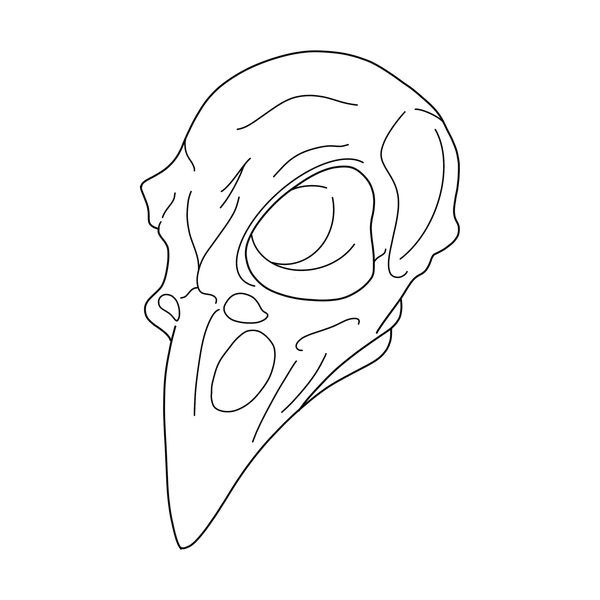
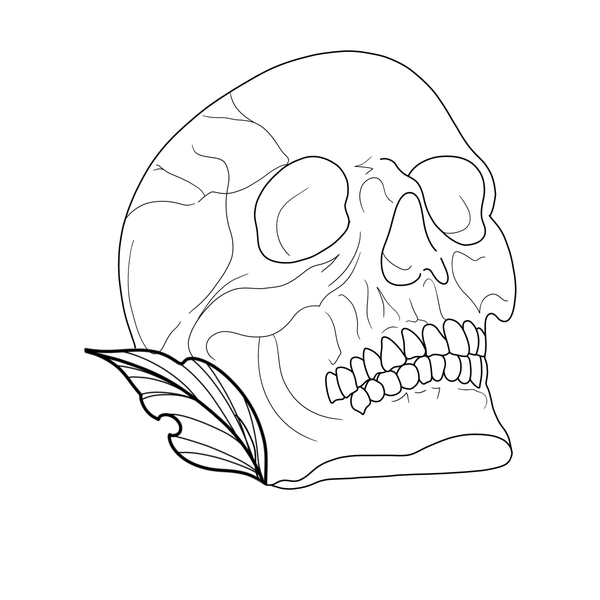
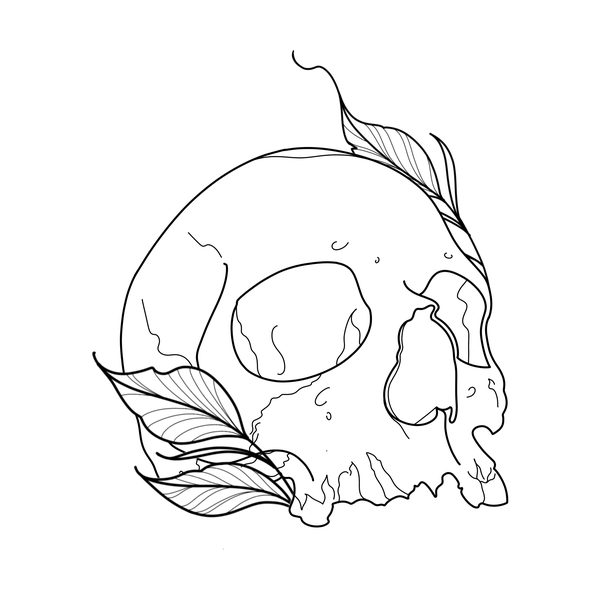
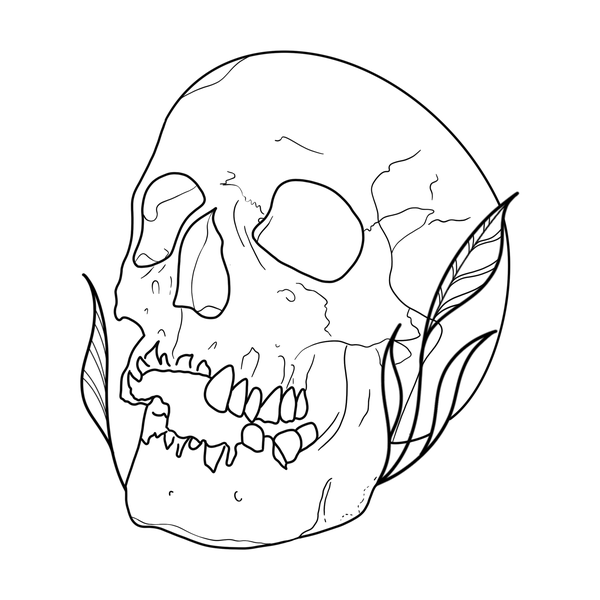
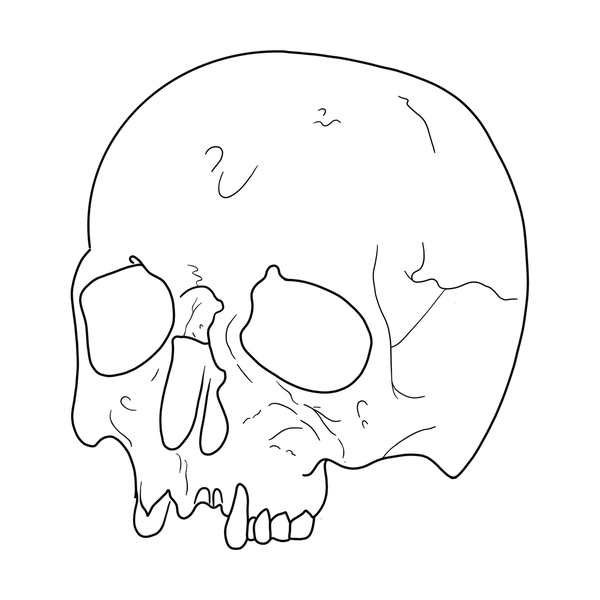
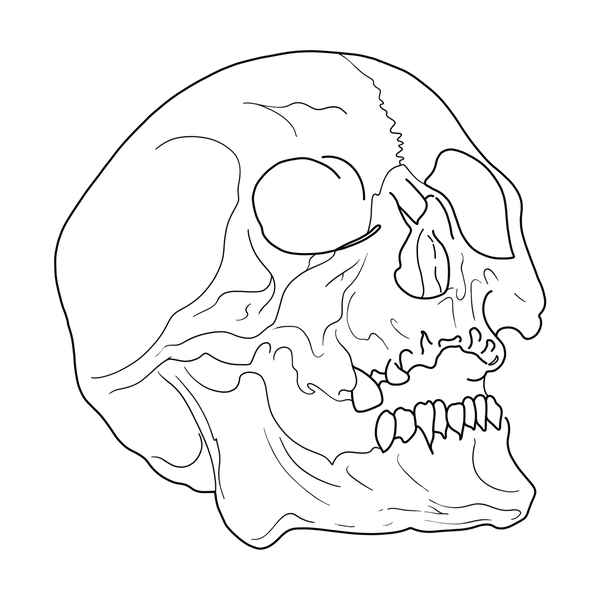
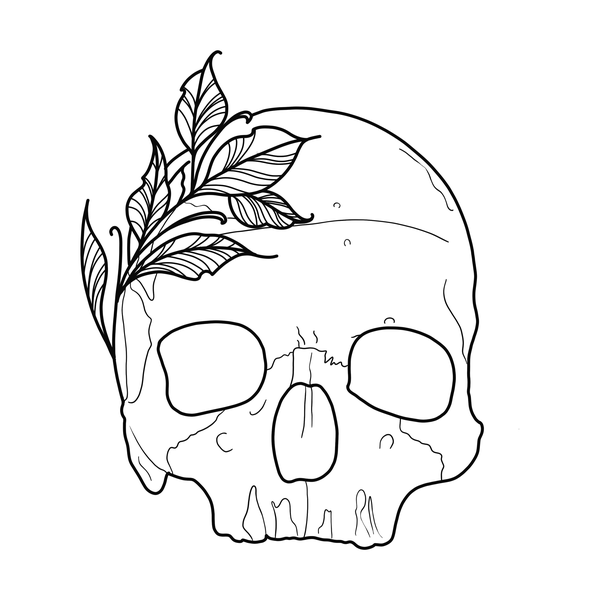
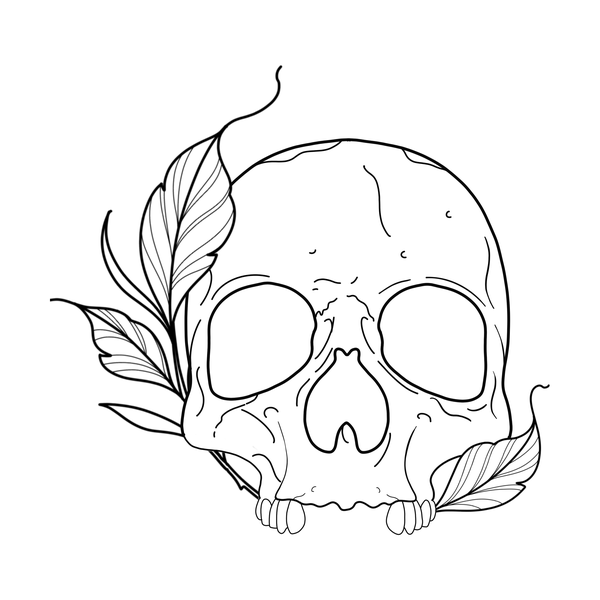
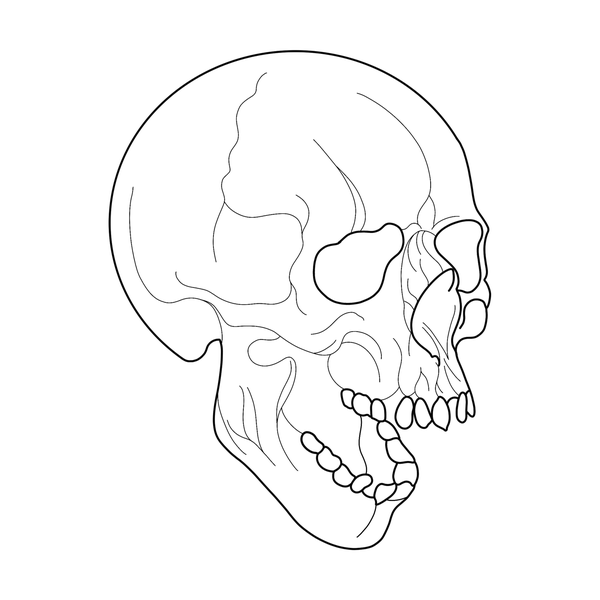
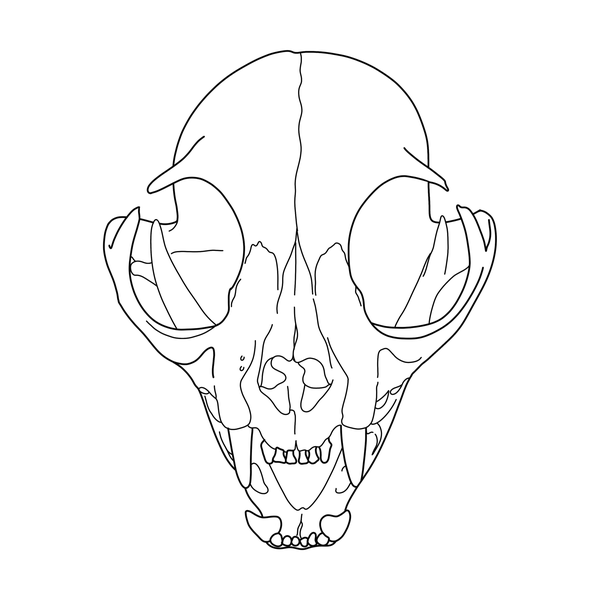
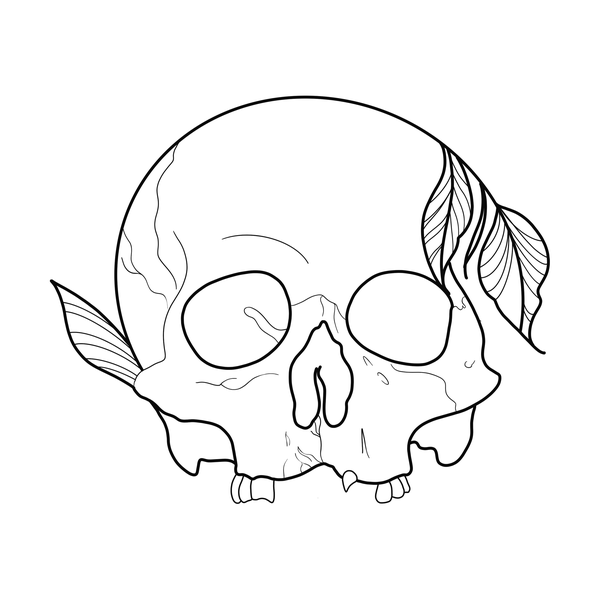
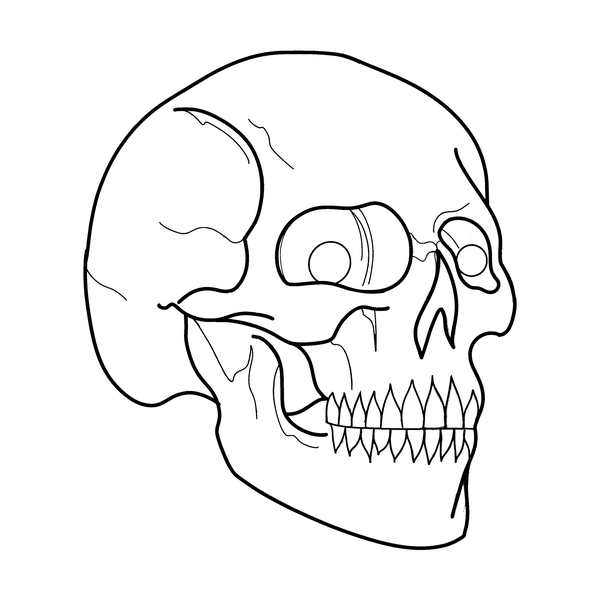
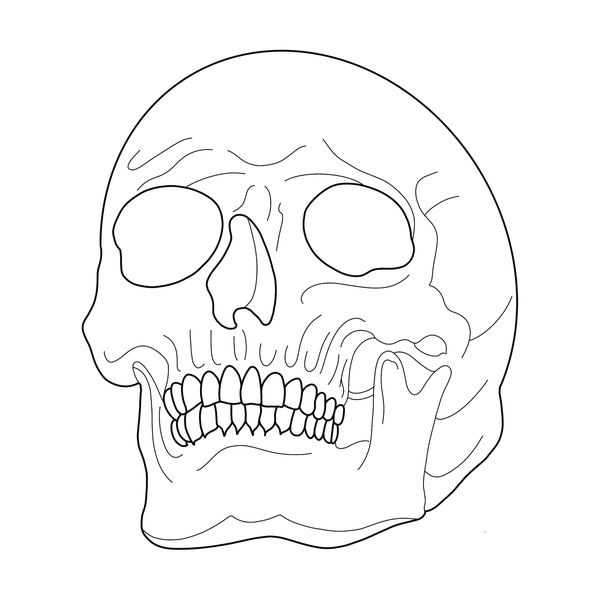
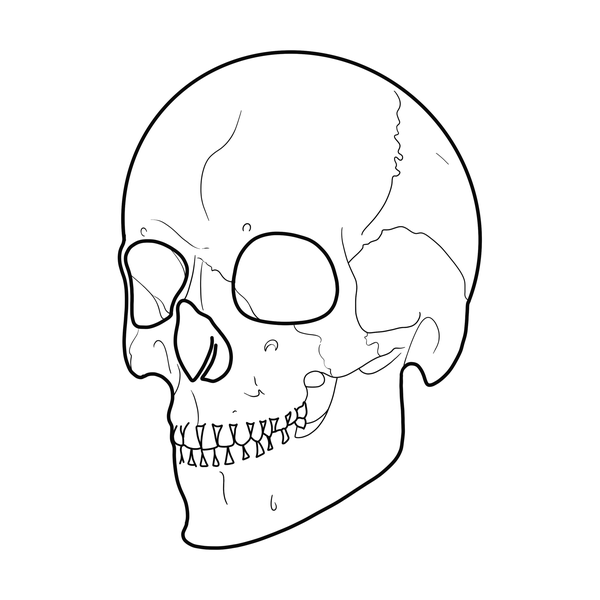
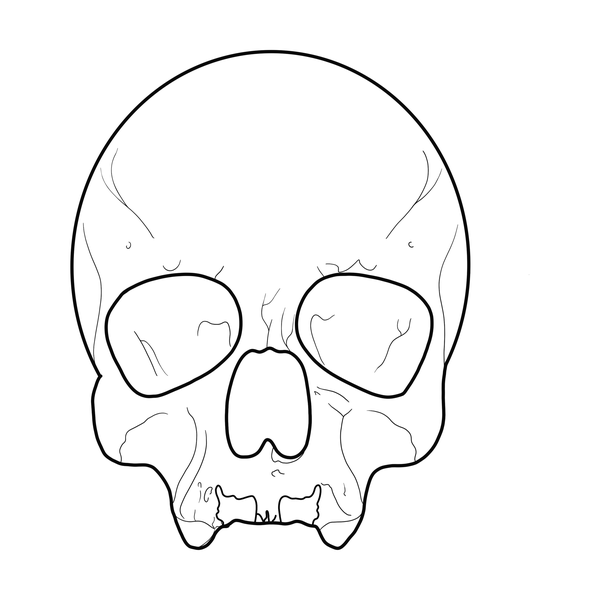
Skull flash designs
16 hand-drawn designs from our flash collection — book any one as-is, or use it as the starting point for a custom piece. Sizing, placement and linework dialed in at your consultation.
Four hundred years of the same picture
Skull and hourglass was a painting genre before it was flash.
Almost every pairing further down this page has a documented European ancestor. Knowing which one you are quoting will not change the tattoo much. It does change how you brief it, and it usually settles the question of whether the piece needs a banner.
The danse macabre
Late-medieval Europe produced painted and printed cycles in which skeletons lead away people of every rank: pope, emperor, merchant, ploughman. Hans Holbein the Younger cut a celebrated set of these designs in the 1520s, published as woodcuts in 1538. The argument being made was levelling. Death does not check your standing first. A crowned skull is still making that argument, and clients who want the crown usually mean exactly this even when they cannot name it.
Vanitas still life
Dutch and Flemish painters of the 1600s built an entire genre around one table. A skull, a snuffed candle, a pocket watch, books, a soap bubble, fruit going over. Look at the eight pairings below and you are looking at that table broken into parts. Skull and hourglass, skull and clock, skull with a rose past its best. If you want the contemplative reading rather than the declarative one, you are asking for a vanitas, and saying so to an artist gets you a better composition.
Worn, not only looked at
Rings, pendants and watch cases carrying skulls, coffins and hourglasses circulated in Europe from the sixteenth century onward, and Victorian mourning jewellery carried the same imagery forward with hair, jet and inscribed dates. The idea of keeping a small skull on your body as a private reminder is not a tattoo invention. It is one of the oldest uses the image has, which is worth remembering if you are being talked into something bigger than you wanted.
Americana simplified on purpose
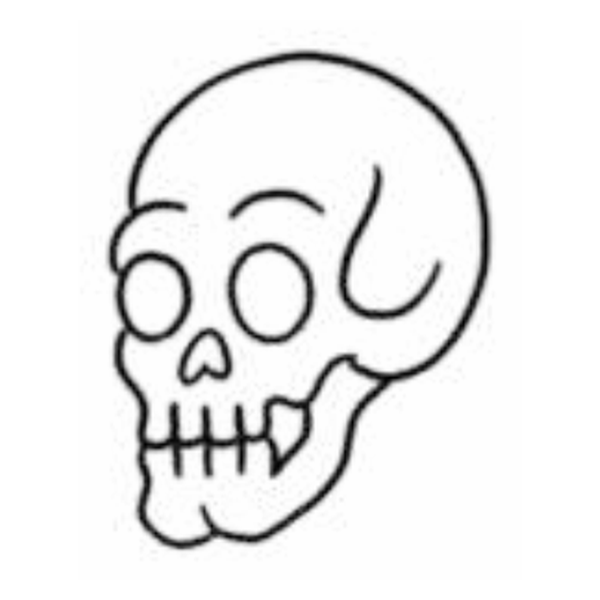
The Traditional skull is deliberately not anatomical. Norman Collins, working in Honolulu as Sailor Jerry, and the flash tradition around him cut the thing down to a squared jaw, two triangular voids, a row of teeth and a heavy outline. That is a solution to the anatomy problem, not a failure to attempt it. Those skulls still read at forty years precisely because they threw away the information that would not have survived anyway.
12 design directions
Twelve concrete directions Apollo artists build skull tattoos around.
Skulls have been stencilled into human skin longer than most symbols on earth. Pre-contact Polynesians carved them into bone. Medieval European woodcuts stamped them onto plague pamphlets. Sailors wore them as insurance against a sea that took more than it gave. Twelve directions cover what clients actually request.
Traditional Americana skull
Sailor Jerry flash · canonical
The bedrock. Bold black outline, limited palette (red, green, yellow, occasional blue). Squared jaw, deep triangular eye sockets, teeth rendered as a row rather than individual molars. The most-stencilled skull in American tattooing — the design was engineered to age on skin for 40 years, and it does. Often paired with a banner reading DEATH, MOM, LOVE, or a name.
Anatomical medical skull
Bone · not symbol
Photorealistic rendering, reference-accurate, sutures and foramina in the right places, teeth individually modelled. This style rewards artists who can handle realism; it punishes ones who can’t, because the eye knows what a skull is supposed to look like. For medical professionals, anatomy enthusiasts, or clients who find the skull beautiful as an object.
Sugar skull (Calavera)
Día de los Muertos · Mexican tradition
Colorful, floral, ornate, with decorative patterns across forehead and cheekbones and flowers where the eyes would be. Sugar skulls come from a specific Mexican tradition — made from sugar for Día de los Muertos to honor deceased relatives. The tattoo carries that weight. Cultural-sensitivity conversation required. Strongest on thigh, shoulder, or chest where the color can land.
Skull and rose
Memento mori classic
The most-requested skull composition in the shop, and probably in the world. Rose as beauty, skull as impermanence, the two together as the whole deal. Works in every style: Traditional, Neo-Traditional, Blackwork, Fine Line, Realism. If you can’t decide what style you want, this composition looks right in all of them.
Skull with crown
Power · mortality of kings
Dark art, power, kings-will-die — style depends on the rendering. A jeweled gothic crown reads as memento mori for monarchs; a rougher, thornier crown reads closer to nothing lasts. Works particularly well in blackwork where the crown’s architecture can carry weight against a simpler skull.
Grim reaper skull
Death personified
Hooded skull with scythe — the personification of death itself. Can be rendered as just the head and hood (4–6 inches, more symbol than scene) or as the full cloaked figure with scythe in hand (6–12 inches, more narrative). Lives in Traditional style or dark-art style depending on the artist.
Pirate skull / Jolly Roger
Nautical · outlaw · flash classic
Skull and crossbones, often with pirate hat, bandana, or eye patch. One of the oldest tattoo motifs in Western sailor tradition, and the modern version still carries that lineage. Reads as rebellion, outlaw, or “I grew up on treasure island books” depending on the rendering. All three are legitimate readings.
Blackwork / illustrative skull
Medieval bestiary · engraved look
Ink-heavy, architectural, medieval-bestiary or engraving-inspired. No gray wash, no color — pure black line and solid fill, often with decorative patterns, ornamental framing, or heraldic elements. Pulls from Albrecht Dürer, medieval memento mori, and contemporary blackwork artists. If you want a skull that looks like it came out of a 15th-century manuscript, this is the direction.
Fine line anatomical skull
Single-needle · botanical style
The fastest-growing skull request in the shop over the last three years. Delicate single-needle work, detailed line rendering, no heavy fill — the skull becomes a botanical illustration rather than a traditional tattoo. Sits comfortably next to fine-line florals, moons, and script. Reads as contemporary rather than classic.
Skull + serpent
Gothic · temptation · rebirth
A snake winding through an eye socket, around the jaw, or coiled around the cranium. Gothic style, heavy symbolic weight — the serpent reads as temptation, rebirth, wisdom, or poison depending on the rendering. Works particularly well in blackwork and neo-traditional; the snake’s form gives the composition movement the skull alone doesn’t have.
Skull with botanical overgrowth
Nature reclaiming · contemporary
Vines threading through eye sockets, flowers blooming from the cranium, mushrooms sprouting from the jaw. A design direction that’s grown up alongside the fine-line movement and the dark-cottagecore aesthetic. Reads as memento mori with softer edges: everything dies, and then something grows out of it.
Skull smoking / skull with joint
Counter-culture · ironic · flash tradition
A skull with a cigarette, cigar, joint, or pipe, usually rendered in Traditional or Neo-Traditional style. The humor is the point — a dead thing enjoying a vice — and the design only works if the artist leans into the joke rather than playing it straight. Sailor Jerry made these. Apollo still makes these.
The details
Five elements that separate good skull work from bad.
Eye sockets, teeth, cracks, proportion, and the nasal cavity. Each is small. Together they decide whether your skull reads as skull or as cartoon-skull-shaped-object.
Eye socket treatment
Empty black (classical memento mori), shadowed depth (realism style), or filled with contents — flowers, snakes, roses, flames. The eye socket is the first thing the viewer reads. Decide what it says.
Tooth rendering
Solid ivory (clean), stained (aged), missing teeth intentional (narrative), cracked or chipped (weathered). Teeth as a row vs. individually modelled is a style-style question — Traditional handles the row, Realism demands the individual.
Cracks & fractures
Period detail. Hairline cracks on the cranium, chipped zygomatic arch, missing mandible. Adds age and narrative. Overdone reads as costume damage; underdone misses the point. The tattoo artist’s judgment call.
Scale and proportion
Zygomatic arches, mandible, cranium ratio. Real skulls have specific proportions — the mandible is roughly one-third the height of the whole skull, the cranium is two-thirds. Cartoon skulls flatten this; the flattening shows immediately in Realism work.
The hollow nose cavity
The triangular nasal aperture is one of the most distinctive features of a human skull. Rendered correctly, the viewer reads skull instantly. Rendered as two round nostril-style holes, the viewer reads cartoon. Small detail, massive legibility consequence.
The thirty-year read
A skull is mostly big shapes, which is why it outlasts most of a collection.
Ink spreads slowly under skin for as long as you own the tattoo. That spread ruins marks sitting close together and barely touches marks that are not. A skull happens to be built almost entirely out of the second kind, with two exceptions we will name.
Broad masses do not merge into each other
The cranium is one wide light plane. The orbits and the nasal aperture are wide dark voids. Almost nothing on a skull sits a millimetre from anything else, so there is very little for the spread to close up. Compare that with a human portrait, which stays a specific face only while its subtle mid-tone gradation survives. A skull needs three values landed in the right places. That is a much lower bar to still be clearing in 2056.
Teeth are the exception and the whole risk
Individually modelled teeth are a row of near-parallel lines a few millimetres apart with a light gap between each one. Those gaps are the first thing on the piece to close. Once they do, the row reads as a grey band with a dark line under it, and the skull loses its grin. This is the single most common way a small realistic skull fails, and it fails around year eight rather than immediately, which is why nobody warns you at the time.
Sutures are hairlines on the most stretched plane
The zigzag cranial suture lines are the finest marks on an anatomical skull and they run over the broadest curve of the drawing, where skin moves most. Under about six inches they are a liability rather than a detail. A realist worth booking will offer to leave them out before you have to ask, and will show you a healed piece where he did.
A committed socket stays a hole
An eye socket packed as flat saturated black will still read as an empty socket in thirty years, because solid black has nowhere to fade to that changes its meaning. A socket built out of soft grey gradient is relying on value differences that flatten over time, and it can drift toward looking like a shadow rather than a void. If the classical mortality reading is the one you want, ask for the sockets to be committed.
So a small skull is a different drawing
A two-inch skull is not an eight-inch skull reduced. It is a separate design with the tooth row treated as one shape rather than thirty-two objects, the sutures gone, and the sockets solid. Ask an artist for that drawing. Asking instead for the big one shrunk is how you end up with the smudge described in the mistakes section, and it is the most avoidable outcome on this page.
Six styles
Every style in tattooing has already taken a pass at this shape.
The skull is the most heavily reinterpreted motif in Western tattooing. Every style has taken a pass at it — which means the first decision is not “do I want a skull” but “which skull tradition am I entering.”
American Traditional
Sailor Jerry flash · canonical
Bold 3RL outlines, flat black fills, limited palette, banner across the forehead or under the mandible. Composition frontal, symmetrical, graphic — built to read at ten feet and hold for 40 years. The safest structural bet: bold outline and saturated fills age predictably. If you’re unsure which style to pick, start here.
Neo-Traditional
Traditional’s vocabulary, expanded sentence
Outlines still present but variable-weight, palette opens into jewel tones and muted earth, shading becomes dimensional. Ornamental flourishes — gems, filigree, art-nouveau line work — frame the skull. Rewards scale; under 5 inches the ornamental detail collapses. Expect 2–3 sessions for anything larger than a forearm placement.
Realism
Photorealistic anatomy
Shadow-heavy, often grayscale, occasionally with a single color accent. No outline — form is rendered entirely through value. The most artist-dependent style. A middling realist produces a muddy gray blob in 5 years; a top-tier realist produces a piece that still holds structural detail at 15. Book the artist, not the style.
Blackwork / Dark Art
Architectural · engraved
Draws from woodcut, etching, medieval memento mori iconography. Solid black negative space is a design element, not a fill gap. Dotwork shading, hatching, and stipple create depth without color. Ages exceptionally well — no color to shift, no fine gray to blur — but demands a tattooer with genuine blackwork discipline.
Fine Line
Hairline · delicate · 2020s style
Grew out of the 2020s LA fine-line wave and now dominates intimate placements. Trades anatomical weight for elegance — reads as a suggestion of a skull rather than an assertion. Ages faster than bold work. Expect visible softening at 10 years and potential touch-up at 15. For clients who want the motif without the declarative weight.
Sugar Skull / Ornamental (Calavera)
Mexican folk tradition
Rooted in Día de los Muertos. Colorful, floral, with specific compositional rules — forehead flower, eye-socket rosettes, symmetrical web pattern across the cranium, often a named banner. A culturally specific style. If you’re outside the tradition, the respectful path is to book a tattooer who works inside it and understand what you’re wearing.
Five placement styles
Placement changes what the skull says.
Forearm reads declarative. Ribcage reads private. Hand reads committed. The same skull on two different placements is not the same tattoo.
Bold / declarative
Forearm · bicep · chest
The skull’s native territory. Flat planes, stable skin, high daily visibility, compatible with every style. Forearm reads in short sleeves; chest stays private unless chosen. Heals cleanly, ages predictably, accepts touch-ups without distortion. If you haven’t picked a placement, start here.
Large statement
Thigh · back · sleeve
Where skull compositions scale into full scenes. Thigh is the most forgiving large-format canvas on the body — low sun exposure, stable skin, accommodates realism and blackwork at 8+ inches. Back and sleeve commit you to multi-session work but give the motif room with banners, botanicals, and secondary elements.
Classical
Shoulder blade · upper back
The traditional memento mori placement. Semi-private, symmetrical body plane, historically the home of religious and mortality-themed work. Handles 5–8 inch compositions cleanly. Pairs well with banner text and botanical framing. Lower visibility than forearm but high impact when shown.
Intimate
Inner forearm · ribcage · sternum · inner bicep
For clients who want the motif as personal rather than declarative. Ribcage is the most painful placement on this list and most prone to blowout — book an experienced tattooer and expect a longer healing window. Inner forearm reads only when you choose to show it. Fine line and small Traditional work live here.
Extreme-visible
Hand · neck · face
Require commitment in the literal sense: visible in every interview, family event, passport photo for the rest of your life. Apollo tattoos hands and necks for clients who have existing visible work and understand employment, social, and healing realities. Face work is handled case-by-case. Not a first tattoo. Not a decision to make at the end of a consultation.
Scale honesty
Four tiers. Skull detail scales with real estate.
Under 3 inches, most skulls flatten into cartoons. Plan around 4–6 inches minimum for anything with teeth, sutures, or anatomical shading.
Pricing, honestly
Skull quotes track session count, not the image.
Hourly with us is $100 with Blue, Hannah or Rick and $350 with Raa or David; a half day runs $400 and a full day $600. What a given skull actually costs depends on artist, size, design and placement, and we quote it against the finished sketch rather than the idea you walked in with.
Eight compositional pairings
What sits next to the skull decides which of the six readings people see.
The pairing changes the reading more than the rendering does. Eight classical pairings, each landing the skull in a different category.
Skull + rose
Memento mori classic. Rose as beauty, skull as impermanence. Every style. The most-requested skull composition in the world.
Skull + snake
Gothic style. Snake through eye socket or coiled around the cranium. Reads as temptation, rebirth, wisdom, or poison depending on rendering. Movement the skull alone doesn’t have.
Skull + crown
Power, kings-will-die, nothing-lasts. Jeweled for monarchy memento mori; thorny for something rawer. Architecture of the crown gives blackwork something to carry.
Skull + banner
Named memorial. DEATH, MOM, LOVE, or a specific name. Traditional flash lineage. The banner sits across the forehead or under the mandible.
Skull + butterfly
Transformation + mortality. The butterfly on the cranium or hovering above it. Contemporary style. Reads as the soul leaving the body, or the changing self that outlasts the bone.
Skull + clock / hourglass
Time + death. Classical memento mori — the hourglass with sand running out, the clock with hands near midnight. Realism and Neo-Traditional carry it best.
Skull + raven / crow
Dark omen. The raven on the cranium, the crow with the skull in its beak. Gothic style with specific literary weight (Poe, Norse tradition). Works in blackwork and illustrative.
Skull + botanical
Reclamation. Vines, flowers, mushrooms growing from the bone. Nature reclaiming. Contemporary 2020s style. The softest memento mori reading.
Cultural respect
On sugar skulls. Handle honestly.
Día de los Muertos sugar skulls come from a specific Mexican Indigenous-Catholic tradition with deep cultural significance. The imagery is recognizable globally — which is part of the problem. Recognizability is not the same as permission.
The heritage question
Día de los Muertos sugar skulls are part of a Mexican Indigenous-Catholic tradition with deep cultural significance. If you have Mexican heritage and personal connection — family altars, ofrendas, a grandmother who taught you the holiday — the design is yours to wear.
Without the connection
If you don’t have Mexican heritage and personal connection, know you’re using a cultural symbol from outside your heritage. That choice has a weight some people will read and respond to. Recognizability is not the same as permission.
Artist-side judgment
Some Mexican-heritage and Chicano-tradition artists will decline sugar-skull work for non-Mexican clients on principle. Some will work with you on a respectful adaptation — often one that drops the most sacred elements and keeps the aesthetic ones. Both positions are legitimate.
The right approach
If you want a sugar skull and you’re not Mexican, consult Mexican-heritage or Chicano-tradition artists specifically. Have the conversation honestly. Let the artist’s judgment guide the outcome. Don’t route around the conversation by booking the first artist who says yes without asking.
Consultation
Six things we settle before a pencil moves.
We would rather push a consultation longer than book a tattoo that answers the wrong question well.
Which of the six readings?
Not “I like skulls.” Which one — memento mori, rebellion, pirate, Día de los Muertos, medical, or gothic? If you can’t answer, pause the design conversation and have the reading conversation first.
Human, animal, or icon?
A human anatomical skull, a ram skull, a deer skull, and a stylized sugar-skull icon are four different tattoos with four different reference bases. Nail the species before we nail the style.
Solo skull or composition?
A skull alone lives or dies on the linework and shading. A skull inside a composition — snake, rose, hourglass, banner, botanicals — gives the eye context and tells the story faster.
How big can you commit?
Skull detail scales with real estate. Under 3 inches, most skulls flatten into cartoons. Plan around 4–6 inches minimum for anything with teeth, sutures, or anatomical shading.
Visible, intimate, or extreme?
Forearm and bicep are forgiving. Hand, neck, and face are commitments that change how the world reads you at a glance. Pick placement with eyes open.
Cultural-tradition specific?
Sugar skull, pirate, Celtic, Tibetan kapala — each has protocols. Flag the tradition now so we route you to the right artist.
Nail the species before we nail the style.
A skull with a joint is a tattoo that knows it’s a tattoo. Lean into the joke.
The reading you don’t explain to anyone — that one is yours alone.
Common mistakes
Eight ways a skull goes wrong, and what stops each one.
Nearly every skull we get asked to fix or cover fell into one of these eight. Six of the eight are decided before anybody switches a machine on, which is the good news.
The unexamined sugar skull
Booked without the heritage conversation. Regretted after the first uncomfortable comment from a stranger in a grocery store. Fix: have the conversation first. Route to a heritage artist if you’re going to book the piece.
Sutures and teeth crammed into two inches
A 2-inch skull with sutures, teeth, and jaw detail. The line weight required for that detail doesn’t fit inside 2 inches. Tattoo ages into a smudge within 5 years. Fix: go bigger or go simpler.
The wrong-style mistake
Watercolor skulls rarely work. The structural weight of the skull fights the softness of the technique. Traditional, Neo-Traditional, Realism, and Dotwork all carry skulls well. Fix: match style weight to subject weight.
The “skull just looks cool” default
The tattoo without a reading. Fine at 22, tiring at 35. Fix: pick one of the six readings and own it. A skull without a reading is a shape, and shapes age badly.
The hand/neck regret
Visible placement chosen for the aesthetic, not for the life. Changes job interviews, family events, passport photos. Fix: test the commitment for 6 months before booking the placement.
The generic flash skull
Picked off a flash sheet, interchangeable with 100,000 others. Fix: custom at least the composition, even if the skull itself is traditional. Banner, placement, secondary element — make the piece yours.
Judging a bone-renderer off day-one photos
Choosing an artist from same-day photos that look crisp. Fix: ask for healed work at 6 and 12 months. Skulls live or die in the heal.
The anatomical-reference mistake
Using a cartoon or video-game skull as reference for a Realism piece. The brain knows it’s wrong even when it can’t articulate why. Fix: match the reference to the style. Realism needs anatomical reference.
Your first skull
Traditional, 4–5 inches, forearm, simple pairing.
The Apollo baseline. Seven decisions the first skull should make on purpose.
Three personalization layers
What makes this skull yours, not a stock skull.
Style, personal element, private meaning. Most clients stop at layer one. Layer three is where the piece lives long-term.
The bone itself — style, size, plane
Style, size, placement. The public-facing layer. This is what strangers see. Traditional, Neo-Trad, Realism, Blackwork, Fine Line, or Calavera. Forearm, chest, thigh, back.
What you put in the sockets, or the banner
What the skull marks and why — a date in the banner, a flower that was your grandmother’s, the species of the animal you hunted with your father. The layer friends ask about.
The reason you left the sockets empty
The reading you don’t explain to anyone. The line from the poem. The reason the eye sockets are empty instead of filled. Yours alone. The line that keeps the tattoo yours for the life of the skin.
When to wait
Four reasons we would rather you came back in a month.
The needle is permanent. The decision doesn’t have to be rushed. If any of these apply, go home, think, come back.
Cultural reading without connection
If you want a sugar skull or a Tibetan kapala and don’t have heritage or practice behind it, wait until you’ve had the conversation with a heritage artist.
Undecided on reading
If you can’t pick one of the six readings, the tattoo isn’t ready. Sit with it another month. A skull without a reading is a shape.
Visible placement without commitment check
Hand and neck skulls change job interviews. Run the thought experiment for 6 months first. Can you live with this in the wedding photos, the passport, the job interview?
Within 6 months of a significant death
Memorial skulls made in raw grief often get redone. Wait for the grief to settle into something you can draw from steadily. The skull will still be there.
FAQ
Eight things people ask us across the desk about skulls.
Eight questions covering meaning, sugar-skull cultural respect, style match, scale, placement, pricing, small-scale work, and the skull + rose classic.
What does a skull tattoo mean?
Six primary readings. Memento mori — the classical Western reading, the skull as reminder of mortality, paired with hourglasses and wilted roses, rendered in Realism and Dotwork. Rebellion — the punk, biker, metal style, bold-line Traditional. Pirate — the Jolly Roger lineage, nautical outlaw tradition. Día de los Muertos (sugar skull / calavera) — Mexican Indigenous-Catholic tradition, NOT Halloween, carrying specific cultural weight. Medical / anatomical — the skull as study object, popular with medicine and science professionals. Gothic / dark art — aesthetic style rather than philosophy. Pick one reading before you pick the design. A skull without a reading is a shape, and shapes age badly.
Should I get a sugar skull tattoo if I’m not Mexican?
Depends on the conversation you’re willing to have. Día de los Muertos sugar skulls (calaveras) are part of a specific Mexican Indigenous-Catholic tradition with deep cultural weight — they’re made from sugar to honor deceased relatives, not decorative objects. If you have Mexican heritage and personal connection to Día de los Muertos (family altars, ofrendas, a grandmother who taught you the holiday), the design is yours. If you don’t have that connection, recognize you’re using a cultural symbol from outside your heritage. Some Mexican-heritage artists will decline sugar-skull work for non-Mexican clients on principle. Some will work with you on respectful adaptation. Consult Mexican-heritage or Chicano-tradition artists specifically. Don’t route around the conversation by booking the first artist who says yes without asking.
What style works best for a skull tattoo?
Depends on the reading. American Traditional is the canonical style — bold outline, flat fills, ages 40 years, pairs with a banner. The safest structural bet. Neo-Traditional for ornamental compositions — expanded palette, dimensional shading, gems and filigree. Realism for anatomical study pieces — photorealistic, 6+ inches, book the artist not the style. Blackwork for medieval-bestiary style — engraved look, ages exceptionally well. Fine Line for contemporary small-scale work — 2–5 inches, inner forearm and behind-ear placements. Sugar Skull / Ornamental for Mexican folk-tradition work with heritage artists. Match the style to the reading: memento mori wants Realism or Dotwork; rebellion wants Traditional; gothic wants Neo-Traditional or Blackwork.
How big should a skull tattoo be?
Depends on style and composition. Under 3 inches: Fine Line only. Anatomical detail collapses below this scale. Traditional outline can work at 2.5 inches but loses the teeth rendering. 3–5 inches: Traditional and Fine Line sweet spot. Banner pairings possible. Forearm-friendly. 5–8 inches: Neo-Traditional, Sugar Skull, Pirate compositions. Room for multi-element composition. Thigh, upper arm, chest panel friendly. 8+ inches: Realism, Blackwork, statement compositions. Back panels, full sleeves, multi-session commitments planned from day one. The honest rule: skull detail scales with real estate. If you want sutures, teeth, and shading, plan 4–6 inches minimum.
Where should I get a skull tattoo?
Depends on how you want it read. Bold and declarative (forearm, bicep, chest) — the skull’s native territory, flat planes, stable skin, compatible with every style. Large statement (thigh, back, sleeve) — where compositions scale into full scenes, thigh is the most forgiving large-format canvas. Classical (shoulder blade, upper back) — traditional memento mori placement, semi-private, symmetrical body plane. Intimate (inner forearm, ribcage, sternum) — for clients who want the motif personal rather than declarative. Extreme-visible (hand, neck, face) — commitment in the literal sense, visible in every interview and family event for the rest of your life. Not a first tattoo. Not a decision at the end of a consultation.
How much does a skull tattoo cost?
Session count sets the number. A small Traditional or fine-line skull at 3–5 inches is a single session. A mid-scale neo-traditional or sugar skull is usually two. Realism or dark art at full scale is multi-session, because anatomical rendering is where the hours go. Back panels and sleeve anchors are multi-session from the first appointment. Every piece is quoted from consultation — scale, style complexity, color vs. black-and-gray, session count, and artist seniority all shift the number. Hourly rates vary by artist. These are total-price estimates for finished work at a senior LA studio.
Can a skull tattoo be small?
Yes, but only in Fine Line style. Under 3 inches, Traditional skulls lose their teeth rendering and Realism completely collapses. Fine Line single-needle work at 2–5 inches can carry a skull cleanly — hairline detail, no heavy fill, the skull becomes more botanical illustration than declarative flash. Most common placements: inner forearm, behind ear, sternum, spine, inner bicep. Caveat: Fine Line ages faster than bold work. Expect visible softening at 10 years and potential touch-up at 15. For clients who want the motif without declarative weight, Fine Line is the right style. For clients who want longevity above all else, stay at 4 inches and go Traditional.
What does skull + rose mean?
Memento mori in its classic form. The rose is beauty, the skull is impermanence, the two together are the whole deal — everything beautiful is mortal, and mortality is what makes beauty matter. The most-requested skull composition in the world, and probably in this shop too. Works in every style: Traditional (the Sailor Jerry canon), Neo-Traditional (expanded palette and ornamental framing), Blackwork (architectural and engraved), Fine Line (delicate botanical style), Realism (photorealistic weight). Scale 5–10 inches depending on how much you want the rose to do. Forearm, bicep, chest, thigh. If you can’t decide what style you want, this is a composition that looks right in all of them.
Know your reading?
Name the reading, be honest about the calavera question, and give the bone enough room to stay bone.
Anatomy first, style second. Zygomatic width and orbital depth are what make it read as bone, and no amount of shading rescues them once they're wrong. Bring the reading you want: memento mori, rebellion, pirate, calavera, medical or gothic.