Tattoo Ideas
Wolf
Fur direction is what makes it a wolf instead of a husky, and husky reference is what walks through the door most weeks. Twelve directions from black-and-grey portraits to Nordic geometric work and Fenrir, plus an honest note on the lone-wolf reading: the researcher whose captive-pack study started it spent decades asking people to drop the idea.
Book a consultationThe browsing framework
Five forks, asked in the order that actually saves you money.
Every wolf consult here runs the same five forks, in order, because each one closes off roughly half the remaining options. Answer them before you arrive and the sketch we put in front of you is the second draft rather than the first.
Realistic portrait or geometric abstraction?
This is the first fork and it decides everything downstream — chair time, artist, size floor, budget. A realistic wolf portrait needs 5 inches minimum and an animal-portrait specialist. Geometric or blackwork wolves hold smaller and read at distance. We don't blend the two well on one canvas — pick a side before the consult.
Solo wolf or pack composition?
A single wolf carries portrait weight and personal symbolism cleanly. A pack — two to five wolves — tells a family story but needs real estate: outer thigh, full back panel, ribs-to-hip. We've turned away more pack requests booked for forearms than we can count. Decide the story before the placement.
What's the wolf actually marking?
Resilience after a hard stretch, protection of someone you love, a loss you're carrying, family bloodline, or a specific animal you knew — these produce visually different tattoos. We ask this directly at consult because a memorial wolf and a protection wolf aren't drawn the same way. Vague 'I just like wolves' stalls the design.
Visible daily or private to you?
Forearm and calf wolves get seen and commented on — be ready for that conversation at every dinner. Ribs, upper thigh, shoulder blade, and inner bicep stay yours. Private placement changes what we draw; you can go more personal, more detailed, more expensive without it becoming public identity.
Can you commit to 5+ inches?
Wolf faces below five inches lose the eyes within six years — the detail that carries the whole piece. If you want under that size, we steer you toward a geometric silhouette, a paw print, or a howling profile at distance. We won't book a tiny realistic wolf portrait. That's a studio line.
We won't book a tiny realistic wolf portrait. That's a studio line.
The most-tattooed wolf in America is also the one most often done badly.
Real wolves aren't solitary. Lone-wolf is a literary trope, not biology.
Flash · ready to ink
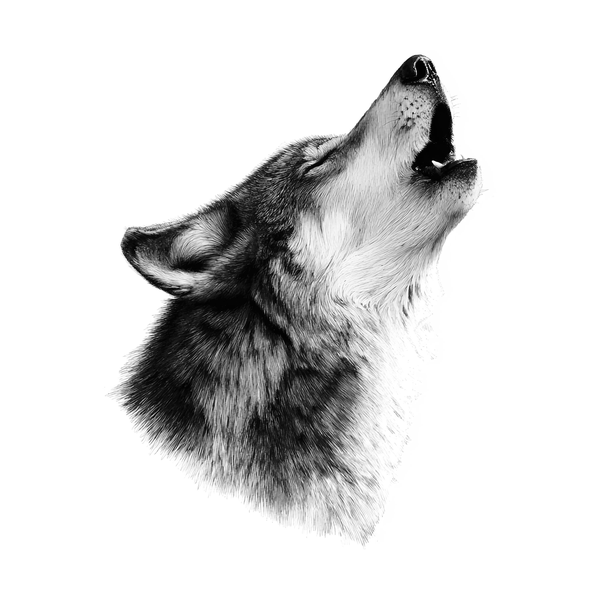
Wolf flash designs
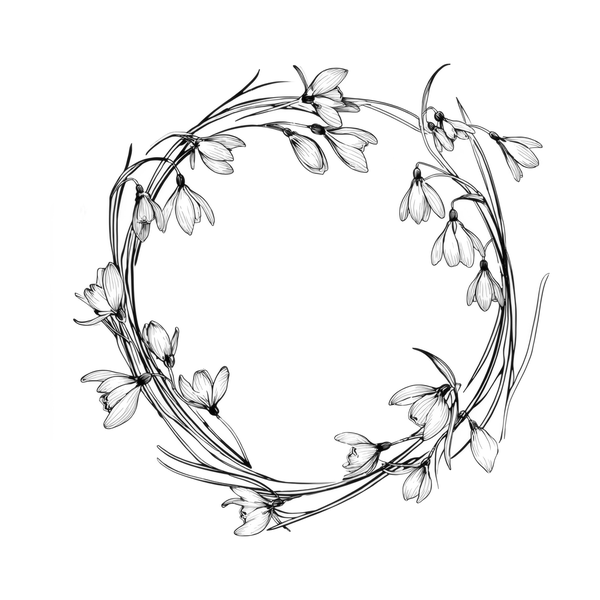
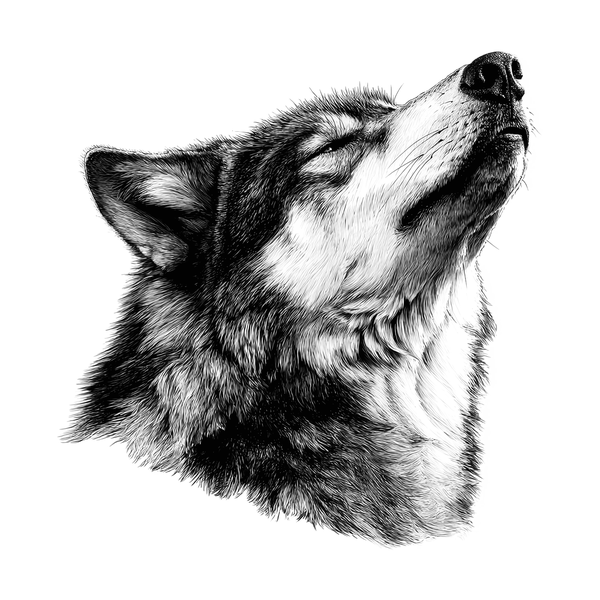
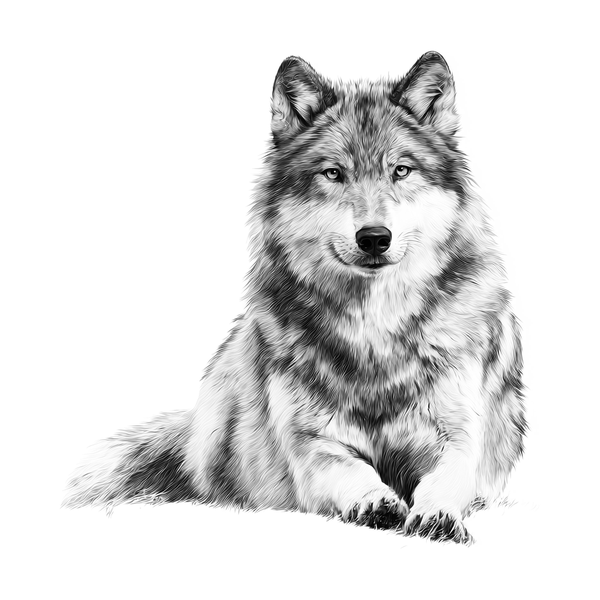
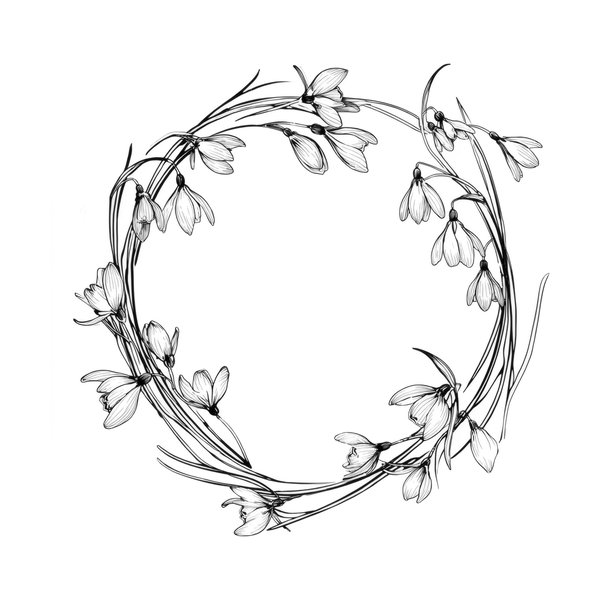
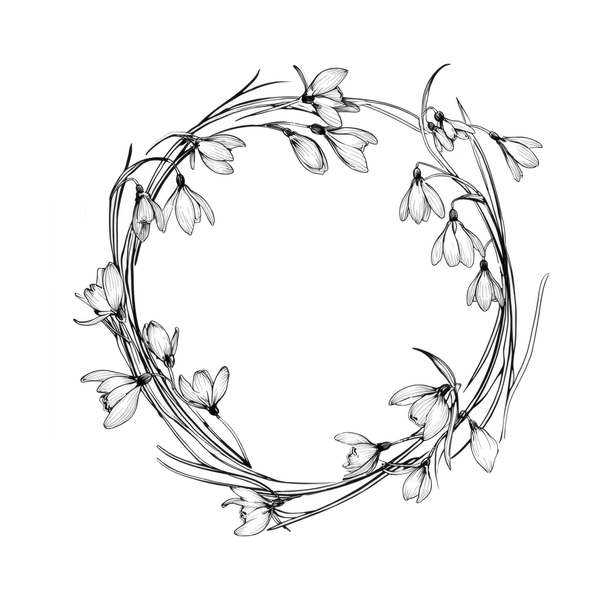
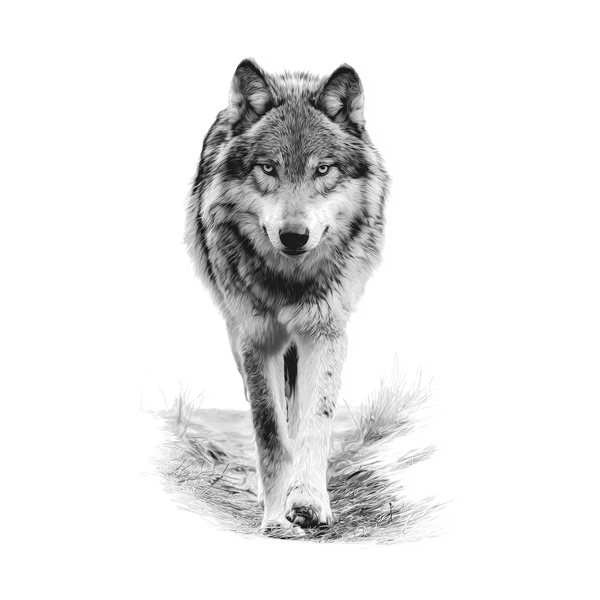
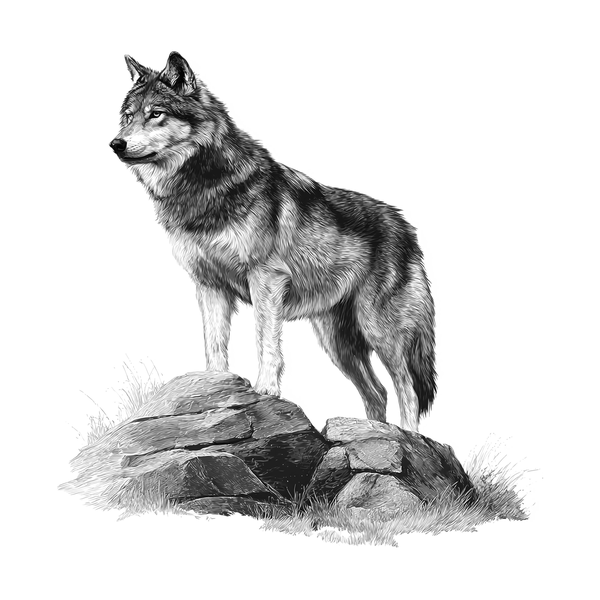
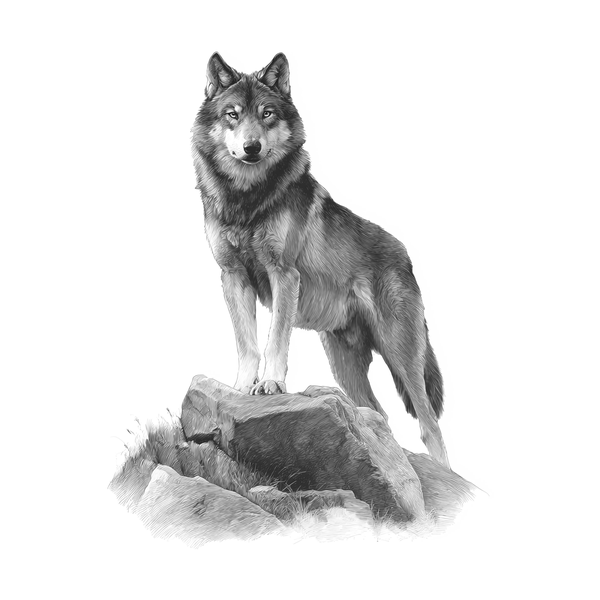
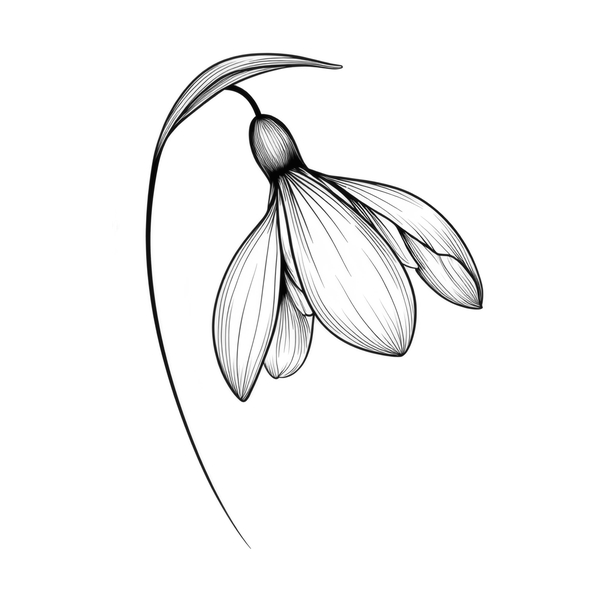
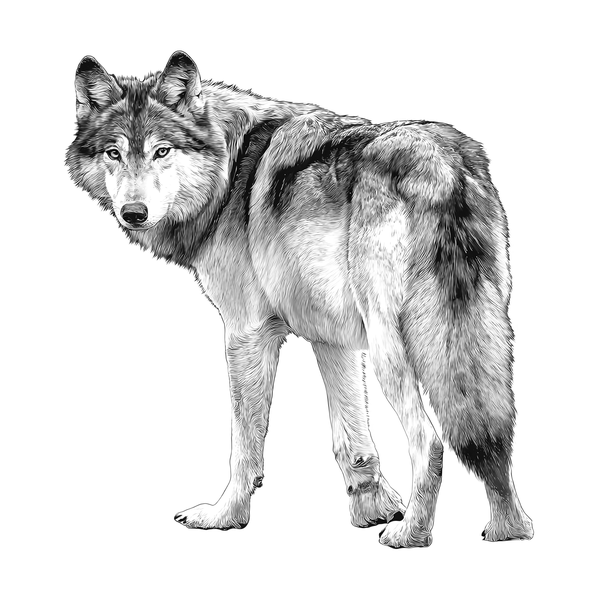
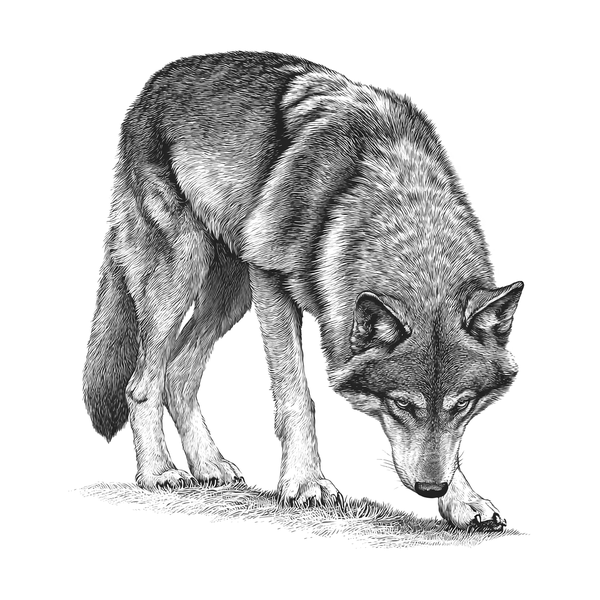
15 hand-drawn designs from our flash collection — book any one as-is, or use it as the starting point for a custom piece. Sizing, placement and linework dialed in at your consultation.
The reference problem
Half the wolf reference folders we get are full of huskies.
This is not a criticism. Search results for 'wolf' are packed with sled dogs and wolfdogs, and the two animals genuinely look alike until you know the five places they differ. Get one of these wrong and the finished portrait reads as somebody's malamute. Get all five right and it reads as a wolf even in silhouette.
The eye colour tell
Adult grey wolves have yellow, amber or gold-brown eyes. Blue eyes in an adult are a dog trait, and a Siberian husky trait in particular. Wolf pups are born with blue eyes and lose them within the first months. So the ice-blue-eyed wolf that half the internet is built on is, biologically, a husky. We will still tattoo blue eyes if you want them and you know that is the choice you are making. What we will not do is let it happen by accident because a reference photo was mislabelled.
Muzzle length and the stop
A wolf's muzzle is long and runs into the forehead on a shallow slope. A husky has a shorter muzzle and a much sharper step where the nose bridge meets the skull, which reads as a more 'cute' face at any size. That step is the first thing an artist copies without noticing. On a five-inch portrait it is roughly the difference between a predator and a pet, and it is the change most often requested after the fact, when it is too late.
Ears, and how far apart they sit
Wolf ears are relatively small for the size of the head, thickly furred, rounded at the tip, and set fairly wide. Husky ears are taller, more sharply triangular, and sit closer together. Because ears are usually the highest point of a wolf portrait they carry a disproportionate amount of the silhouette. Fixing them is cheap at stencil and impossible afterwards.
The tail, if the tail is in frame
A wolf carries its tail straight, hanging down or held level. Huskies and malamutes curl the tail up over the back. This only matters on full-body compositions, walking poses and pack scenes, but on those it is the single clearest giveaway in the whole drawing and nobody catches it until a stranger points it out.
Fur direction, and the ruff
Fur is not texture. It is a set of flows. Short hair sweeps back off the nose, longer hair fans out and down from the cheeks into the cape over the shoulders, and the chest hair runs downward. An artist who renders fur as generic scribble in every direction produces something that looks soft and toylike, and it gets worse as the piece ages and the strokes merge. Ask to see the fur direction drawn on the stencil before it goes on your arm. Any animal-portrait specialist will already have done it.
12 design directions
Twelve wolves, and why none of them is a resized version of another.
Twelve compositional patterns cover almost every wolf we've booked in the last five years. They're not interchangeable — a realistic black-and-grey portrait and a geometric Nordic wolf aren't scaled versions of the same tattoo.
Realistic wolf head portrait
Black-and-grey photo-real, forward gaze
Our most-requested wolf and the one we're strictest about. A forward-facing wolf head in black-and-grey realism lives or dies on fur detail: individual whiskers, the slight wetness of the nose, the catchlight in the eye. We pack these with Fusion Gray Wash set, Eternal Graywash, and Solid Ink diluted for midtones. Anything under 5 inches collapses into a grey blob inside 6 years — we've seen it.
Howling-at-moon composition
The cliché, reworked
The most-tattooed wolf in America and the one most often done badly. We still take them — but we rework the composition. Instead of a tiny silhouette on a full moon, we pull the wolf forward in three-quarter profile, moon behind the shoulder as negative space, pine trees cropped at the frame. The howl works best when the jaw opens 30–40 degrees, not a cartoonish 90.
Geometric Nordic-triangular wolf
Blackwork linework inside a triangle or hexagon
The workhorse of the modern wolf catalog. A stylized wolf head — usually three-quarter or profile — built from straight lines, chevrons, and dotwork, contained inside an equilateral triangle or hexagon. Ages better than anything else on this list because there's no grey to blow out. We run these with a 7RL or 9RL. Clients who ask for a 'Viking wolf' almost always want this.
Wolf-pack formation
Three to five wolves in a composed scene
More ambitious than it looks. We arrange three wolves in a triangular composition — one forward, two flanking, sometimes a fourth reading away for depth. A full sleeve-panel or back-piece conversation, minimum 10 inches. Anything smaller and the wolves look like identical stamps. We often steer clients toward 'one wolf, one pup' or 'wolf with two ravens' instead — the odd-numbered non-matching composition reads better.
Snarling wolf
Teeth bared, three-quarter low angle
Rendered from a low upward angle so the jaw dominates, teeth and gums visible, ears pinned back. This is the one clients ask for when they mean 'I want the wolf to look tough.' We push back gently — a calm, direct-gaze wolf photographs better and ages better than a snarl because mid-tone gum tissue and wet canine highlights are the first details to go soft. If you insist, go 6 inches minimum.
Wolf-and-forest landscape
Full environmental scene, wolf in mid-ground
A small-to-mid wolf placed in a larger pine-forest or mountain scene, usually in blackwork or black-and-grey illustrative. Our approach: wolf at 25–35% of the total composition, never the focal center — the environment does the work, the wolf anchors it. Solid-black silhouette reads best at distance; detailed rendered wolf reads best up close. Pick one.
Norse Fenrir
The bound wolf of Ragnarök
Fenrir is Loki's son — the wolf bound by the dwarf-forged fetter Gleipnir, fated to kill Odin at the world's end. A legitimate Norse reference sourced from the Prose Edda, not pop-media decoration. We draw these as a chained, muscular wolf head with a broken chain, sometimes paired with a runic border in Younger Futhark. We don't mix Fenrir with Celtic knots, Native feathers, or Japanese wind bars.
Wolf with spirit elements
Double-exposure, translucent overlays
A wolf head with a second image layered inside the silhouette — mountains, a forest, a human profile, a flying bird. Done well, our favorite modern wolf approach. Done poorly, it reads as a faded sticker. The key: only one element inside the wolf, not three. Solid black outline on the wolf, lighter illustrative work for the interior scene, hard edge where they meet.
Watercolor wolf
Soft-wash color with black anchor
A wolf silhouette or half-rendered head with loose color washes behind — indigo and ochre, or coral and sage. We always anchor watercolor wolves with real black linework or a solid shadow underneath; pure-watercolor-without-black fades into a bruise within 4 years. Pigments: Eternal Watercolor plus World Famous Ivy League for the shadow. Two sessions.
Dotwork geometric wolf
Stippled shading, hard geometric frame
Close cousin of the Nordic-triangular wolf, but the shading inside the frame is built entirely from dots — no black fill, no grey wash. We run these with a 3RL or 5RL and budget 5–7 hours for a 4-inch piece. Takes longer than blackwork, ages like stone. The wolf we recommend when clients tell us they want it to still look like something in thirty years.
Traditional American wolf
Sailor Jerry bold-line Americana
Bold black outline, limited palette (red, yellow, green, sometimes brown), wolf head in three-quarter view with a banner or roses. A legitimate classical approach — Ed Hardy drew great ones, Chris Garver still does. Holds up for decades because the line weight does the heavy lifting, not the shading. We keep the palette to four colors maximum.
Fine-line wolf profile
Single-needle illustrative, small scale
The quietest wolf we book — a profile head in hairline single-needle work, often with cross-hatched shading instead of greywash. 1RL or 3RL machines at low voltage. Honest caveat: fine-line wolves look spectacular at year one and soft at year ten. We'll do them, but we require you to acknowledge the trade. Best on the inside of the forearm or bicep where sun exposure stays minimal.
Scale honesty
The eye decides the floor. Everything else follows the eye.
Not the other way around. If you want detail, commit to the scale that holds it.
Six styles
Fur is the problem every style solves differently.
The wolf has been tattooed in every major style American tattooing has invented. The choice isn't which style you like most; it's which style matches how you'll wear the piece for the next thirty years.
Black-and-grey realism — fur, and the catchlight in the eye
Photographic wolf portraiture
Our flagship for wolf portraits. Built from soft grey passes — Fusion Gray Wash and Eternal Graywash series — with solid-black anchors in the pupil, nostril, and jaw shadow. Artists we study: Nikko Hurtado's animal work, Carlos Torres for West-Coast fur technique, Bob Tyrrell for the highest-contrast approach. We require reference photos, not stock illustrations.
Traditional American — the outline does the work, not the fur
Sailor Jerry lineage, bold-line Americana
Heavy black outline (11 or 14 round liner), limited four-color palette, iconic framing. Ages better than almost any other style because the black outline keeps the image legible even after pigment shift. We work in the Hardy and Garver tradition — clean, flat color packing, no gradient shading.
Neo-Traditional — room for a moon or florals without crowding the muzzle
Expanded palette, fuller shading, traditional bones
Traditional structure — bold outline, strong silhouette — with a widened color set (burgundy, sage, muted teal, coral) and more shading depth than classical Americana allows. We pull influence from the Jeff Gogué and Russ Abbott generation. A Neo-Traditional wolf can carry a moon, florals, or a banner without looking crowded. Two sessions for anything over 5 inches.
Fine line — a hairline wolf, and the trade you have to accept
Illustrative hairline work
A wolf rendered in hairline work, often with cross-hatching instead of grey wash. Runs on a 1RL or 3RL at low voltage. Honest truth — fine-line wolves look spectacular at one year and soft at ten. We'll do them, but we require the client to acknowledge the trade. Best on the inside of the forearm or bicep where sun exposure stays minimal.
Geometric blackwork — no grey to blow out, no fur to blur
Hard lines, solid-black fill, dotwork shading
The style we push when a client says 'I want a wolf that lasts.' Built from 7RL and 9RL outlines, solid-black geometric frames, stippled interior shading. No grey to blow out, no color to shift. Artists we reference: Chaim Machlev for precision, Thomas Hooper for organic-geometric blend, Jondix for ornamental pairings. The best long-term bet on this menu.
Watercolor — only over a black wolf underneath
Soft washes anchored by black structure
We only do watercolor wolves with a black-linework anchor underneath — never pure color. Eternal Watercolor pigments hold better than reputation suggests when layered over existing black. Expect two sessions: black structure and dry-brush wash first, color saturation and edge cleanup at 8 weeks. Clients who want a watercolor splash with no black — we'll redirect to Neo-Traditional.
Five placement styles
A wolf needs a plane wide enough for the ruff to sit on.
The ruff is the widest part of a wolf portrait, and it wants a plane that does not fall away underneath it. That single constraint rules out more placements than pain or visibility ever will.
Low-UV skin — where grey wash holds longest
Inner bicep · inner forearm · side ribs · shoulder blade
Low-sun-exposure zones where fine-line and detailed grey wash age slowest. Inner bicep is our most-recommended placement for realistic wolf portraits under 6 inches — the light stays even, the skin stays smooth, and the composition frames naturally when the arm rests.
Outer forearm — the most-booked wolf on the body
Outer forearm · outer calf · chest panel · outer upper arm
High-visibility placements that carry Traditional, Neo-Traditional, and geometric wolves best. The outer forearm is our single most-booked wolf placement — it holds a 5-inch geometric wolf with room for a small accent element above or below without crowding.
Wide flat planes that forgive a size change at layout
Outer shoulder · shoulder cap · upper back · outer thigh
Large flat canvases that forgive scale increases. If a client starts at 6 inches and realizes at layout they want 8, these placements absorb it. Thigh is our preferred spot for wolf-and-landscape scenes — the vertical runs the composition naturally.
Ribs and inner arm — private, and harder on pigment
Side ribs · inner bicep · inner forearm
Workable for clients who want the wolf as a private piece — meaningful to them, not publicly on display. We caution that rib work on a detailed realistic wolf is a two-session minimum because rib pigment uptake is uneven. Expect soft spots and plan a touch-up at 10 weeks.
Panels big enough for a pack or a treeline
Full upper back · chest-to-shoulder panel · half sleeve · thigh panel
Pack-formation wolves, environmental landscape wolves, Fenrir-chain compositions. Anything over 10 inches lives here. A full-back wolf scene is a one-and-a-half to two-year project split across 4–6 sessions at Apollo — we don't rush these, and we don't discount them.
Eight compositional pairings
What you put around the wolf is what stops it reading as stock.
A wolf on its own is the single most reproduced animal in Western tattooing, which means the thing beside it is doing most of the work of making yours specific. Eight companions we build around, and where each one wants to sit.
Wolf + moon
We've inked this more times than we can count, and it still hits. A full moon behind a wolf gives us contrast, a built-in light source, and a silhouette that reads from across a room. We lean into it rather than apologizing for it — just rework the staging so it doesn't read as flash-sheet default.
Wolf + forest / treeline
Pine silhouettes or birch trunks framing the wolf give the piece a home. We run the trees up the arm or ribs so the wolf emerges from the woodline — it solves the 'floating head' problem cold and grounds the composition naturally.
Wolf + mountains / landscape
A ridgeline under the wolf's chest anchors the composition and lets us stretch the piece across a shoulder or thigh. We build the mountains in softer greys so the wolf stays the hero — no competing focal points.
Wolf + skull
Deer skull, ram skull, or a weathered cow skull under the wolf's jaw tells a survival story without words. We keep the skull tonally quieter so the wolf's eyes still own the piece. Strong forearm and calf option.
Wolf + florals
Peonies, wild roses, or pine boughs around a wolf portrait soften the piece without defanging it. We place the blooms at the base or along one shoulder of the wolf, never crowding the face. Reads beautifully on thighs and upper arms.
Wolf + raven
Odin's ravens and wolves travel together in the Eddas, so we love this pairing for Norse-leaning clients. A raven on a branch above the wolf, or mid-flight behind it, gives us movement and mythological weight without needing runes or overt symbols.
Wolf + compass
Good fit for travelers, veterans, and anyone marking a direction change. We build the compass small and place it on the wolf's chest, under the jaw, or as a background element — never floating flat like a sticker. Black-and-grey or with a single accent color.
Wolf + paw prints
A trail of prints walking up a forearm or calf toward the wolf portrait tells the family-pack story honestly — which, given the debunked alpha myth, is the more accurate read anyway. We like this for parents, siblings, and chosen-family pieces.
About the lone wolf
The alpha wolf came out of a zoo, and the man who popularised it spent decades taking it back.
We bring this up in consults and it changes the design about a third of the time, so it belongs on the page. Nobody is going to refuse you a lone-wolf tattoo. It is worth knowing what the phrase actually rests on before you wear it for fifty years.
Where the idea came from
The dominance hierarchy that gave us the word alpha was drawn from research on captive wolves, animals from different families put together in an enclosure. Strangers forced into a small space fight for rank. The behaviour was real. What it described was captivity, not wolves.
And who withdrew it
L. David Mech, the biologist whose 1970 book carried the alpha idea to a general audience, spent much of his later career correcting it after studying wild wolves on Ellesmere Island and elsewhere. He has publicly asked people to stop using the term and asked his publisher to stop reprinting the book. That is an unusually clean retraction for any field, and it is worth more than the meme it failed to kill.
What a wild pack actually is
A family. A breeding pair and their offspring from one or several years, with the young dispersing as they mature. The leaders are leaders because they are the parents, not because they won anything. Mech's later work uses breeding pair rather than alpha for exactly this reason.
The lone wolf is a real thing, just not that thing
Solitary wolves exist. They are usually dispersers: young animals who have left the family and are crossing country looking for a mate and territory of their own. That is a genuinely good tattoo. It is about leaving and searching rather than about being the toughest one in the room, and it lands very differently on someone who has actually done it.
What this changes on the skin
Clients who arrive wanting a snarl often leave wanting a watchful head with two smaller wolves reading away behind it, or a trail of prints running up toward a single portrait. Both age better than a snarl, because bared gum tissue and wet canine highlights are the first mid-tones to soften. The honest version of the symbol and the version that survives twenty years turn out to be the same drawing.
Consultation
Six answers that turn a two-hour consult into forty minutes.
None of these are trick questions. Three of them decide the budget, and one of them occasionally decides that we ask you to come back in three months.
Is this a specific wolf or an archetype?
We ask first. A specific animal — one you knew, one from a documentary that moved you, a family dog with wolf in it — gives us a reference foundation. An archetype means we're building from scratch and the meaning work matters more. Both are valid, but the design process splits here.
What's the wolf doing — pose and energy?
Howling, watching, walking, resting, snarling, eyes-forward portrait. Each reads differently on skin. We push back on snarling wolves for first-timers — aggressive poses age into cartoonish over twenty years. A steady watchful gaze or a neutral portrait carries the decades better.
Color story or grayscale?
Grayscale wolves are our default recommendation — they hold detail longer, heal cleaner, and don't lock you into a color palette you'll outgrow. Amber or ice-blue eyes as a single color accent work well. Full-color realistic wolves need touch-ups at year eight to ten. Budget that in or go grayscale.
Where are you in life with the wolf's meaning?
If this marks a loss, how recent? If resilience, what came before? We're not a therapist's office, but we've seen memorial pieces booked at three weeks heal into regret by month six. Grief changes what you want on your skin. We'll ask — and sometimes we'll ask you to wait.
What's your reference folder look like?
Send us ten to fifteen images before the consult — photos of real wolves, other tattoos you admire, wildlife photography. We're looking for pattern. If every reference is digital fantasy art from a game, we'll redirect. Tattoo-native references and wildlife photography build pieces that age.
What does your skin history tell us?
Sun exposure on the planned area, previous tattoos and how they healed, any keloid tendency, medications affecting healing. A forearm wolf on someone who surfs daily in Santa Monica sun needs different aftercare planning than a rib piece on someone indoors. We build the quote around real conditions.
Fine-line wolves look spectacular at year one and soft at year ten.
Grayscale wolves age longer, heal cleaner, and don't lock you into a palette you'll outgrow.
We don't do identical copy-paste matching wolves. Matched yes, identical no.
Common mistakes
Eight ways a wolf goes wrong, six of them before the machine starts.
Nearly every wolf we get asked to fix or rework landed in one of these eight. Six are settled at the desk, which is the reason the consult is a hundred dollars rather than free.
Tiny realistic wolf face where detail collapses
Under five inches, realistic wolf eyes and fur blur into a smudge by year six. We've seen it a hundred times — client wanted 'subtle' and ended up with a grey blob. The face is the whole piece. Fix: size up to 5 inches minimum, or switch to a geometric silhouette or paw print at the smaller size.
Borrowing from cultures outside your heritage
Native American, Norse, Japanese, and Celtic wolf traditions carry real meaning for the communities they belong to. Wearing them without connection reads as costume and ages badly as your own awareness grows. Fix: build from your own story — a wolf that reflects your life, not a tradition you're visiting. We'll help you design it.
Generic 'lone wolf' symbolism with no personal anchor
Lone wolf has been diluted by decades of stock imagery and social-media posts. Without a specific reason it's yours, it reads thin within five years. Real wolves aren't solitary anyway — lone-wolf is a literary trope, not biology. Fix: tie it to a named event, a named person, a date, or a specific animal you knew.
Skipping the fur-direction conversation
Fur on a wolf has real direction — off the muzzle, down the chest, along the flank. Artists who skip this produce wolves that look like plush toys. Your body hair direction matters too for some placements. Fix: ask the artist to sketch fur direction on the placement before stencil. Non-negotiable.
Pose mismatched to placement shape
A howling wolf on a round shoulder cap fights the anatomy. A walking profile on a narrow forearm gets cramped. The pose has to follow the muscle. Fix: bring placement photos to consult before choosing pose. We design wolf pose around your body's shape, not from a saved Pinterest image.
References sourced from digital fantasy art or AI
Game concept art, AI-generated wolves, and fantasy illustrations don't translate to skin. They're drawn for pixels and lose coherence as line and shade. We see the issue within the first ink pass. Fix: build your reference folder from wildlife photography, tattoo portfolios, and charcoal or graphite studies.
Booking a generalist instead of an animal-portrait specialist
A strong generalist can do a lot — but realistic wolf portraits need someone who tattoos animals weekly. Fur, eye reflection, and muzzle anatomy are a specific skill. Fix: ask to see three wolf portraits healed at one year or more in the artist's portfolio. If they don't have them, find someone who does.
Memorial wolf booked too soon after loss
Grief moves the design. A piece booked three weeks after losing someone often doesn't match what you want at month eight. We've rescheduled these and it was the right call. Fix: wait minimum three months from the loss. Journal what the wolf means during that window. Then book consult — not before.
The first-wolf guide
If this is your first, the answer is grayscale realism at five inches on the outer forearm.
Eight decisions the first wolf should make on purpose.
Personalization
Three layers, and the one nobody but you will ever read.
Almost everyone arrives having thought hard about layer one and not at all about layer three. Layer three costs nothing, adds no chair time, and is the reason people still like the tattoo at fifty.
Which wolf, doing what — the layer strangers read
Grey wolf, timber wolf, Arctic wolf, red wolf — different animals, different builds, different eye-color ranges. Pose follows: watchful portrait, full-body walking, howling profile, resting. Style locks it: grayscale realism, Neo-Traditional, blackwork geometric, or fine-line silhouette. This layer is what strangers see.
The animal you actually knew, worked in
Specific real wolf as source — a documentary wolf, a sanctuary wolf you visited, a family dog with wolf ancestry. Companion elements woven in: a tree species from where you grew up, a moon phase tied to a date, a feather or stone with personal weight. Color story pulled from a memory rather than a generic palette.
The date in the fur nobody else will find
A date hidden in the fur texture, initials worked into negative space on the chest, a coordinate set in the eye reflection, a phrase shortened to initials along the jaw line. Nobody reads this layer except you, and that's the point. We build this in quietly at the stencil stage and we won't ask you to explain it.
Matching wolves
One of the most-requested appointments. One of the most under-planned.
The brief here is unusual: each wolf has to work as a whole tattoo on one body, while still obviously belonging to the other. Most matching requests we see have only planned the second half of that.
Couples — two wolves, one composition
Alpha-pair imagery is the obvious pull, and we'll be honest: plan for the piece to outlive the relationship. We design matching wolves to hold up visually and emotionally even if the relationship doesn't. Each wolf should stand alone on its wearer. Studio policy, not pessimism.
Siblings — shared pose, individual detail
Matching sibling wolves work best with a shared pose or style and individualized detail — different eye colors, different fur markings, scaled to each body. The shared piece is the anchor; the differences make it yours. We've done three-sibling and four-sibling sets. They read as family without reading as identical.
Pack concepts — planned across years
A pack tattoo across three to five people rarely gets done in the same session. Plan it as a multi-year project with one anchor artist who keeps the style consistent. Each member adds theirs when ready. We document the first piece thoroughly so additions five years later still match.
No identical matching
We don't do identical copy-paste matching wolves. Matched yes, identical no. Each wearer's wolf should have something only theirs — a detail, a color shift, a size scaled to their body. Identical matching ages worse than differentiated matching. A strong studio take from enough years of seeing both.
FAQ
Ten answers, including the two nobody enjoys hearing.
Ten questions covering meaning, cliché concerns, cultural boundaries, style choice, sizing, poses, pack vs. lone, color longevity, placement, and aging.
What does a wolf tattoo mean?
Whatever you bring to it. We've tattooed wolves for loyalty, grief, independence, family, Norse heritage, and for people who just love the animal. Meaning is what you carry in — we build the piece to hold it. Blue's rule: if you need a paragraph to explain the tattoo, we haven't designed it right yet.
Are wolf tattoos cliché?
Only if we phone it in. A generic howling-at-the-moon flash pull off Pinterest is cliché. A custom wolf drawn to your reference, your placement, and your story isn't. We turn down tattoos we don't want to do — if we're booking you a wolf, it's because we found the version of it worth our chair time.
Can I get a Native American-style wolf if I'm not Native?
Not from us. Ceremonial clan markings, dreamcatcher-wolf hybrids, and sacred-design wolves aren't ours to tattoo on non-Native clients. A naturalistic wolf — realistic, black-and-grey, Neo-Traditional — is open territory. We'll walk you through the line clearly before we book.
Realistic vs. geometric — how to choose?
Realistic wolves read like a photograph and age like one — softer, looser, still beautiful at twenty years. Geometric wolves read graphic and hold crisp lines longer but can feel dated faster. We ask what you want the piece to feel like at fifty. That answer picks the style.
Minimum size for a realistic wolf portrait?
Four to five inches on the shortest axis, minimum. Smaller than that and the eyes, nose, and fur texture blur together by year five. For a full wolf portrait with convincing detail, we're booking 5–6 inches minimum and running 6–10 chair hours depending on shading depth.
Does the wolf have to be howling at a moon?
No, and honestly we prefer it doesn't. A head-on portrait, a side-profile snarl, a walking wolf emerging from trees — these all beat the howling-moon default. If you want the moon, we'll earn it in the composition. If you want something else, we've got a stack of stronger options.
Pack vs. lone wolf — which suits what meaning?
Pack for family, chosen family, loyalty, and anyone who knows real wolves don't live alone. Lone wolf for solitude, independence, and literary-trope clients who own the reference. We lean pack — it's the biologically honest read, per Rick McIntyre's Yellowstone research — but we'll tattoo either with conviction.
How long do color wolf tattoos last?
Ten to fifteen years before any color touch-up becomes worth discussing, if you sunscreen it and don't cook it in tanning beds. Black-and-grey wolves run longer — twenty-plus years before softening becomes noticeable. Touch-ups are $100 with us and we schedule them honestly rather than waiting for you to notice.
Best placement for a first wolf tattoo?
Outer upper arm or outer calf. Both take detail well, heal predictably, sit out of constant friction, and give us 6–8 inches of real estate — which a wolf needs. We steer first-timers away from ribs, hands, and inner biceps for a debut piece. Walk before sprint.
Do wolf tattoos age well?
When we build them right — yes. That means line-weight planned for skin movement, fur texture layered instead of scratched in, and eyes anchored with proper contrast. A rushed wolf turns into a grey blob by year ten. An Apollo wolf is designed from the first sketch to still read at twenty.
Got your five answers?
Send the reference folder ahead. Ten to fifteen images is plenty, and wildlife photography beats fantasy art every time.
Bring wolf reference, not husky reference. That swap is the single most common thing we correct at the counter. After that it's portrait, full-body or geometric, and how much fur direction the scale you want can actually carry.