Kids & Family Piercing
Photos & Social With Fresh Piercing
A parent's guide to photographing a child's fresh piercing for family memory, school photo day, and social posting — wai
Book a consultationWhy the wait matters
A settled piercing photographs better than a swollen one.
Twenty-four hours of patience turns a pink, puffy, asymmetrical-looking photo into the real-world look of the piercing. Forty-eight hours is better. Day thirty is the portrait. None of this means the day-of photo is worthless — it's a meaningful family memory. It just isn't the photo that represents the piercing; it's the photo that represents the moment.
The short version. Wait for swelling to resolve. Shoot in soft daylight. Turn off filters for documentary photos. Frame tight on the piercing. Respect child privacy on public posts — location off, face-light-framing, teen consent. Take the day-of, the day-two, and the day-thirty photos; each has a different job.
Five photo decisions
Before the shutter.
Five filters that improve every piercing photo and protect every child's privacy. Worth the ninety seconds to run them.
Has the swelling resolved?
Most lobe piercings in kids swell lightly for 24–48 hours; cartilage and cartilage-adjacent placements swell longer, sometimes 3–7 days. Photos taken during peak swelling show a puffier, reddish, asymmetric piercing that doesn't represent the final look. The patient answer is to wait the 48-hour window for lobes, longer for cartilage.
Is the lighting actually friendly?
Direct overhead light highlights every shadow on a fresh piercing; direct flash reflects off the jewelry and hides the detail. Soft, diffused daylight — near a window, slightly off-axis — is the piercing photographer's friend. Harsh bathroom light at 10pm on day one is the opposite.
Are you using filters that obscure medical signs?
Beauty filters, heavy color grading, and aggressive skin-smoothing hide the early signs of a reaction or infection — redness, swelling, pus, spreading warmth. Parents later show a dermatologist a heavily filtered photo and the clinician can't read it. For documentary photos (healing check, sharing with the piercer or pediatrician), leave the filters off.
Is this photo for the family or for social?
Different photos for different audiences. A family-memory photo is lovingly imperfect and stays in the family archive. A social-media photo raises privacy questions about the child — their face, their location, their identifying context. The two photos aren't the same; making that distinction before posting is worth the two-second pause.
What about location data?
Photos taken at a studio and posted with location tags can expose where the child was at a specific time. EXIF data, geotagged posts, and 'tagged location' features on social platforms all carry real information. For family-archive photos, geotags are fine. For public social posts of a minor, turning off location data is the cheapest child-privacy move available.
Twelve photo tips
Timing, framing, and what to leave off.
Twelve specific photo practices, sorted from fundamentals at the top (wait, soft light) through framing in the middle (close-up, no hands) to the long-form portrait at the end (day thirty).
Wait 24–48 hours (lobes)
Most lobe swelling resolves in 1–2 days. A photo taken that weekend will show the final visual result; a photo taken that evening shows peak swelling and pinker tissue. Waiting gives the photo the best version of the piercing and the easiest moment to assess healing.
Wait 3–7 days (cartilage)
Cartilage piercings swell longer and resolve more slowly. Photos at day three are already calmer than day one; photos at day seven are usually the real-world look. For school picture day, aim the piercing appointment well before the photo day.
Use soft, diffused daylight
Near-a-window, off-axis daylight is the gentlest light for jewelry and healing skin. Harsh direct sun and overhead halogen both exaggerate redness and create glare on the jewelry. An overcast day outside or by a south-facing window indoors is the best studio light a parent can find.
Focus on the jewelry, not the whole face
A tight close-up of the ear or nose with the jewelry in focus tells the piercing story better than a full-face photo. It's also kinder to child privacy when photos get shared — the piercing is the subject, not the child's full identifying portrait.
Shoot at the jewelry's natural angle
A flat-back stud sits with the gem facing forward; a captive hoop sits with the bead at the bottom. Photograph straight-on to the jewelry's intended face angle rather than from a 45-degree angle that makes the piece look tilted or rotated.
Keep hands out of the frame
No pushing hair back while the shutter clicks, no fingers near the piercing. Hair can be pinned off-camera; the piercing speaks for itself. Fingers near the healing channel in a photo is both a visual clutter and an aftercare bad habit broadcast to anyone who sees the post.
Shoot in burst or video mode
A single still often catches a blink or a side-turn. Burst mode or a quick video gives multiple frames to choose from — and with a young child, the best frame is the one where the eyes open, the mouth is calm, and the jewelry is in focus. Pick the one that worked; delete the rest.
Avoid skin-smoothing filters
Default iPhone and Android 'beauty' modes smooth skin as part of the post-processing pipeline. For a documentary photo of a healing piercing, this is actively misleading. Turn off beautification filters before shooting; pick a neutral camera preset.
Avoid aggressive color grading
Instagram and TikTok filters push warm tones, magenta, or cool blue. A piercing photo under heavy color grading doesn't show the actual state of the skin — which matters when the photo gets shared for a real-world check-in. Use neutral color or no filter for documentary shots.
Consider a no-face photo
A close-up of the lobe or the ear profile shows the piercing beautifully without identifying the child. Many piercing studios post client photos this way specifically to protect privacy; parents can do the same for the family archive and for any shared posts.
Turn off location data for public posts
iPhone, Android, and social platforms all offer per-photo or per-post location controls. For a public post of a minor, turning off location data is a one-tap privacy improvement. For a private family album, location tags can be useful for memory; they're a liability when the post is public.
Wait a month before the 'how it looks' photo
The photo that represents the piercing in its settled form is usually the 30-day photo — swelling fully resolved, any early crusting gone, jewelry sitting naturally. The day-of photo is a memory of the event; the month-out photo is a portrait of the piercing. Take both; value them differently.
Wait 24–48 hours before the 'share' photo. The day-of photo is a memory, not a portrait.
Soft, off-axis daylight. Turn off the flash. Keep hands out of the frame.
Filters hide infection signs. For documentary photos — healing check, piercer share — leave them off.
Six photo categories
Different photos for different jobs.
Memory photos, settled-portrait photos, documentary/clinical photos, event photos, the piercer-check photo. Six categories, each with its own timing and audience.
The day-of memory photo
Taken in the studio or just after. Wide shot, showing the child's reaction, the earring in place, often a supportive parent nearby. This is the family-memory photo — imperfect, emotional, and not really about the jewelry. Stays in the family archive; usually not a social post.
The 48-hour settled photo
Swelling resolved, jewelry in natural position, child calm and not visibly sore. This is the best visual representation of the piercing at its earliest presentable stage. A good photo for sharing with family who couldn't be there; still worth holding off public posting if the child is young.
The one-week documentary photo
Taken for a healing-check purpose — sending to the piercer, showing the pediatrician, or recording for the family album. Neutral lighting, no filters, the piercing tightly framed. The photo a parent might reference later to remember what week-one looked like.
The 30-day portrait
The piercing fully settled, healing on track, jewelry in everyday position. This is the photo that represents the piercing in its real-world state. The go-to 'how it looks' photo for family sharing and, if the family chooses, selected social posting.
The school / event photo
The target photo for school picture day, a family wedding, a ceremony. Planning the piercing appointment with the event date in mind — enough weeks before for the piercing to be past its peak-swelling phase and into its settled look. The photo that 'marks' the piercing moment long after the appointment.
The 'for the piercer' clinical photo
When a parent has a question about healing, infection, or jewelry fit, a clear, well-lit, filter-free photo sent via Apollo's contact channels speeds the answer. Close-up on the piercing, neutral light, the child's face optional. The photo isn't for social — it's a diagnostic tool.
By placement
Framing and timing differ by site.
Lobes, cartilage, nostril, septum, and teen navel — each has a different best-angle and a different swelling timeline. Five quick per-placement notes.
Lobe photos
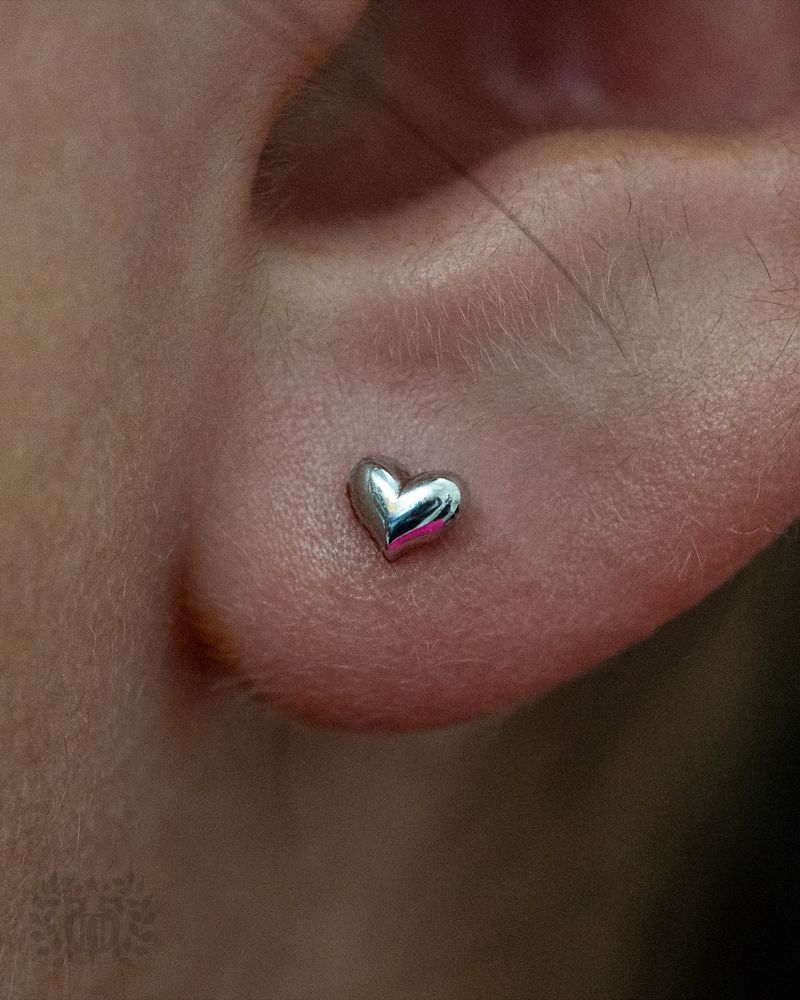
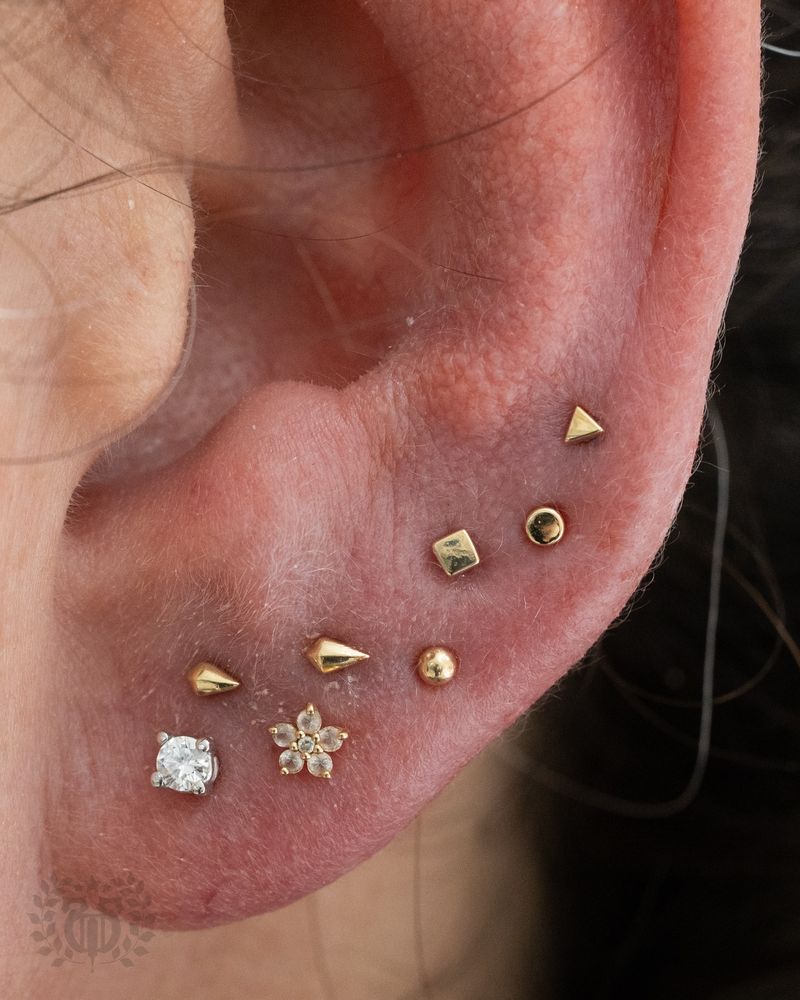
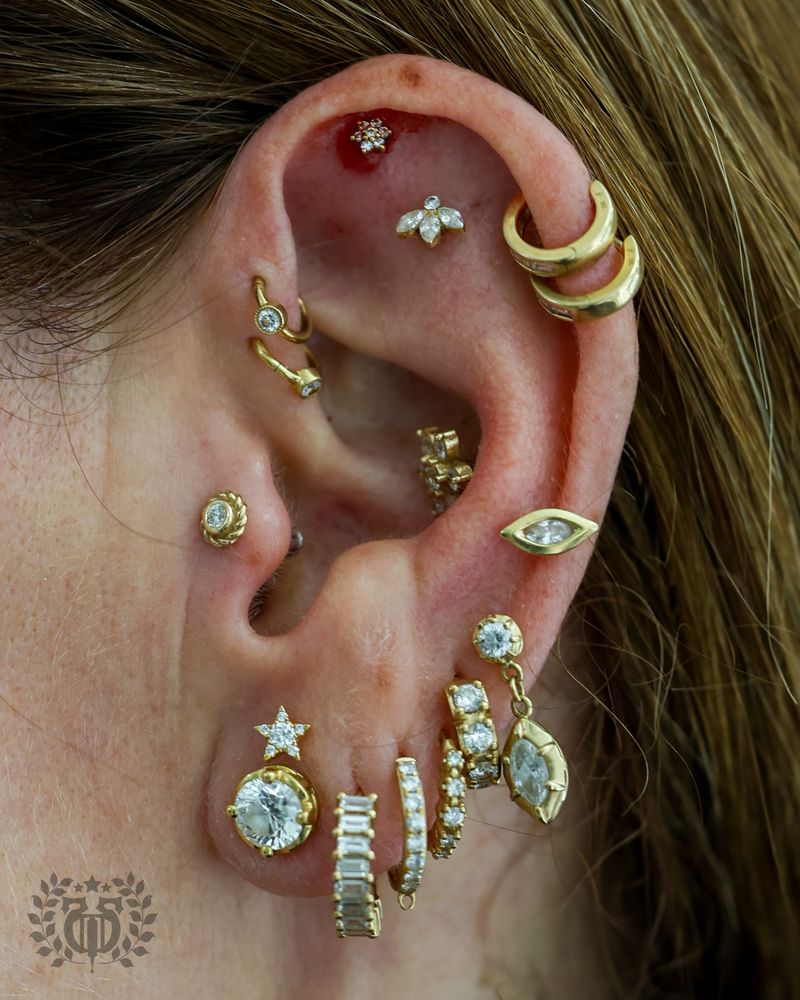
Easiest to photograph; tiny, well-defined, usually symmetric. Shoot straight-on to the ear's outer face, with the stud gem visible. Wait 24–48 hours for lobe swelling; after that the jewelry sits in its real position and the photo looks right.
Helix / cartilage photos
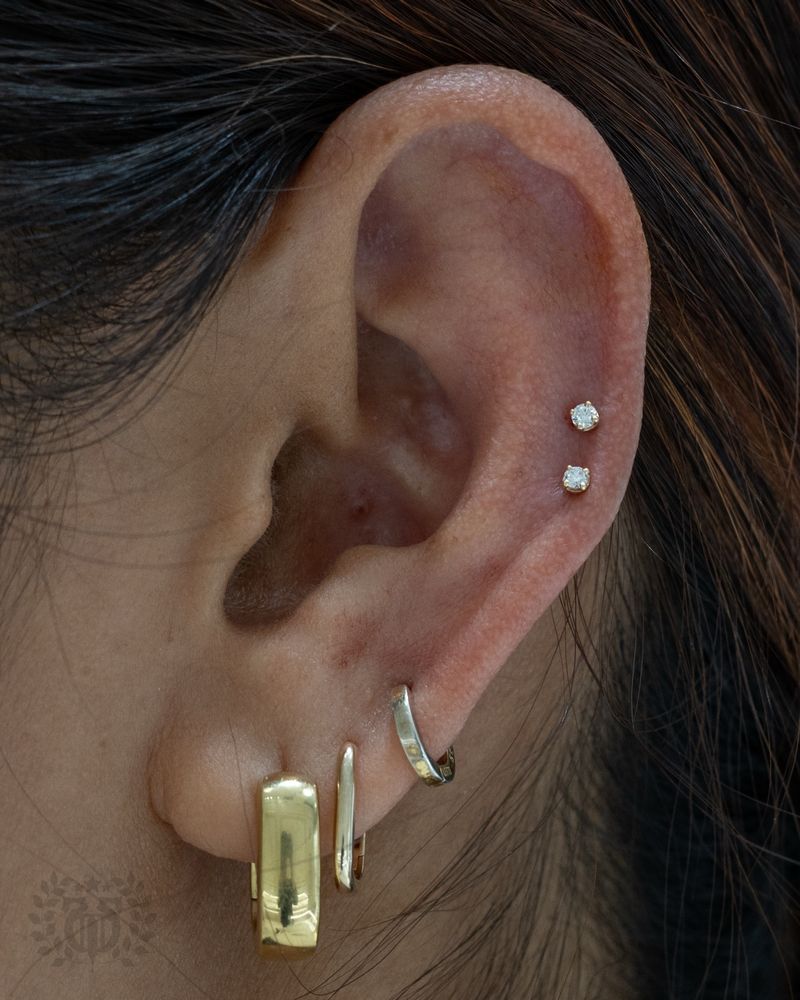
Requires a profile shot, hair pulled back (but not tugged during photo). Swelling takes 3–7 days to resolve; don't photograph on day one and expect the final look. The jewelry often sits slightly flared during healing — expected and temporary.
Nostril photos
Shoot at a slight 45-degree angle to the nose profile, not straight-on (flattens the piercing). Natural daylight avoids the white-flash reflection on the jewelry. Nostril swelling resolves in 3–5 days; wait a few days for the clearest shot.
Septum photos
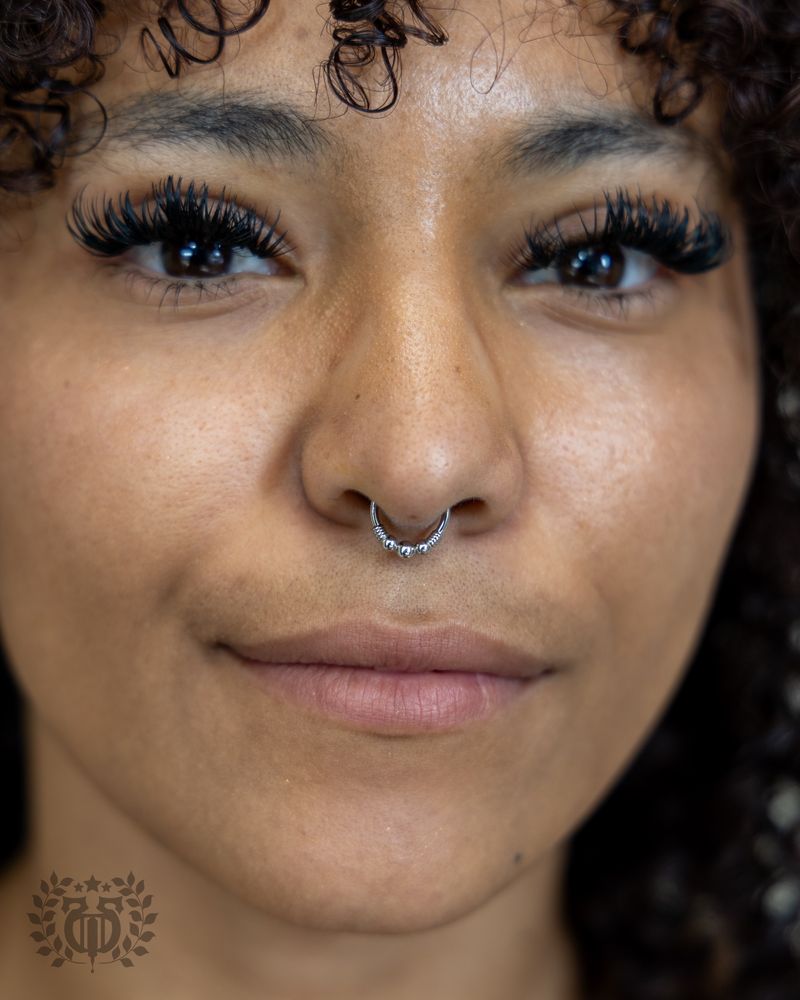
The piercing rides below the visible nose cartilage; some jewelry shows from straight-on, some only from slight under-angle. Teens often prefer 'flipped up' vs 'flipped down' depending on the photo context. Shoot both; pick the one that matches the intended audience.
Navel photos (teen)
Privacy and age-appropriateness are the main considerations. For a teen's own archive, a tight close-up without face or identifying body markers is the appropriate frame. For anything beyond the personal archive, the ambient sensitivity about minor navel photos online is significant; a no-photo default is often the right default.
Four appropriateness tiers
From share-freely to avoid-posting.
Tier 1 is public-safe. Tier 2 is family-archive. Tier 3 is clinical. Tier 4 is the don't-post category.
Tier 1 — Appropriate to photograph and share freely
The 30-day portrait photo, the month-after family album picture, a close-up of the jewelry with no face in frame. Photos representing a settled, healed-in piercing at its real-world look. Sharing with extended family, sending to the grandparent who couldn't be there — all fine.
Tier 2 — Family archive, private sharing
The day-of memory photo, the 48-hour settled shot, the week-one documentary photo, all the intermediate photos that capture the healing process. Meaningful for the family record; appropriate for private sharing with chosen family; not ideal for public posting with minors.
Tier 3 — Diagnostic / clinical
A photo sent to the piercer or pediatrician to check on a healing question. No filters, neutral light, tight frame, no child identification needed in the photo. Shared privately via the clinical channel; not stored in the family album as the 'memory' photo.
Tier 4 — Photos to avoid
Filtered 'cute' photos that hide early medical signs. Public social posts of a minor's face with location data attached. Photos taken during peak swelling and shared as 'the final look.' Photos where a parent's finger is near the healing channel. Navel or body piercings of a teen posted publicly. Each of these has a specific harm profile.
Shot pairings
Eight combinations that produce better photos.
Wait plus light, close-up plus no-face, burst plus quick-select. Eight pairings worth remembering at the shutter.
Wait + soft daylight
Twenty-four to forty-eight hours for lobe swelling plus near-a-window daylight produces the best early-days photo. Not the day-of photo — that one is for memory. The 48-hour shot in soft light is the one that looks like the piercing.
Close-up + no face
A tight frame on the ear or nose, no face in the shot. Beautifully protects the child's privacy and focuses the photo on the piercing. The go-to frame for any photo destined beyond the immediate family.
Burst mode + quick select
Ten quick frames in burst, one blink-free frame picked, rest deleted. Especially useful for young children who move; the decisive moment is usually in the middle of the burst, not the first frame.
Daylight + no filter
Both together. Soft daylight makes filter-free skin look natural; filter-free preservation makes the daylight photo usable as a documentary record. The pair removes the two things that most distort piercing photos.
Settled photo + schedule alignment
For school picture day or a family event, book the piercing three-plus weeks before the photo date. Lobes are fully settled in 3–4 weeks; cartilage takes longer. The photo lands when the piercing looks its best, not during swelling.
Private album + public-safe alternative
Keep the full photo set private; prepare a public-safe version (tight crop, no face, no location) if a public post is desired. Two versions of the same moment — one for the family archive, one for what's shareable.
Location off + generic caption
For any public post, turn off photo geotagging and write a caption that doesn't name the school, the studio address, or specific identifiers. 'First piercing!' is fine. 'First piercing today at [address] in Santa Monica right after school' is a location profile.
Clinical photo + piercer contact
A healing concern prompts a close-up photo, filter-free, well-lit, sent to Apollo via the contact channel the studio provides. Not a panic post to social; a direct message to the people who can answer. Response time is faster and the information is appropriate to the audience.
Six questions for the studio
The photo conversation worth having.
Six questions a kids-piercing studio answers clearly — from 'when's the best photo day' to 'can I send you a healing picture.'
“When should we take the 'it's healed' photo?”
For a child's lobe, the settled photo is usually 30 days; cartilage takes 3–6 months for the real-world look to emerge. The studio can suggest a target date based on the specific placement. A photo at week two isn't wrong; it just doesn't show the final result.
“Is it okay to share a photo of my child's piercing on social media?”
The studio can share general thinking — child privacy considerations, face-omission framing, no location data — without telling the family what to do. It's a family decision; it's worth pausing to decide rather than auto-posting. The more the photo is documentary (piercing-centered, no identifying detail), the lower the privacy cost of sharing.
“Can I send you a photo if I'm worried about healing?”
Yes. Apollo wants the clinical photo if there's a question — close-up, filter-free, well-lit. It's often faster than an in-person return visit for clarifying whether what a parent is seeing is normal healing or something that needs a check. The studio provides the contact channel; the photo goes there, not to social.
“What filters should we avoid?”
Beauty filters, skin-smoothing, aggressive color grading, and anything that distorts the natural look of the skin or jewelry. For family memory photos, filters are a personal preference. For documentary photos (healing check, pediatric sharing, piercer check-in) the filters obscure the information the photo is supposed to carry.
“Can we post a photo without the child's face in it?”
Absolutely; many studios post client photos this way specifically to protect privacy. A close-up on the ear, a profile shot from behind, a jewelry-only close-up — all of these tell the piercing story without identifying the child. A parent can adopt the same practice.
“What about photos at a cultural ceremony?”
Family and cultural ceremonies often produce meaningful ceremony photos; the considerations are the same (privacy, location data, filter-honesty) but the context is often more controlled — a ceremony at home, family and close community. The photos tend to belong in the family album more than the public feed; when a post is chosen, the same privacy frames apply.
Eight photo mistakes
Each one with a fix.
Predictable photo and posting missteps; each has a quick correction.
Posting the day-of photo during peak swelling as 'the final look.'
Fix: The piercing looks pinker, puffier, and more irregular during the first 24–48 hours. A photo posted then sets a wrong expectation and sometimes prompts well-meaning comments about 'does that look infected?' Fix: take the day-of photo for the archive; wait 48 hours for the 'share' photo.
Using beauty filters on documentary photos.
Fix: The default iPhone portrait mode, Instagram's built-in smoothing, and TikTok's face filters all alter skin and jewelry. A 'does this look okay' photo sent to the piercer or pediatrician through a filter is almost useless. Fix: turn filters off before taking the documentary photo; keep filters for the fun family memory shots only.
Tagging the studio location on a public post of a minor.
Fix: Location data + a child's photo + a public post = a profile of where the child was when. Fix: for public posts of a minor, turn off photo location, don't tag the studio location, and write captions that don't name identifying details. The family archive can keep the location data; the public post shouldn't.
Photographing hands touching the piercing.
Fix: A photo with fingers near the healing channel teaches the child that touching is photo-worthy — and broadcasts an aftercare bad habit. Fix: hands out of frame. Use hair pinned back (not held back in the photo). The jewelry speaks for itself.
Forgetting to turn off flash.
Fix: Direct flash reflects off the jewelry and off the healing skin's moisture, creating white-out areas and obscuring the real look. Fix: natural light. If indoor and dim, a lamp off-axis is better than direct flash.
Sharing the 'for the piercer' photo on social.
Fix: The clinical photo is close-up, unfiltered, and designed to show the state of the piercing for diagnostic purposes. It's not a flattering photo; it's not intended to be. Fix: keep clinical photos private; for social, use the flattering settled portrait at 30+ days.
Posting a teen's body piercing without their consent.
Fix: A teen's first piercing is their story to tell. A parent proud of the moment can overstep when sharing. Fix: ask the teen whether they want the photo posted, and follow their lead. Teens regularly regret parents posting them to public feeds; the question itself preserves the relationship.
Sharing photos that could be used for identification in unfriendly contexts.
Fix: In custody disputes, family-law matters, and (rarely) more serious situations, identifying photos and location data of a minor can be used against a parent. Fix: general caution on public posting of minors. A family album photo is almost always fine; a public post with location tag and school uniform is not.
First-photo checklist
Eight lines that turn a snapshot into a portrait.
Screenshot this. Run it when the shutter is about to click or the caption is about to post.
- ·Let the swelling resolve before the 'share' photo. Lobes: 24–48 hours. Cartilage: 3–7 days. Nostril: 3–5 days. The day-of photo stays in the family archive.
- ·Shoot in soft daylight — near a window, off-axis, no direct flash. Natural light is kinder to healing skin and to jewelry than any indoor overhead.
- ·Turn off beauty filters and skin-smoothing for any documentary photo. The photo's job is to represent the real look; filters defeat the job.
- ·Frame tight on the piercing. Less of the child's face is better both for composition and for privacy — a close-up of the ear tells the piercing story.
- ·Take more frames than you need. Burst mode or quick video catches blink-free, mouth-calm, jewelry-focused versions; pick one and delete the rest.
- ·Decide audience before posting. Family archive is one thing; public social is another. A public post of a minor invites extra privacy consideration.
- ·Turn off location data for public posts of a minor. One-tap privacy improvement; matters more than most parents realize.
- ·Plan the big photo for day 30. The settled-piercing portrait is usually the 30-day one. School picture day, family event, ceremony — calendar the piercing at least a month ahead.
Ceremonies, sensory, teens
Three layers the photo conversation adjusts for.
Family ceremonies, sensory-sensitive kids, teen autonomy. Three contexts where the photo rules shift — usually toward more patience and more consent.
Family ceremonies and milestone photos
When a piercing aligns with a family ceremony (quinceañera, bat mitzvah, Karn Vedha, baby blessing), the photography is often an important part of the cultural memory. Apollo's piercer can advise on timing — enough days before the ceremony for swelling to resolve, enough days after for the piercing to photograph well. A photo taken during peak swelling at the ceremony itself doesn't match the family's memory of the day; a photo at day three or day seven does.
Sensory-sensitive kids and photo stress
Photos at the studio, photos at the appointment, and photos in the hours after can be overwhelming for sensory-sensitive children. Apollo keeps studio photography low-key and doesn't pressure children to pose. Parents who want a family memory photo can take it at home later, in a familiar environment, at a calm moment. The photo's meaning doesn't depend on its day-of timestamp.
Teens and photo autonomy
A teen's first piercing is their story to tell. Apollo encourages parents to ask the teen before posting, to share privately rather than publicly by default, and to respect the teen's own social account as the primary channel if the teen chooses. Teens posting themselves is often more authentic than parents posting them; the parent's role is to protect the option, not overwrite it.
Audience and privacy notes
Four practical sharing patterns.
Album vs. feed, distant grandparents, sibling sessions, consent conversations. Four family-sharing patterns worth knowing.
Family album vs. public feed
Two different audiences, two different standards. The family album can hold the day-of photo with the child's face, the location, the date — a full record. The public feed benefits from a curated version: tight frame, no identifying details, no location. Keeping them separate is the clearest way to honor both purposes.
Grandparents who weren't there
The 48-hour photo — settled piercing, calm child, good light — is the one to send to the grandparent who couldn't be at the appointment. Private message, not public post. A short video with a quick wave from the child often works better than a still photo for distant family; the voice and the motion carry the memory.
Sibling photo sessions
Two kids pierced in one appointment often get a joint photo session around day three. Matching jewelry, matching framing, a quick 'two ears' shot that becomes the family holiday card. Private and fun; easy to keep out of public feeds while still sharing generously within the family.
Photo consent as a conversation
With older kids and teens, asking before photographing — and before posting — models consent as a practice the family takes seriously. 'Can I post this?' is a small question with a big ongoing lesson. Teens who feel respected about their photos grow into adults who respect others' photos; the habit scales beyond the piercing.
Location data on a minor's public photo is a privacy cost. One tap turns it off.
Ask the teen before posting. A teen's first piercing is their story to tell.
The 30-day photo is the portrait. The day-of photo is the memory. Take both; value them differently.
FAQ
Nine questions parents ask before the shutter.
Short versions; pillars above carry the depth.
How long should I wait before taking photos of my child's new piercing?
For the day-of memory photo, go ahead — it belongs in the family archive. For the 'this is what it looks like' photo, wait 24–48 hours for a lobe to let the initial swelling resolve, and 3–7 days for cartilage or nostril placements. The jewelry settles into its natural position as swelling goes down, and the photo taken at day two or day three looks much more like the piercing's final form than the photo taken at hour two. For a portrait photo that captures the piercing as it really looks after healing starts to progress, the 30-day photo is usually the best single shot — swelling fully resolved, jewelry positioned, no early-phase redness.
Is it okay to post my child's piercing on social media?
It's a family decision, and it's worth pausing to decide rather than auto-posting. General thinking that guides Apollo's own recommendations: close-up framing (piercing, not full face) protects privacy while still showing the moment; location data off for any public post of a minor; captions that don't name schools, addresses, or identifying details. Many parents keep the full set in a private family album and post a curated, tighter-cropped version publicly. For teens, asking the teen before posting is both polite and a respectful consent practice. The piercing itself is photogenic; the child's full identifying portrait doesn't have to be the photo that gets shared.
Should I use a filter on piercing photos?
Depends on the purpose. For family-memory fun photos, filters are a personal preference — use them if the family enjoys them. For documentary photos that show what the piercing actually looks like — the photo you'd send to the piercer with a healing question, the photo you'd show the pediatrician, the photo you'd reference in a month to remember — leave filters off. Beauty filters and skin-smoothing hide the actual state of the tissue, which defeats the documentary purpose. A phone's default 'portrait' mode and Instagram's built-in smoothing both alter the skin; turn them off for the clinical photos.
What lighting is best for piercing photos?
Soft, diffused daylight is the best everyday light for piercings. A spot near a window, slightly off-axis from the direct sun or direct window glare, preserves skin tone without creating hot-spot reflections on the jewelry. Overcast-day outdoor light is especially friendly. Direct overhead indoor light (bathroom fluorescents, kitchen lights directly above) creates unflattering shadows and highlights every healing edge. Direct flash reflects off the jewelry and off the skin's moisture, producing white-out areas that obscure detail. When shooting at home, a lamp positioned to the side (not aimed directly at the piercing) gives far better results than the room's overhead fixture.
Can I send Apollo a photo if I'm worried about healing?
Yes, and we prefer it when there's a question. The ideal photo: close-up of the piercing (fills most of the frame), neutral daylight, no filter, and a clear view of the jewelry and surrounding skin. Send it via the contact channel the studio provides at booking or on the site. We can often answer 'is this normal' questions faster via photo than via a return visit — and if the photo suggests a real concern, we can schedule the return visit with a head start on what to look at. The clinical photo is for us, not for social; we'll treat it as confidential.
What about photos during a cultural or religious ceremony?
Ceremony photos are often central to the family memory of the event. Apollo can plan the piercing appointment with the ceremony date in mind — a piercing a few days before a ceremony usually photographs well at the ceremony itself (initial swelling down, jewelry settled). For the day of the ceremony, the same photography considerations apply: natural light where possible, close-up framing for jewelry shots, full-context wider shots for the family memory. Private ceremony photos in the family album are almost always fine; public-social decisions get the same privacy framing as any other post.
How do I turn off location data on a photo I'm about to post?
Both iPhone and Android offer per-photo or app-level location controls; the specific path varies by OS version. On iPhone, the Photos app's 'i' info button shows the photo's location and offers 'Adjust' / 'Remove' options; Instagram and TikTok each offer separate location-sharing toggles per post. The universal approach: check your phone's privacy settings for each social app and disable location for public posts by default. For a specific post you want to share without location, most apps show the 'Add location' step as optional — leaving it blank is the privacy-forward choice for a minor's photo.
Should I post a photo of my teen's piercing without asking?
Asking first is the better practice, both respectful and consent-modeling. Teens' feelings about being posted vary widely — some are enthusiastic, some are mortified, many are somewhere in between depending on the audience and the context. Asking is a two-word question with a big ongoing lesson: 'Can I post this?' Teens who feel respected about their image grow into adults who respect others' images. For first piercings specifically, the teen's own social feed is often the more authentic channel; the parent's role is to protect the option and let the teen narrate their own story.
What photos should I absolutely avoid?
Four categories to keep out of public posting: (1) photos taken during peak swelling and captioned as 'the final look' — they set a misleading expectation and invite 'does that look infected' comments; (2) heavily filtered photos where the filter obscures medical signs — these become useless for healing checks; (3) public posts of minors with location tags, school uniforms, or captions that name identifying details; (4) photos where hands are touching the healing piercing, which both broadcasts an aftercare bad habit and looks cluttered. Family archive photos can include most of these contexts; the public post has a higher bar.
Patience, light, and the decision about audience.
Book the consultation. We’ll talk timing if the photo day matters.
For school picture day, a cultural ceremony, or a family event, Apollo schedules the piercing with the photo in mind — enough days before for swelling to resolve, enough days after for the jewelry to settle. Pricing is discussed at consultation. Bring the calendar; we’ll find the right appointment day for the photo you want to keep.