Piercings
Piercing Prices: How Much Does a Piercing Cost?
Short answer: at Apollo, lobes are $75, cartilage is $75–$85, septum is $85, navel is $75 and an industrial is $125 — service only, with the jewelry priced separately. Below: the full type-by-type table, Apollo's two published Santa Monica prices, and exactly what moves the number.
Book a piercingBiggest price factor
Jewelry quality
Sterilization
Hospital-grade autoclave
Piercer
Fakir-certified
Included
Downsize + check-ins
Cost
How much does a piercing cost?
At Apollo, most piercings are $75 to $125 for the service, and the jewelry is priced separately on top. Lobes are $75, cartilage is $75–$85, nose is $75, navel is $75 and an industrial is $125. Two specials sit on top of that: two piercings for $75 and a $99 sitting fee for The Curated Ear (up to four ear piercings in one sitting). Everything else we quote in person, exactly, before we start.
There's no single flat price for "a piercing," and anyone quoting one is leaving out what matters. What you pay is really two things — the piercing service and the jewelry — and the jewelry is usually the larger and more important half. A simple lobe with a titanium end and a navel with a solid-gold gem are very different prices, and both are worth more than a $20 mall piercing for reasons that show up months later. Below we give honest typical market ranges by piercing type so you can budget before you visit. At Apollo in Santa Monica — serving Venice, West LA and Culver City — we quote every piercing in person once we've seen your anatomy and you've chosen your jewelry, so the price you hear is the price you pay.
By piercing type
Typical piercing cost by type
The ranges below are general Los Angeles market guidance for reputable needle studios, not Apollo's flat rates — your exact price depends on the jewelry you choose and your anatomy. At most professional studios the piercing fee and the jewelry are priced separately: the lower end of each range usually reflects implant-grade titanium, and the higher end reflects solid 14k/18k gold or a gem end. Mall or kiosk "gun" prices are deliberately left off — that's a different (and riskier) service, not a cheaper version of the same one.
Apollo's piercing prices (service only)
These are our actual service fees, straight from our booking system. Jewelry is priced separately and is always your choice — an implant-grade titanium end and a solid-gold BVLA piece can differ by $100+ on the very same piercing. We quote the full number in person, before anything happens.
Ear
| Service | Price |
|---|---|
| Single or double lobe | $75 |
| Kid / teen, single or double ear | $75 |
| Helix or forward helix | $75 |
| Conch, tragus, rook or daith | $85 |
| Industrial | $125 |
| Triple ear | $175 |
| Tandem ear (two piercers, side by side) | $125 |
Face & oral
| Service | Price |
|---|---|
| Nose, single lip, eyebrow or bridge | $75 |
| Septum | $85 |
| Double lip | $125 |
| Tongue | $100 |
Body
| Service | Price |
|---|---|
| Navel | $75 |
| One nipple | $75 |
| Double nipple | $125 |
| Single dermal | $200 |
| Double dermal | $400 |
Specials
| Special | Price | What you get |
|---|---|---|
| Two piercings | $75 | Both lobes in one sitting — single-use needles, implant-grade starter jewelry priced separately. |
| The Curated Ear — up to four piercings | $99 | Online-only reservation. Up to four ear piercings in one sitting (four is the max), placement planned to your anatomy. |
Genital and intimate piercings are $200 and are booked by consultation only. Every price above is the service fee only; jewelry is quoted in person, exactly, before we start — the number you hear is the number you pay.
*General market ranges for professional needle piercing in the LA area, jewelry included at the lower grade. They are not a quote. Apollo prices each piercing exactly at consultation based on your jewelry and anatomy — book a consultation or call to confirm.
What affects price
What determines a piercing's price
A few things move the number, and none of them are arbitrary:
- Jewelry material and quality — implant-grade titanium (ASTM F-136), solid 14k/18k gold and niobium cost more than the plated "surgical steel" sold cheaply, because they're biocompatible and won't leach nickel into a healing wound. This is the single biggest factor, and our piercing safety statistics page sets out what those standards specify and why "surgical steel" corresponds to no standard at all.
- The piercer's training — a Fakir-certified, bloodborne-pathogen-trained piercer with years behind the needle places a piercing that heals straight and lasts. Experience isn't free, and it's the thing you'll be most grateful for.
- Sterilization and single-use supplies — a hospital-grade autoclave, single-use needles, and a fresh setup for every client cost money per piercing that a gun-and-stud kiosk simply doesn't spend.
- Placement difficulty — a surface or dermal anchor, or a precise multi-piece cartilage project, takes more skill and time than a standard lobe.
- Aftercare and follow-up — a real studio builds a free downsize and check-ins into the price so your piercing settles cleanly.
What you pay for
What you're actually paying for
At a professional studio, the price reflects everything you can't see on the way in: implant-grade or solid-gold jewelry sized long for swelling, a certified piercer who marks and checks placement with you, a fresh sterile needle and setup, an autoclave and a licensed, inspected studio, and a downsize visit built in. You're not paying for a piece of metal — you're paying for a piercing that heals correctly the first time and jewelry your body won't fight.
Why we don't discount
Why a discounted piercing can be a red flag
Here's the part most people never consider: even when a studio uses good jewelry, leading with discounts and coupons is itself a signal. A business that competes on price is telling you price is its main advantage — that it needs to undercut to win clients rather than letting the quality of the work bring them in. Great piercers stay booked because of how their work heals and looks, not because of a punch card or a flash sale. At Apollo we'd rather quote you honestly and earn the appointment with craft than train you to wait for the next deal. A fair, steady price is part of how you know the service behind it is fair and steady too.
By piercing type
Cost factors by piercing type
What moves the price within each popular piercing — and where to read the full guide:
- Ear & cartilage — lobe, helix, tragus, conch, rook and daith. Driven mostly by jewelry choice; cartilage must be done with a needle, never a gun. See our ear piercing shop in LA for the full menu.
- Industrial — two cartilage points joined by one barbell, so it's effectively two piercings; it also depends on your ear having the right anatomy to support the bar.
- Nostril & septum — jewelry (titanium vs. gold, stud vs. ring) and the precision of the placement.
- Navel — the curved barbell quality decides most of it; gem ends and solid gold sit at the top of the range.
- Nipple — a correctly sized implant-grade barbell and an experienced piercer matter more here than anywhere; cheap nipple piercings reject and scar easily.
- Lip & labret — flat-back labret jewelry quality and material; solid gold runs higher than titanium.
- Dermal & surface — these need a skilled piercer and a quality anchor, and are the most likely to reject when done cheaply, so the price reflects the difficulty and the follow-up they require.
If you have sensitive skin or a nickel allergy, the metal grade matters even more — see our sensitive-skin jewelry guide. Prefer a Westside studio? We cover the whole process on our piercing in Santa Monica page. For an exact quote on any piercing, book a consultation or call us — we'll show you the jewelry options and price it on the spot.
Skill & expertise
What a cheap price says about the piercer
A piercing is a small surgical procedure, and the person holding the needle is the product. A rock-bottom price almost always means one of two things: an inexperienced piercer building a portfolio, or a high-volume shop moving people through as fast as possible. Neither is what you want a needle-and-your-anatomy decision riding on. Steady hands, anatomical judgment and a clean, unhurried appointment are exactly what a fair price pays for — and exactly what gets cut to hit a bargain number. A piercing placed correctly the first time, by someone who has done it tens of thousands of times, is the cheapest one in the long run.
Jewelry
What "cheap jewelry" actually is
Half of what you pay for is the jewelry sitting in a fresh wound for months — so its quality isn't cosmetic, it's medical. Cheap body jewelry is typically mass-produced from uncertified, low-grade alloys — often "surgical steel" that still contains nickel, or plated base metal — with no mill certificate proving what it's actually made of. Those metals leach into a healing piercing and drive irritation, prolonged swelling and rejection. Quality jewelry is implant-grade titanium (ASTM F-136), solid 14k/18k gold or niobium, with documentation to back it up. The price gap between the two isn't markup — it's the difference between metal your body accepts and metal it fights. If a studio can't name the material grade or show a mill certificate, the low price is the tell.
Buyer beware
The hidden cost of a cheap piercing
Price-shopping a piercing is where people get hurt — literally and financially. A bargain piercing usually means low-grade jewelry, a gun instead of a needle, or an undertrained piercer, and the savings vanish the moment something goes wrong:
- Rejection and migration — poorly placed or low-quality jewelry gets pushed out by your body, leaving a scar.
- Infection — non-sterile tools and nickel-heavy jewelry are a recipe for an angry, infected piercing.
- Scarring and re-dos — a botched angle often can't be re-pierced for months, and fixing it costs more than doing it right once.
The cheapest piercing is frequently the most expensive one, because you pay twice: once for the bad piercing and again to correct it.
Gun vs needle
Why the piercing gun is never worth it
A mall or pharmacy "ear piercing" is cheap for one reason — it's done with a spring-loaded gun, not a needle. Guns can't be fully sterilized (the plastic housing can't go in an autoclave) and they pierce by blunt force, crushing tissue rather than passing cleanly through it. On cartilage that's especially damaging and can shatter it. A professional needle piercing costs more than a kiosk and is worth every dollar of the difference: a sterile, single-use needle makes a clean channel that heals far better.
Before you book
Questions to ask before you book
Whatever studio you choose, these questions separate a safe piercing from a risky one:
- Do you pierce with a single-use needle (never a gun)?
- Is the starter jewelry implant-grade titanium or solid gold — and can you show the mill certificate?
- Do you sterilize with an autoclave, and are you licensed and inspected?
- Is your piercer certified and trained in bloodborne pathogens?
- Is a downsize or follow-up included?
If a price seems too good to be true, the answer to one of these is usually no.
Our standards
Why get pierced at Apollo
Every piercing at our Santa Monica studio is done with a single-use sterile needle — never a piercing gun, which can't be sterilized and crushes cartilage. We install only implant-grade titanium (ASTM F-136), solid 14k/18k gold, or niobium, placed and checked by a Fakir-certified senior piercer. Your fresh jewelry is sized long for swelling, and a downsize follow-up is built into every piercing so it settles cleanly.
Cost
Piercing price FAQ
Why don't you list one flat price for every piercing?
Because the jewelry is half the price and it's your choice. A titanium flat-back and a solid-gold gem end can differ by $100+ on the same piercing. We quote the full number in person, before anything happens.
Is a cheap mall piercing the same thing for less money?
No. Piercing guns crush tissue rather than pierce it, can't be fully sterilized, and use lower-grade jewelry. Needle piercing at a licensed studio is a different service — the "savings" often get spent on troubled healing.
Do I pay for the follow-up?
Downsize checks are included. Healed jewelry swaps are priced as jewelry only.
Do you take walk-ins for piercings?
Yes — daily, 8am–8pm, at 2625 Main St, Santa Monica. The Curated Ear $99 sitting is the one thing that must be reserved online.
Questions
Frequently asked questions
How much does an ear lobe piercing cost in Los Angeles?
Apollo charges $75 for a single or double lobe piercing — that is the service fee for both lobes in one sitting, with jewelry priced separately.
What is the Curated Ear $99 special?
An online-only reservation: up to four ear piercings in one sitting for a $99 sitting fee when styled in solid gold or BVLA jewelry from the case, with a free downsize check included.
How much does a piercing cost?
There's no single price — it depends mostly on the jewelry you choose (implant-grade titanium vs. solid gold) and the piercing itself. At Apollo, lobes are $75, cartilage placements are $75–$85, nose is $75, navel is $75 and an industrial is $125 — service only, with jewelry usually priced separately. We give an exact quote in person once we've seen your anatomy and you've picked your jewelry.
How much is a nose piercing?
At Apollo a nostril piercing is $75 and a septum is $85, service only. Jewelry grade (implant-grade titanium vs. solid gold, stud vs. ring) driving most of the difference. That's general market guidance, not Apollo's flat rate — we confirm the exact price at your appointment based on the jewelry you choose.
How much does ear piercing cost?
At Apollo, a single or double lobe is $75. Helix and forward helix are $75; conch, tragus, rook and daith are $85. Final cost also depends on the jewelry. A studio piercing costs more than a mall gun because it's a sterile single-use needle, implant-grade jewelry and a trained piercer — and it heals far better. We quote your exact ear piercing at consultation.
Does ear piercing hurt?
A lobe is mild — most people rate it 2–3 out of 10, a quick pinch. Cartilage piercings like helix, tragus or conch are firmer, usually 4–6 out of 10, sharp for a second and then done. We use a single-use needle for a clean, accurate pass, which is both safer and less traumatic than a gun.
Does a nose piercing hurt?
A nostril piercing is brief — most clients rate it about 3–5 out of 10, a quick sting that often makes your eyes water for a moment, then it's over. A septum, pierced through the soft 'sweet spot' rather than cartilage, is usually a fast pressure and pinch. Both are done with a single-use needle.
Why is implant-grade jewelry worth it?
Because it sits inside a healing wound for months. Implant-grade titanium (ASTM F-136) and solid 14k/18k gold are biocompatible and come with a mill certificate proving what they're made of; cheap 'surgical steel' often contains nickel and has no documentation, which drives irritation, prolonged swelling and rejection. Paying more up front for metal your body accepts is what avoids a costly re-do later.
Is the downsize included in the piercing price?
At Apollo, yes — a downsize follow-up is built into every fresh piercing. Your starter jewelry is fitted long to allow for swelling, and once that settles we swap to a shorter post so it seats correctly and doesn't snag. A studio that doesn't include the downsize is leaving out a step that matters for clean healing.
How much does a nipple piercing cost?
It varies with the jewelry, and it's one piercing where an experienced piercer and a correctly sized implant-grade barbell matter most — cheap nipple piercings reject and scar. Apollo charges $75 for one nipple and $125 for both. We quote it during a quick consultation; book online or call us.
How much does a labret or lip piercing cost?
It depends on the flat-back labret jewelry you choose — solid gold runs higher than implant-grade titanium — and the placement. We'll show you the options and price it in studio.
How much do dermals (microdermals) cost?
Surface and dermal anchors take more skill and a quality anchor, and they're the most likely piercing to reject when done cheaply, so the price reflects that difficulty and the follow-up. We quote dermals after assessing the placement.
Why does ear piercing at a studio cost more than the mall?
Because it's done with a sterile single-use needle instead of a gun, with implant-grade jewelry, an autoclave and a trained piercer. A gun can't be fully sterilized and pierces by blunt force — paying a little more avoids blowouts, infection and scarring.
Why is quality piercing jewelry more expensive?
Because it sits in a healing wound for months. Implant-grade titanium (ASTM F-136) and solid gold are biocompatible and come with documentation of what they're made of; cheap 'surgical steel' often contains nickel and has no mill certificate, which drives irritation and rejection. You're paying for metal your body accepts.
Should I look for a piercing discount or deal?
Be cautious. A studio that leads with coupons is competing on price rather than craft — good piercers stay booked because of how their work heals, not because of a sale. A fair, steady price usually signals a fair, steady service behind it.
Is a cheaper piercing ever worth it?
Rarely. The piercing fee is a small part of the real cost — the jewelry and how it heals decide everything. A rejected or infected bargain piercing costs more to fix than doing it right once, so we'd rather quote you honestly than cut corners.
Studio portfolio
Real piercings from our Santa Monica studio
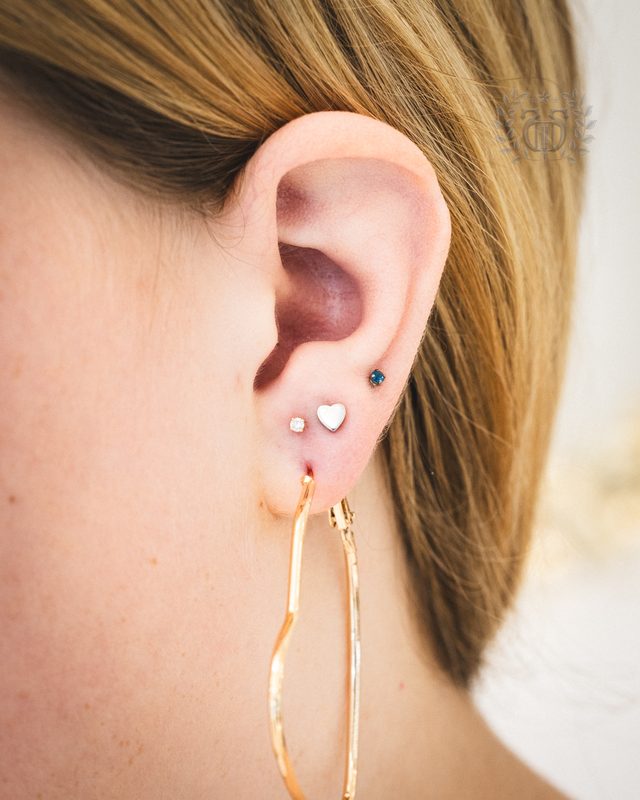
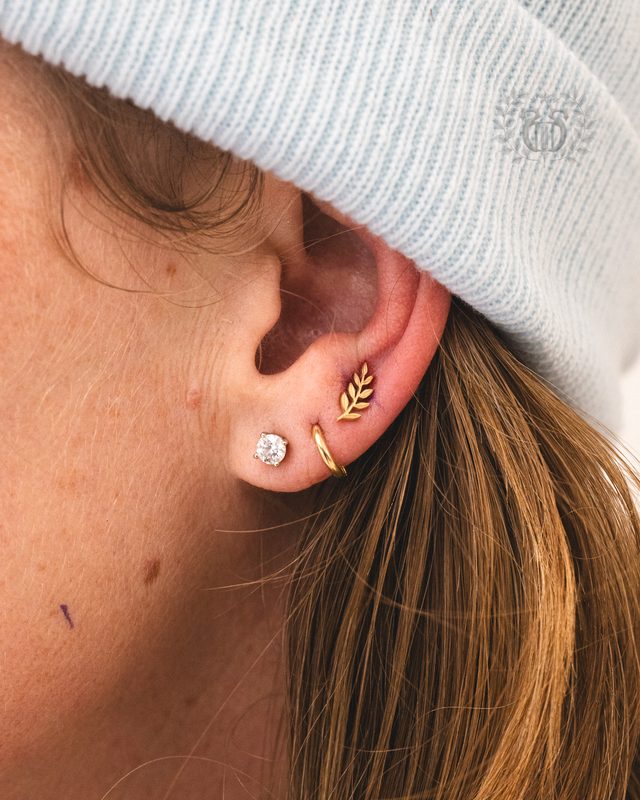
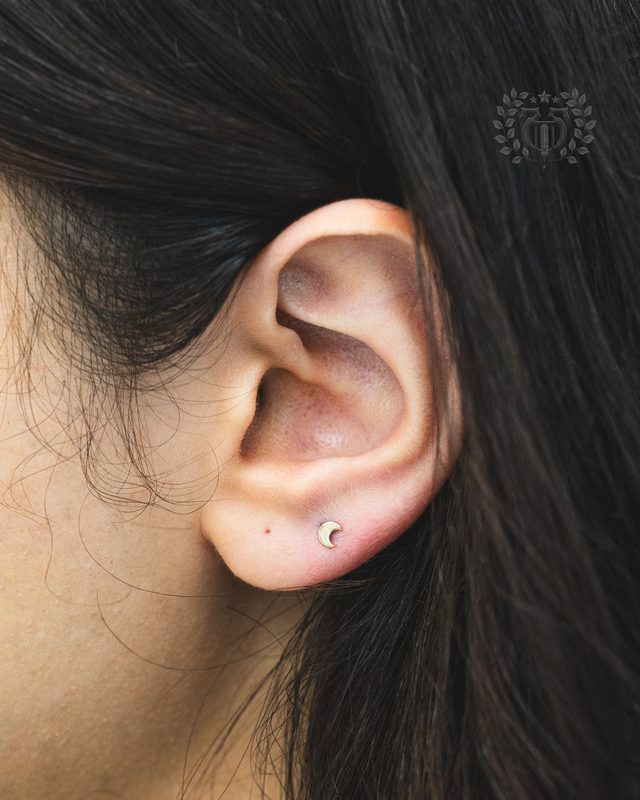
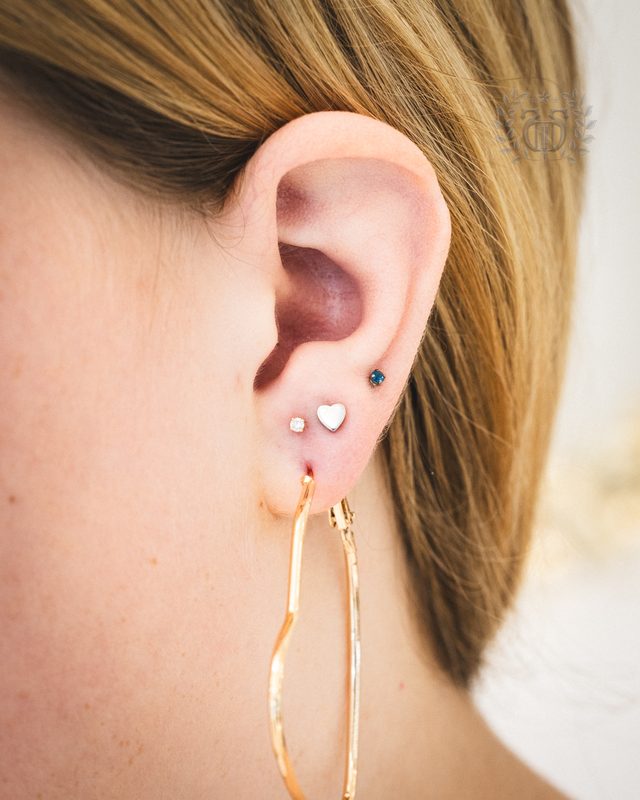
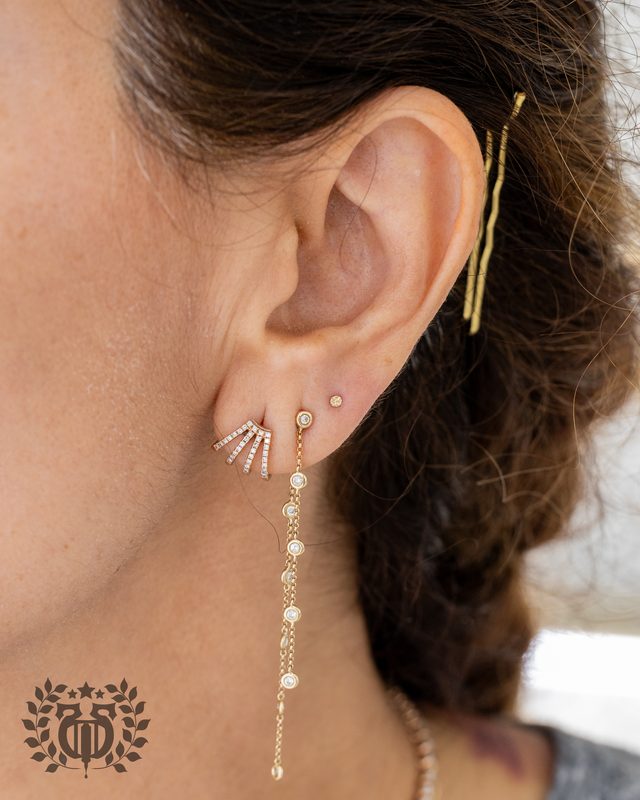
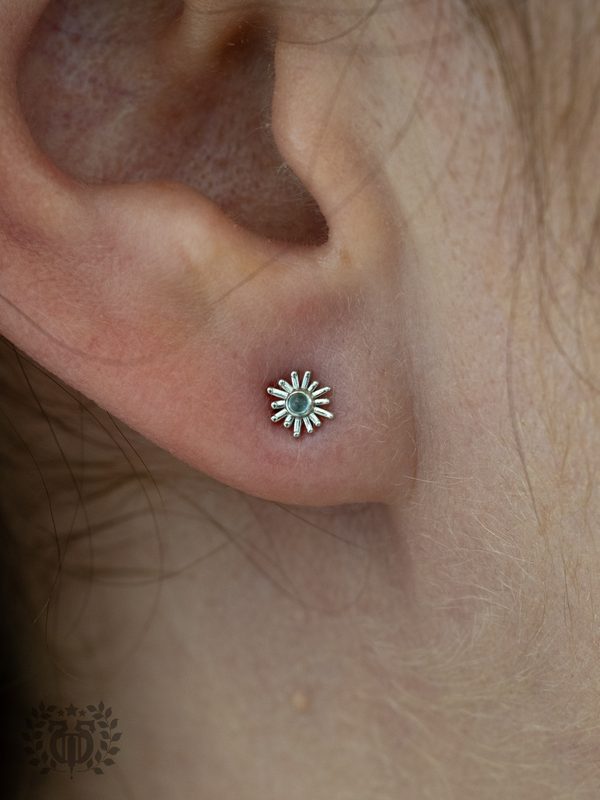
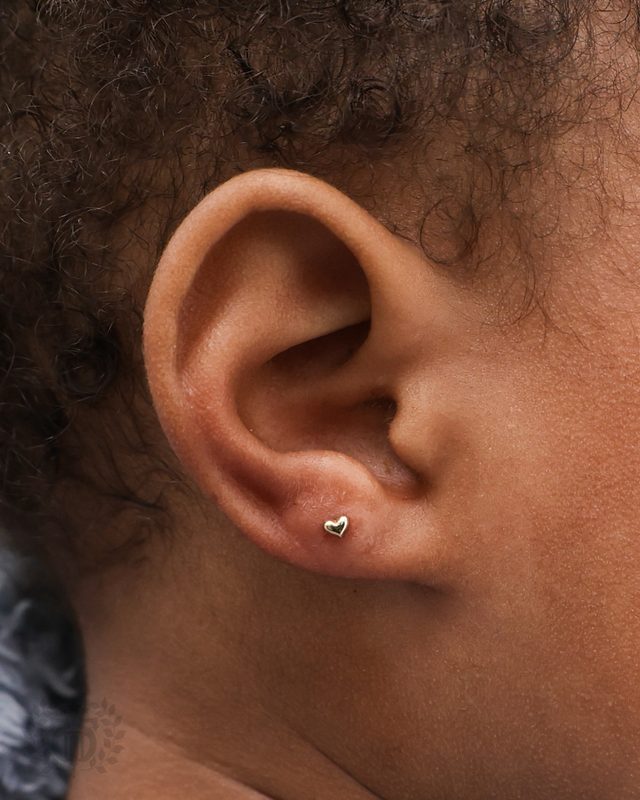
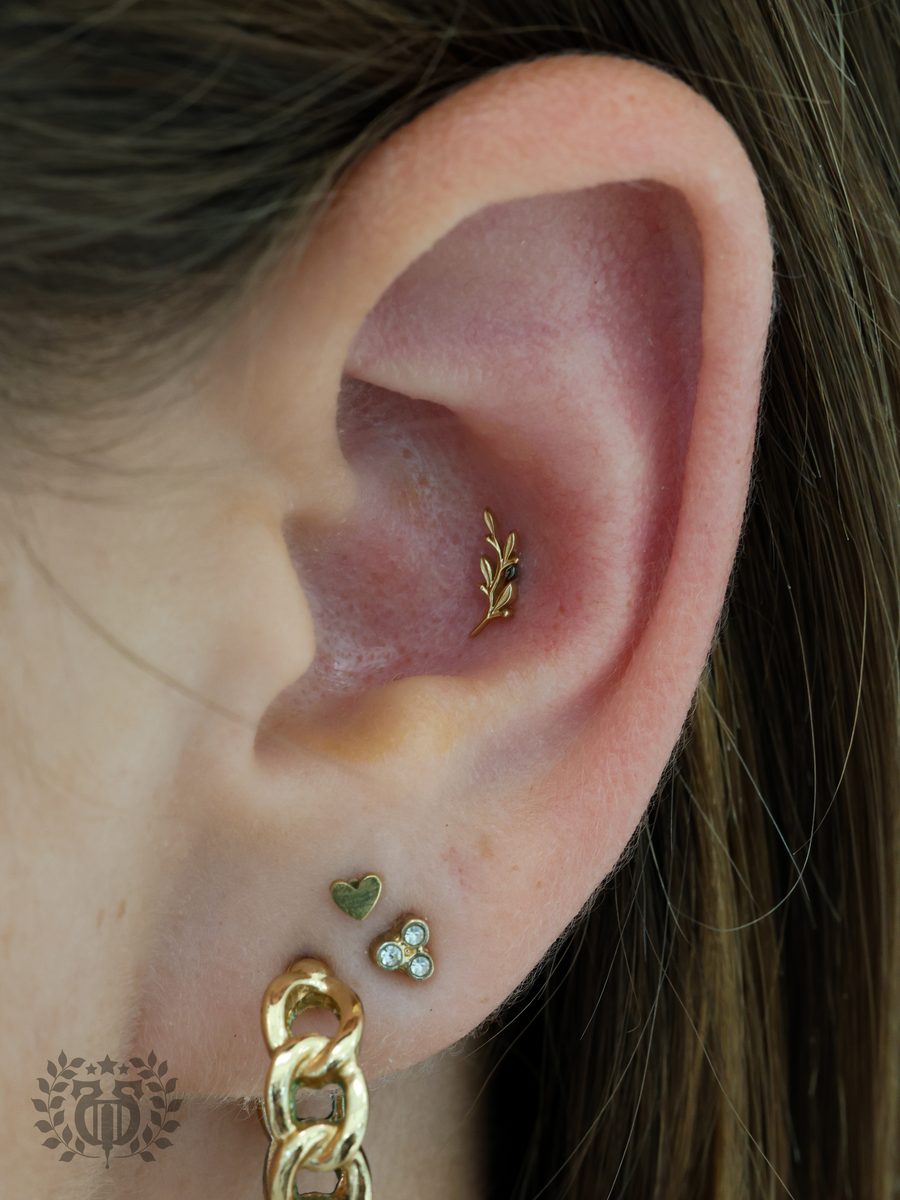
Real work from our piercing chairs — implant-grade titanium and gold, placed freehand by our Fakir-certified piercers.