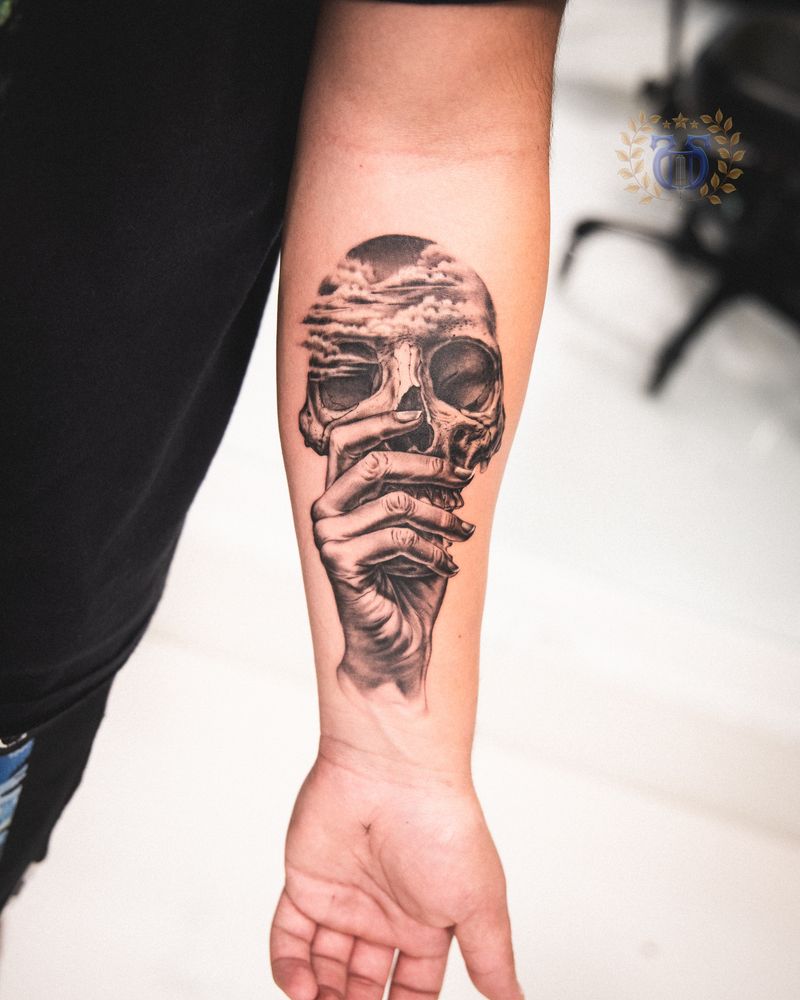
Tattoo Styles
Black & Gray
Dilution is the whole discipline. One carbon black, thinned in a cap into three to five separable tones, laid so the eye reads volume instead of outline — that mixing decision, not the needle, is what separates a specialist from an artist who occasionally works without color.
Book a consultationIn the cap
Gray wash, defined properly.
Black and gray is defined by pigment dialect, not by needle configuration. Here is how that plays out at the workstation.
The base pigment is a concentrated carbon black ink — the same ink that lays traditional outlines — but diluted to produce a family of grays. Specialists typically work with a three-tone set (black, mid-gray, light gray) or a five-tone set (adding a dark-charcoal and an ultra-light wash). The dilution happens in a small cap on the workstation: distilled water, sometimes witch hazel, sometimes a professionally-manufactured gray wash solution. Proportions vary by artist and by subject.
Needle choices vary more than in fine line. Common configurations include 3RL and 5RL for outlining and light shading, magnums (M1, RM, SM) from 5M up to 15M for broader gradient passes, and occasionally a single-needle 1RL for Chicano-tradition detail. Machine choice matters too: rotary machines dominate modern black-and-gray because consistent stroke produces cleaner gradient than coil machines, though some senior practitioners still swear by tuned coils for shading.
The discipline is tonal range. A piece with only black-and-light-gray reads as graphic and flat; a piece that spans the full range from deepest black through five or six identifiable mid-tones to the lightest wash reads as dimensional. Specialists spend years calibrating their eyes to that gradient — it is the craft signal in this category, equivalent to line-weight consistency in fine line.
One terminology note worth holding: black and gray as a general style is broader than any of the sub-specialties it contains. Soft-wash contemporary black and gray, Chicano single-needle black and gray, black-and-gray realism, bold traditional black and gray — all sit under the same umbrella but have different technical demands. Picking the specialist means picking the sub-specialty first, then the artist.
Three sub-styles
Soft wash, saturated, fine-line monochrome.
Inside black and gray there are three technical styles most clients never get explained. Knowing which one matches your subject narrows the artist search by a factor of ten.
Soft wash
Painterly, gradient-heavy
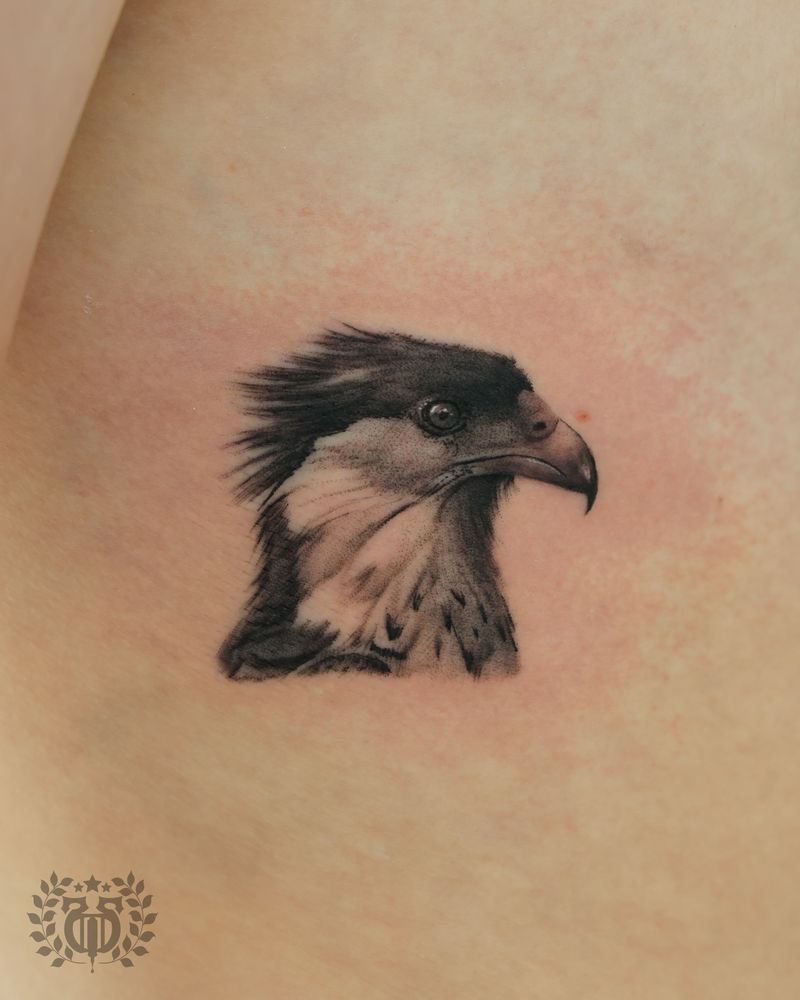
The contemporary dominant style. Wide tonal range, significant mid-gray work, minimal hard outline. Reads as graphite or charcoal on skin. Subjects: botanicals, portraits, scenic, memorial. The style most clients picture when they say "black and gray" today.
Saturated
Bold outline, deep blacks
Closer to American Traditional structurally but without color. Heavier outline, solid black fills, compressed tonal range. Subjects: devotional iconography, ornamental, statement pieces. Ages like traditional work — the outline carries the composition long after the gray drifts.
Fine-line monochrome
Hairline, minimal shading
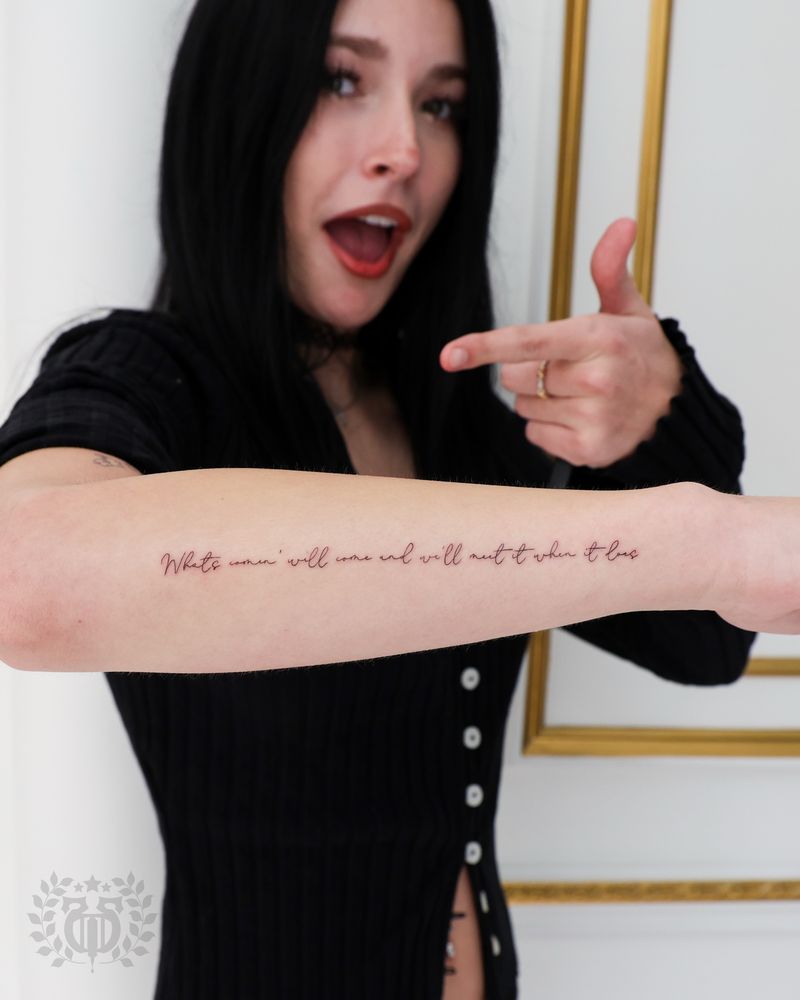
The Chicano single-needle lineage and its modern descendants. 1RL line work, minimal gradient, sometimes dotwork stippling for shading instead of wash. Subjects: lettering, religious iconography, micro-portraiture, ornamental detail. Delicate style, short-term fade behavior closer to fine line.
Where the sibling lives
Black-and-gray realism
The photorealism-leaning specialization inside black and gray. Full tonal range in service of reproducing a specific photographic reference. Technically demanding, reference- dependent, and covered in depth on our black and gray realism sibling page — the specialist version of this broader style.
Native subjects
Seven subject families that suit it.
Black and gray's native range is wider than fine line's but narrower than color. These seven subject families are where the style consistently earns its keep.
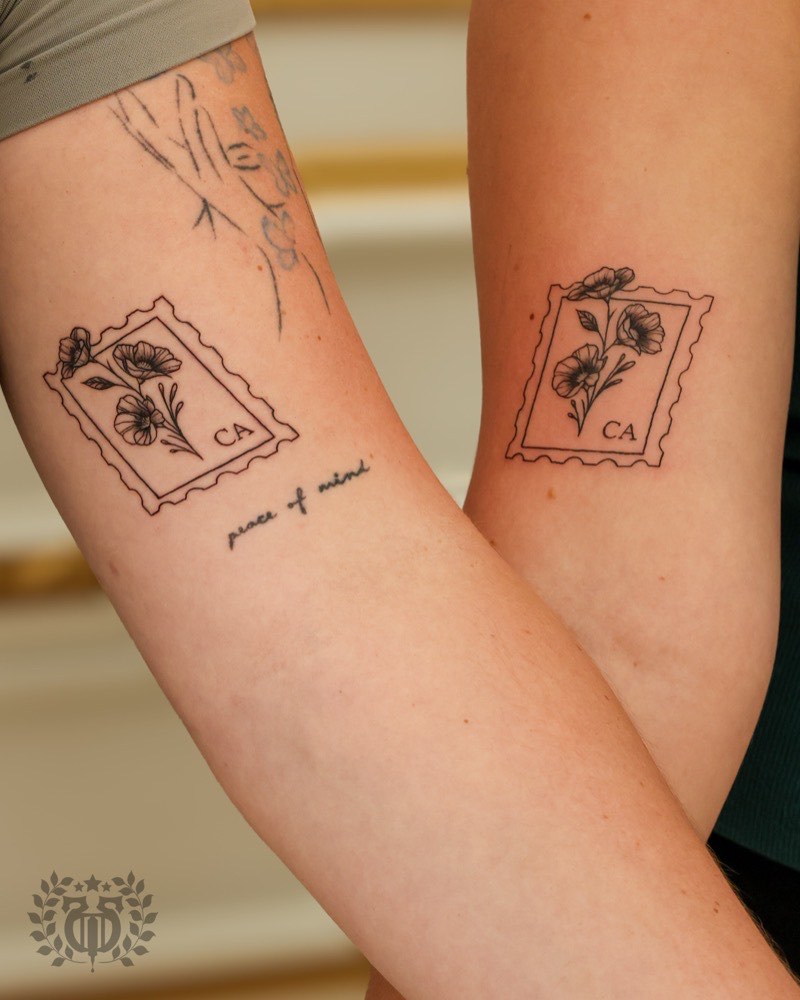
Botanical & floral (soft wash)
Where monochrome botanical work lives — roses, peonies, magnolias rendered with soft gray gradient instead of color. Reads as graphite on skin. The shading carries the volume the color would otherwise provide, and when laid in properly, the piece holds its form for decades without the fade-behavior of color.
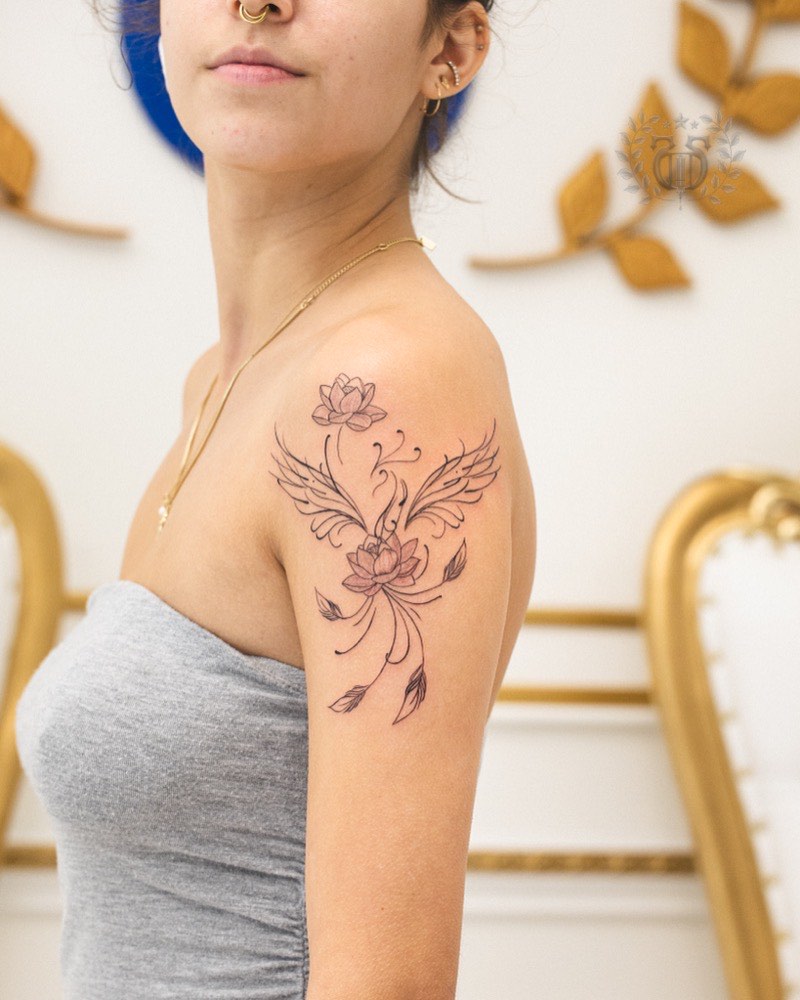
Portraiture & faces
The subject black and gray was invented for. A face reads through gradient, not outline — which is exactly what black and gray is built around. From Chicano single-needle portraits to contemporary soft-wash faces, the style is the specialist's language for likeness at full scale.
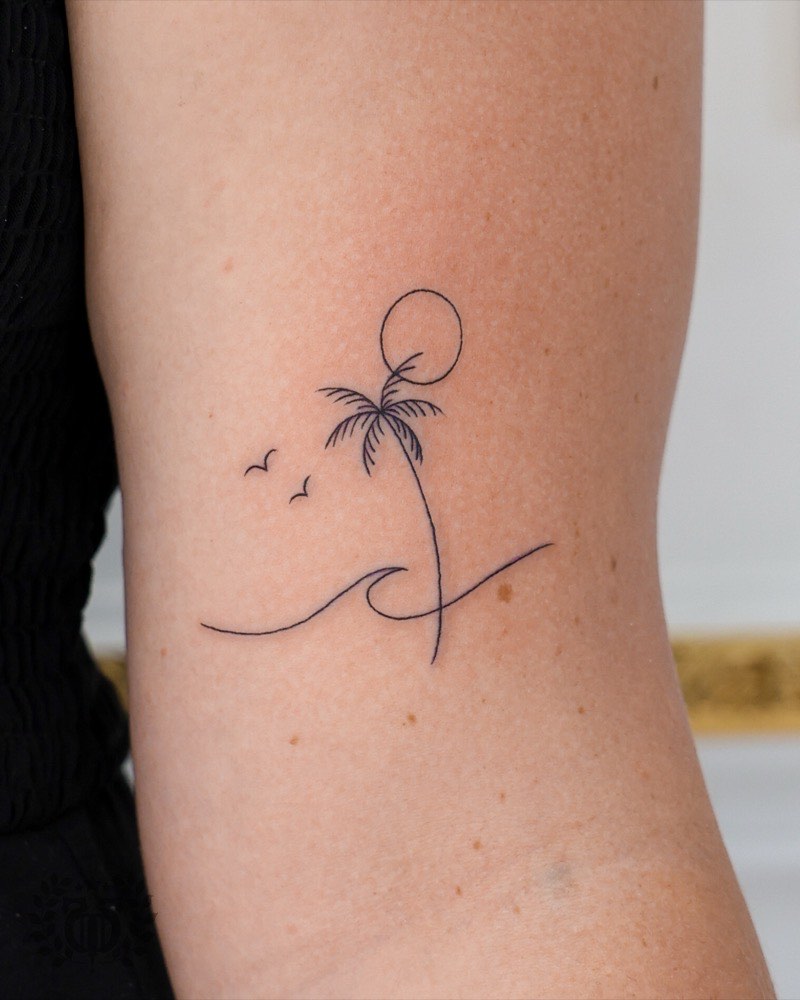
Religious & devotional
Madonnas, saints, praying hands, Sacred Heart iconography. The Chicano black-and-gray tradition built its canon around religious imagery, and the style still carries it better than any other. Bold outline anchors the silhouette; interior gray-wash shading does the volumetric work.
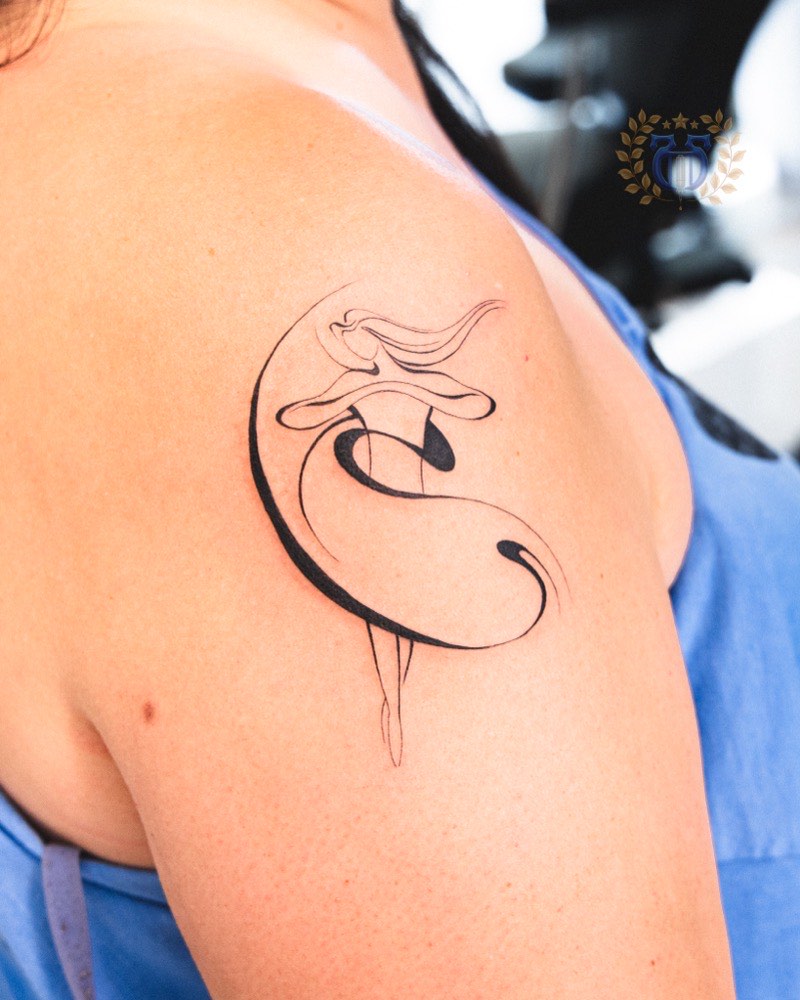
Memorial & portrait work
Memorial pieces built from a specific reference photograph. Monochrome rendering reads with less visual noise than color realism — the reference photo's mood carries without being amplified or altered by pigment choice. The specialist's style for grief-work.
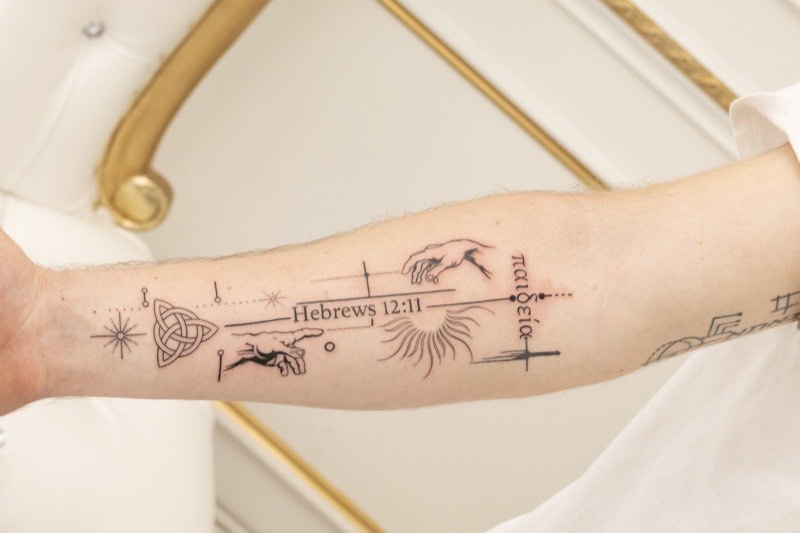
Architectural & ornamental
Filigree, cathedrals, lace patterns, ornamental scrollwork. Monochrome reads as engraving — a dialect the Western decorative tradition already has five centuries of visual grammar for. Ornamental work in gray wash references etching and silverpoint in a way color can't.
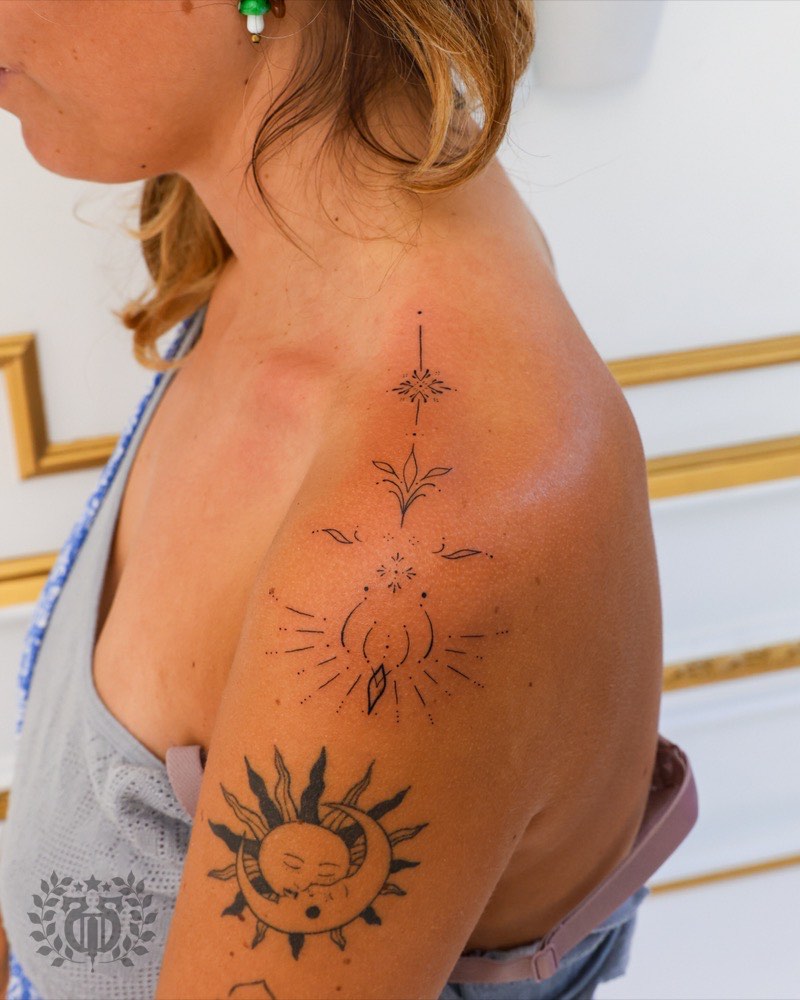
Animal portraiture
Pets, wildlife, memorial animal work. The same gradient logic that makes faces read makes fur and feather texture read. Dog, horse, wolf, bird portraits land more consistently in black and gray than in color because the tonal range of real fur lives naturally inside the gray style.
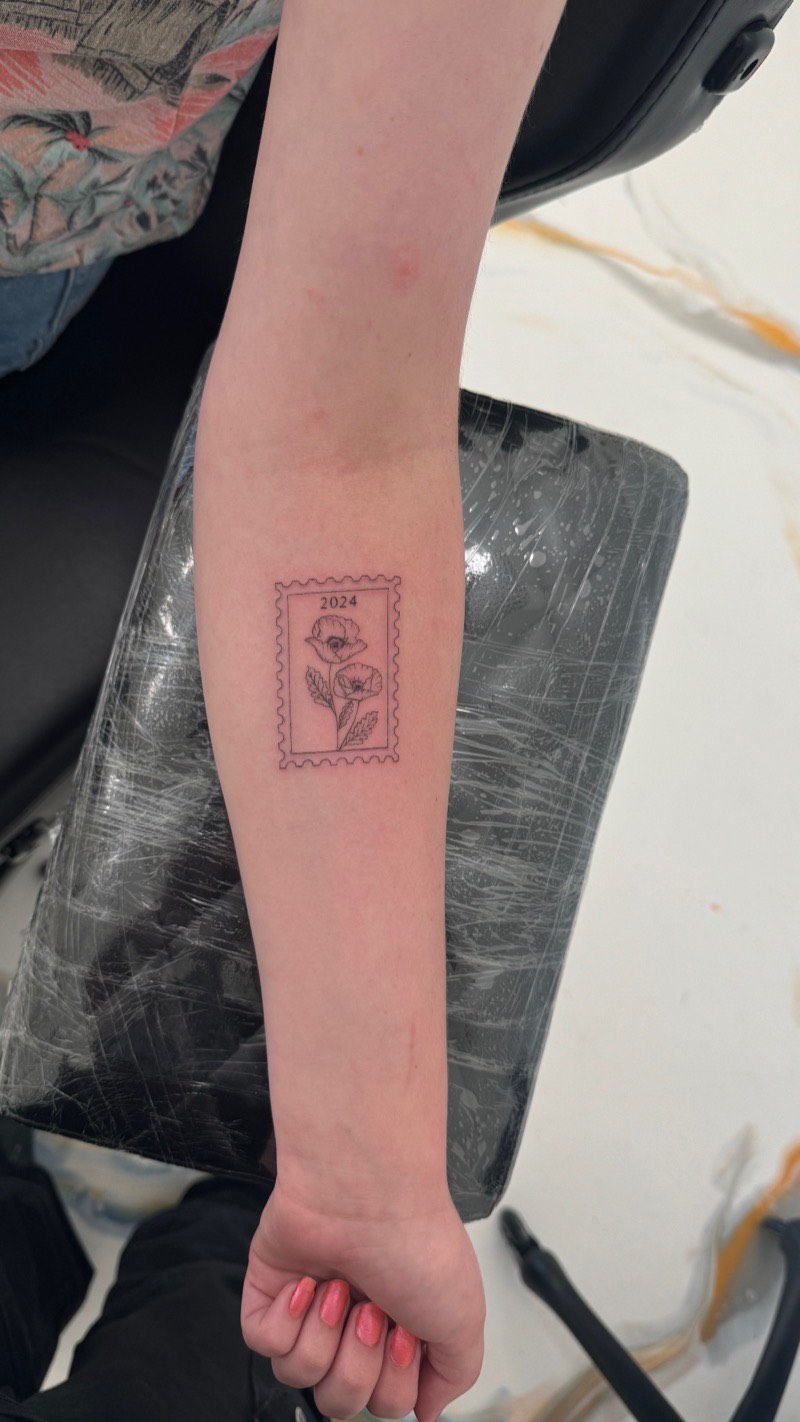
Scenic & landscape
Mountain ranges, coastlines, dusk-light forest scenes. Black and gray handles atmospheric depth through tonal recession — the further element reads lighter, the foreground reads heavier. This is the style for scenic work where the mood matters more than the specific hue.
Where gray loses
What gray wash cannot do.
Black and gray is not a filter you apply to any idea. These are the briefs where gray wash loses, whoever is holding the machine.
Bright-palette traditional iconography
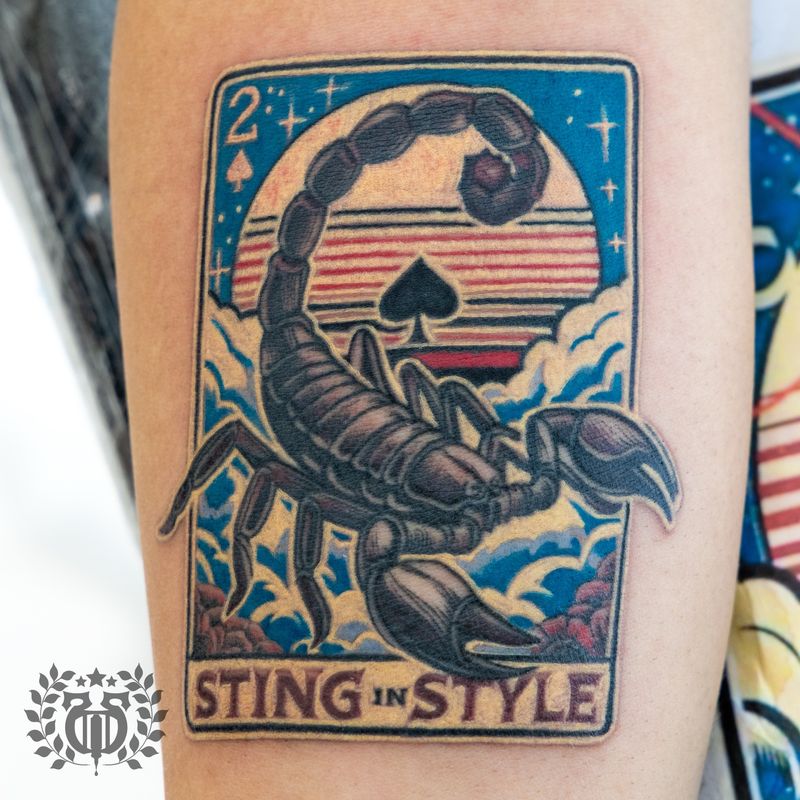
American Traditional flash was engineered around a four-color palette — flatten a swallow or a pin-up into black and gray and the design loses the structural logic that makes it read. Traditional subjects belong in traditional color.
Watercolor-style ideas
Watercolor is a color-first style. Monochrome versions exist, but they are not black and gray in the working-shop sense — they are a different technical style and should be briefed accordingly.
Micro-scale realism
Black and gray depends on tonal range, which needs enough square area to carry gradient. Under 2 inches the wash compresses and reads as a smudge rather than shading. Scale down to simplified line work or scale up to hold the gray.
Cover-ups over dense saturated color
Black and gray's pigment load is moderate — enough to work over old black outlines in some cases, rarely enough to fully mask saturated red, green, or yellow underneath. Laser lightening first, then monochrome on top, is the honest cover-up path here.
High-contrast graphic design
Logos, sharp flat shapes, vector-style ideas want crisp solid ink. Black and gray's advantage is tonal subtlety — weaponizing it against a graphic brief flattens both.
UV-reactive or experimental ink work
Out of style. Black and gray is a pigment-and-dilution discipline built around carbon-based ink traditions. Keep specialty inks in their own lane.
Numbers and ground
Sizes, weights, and one honest floor.
Black and gray's longevity depends on scale floors more than fine line's does — because gradient needs room to develop. The rules below aren't preferences; they're the honest minimums for the style to read at year ten.
The floor for gradient
Below this the gray wash compresses and reads as a bruise rather than deliberate shading — the tonal range needs area to develop.
A recognizable face in monochrome needs roughly this much real estate for features to differentiate without merging.
Areas that fold or stretch (inner elbow, back of knee, hand) benefit from larger scale so soft wash has room to soften without losing form.
Thinner than traditional but heavier than fine line. Enough weight to carry shading; light enough to read as ornamental rather than bold.
Where it holds up
- Outer forearm. Flat working surface, stable skin for gradient work.
- Upper arm (outer & bicep). Classic black-and-gray placement since the 1970s.
- Chest panel & sternum. Plenty of area for portraits and religious pieces.
- Thigh (outer & front). Large canvas, steady skin, excellent for memorial and scenic work.
- Shoulder blade & upper back. The portrait placement of choice for full-scale work.
- Calf (outer). Holds gradient well, reads year-round.
Where gray wash struggles
- Fingers & palms. Friction and cell turnover; gray wash blurs and loses tonal range inside a year.
- Inside of wrist (for detailed work). Thin skin, high flex, aggressive aging for soft-wash detail.
- Behind ear (large detailed pieces). Small pieces hold; detailed shading loses form.
- Feet. Shoe friction strips soft wash faster than almost any other placement.
- Inside upper arm. Constant bending distorts gradient work — portraits compress.
- Ribs (for portraits). Skin movement and pain tolerance make this a moderate fit for long gradient sessions.
Black and gray in the wild
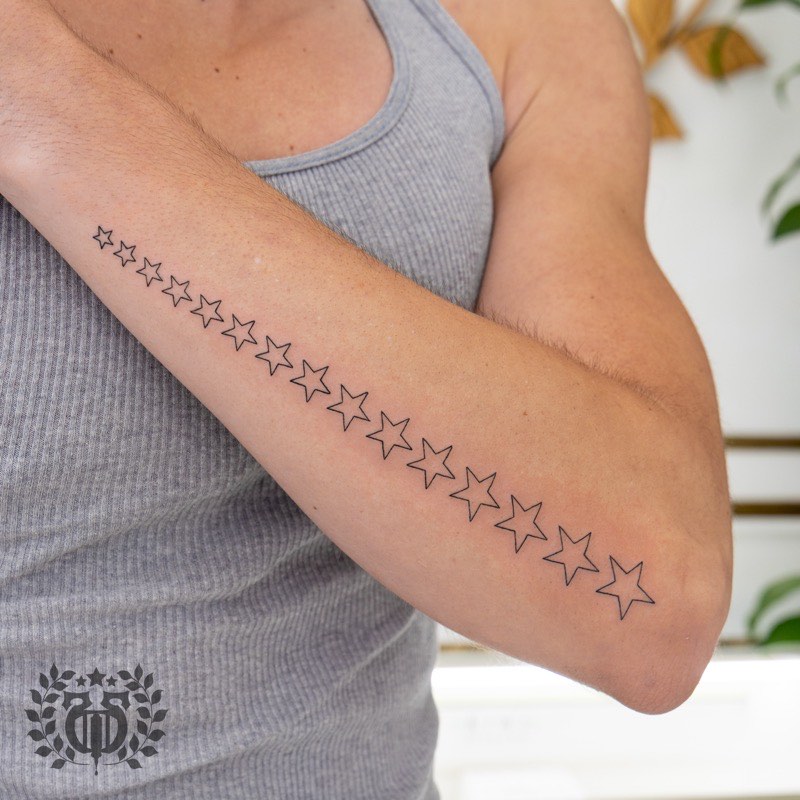
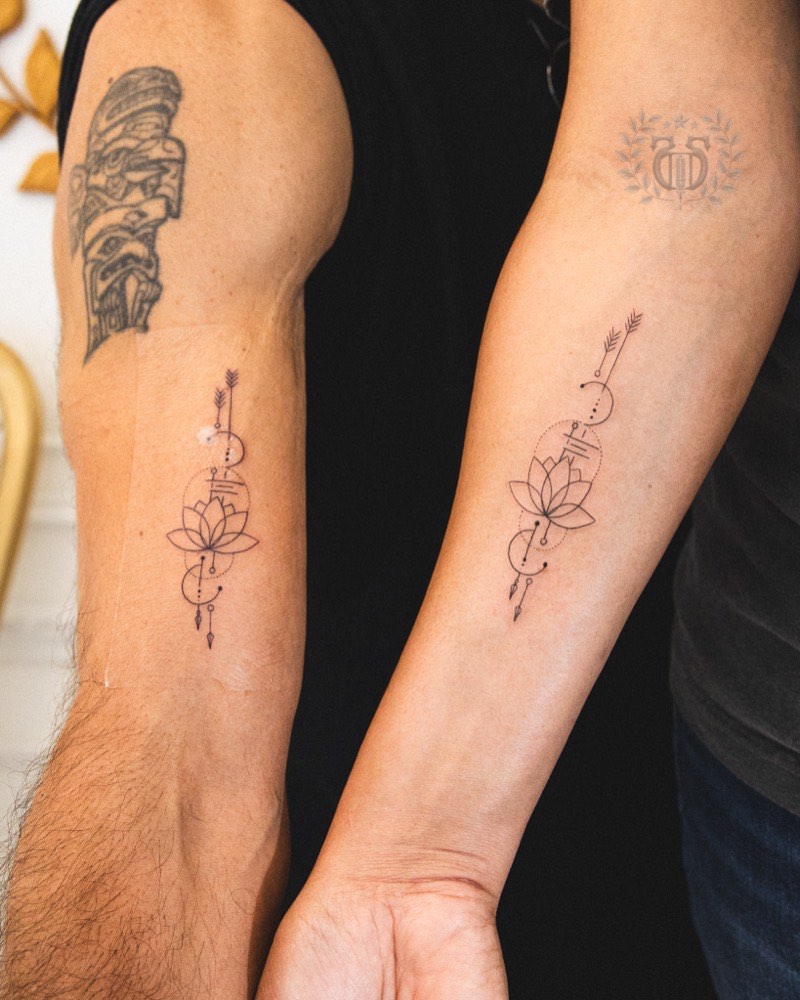
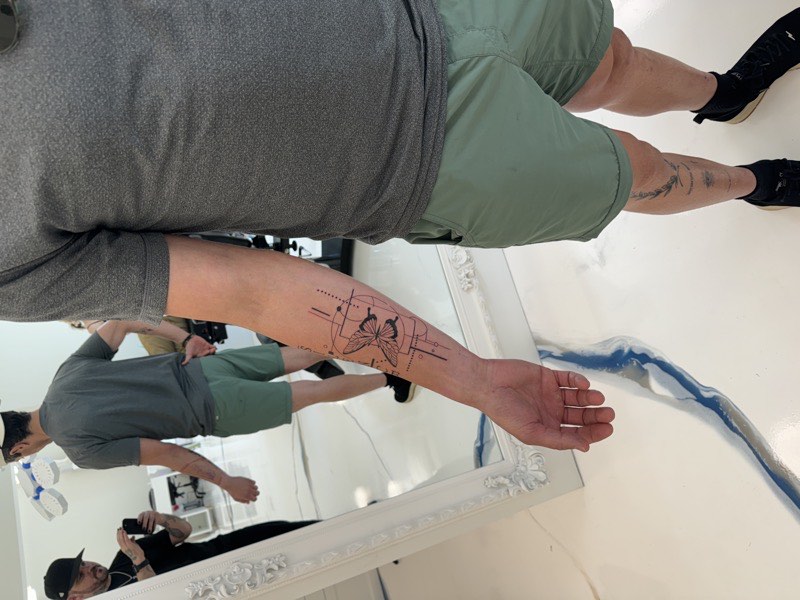
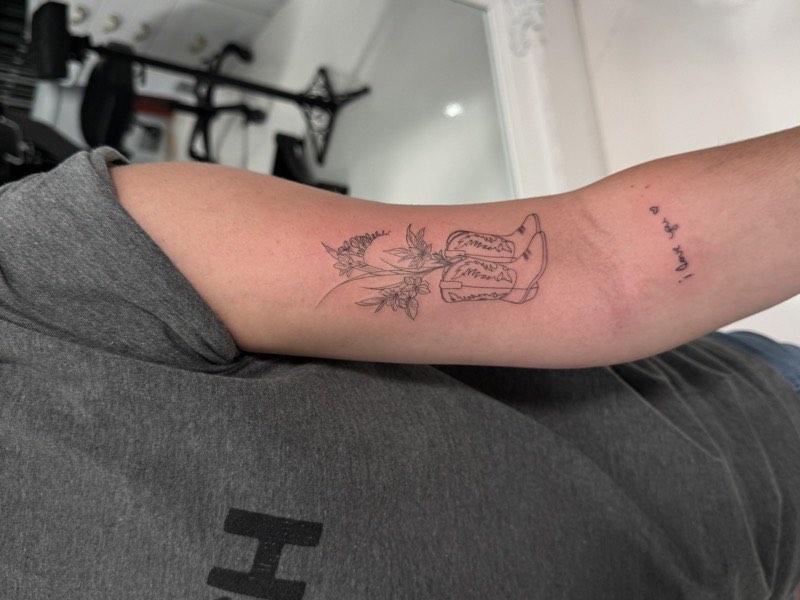
Gray wash in the shop's own work.
The twenty-year read
The twenty-year read on gray wash.
Aging is a feature of the medium. Here is the year-by-year read, which most studios skip at consultation.
Wash settling
A healed black-and-gray piece at one year looks softer than the wet-ink day-three photos and that is the correct read. The dermis is still remodeling, the wash has settled from its freshly-deposited brightness, and edges have softened by a hair. This is settling, not fading. Clients who have not been prepped for it read this phase as loss. Specialists prep the expectation at consultation.
Early touch-up window
The tonal range compresses slightly — the darkest darks stay dark, the lightest lights drift toward mid-gray. Outlines remain crisp on well-executed work. This is when specialists look at re-saturating specific shadow zones rather than reworking the piece.
When gray needs a lift
The first genuine touch-up usually lands here. On portraits, the darkest shadows may be re-pulled to restore the face's depth map. On ornamental work, the anchoring lines get refreshed while the mid-tone wash is usually left alone — it has aged into its lived-in state.
Soft-wash truth
Black and gray at 15 years reads as a recognizably aged version of itself — softer, cooler in temperature, slightly more unified in tonal range. This is the style's honest long-form state and what collectors of the style often prefer. Chicano black-and-gray pieces from the 1980s and 1990s on senior collectors still read correctly at this age.
The twenty-year verdict
Properly placed black and gray holds its composition at 20 years. The piece softens but does not disappear — unlike some fine-line work, there is enough pigment mass to survive two decades of UV exposure and skin remodeling. Color pieces at 20 years drift in hue; black and gray pieces at 20 years drift in tone. Most wearers find the latter easier to live with.
Three variables dominate how black and gray specifically ages: wash saturation at the lay-in (under-saturated grays drift toward skin tone faster), UV exposure (carbon pigment is among the most UV-stable, but diluted grays lose the lightest tones first), and session layering (pieces built across 2–3 sessions with heal time between tend to hold richer gradient than single-sit marathon pieces).
Planning table
A planning table for gray wash.
The table our gray-wash artists work from in the chair. Treat each row as an opening position. Your artist will move it once the reference is in front of them.
What people assume
Five assumptions we usually adjust.
What first-timers arrive believing about gray wash. Read these forward. Nothing here is a verdict on a tattoo you already have.
“Black and gray just means removing color from any idea.”
Black and gray is its own style with its own compositional logic. A color piece converted to monochrome is not a black and gray tattoo — it's a color tattoo minus color. The design has to be built for gray wash from the first sketch.
“It's the same thing as fine line.”
Overlap but not identity. Fine line describes a needle configuration (1RL) and line weight; black and gray describes a pigment dialect (black diluted to gray through saline or distilled-water wash). A piece can be one, the other, both, or neither.
“It will fade faster than color.”
Usually the opposite. Well-laid black and gray holds its composition longer than many color pieces because the pigment is a single dilution of carbon ink — no multi-color interaction, no specific pigment line vulnerable to UV photobleaching.
“Any black-and-gray artist can do any black-and-gray subject.”
Subject specialization within the style is real. A filigree specialist is not a portrait specialist is not a scenic specialist. Match the portfolio to the subject, not just to the style.
“Grayscale realism is the same as soft-wash gray work.”
Different styles inside the same family. Black-and-gray realism (see our color-realism sibling) chases photographic accuracy; soft-wash black and gray chases a painterly graphite-on-skin effect. Both are valid — they need different reference material and different artists.
Picking the hand
Picking the right gray-wash hand.
Black and gray rewards specialist fit inside a sub-style. How to read a portfolio, what should worry you in one, and the questions a gray-wash artist should welcome.
Good signs in a gray-wash portfolio
- Multi-year-old healed gradient photos posted proudly
- Consistency in tonal range across different body areas — forearms, thighs, chests all reading in the same style
- Willingness to show in-progress photos from layered sessions (black and gray often builds across 2–3 sittings)
- Specific craft language: wash dilution, needle grouping (3RL vs. magnum), machine type
- A portfolio that specializes — portraits, or ornamental, or scenic — rather than claiming all of it
- Long-form captions that walk through the tonal plan
Walk away if
- Portfolio shows only fresh wet-ink photos — no healed gradient documentation
- Visible patchy wash in finished work — tonal range that skips mid-tones
- Blowout in gray wash areas (ink migrating into surrounding skin during the deposit)
- Faces with inconsistent feature proportion across different pieces
- One strong black-and-gray piece surrounded by color, traditional, and fine-line work (generalist, not specialist)
- No discussion of pigment dilution ratios or wash technique in captions
- Refusal to show the same piece at 1-year, 3-year, 5-year healed stages
Six questions for a gray-wash portfolio
- Which black-and-gray pieces in my subject area have you healed this year?
- Are you mixing wash on the day, or using pre-diluted gray sets?
- At this size and placement, what tonal range should I expect — soft-wash, mid-range, or saturated?
- How many sessions should I plan for, and why break it across sessions vs. one long sit?
- What does your touch-up window look like specifically for gradient work?
- Which subjects inside black and gray do you decline, and why?
Someone who works in gray wash daily answers all six concretely. If an artist gets vague at this point, the vagueness is the answer.
FAQ
Straight answers about gray wash.
Seven things clients want settled before they commit a forearm to gray wash.
What's the difference between black and gray tattoos and black and gray realism?
Both sit inside the same pigment family but pursue different goals. Black and gray in the general sense is the monochrome style — a dialect for any subject rendered in carbon ink and gray wash. It includes soft-wash botanical, ornamental, devotional, scenic, and painterly work. Black and gray realism is a narrower specialization chasing photographic fidelity to a specific reference image. All black-and-gray realism is black and gray, but not all black and gray aims for realism. Our sibling guide at /tattoos/styles/black-gray-realism/ covers the photorealism-leaning style; this guide covers the broader monochrome dialect.
How does the gray wash actually get mixed?
Two main methods. Traditional Chicano black and gray dilutes a concentrated black tattoo ink with distilled water (sometimes witch hazel) in custom ratios — the artist mixes a 3-gray set or 5-gray set on the day, tuned to the skin and the reference. Modern pre-diluted gray sets (manufactured in fixed ratios) are faster but give less tonal flexibility. Both can produce excellent work; the craft signal is whether the artist is thinking about tonal range deliberately, regardless of which method produces it.
Does black and gray age better than color?
Usually yes. Carbon-based black ink is among the most stable pigments tattooing uses, and gray wash is just diluted black. Color pigments vary — red and yellow families tend to photobleach faster under UV than cool tones. A black-and-gray piece at 20 years will have softened in tonal range but will still read as the same composition; a color piece at 20 years will often show hue drift. Both styles can be maintained with touch-ups, and both can fail when placed wrong or laid in too shallow.
Is black and gray the same as fine line?
Overlap, not identity. Fine line refers to needle configuration (typically 1RL or 3RL) and line weight; black and gray refers to pigment dialect (carbon ink with gray wash). A piece can be fine line in color, fine line in black and gray, bold black and gray, or bold color. The common confusion comes from Chicano single-needle tattooing, which is both fine line AND black and gray — but those are two axes, not one style.
Can I do a cover-up with black and gray?
Sometimes. Black and gray has moderate pigment load — heavier than fine line, lighter than saturated traditional. It can cover old black outlines and lightly-saturated work if the new design is built to absorb the existing imagery. Saturated-color cover-ups usually need laser lightening first, with black and gray built into the faded area afterward. A specialist cover-up consultation walks you through whether your specific existing ink is a candidate.
How many sessions should I plan for a black and gray piece?
Depends on scale and complexity. A 3-inch soft-wash botanical is usually one session. A 6-inch portrait is commonly two sessions — outline plus shading, or initial lay-in plus detail refinement. A half-sleeve black-and-gray composition is typically four to six sessions. Layering across sessions gives the skin time to heal between pigment deposits, which produces cleaner gradient than trying to push saturation in a single long sit.
Can black and gray work on darker skin tones?
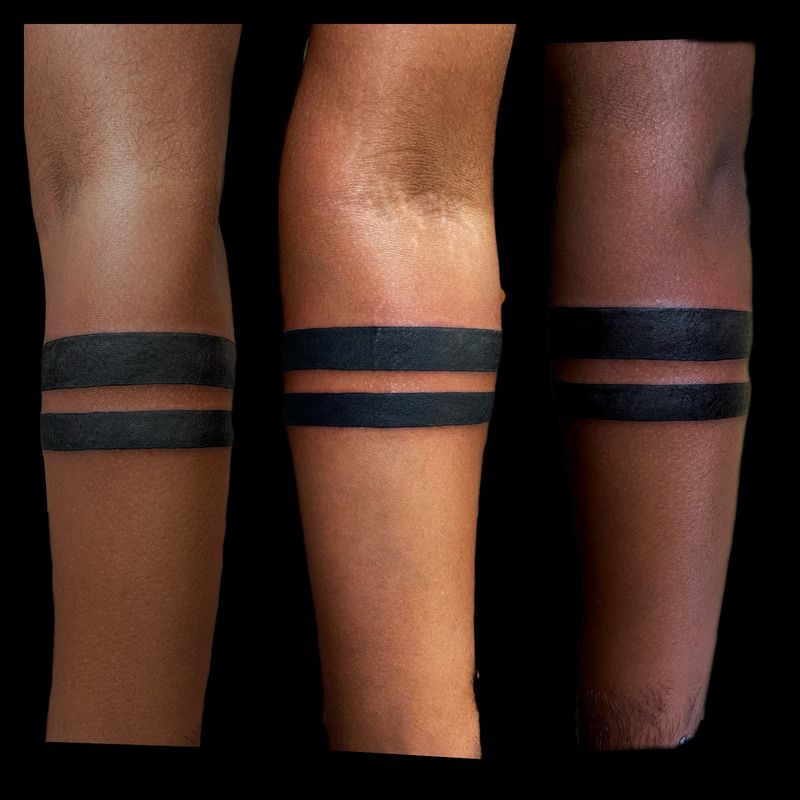
Yes, with craft adjustments. On Fitzpatrick I–III skin, the full tonal range from lightest gray to deepest black reads with full contrast. On IV–VI skin, the lightest grays may blend into natural skin tone, which changes the compositional approach — experienced artists shift the working tonal range darker and rely more on line weight for structural information. This is a craft conversation, not a limitation. The best signal is an artist whose portfolio shows healed black-and-gray work across multiple skin tones.
Next step
Reference, subject, placement — then we point you at the artist whose sub-specialty fits.
Black and gray is a specialist's style with real sub-specialties inside it. Bring a couple of images you keep going back to, the subject, and the patch of skin you have in mind. From there we pick the sub-specialty before the artist. Soft wash, saturated and single-needle are three different bookings, and choosing wrong costs more than choosing slowly.