Tattoo Styles
Black Gray Realism
Take the pigment out and one problem disappears: there is no color left to shift. What softens over the decades is contrast, and contrast can be pushed back. The East LA single-needle lineage, the gradient craft, and the photo standards that decide whether a face reads at all.
Book a consultationTechnique
What black-and-gray realism actually is.
A rendering discipline built on one color and its dilutions. What that looks like once the machine is running.
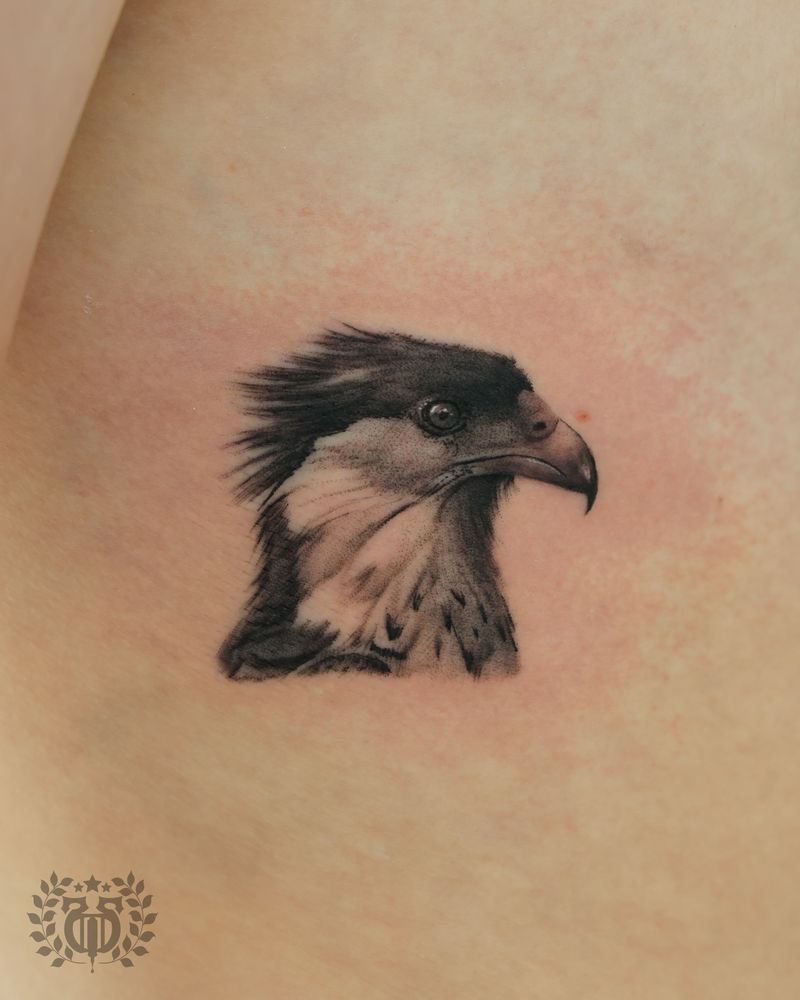
Black-and-gray realism is a tattoo discipline that renders photographic imagery using only black ink and its dilutions. By thinning black pigment with distilled water or witch hazel, artists create a full tonal spectrum — deep saturated blacks through mid-tones to whisper-soft grays — that mimics the way a silver gelatin photograph handles light.
The hallmarks: smooth tonal gradients, high dynamic range, and the use of the client's own skin as the brightest highlight value. Hard outlines are rare; edges are defined by tonal contrast, the same way a photograph resolves form. The style demands different skills than color realism — less pigment management, far more value discipline.
At the machine, the practice runs on a small range of configurations. Single-needle (1RL) or three-round-liner (3RL) for the finest detail and outline work. Magnum groupings for smooth filling and gradient shading. Most specialists work primarily on rotary machines for consistent depth on extended passes. The thin needle is the heritage; the smooth magnum is the modern refinement.
The Chicano lineage
Where the style came from.
Black-and-gray realism is a specific Los Angeles tradition. The people and the decades behind it.
1960s – early 1970s
Prison single-needle
The aesthetic emerged inside the California prison system. With no access to professional equipment, incarcerated artists built rotary machines from cassette-player motors, guitar strings, and ballpoint pen barrels. One sewing needle, diluted pigment, hours of patient stippling. That constraint produced the delicate, photographic quality the style is now celebrated for.
1975 — East LA
Good Time Charlie's Tattooland
Founded by Charlie Cartwright in East Los Angeles. Jack Rudy joined shortly after and took over the shop; Freddy Negrete apprenticed there and is widely credited as the first professional tattooer to bring the prison single-needle aesthetic into a street shop setting. They professionalized the technique — refining machines, formalizing gray-wash dilution.
1980s – 2000s
Shamrock Social Club
Mark Mahoney — a direct inheritor of the Rudy/Negrete tradition — established Shamrock Social Club on Sunset Boulevard and became the connective figure between Chicano black-and-gray and the broader Hollywood tattooing world. The shop's lineage runs continuously from East LA to now.
2000s – present
Modern specialists
Chuey Quintanar at Timeless Tattoo carries the Chicano technique at elite precision. Nikko Hurtado bridged into color realism. Jose Lopez anchors the OC Chicano scene. The tradition is alive, continuous, and still evolving — but the roots are visible in every piece.
Black-and-gray realism as the modern commercial world now understands it is a descendant of the East LA tradition. The religious iconography, the script lettering, the portrait work, the graceful gray-wash shading — all of it traces back to the prison-born technique that Good Time Charlie's legitimized in 1975. Choosing this style is choosing to participate in that lineage.
Technique
Four moves that define the craft.
The shading vocabulary that separates strong black-and-gray from average realism.
Ι
Dilution controls value
Undiluted black for darkest values, roughly one-to-one dilution for mid-gray, heavily diluted wash for softest passages. The skin itself provides the highlight — areas of untouched skin read as pure white against surrounding gray — so planning negative space is as important as planning the blacks.
ΙΙ
Whip shading
A flicking wrist motion that tapers each pass. Ideal for soft gradients on skin and fabric — the transitions into shadow on a portrait face, the fade along a flowing robe, the gradient of a stone surface.
ΙΙΙ
Pepper shading
Short stippling bursts that build texture and grain. Often used for stone, hair, and atmospheric background. Distinctive speckled quality that signals a traditional Chicano approach.
ΙV
Smooth shading
Slow overlapping passes that produce unbroken gradients across large areas like cheeks, forehead planes, and drapery. The workhorse technique for facial realism — the difference between a competent artist and a specialist.
Gradient needs room
Where gradient work sits best.
Detail and gradient require real estate. These are the placements and sizes that carry black-and-gray without breaking.
Ground that suits gradient
- Upper arm (workhorse). Deltoid wrapping to outer bicep — visible when desired, coverable for work, generous enough for a 5–7 inch portrait.
- Upper back / chest pec (best). Broad enough to hold mid-tone gradients without the image breaking across a joint. Natural fit for full Virgen de Guadalupe or angel compositions.
- Outer or front thigh (best). Generous flat canvas for large pieces (8+ inches) with background detail. Low friction, ages cleanly.
- Inner bicep (intimate/memorial). Softer skin, personal viewing angle. Shaded blacks settle beautifully once healed. Frequently chosen for grandparent, child, or lost-loved-one portraits.
- Outer forearm (on display). For clients who want realism visible daily, functioning almost as wearable portraiture. Solid for clock-and-rose, portrait, or eye compositions.
- Hands, fingers, feet (avoid). These areas flex constantly, shed ink aggressively, and will blur the fine mid-tone transitions that make black-and-gray read as photographic.
Size bands for a face
- Under 4 inches. Facial features compress and the likeness collapses. The single most common regret we see in realism consultations.
- 4–6 inches. Floor for a recognizable portrait. Works for single-subject compositions like a realistic rose, clock-and-rose pairing, eye with teardrop, or small Chicano-tradition script-and-portrait.
- 6–8 inches. Where black-and-gray realism really opens up. Clean eyes, skin texture, hair strands read properly. Multi-session work typically lives here.
- 8+ inches. Scenes with backgrounds — architecture, landscapes, multi-figure compositions, religious iconography with environmental detail. Half-sleeve, chest panel, or back piece territory.
Arrangements
Eight compositions that hold up.
Not a catalog — opening positions for the conversation. Each one is a shape the tradition has worked and refined over decades.
1. Chicano Virgen de Guadalupe
Cornerstone of LA black-and-gray tradition. Full-figure Virgen with radiating mandorla, folded hands, crescent moon at her feet. Chest, full back, or outer forearm. Shading from ink-black robes through soft gray rays, with the face luminous. A devotional piece that carries deep cultural weight in the LA region.
2. Photorealistic human portrait
Grandparent, parent, child, or spouse from reference photograph. Highest-stakes request — likeness is everything. Multiple high-res reference photos required, ideally with directional lighting. 5–8 inches on upper arm, inner bicep, or chest. Two to three sessions plus a touch-up.
3. Clock with Roman numerals and rose
An antique pocket watch or wall clock with Roman numerals, often set to a meaningful time, draped with or rising from a photorealistic rose. Strong on forearm, outer thigh, or shoulder. Metal textures and petal gradients show the range of realism shading inside a compact 5–7 inch format.
4. Religious angel with wings
Guardian angels, archangels, praying cherubs — often paired with clouds, script, or rays of light. Wings give the artist a dramatic playground for feather texture and smoky negative-space clouds. Chest, upper back, or half-sleeve at 7+ inches.
5. Praying hands with rosary
Clasped hands, often with a rosary draped through the fingers. Knuckle and tendon shading is the hallmark — realistic skin, veins, and nail detail separate great work from average. Strong on the inner forearm, calf, or center chest at 5–8 inches.
6. Realistic rose, single-stem
The black-and-gray rose — dense, layered bloom with deep-black core shadows and gray petal edges fading into skin. Leaves, thorns, clean stem complete the composition. Works at nearly any size from 3 inches up, though 5 inches and larger lets the petal gradations breathe.
7. Skull with ornamental filigree
Classic memento mori upgraded with decorative linework — roses, scrollwork, clockwork, or lace patterns weaving through the skull's contours. Black-and-gray renders the bone texture realistically while ornamental elements add graphic contrast. 5–8 inches.
8. Eye with teardrop (Chicano traditional)
A single realistic human eye, often with a single tear, rendered in sharp black-and-gray. Rooted in Chicano tradition and frequently carrying memorial meaning. The iris detail, eyelash work, and teardrop highlight define the piece. 3–5 inches on forearm or ribs.
Cross-style
Black-and-gray with other styles.
The hybrids the tradition has already tested — pairings that add weight without muddying the realism.
Pairing
B&G realism + fine-line script
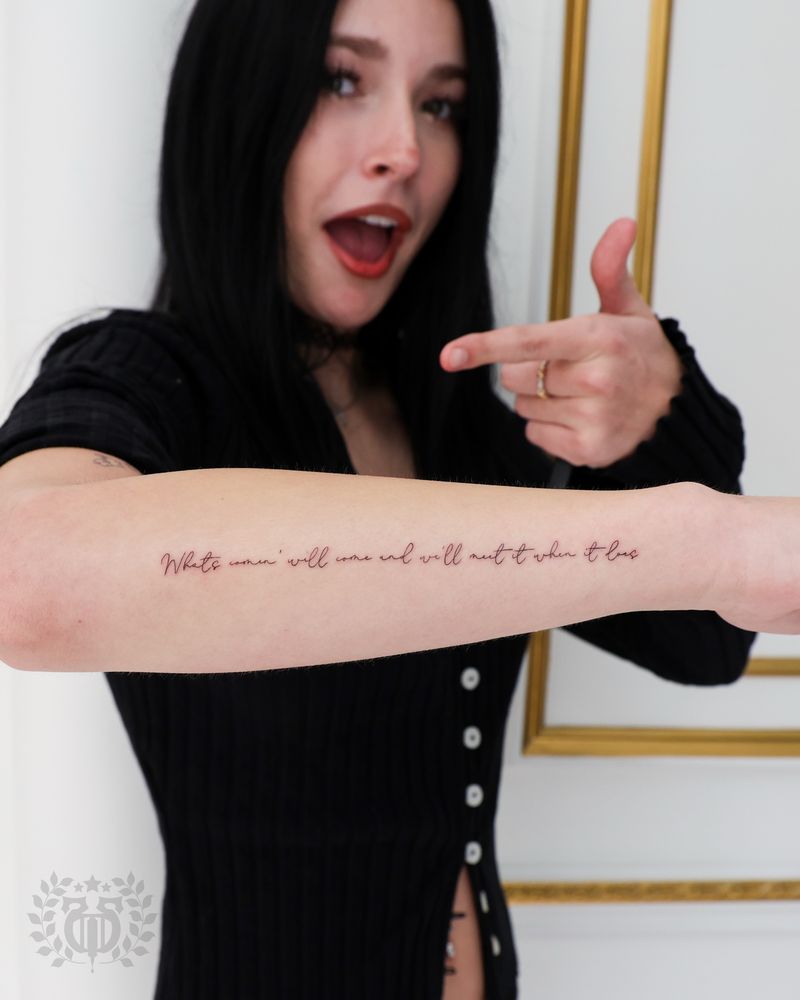
The quintessential LA Chicano pairing. A portrait with a name, date, or phrase in classic single-needle lettering — clean, elegant, unmistakable.
Pairing
B&G realism + ornamental framing
Mandala arcs, lace patterns, or filigree scrollwork border a portrait or central subject. The graphic structure contrasts beautifully with the photographic interior.
Pairing
B&G realism + dotwork backgrounds
Stippled texture layered behind or around the realistic focal point, creating depth without competing color. Strong for spiritual or celestial compositions.
Pairing
B&G realism + cursive script
Handwritten names, dates, or phrases in cursive lettering woven into or alongside the portrait. The most traditional Chicano presentation.
Pairing
B&G realism + blackletter
Gothic lettering layered with a religious portrait creates a doubled weight — the same tradition, two different voices.
Aging & longevity
How the style holds over decades.
Black-and-gray ages distinctively. The tonal vocabulary shifts over time, but the image persists.
Year 1–3: Settling.
Fresh work reads sharper than it will. Once the dermis fully heals, the lightest gray washes soften by a shade. This is settling, not fading — it's what a realism specialist designs for.
Year 3–7: The first touch-up window.
Lightest gray passages may need a refresh. Deep blacks and mid-tones typically hold. The touch-up is part of ownership, not a failure of the original.
Year 7–15: Maturing.
Good black-and-gray at fifteen years reads as a lived-in version of itself — softer, warmer in the grays, still photographic. This is the timeline the style was built for.
Year 15–25+: The deep hold.
Black-and-gray at 20+ years still carries. Carbon black resists UV breakdown better than color pigments, which is why the style outlasts color realism by roughly a decade on the same skin.
First black-and-gray piece
Eight steps to a usable brief.
The preparation that separates clients who leave satisfied from clients who leave wishing they'd done more research.
- Study the lineage. Look at Jack Rudy, Freddy Negrete, Chuey Quintanar, Mark Mahoney. Understand the tradition before walking into the consultation.
- Reference, reference, reference. Bring five to ten photos of your subject, not one. The artist composites from your archive; more source material means better final work.
- Scale up, not down. First-time realism clients almost always ask for something too small. Accept the artist's scale recommendation.
- Pick a protected placement. Inner bicep, inner forearm, upper back, chest. Skin that doesn't see the sun or rub against clothing holds realism detail far longer.
- Understand healing is slow. Realism pieces scab heavier than line work. Plan 3–4 weeks of careful aftercare and avoid sun exposure for a full healing cycle.
- Commit to the session count. Don't book realism expecting one sitting. Multi-session is standard; budget the time across weeks.
- Ask about Chicano literacy. If you want the tradition specifically, ask your artist to name the practitioners they draw from. Vague answers are red flags.
- Plan the touch-up. Soft gray washes benefit from a refresh at the three-to-five-year mark. Budget it into the long-term ownership of the piece.
Your decisions
Three decisions that personalise it.
The specifics that turn a generic portrait into a piece of family record.
Memorial context
Names, dates, handwritten script from the subject's own letters, background elements that reference a place or moment shared with the person depicted.
Cultural specificity
Religious iconography chosen from the client's tradition — Virgen de Guadalupe, Sacred Heart, Santo Niño, Our Lady of Sorrows. The portrait carries deeper weight when the iconography is lived, not borrowed.
Environmental framing
Architectural elements (arches, stained glass, stone), atmospheric context (clouds, rays, draped fabric), or personal objects (a clock set to a meaningful time, a rose from a garden).
Briefs we rework
Six briefs we rework.
The failure modes specific to this style. Not judgments — framing for the next piece.
Wrong artist for the style
Traditional and neo-traditional specialists often cannot execute smooth realism gradients. Match the artist's demonstrated strength to the style. A generalist at this level of detail is a gamble.
Going too small
Realism needs space to breathe. A portrait smaller than a playing card loses the detail that makes it read as realism rather than a blurry suggestion. Commit to appropriate scale or choose a different style.
Expecting color vibrance
Black-and-gray is a grayscale medium. If you want punchy reds and electric blues, choose color realism. Judging a grayscale piece against color expectations guarantees disappointment.
Skipping the touch-up
Even durable black-and-gray work benefits from a light touch-up around the 3–5 year mark. Gray tones — especially lightest washes — can settle slightly into surrounding skin. Budget for it as part of ownership.
Bad reference
Low-resolution phone screenshots, heavily filtered images, and composite Pinterest mashups produce weak tattoos. Invest time finding the clearest, sharpest reference possible. Your artist can only render what the source actually shows.
Rushing the session
A portrait that feels rushed will look rushed forever. If the artist needs three sessions to render the piece they want to render, accept that pace. Clients who try to compress the work almost always regret it.
Portfolio review
Eight questions for a portfolio review.
An artist fluent in the tradition can answer every one concretely.
- Do you have portraits photographed a year or more after the sitting?
- How do you handle gradient transitions on darker skin tones?
- What reference quality do you need from me for a portrait?
- How many sessions will this take, and what's between them?
- Have you worked in the Chicano tradition specifically?
- What's your touch-up policy on soft gray washes?
- Which Chicano-tradition artists do you study or reference?
- What would you talk me out of in this concept?
Generalist answers on any of these are telling you something. Black-and-gray realism is a specialist's craft.
FAQ
The realism questions we get asked twice a week.
What clients ask once they understand that contrast, not color, is the thing that softens.
What's the difference between black-and-gray and blackwork?
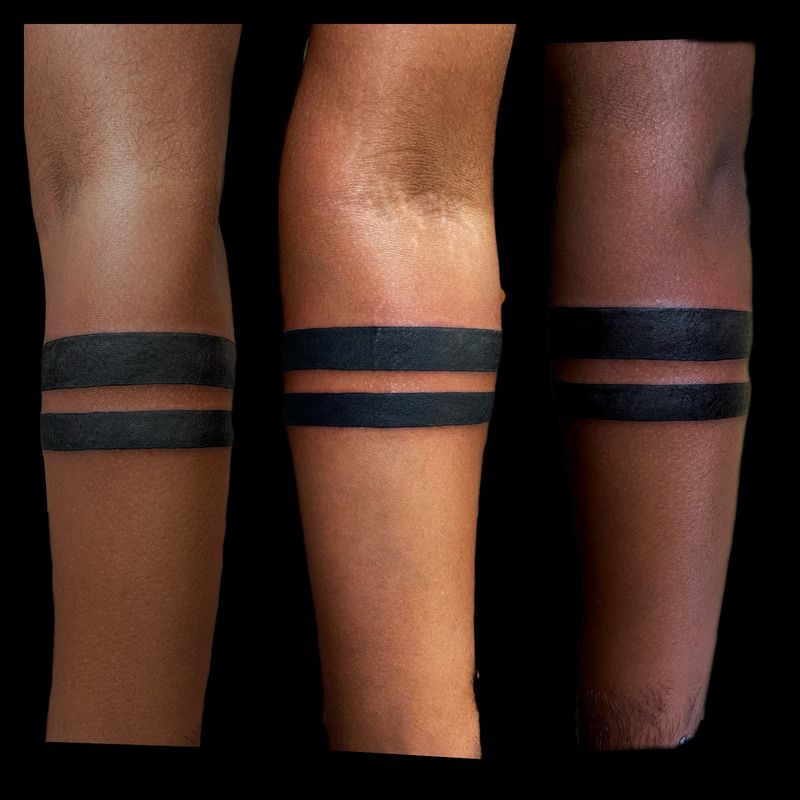
Blackwork relies on solid black fills, bold outlines, and high-contrast negative space to create graphic statements. Black-and-gray realism uses diluted black ink to build smooth gradients that mimic photographic tonality. Blackwork tells you what something is through shape; black-and-gray realism shows you what something looks like through shading and atmospheric depth.
Does black-and-gray age better than color?
Yes, generally. Black ink holds its integrity longer than color pigments because carbon-based black resists UV breakdown better than organic colorants. A well-executed black-and-gray piece can hold clean tonal separation for 15–20 years with basic care. Color realism often needs touch-ups within 8–10 years to restore saturation.
Is black-and-gray realism the same as Chicano style?
They share a bloodline but aren't identical. Chicano style is the cultural and aesthetic tradition that refined black-and-gray technique in 1970s East LA, centered on specific imagery: religious iconography, lowriders, clown masks, script lettering. Black-and-gray realism is the broader technical category. Every Chicano tattoo uses black-and-gray; not every black-and-gray tattoo is Chicano.
How long does a black-and-gray portrait take?
A palm-sized portrait typically runs 4–6 hours in a single sitting, assuming clean reference and a cooperative placement. Larger portraits incorporating background elements, secondary figures, or extended composition usually split across 2–3 sessions totaling 12–18 hours. Rushing a portrait guarantees a muddy result, so artists pace the work deliberately.
Can I do a memorial portrait in black-and-gray?
This is one of the style's most meaningful applications. The grayscale palette reads quieter and more reverent than saturated color, which suits memorial work. Bring the sharpest, highest-resolution photograph you can find, ideally with clear lighting on the face. Your artist will discuss composition, background elements like roses or clouds, and whether to include names or dates.
Does pricing differ from color realism?
We quote by hours in the chair, agreed at consultation. Black-and-gray realism demands the same patient, technical labor as color work, so hourly rates are similar. You may save slightly on session count because fewer ink changes streamline the work, but budget a similar overall range.
Can black-and-gray cover an old tattoo?
Yes, often better than color can. The dense shadow passes in black-and-gray realism absorb underlying linework effectively, and strategic composition can hide old ink inside new shadow zones. Bring photos of the existing tattoo to your consultation. Your artist will assess darkness, saturation, and size before confirming whether direct cover-up works or laser lightening should come first.
How does it look on darker skin tones?
Beautifully, when handled by an artist who understands melanin-rich skin. The technique shifts: artists lean on deeper contrast, push highlights harder, and skip the lightest gray washes that disappear into the skin. Ask to see healed work on clients with similar complexions. A competent realism artist adjusts approach rather than defaulting to a single formula.
What placement ages best?
Inner bicep, inner forearm, chest, upper back, and calf hold black-and-gray detail longest. These areas see limited sun exposure and minimal friction. Hands, fingers, feet, and outer forearms age faster because of constant UV and contact. For portraits specifically, pick a flat, protected canvas that lets the detail breathe.
Can I add color later?
Technically yes, but it rarely flatters the original. Black-and-gray pieces are composed with grayscale values that break down when color gets introduced later. If you want the option of color, commit to it from the start. Converting finished black-and-gray to color usually reads as an afterthought rather than an integrated design.
Ready to talk portraiture?
Bring the reference, bring the memory — we'll talk through the tradition and the timeline.
Black-and-gray realism is a specialist's craft inside a specific LA lineage. Bring five to ten high-resolution photographs of your subject, the placement you're considering, and a sense of the composition. Then we size it honestly. Most people arrive wanting a face about two inches smaller than the features will tolerate, and that conversation is better had before a deposit.