Kink & Ink
Placement & Visibility Control
A working-studio map of body placements as a both-directions tool — deliberate display and deliberate concealment.
Book a consultationThe both-directions framework
Five questions before placement narrows.
Most regret-after-the-fact placements come from skipping the decisions on this page. Run the five questions in order: direction, intended reader, must-not-see list, seasonal default, photographic surface. Then start the design.
Display, conceal, or both?
Visibility control runs both directions. Some readers want a piece readable across a room — to a partner, a community, themselves in the mirror. Others want a piece only chosen people see. Both are legitimate. Decide which direction you're working before placement. The word is control, not hide.
Who is the intended reader?
Wearer alone, partner, kink or queer community, an audience across a beach, a coworker who matters. The intended reader sets the placement; the placement sets the visibility default; the visibility default sets the cover-or-display question — not the other way around.
Who must NOT see it, and where?
Often more important than the first question. A grandparent at a wedding, a patient in a clinical room, a courtroom across an aisle, a child at a school pickup. The must-not-see list determines the placement floor. Be specific about people and rooms, not vague about 'the public.'
What's the seasonal default?
An arm tattoo is invisible under sweaters for six to eight months in northern climates and the daily default in Los Angeles. Plan for the warmest climate you live in or visit regularly — that's the visibility you actually have to live with on the days that matter.
Photographic vs. in-person exposure?
A piece covered at work may still surface in beach photos, gym mirrors, dating-app pictures, locker-room candids, or a partner's social media. Hidden is not the same as private. If photographic privacy matters, design around swimwear and gym clothes — not just office wear.
Visibility control runs both directions. The word is control, not hide.
Sub-specialty matters more than industry. Ask the role, the room, the typical week.
Hidden is not the same as private. A piece covered at work may still surface in beach photos.
The body map
Five visibility zones cover almost every placement decision.
From always-public to wearer-only, every placement on the body sits inside one of five visibility zones. Pick the zone first; the specific placement within the zone is the second decision. Hidden does not mean small — the torso is the largest private canvas you own.
Always-public zones
Visible in any clothing short of a hood and gloves
Hands, fingers, neck above the collar, face, throat. Visible at every interview, funeral, school pickup, and grocery checkout. Cover-up is functionally impossible day-to-day. The category to choose only when you've made peace with always-on visibility — and rehearsed every cover-up logistics question before the appointment.
Summer-exposure line
Visible in short sleeves and shorts
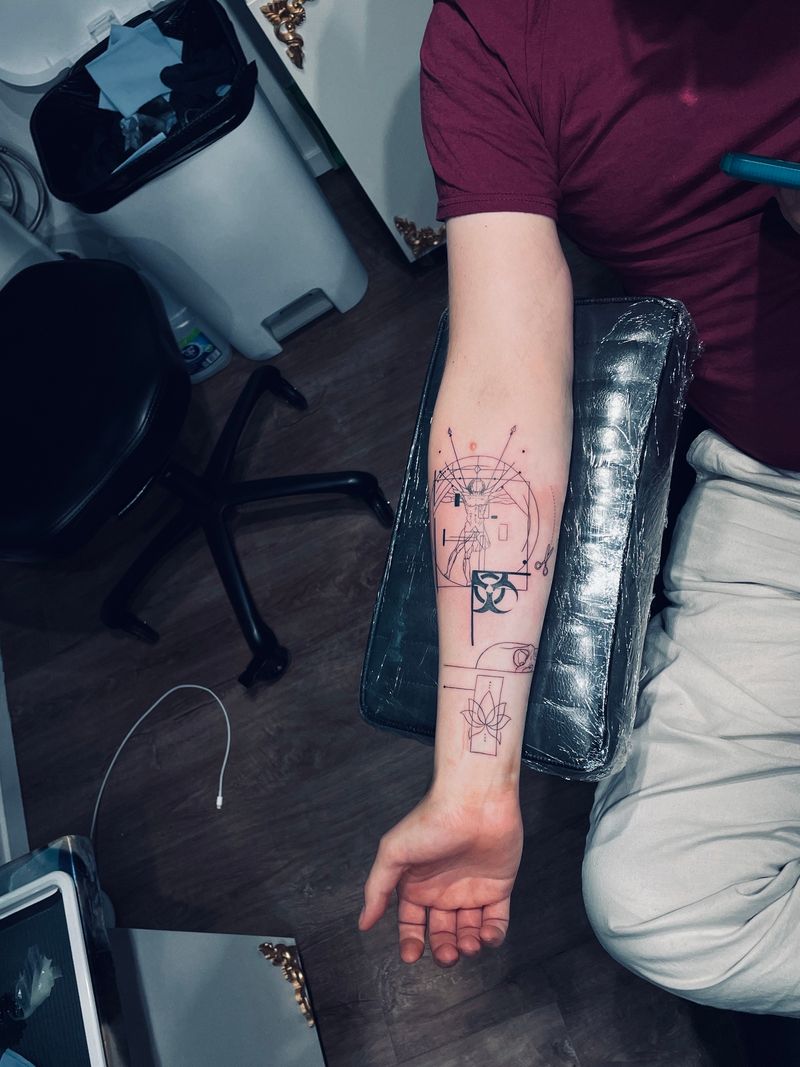
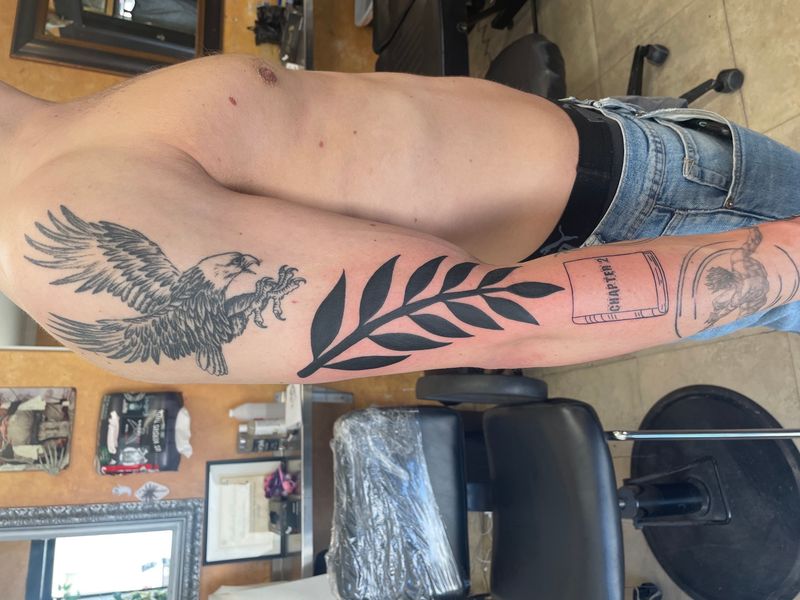
Forearms, lower legs, calves, ankles. Hidden by long sleeves and pants for six to eight months in northern climates; visible the other four. In year-round warm climates the line is the daily default. The most-requested zone for clients who want optional visibility — and the trickiest one for travelers who move between climates.
Dress-code-coverable
Hidden by a suit, dress, or formalwear
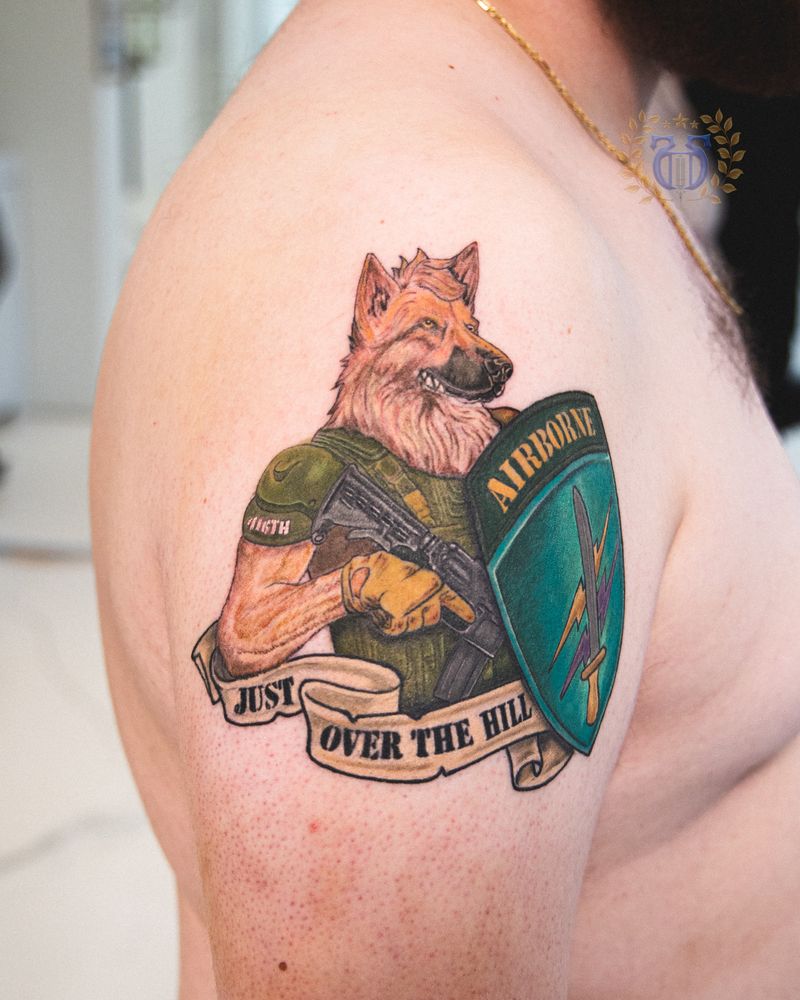
Upper arm above the bicep, shoulder cap, upper back, chest under collar, between shoulder blades. Disappears under any business or formalwear by default — no concealer, no rehearsal, no friction. The lowest-regret zone for clients who expect any kind of career transition over the next decade.
Beach-only-visible
Visible in swimwear or partial undress
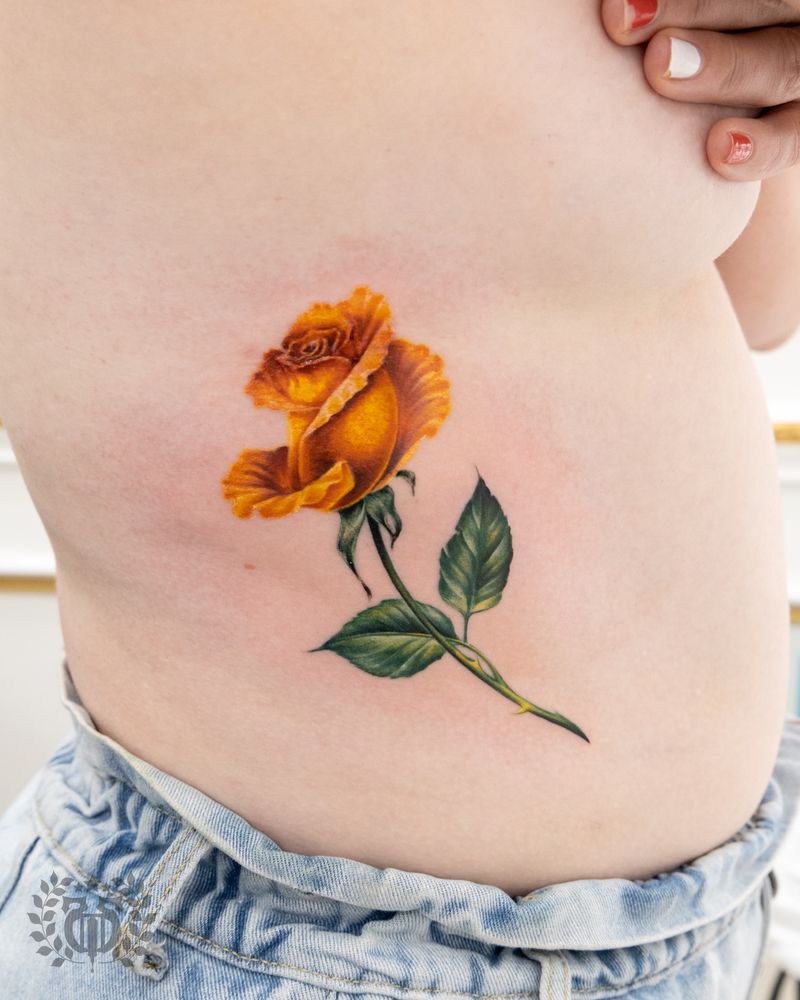
Ribcage, hip, sternum, underbust, lower back, upper thigh. Visible only in beachwear or chosen private contexts. The largest hidden canvas on the body — the torso is bigger than most clients realize. Stretch and skin change matter more here than on the arm; designs with organic edges handle change better than tight geometric work.
Wearer-only zones
Visible only to the wearer or to chosen partners
Inner thigh, behind ear, hairline nape, inner upper arm, foot arch, inner lip. Visible in private contexts or to the wearer in the mirror. Inner-lip placements are intentionally short-life: many wearers see significant fade within one to five years and treat them as ephemeral by design.
Seasonal visibility
Plan for the warmest climate you live in or visit.
The seasonal default is more important than the maximum-exposure case. Four notes on how visibility actually plays out across climates and indoor environments.
Northern climates
Forearm and lower-leg work disappears under sweaters and pants from late October through April across most of the northern continental US — roughly six to eight months a year. The 'visible' assumption people carry from summer is the minority case for these zones, not the default.
Year-round warm climates
Los Angeles, the Gulf Coast, and most of the Southwest flip the calculation. A forearm tattoo is visible most days. Long-sleeve cover becomes a deliberate fashion choice rather than a seasonal default. Plan placement for August, not January.
Climate-controlled work
Office air conditioning runs cold year-round. Cardigans, blazers, and long sleeves are common indoors even in summer. The work-day visibility of a forearm or upper-arm piece can be lower than the outdoor seasonal default suggests. Worth knowing if the daily-life default and the work default disagree.
Travel and seasonal moves
If you travel for work, split time across cities, or move between climates, plan for the warmest one. The warmest-climate default is the one your placement has to survive. This matters more for the summer-exposure line than for any other zone.
Field tiers, not industry shorthand
Sub-specialty matters more than industry in 2026.
'Healthcare,' 'finance,' 'hospitality' on their own no longer predict the placement floor. Map the role, the room, and the typical week — not the field name. Four tiers cover the decision; the fifth card is the honest hedge on why shorthand ages fast.
Publicly-visible roles
Customer-facing, courtroom, patient-facing, on-camera
Sub-specialty matters more than industry. A surgeon and a nurse work in healthcare; their visible-tattoo realities differ. A federal litigator and a public-defender clinic attorney are both lawyers; one will get questions, one mostly won't. The decision frame: how much sustained, in-person visibility does the role carry, with whom, on a typical week? Plan for that.
Dress-code-coverable roles
Office, hybrid, business-casual, indoor work
Most office and hybrid roles in 2026 don't restrict tattoos covered by ordinary work clothing. The wedding-and-funeral test — would the placement disappear in formalwear? — is the practical floor. Pull the actual employee handbook before booking visible work, and remember handbooks change with new HR leadership; a current-job tolerance is not a future-job guarantee.
Self-directed and creative roles
Trades, creative studios, performers, makers
The highest-tolerance category in the US — visible work is unremarkable across hands, forearms, necks for most of these contexts. Cultural friction is low; uniform friction is essentially zero. The category where the visibility-control conversation is least about employer constraint and most about personal display preference.
Strict-uniform roles
Military, federal courtroom, fine-dining service, faith-affiliated education
These roles maintain tighter visibility rules in 2026 — the US military's tattoo policy still bars face, most neck-above-collar, and any 'extremist, indecent, sexist, or racist' content; fine-dining 'classical service' and faith-affiliated K-12 settings keep stricter codes than industry averages suggest. If you're in or planning to enter one, the dress-code-coverable zone is the only safe default.
The honest hedge
Industry shorthand ages fast
Healthcare-by-itself, finance-by-itself, hospitality-by-itself are no longer reliable predictors. Sub-specialty, individual employer, and patient or client base matter more. A pediatric oncologist and a tattoo-positive ER nurse work the same field; their placement floors differ. Ask the role, the room, the typical week — not the industry label.
The self-employed track
If you don't have a uniform handbook, the question is situational.
Freelance, gig, performer, sex-worker, creative-studio, and consulting readers don't plan around an employer's dress code. Visibility becomes situational instead of binary. Four axes that organize the decision.
Client-facing days vs. studio days
If you set your own schedule, the visibility question becomes situational rather than employer-binary. Some self-employed readers have client-facing days (meetings, in-person sessions, photo shoots) and studio days (alone, hidden, work clothes irrelevant). Plan placement for the client-facing day's exposure, not the average.
Platform photos and personal brand
Performers, content creators, sex workers, and creative freelancers often have a public photo identity that's distinct from in-person life. A piece visible only in particular outfits or particular angles becomes part of the photo-brand decision. Decide whether the piece reads on-brand, off-brand, or invisible from your standard photo angles before placement.
In-person session vs. remote
Therapists, coaches, consultants, and many creative practitioners alternate in-person sessions with remote work. Webcam framing covers neck-down. In-person framing covers nothing. If your work mixes the two, plan placement for the in-person mode — that's the one with no override.
Future client base shifts
Self-employment makes career transitions more frequent and less predictable than W-2 work. Plan for the dress-code-coverable zone if you might pivot toward courtroom, clinical, corporate-facing, or strict-uniform contexts in the next decade. The same zone that protects W-2 transitions protects gig-to-corporate ones.
Communication pieces
Some pieces are deliberately readable by specific people.
A communication piece is readable to chosen audiences and intentionally generic to outsiders. Coded symbols readable to insiders and ambiguous to outsiders are a long-standing queer and kink-community practice. Placement is half the design.
The communication principle
A communication piece is deliberately readable to specific people — partner, community, an audience that knows the language — and intentionally generic to outsiders. Coded symbols readable to insiders and ambiguous to outsiders are a long-standing queer and kink-community practice, with histories tracked in the Leather Archives & Museum and contemporary community writing. Placement is half the design.
Inside-eyeline vs. outside-eyeline
Inside-eyeline placements (inner forearm, inner upper arm, sternum, wrist) face the wearer in normal posture. Outside-eyeline placements (outer forearm, calf, shoulder) face outward to readers. Pieces the wearer wants to see daily go inside-eyeline; pieces meant for chosen readers go outside-eyeline. Some clients want both — design accordingly.
Consent goes both directions
Readability to 'the right people' must not become readability to all kink-aware viewers without the wearer's consent. A piece designed to be read by a specific partner is not a piece designed to be read by every stranger who recognizes the symbol. The placement and the symbol's specificity together control how wide the readable circle actually goes.
Plausible-deniability layers
Some pieces read as ornament to outsiders and as something specific to chosen readers. Implicit symbol choice, classical-illustration framing, or coded color palette can carry the work for the audience that knows; the rest of the world reads decoration. Useful when the wearer wants community legibility without out-of-context disclosure.
Cover-up logistics
Six options. Clothing first. Honest limits on each.
Every placement should have at least one cover plan the wearer has actually rehearsed. Cover-up logistics are part of the design, not a fallback guarantee — shade range, friction zones, application skill, end-of-day removal, and cost all matter.
Clothing first
The default cover. Long sleeves and pants vanish forearm, calf, and dress-code-coverable placements with no friction. Watch bands and bracelets cover small wrist marks. Hair covers nape and behind-ear. Closed-collar shirts cover upper-back work. Built-in clothing cover is the lowest-effort strategy whenever the placement allows.
Compression sleeves
Skin-tone nylon-spandex sleeves marketed for tattoo cover are well-known in healthcare and food-service contexts. Honest read: they pass for ordinary observation and read as a sleeve rather than a bandage, but they don't fully erase visible work for someone who looks closely, and texture is visible up close. Best for arm and calf placements with simple line work.
Professional cover-up cream
Tattoo-cover cream products (Dermablend and similar) are dermatologist-tested and water-resistant, with manufacturer wear claims of roughly 12 to 16 hours under normal conditions. Real-world wear varies with friction, sweat, and reapplication — test a full work day before relying on it for an event. Honest hedge: shade ranges have historically been weakest for deep skin tones, friction zones (knuckles, palms, neck creases) defeat cover product, and the cost adds up. Treat as one option, not a fallback guarantee.
Theatrical-grade makeup
Stage makeup lines (Ben Nye, Mehron, Kryolan) carry heavier coverage than consumer concealers and are referenced in trade-press cover-up guides. Used by performers for predictable on-camera results. Same caveats as cream cover-up apply: shade matching, friction zones, application skill, end-of-day removal. Heavier coverage also means heavier removal — alcohol-based setting sprays can dry recently healed tattooed skin.
Bandage / single-event cover
A gauze square taped over the placement, framed as a healing scrape or recent procedure, is plausible for a single-day cover and not a long-term solution. Useful for one specific event you can't avoid (job interview, wedding, court appearance) when the placement falls outside any clothing or makeup option.
Strategic clothing choice
A turtleneck for one evening, a long-sleeve dress for one wedding, a closed-collar shirt for one interview. Single-event clothing cover is plausible for nearly any placement above the elbow or below the knee, and it's the strategy that survives best when the cover-up cream runs out, the appointment runs long, or the room runs hot.
Plan placement as if laser removal isn't an option, then count it as a long-term backstop.
Skin changes — pregnancy, surgery, hormone shifts, aging. Design for change in stretch zones.
Career transitions happen. Place the piece such that the dress-code-coverable option stays open.
Body change, aging, skin questions
Skin shifts. Design for change, hedge to your clinician.
Pregnancy, weight fluctuation, top or bottom surgery, hormone shifts, and ordinary aging change tattooed skin. Four notes — weight- and trans-inclusive, not gatekeeping — on how to plan for it. Individual skin questions go to a dermatologist or your physician, not a studio page.
Stretch zones
Ribs, abdomen, hips, breasts, and inner thighs can shift with body changes — pregnancy, weight fluctuation, top or bottom surgery, hormone shifts, normal aging. Designs with organic edges and forgiving compositions handle change better than tight geometric work in these zones. If you're planning gender-affirming surgery or pregnancy, talk to your surgeon or OB before booking work that crosses surgical or stretch fields. Not a reason to avoid these placements; a reason to design for change.
How tattoos age in different zones
Skin loses collagen and elastin with age, and the most visible decline is in chronically sun-exposed zones — face, neck, chest, back of hands, forearms. Fine-line and micro-realism in friction zones (fingers, palms, foot tops) need touch-ups every three to eight years; bold linework in low-sun zones holds longest. A 60-year-old reader's placement calculus differs from a 25-year-old's — not a moral judgment, just information.
Sun and skin-cancer screening
Sun-exposed placements need broad-spectrum SPF 30+ daily once healed — UV is the largest single driver of long-term fade. The American Academy of Dermatology also notes that dense tattoo work can make it harder to spot changes in moles. Don't tattoo directly over an existing mole, and tell your dermatologist about tattooed areas at annual skin checks. Standard, not paranoid.
Keloid history and intimate-zone healing
If you or close family have a history of keloids, the chest, shoulders, and upper back are higher-risk zones — bring it up at consultation, it changes placement and aftercare. Intimate placements (inner thigh, hip crease, lower abdomen near the waistband) heal in a high-moisture, high-friction environment with longer aftercare windows; any sign of infection (spreading redness, warmth, fever, pus) is a same-day call to your physician. For individual skin-condition questions — eczema-prone areas, prior surgical scars, planned MRI — talk to a dermatologist or your physician.
Travel, culture, MRI, removal
The decisions placement doesn't fully resolve.
Visible-tattoo acceptance varies internationally; faith and family communities shape the calculus more than US-only advice suggests; MRI safety carries a small but real hedge; and laser removal is not a casual undo. Plan placement as if these constraints exist, because for many readers they do.
International acceptance varies
Visible tattoos are widely accepted in much of the US and EU and substantially less so in Japan (onsen, gym, and pool bans persist at many establishments), parts of the Gulf, conservative-religious settings, and some immigration or visa contexts. If you travel to or live across these contexts, plan for cover regardless of placement.
Family and faith communities
Religious and cultural traditions — Jewish, Christian, Muslim, and many others — have long shaped where and whether tattoos appear. For many readers placement honors a faith community or family relationship, not a kink context. We hold space for both; the page is a tool, not a verdict on what your community ought to allow.
MRI and the iron-pigment hedge
MRI-tattoo concerns are rare but real. The FDA notes that some pigments — particularly older or iron-oxide-based reds and browns, and some permanent-makeup inks — have caused mild skin irritation or warmth during scans. Modern professional tattoo inks largely don't carry this risk, but composition is unregulated, so if you have a planned MRI and a large or recent tattoo, mention it to the radiologist. Do not skip an MRI you need over a tattoo.
Laser removal is not a casual undo
Laser is real but it's not a low-friction reset. Most tattoos require 6 to 12 sessions over one to two years; cost commonly exceeds the original tattoo; certain ink colors (white, light blue, fluorescents) respond poorly; and outcomes depend heavily on operator experience with the client's skin tone — Black and Brown clients should specifically seek removal specialists with documented healed work on similar skin. Plan placement as if removal isn't an option, then count removal as a long-term backstop, not a safety net.
Common mistakes
Eight placement-and-visibility patterns to watch for.
Most regret-after-the-fact placements come from one of these eight patterns. Catching them at the consult is cheaper than cover-up tattoos or laser later — and laser is not as casual a backstop as people assume.
The maximum-exposure miscalculation
Planning placement for the August beach trip rather than the daily-life default. Most days are not the maximum-exposure day. Fix: design for the warmest climate and the most-frequent context, then check the maximum-exposure case as a constraint.
The closeting frame
Treating 'visibility control' as 'how do I hide this.' Some readers want pieces seen — by partners, by community, by themselves. A page or a consult that defaults to concealment misreads them. Fix: start with display-or-conceal as a real both-ways question, not a polite preface to hiding.
The industry shorthand
Booking by industry label — 'I'm in healthcare so I need to keep it covered.' Sub-specialty matters more than industry in 2026. A pediatric oncologist and an ER triage nurse are both healthcare. Fix: ask the role, the room, and the typical week, not the field name.
The cover-up cream guarantee
Counting on Dermablend or similar for daily wear without testing it. Shade range, friction zones, application skill, and end-of-day removal all matter. Fix: do a full work-day trial with the actual product before relying on it; treat clothing as the first-line plan and makeup as the contingency.
The audience-mismatch placement
Putting a communication piece on an outside-eyeline placement when the intended reader is the wearer, or on an inside-eyeline placement when the audience is chosen others. Fix: match placement to the intended reader before drawing the design.
The W-2-only frame
Planning a placement around 'what your boss will see' when the actual audience is clients, audiences, partners, photographers, or your own platform. Fix: name your real visibility surfaces — client-facing day, platform photo, in-person session — and plan for those, not for an employer that might not be the constraint.
The body-change blindspot
Booking tight geometric work on ribs, abdomen, hips, or breasts without thinking about pregnancy, weight change, top or bottom surgery, hormone shifts, or aging. Fix: in stretch zones, choose organic edges and forgiving compositions; if surgery or pregnancy is on your horizon, talk to your clinician before booking.
The photographic-exposure miss
Forgetting that a piece covered at work can still surface in beach photos, gym mirrors, dating-app pictures, and partners' social media. Hidden is not the same as private. Fix: if photographic privacy matters, plan for swimwear and gym clothes — not just office wear.
The first-placement guide
If this is your first kink-aware piece, plan to the floor.
Eight decisions the first placement should make on purpose. The dress-code-coverable zone or the summer-exposure line gives the most cover options across the longest career and life-change timeline.
Personalization
Three layers turn a placement into one that fits the piece.
Direction, cover plan, audience layer. Most clients only think about the cover plan. The first and third are where most regret-after-the-fact placements actually fail.
The direction layer
Display or conceal — and for whom. Wearer-readable inside-eyeline, partner-readable mirrored placement, community-readable outside-eyeline, audience-readable across a room. The direction layer is where most regret-after-the-fact placements actually fail; clients pick the wrong direction before they pick the wrong location.
The cover plan
Clothing first; compression sleeve, professional cream, theatrical makeup, bandage as backups. Every placement should have at least one cover plan the wearer has actually rehearsed. The cover plan is part of the design, not a contingency tacked on after.
The audience layer
Specific readers, named. Partner, community, future-self, child-friendly contexts, photographic record. The audience layer is what turns a generic placement into one that matches the piece's purpose. A piece for a partner is a different placement decision than a piece for a community than a piece for the wearer in the mirror.
FAQ
The questions every placement-and-visibility consult surfaces.
Nine questions covering the both-directions frame, sub-specialty over industry, the self-employed track, career-transition resilience, cover-up cream limits, body change, communication pieces, MRI/aging/sun, and international travel.
Is this page just about hiding tattoos?
No. Visibility control runs both directions. Some readers want pieces seen — by a partner, a community, an audience across a room, themselves in the mirror. Others want pieces only chosen people see. The five-zone body map and the decision framework on this page support both intents. The word is control, not hide. If your piece is meant to be readable to specific readers, that's a placement decision in its own right — usually inside-eyeline or beach-only-visible — not a less-than version of concealment.
I work in healthcare / law / teaching — what should I know?
Industry shorthand ages fast. Sub-specialty and individual employer matter more in 2026 than the field label. A pediatric oncologist and a tattoo-positive ER nurse work the same field with very different placement floors; a federal litigator and a public-defender clinic attorney are both lawyers with different visibility realities. Decision frame: how much sustained, in-person visibility does your role carry, with whom, in a typical week? Pull the actual employee handbook before booking visible work, and assume current-employer policy may not survive a job change. For the strictest cases, the dress-code-coverable zone (upper arm, upper back, chest under collar) plus the beach-only-visible zone (torso, hip, thigh) are the lowest-friction defaults.
I'm self-employed, freelance, or in creative work — does this still apply?
Yes, with a different framing. The visibility question for non-W-2 readers is situational rather than employer-binary. Common axes: client-facing day vs. studio day, in-person session vs. remote/webcam, platform photo vs. off-record context, current client base vs. likely future pivot. Plan placement for the strictest in-person mode you regularly work in, and account for your photographic identity if you have a public-facing one. Self-employment makes career transitions more frequent and less predictable than W-2 work — the dress-code-coverable zone protects gig-to-corporate pivots the same way it protects W-2 ones.
What's the most career-transition-resilient placement?
The dress-code-coverable zone (upper arm above the bicep, shoulder cap, upper back, chest under collar, between the shoulder blades) and the beach-only-visible zone (ribcage, hip, sternum, underbust, thigh). Both disappear under standard business or formalwear and stay invisible across nearly every professional context. Always-public placements (hands, neck, face) are the highest-friction for transitions, and even with the broad acceptance shifts of 2018-2024, strict-uniform contexts (US military, federal courtroom, fine-dining classical service, faith-affiliated K-12) keep tighter rules. If you expect significant transitions, dress-code-coverable is the lowest-regret default.
Will tattoo cover-up cream actually work for daily wear?
Sometimes, with honest limits. Professional cover-up creams (Dermablend and similar) are dermatologist-tested and water-resistant, with manufacturer wear claims around 12 to 16 hours under normal conditions. Real-world wear varies with friction, sweat, and reapplication. Honest hedges: shade ranges have historically been weakest for deep skin tones, friction zones (knuckles, palms, neck creases) defeat cover product, application takes practice, and the cost adds up over months of daily wear. Treat clothing as the first-line plan and cover-up cream as the contingency. Test a full work day with your actual product before relying on it for an event.
I'm planning pregnancy or gender-affirming surgery — does that change placement?
It can, and it's a question worth bringing up with your clinician before the studio. Stretch zones — ribs, abdomen, hips, breasts, inner thighs — shift with pregnancy, weight change, top or bottom surgery, and hormone shifts. Designs with organic edges and forgiving compositions handle change better than tight geometric work in these zones. Mayo Clinic recommends against new tattoos during pregnancy due to infection risk and limited safety data on ink components in pregnancy. Talk to your OB or your surgeon about timing and placement, especially for work that crosses surgical fields. For individual skin-condition questions, hedge to a dermatologist.
What's a 'communication tattoo'?
A piece deliberately readable by specific people — partner, community, an audience that knows the language — and intentionally generic to outsiders. Coded symbols readable to insiders and ambiguous to outsiders are a long-standing queer and kink-community practice with histories tracked in the Leather Archives & Museum and contemporary community writing. Inside-eyeline placements (inner forearm, sternum, wrist) face the wearer in normal posture and work for pieces the wearer wants to see daily; outside-eyeline placements (outer forearm, calf, shoulder) face outward and work for pieces meant for chosen readers. Consent goes both directions — readability to the right people must not become readability to all kink-aware viewers without the wearer's consent.
What should I know about MRI scans, sun, and aging?
Three quick frames. MRI: rare but real risk — the FDA notes that some pigments (older iron-oxide reds and browns, some permanent-makeup inks) have caused mild skin irritation or warmth during scans; modern professional tattoo inks largely don't carry this risk. If you have a planned MRI and a large or recent tattoo, mention it to the radiologist — do not skip an MRI you need over a tattoo. Sun: SPF 30+ daily on healed sun-exposed work; the AAD also notes dense tattoo work can make it harder to spot mole changes, so keep up with skin checks. Aging: skin loses collagen and elastin with time, fine-line and micro work in friction zones (fingers, palms, foot tops) need touch-ups every three to eight years, bold linework in low-sun zones holds longest. Information, not gatekeeping.
I travel internationally — does that change anything?
Visible-tattoo acceptance varies by country and context. Japan still has widespread onsen, gym, and pool restrictions; parts of the Gulf and many conservative-religious contexts maintain stricter norms; some immigration and visa contexts ask about tattoos. If you travel to or live across these settings, plan for cover regardless of placement — the dress-code-coverable zone holds up across most of them. Travel and family visits change the calculus more than most US-based readers expect, especially for forearm, calf, and neck placements that read as ordinary at home.
Ready to map the placement?
Bring the direction, the intended reader, the must-not-see list, the seasonal and travel default, and the photographic surface.
Apollo placement consults start with the both-directions framework and walk through the body map zone-by-zone before any design touches paper. Book the consult to leave with a placement that survives every wedding, courtroom, beach, photo shoot, and career change you can plausibly imagine.