Kink & Ink
Rope & Shibari
A working-studio reference on rope and shibari tattoos — the Edo-period hojojutsu (捕縄術) policing-and-restraint roots, th
Book a consultationThe browsing framework
Five decisions narrow the rope work to one piece.
When a client says I want a shibari tattoo, the question is almost never which one. It's a sequence of five narrowing decisions about pattern, scale, lineage, and visibility — and "shibari" is the answer to none of them. Most of the work of a good consultation is walking down the ladder one rung at a time.
Figurative, trompe-l'oeil, or abstract?
Three categories, three different design problems. Figurative work renders a stylized bound figure (often illustrative or fine line, frequently a third-party figure rather than the wearer) and asks for portrait-capable artists. Trompe-l'oeil draws rope on the wearer's skin as if they were currently tied — a takate-kote across the chest, a karada lattice across the torso. Abstract is the rope vocabulary as ornament — a single knot, a hishi panel, a futomomo wrap reading as decorative geometry rather than as bondage. Most contemporary commissions sit in the abstract category; it ages cleanest and asks the least of the room.
Single knot or full lattice?
A single rope-knot motif at two-to-four inches is one piece. A full hishi panel at fifteen inches is another. They share a source vocabulary and almost nothing else. Pick the scale the piece is actually for before you pick the artist.
Practitioner or aesthetically drawn to the form?
Some clients arrive as riggers, rope bottoms, or both, and want a discreet emblem of a practice they study under a named teacher. Others arrive because the pattern is beautiful and the lineage is something they read up on before they book. We tattoo both — and we walk every client through where the imagery comes from before pencil touches paper, because community readers will assume you already know.
Discretion requirements?
A small inner-forearm knot reads as ornament to anyone outside the practice. A full-back hishi panel is unmistakable to a knowledgeable viewer. Walk through your week with the artist before committing — what you wear, who sees what, who you want to be visible to. The piece is also 18+ in subject matter; mention discretion preferences early.
Tattoo design only — not rope-practice instruction.
This page covers tattoo art that references rope. It is not a guide to the practice itself. If you are curious about rope practice, that is a separate topic with real safety considerations — work with a qualified rope educator and ask your clinician about anything physical. We won't draw safety diagrams onto your skin, and we won't teach the practice from the tattoo chair.
Tattooing the art is separate from practicing it. Honor the lineage either way.
Pattern work goes on stable skin. Forearm, ribcage, upper back, thigh — not on flexion zones.
Kinbaku is a 20th-century Japanese erotic art with named lineages and living practitioners. We tattoo the imagery; we do not perform mystic-master cosplay.
12 design directions
The working catalog clients actually browse.
Rope work composes across nearly every contemporary tattoo approach — but the variations are genuinely distinct. A single takate-kote knot and a full-back hishi lattice have nothing in common except the source vocabulary. Below: the 12 directions clients ask for most.
The single-knot study
Abstract ·standalone ornament
One precisely rendered knot — a square knot, a double-coin, or a finishing rosette borrowed from the rope vocabulary — read as ornament rather than as part of a tie. Two to four inches, fine line or blackwork. Sits cleanly on inner forearm, sternum, or behind the ear. The smallest commitment in the category and the cleanest entry point for clients newer to the imagery.
The cinched cuff band
Abstract ·rope-as-jewelry
A wrap of rope rendered around the wrist or ankle that reads, from across a room, as a bracelet or anklet — and rewards close looking with a small terminating knot at the front. Fine line single-needle. Honest caveat: ankle and wrist skin are high-flex; expect line softening at the seven-to-ten-year mark and plan for a touch-up cycle.
The diamond lattice panel
Abstract ·hishi (菱) as pure ornament
A geometric grid of rope diamonds — hishi means diamond — with knot rosettes at the intersections. No body underneath. Six to twelve diamonds stacked across the chest, sternum-to-navel, or as a back panel. Asks for an artist who runs geometric repeating-pattern work specifically. Six inches and up; below that the repeating geometry compresses to noise.
The takate-kote-inspired chest composition
Trompe-l'oeil ·高手小手 silhouette
The takate-kote (高手小手, 'high hand, small hand') is the chest-and-arm box tie. A tattoo that suggests the upper-body harness silhouette is takate-kote-inspired, not a literal TK — the actual tie crosses the chest and binds the arms in a specific pattern that a tattoo can reference but not be. Reads as architectural chest piece to outside viewers, as box-tie reference to practitioners. Six to ten inches.
The futomomo thigh wrap
Trompe-l'oeil ·太腿 single-leg pattern
Futomomo (太腿, 'thick thigh') is the leg tie binding ankle to thigh. Rendered as a tattoo, the cinches and frictions follow the thigh's natural curve — a series of parallel passes with a terminating rosette. Reads as a decorative wrap. Five to eight inches, fine line or blackwork.
The karada-style body harness
Trompe-l'oeil ·体 diamond body lattice
Karada (体, 'body') is the diamond-pattern body harness — non-suspension, often translated as 'rope dress.' Rendered as ornament, the karada lattice frames the lumbar curve, stretches edge-to-edge across the back, or sits as a discreet panel at the small of the back. Multi-session at full scale; the lattice rewards being seen at full size.
The botanical-rope composition
Abstract ·rope plus floral
Rope geometry paired with floral elements — peonies emerging at hishi intersections, a single chrysanthemum at the lattice center, a futomomo wrap with cherry-blossom branches running through it. The flower is a paired composition that lets the rope read as ornament rather than as harness. Neo-traditional or illustrative. Six to ten inches. If the piece leans into Japanese-traditional iconography, book an artist who specializes in irezumi rather than a generalist fine-line tattooer.
The knot rosette
Abstract ·finishing knot as flower
A single ornamental rope knot — a Somerville bowline, a pineapple knot, or one of the named finishing knots — treated as a botanical illustration. Often paired with a peony or chrysanthemum in the Japanese-craft tradition. Reads as botanical ornament; rewards close looking for the rope reference.
The negative-space cinch
Abstract ·advanced compositional
Rope rendered only by the shadow it casts on the skin; the rope itself is the un-tattooed gap. An advanced choice, best on uniformly tattooed panels (a blackwork sleeve, a dotwork field). Asks for an artist who plans negative space deliberately. Reads as compositional ornament rather than as bondage imagery.
The figurative bound study
Figurative · rendered figure (often third-party)
A stylized figure rendered with rope — a kneeling pose, a partial torso, or a third-party figure rather than the wearer. Asks for a realism or illustrative artist with portrait skill. Honest caveat: figure work doesn't scale below five inches and reads more directly as bondage iconography rather than as ornament. Bring multiple references; book the realism specialist, not the fine-line generalist. The page's working position is that pattern-only renders are usually the cleaner choice.
The matched single-knot pair
Abstract ·same knot, two wearers
Two identical rope knots on partners — same artist, same day, same stencil. Often placed on mirrored body locations (one inner wrist each, one sternum each). The matching is execution-identical, not just visually similar. Plan as a single appointment.
The minimal rope line
Abstract ·gesture without literal knot
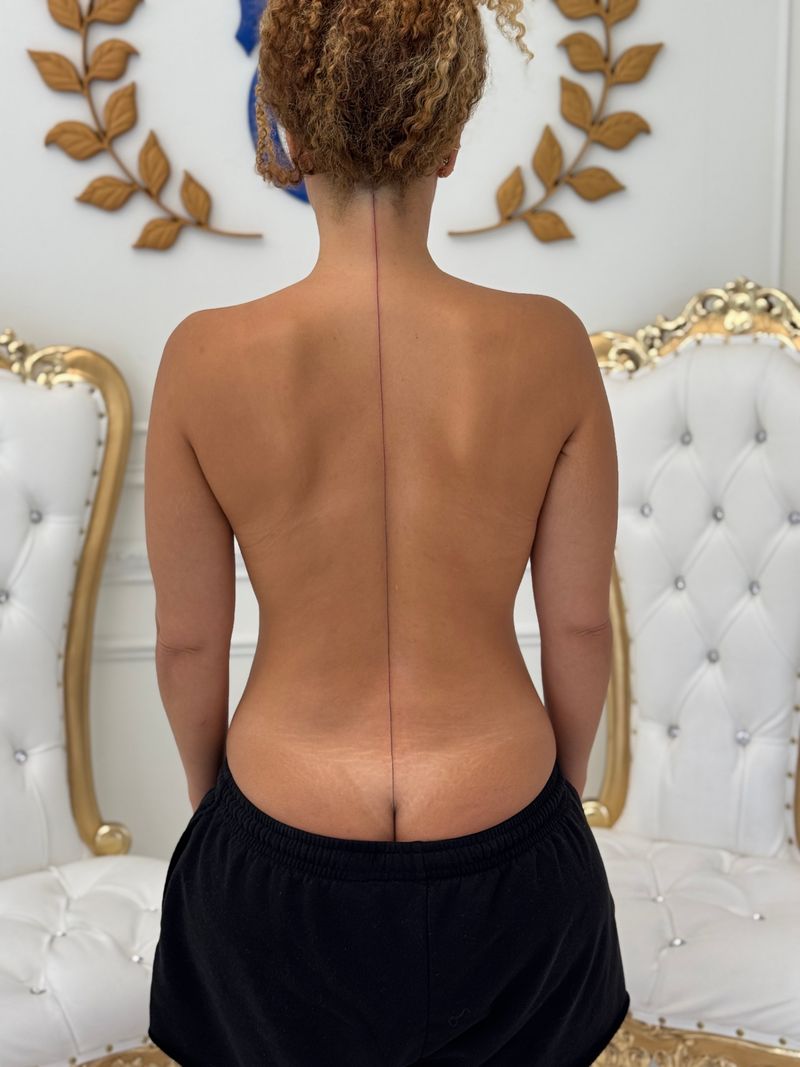
A single curving line referencing rope without explicit knot work. Reads as abstract drawing — only practitioners or those familiar with the practice see the rope reference. The most discreet option for clients who want a daily reference without overt knot iconography. Fine line, two to four inches.
Six approaches
Pick the approach before you pick the artist.
Rope geometry is unforgiving of line wobble. Pick the wrong approach for your scale and the pattern compresses or drifts. Pick the right one and rope work is one of the most architectural categories in the medium.
Fine line / single-needle
Hairline geometric clarity
The dominant contemporary approach for single-knot and small pattern work — single-needle (1RL) for the cleanest hairline read, fine line as the broader umbrella. Hairline outline only, no fill. The geometry of a single rope knot or a small hishi diamond reads cleanly at small scales. Honest caveat: parallel hairline rope lines drift toward each other faster than single lines as ink settles. On stable-skin placements (forearm, ribcage) the work holds well for years; aging varies by skin, artist, and placement, and touch-ups every several years are normal rather than a sign of bad work.
Blackwork
Solid fill, architectural pattern
Solid black rope lines, full-fill knots, geometric pattern work where the contrast between rope and skin carries the design. The readability winner for full-harness panels because intersecting line work needs bold weight to remain legible at healing and over time. Asks for an artist who laminates saturation evenly — patchy blackwork ages badly and is hard to correct without recoloring.
Dotwork
Stippled tonal rope rendering
Graduated dots replacing rope outline. Reads as decorative geometric ornament. Used most often when the client wants the pattern to feel more decorative than literal. Asks for an artist who specifically runs dotwork — it is its own discipline and not every fine-line tattooer runs it well. Ages slowly because there is no thin outline to soften.
Neo-traditional
Bold outline with botanical integration
Heavier outline weight than fine line, dimensional shading, sometimes a muted color wash. Reads decorative and slightly retro. Pairs well with traditional flash-lineage elements (lock, key, dagger) and with botanicals (peony, chrysanthemum) that let the rope read as composition rather than as harness.
Japanese-traditional / irezumi-influenced
Pairing rope with the Japanese-traditional vocabulary
Knot work paired with traditional Japanese motifs — peony, chrysanthemum, koi, wave. Important caveat: irezumi and tebori are their own disciplines with their own master-apprentice ethics. We do not represent ourselves as irezumi practitioners. If you want a piece that genuinely sits in the Japanese-traditional canon, book an artist who specializes in that tradition rather than a generalist fine-line tattooer doing one-off Japanese motifs. Note also that shimenawa (the sacred Shinto purification rope) is a separate iconography from kinbaku and shibari and should not be marketed as a kink wink.
Illustrative figure work
Stylized figure with rope
Used by clients who want a figure rendered with rope work — a stylized bound pose, a partial torso, often a third-party figure rather than the wearer. Asks for a realism or illustrative artist with portrait skill. Honest caveat: figure work doesn't scale down — five inches is the practical floor — and reads more directly as bondage iconography than as ornament. Bring the reference. Pattern-only renders are usually the cleaner choice; figure work asks more of the room and the artist.
Five placement registers
Placement decides whether the geometry holds.
Rope pattern work asks for surfaces that hold the geometry — flat-ish skin, not high-flex zones. Five placement registers cover almost every choice a client will actually make.
Discreet small-knot
Inner forearm · inner wrist · sternum · ribcage
Single-knot work and small pattern motifs sit cleanly in these zones. Reads as ornamental knot to outside viewers, as specific shibari reference to practitioners. The default for clients newer to the iconography or with discretion requirements.
Mid-scale ornamental
Upper thigh · outer thigh · ribcage panel · upper arm
Six-to-ten-inch pattern work — a futomomo wrap, a partial hishi lattice, a chest harness silhouette extended onto the shoulder. Reads as ornamental pattern to most viewers. The placement style for clients who want substantial pattern work without committing to a sleeve.
Full panel / sleeve
Full back · full arm · full leg · full ribcage
Multi-session compositions where rope geometry is the unifying motif. Planned from day one as composition rather than as scale. Asks for an artist who runs full-panel pattern work specifically.
Wraparound band
Wrist · ankle · upper bicep · thigh
Single-rope wrap rendered as bracelet, anklet, or upper-arm band. Reads as ornament. The most discreet entry point. Honest caveat: ankle and wrist skin are high-flex; expect line softening at the seven-to-ten-year mark.
Matched-pair coordinates
Mirrored inner wrists · paired sternum · paired ribcage knots
Two identical single-knot pieces on partners. Placement chosen so the pieces sit in the same relationship to each body — same wrist, same chest side, same ribcage location.
Scale honesty
Four tiers. Your scale sets your pattern.
Not the other way around. If you want lattice work, commit to the scale that holds the geometry.
Eight compositional pairings
Rope alone is one composition. Rope with a paired motif is a Japanese-canon composition.
The pairing changes the read. Eight pairings, each landing the rope work in a different ornamental register.
Rope + peony
The classic Japanese ornamental pairing. Hishi lattice with peonies at the diamond intersections, or a futomomo wrap with peonies running through it. Neo-traditional or illustrative.
Rope + cherry blossom
Branches running through the pattern work. The flowers soften the geometry without erasing it. Common on thigh and ribcage compositions.
Rope + dragon
A stylized dragon woven through the pattern work — the dragon's body referencing the rope's path. Asks for substantial scale (twelve inches and up). Japanese-modern style.
Rope + chrysanthemum
The chrysanthemum's radial geometry pairs cleanly with hishi lattice work. Often placed at the center of a back panel as the focal point. Neo-traditional or illustrative.
Rope + koi
A koi rendered swimming through the rope geometry. Japanese-modern. Substantial scale (eight inches and up). Pairs the rope work with the broader Japanese tattoo vocabulary.
Rope + lotus
Lotus flowers terminating the rope passes — a finishing knot rendered as a lotus emerging from the pattern. Symbolic of release within structure.
Matched-pair single knot
Two identical takate-kote knots or single rope knots on partners. Same artist, same day, same stencil. The matching is the meaning.
Triskelion + rope knot
Community emblem with a smaller rope-knot motif nearby. The community piece on one side, the practice piece on the other. See our triskelion guide.
Consultation
Six questions to bring with you.
Walk into the consult with answers to these and you save yourself an hour and a bad first draft.
Practitioner or aesthetically drawn to the form?
Rigger, rope bottom, both, or aesthetically drawn to the imagery. The studio doesn't gatekeep — we tattoo the design you bring — but the answer shapes the consultation. Practitioners often want specific patterns from their study (Yukimura-ryū, Osada-ryū, Akechi-ryū, or a teacher's specific lineage); clients drawn to the form aesthetically usually choose ornamental work that doesn't reference a specific tie. Both are legitimate; we just need to know which conversation we are in.
Figurative, trompe-l'oeil, or abstract?
Three categories. Abstract pattern-only renders are the page's recommended default — they read as ornament and ask the least of the artist and the room. Trompe-l'oeil rope-on-skin compositions are takate-kote-inspired or karada-inspired, not the literal tie. Figurative work needs a realism portfolio. Decide the category before you book the artist.
Which approach?
Fine line, blackwork, dotwork, neo-traditional, Japanese-traditional, or illustrative figure work. If you don't know, say so. The artist will walk you through healed examples. Geometric pattern work is unforgiving of line wobble — the artist's healed portfolio matters more than for many other subjects. If the piece leans Japanese-traditional, book an artist who specializes in that tradition.
What scale and which body region?
A single inner-forearm knot is one decision. A back-panel hishi lattice is another. Walk through the body regions you're comfortable committing with the artist before settling on placement. Pattern work asks for surfaces that hold the geometry — flat-ish skin, not high-flex zones.
Discretion requirements?
A small inner-forearm knot reads as ornament. A back-panel hishi lattice is unmistakable to a knowledgeable viewer. Ask the studio about its discretion policy — off-calendar consult, off-portfolio piece, off-CRM notes are all available on request.
Matched-pair work?
If yes, the partner should be in consultation if possible. Matched single-knot pieces (rigger and bottom, or two practitioners) are best executed as a single appointment with a single artist. Two appointments two months apart drifts in line weight.
We don't draw the bound figure unless the piece asks for it. Most clients tattoo the geometry the rope leaves behind.
A hishi lattice at three inches becomes noise. A hishi lattice at twelve inches becomes architecture. Commit to the scale that holds the geometry.
Geometric work shows its age clearly. Ask for healed pattern work at five years before you book.
Common mistakes
Eight execution patterns to watch for.
Most disappointing rope tattoos fall into one of these eight categories. Catching it in the consultation prevents it in the chair.
The Pinterest stack
Forty saved shibari images, bits picked from each, artist asked to combine. The result is a pattern that belongs to no specific tie and reads as a compromise. Fix: bring three references, not thirty. If you are a practitioner, document the specific tie from your study rather than approximating an aesthetic.
The scale-compression mistake
Wanting a full hishi lattice at three inches. The repeating pattern compresses to noise. Fix: if you want lattice work, you need at least six inches. If you only have three inches, pick a single-knot motif and let it carry the piece.
The line-drift mistake
Booking a fine-line hishi lattice on a high-flex placement (knuckle-adjacent, ankle, the side of the hand). Parallel rope lines drift toward each other and the diamond geometry collapses sooner than it should. Fix: pattern work goes on stable skin. Forearm, ribcage, upper back, thigh — not on flexion zones.
The samurai-mystic frame
Treating shibari as an ancient samurai sex art passed down master-to-apprentice. That framing — the noble-mystic-Eastern-secret narrative — is a documented Western romantic invention, called out by Japanese and Japanese-diaspora educators including Midori. Hojojutsu and kinbaku are not a continuous lineage. Fix: name the actual history. Hojojutsu (捕縄術) was Edo-period restraint craft; kinbaku (緊縛) is a 20th-century Japanese erotic art most often credited to Itō Seiu. Decline the mystic frame on the page and on the skin.
The shimenawa conflation
Mistaking shimenawa (the sacred Shinto purification rope you see at shrines and around sacred trees) for a kink reference and putting it into a shibari composition for vibes. Shimenawa is religious iconography, not a kinbaku motif. Fix: keep the categories separate. If you want sacred-Japanese rope iconography, that is a different consultation with an artist working in Japanese-traditional and asks different questions about cultural attribution.
The geisha-and-katana cliché
Mashing rope with hannya masks, samurai swords, geisha figures, and other Japanese-coded imagery to make the piece feel 'authentic.' The 'samurai-porn' compound aesthetic is the specific failure Japanese practitioners flag. Fix: a tattoo about rope can simply be about rope. If a piece needs a Japanese-canon companion (peony, chrysanthemum, koi), commission it from an artist who works in irezumi rather than from a generalist treating it as decoration.
The figure-work overreach
Booking a stylized rendered figure in rope without checking the artist's realism portfolio. The result is a portrait that doesn't read. Fix: figure work asks for a realism specialist. If your artist's portfolio is fine-line geometric work, ask for a pattern-only render rather than a figure.
The fresh-photo, first-available-artist trap
Booking with whoever can get you in this week, picked off shiny day-one Instagram shots. Every tattoo looks like a 10/10 at day 1. Pattern work asks for either fine-line precision or blackwork specialism — not every artist runs both well. Fix: ask for healed pattern work at the 1-year and 5-year marks in the approach you want. That is the work you are actually buying. Wait three weeks for the right portfolio match rather than settling for this week's opening.
The first-piece guide
If this is your first rope piece, single-knot is the correct answer.
Single-knot ages well. The honest starting recipe is a fine-line single rope knot or finishing rosette at two-to-four inches on the inner forearm, sternum, or ribcage. Eight decisions the first piece should make on purpose.
Personalization
Three layers turn a stock pattern into an heirloom pattern.
A rope piece becomes yours in three distinct layers. Most clients only think about the first. The last is where the piece actually lives.
The base pattern
Knot, lattice, wrap, harness silhouette. The element, the scale, the placement. These are the bones — they determine whether the piece reads as a discreet single-knot, an ornamental panel, or a full-pattern composition.
The personal layer
A specific tie or finishing knot from your study. A botanical element integrated into the geometry — peony at the central knot, chrysanthemum at the lattice center, cherry blossom running through a futomomo wrap. A small companion: a date, a partner-matched motif, a verified kanji (verified with a native speaker, not pulled from a font reference). This is where the piece starts separating from the catalog.
The private meaning
What this rope work marks for you. The teacher whose lineage you study under. A relational chapter. A reclamation. A practice you take seriously. Nobody else needs to know. The private layer is what keeps the piece from feeling generic, even if the pattern reads as standard ornament to a stranger.
Matching rope pieces
One of the more common appointments. One of the most under-planned.
Matched single-knot pieces should survive the practice that inspired them. Design them that way on purpose.
Common matching configurations
Most-common matching for rope work: identical single rope knots on partners — often rigger and rope bottom, or two practitioners studying together. Sometimes a continuous line that 'completes' when partners stand together. Keep matched pieces simple; complex lattices rarely match well across two skins.
Match the knot, vary the surrounding ornament
Same single knot at the same scale; different surrounding element per partner — one with a peony, one with a chrysanthemum, or one inside a thin border ring and one inside a laurel. Each piece still belongs to the wearer.
Plan for the piece to outlive the dynamic
Relationships shift. Practices shift. Build the design so it works as a solo piece if circumstances change. The single knot still reads as ornamental knot. The pattern still reads as decorative geometry. Design hygiene, not pessimism — every kink-affirming consult covers this.
Same artist, same day, same stencil
The only way matched single-knot work actually matches is if execution is identical. Two appointments two months apart with two artists is not matching — it's two pieces that look approximately similar.
FAQ
The questions every rope-work consultation surfaces.
Eight questions covering the shibari/kinbaku distinction, the hojojutsu and kinbaku lineages, specific pattern names, appropriateness, scale, aging, healing if you practice rope, and matched-pair guidance.
What's the difference between shibari and kinbaku?
Shibari (縛り) is a generic Japanese word that means 'to tie' or 'binding.' Kinbaku (緊縛) means 'tight binding' and is the term most often used inside Japan for the erotic rope-art tradition; kinbaku-bi (緊縛美) means 'the beauty of tight binding.' Western kink communities began using 'shibari' in the 1990s as a marketing-friendly umbrella term for the art form, and the two are now often used interchangeably in English. A note on the binary: the framing that 'shibari is aesthetic and kinbaku is sensual' is a Western-coined distinction that does not exist in Japanese practitioner vocabulary; some Japanese masters explicitly reject it. We use 'shibari' in this page's title for English search, and 'kinbaku' where we mean the erotic art lineage specifically.
Where does the imagery come from?
Two distinct lineages, often conflated, that should not be conflated. Hojojutsu (捕縄術) is the Edo-period (1603 – 1868) Japanese martial art of restraining captives with rope; documented in over 150 ryū (schools), it was law-enforcement and battlefield craft, not aesthetics. Kinbaku is a 20th-century Japanese erotic art that drew inspiration from hojojutsu and from kabuki and ukiyo-e visual sources, but is not a continuous lineage descending from it. The figure most often credited as the 'father of kinbaku' is Itō Seiu (伊藤晴雨, 1882–1961). Western awareness grew in the mid-1990s through Japanese SM magazines (SM Sniper, Kitan Club archives), through performers including Akechi Denki (1940–2005), and through teachers including Yukimura Haruki, Osada Steve (Osada-Ryu), and Midori, whose 2001 The Seductive Art of Japanese Bondage was an early English-language reference. The 'ancient samurai art' framing is a Western romantic invention; the actual history is more recent and more specific.
What are takate-kote, futomomo, karada, and hishi?
Specific patterns from the kinbaku/shibari vocabulary. Takate-kote (高手小手, 'high hand, small hand') is the box tie — a chest-and-arm harness binding the arms behind the back. Futomomo (太腿, 'thick thigh') is the leg tie binding ankle to thigh. Karada (体, 'body') is a diamond-pattern body harness, often called a 'rope dress.' Hishi (菱) means 'diamond' and refers to the repeating diamond lattice that appears across many patterns. As tattoo references, these are typically rendered as the geometric pattern itself — without a body underneath — rather than as figure work. A tattoo that suggests the takate-kote silhouette is takate-kote-inspired, not a literal TK; the actual tie is a specific physical pattern, not a tattoo composition.
Is it appropriate to tattoo shibari work if I'm not a practitioner?
That is a question for you and the people you study with, not for the studio. We will tattoo the design you bring and we will walk you through the lineage so the choice is informed — the question of whether wearing the imagery fits your relationship to the practice is genuinely yours. The honest version: tattooing the art is separate from practicing it, and most clients who arrive drawn to the imagery aesthetically end up choosing abstract pattern-only renders rather than figurative work, because those read as ornamental geometry to outside viewers and ask the least of the room. If you want a piece that genuinely sits in the Japanese-traditional canon (rope plus peony, chrysanthemum, or koi), book an artist who specializes in irezumi rather than a generalist fine-line tattooer.
How big does a rope tattoo need to be?
Depends entirely on the element. A single rope knot at two-to-four inches is a self-contained piece. A futomomo wrap needs at least five inches to read clearly. A hishi diamond lattice needs at least six inches — below that, the repeating geometry compresses to noise. A karada or full-back hishi panel runs twelve to sixteen inches. The honest rule: your scale sets your element, not the other way around. If you want lattice work, commit to the scale that holds the geometry.
Which approach ages best for rope tattoo work?
Aging varies by skin, artist, and placement — talk to your artist about line weight before committing to scale. As general patterns: blackwork and dotwork tend to hold up because there is no thin outline to soften. Fine-line single-needle ages well on stable-skin placements (forearm, ribcage, upper back, thigh) and softens sooner on high-flex zones. Geometric pattern work is unforgiving of line wobble and drift, so the artist's healed portfolio matters more than for many other subjects — ask specifically for healed pattern work at the one-year and five-year marks. Touch-ups every several years are normal, not a sign of bad work. Once the piece is healed, daily broad-spectrum SPF 30+ is the single best thing you can do for any tattoo.
Will this hold up if I keep practicing rope?
On healing: standard tattoo aftercare applies. Follow your artist's aftercare instructions; a piece that wraps a limb has more surface area sitting against clothing during the first two weeks, so loose layers during healing matter more than usual. Wait until the skin is fully healed and unbroken before any rope-on-rope contact over the area; your artist will give you a specific window. Beyond healing: many studios that work with kink clients commonly ask about intended use during placement consultation, because long-term rope-on-rope friction over a healed but young tattoo can affect saturation. If you have any medical condition (vascular, neuropathy, recent surgery, sensitive skin from past marks), talk with your clinician before booking. This page is about tattoo art only — for the practice itself, work with a qualified rope educator.
Can I get a matching rope tattoo with a partner?
Yes, and matched single-knot pieces are one of the more common appointments in this category. Most-common configurations: identical rope knots on partners (often rigger-and-rope-bottom pairings), or matching decorative single knots. Working rules: match the knot, vary the surrounding ornament so each piece still belongs to the wearer; plan for the piece to outlive the relationship or the practice (the single knot still reads as ornamental knot if circumstances change); book the same artist, same day, same stencil, because matching across two appointments drifts in line weight. Bring the partner into consultation if at all possible — matched-pair work is two pieces with one design problem.
Ready to walk the five decisions?
Bring the pattern. Bring the references. Bring the lineage you've read.
Apollo rope and shibari consultations start with the browsing ladder and build the design outward. We tattoo the imagery you bring, we name kinbaku and hojojutsu accurately, and we decline the ancient-samurai-mystic frame. Book the consult and walk out with a piece whose register, scale, placement, and personal layer all agree on what the work is for.