The Apollo Tattoo & Piercing Studio crest

THE APOLLO TATTOO & PIERCING STUDIO

World-Class Tattoo & Piercing Studio in LA

Children's piercing FAQ

Small ears. Sixteen questions every parent asks.

We’ve done this thousands of times. Every version of nervous child, every version of nervous parent — we’ve seen it. You’re not the first. You won’t be the last.

The honest parent-to-piercer conversation: the right age, how to prep your child without using the word “shot,” why professional studios don’t use guns on any age, which metals are safe and which aren’t, the step-by-step of the appointment, the aftercare routine that actually works, the healing timeline by tissue, the red flags that send you to the pediatrician, and the cultural traditions we respect at the chair. Sixteen topic pages. Ten FAQ answers. No upsell.

Needle, never gunProfessional-studio standards · implant-grade titanium · single-use sealed
Santa Monica, CAOpen monday-sunday · 8:00 AM to 8:00 PM

The sixteen questions we hear most

Pick your question. Start where you need to start.

Each card opens a full topic page. Age, prep, sensory, needle vs gun, metals, sterility, the appointment, both ears vs one, aftercare, timeline, infection, sleep and water, changing their mind, keloids, cultural tradition, cartilage for teens. The sixteen conversations that make up most of the kids-piercing consultation, each written the same way we’d say it at the counter.

Ι

The right age for ear piercing

Infant, toddler, kindergarten, tween — what changes with each, and why no single age is “the right one.”

ΙΙ

Preparing your child emotionally

Honest language, visualization, the day-of script — and why the word “shot” is the wrong word.

ΙΙΙ

Sensory-sensitive and neurodivergent children

Quieter appointment windows, headphones, weighted blankets, and the conversations we have before you arrive.

ΙV

Needle vs. piercing gun for kids

Why professional-studio don’t use guns on any age, and the two reasons that argument is even louder for children.

V

Jewelry metals safe for kids

Implant-grade titanium (ASTM F-136), solid 14k gold, niobium — and the plated and “hypoallergenic” metals that aren’t.

Sterility and studio safety for kids

Autoclave standards, single-use needles, sealed jewelry opened at the chair, and the health-department paperwork to look for on the wall.

VΙΙ

What to expect at the kids appointment

Check-in, consultation, marks in the mirror, the piercing itself, aftercare review — step by step for a first-time family.

VΙΙΙ

Both ears at once or one at a time

The honest case for each — one piercer or two, what a child can actually tolerate, and what Apollo recommends by age.

ΙΧ

Kids piercing aftercare, daily

Sterile saline, twice a day, LITHA. The two-minute routine and the ten common mistakes parents repeat from the nineties.

Χ

Kids piercing healing timeline

First 24 hours, first week, first month, first six months. What’s normal, what’s expected, what surprises first-time families.

ΧΙ

Infection signs — when to see a doctor

The difference between irritation and infection, what the AAD and AAP flag, and the threshold for a pediatric visit.

ΧΙΙ

Sleeping, showering, swimming

Why pools, hot tubs, and lakes are off-limits for the first month — and the sleep-side tricks that save cartilage piercings.

ΧΙΙΙ

If your child changes their mind

At the chair, halfway through prep, or a month after healing. Every version is valid. Here’s how we handle each.

ΧΙV

Keloids and scarring risk in kids

Family history, skin type, site-specific risk. What the AAD says about predisposition, and when to proceed carefully.

ΧV

Cultural and religious ear piercing traditions

Latin American, South Asian, African diaspora, Jewish, and Mediterranean traditions — and how we honor them at the chair.

ΧVΙ

Cartilage piercings for older kids and teens

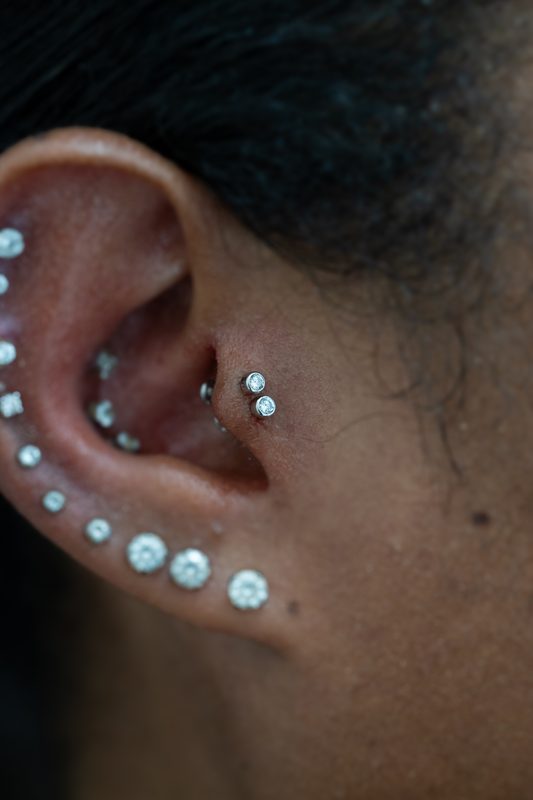
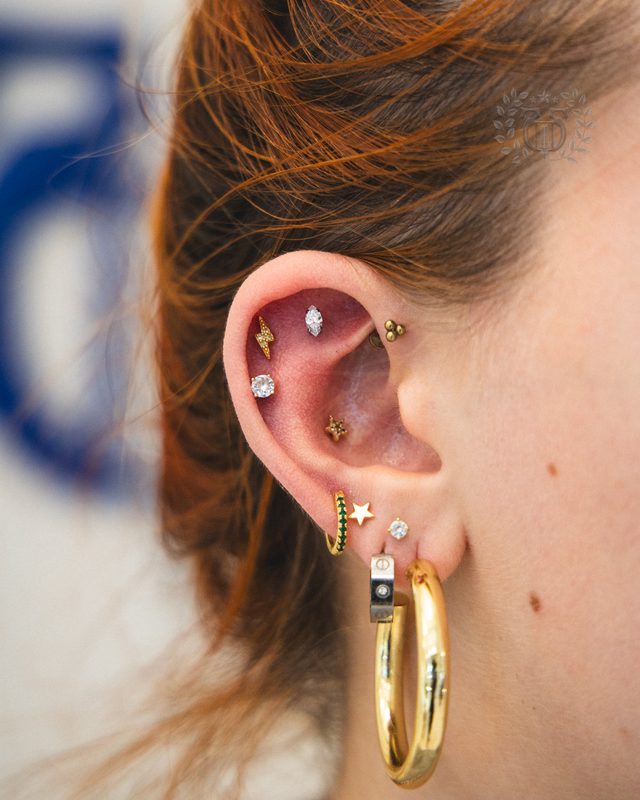
Helix, tragus, conch — when tweens and teens are developmentally ready, and the placements we recommend at each age.

Deciding to pierce your child’s ears is a legitimate choice that cultures around the world have made for millennia. Deciding not to is equally valid.
— The Apollo Tattoo Studio
Every version of nervous child, every version of nervous parent — we’ve seen it. You’re not the first. You won’t be the last.
— The Apollo Tattoo Studio
The word “shot” is the wrong word. A piercing isn’t a shot. Start the conversation with the right vocabulary.
— The Apollo Tattoo Studio

Healing at a glance

Five stages. Watch for the one that fools parents.

A kid’s lobe looks healed weeks before the channel underneath is done. The stage that fools most parents is month two — surface settled, jewelry feels “fine,” so the family relaxes the routine. Don’t. The downsize window and the real heal are still ahead.

When Stage What’s normal · what to do
First 24 hours Fresh Mild throb, pink to light red, some lymph leakage (clear or pale yellow), minor warmth around the site. Expected. No cleaning required the first day beyond the saline rinse your piercer applies at the chair.
Day 2–7 Acute Sterile saline spray twice a day. Light crust forms at the jewelry — leave it. Some itch is normal as the channel begins to close around the post. No touching, no rotating, no pools, no baths.
Week 2–4 Settling Redness fading, swelling down, crust smaller. The site feels less present day-to-day. This is when parents — and kids — often get complacent. Keep the saline routine exactly as it was week one.
Month 2–3 Maturing Surface healed, channel still forming. Jewelry can feel “fine” while the tissue underneath is still fragile. This is the correct window for the first downsize. Don’t change jewelry yourself at home.
Month 4–6 Full heal (lobe) Standard lobes typically complete around this window. Cartilage takes longer — 9–12 months minimum, often 12–18. Don’t let a healed-looking lobe rush you past the cartilage timeline if both are present.

Red flags — when to act

Six signs that are not “wait and see.”

Most fresh piercings look worse than they are for a few days. These six are different. When any of them appear, stop Googling and act. The kids-piercing pipeline most often ends in the pediatrician’s office because families waited a day too long to call.

Ι

Infection

Increasing redness, swelling that worsens rather than improves, warmth, thick yellow or green discharge, fever, or a red streak moving away from the site. When to act: see a pediatrician the same day.

Read the infection signs page →
ΙΙ

Allergic reaction

Persistent itch, dry flaking around the site, a widening ring of red skin that doesn’t fade with the standard timeline. Often a reaction to nickel in costume or plated jewelry. When to act: return for jewelry review within a week.

Read the infection signs page →
ΙΙΙ

Keloid

A raised, firm scar that grows beyond the original wound site. Family history matters. More common in some skin types than others per AAD guidance. When to act: pediatric dermatology referral if a bump is growing, not shrinking, past month two.

Read the infection signs page →
ΙV

Trauma

Jewelry snag, pull, or torn lobe — most often from a hairbrush, a hood, or a sibling. Bleeding that restarts after week one, or an obvious displacement of the post. When to act: return to the studio for assessment; severe tears go to urgent care.

Read the infection signs page →
V

Migration

The piercing slowly moves through the tissue toward the surface. Visible as the post sitting shallower than day one. More common in surface piercings than lobe or cartilage. When to act: schedule a piercer review before the jewelry breaks through skin.

Read the infection signs page →

Rejection

The body’s full push-out response — jewelry comes to the surface and exits. Usually preceded by migration for weeks. Not dangerous, but the piercing is over. When to act: remove the jewelry and let the channel close; discuss replacement options after full heal.

Read the infection signs page →

Cultural respect

We honor the tradition. We don’t compromise the standards.

Infant and early-childhood ear piercing is a centuries-old tradition in Latin American, South Asian, African diaspora, Mediterranean, and several Jewish communities. We understand why families pierce early. We’ve pierced grandmother, mother, and daughter in the same month. Our standards — needle, implant-grade jewelry, professional-studio sterility, documented consent, an unrushed appointment — apply equally to every family. The tradition is yours. The safety floor is ours. The two are not in conflict.

  • ·If your family observes a specific piercing-day tradition (e.g., mundan or karnvedh sanskar, quinceañera, bat mitzvah, first haircut or naming day), tell us at booking. We’ll align the appointment to the date you need.
  • ·If a grandparent or elder wants to be present, bring them. We don’t cap room attendance for families.
  • ·If the tradition calls for specific jewelry (gold studs, a particular stone, a family heirloom), bring it for review — we’ll confirm whether it meets the initial-piercing standard, or recommend a temporary implant-grade stud to wear through the heal before swapping.
A piercing gun cannot be sterilized to medical standard. That sentence is the whole argument.
— The Apollo Tattoo Studio
Small ears are the entire reason the appointment is unrushed. We budget time so your child isn’t a clock problem.
— The Apollo Tattoo Studio
Standards we can show you, not just describe. The paperwork is on the wall because the work is in the room.
— The Apollo Tattoo Studio

FAQ

Ten questions the sixteen topic pages answer at the hub level.

Short versions for parents scanning. Full versions live on the topic pages linked above.

What’s the right age to get my child’s ears pierced?

There is no single right age. The American Academy of Pediatrics (AAP) recommends waiting until a child is old enough to care for the piercing themselves — typically around eight, though some families wait longer. Cultural families often pierce in infancy, and that’s a centuries-old tradition we respect. The practical windows most parents choose from: infancy (parental aftercare, cultural tradition), age 5–7 (language for consent, limited self-care), age 8+ (partial self-care), and tween/teen (full self-care, self-chosen). What matters more than age: studio standards, jewelry quality, and the child’s own buy-in on the day.

Should I use a needle or a piercing gun on my child?

Needle. Every time. The professional piercing industry does not endorse piercing guns at any age, for two reasons that weigh heavier for children: guns cannot be sterilized to medical standard (the plastic housing can’t go in an autoclave), and they use blunt studs that tear tissue rather than cleanly piercing it. A needle piercing is quieter than a gun, heals cleaner, uses implant-grade jewelry from day one, and is done by someone who trained for years rather than hours. Apollo is needle-only, single-use, sealed, opened in front of you.

What jewelry is safe for my child’s first piercing?

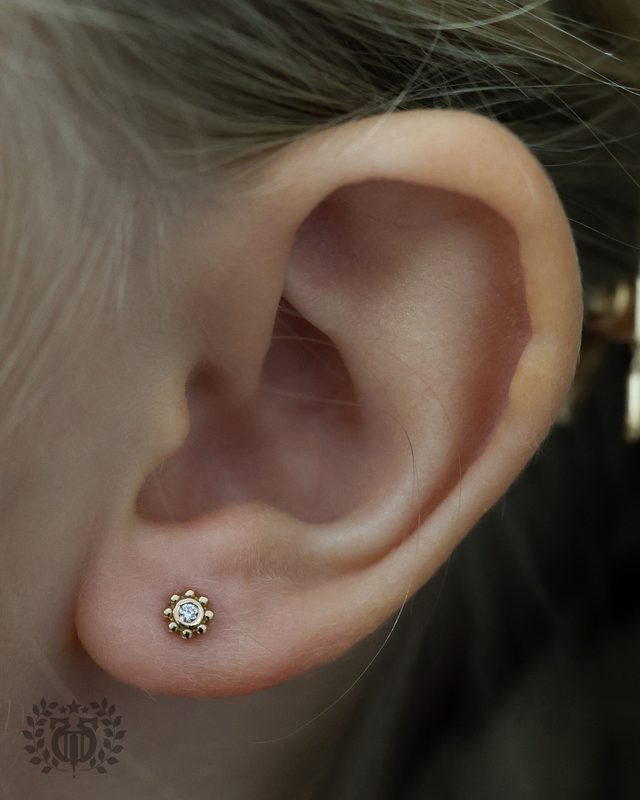
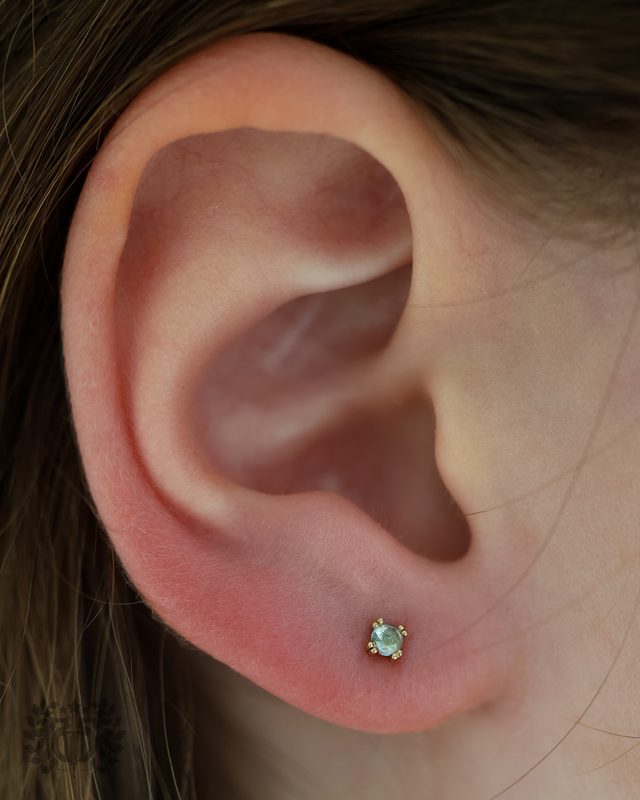
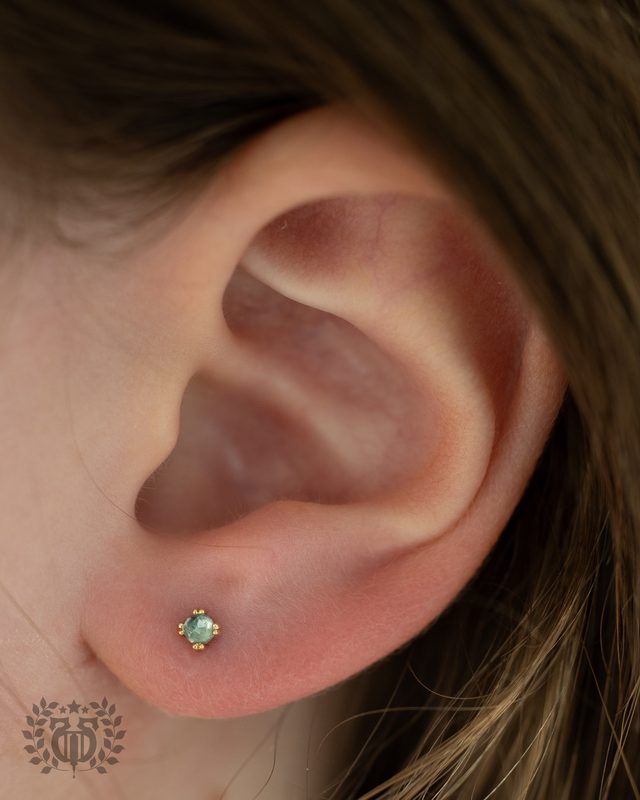
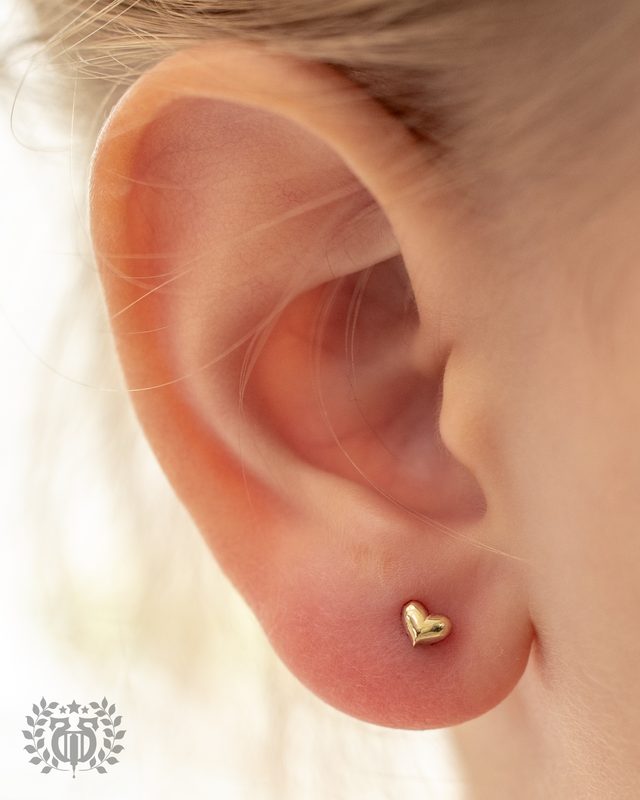
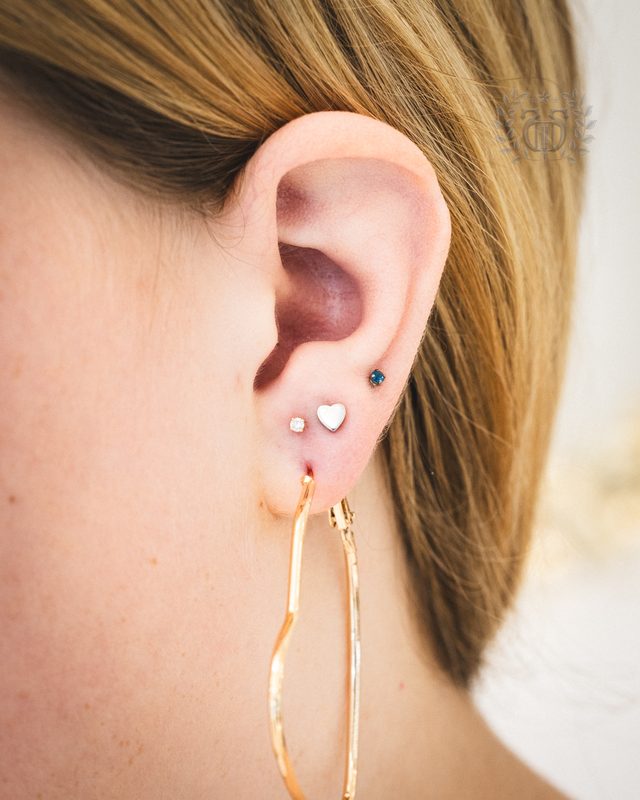
Implant-grade titanium rated ASTM F-136, niobium, or solid 14k or 18k gold. That’s the complete safe list. Avoid: plated gold (the plating wears through and exposes the base metal), “surgical steel” without an ASTM number (almost always contains nickel), costume jewelry, and anything sold in department store piercing counters. Nickel contact allergy is a lifelong condition that most commonly begins with a first piercing in the wrong metal. The AAD flags nickel as the most common contact allergen in children. Spending once on implant-grade jewelry is the cheapest long-term decision in piercing.

What does the piercing appointment actually look like?

About forty-five minutes end to end. Check-in and ID verification (California law requires parent or legal guardian present with matching ID). Consultation — the piercer talks with your child directly, looks at the anatomy, and marks placement with a skin-safe marker. Mirror check, adjustment, last chance to pause or back out. Sterile setup in view: sealed needles and jewelry opened at the chair. The piercing itself is shorter than a held breath. Aftercare review, downsize appointment booked before you leave. At every step, the child can say pause — and we pause.

Should both ears be done at once or one at a time?

Depends on the child, not the studio’s preference. Some kids handle the adrenaline of one piercing and are ready for the second five minutes later. Others need a week, and that’s fine. Apollo has two piercers available for simultaneous (“synchronized”) piercings — one on each ear at the same moment — which avoids the dreaded second-ear anticipation. We recommend synchronized for most children ages 5–12. For infants, one-at-a-time with gentle pacing is often kinder. For tweens and teens, ask them directly — they know their own tolerance.

How do I clean my child’s new piercing?

Sterile saline spray, twice a day, nothing else. That’s the professional-studio recommended protocol, and it’s the same at every age. Spritz the saline on, let it sit 30 seconds, pat dry with a clean paper product (not a towel — fibers catch). Do NOT rotate the jewelry (outdated by two decades — it reopens the healing channel). Do NOT use alcohol, peroxide, Bactine, tea tree oil, or antibacterial ointment. Do NOT let your child pick at it. Dissolve crust with a few extra saline spritzes in the shower. Hands off otherwise.

How long does a kid’s ear piercing take to heal?

Standard earlobes: 6–12 weeks to feel settled, 4–6 months to fully heal. Cartilage (helix, tragus, conch): 9–12 months minimum, often 12–18 months. The surface can look healed months before the channel underneath is done — this is the number-one reason piercings get downsized too late or changed too early. Follow the downsize appointment your piercer booked at the original visit (typically 4–8 weeks for lobes). Don’t swap jewelry at home before full heal. Don’t let a sibling or parent change it either. The timeline isn’t negotiable.

How do I tell the difference between normal healing and infection?

Normal: some pink-to-red tint the first two weeks, mild warmth, clear-to-pale-yellow lymph leakage that dries to a light crust, occasional itch. Settles down week by week. Infection warning signs per the AAD and AAP: redness that spreads rather than shrinks, swelling that worsens past day five, thick yellow or green discharge, heat you can feel with the back of your hand, fever, a red streak moving away from the site, or sudden severe pain. See a pediatrician the same day if any of these show up. Irritation is common, infection is rare — but the threshold for calling the doctor should be low.

Can my child swim, shower, and sleep normally after piercing?

Shower yes, from day one — just avoid direct spray force and rinse with saline after. Bath, pool, hot tub, lake, ocean: no, for the first four weeks minimum — standing water carries bacteria that fresh piercings cannot clear. Swim season plans matter in booking. Sleep: side sleepers with a new helix or tragus will feel it. A travel pillow with the center cut out (sold as a piercing pillow online) saves weeks of sleep disruption. For lobes, a regular pillow with a clean case changed every 2–3 days is fine. Sleep position is the most underestimated variable in cartilage piercing success.

What if my child changes their mind — at the chair, or later?

Every version is valid and we plan for it. At the chair: we pause, no questions asked, no guilt-tripping, no sunk-cost conversation. Parents sometimes feel embarrassed — don’t. We’d rather your child leave unpierced and come back in six months than get pierced into a memory they resent. Halfway through prep: same rule. A month after healing: the jewelry comes out, the channel closes, the skin settles. Lobe channels close cleanly in most kids. Cartilage leaves a small dimple that softens over a year. Nothing about the decision has to be permanent.

Ready for your child's first piercing?

Book a family piercing consultation. Bring your questions — we'd rather answer ten than skip one.

Apollo piercers meet professional-studio standards — gun-free, single-use-needle only, and used to first-time nerves. We budget time so your child isn't rushed and you aren't either.

Sixteen topics Book consultation