How to browse this portfolio
Five reading notes before you scroll the gallery.
Piercing portfolios reward a careful read. Five notes below help you see past the jewelry and into the placement, healing, and design math that actually separates a curated piercing book from a mall kiosk feed.
Read placement, not just jewelry.
A piercing portfolio is as much about where the piece sits as what's in it. Look at how each piercing relates to the wearer's anatomy — the placement is half the work. Jewelry can change; placement is permanent.
Notice healed work, not just fresh.
Fresh piercings flatter everyone. Healed work tells the truth — how the piece settled, how the skin accepted the jewelry, whether the placement held through the healing curve. Look for the healed tiles.
Jewelry is part of the piece.
Blue's portfolio uses implant-grade titanium and fine gold — not studio-grade costume metal. The material is part of what separates Apollo piercings from mall kiosk piercings. Look at the finish, not just the shape.
Ear curation is a category.
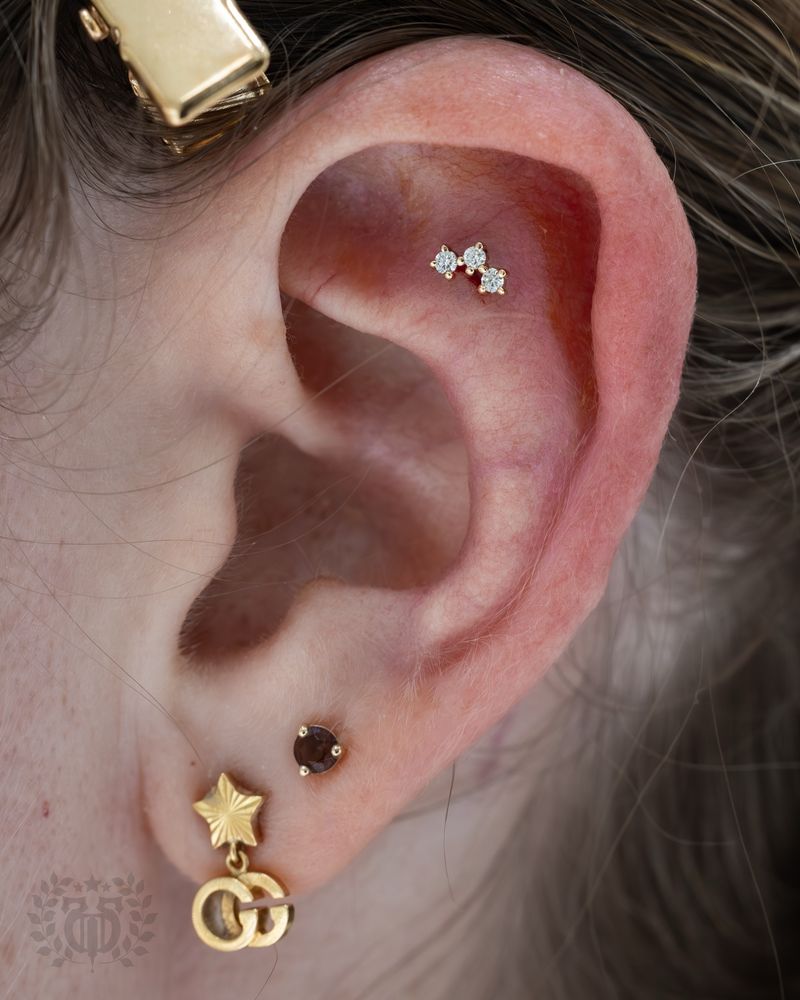
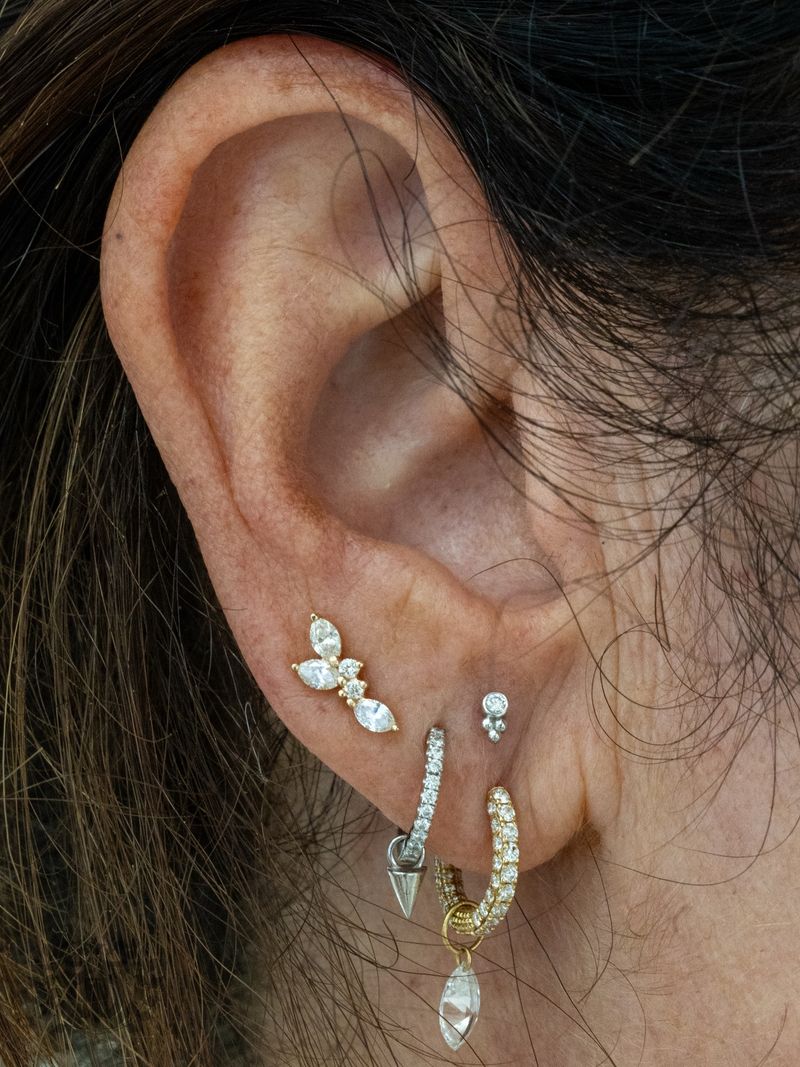
Ear projects in the gallery show curated placements built as compositions rather than one-off piercings. Blue's ear-curation bookings plan three or four piercings as a single design from day one.
Bring three references.
Pick three tiles from the gallery that come closest to the placement, jewelry, or curation feel you want. Three references — not thirty — focuses the consultation. Blue uses them as design reference, not a template.
Placement is permanent. Jewelry can change. The consultation spends most of its time on placement.
Fakir lineage means formal training. A documented curriculum, not a weekend course. The standard is public-record.
A curated ear is a composition, not a collection. The pieces relate to each other; the jewelry complements rather than competes.
12 placements from the portfolio
Each category, annotated.
Twelve specific placements from Blue's working book — the categories most often booked, with healing windows, jewelry notes, and visit counts.
Piece 1 · Lobe curation
Multi-lobe placement, fine-gold jewelry
A three-piercing lobe curation — anchor stud, accent hoop, secondary stud. Designed as a single composition rather than three separate piercings. Healed at 4 months in implant-grade titanium, switched to fine gold at the jewelry change appointment.
Piece 2 · Helix with orbital
Structural ear placement, curated
A helix piercing paired with a connected orbital — two piercings linked by a single piece of jewelry. Requires specific anatomy and a piercer who plans the placement as a composition.
Piece 3 · Conch and daith pairing
Inner-ear placement, complementary jewelry
A conch piercing paired with a daith for visual balance in the ear. The jewelry choices complement rather than compete — a smaller conch stud with a larger daith ring reads cleanly from the front.
Piece 4 · Industrial bar
Two-point cartilage piercing
An industrial barbell connecting two points of the upper ear cartilage. Requires specific anatomy — not every ear suits an industrial. Blue's consultation rules this in or out before the booking.
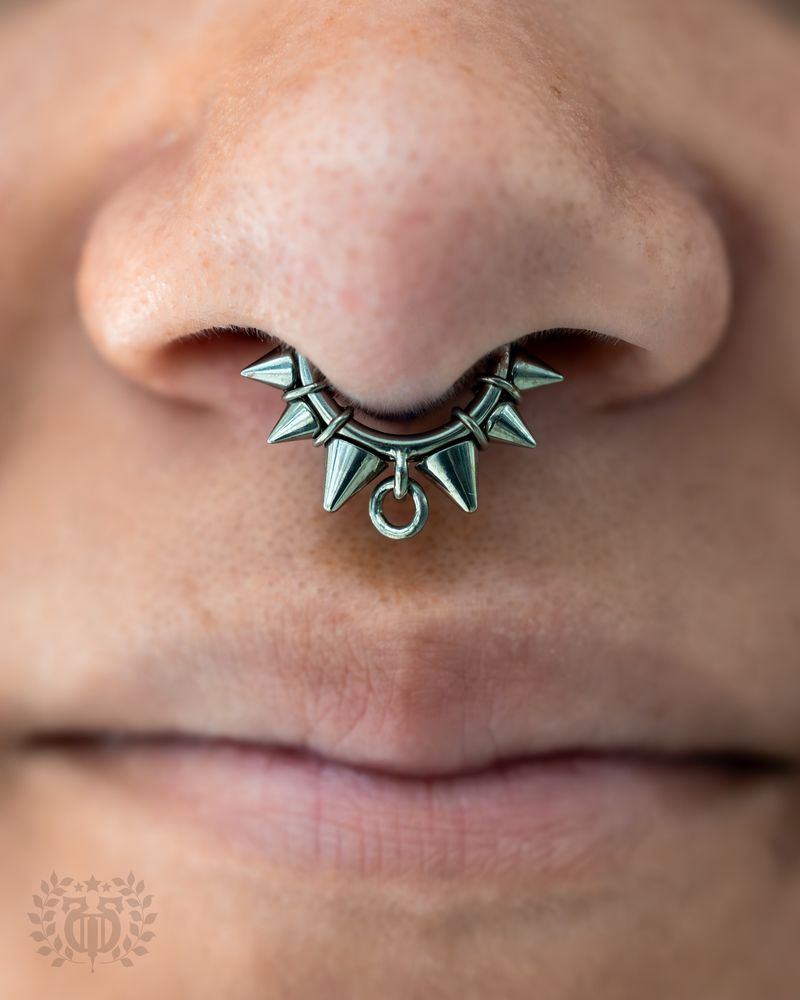
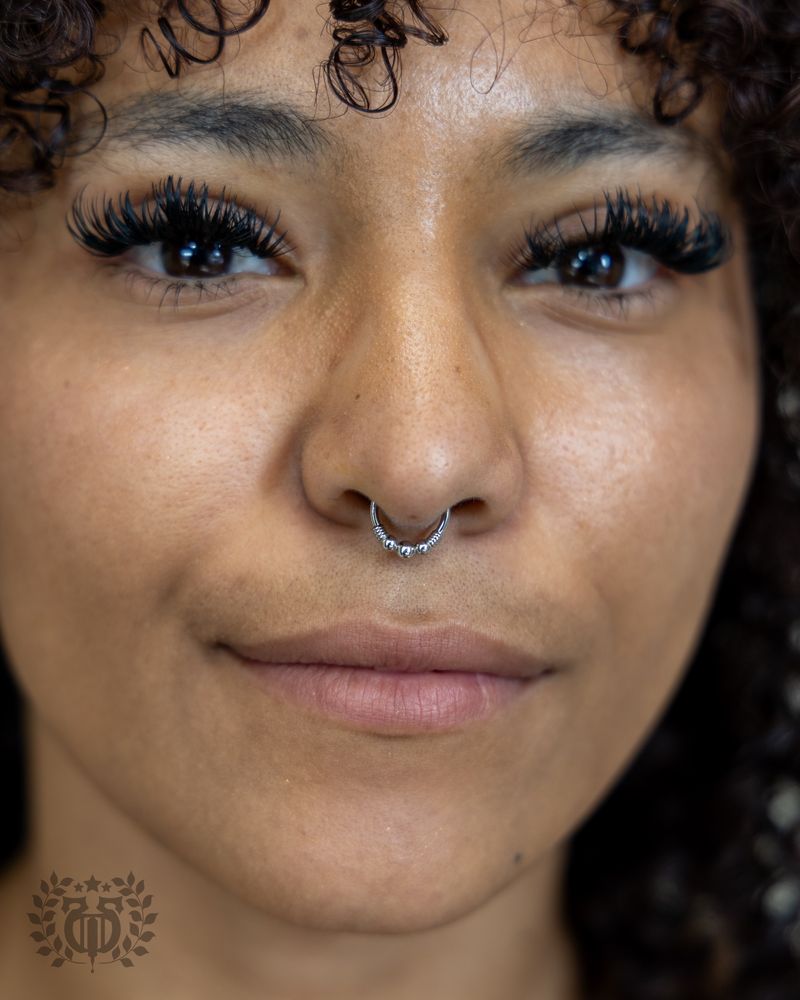
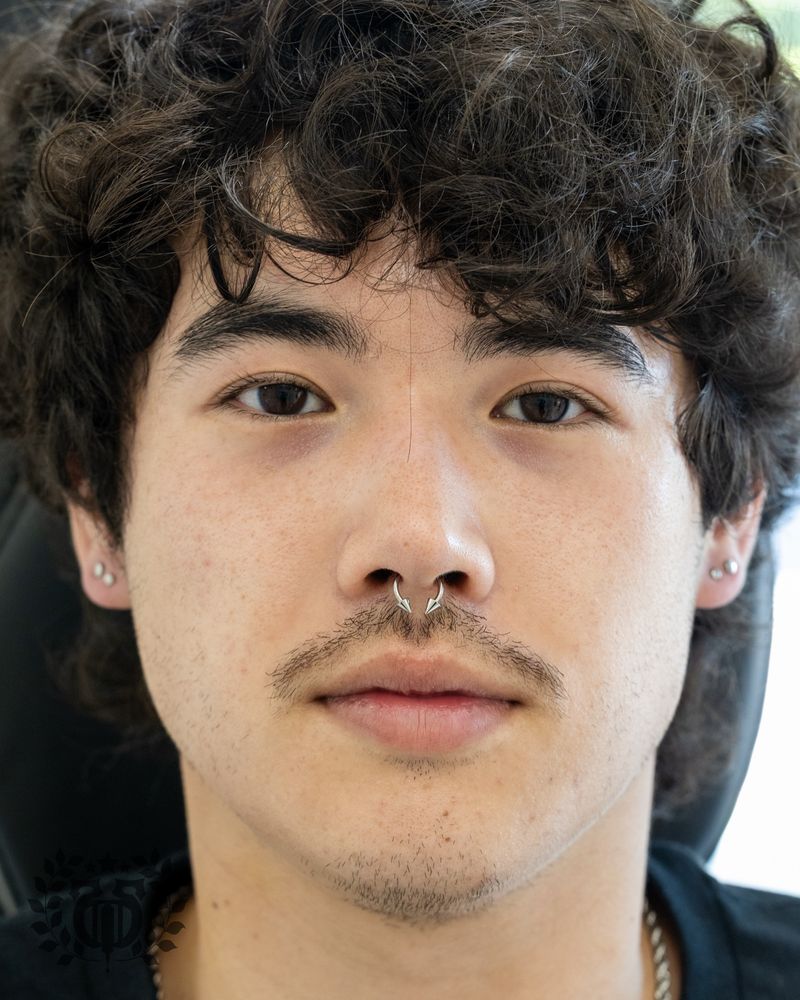
Piece 5 · Septum piercing
Central facial placement
A septum piercing placed through the sweet-spot — the thin cartilage column at the front of the septum, not through the harder tissue further back. Healed at 6 months in a titanium clicker.
Piece 6 · Nostril single
Classical facial piercing
A single nostril piercing with a fine-gold stud. The placement respects the natural curve of the nostril rather than forcing a position the anatomy doesn't support.
Piece 7 · Labret and Medusa
Paired lip placements
A center labret paired with a Medusa (philtrum) piercing. Both require consideration of how the jewelry interacts with teeth and gums over time. Blue covers the aging trade-offs at consultation.
Piece 8 · Eyebrow piercing
Surface-piercing placement
A vertical eyebrow piercing. Surface piercings have a shorter lifespan than cartilage or lobe piercings — Blue tells clients this at consultation so expectations are set honestly.
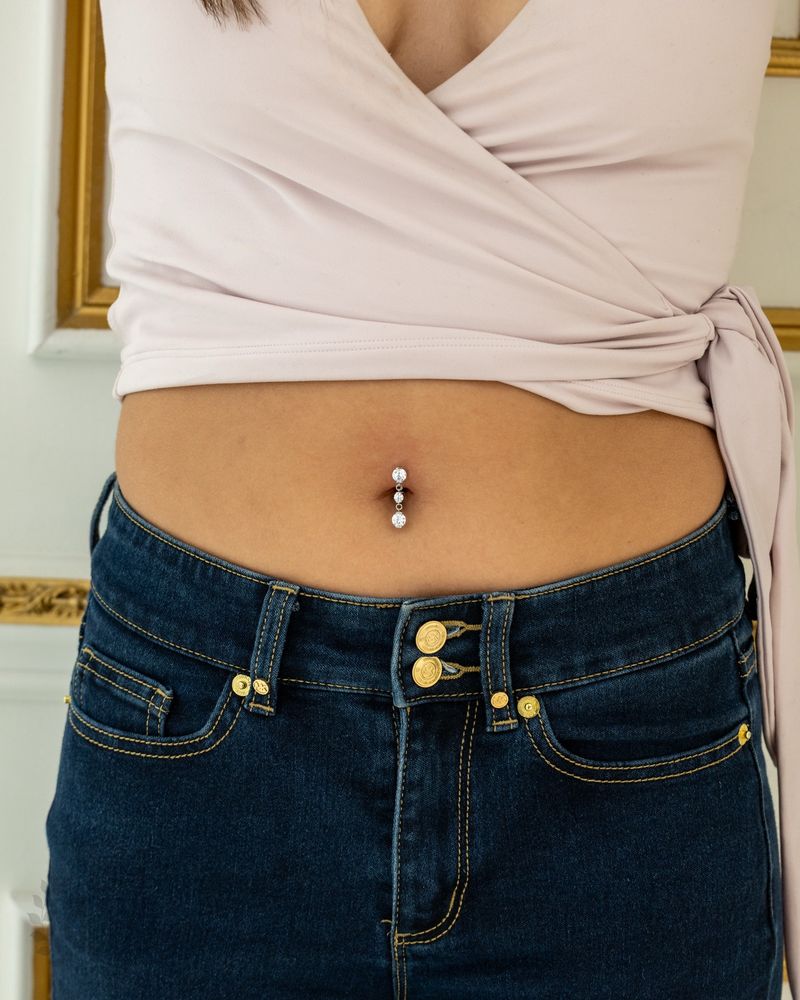
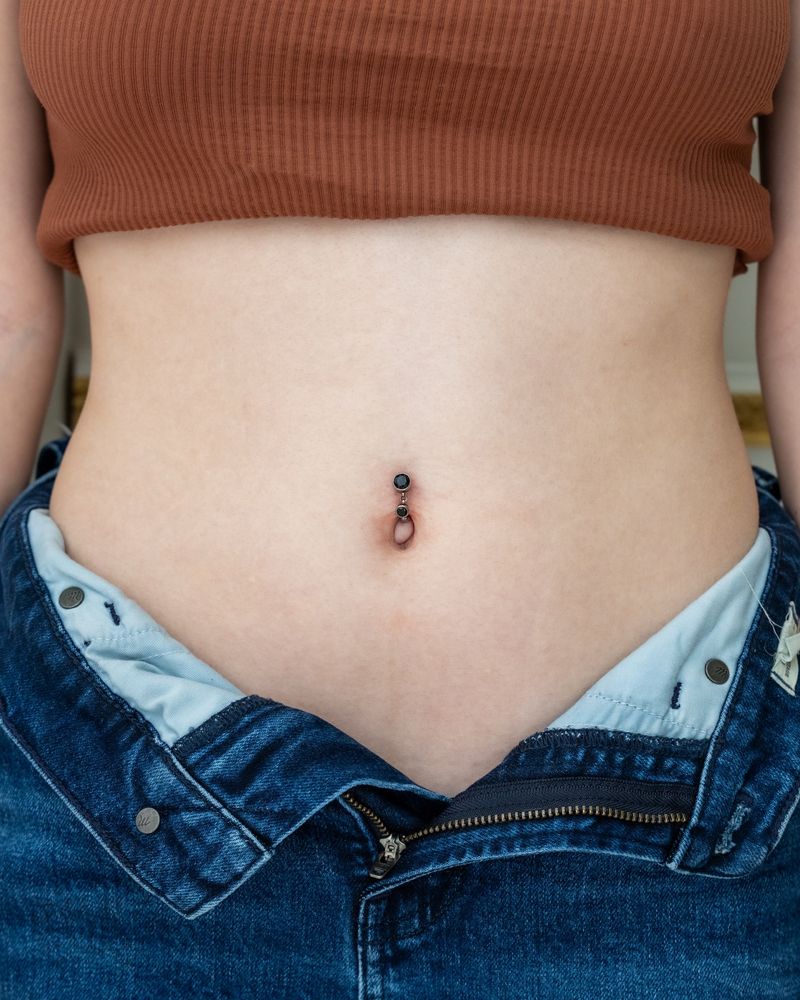
Piece 9 · Navel piercing
Body piercing, healed at 12 months
A standard navel piercing healed at 12 months. Navel placements have long healing curves — 6 to 12 months before the piece is fully settled. Blue plans the jewelry accordingly.
Piece 10 · Multi-piercing curation
Four-piercing ear project
A full ear-curation project — four piercings planned as a single composition across helix, tragus, and lobe. Planned from the first consultation as a design, not added one at a time.
Piece 11 · Jewelry change / upgrade
Moving from healing jewelry to long-term
A jewelry change appointment — moving from the initial implant-grade titanium healing jewelry to fine-gold or more decorative pieces after the healing window. A common Blue appointment for existing clients.
Piece 12 · Second-opinion troubleshooting
Migrated, rejected, or problem piercings
A second-opinion consultation for a migrated, rejected, or otherwise problematic piercing from another studio. Blue assesses whether the piece can be saved, should be removed and re-done after healing, or should be retired.
Six categories represented
Ear curation, facial, body, complex anatomy, jewelry upgrades, combined sessions.
Blue's portfolio clusters around six sub-categories of piercing work. Pick the one your piece wants to live in.
Ear Curation
Composition-first multi-piercing work
Ear projects planned as a single composition rather than one-off piercings. Blue's ear-curation bookings plan three or four pieces as design math from day one. The piercings relate to each other; the jewelry complements rather than competes.
Facial Piercings
Nose, lip, and brow work
Septum, nostril, bridge, labret, Medusa, eyebrow. Facial piercings ask specific things of anatomy and aftercare. Blue's consultation rules in or out the placement based on actual tissue, not reference photos from a Pinterest board.
Body Piercings
Navel, nipple, surface, genital
The piercings that sit outside the face and ear. Body piercings have longer healing curves and specific anatomy requirements. Blue's Fakir-lineage training anchors this category.
Complex Anatomy
Edge-case placements and troubleshooting
Piercings that fall outside the standard anatomy — unusual ear structures, septum variations, previously pierced tissue with scar. Blue consults these carefully and is honest when the answer is that a piece can't work.
Jewelry Upgrades
Healing to long-term piece transitions
The appointment where initial healing jewelry (implant-grade titanium) is swapped for long-term pieces (fine gold, specialty jewelry). A separate booking from the original piercing; runs shorter than a piercing appointment.
Tattoo-plus-piercing
Combined session work
A rare category — Blue also tattoos. Clients sometimes book a small tattoo paired with a piercing in a single visit, or plan complementary work across both disciplines. Ask at consultation if this interests you.
Selected work
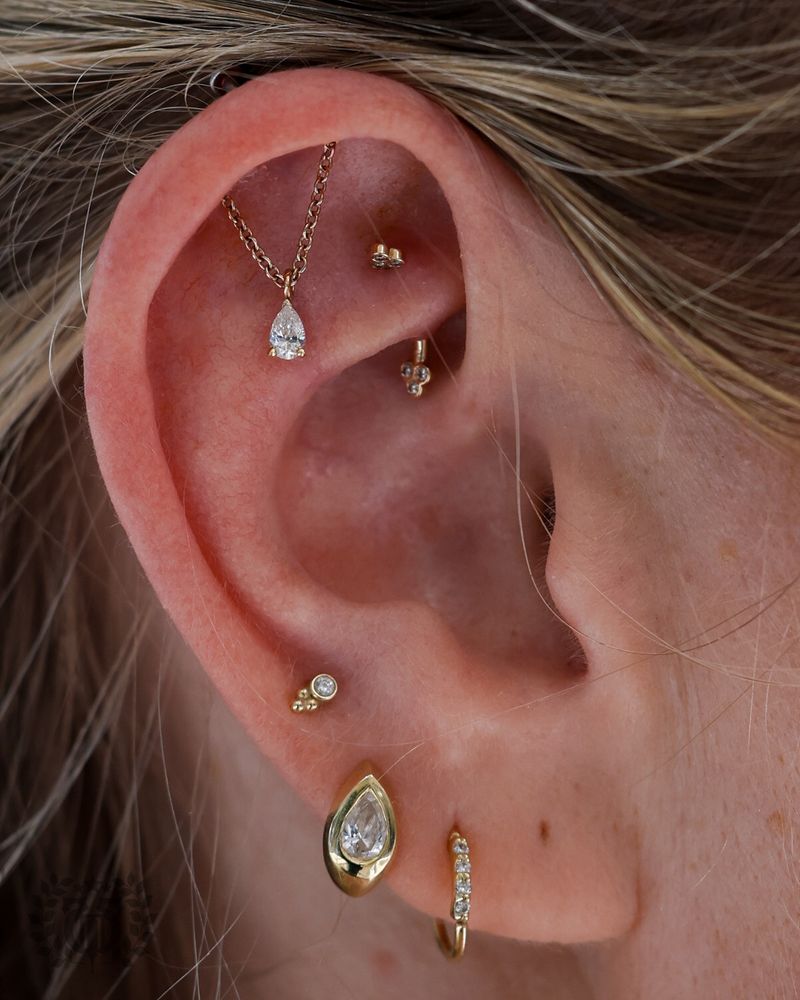
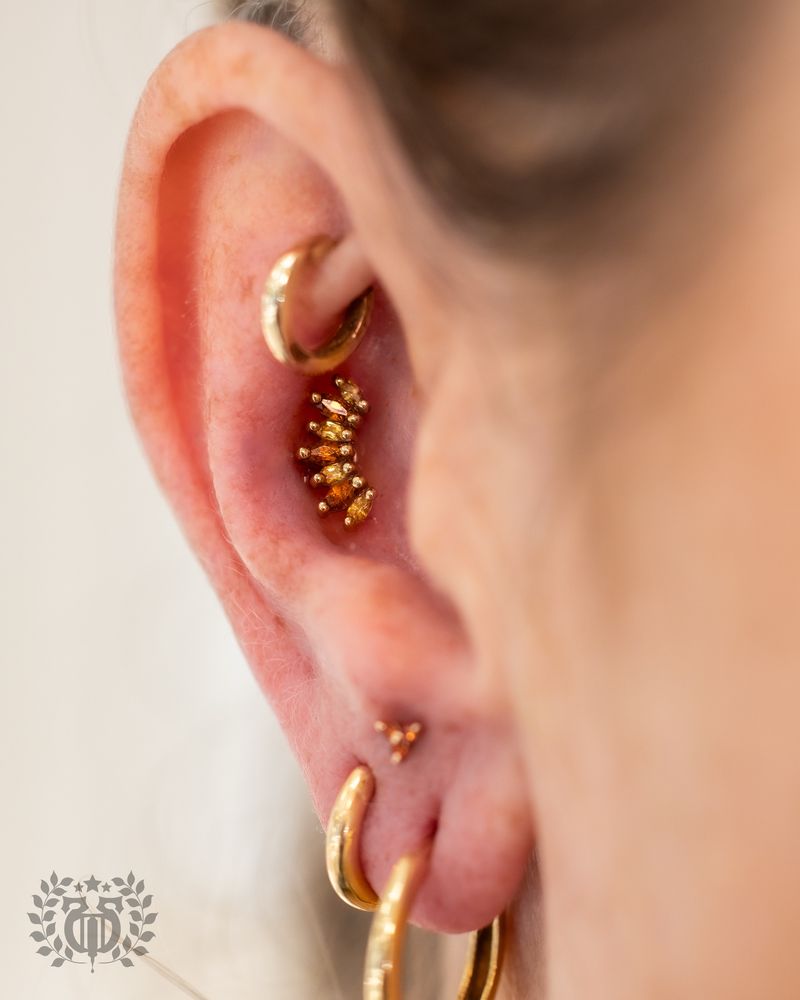
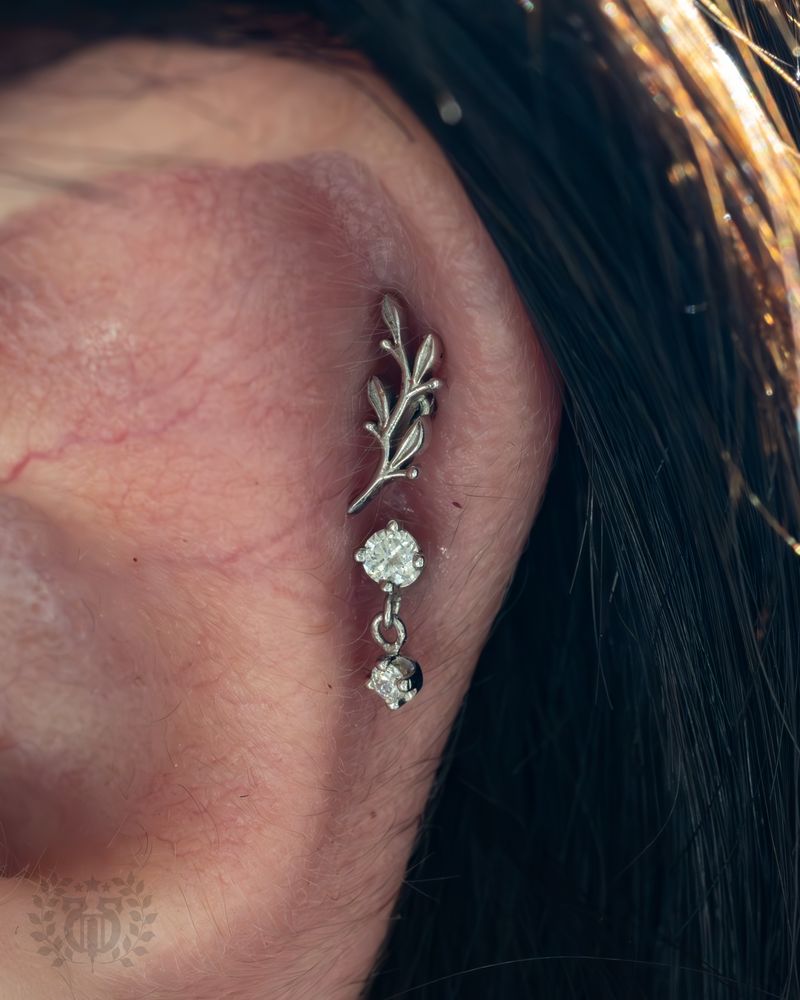
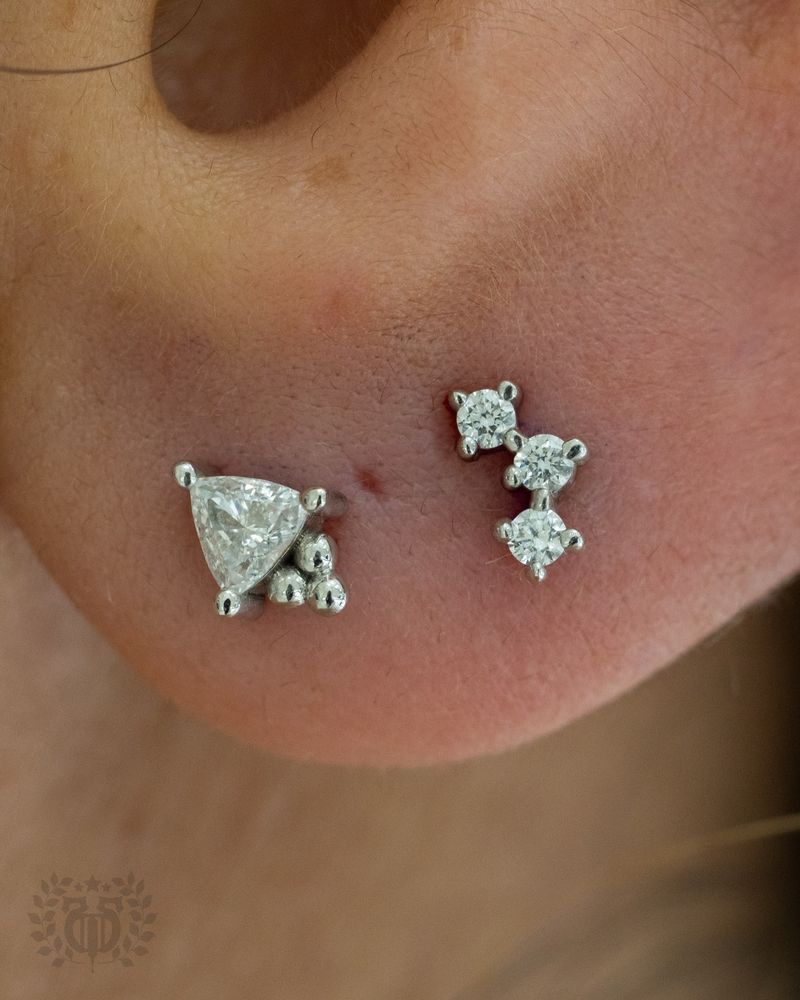
Thirteen pieces from Blue's piercing book.
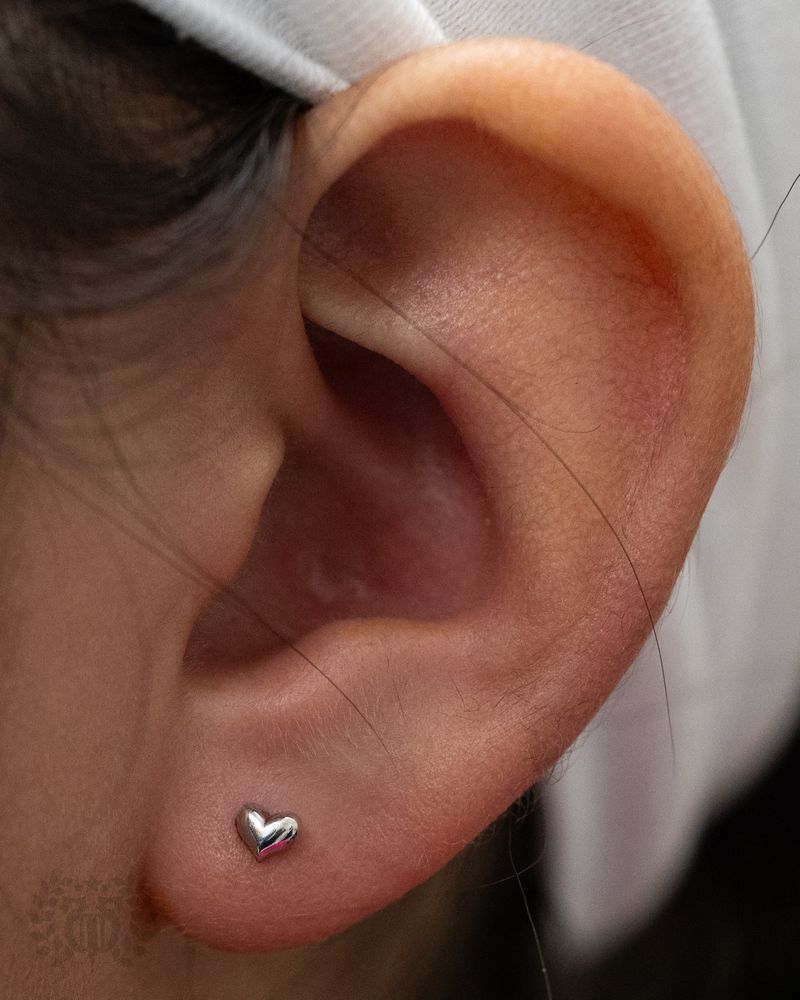
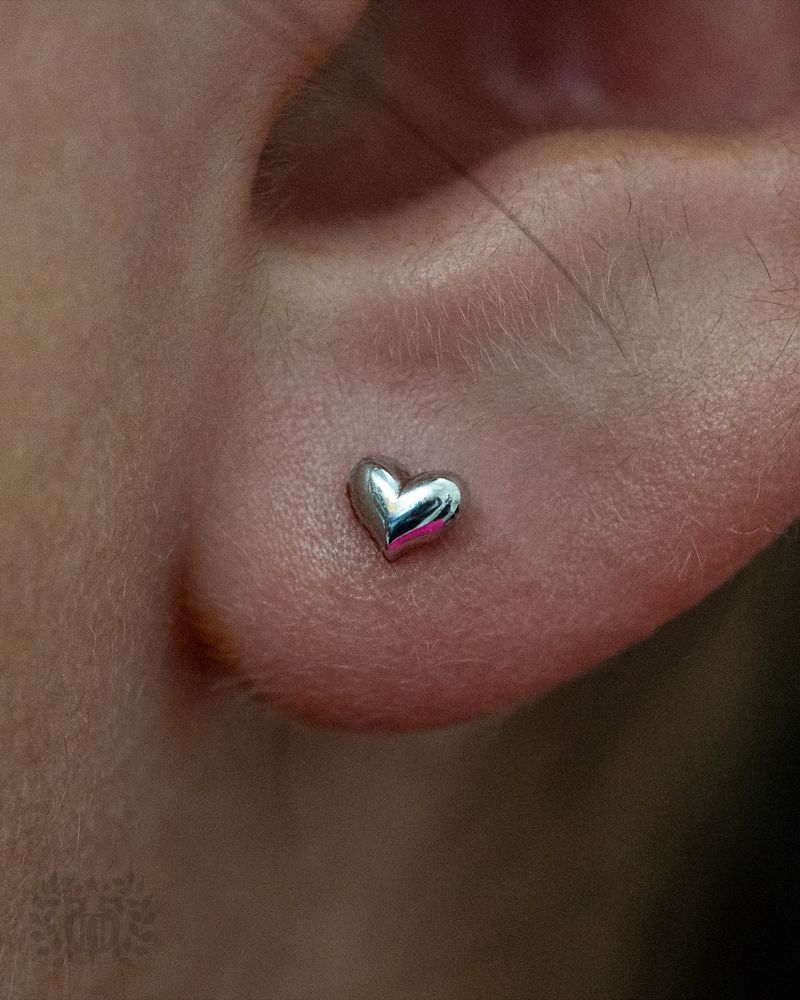
Classic lobes, advanced cartilage arrangements, and industrial work — healed and fresh. For specific piercing placements, refer to the 12-piece catalog above.
Five placement categories
Where Blue's piercing book actually lives.
Five body zones anchor Blue's piercing practice. Each asks different things of anatomy, jewelry, and healing.
Ear (helix, conch, daith, tragus)
Upper helix · conch · daith · tragus · rook
Blue's most-booked category. Cartilage piercings ask for specific placement, specific jewelry, and a long healing window. The ear is where most curation projects live.
Earlobe
Lower lobe · upper lobe · secondary lobe
The simplest piercing and also the foundation of most curations. Blue books lobe work both as first piercings and as anchor pieces for multi-piercing compositions.
Face (septum, nostril, lip, brow)
Septum · nostril · labret · Medusa · eyebrow · bridge
Facial piercings. Each asks specific things of anatomy. Blue's consultation rules in or out the placement before the booking — tissue first, jewelry second.
Body (navel, nipple, surface)
Navel · nipple · surface · genital
Body piercings with longer healing curves than ear or face. Blue's Fakir-lineage training specializes this category. Aftercare is different; the consultation covers it.
Advisory / troubleshooting
Anywhere with non-standard anatomy
Second opinions on problem piercings, complex anatomy, scar tissue. Blue consults before the booking — sometimes the answer is the piece can't be done, and that's the honest consultation.
Session durations
Four appointment lengths cover the working book.
Blue's piercing appointments range from single-piece visits to multi-piercing curation sessions. Four tiers cover the appointment math.
Eight pairing notes
Who this portfolio fits — and where to route when it doesn't.
Blue's piercing bench is not a one-size-fits-all. Eight notes below describe who this portfolio is built for and where the studio routes when another bench is the better match.
If simple ear lobes are the priority
Route to Bunny Vogt, Apollo's piercer specializing in simpler lobe work, kid and teen piercings, and starter pieces. Bunny's portfolio is the match when the piece is straightforward.
If you want a tattoo alongside
Blue also tattoos. See Blue's tattoo portfolio for the other half of his book. Clients sometimes book both in a single visit.
If tattoo photorealism is the priority
Route to Raa for tattoo work. Apollo's piercing and tattoo benches work as separate disciplines; the studio routes correctly at consultation.
Fakir-lineage clientele
Clients who prioritize formal piercing training over self-taught or mall-kiosk-trained piercers. Blue's Fakir Intensives certification is documented and is the baseline Apollo's piercing standards are built on.
Ear-curation clientele
Clients planning multi-piercing ear projects as compositions. Blue's curation consultations plan the full design from the first booking so the jewelry and placements relate.
Second-opinion clientele
Clients with migrated, rejected, or otherwise troubled piercings from other studios. Blue's second-opinion consultations are where much of his specialty work lives.
Jewelry-upgrade clientele
Existing Apollo clients moving from healing jewelry (implant-grade titanium) to long-term pieces (fine gold or specialty jewelry) after the healing window.
Body-piercing clientele
Adult clients booking body piercings — navel, nipple, surface, or genital work. The Fakir-lineage training is specifically calibrated for this category.
Consultation
Six questions to answer before you book with Blue's piercing bench.
Piercing consultations work best when the placement intent, jewelry standard, and any relevant history are ready. Six questions below frame the booking.
Which tile from the portfolio is closest?
Pick three tiles that come closest to the placement, jewelry style, or curation feel you want. Blue uses them as a design reference at consultation, not as a template.
What's the sentence?
Describe the piercing in one sentence. "I want a septum." "I'm building a curated left ear." "I need a second opinion on my navel piercing." The sentence frames the consultation.
Is this a new piercing or an existing one?
New piercings and troubleshooting consultations follow different paths. Blue will ask this first. Bring any previous-studio history for existing piercings.
What jewelry standard do you want?
Implant-grade titanium for healing, fine gold or specialty pieces for long-term. Blue walks through the options at consultation — the jewelry changes the piercing as much as the placement does.
Any anatomy or medical considerations?
Deviated septum? Previous surgery near the placement? Scar tissue? Blue rules the placement in or out based on actual tissue, not reference photos. Bring the history.
What's your healing commitment?
Piercings heal over weeks or months depending on placement. Body piercings can take a year. Blue covers the aftercare timeline at consultation so the commitment is clear before the booking.
The piercing isn't done when the tenderness leaves. It's done when the channel is fully healed. That's weeks to months, not days.
Mall-kiosk metal is the fastest way to a rejection. Implant-grade titanium is the floor, not a premium.
The portfolio is a catalog of placements that have been lived with — not a menu of piercings to order.
Common misconceptions
Eight patterns that mismatch a client to this portfolio.
Most mis-bookings with Blue's piercing bench trace to one of these eight patterns. Catching them before the consultation routes the booking correctly on the first try.
"I want a piercing on anatomy it won't work on."
Some placements require specific anatomy — a sweet-spot septum, a true inner conch, a bridge with suitable depth. Fix: trust the consultation. If Blue says the placement won't work, the honest answer is to choose another placement.
"Mall-kiosk metal is fine."
It isn't. Studio-grade plated jewelry causes healing problems. Fix: healing in implant-grade titanium is the standard. Upgrade to fine gold only after the healing window closes.
"I'll just touch it to check healing."
Touching a healing piercing is how it gets contaminated. Fix: follow the aftercare sheet exactly. No touching, no rotating, no changing jewelry during the healing window.
"I'll change jewelry at home before it's healed."
Early jewelry changes migrate or reject piercings. Fix: wait for the full healing window, then come back for a jewelry change appointment. Blue books these as short visits.
"The migrated piercing will heal itself."
Usually not. Migrating piercings rarely settle back on their own. Fix: book a troubleshooting consultation. Sometimes the piece can be saved; sometimes it needs to be removed and re-done after the site heals.
"I want an industrial but my anatomy doesn't suit it."
Industrials need specific ear shapes. Forcing one on the wrong anatomy leads to migration and rejection. Fix: Blue's consultation will tell you. If an industrial won't work, he'll propose an alternative placement.
"Piercings are quick. I'll fit it into my lunch break."
A proper piercing consultation plus piercing plus aftercare walkthrough runs 45 – 60 minutes. Fix: book the full appointment window. Rushing the consultation rushes the piercing.
"I'll book a tattoo and a piercing in the same visit."
Possible with Blue, but not all combinations work — some placements interact with wound care. Fix: ask at consultation whether combining sessions is advisable for your specific work.
First-visit recipe
If the portfolio matches and this is your first Blue piercing, here's the recipe.
Eight decisions a first piercing appointment should make on purpose. Built around a first booking with Blue's piercing bench.
Personalization
Three layers make a Blue piercing actually yours.
A piercing is a placement plus a jewelry choice plus a private meaning. Use the gallery to lock the placement; the jewelry and the private layers get built at the consultation.
The placement layer
Where the piercing sits on the body. This is the foundation. Placement is permanent; jewelry can change. Blue's consultation spends most of its time on this layer.
The jewelry layer
What goes in the piercing — material, shape, size, finish. Implant-grade titanium during healing, then fine gold or specialty pieces for the long term. The jewelry is how the piercing expresses itself.
The private layer
What the piercing marks for you. A coming-of-age moment, a cultural piece, a personal decision. The private layer is yours; Blue respects it without asking.
Working with Blue
Partners, family, collections, milestones — piercing across relationships.
Piercings often mark moments. Four notes below cover how Blue works with partners, family, collection-building clients, and milestone piercings.
Partner piercings
Couples booking matching placements. Blue books these same-visit when the anatomy supports matching. The jewelry can be identical or complementary depending on the design intent.
Family groupings
Siblings, parents-and-adult-children, or family groups booking together. Each person's anatomy is different — the matching happens at the placement-type level rather than exact jewelry.
Curated collection (self)
A single client building a piercing collection across months or years. Blue plans the full collection at the first consultation so each new piece relates to the existing ones.
Milestone piercings
Piercings marking a specific event — coming of age, recovery, a significant relationship. Blue consults these carefully; the placement often matters as much as the piercing itself.
FAQ
The questions every piercing portfolio visit surfaces.
Eight questions covering booking, why tattoo work appears alongside, Fakir certification, jewelry standards, Blue-vs-Bunny routing, appointment length, combined sessions, and troubleshooting existing work.
How do I book a piercing with Blue after seeing the portfolio?
Apollo consultations with Blue's piercing bench are booked through the studio's piercing inquiry form — describe the piercing in a sentence, note the placement and any relevant anatomy or medical history, and the studio routes the booking. New-client piercing consultations run 1–3 weeks out — faster than tattoo bookings. Come to the appointment with your ID, a current aftercare-friendly top, and three reference tiles from this portfolio.
Why does the gallery show tattoo work alongside piercings?
Blue handles both tattoo and piercing at Apollo — one of the rare practitioners who does both at senior level. The gallery on this page reflects the studio work he's responsible for. If you're specifically evaluating piercing work, the placement notes on the 12-piece catalog above annotate the piercing categories. For the dedicated tattoo portfolio, see his tattoo-side bio and portfolio page.
Is Blue Fakir-certified?
Yes. Blue completed the Fakir Intensives program — the formal piercing education lineage that Fakir Musafar established as the standard for professional body piercing training. The certification is documented and is the curriculum Apollo's piercing standards are built on. If the training provenance of your piercer matters to you, Blue's credentials are a reason to book with him specifically.
What jewelry does Blue use?
Implant-grade titanium for all healing jewelry — the material standard that minimizes rejection and migration risk during the healing window. Fine gold (14k and above) and specialty jewelry are available at the jewelry-change appointment after the full healing window closes. Apollo does not use costume-grade plated metal, studio-grade plated gold, or any jewelry that doesn't meet implant-grade standards. The material is part of the piercing, not an accessory.
What's the difference between Blue and Bunny Vogt for piercings?
Both are senior piercers at Apollo; the specialties differ. Blue's book clusters around ear-curation projects, facial piercings, body piercings, complex anatomy cases, and Fakir-lineage specialty work. Bunny specializes in simpler lobe piercings, kid and teen work, and starter pieces. For a first piercing on straightforward anatomy, either bench works; for curation, troubleshooting, or specialty work, Blue is the default. The consultation form routes based on what you're booking.
How long does a piercing appointment take?
A single piercing appointment runs 45–60 minutes total. That includes consultation, placement marking, the piercing itself, and the aftercare walkthrough. Paired piercings run 60–90 minutes. Full ear-curation projects (3–4 pieces) run 90–120 minutes. Jewelry-change appointments run 15–30 minutes. Blue books the appointment window intentionally — rushing the consultation rushes the piercing, and that's not how Apollo books.
Can I book a piercing and a tattoo in the same visit?
Sometimes, depending on the combination. Blue also tattoos, and clients occasionally book both in a single visit. The limitation is usually around wound care — some placements interact (a tattoo near a fresh piercing, or vice versa). Ask at consultation whether your specific combination is advisable. If the combination works, Blue will coordinate the timing within the single appointment.
What if I have a migrated or rejected piercing from another studio?
Book a second-opinion consultation. Blue assesses the piece and offers one of three paths: save the piercing (if the migration hasn't gone too far), remove it and let the site heal fully before re-piercing, or retire the placement entirely. Bring any relevant studio history you have. Second-opinion consultations are common Blue bookings; the goal is an honest assessment, not to sell you on a procedure that won't work.
Ready to bring the placement into a consultation?
Pick the placement. Bring the anatomy history. Walk in prepared.
Apollo consultations with Blue's piercing bench work best when the placement, the jewelry standard, and any relevant anatomy or medical history are ready. If the piercing matches his Fakir-lineage specialty, his bench is yours. If another Apollo bench fits the piece better, the studio routes the booking.