Tattoo Ideas
Blackwork Tattoo Ideas
Blackwork is the most durable category of tattooing we do, and also the least forgiving of a rushed design. Solid black holds its edge for decades when the composition is built for the body it sits on, and turns into a gray smudge when it isn't. Here's how we think about blackwork at our Main Street studio in Santa Monica, from first sketch to how the piece will look in fifteen years.
Book a consultationWhat Counts as Blackwork
Blackwork is a family of styles, not one look. The common thread is that black ink does all the work — no color, and often no gray wash either. Within that, the pieces we build most often at the studio fall into a handful of camps:
- Ornamental — mandalas, filigree, lace panels, jewelry-like bands. Symmetrical, decorative, designed to follow a limb rather than sit on it like a sticker.
- Geometric — sacred-geometry grids, tessellations, linework armor. Precision-dependent and the least forgiving of sloppy stencil placement.
- Neo-tribal — the sharp, flowing black shapes that came back hard after 2020. Reads as movement, not pattern.
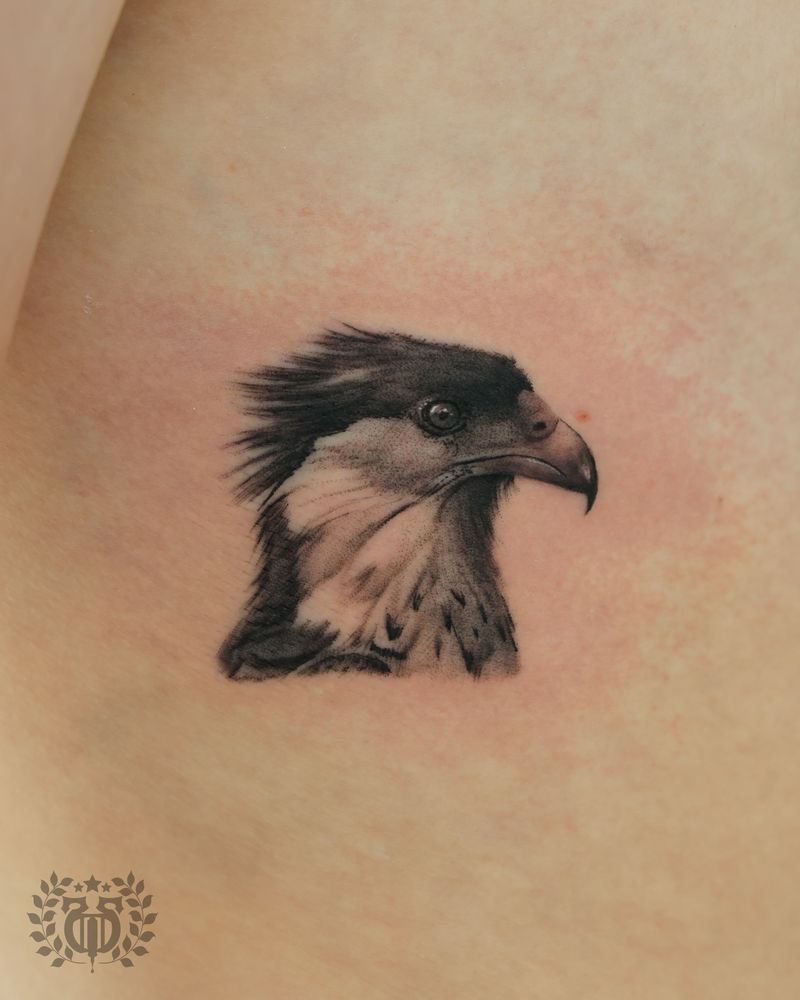
- Illustrative / etchwork — woodcut and engraving-style shading built from hatching and stipple instead of solid fill. Botanicals, animals, anatomical subjects.
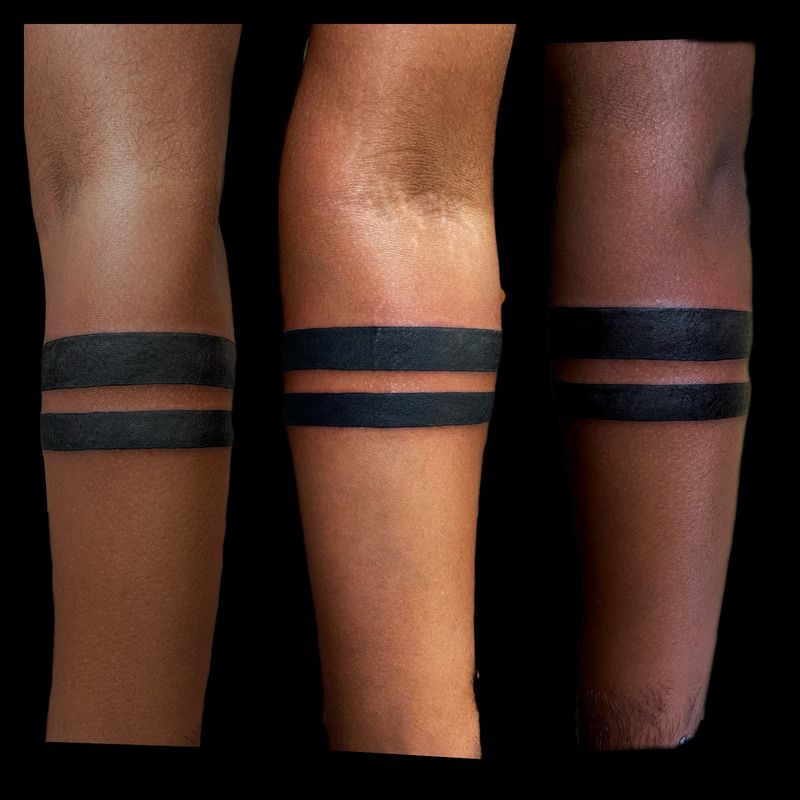
- Blackout and negative space — large saturated fields where the untattooed skin becomes the image.
- Dotwork — gradients built entirely from stipple. Slow to tattoo, gorgeous when healed, punishing if the artist rushes density.
Most of the strongest pieces we tattoo mix two of these. An ornamental forearm panel with etchwork botanicals inside it will read better at arm's length than either style alone, because you get contrast between solid black, texture, and open skin.
Ideas That Work by Placement
Forearm and Inner Arm
The forearm is the best first blackwork placement in our experience. It's flat enough for geometry to stay square, it ages slowly, and it's easy to keep out of the sun. Ornamental cuffs that wrap the wrist, etchwork botanicals running elbow to wrist, and single bold neo-tribal shapes all sit well here. The inner arm holds fine linework better than almost anywhere else on the body — thin skin, little friction, minimal sun.
Upper Arm and Shoulder Cap
Curved, muscular, and highly visible. This is where neo-tribal and armor-style geometry earn their keep, because the design can be drawn to follow the deltoid instead of fighting it. Anything symmetrical here has to be stenciled on a relaxed arm and checked in a mirror from three angles — a mandala that looks perfect on a flexed shoulder will sit crooked at rest.
Sternum, Ribs, and Spine
Ornamental blackwork was practically invented for these placements. A sternum piece with a strong vertical axis flatters most bodies, and a spine panel is one of the few places where perfect symmetry is genuinely achievable. Honest warning: ribs and sternum are among the more painful sessions, and rib skin stretches, so avoid ultra-fine parallel lines under a quarter inch apart there.
Thigh and Calf
The thigh is our favorite canvas for large ornamental and blackout work — big, flat-ish, forgiving, and easy to cover while healing. Calves handle bold shapes well but are notorious for swelling and for slower healing, especially if you're on your feet all day, which most people in LA hospitality and film work are.
Hands, Neck, and Fingers
We'll do them for clients who are already committed, but we're upfront: hand and finger blackwork needs touch-ups, sometimes more than once. Constant washing, sun, and fast cell turnover break down solid fill. Design for it — heavier lines, more open space, no detail under two millimeters.
How Blackwork Actually Ages
Solid black is the most stable pigment in tattooing, but it doesn't stay put the way a fresh photo suggests. Three things happen over ten to twenty years:
- Lines thicken. Ink migrates slightly in the dermis. A 1mm line becomes closer to 1.5mm. This is why we space parallel lines generously and why very tight geometric grids can eventually close up into a solid block.
- Solid fields soften at the edge. Blackout panels stay black but their borders lose crispness. Designing a visible edge that's meant to be organic solves this before it becomes a problem.
- Sun fades black to a cool gray-blue. This is the single biggest factor in Los Angeles. Daily sun on an unprotected forearm will age a piece faster than anything an artist does with a machine.
Nothing here is an argument against blackwork — it's an argument for building breathing room into the design. Well-spaced blackwork at twenty years still reads clean. Overpacked blackwork at five years reads muddy.
Trade-Offs Worth Knowing Before You Commit
Large blackwork means multiple sessions. A full ornamental thigh panel is realistically three to five sittings, and saturation work is uncomfortable in a dull, grinding way rather than a sharp one. Solid fill is also the hardest thing to laser off later — heavy black requires many more removal sessions than fine line, and blackout is close to permanent in practical terms. If you're likely to change your mind, start with ornamental linework that leaves room to expand instead of committing skin to full saturation on day one.
The upside: blackwork is the best cover-up material there is. An old faded piece disappears under a well-designed ornamental or neo-tribal panel more convincingly than under any color work, and the result doesn't look like a cover-up. Bring the old tattoo to the consultation — we design around what's there, not on top of it.
Building Your Piece
Come in with a feeling and two or three reference images, not a finished drawing. The best blackwork we produce starts from a conversation about placement and flow, then gets drawn to your specific anatomy. If you're still gathering direction, browse our other tattoo ideas and the range of work in our tattoos portfolio, then book a consultation at the studio. We'll talk through size, sessions, and how the design will hold up on the placement you actually want — and we'll tell you honestly if a different placement would serve the idea better.
The blackwork tattoo questions that come up most
Does blackwork hurt more than other tattoo styles?
The needle sensation isn't sharper, but the duration is longer and saturation passes create a dull burning ache that builds over a session. Most clients find large fill work more tiring than painful. We break big pieces into multiple sittings specifically so the last hour isn't the one that ruins your experience.
How long does a blackwork sleeve take?
A full ornamental or neo-tribal sleeve is typically 20 to 35 hours spread across four to eight sessions, depending on density and how well you sit. Sessions are usually spaced three to four weeks apart so each area heals fully before we work adjacent skin.
Will blackwork show up on dark skin?
Yes, and it's often the most flattering style on deeper skin tones because it relies on contrast and shape rather than color subtlety. The key adjustments are slightly bolder line weight, more negative space, and avoiding fine gray gradients that can lose definition. Ask to see healed examples on skin similar to yours before booking.
Can blackwork cover an old tattoo?
It's the most reliable cover-up approach we have. Solid black and dense ornamental patterns can absorb an old design completely, though a very dark or heavily scarred original may need a laser lightening session first. Bring the existing tattoo to a consultation so we can assess it in person.
Is blackout tattooing a good idea?
It can look extraordinary, and it's the most permanent decision in tattooing. Full saturation is extremely difficult to remove or work over, and the aftercare is demanding. We only take on blackout projects after a real conversation about long-term intent, and we usually suggest starting with a partial or negative-space version first.
How do I keep my blackwork from fading?
Sunscreen, consistently, for the life of the tattoo. UV exposure is the main cause of black turning gray-blue, and Southern California sun is relentless. Keep it covered or SPF 30+ for the first several months especially, and moisturize regularly once healed.
Will I need touch-ups?
On forearms, thighs, and backs, usually not for years. On hands, fingers, feet, and elbows, plan on at least one touch-up as solid fill breaks down faster in high-friction, high-turnover areas. We include a touch-up window on our own work and will tell you upfront if a placement is likely to need one.
What should I bring to a blackwork consultation?
Two or three reference images that show the feeling you want, the placement you have in mind, and any existing tattoos on or near that area. Wear or bring clothing that lets us see the placement clearly. You don't need a finished drawing — the design gets built to your anatomy after we talk.