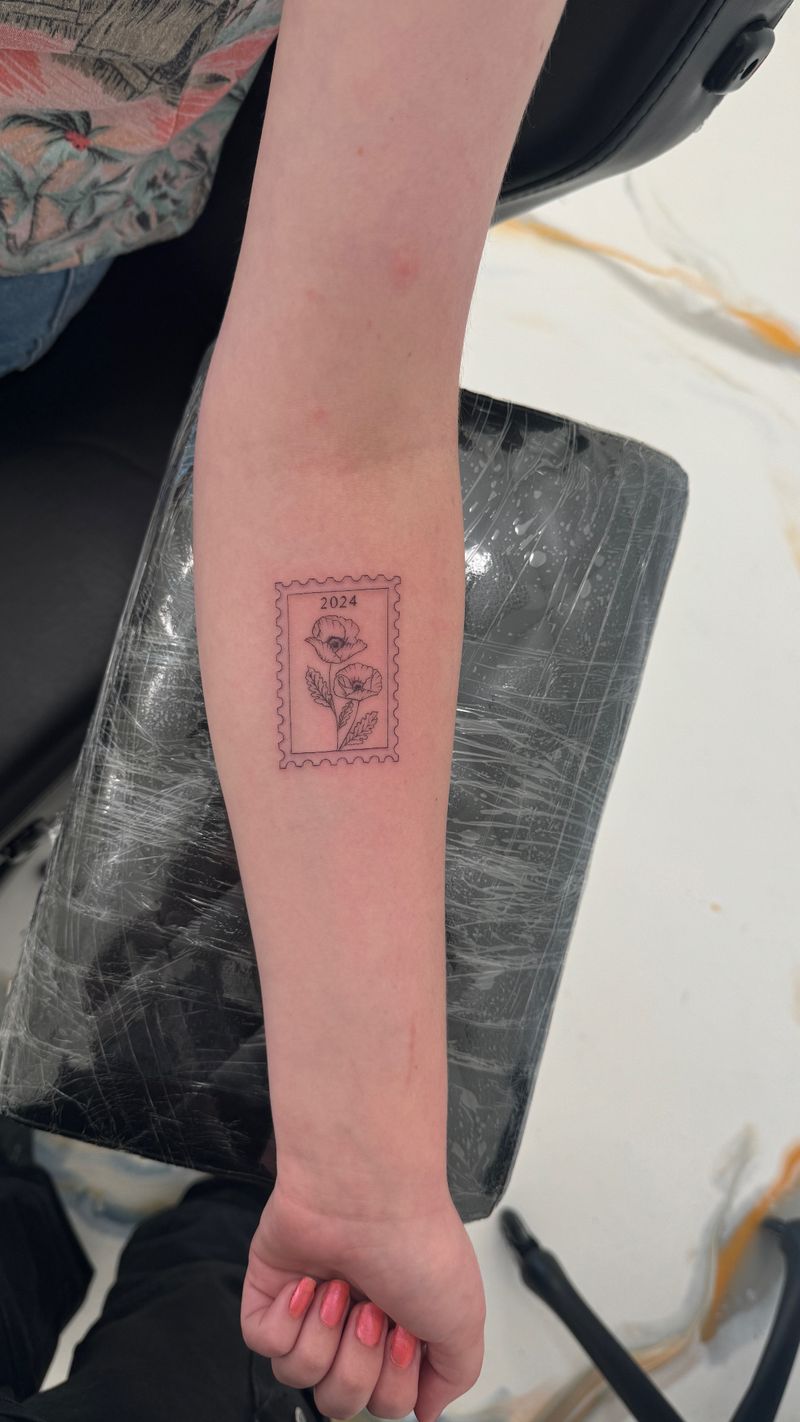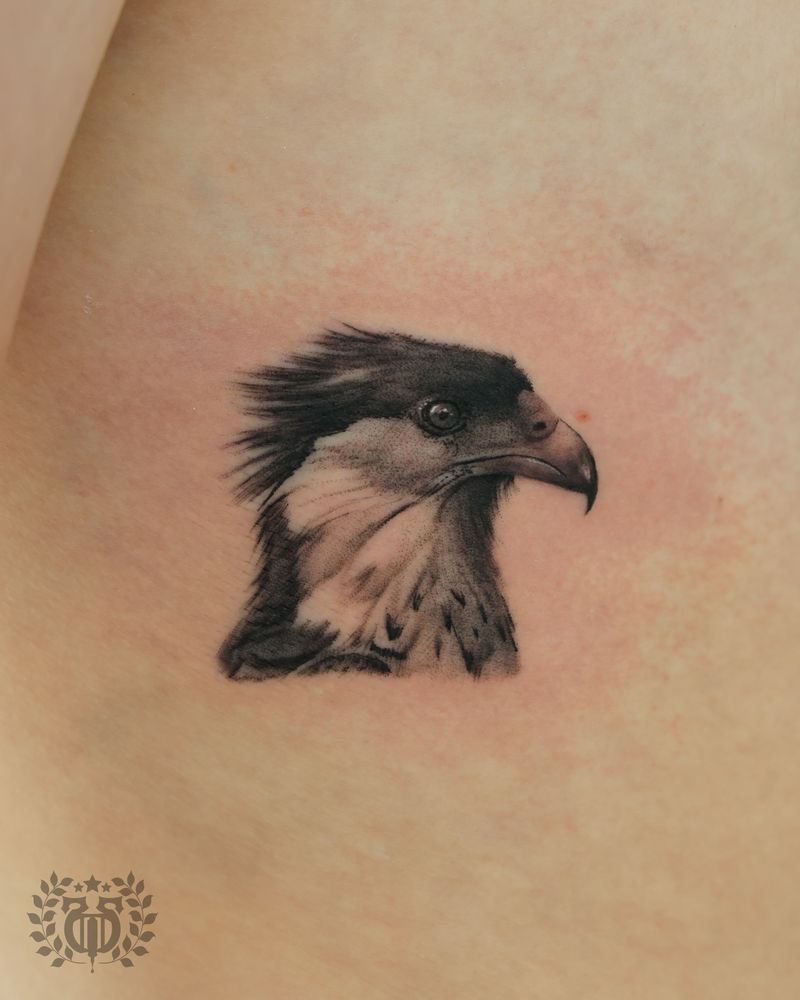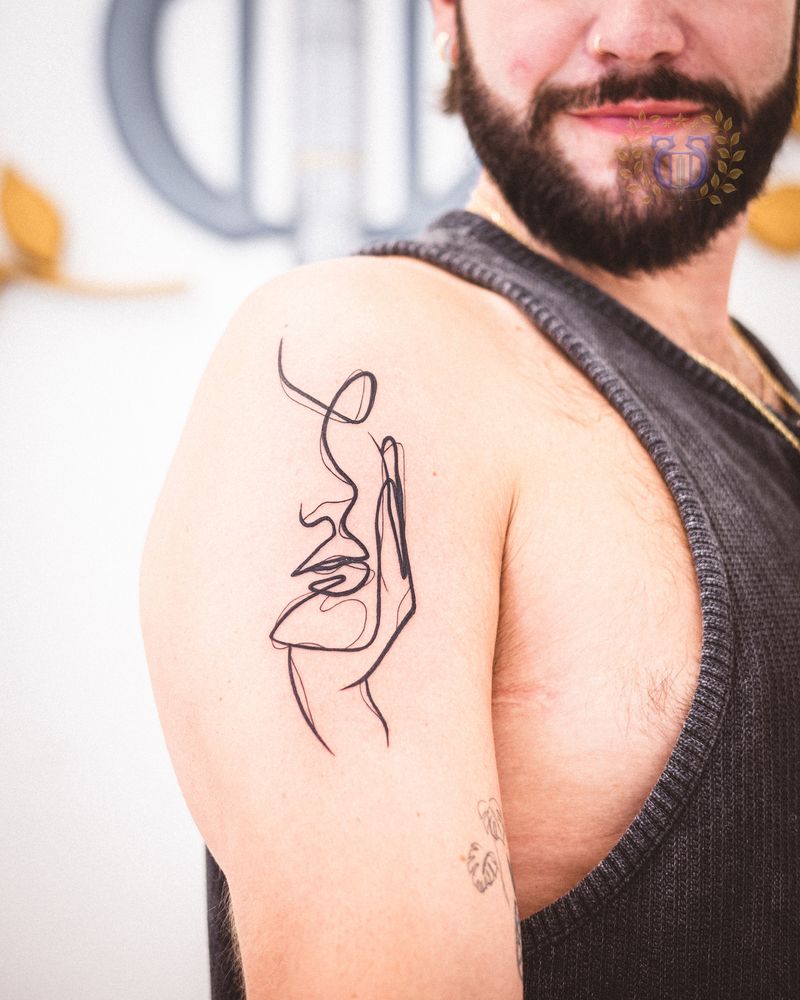
Tattoo Ideas
Small Tattoo Ideas
Small tattoos are the most requested pieces at our Main Street studio, and they're also the ones most likely to go wrong when they're planned off a Pinterest screenshot. The difference between a small tattoo that looks sharp at year five and one that reads as a gray smudge comes down to a few unglamorous decisions: size, line weight, and placement. Here's the honest version of the conversation our artists have with clients every single day in Santa Monica.
Book a consultationWhat counts as a small tattoo?
In practice, a small tattoo is anything from about one inch to four inches at its longest dimension — a piece that fits inside one sitting, needs no composition planning beyond its own borders, and can be placed almost anywhere on the body. Above roughly four inches you are designing around anatomy; below about one inch you are fighting how ink behaves in skin.
That range is a working definition from the studio floor, not an industry standard. Nobody issues small-tattoo certificates. But it is the range where the same set of decisions keeps coming up, and it is why a page like this can be useful at all: a two-inch moth on a forearm and a two-inch date on a ribcage have almost nothing in common as images and almost everything in common as problems to solve.
The three decisions that determine whether a small tattoo still looks good in ten years are, in order of how often people get them wrong: how many elements the design contains, how much space sits between the lines, and where on the body it goes. The subject matter — the thing everyone spends months choosing — matters least of the four. A well-built small tattoo of a mediocre idea outlives a badly built small tattoo of a beautiful one.
What are the best small tattoo ideas?
The small tattoos that work are the ones designed at small scale rather than shrunk to it. Below is how our artists group the requests that come through the door, with the deeper page for each direction. Every one of these has a version that works at two inches and a version that does not, and the difference is almost always element count.
Botanical and floral
The single most-requested category, and the most forgiving, because a plant can be drawn as one confident silhouette or as forty overlapping petals and both read as the same subject. A single stem with three leaves survives anything. A full bouquet at wrist size does not.
- Wildflower tattoos — loose stems and seedheads, the most naturally small-friendly floral direction because negative space is built into the subject.
- Birth flower tattoos — a personal meaning attached to a specific species. Some of the twelve read small; several genuinely do not, which is worth knowing before you commit.
- Rose tattoos — the classic, and the one most often over-detailed. A traditional rose with six petals holds forever; an eleven-petal realistic rose at two inches becomes a shadow.
- Lily tattoos and lotus tattoos — both built on large simple petal shapes, which is exactly what small scale wants.
- Flower tattoos generally — start here if you know you want a botanical but not which one.
Animals, wings, and small creatures
Winged subjects dominate small tattooing for a structural reason: wings are symmetrical, they fill a space without needing much internal detail, and they look deliberate at any size. The trap is wing venation and feather texture, which is the first thing to blur.
- Butterfly tattoos — the most-requested small subject on earth. Ask for fewer, larger cells in the wing than the reference photo has.
- Moth tattoos — heavier and more graphic than butterflies, which makes them the better small choice of the two.
- Dragonfly tattoos — a long body and four thin wings; needs deliberately open venation to survive.
- Hummingbird tattoos — beautiful and detail-hungry. This is one where we will push you toward three inches rather than two.
- Swallow tattoos — built for small scale from the start. A traditional swallow is a solved design problem, which is why it has survived a century.
- Snake tattoos — a snake is a line, so it small-scales better than almost any other animal and suits narrow placements like the spine or a forearm strip.
Celestial, symbolic, and time
Geometric and symbolic subjects are the safest small tattoos in existence, because they are already reduced. There is no detail to lose.
- Moon phase tattoos — a row of simple shapes; scales down further than almost anything else here.
- Zodiac tattoos — both the glyph and the constellation versions are essentially line-and-dot work, which ages predictably.
- Heart tattoos — the purest small-tattoo form. A solid or single-line heart at one inch is one of the few designs that genuinely works that small.
- Mountain tattoos — a range reduced to three or four peaks is a strong small piece; a photographic ridgeline is not.
- Hourglass tattoos and pocket watch tattoos — both traditionally rendered with heavy outlines, which is why they hold at modest sizes.
- Geometric tattoos and mandala tattoos — both work small, with one caveat covered below: closely spaced parallel lines are the failure mode.
Words, names, and script
Text is the category where size rules are least negotiable, because legibility is binary. It reads or it does not.
- Script and lettering tattoos — typeface choice does more work than size. A clean serif at a quarter inch beats an ornate script at half an inch.
- Name tattoos — short names have an enormous advantage here. Four letters can be set large inside a small footprint; twelve cannot.
Matching, family, and memorial
Small tattoos carry most of the relationship work in tattooing, because they are the ones people get together, on impulse, in a shared afternoon.
- Matching tattoos — complementary designs age better than identical ones, for reasons both practical and otherwise.
- Sibling tattoos and mother-daughter tattoos — the variants of that idea with the most staying power.
- Family tattoos and memorial tattoos — where dates, initials, and handwriting most often appear, and where the legibility rules matter most.
- First tattoo ideas — if this is your first, start there and come back here for sizing.
What are the best simple tattoo ideas?
Simple and small are not the same thing, and conflating them is the most common planning error we see. Simple describes the design; small describes the footprint. A simple tattoo has few elements, few line weights, and generous space between them. It can be six inches across. A small tattoo is under about four inches and can still be catastrophically complicated.
What simplicity actually buys you is margin. Ink migrates slightly outward in the dermis over the years — that is not a defect, it is how skin works — and a simple design has room to absorb that movement without any two elements colliding. A complicated one does not. This is why a hundred-year-old American traditional flash design still reads perfectly on an eighty-year-old arm while a five-year-old micro-realism piece already looks soft.
The practical test we use at the desk: can you describe the design out loud in under six words? "A swallow." "Three mountains and a moon." "My daughter's name in serif." Those all pass. "A hummingbird drinking from a lily with a constellation behind it and my grandmother's handwriting underneath" does not — not because it is a bad idea, but because it is a four-inch idea being asked to fit in two.
If you want simple and small, the highest-hit-rate directions are minimalist tattoos, single-line botanicals, celestial glyphs, and small traditional flash. All four were designed with reduction as the point rather than as a compromise.
Where is the best place for a small tattoo?
The inner forearm, if you want one answer. Flat, stable skin, low nerve density, shaded most of the day under a sleeve, easy for the artist to stretch, and — the underrated part — you can see it yourself without a mirror. Tattoos you see every day are the ones you keep loving.
Beyond that, placement is a trade between visibility, pain, and how well the spot holds ink. Those three rarely point the same direction.
The reliable placements
- Inner and outer forearm. The best all-round real estate on the body for a small piece. The only real caveat is sun, and in Santa Monica that caveat is not small.
- Wrist. Heals cleanly, shows fine linework well, and sits at the top of the visibility scale. Watch watch-straps during the heal.
- Bicep and shoulder. Among the lowest-pain, best-aging spots on the body, and fully coverable. If longevity is your priority above all else, this is the answer.
- Calf and thigh. Not obvious choices for something small, but both are stable, forgiving, and give a two-inch piece room to breathe.
The high-visibility, higher-maintenance placements
- Ankle. Classic small-tattoo territory. The bone stings more than clients expect and sock friction during the heal is a genuine variable, but ink holds well here.
- Collarbone and sternum. Elegant for script and delicate botanicals. Skin over bone hurts more, and the skin here moves constantly, so we will steer you a line weight heavier than you would use on a forearm.
- Ribs and hip. Beautiful placements, genuinely sharper sessions, and skin that changes with body composition more than most people plan for.
- Spine. Small vertical pieces sit here well. Go bolder than feels necessary — thin work over vertebrae is the hardest thing on the back to keep crisp.
- Behind the ear. Discreet and charming, with an honest asterisk: thin skin there takes detail beautifully at first and fades faster than almost anywhere else. Choose something ultra-simple and budget for a touch-up.
- Neck. A visibility decision more than a design one. Worth thinking through separately from the tattoo itself.
The placements we will talk you through carefully
Fingers, palms, the sides of the feet, and to a lesser extent the hands. We tattoo all of them. But these areas shed skin aggressively and see constant friction, and even flawless work can heal patchy, drop out in places, or fade noticeably inside a couple of years. If you want a finger tattoo, get it knowing that a touch-up is not a possibility — it is part of the plan. Ring-finger band tattoos are the most common version of this conversation, and they are worth having before the appointment rather than after.
How small is too small?
There is no universal number, and any studio that gives you one is simplifying. What there is, is a set of working rules our artists apply at the stencil stage:
- Script needs letter height, not word width. Roughly a quarter inch per letter is the floor for a clean typeface; closer to half an inch if you want it legible across a room in twenty years. Ornate scripts need more than that, because the flourishes are doing the work that spacing normally does.
- Lines want visible daylight between them. If two lines are close enough that you have to look twice to see the gap on the stencil, they will touch eventually. The gap needs to be a deliberate feature of the design, not the leftover space between things.
- Element count is the real size driver. A design with three elements can go smaller than a design with eight. When we ask for twenty or thirty percent more size, the alternative is almost always removing an element instead — and we will offer you that choice.
- Micro-realism and photographic shading do not have a small version. Gradient shading needs physical room to be a gradient. Below a certain size it is just a gray patch, everywhere, from anyone.
None of this is upselling. Time is billed by the hour here, and a smaller tattoo is a shorter booking — when we push for size, it costs us, not you.
Do small tattoos hurt?
Less than large ones, for a reason that has nothing to do with size: the session is shorter. Most of what people describe as tattoo pain is cumulative — the fortieth minute in one spot is harder than the fourth, regardless of the piece. A forty-five-minute small tattoo simply does not have time to get there.
Placement matters far more than dimensions. A one-inch piece directly on the ankle bone, a rib, the sternum, or the top of the foot can be sharper minute-for-minute than a four-inch piece on a bicep. The general pattern is that thin skin over bone hurts most, fleshy areas with muscle underneath hurt least, and nerve-dense areas like the inner arm and the ditch of the elbow are their own category.
The thing most first-timers report afterwards is that the anticipation was disproportionate to the event. That is not us being reassuring — it is the single most common sentence said at our front desk after a first small tattoo.
How much does a small tattoo cost in Los Angeles?
At Apollo, tattoo work is booked as artist time, and the rate depends on which artist you book. Blue, Hannah, and Rick are $100 an hour. Raa and David are $350 an hour. A small piece is usually a single sitting, so the honest way to estimate your cost is to decide who you want to work with and multiply by the time the piece needs — which for most small tattoos is one hour, sometimes less, occasionally two if the design is dense or the placement is awkward.
Time is booked in blocks, with one hour as the smallest, so a fifteen-minute tattoo and a fifty-minute tattoo generally cost the same. That is not a surcharge on tiny work; it reflects the fact that setup, sterile single-use supplies, stencil, and breakdown take the same effort regardless of how big the design is.
Two things that are not priced by size: custom drawing time, if you want something designed from scratch rather than adapted from flash, and touch-ups, which are $100 on work we did. Anyone quoting you a firm price for a custom piece before seeing the design and the placement is guessing, and the guess is usually wrong in the direction that favors them.
For the broader picture on what drives a tattoo quote up or down, our tattoo pricing guide goes through it properly.
How long does a small tattoo take?
Most small tattoos are between thirty and ninety minutes of actual tattooing. Add stencil placement, which sounds trivial and is not — getting a two-inch design sitting correctly on a curved forearm can take three attempts and fifteen minutes, and it is worth every second, because a perfectly executed tattoo in slightly the wrong spot is a permanent slightly-wrong tattoo.
What pushes a small piece past ninety minutes: color packing, which is slow; dense black fill; anywhere the artist has to stretch skin one-handed; and any placement where you will need breaks. Budget two hours in your day for a one-hour tattoo and you will never feel rushed.
Fine line or bold: which small tattoo ages better?
Bold, unambiguously — and that is not an argument against fine line, it is a trade you should make consciously.
Fine-line work, single-needle or three-liner, is what most people picture when they say "small tattoo," and Los Angeles is arguably its global home. Done well, on a stable placement, it ages far better than its reputation suggests. But it has no margin for error in either direction: a fine line packed slightly too deep heals blown out and fuzzy; slightly too shallow and it heals patchy. There is less ink in the skin to begin with, so there is less to lose before the design changes character. This is the style where the individual artist's hand matters most, which is why we tell people to choose a fine-line artist from photos of healed work, never fresh work.
Bold small tattoos — traditional-style pieces with a solid outline and simple saturated fill — are the underrated option. A two-inch traditional heart or swallow looks nearly identical at year fifteen, because blur is already designed into it: thick lines, open space, no detail small enough to lose. If your priority is a tattoo that never needs attention, small and bold beats small and delicate every time.
What we will not do is pretend a one-inch micro-realism portrait will look like the reference photo in five years. It will not, anywhere, from anyone. That is physics, not skill.
Do small tattoos fade or blur over time?
All tattoos soften. Pigment particles sit in the dermis and move fractionally over decades, and contrast flattens as the surrounding skin changes. Small tattoos are not more prone to it — they just have less room to absorb it before the design's shape changes.
The variables you actually control, in rough order of how much they matter:
- Sun. The largest single factor, and in Los Angeles the one most people underestimate. Daily sunscreen on healed work does more for a tattoo's appearance at ten years than any product marketed as tattoo aftercare.
- Placement. High-friction, high-shed, thin-skinned areas fade fastest: fingers, palms, feet, behind the ear. Stable areas under clothing fade slowest.
- Original sizing and spacing. Decided once, at the stencil, and never adjustable afterwards.
- The heal. A tattoo that scabs badly, gets picked, or gets soaked in the first weeks can lose ink in patches permanently.
On healing timelines specifically, we will give you the same two-to-three-week figure every studio gives you, with one piece of honesty attached: that number has never actually been measured in a clinical study. We traced the citation chain behind it and published what we found in our tattoo evidence review. It is a reasonable working estimate from experience, and we use it — but it is an estimate, and your aftercare should follow how your specific tattoo looks rather than a calendar.
Are mini and micro tattoos a good idea?
Sometimes. The sub-one-inch "micro tattoo" is genuinely popular and genuinely harder to execute than anything larger, and the honest answer depends entirely on what the design is.
Works at micro scale: single solid shapes, a heart, a star, a dot pattern, a two-or-three-letter initial in a plain face, a simple glyph, a tiny lightning bolt, a single-line outline of something recognizable in silhouette. Anything where the whole design is one gesture.
Does not work at micro scale: anything with an interior. Faces, animals with features, flowers with individual petals, text longer than a few characters, anything that needs a line inside another line. At that size the interior fills in and you are left with the outline — which is fine if the outline was the point and a disappointment if it was not.
If you love a design that does not survive micro, the fix is almost never "do it anyway, smaller." It is to redraw the design at micro scale as a different picture of the same idea.
Can you walk in for a small tattoo?
Usually, yes. A piece under about three inches with clean linework and minimal shading fits comfortably in a same-day slot when an artist has an opening. Script, single botanicals, small traditional flash, and simple symbols are all walk-in territory at our Main Street studio.
What pushes a small tattoo out of walk-in range: heavy detail, color packing, tricky placements like ribs or hands, and anything custom enough to need real drawing time. If your idea has more than a handful of elements, or you are attached to a specific artist, book it — especially on weekends, when the same-day slots go early.
How to plan a small tattoo that lasts
Bring three things to the consultation and it will be a fifteen-minute conversation instead of a rescheduled appointment.
- References as direction, not as a blueprint. Five images that share a mood tell an artist far more than one image you want copied. And a copy of someone else's tattoo will not sit right on your body anyway — it was drawn for theirs.
- The placement, or at least two candidates. Bring the actual body part, uncovered, so it can be looked at. Skin quality, existing marks, and how the area moves all change the design.
- Your constraints, stated up front. Does it need to be covered by work clothes. Are you planning more tattoos in that area later. Is there scarring, a mole, or existing ink to work around. Do you have a hard budget. All of these shape a good design; discovering them at stencil time wrecks a session.
The one piece of advice worth more than all of it: give the idea a season. The small tattoos people regret are overwhelmingly the ones decided in a week. The ones they love are the ones they had already been thinking about for a year before they walked in.
If you are anywhere in Santa Monica or greater Los Angeles, bring us the idea before you have committed to a size. Browse the rest of our tattoo ideas library for subject-level direction, or look at how our artists handle scale in the portfolio. When you are ready, book a consultation and we will size it honestly — including the times honest means bigger.
FAQ
Small tattoo ideas: common questions
Sizing, cost, pain, placement and aging - the questions our artists answer at the desk every day.
What is the minimum size for a small tattoo?
There is no universal number. What there is, is a set of working rules: script needs letters roughly a quarter inch tall at minimum and closer to half an inch to stay legible in twenty years, lines need visible daylight between them on the stencil, and element count drives size more than subject does. Micro-realism and photographic shading have no small version at all. If an artist asks you to go bigger, it is because they have seen what tight linework looks like after ink spreads for a decade.
What are the best small tattoo ideas?
The ones designed at small scale rather than shrunk to it. The highest-hit-rate directions are single-stem botanicals, wildflowers, moths and swallows, moon phases and zodiac glyphs, simple hearts, short script in a clean typeface, and small traditional flash. All of them share the same property: few elements, generous spacing, and no interior detail that has to survive being reduced.
What is the difference between a small tattoo and a simple tattoo?
Small describes the footprint, simple describes the design. A simple tattoo has few elements, few line weights, and generous space between them, and it can be six inches across. A small tattoo is under about four inches and can still be catastrophically complicated. The test we use at the desk: can you describe the design out loud in under six words?
Where is the best place on the body for a small tattoo?
The inner forearm is the most reliable all-around spot: flat, stable skin, low nerve density, easy healing, and you can see it every day. Wrist, bicep and shoulder are close seconds, and the bicep is the best-aging of the group. Thin-skinned or high-friction spots - behind the ear, fingers, palms, feet - can absolutely be tattooed but fade faster and should be entered into with a touch-up already in the plan.
How much does a small tattoo cost in Los Angeles?
At Apollo, tattoo work is booked as artist time. Blue, Hannah and Rick are $100 an hour; Raa and David are $350 an hour. Most small pieces are a single sitting of one hour, sometimes two if the design is dense or the placement is awkward, so your cost depends on which artist you book and how long the piece needs. Time is booked in blocks with one hour as the smallest, because setup, sterile single-use supplies, stencil and breakdown take the same effort regardless of design size. Touch-ups on our own work are $100.
How long does a small tattoo take?
Most small tattoos take thirty to ninety minutes of actual tattooing, plus stencil placement, which can take fifteen minutes on a curved area and is worth every second. Color packing, dense black fill, and placements where you will need breaks all push it longer. Budget two hours in your day for a one-hour tattoo and you will never feel rushed.
Do small tattoos hurt?
Less than large ones, mainly because the session is shorter and most tattoo pain is cumulative. Placement matters far more than size: a one-inch piece on the ankle bone, a rib or the sternum can be sharper minute-for-minute than a four-inch piece on a bicep. Thin skin over bone hurts most, fleshy areas with muscle underneath hurt least. Most first-timers tell us afterwards that the anticipation was worse than the needle.
Do fine-line tattoos fade faster than bold ones?
Yes. There is less ink in the skin to begin with, so there is less to lose before the design changes character, and thin lines have no margin for spread. A well-executed fine-line piece on a stable placement can still look excellent for many years, but a bold traditional piece will outlast it with less maintenance, because blur is already designed into it. Choose a fine-line artist from photos of healed work, never fresh work.
Are mini and micro tattoos a good idea?
It depends entirely on the design. Single solid shapes, a heart, a star, a two-letter initial in a plain face, a simple glyph, or a single-line silhouette all work below one inch. Anything with an interior does not: faces, animals with features, flowers with individual petals, or text longer than a few characters will fill in and leave you with the outline. If you love a design that does not survive micro scale, the fix is to redraw it as a different picture of the same idea, not to do it anyway smaller.
Can I walk in for a small tattoo, or do I need an appointment?
Simple pieces under about three inches - script, flash, single symbols - are usually walk-in friendly when an artist has an opening, typically taking thirty to ninety minutes. Heavy detail, color packing, tricky placements like ribs or hands, and anything custom enough to need drawing time all need a booked appointment. If you are attached to a specific artist, book it, especially on weekends.
Will a small tattoo blur over time?
All tattoos soften as pigment moves fractionally in the dermis over decades. Small tattoos are not more prone to it - they just have less room to absorb it before the design's shape changes. The variables you control, in order of how much they matter: sun exposure, which is the largest and the one most underestimated in Los Angeles; placement; the original sizing and spacing, which is decided once at the stencil; and how well the tattoo heals.
How long does a small tattoo take to heal?
We will give you the same two-to-three-week figure for the surface that every studio gives, with one piece of honesty attached: that number has never been established by a clinical measurement. We traced the citation chain behind it and published what we found in our tattoo evidence review. Treat it as a reasonable working estimate from experience, and judge your heal by how the skin actually looks rather than by a date on the calendar.