Tattoo Ideas
Finger Tattoo Ideas
Our first job here is often talking you out of the design you walked in with. Finger skin sheds faster, takes more abrasion and sees more sun than anywhere else on the body, so blowout and fade arrive years earlier. What survives, what does not, and the ideas worth doing anyway.
Book a consultationWe love finger tattoos. We also refuse a fair number of them every month. Both are true, and if a studio only tells you the first part, find a different studio. The difference between a finger tattoo that still reads clean at year three and one that looks like a smudge by month eight comes down almost entirely to design choices made before the needle touches skin. Here are the ideas that work, the spots on the finger that hold ink best, and the expectations any reputable artist should set first.
Why Finger Tattoos Fade Faster Than Anything Else
This is not artist folklore. There are three concrete reasons finger ink struggles, and understanding them will make every design recommendation below make sense.
- Skin turnover. The skin on your hands and fingers regenerates faster than nearly anywhere else on your body. Tattoo ink sits in the dermis, but the constant cell turnover above it, plus the thinner, tighter skin over knuckles and joints, means pigment gets pushed out and diffused more aggressively. Fine lines soften, small gaps close up, and detail disappears.
- Sun exposure. Your hands are in daylight every day, year-round — in Los Angeles, that is not a small factor. UV breaks down pigment, and unlike a rib or thigh piece, a finger tattoo never gets covered. Unless you are religious about sunscreen on your hands (almost nobody is), the sun is quietly erasing the work.
- Handwashing and friction. During healing, a tattoo needs to stay clean but undisturbed. Your fingers touch everything & get washed a dozen or more times a day. That constant friction and moisture during the healing window is why finger tattoos are notorious for "ink fallout" — patches where the pigment simply did not stay.
None of this means you should not get a finger tattoo. It means you should get one designed for the reality of the placement.
What Survives on a Finger (and What Does Not)
The rule is simple: bold and simple beats fine and detailed, every time. A finger tattoo needs room to blur. Every line will spread slightly over the first year or two — a design that only works when the lines are hairline-thin has nowhere to go but mush.
Designs that hold up
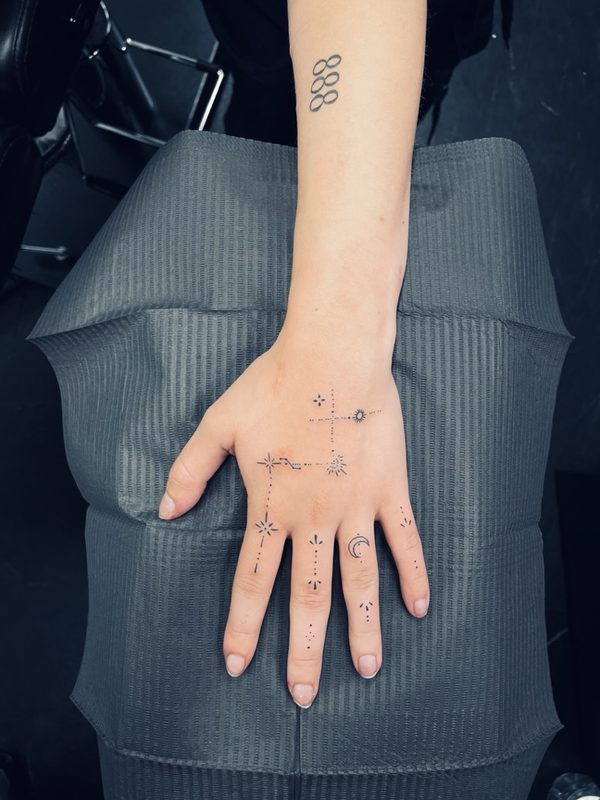
- Simple geometric shapes — a single triangle, circle, or chevron
- Solid or dotted band designs around the base of the finger
- Single bold symbols: a small cross, crescent moon, arrow, wave, or heart with real line weight
- A single letter or numeral, sized generously
- Small solid-black elements rather than outlines packed with detail
Designs we will talk you out of
- Fine-line script or cursive words — the letterforms close up and become unreadable
- Micro-realism or shading-dependent designs — there is not enough skin real estate or stability
- Anything with lines closer than a couple of millimeters apart — they will merge
- White ink and pale colors — they disappear on fingers faster than anywhere else
- Tiny detailed animals, faces, or florals scaled down to fingernail size
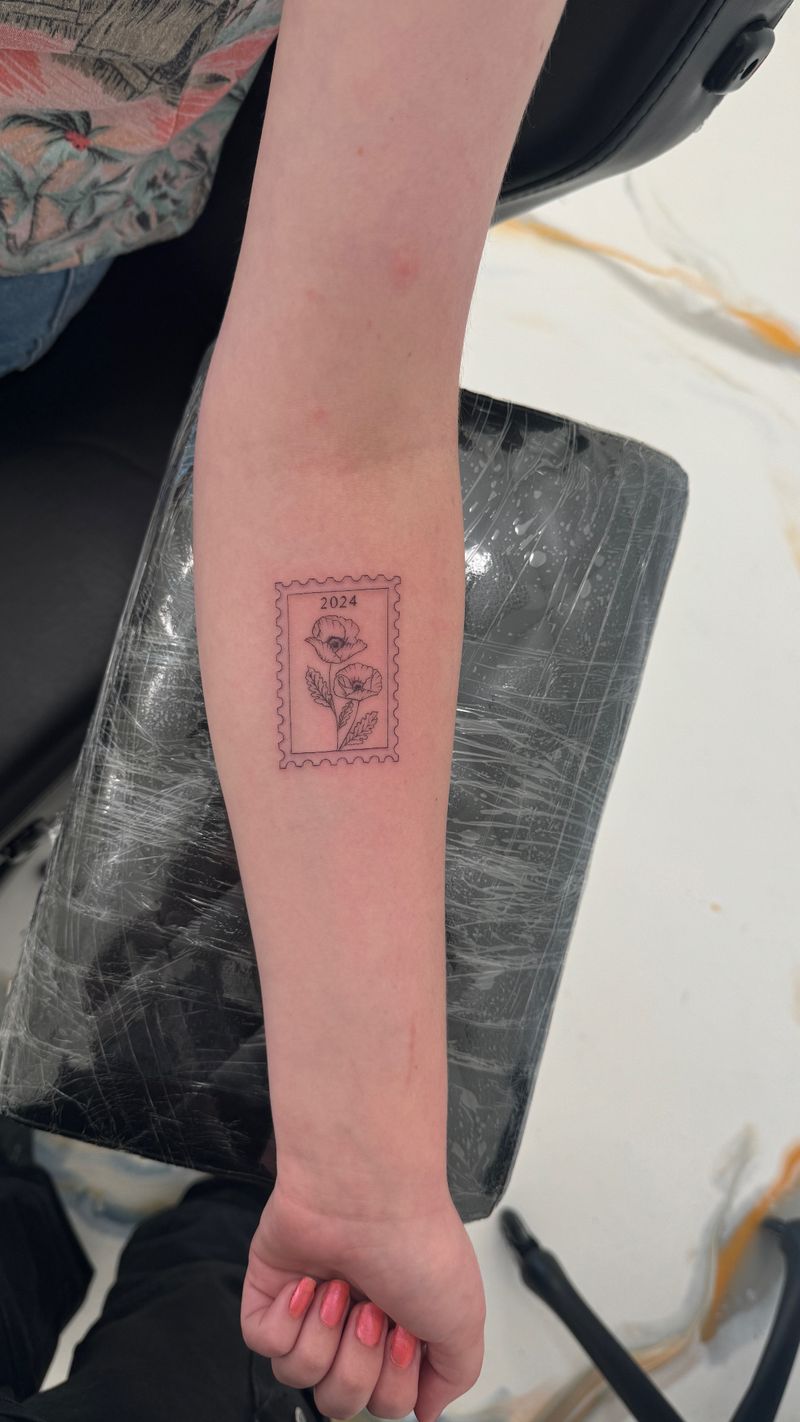
If you love a delicate design, the honest move is usually to relocate it — wrist, forearm, or behind the ear give fine-line work a fighting chance. Browse our tattoo ideas hub for placement-by-placement guidance.
Placement Within the Finger Matters More Than You Think
"Finger tattoo" covers several very different patches of skin.
Side of the finger
The most popular spot and, honestly, a mixed bag. It is discreet — visible when you want it, hidden in a handshake — which is why tiny words and symbols end up here. But it is also where we see the most ink fallout, because that skin creases with every grip. If you go side-of-finger, keep it extremely simple and expect a touch-up.
Base of the finger (the ring zone)
The best real estate on the hand. The skin where a ring sits is more stable than the knuckle or the side, and band designs suit the way that skin moves. This is where wedding band tattoos live, and it is the finger placement we can stand behind most confidently.
Top of the finger and knuckles
The classic knuckle-lettering zone. Ink over the joint itself takes a beating from constant flexing, so we place designs on the flat segments between joints, not across them. Knuckle lettering (one character per finger) works because each letter is bold and isolated — it is one of the oldest finger tattoo formats for a reason.
Inner finger and palm side
The most temperamental placement in tattooing, full stop. Palm-side skin regenerates so fast that patchy healing is the norm, not the exception. Some clients love the worn-in look this produces; if you need crisp permanence, this is not your spot.
Wedding Band and Ring Tattoo Ideas
Ring tattoos are the strongest use case for finger ink — meaningful, well-suited to the placement, and practical for people who cannot wear metal rings at work. Ideas we tattoo regularly at Apollo:
- Solid black band — the most durable option there is; ages the most gracefully
- Dotwork band — a ring of evenly spaced dots; delicate-looking but structurally sound if the dots are sized right
- Double thin band — two parallel lines with real spacing between them
- Chevron or geometric band — a repeating triangle or diamond motif
- Roman numeral date — an anniversary rendered in bold numerals at the ring base
- Partner's initial — a single letter, sized to survive
- Matching minimalist symbols — sun and moon, two halves of one shape, coordinates simplified to a single mark
One honest note on band tattoos: a fully closed band on the palm side of the finger often heals patchy, for the palm-skin reasons above. Many couples choose a three-quarter band that stops at the sides — it reads as complete when your hand is relaxed and heals far more predictably.
Touch-Up Expectations: The Part Nobody Puts on Instagram
Plan on at least one touch-up. For most finger tattoos, that means a pass somewhere between six and twelve months in, once the design has settled and any fallout is visible. This is normal for the placement, not a sign of poor work — and any studio quoting a finger tattoo should say so up front and explain their touch-up policy before you book.
Two caveats: the same small area can only be reworked so many times before the skin gets overworked and scarring risk climbs, and no touch-up schedule makes a bad design choice survive. A fine-line script that fell out will fall out again. One more reason to start with a design built for the placement.
What a Reputable Studio Will Tell You Before Doing One
Use this as a filter when choosing where to go. A serious studio should: tell you plainly that finger tattoos fade and blur faster than other placements; steer you away from fine script, micro-detail, and pale colors; recommend the most stable placement for your design; explain their touch-up policy in concrete terms; and be willing to decline outright if the design will not survive. At Apollo, we would rather lose a booking than put something on your hand that embarrasses both of us in a year. That honesty is the whole reason clients across Los Angeles trust us with visible tattoos in the first place.
Thinking About a Finger Tattoo in Santa Monica?
Bring us your idea — even the ones we listed as problematic. Half the time there is a version that will genuinely hold up: bolder line weight, a smarter spot on the finger, or a placement that lets the design breathe. Our artists on Main Street will give you a straight answer either way. Book a consultation and we will design something you will still be glad to see on your hand a decade from now.
Fingers are the least forgiving placement for compact work, which is exactly why the general sizing rules matter more here than anywhere. Our small tattoo ideas guide covers what survives at scale and what does not.
The finger tattoo questions that come up most
How long do finger tattoos actually last?
The ink is permanent, but the crispness is not. Most finger tattoos show noticeable softening within one to three years, faster than nearly any other placement. Bold, simple designs at the base of the finger age best; fine-line script on the side of a finger can blur within months. Expect at least one touch-up to keep it sharp.
Why do finger tattoos fade faster than other tattoos?
Three reasons: the skin on hands regenerates faster than most of the body, which diffuses pigment; your hands get daily sun exposure year-round, and UV breaks ink down; and constant handwashing and friction disrupt healing, causing ink fallout. All three hit fingers harder than any other placement.
What finger tattoo designs hold up best?
Bold and simple wins every time. Solid or dotted bands, single geometric shapes, generously sized single letters or numerals, and small solid-black symbols all age well. Fine-line script, micro-realism, tightly spaced lines, and white or pale-colored ink are the designs most likely to blur into an unreadable smudge.
Is the side of the finger or the top better for a tattoo?
The base of the finger, where a ring sits, is the most stable spot on the hand. The flat segments on top of the finger, between the knuckle joints, are next best. The side of the finger is popular for discretion but creases with every grip, so it has the highest rate of ink fallout. Palm-side skin is the least predictable of all.
Do finger tattoos hurt more than other tattoos?
Generally yes, though they are quick. Fingers have thin skin directly over bone and tendon and a dense supply of nerve endings, so the sensation is sharper than fleshier placements. The upside is that most finger tattoos take minutes rather than hours, so the intensity is short-lived.
Are wedding ring tattoos a good idea?
They are one of the best uses of finger ink — meaningful, suited to the placement, and practical if your job prohibits metal rings. Choose a solid band, dotwork band, or Roman numeral date, and consider a three-quarter band that stops at the sides of the finger, since fully closed bands often heal patchy on the palm side.
How many touch-ups will a finger tattoo need?
Plan on at least one, usually between six and twelve months after the initial session once the design has settled. Some pieces need a second pass later. There is a practical limit, though — the same small area can only be reworked so many times before overworking the skin, which is why starting with a durable design matters more than any touch-up schedule.
Will a professional studio refuse certain finger tattoos?
A reputable one will. If an artist agrees to tiny cursive script or a micro-detailed portrait on a finger without pushing back, that is a red flag — they are selling you a tattoo they know will not survive. A serious studio will explain the placement's limits, suggest a more durable version or a better location, and decline outright if the design cannot be saved.