Lore & Meanings
Trident Tattoo Meaning
The trident is one of those symbols that reads as simple until you look closer. A three-pronged fork can mean Poseidon's authority over the sea, Shiva's power over creation and destruction, a nation's coat of arms, or an insignia a person spent years earning. Before you commit one to skin, it is worth knowing which trident you are actually asking for, and why this particular shape is harder to tattoo well than it looks.
Book a consultationWhere the Trident Comes From
The trident is old, functional, and geographically scattered. It began as a fishing spear — three barbs give you a much better chance of holding a thrashing fish than one — and that practical origin is why so many coastal and river cultures independently arrived at the same shape. From there it became an emblem of the people who controlled water, and from there a symbol of power more broadly. When a client tells us they want a trident, our first question is always which tradition they are drawing from, because the visual language changes significantly depending on the answer.
Poseidon, Neptune, and Mastery of the Sea
The best-known trident belongs to Poseidon in Greek myth and Neptune in Roman. It is not a decorative scepter; in the stories it is a working instrument. Poseidon strikes the ground with it and springs open, strikes the sea and storms rise, strikes the earth and it shakes. The trident stands for authority over something fundamentally uncontrollable — which is a very different idea from simple dominance. Clients who choose the Poseidon reading often mean something closer to holding steady in rough conditions than ruling. That reading tends to pull the design toward ornate Greek detailing: laurel, wave curls, a Corinthian-style shaft, sometimes the god's hand gripping it.
Shiva's Trishula and the Three Gunas
In Hindu iconography the trishula carried by Shiva is a distinct object with its own meaning, and it deserves to be understood on its own terms rather than treated as a Greek trident with different styling. The three prongs are widely read as the three gunas — sattva, rajas, and tamas, the qualities of balance, activity, and inertia that Hindu philosophy describes as making up all of nature. Other traditional readings map the prongs to creation, preservation, and destruction, or to past, present, and future. The trishula is often depicted with a damaru drum bound to the shaft, and the prongs typically curve outward with a broader central blade — quite different in silhouette from the Greek form. If you are drawing on this tradition, we would rather build a design that respects the source than one that borrows the outline and drops the substance.
The Ukrainian Tryzub
The tryzub is Ukraine's national coat of arms, and its use goes back to the coins of Kyivan Rus' — this is a heraldic emblem with over a thousand years of continuous history, not a mythological weapon. It is a distinctive stylized form with a broad central prong and flanking arms, usually rendered in gold on blue when colored. People get it for national identity, family heritage, and solidarity. It is worth knowing that this trident carries specific political weight, which is exactly why people choose it. Treat it as a flag, not a fantasy motif, and design it accordingly.
The Navy SEAL Trident
The Special Warfare insignia — the Trident — is an earned military qualification badge combining an eagle, an anchor, a trident, and a flintlock pistol. This one comes with an etiquette question attached, and we will raise it directly with anyone who asks for it. Wearing an insignia you did not earn is something the veteran community takes seriously, and permanently. If you earned it, we will tattoo it and be glad to. If you are getting it in memory of someone who did, we will usually suggest a design that reads clearly as a tribute — a name, dates, a memorial framing — so it is never mistaken for a claim. That is not us being difficult; it is us keeping you out of an uncomfortable conversation for the rest of your life.
Surf Culture and the Southern California Read
Here on the Westside, plenty of tridents have nothing to do with mythology or the military. Surfers, lifeguards, divers, swimmers, and people who simply grew up in the water get them as ocean tattoos — a personal marker of a relationship with the Pacific. Those pieces tend to be looser and more graphic: a trident worked into a wave, paired with a compass rose, a rope-wrapped shaft, a shark or a whale tail. This is the most common version we tattoo in Santa Monica, and it is a perfectly legitimate reading of the symbol. For more on how symbols land differently by region and personal history, see our meanings & symbolism hub.
Tattooing a Trident: What Actually Matters
It Is a Long Vertical Design, So It Needs a Long Placement
A trident is essentially a line with a crown on top. Compressed into a square, it stops being a trident and becomes a stubby fork. The shape wants length, which points to a specific short list of placements: the inner or outer forearm, the spine, the calf, the outer upper arm, and the side of the ribs. Forearm and calf are the most requested and generally the easiest to execute well. The spine gives you the most dramatic length but is one of the more uncomfortable placements and moves a great deal, which matters for the reason below. Small tridents on the wrist, ankle, or behind the ear are possible but need heavy simplification — drop the ornamental detail and keep the silhouette, or it will close up.
Why Straight Lines Are the Hard Part
Here is the thing most people do not expect: a long, perfectly straight line is one of the most technically demanding things a tattooer does. Skin is not paper. It stretches, and it stretches unevenly — pull a forearm one way while you tattoo and release it, and a line that looked dead straight in the moment relaxes into a subtle bow. Bodies are also curved and tapered, so a line that is straight against gravity may look bent against the muscle. Experienced artists manage this by keeping stretch consistent along the whole pull, tattooing in the direction the skin wants to move, and checking the piece with the limb in a neutral, relaxed position rather than in the stretched working position. The stencil placement conversation before the needle touches you is worth taking seriously — walk to a mirror, stand naturally, and look at it the way people will actually see it.
Blackwork, Fine Line, and Traditional
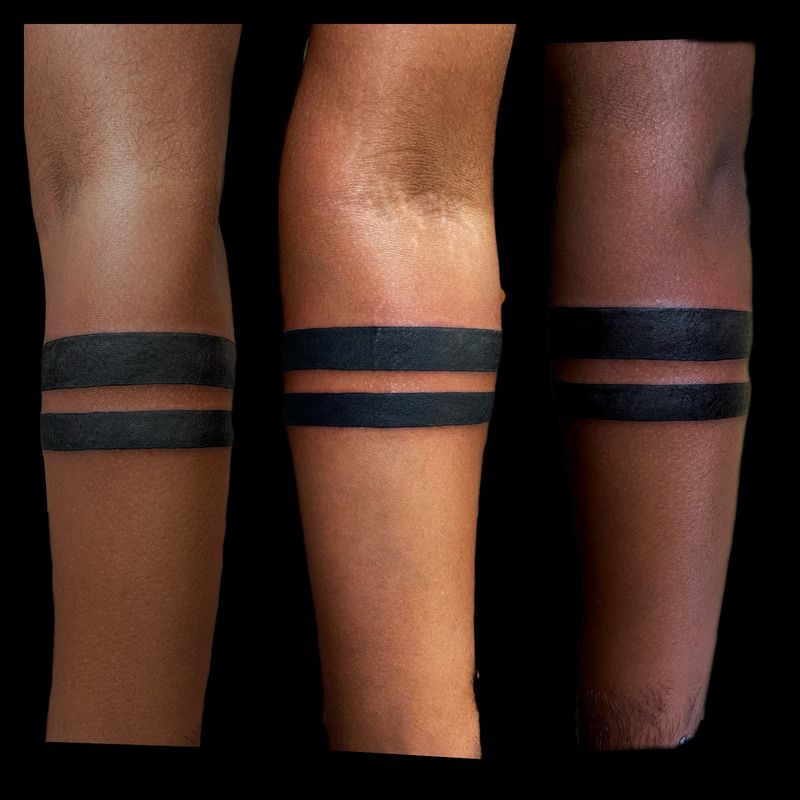
- Blackwork — Solid, bold, high contrast. The most durable choice for a trident by a wide margin. Weight in the shaft and prongs means the design stays legible for decades, and it reads clearly from across a room.
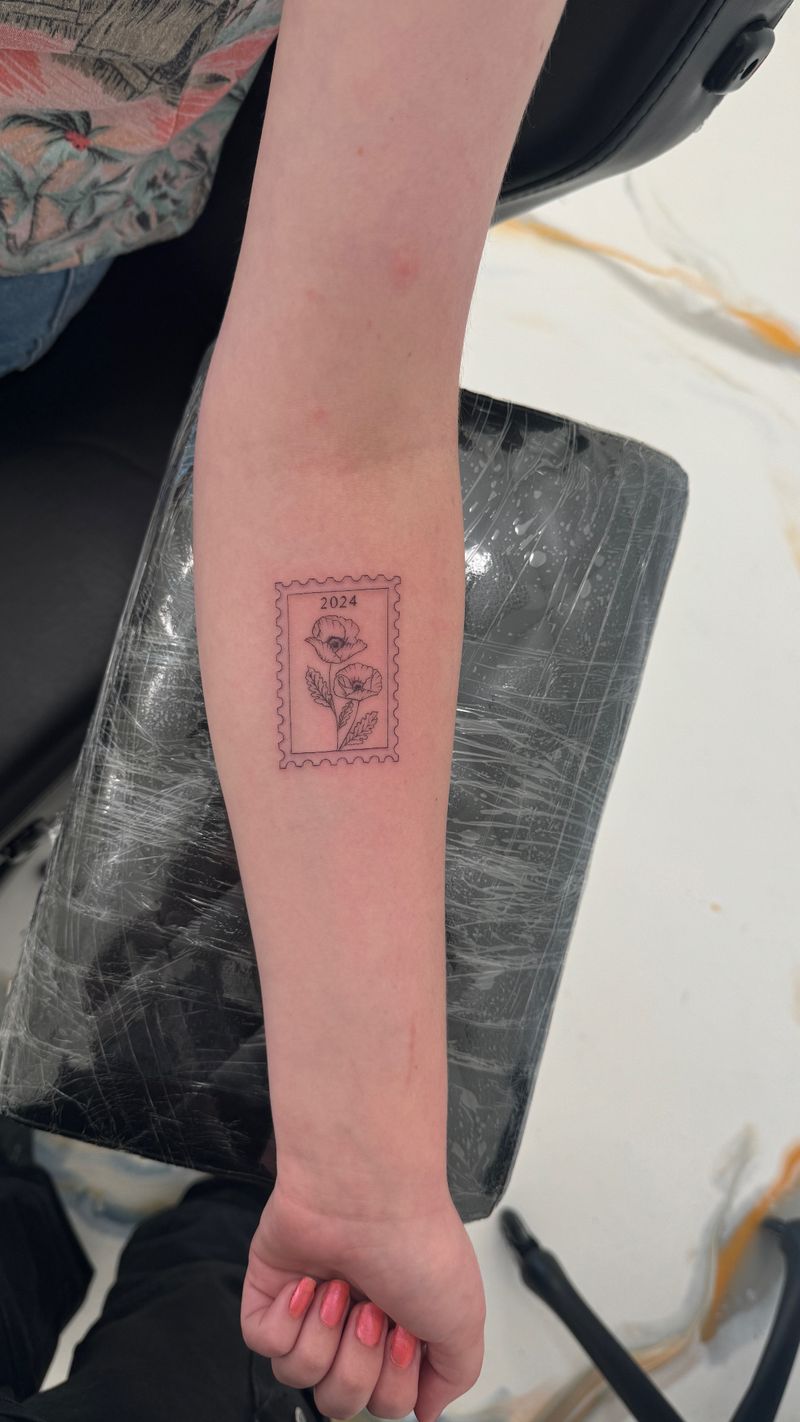
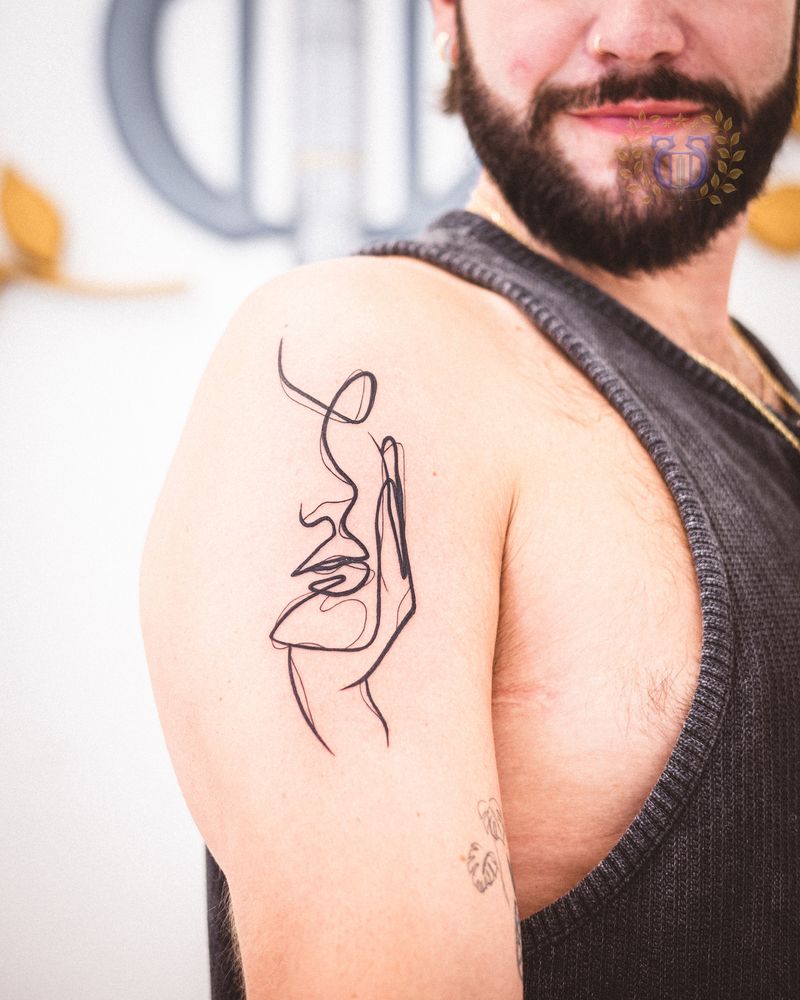
- Fine line — Elegant and currently very popular, especially for smaller Poseidon and ocean-themed pieces. It photographs beautifully. It also asks the most of both artist and aftercare, and needs realistic expectations about how it ages.
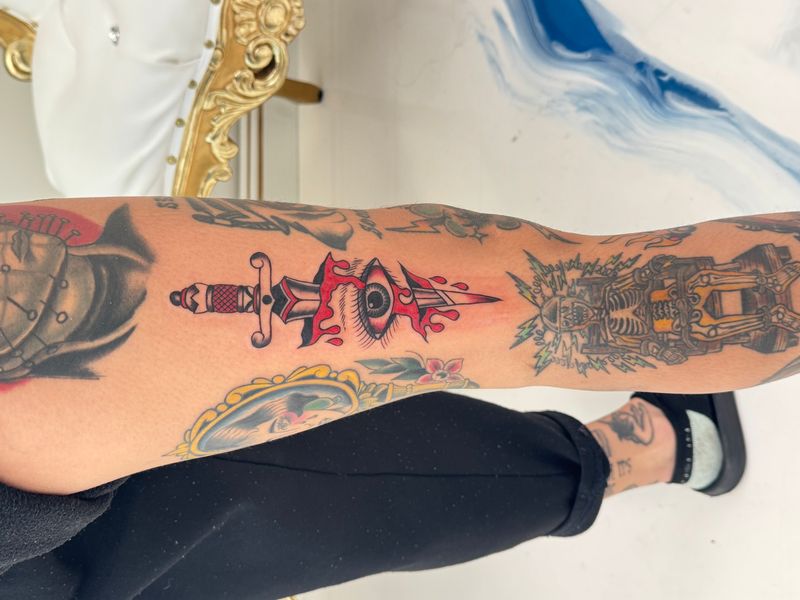
- American traditional — Bold outline, limited palette, built-in longevity. A trident suits the traditional nautical vocabulary perfectly and sits naturally alongside anchors, ships, and swallows.
- Illustrative and neo-traditional — Room for texture, ornament, and shading on the shaft. Works well at larger sizes where detail has space to breathe.
The Aging Problem Nobody Warns You About
Tattoo lines spread slightly over the years as ink settles in the dermis — this is normal and it happens to everyone. On most designs it is barely noticeable. On a trident it can be, because the design contains thin parallel lines running close together. If the shaft is drawn as two hairline strokes a millimeter apart, or the prongs taper into near-touching points, those lines can merge over ten or twenty years and turn a crisp shaft into a single gray bar. The fix is straightforward and should be decided at the drawing stage: give parallel lines real breathing room, or fill the shaft solid so there is nothing to merge. A good artist will build this into the design without being asked, but it is a fair question to raise in your consult. The same logic applies across all our tattoos work — designs are drawn for how they will look in twenty years, not just on day one.
Bringing Your Idea In
The most useful thing you can bring to a consult is not a reference image — it is a clear answer to what the trident means to you. Poseidon, Shiva, heritage, the ocean, or something entirely personal. Everything else follows from that: the silhouette, the styling, the size, the placement, and the level of detail. If you are still deciding between readings, that is a fine place to start too. Come and book a consultation, and we will work through it with you.
Things worth knowing before your trident tattoo
What does a trident tattoo mean?
It depends entirely on the tradition. Most commonly it represents Poseidon or Neptune and mastery over the sea, but it can also mean Shiva's trishula and the three gunas in Hindu philosophy, Ukrainian national identity as the tryzub, or an earned Navy SEAL qualification. Many people in coastal Los Angeles also get it simply as an ocean and surf symbol with no mythological reference at all.
Where is the best place on the body for a trident tattoo?
The trident is a long vertical design, so it works best on long placements — forearm, calf, spine, outer upper arm, or the side of the ribs. Forearm and calf are the most popular and generally the most straightforward to execute cleanly. Small placements like the wrist or behind the ear are possible but require simplifying the design down to its silhouette.
Can I get a Navy SEAL trident if I did not serve?
We would strongly advise against wearing an earned insignia you did not earn, and we will talk it through with you rather than just declining. If you are honoring someone who served, we will usually design the piece as an explicit tribute — with a name, dates, or memorial framing — so it reads as remembrance rather than a claim. Most people appreciate the conversation once they understand why it matters.
Is the trishula different from a Greek trident?
Yes, meaningfully so. The trishula has its own silhouette, typically with a broader central blade and outward-curving prongs, and is often shown with a damaru drum bound to the shaft. It carries specific philosophical meaning in Hindu tradition rather than mythological narrative. If that is your reference, we will design from the trishula rather than restyling a Greek trident.
How much does a trident tattoo cost?
It varies with size, style, placement, and detail — a simple fine line forearm trident and a large ornate blackwork spine piece are very different jobs. We quote in consultation once we know the design, rather than giving a number that turns out to be wrong. Bring your idea and preferred placement and we will give you an honest estimate.
Why do straight lines matter so much on this design?
Because a trident is mostly one long line, any wobble is immediately visible in a way it would not be on an organic design. Skin stretches unevenly under the needle, so a line that looks straight while the limb is pulled taut can relax into a slight bow afterward. Managing this takes consistent stretch through the whole pull and checking the work with the body in a natural position.
Will a thin trident tattoo blur over time?
All tattoo lines spread a little as they settle over the years. The specific risk with a trident is thin parallel lines in the shaft or narrowly tapered prongs merging together and reading as one solid bar decades later. Building in adequate spacing, or filling the shaft solid, prevents this — it should be decided during the drawing stage.
Does a trident tattoo pair well with other designs?
Very well. It sits naturally within nautical and ocean sleeves alongside waves, compasses, anchors, ships, and sea creatures, and it works as a strong vertical anchor point in a larger composition. If you are planning toward a sleeve or a back piece, tell us at the consult so we can place and scale it to fit what comes later.