Lore & Meanings
Dove Tattoo Meaning
There is no such animal as a dove, strictly speaking. Doves and pigeons are the same family of birds, and English simply uses the prettier word for the ones it likes. Knowing that the split is linguistic rather than biological explains a surprising amount about why this tattoo reads the way it does.
Book a consultationWhere the Dove Gets Its Meaning
Doves carry more symbolic weight than almost any other bird in the tattoo vocabulary, and the reason is that several unrelated traditions landed on the same image. When someone sees a dove on your arm, they are pulling from whichever of those traditions they know. That is worth understanding before you pick a design, because a small change — an olive branch, a beam of light, a ribbon with a date — steers the reading almost completely.
Peace
The modern peace association is the broadest and the most recent. Picasso's 1949 lithograph for the World Peace Congress pushed the white dove into global shorthand for anti-war sentiment, and it stuck. A plain white or unshaded dove in flight, with no other elements, usually reads this way by default. It is also the least specific reading, which is either a feature or a problem depending on what you want the piece to say.
Noah and the Olive Branch
In Genesis, the dove returns to the ark with an olive leaf — the sign that the flood has receded and there is dry land again. This is the origin of the dove-with-branch composition, and it means something more particular than peace: it means the worst has passed. Clients often bring this one in after recovery, after a divorce, after a long illness. The olive branch is the load-bearing element. Without it, that specific meaning does not carry.
The Holy Spirit
In Christian iconography the dove descends at Christ's baptism, and it represents the Holy Spirit. Descending doves — wings up, head down, often with rays of light behind them — are read as devotional rather than pastoral. If faith is the point, the posture matters more than most people expect. A dove flying upward and a dove descending are two different statements.
Mourning and Memorial
A very large share of the dove tattoos we do are memorial pieces. The dove as released soul is a real and widely understood convention, reinforced by the practice of releasing white doves at funerals. These usually carry a name, dates, or a small object — a rosary, a banner, a portrait. Two doves in a memorial context often stand for a couple, or for a parent and child. If this is your reason, tell your artist plainly. It changes how the piece should be composed and how much room to leave for text.
Love and Partnership
Doves mate for long periods and are strongly associated with devotion, which is why paired doves show up in wedding imagery across cultures. Traditional American tattooing absorbed this: two doves, a heart, a banner. If you want a partnership piece that will not read as generic, the details do the work — a specific flower, an heirloom object, a date in a script that means something to you.
Chicano and Latin American Traditions
In Chicano tattooing, developed in Southern California and carried through Los Angeles for generations, doves are a core motif with layered meaning. They appear in black and gray as symbols of peace, faith, remembrance for those who have passed, and freedom — including release from incarceration. They are often paired with praying hands, roses, Our Lady of Guadalupe, script lettering, or clock faces. In Catholic Latin American practice more broadly, the dove of the Holy Spirit appears in confirmation and baptism imagery. This tradition has its own visual grammar and its own history, and it deserves to be executed with respect rather than borrowed as decoration. If a Chicano-style piece is what you want, look at portfolios specifically. Black-and-gray fine shading is a distinct discipline.
Dove and pigeon are the same bird
Columbidae is one family, running to hundreds of species, and there is no consistent line inside it separating doves from pigeons. English tends to reach for dove when a bird is small and pale and for pigeon when it is large and grey, and much of that split is just the accident of one word arriving from Germanic and the other from French. The rock dove and the feral city pigeon are the same species.
Which produces a fact people find either funny or slightly deflating. The white birds released at weddings and funerals are, in almost all cases, white homing pigeons, bred and trained to fly back to a loft. Actual doves released outdoors mostly do not survive. The ceremony works because the bird goes home.
We'd argue that improves the symbol rather than damaging it. A bird that leaves, is watched out of sight, and then returns to a specific address is a better image for grief and for faith than a generic white shape. It's also the reason the same family gave sailors their homecoming birds. If you're getting a dove for someone who died, the homing habit is worth building into the piece, and it argues for a bird in strong directional flight rather than hovering.
Love first, peace much later
The peace reading is the youngest layer on this bird by a wide margin, and the layers underneath it are worth knowing.
In the ancient Near East and the Mediterranean the dove belonged to goddesses of love and fertility. Doves attend Inanna and Ishtar in Mesopotamian material, and by the Greek and Roman period the bird is firmly Aphrodite's, drawing her chariot and turning up wherever love is the subject. That is the oldest large body of dove imagery we have, and it is not about calm.
Then the Genesis flood story gives the bird an olive branch and a role as the messenger that the world is survivable again. Then the Gospels put a descending dove over the Jordan and hand it to the Holy Spirit. Then the twentieth century makes it a political emblem.
Four layers, four different arguments, all still legible. A pair of doves reads Aphrodite and reads marriage. A single dove with a branch reads Genesis and reads relief. A dove descending, wings up, light behind it, reads Christian without needing a cross anywhere in the piece. And a plain white dove in level flight reads as the poster. Pick knowingly.
How a Dove Actually Tattoos
Symbolism is the easy part. The harder question is whether the design you have in your phone will still look like a bird in fifteen years.
Feather Detail and Size
Individual feather rendering is where dove tattoos succeed or fail. Skin is not paper — ink spreads slightly over time, and lines that sit close together tend to migrate toward each other and eventually merge. Rough guidance from working on them:
- Under 2 inches: Suggest feathers rather than draw them. A few broken lines and one value of shading. Every individually outlined primary feather at this size will close up.
- 2 to 4 inches: The sweet spot for most dove pieces. Enough room for distinct wing sections and real value separation without crowding.
- 5 inches and up: Full feather detail, layered shading, and texture all become viable. This is where black-and-gray realism lives.
If you love a highly detailed reference image, the honest fix is usually to size up rather than to compress the detail. Shrinking a detailed drawing does not preserve it — it just guarantees a blur later.
Fine Line vs. Black and Gray vs. Traditional
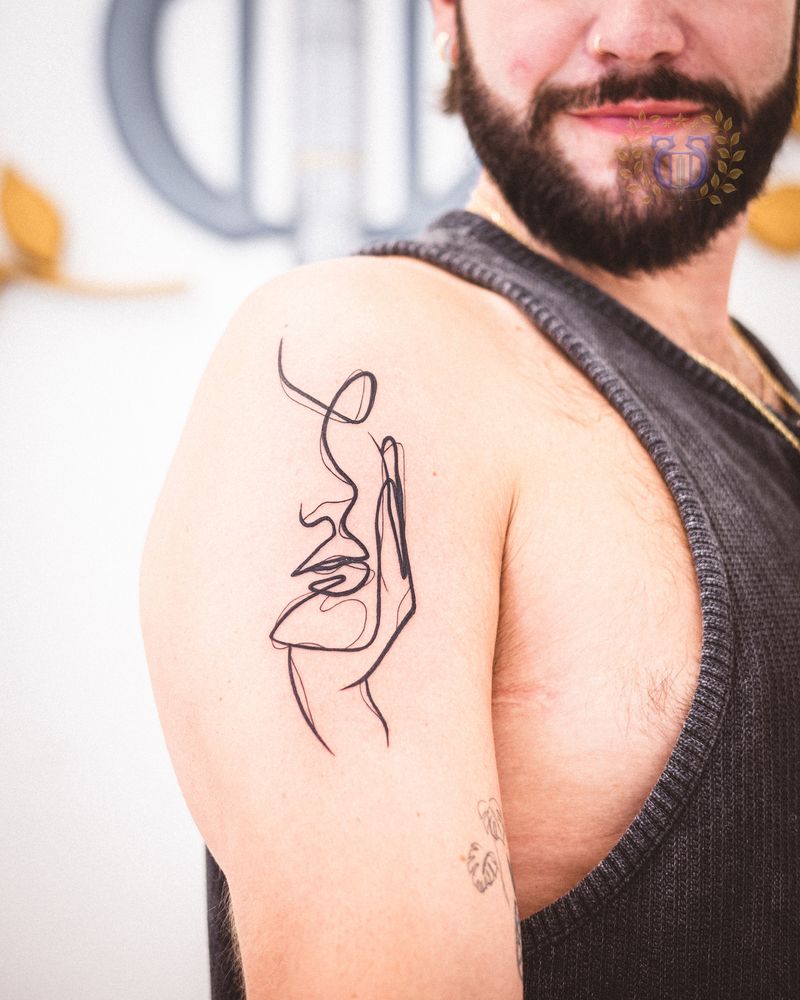
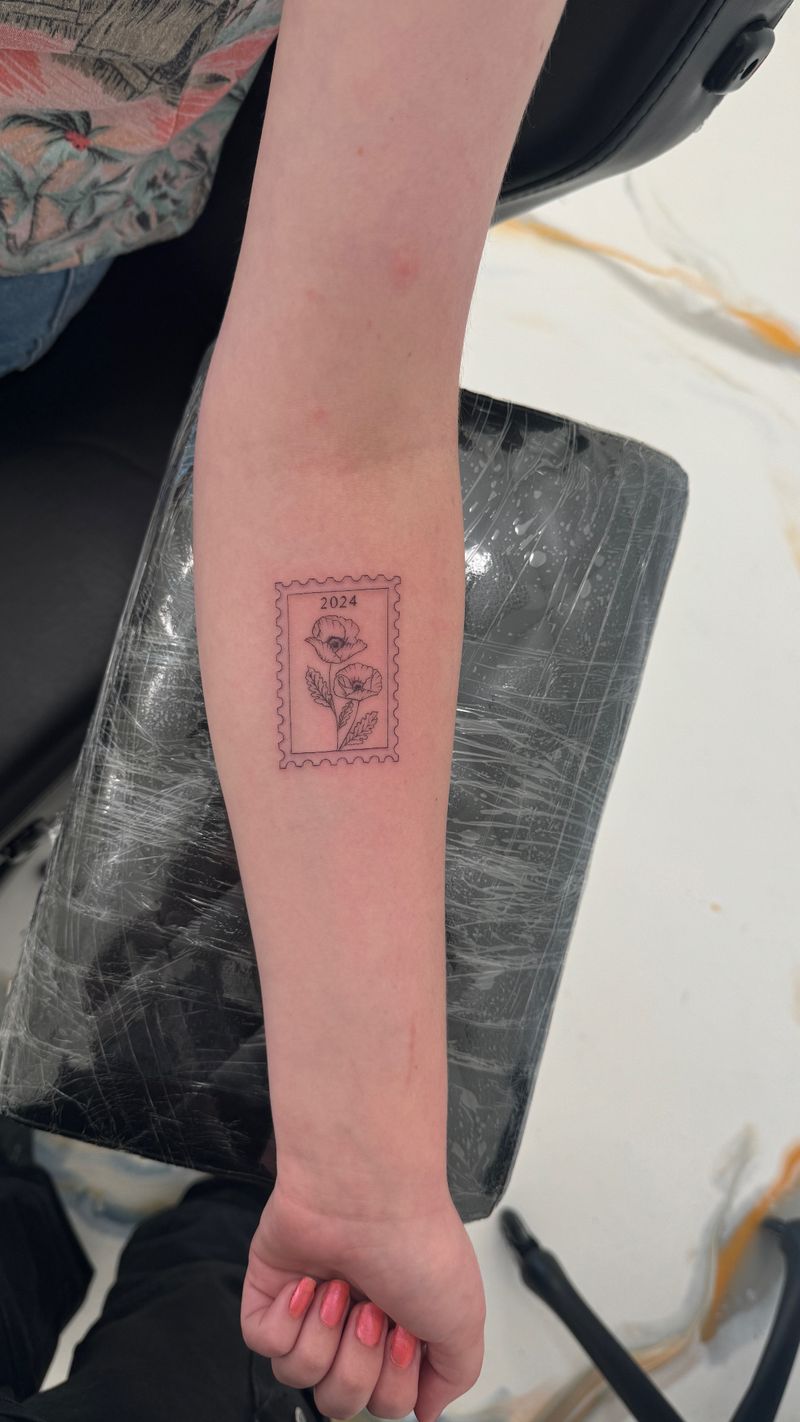
Fine line gives you a delicate, illustrative dove — popular for small placements and minimal designs. The trade-off is longevity. Thin single-needle work softens faster and is more sensitive to sun exposure, which in Los Angeles is not a small factor. Expect to want a touch-up sooner than with heavier styles.
Black and gray is the most durable route for realistic doves. Smooth value transitions hold their read even as edges soften, and a well-built gray wash ages gracefully. This is the standard approach for memorial and Chicano-style work, and for good reason.
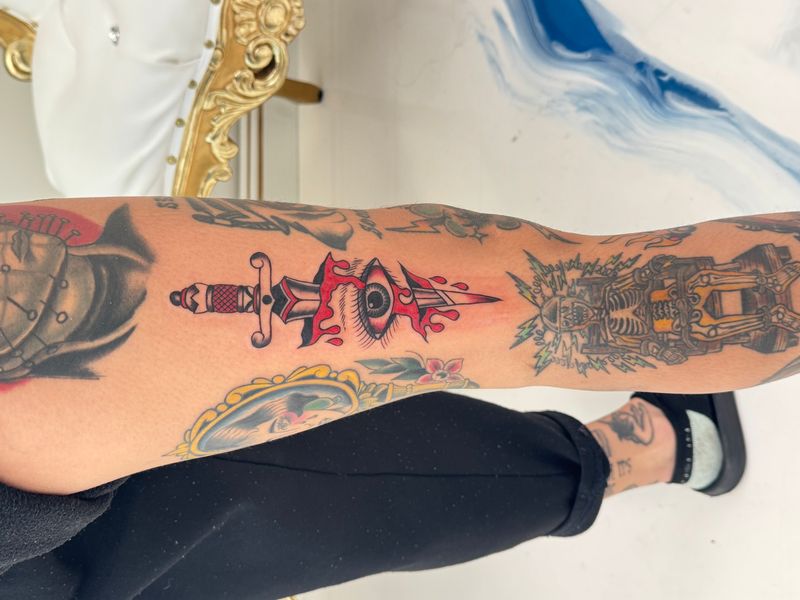
Traditional — bold outlines, limited palette, high contrast — is the most legible option at a distance and over decades. American traditional dove designs from the mid-century are still readable on the people wearing them, which is the strongest argument any style can make. If you want something you will never have to squint at, this is it.
Browse our tattoos work to see how these styles differ in practice, and our meanings & symbolism hub for related motifs.
Placement
- Forearm: The most reliable placement. Flat, stable, well-covered, easy to view and easy to maintain. A dove in flight reads well along the arm's length.
- Chest: Excellent for larger compositions, paired doves, and memorial pieces with text. The chest gives you a symmetrical canvas and holds ink well. Sternum placement is more painful and moves more with the body.
- Behind the ear: Popular and small, which means it must be simple. Skin here is thin, the area is constantly exposed to sun, and detail closes up faster. Plan on touch-ups.
- Hand and fingers: Hands are high-visibility and high-wear. Constant washing, friction, and sun mean hand tattoos fade and blur faster than anywhere else. They can look excellent, but go in knowing that maintenance is part of the deal.
Aging and Touch-Ups
Every tattoo softens. What determines how fast is sun exposure, placement, line weight, and how you care for it. Daily SPF on exposed work is the single most effective thing you can do — more than any aftercare product. A well-placed black-and-gray dove on a forearm might go a decade before it needs attention. A fine line dove behind the ear on someone who is at the beach every weekend may want a refresh in two or three years. Neither is a failure; they are different maintenance schedules, and you should know which one you are choosing.
If you are still weighing meanings, styles, or placement, bring your references in and talk it through. You can book a consultation. Between the body you have and the reason you came in, there is usually one right answer.
What clients ask about dove tattoos
What does a dove tattoo symbolize?
Most commonly peace, faith, love, or remembrance of someone who has died. The specific meaning depends heavily on the details — an olive branch points to Noah and new beginnings, a descending dove with light rays reads as the Holy Spirit, and a name or date makes it a memorial piece. The same bird carries all of these.
Is a dove tattoo religious?
It can be, but it does not have to be. The Holy Spirit and Noah's ark associations are explicitly Christian, while the peace symbolism is entirely secular. If you want to avoid a religious reading, skip the descending posture, the rays of light, and the olive branch.
What do two doves mean?
Paired doves usually represent partnership, marriage, or lasting devotion, drawing on the birds' reputation for long-term bonding. In memorial contexts, two doves often stand for a couple or for two people being remembered together. Traditional tattooing frequently pairs them with a heart or a banner.
How small can a dove tattoo be and still look good?
Around two inches is where most designs start working comfortably. Below that, feather detail has to be suggested rather than drawn, because closely spaced lines merge as ink spreads over the years. A simplified small dove ages far better than a shrunken detailed one.
Does a dove tattoo mean prison release?
In some Chicano and prison tattoo traditions, yes — the dove represents freedom and release. That reading exists alongside all the others and is not automatically assumed from a dove alone. Context, style, and accompanying imagery determine how a piece is read.
Fine line or black and gray for a dove?
Fine line gives a delicate, illustrative look but softens faster, especially in sunny climates like Los Angeles. Black and gray holds up better long term and is the standard for realistic and memorial doves. If maximum longevity matters most, traditional bold-line work outlasts both.
Where does a dove tattoo look best?
The forearm and chest are the most reliable — stable skin, good coverage, and enough room for the design to breathe. Behind the ear and on the hand are popular but fade faster due to thin skin, sun exposure, and wear. Placement should be decided alongside size and style, not after.
How often will a dove tattoo need a touch-up?
It depends on placement and line weight more than anything. A black-and-gray forearm dove can go a decade or more; a fine line piece behind the ear may want attention in two to three years. Daily sunscreen on exposed tattoos extends the interval more than any other single habit.