Tattoo Ideas
Spine Tattoo Ideas
It flexes with every movement, sits directly over bone, and spends the whole healing window under a waistband or a bra band. The spine rewards good composition like nowhere else on the body and punishes bad planning just as hard. Here is the version a working studio actually gives clients.
Book a consultationFirst, the Honest Part: Yes, It Hurts
We are not going to soften this. The spine is one of the most painful placements in tattooing, and anyone who tells you otherwise is trying to close a booking. There is almost no fat or muscle between the needle and the vertebrae, and the skin directly over the spinal column is dense with nerve endings. Most clients describe it as a sharp, electric sensation rather than the dull burn of a forearm or thigh piece, and the spots directly over each vertebra tend to spike hardest.
That said, pain is a range, not a verdict. The skin an inch to either side of the column is noticeably more tolerable than dead center. Fine-line work hurts less than heavy packing. And a two-hour session is a very different experience from a six-hour one. People sit for spine tattoos every week at our Santa Monica studio and walk out fine. The point is to go in with accurate expectations, eat a real meal beforehand, and plan your sessions around your actual tolerance instead of your optimism.
Vertical Composition Ideas That Actually Work
The spine gives you a canvas that is tall, narrow, and symmetrical. Designs that fight that shape look awkward; designs that lean into it look inevitable. These are the directions we see hold up best over time.
Script and Single Lines of Text
A single phrase running down the spine is the classic for a reason. The vertical format forces restraint: one line, chosen carefully, in lettering sized so it stays legible as skin ages. We push clients toward fewer words and cleaner letterforms. A short phrase in a well-drawn script outlives a paragraph in tiny lettering every time, because small text on a flexing surface blurs faster than almost anything else in tattooing.
Florals and Botanical Runs
Climbing vines, a stem of orchids or snapdragons, cherry blossom branches, wisteria trailing from the neck toward the lower back — botanical work is built for this placement. Flowers give the artist natural anchor points at each vertebra and let the design taper gracefully at both ends instead of stopping abruptly. Fine-line botanical spine pieces are among the most requested designs in our tattoos portfolio, and they age well when the linework is given room to breathe.
Geometric Ladders and Sacred Geometry
Stacked geometric elements — chevrons, mandala segments, dotwork nodes spaced down the column — create a ladder effect that mirrors the structure of the spine itself. This style demands precision, because the body will telegraph any asymmetry: a geometric piece that drifts two millimeters off the centerline reads as crooked forever. This is a placement where the artist's stencil discipline matters as much as the design. Ask to see healed geometric work before you commit.
Single-Needle and Fine-Line Minimalism
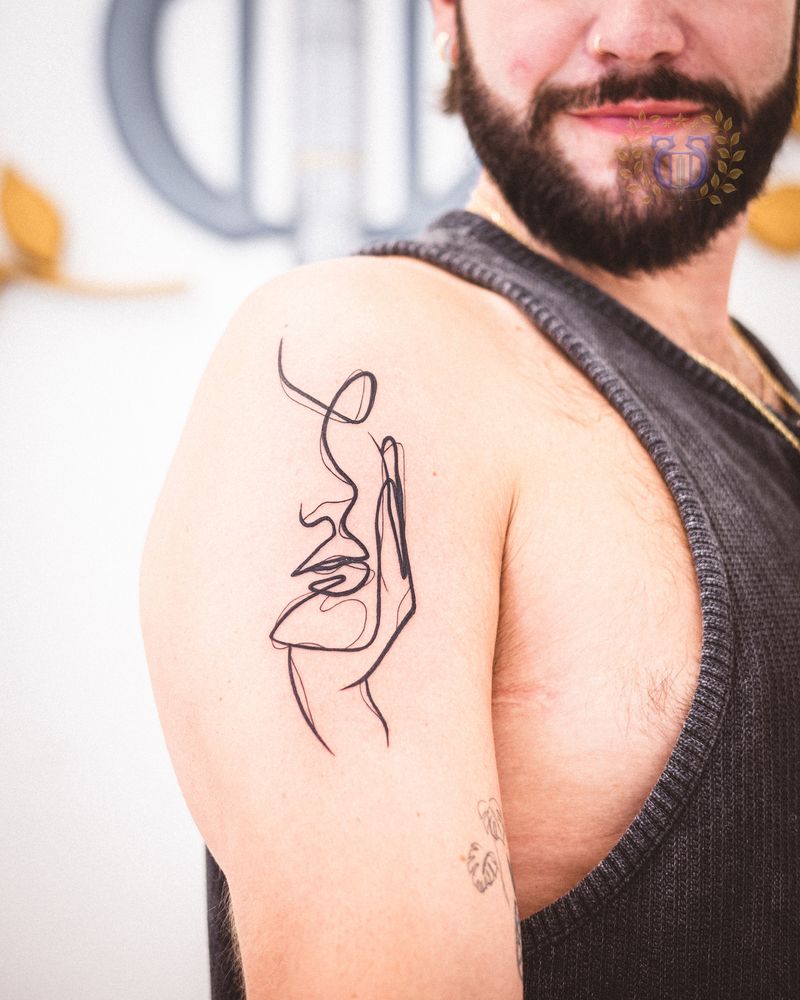
A single unbroken line, a constellation, a row of tiny symbols, an abstract brushstroke — minimal spine work trades impact-per-inch for elegance, and it shortens the session dramatically, which matters here more than anywhere. The tradeoff is honesty about aging: single-needle lines are delicate, and skin over the spine stretches and flexes constantly. Expect softening over the years and plan for a touch-up down the road. A good artist will size the line weight so the piece still reads cleanly at year ten, not just in the day-one photo.
Sizing and Session Reality
A full nape-to-lower-back spine piece is not a one-sitting tattoo for most people. Here is the honest math: a fine-line script piece might be 90 minutes; a detailed botanical run at full length is commonly two sessions of three to four hours each; a densely packed geometric column can go longer. Pain compounds over a session on the spine in a way it does not on the arm, so we would rather split the work than have you white-knuckling the last hour while your body floods with adrenaline and the skin gets harder to work.
Budget accordingly, and be suspicious of anyone promising a large, detailed spine piece in a single short sitting at a bargain price. Speed on this placement usually means shortcuts, and shortcuts on the centerline of your body are visible from across a room.
Healing on a Surface That Never Stops Moving
The spine flexes every time you sit, stand, twist, or reach. That constant movement is the real challenge of this placement, more than the pain. A healing tattoo is an open wound trying to close over skin that stretches thousands of times a day.
- Clothing friction is the enemy. Bra bands, waistbands, backpack straps, and tight shirts all cross the spine. For the first two weeks, plan your wardrobe around the tattoo: loose tops, low-friction fabrics, and for many clients, going without a traditional bra band where possible.
- Sleeping takes strategy. Back sleepers need to become side or stomach sleepers for a while. Clean sheets, every night, non-negotiable.
- You cannot see it or reach it easily. Aftercare on your own spine is awkward. Recruit a partner or roommate for ointment duty, or ask us about second-skin adhesive films, which we often recommend for this placement precisely because they remove the friction problem for the first several days.
- Gym and yoga wait. Spinal flexion, sweat, and mat contact are all bad for a fresh spine piece. Give it ten to fourteen days minimum before loaded movement.
What a Good Artist Will Tell You Before Booking
A consultation for a spine piece should include some version of the following, unprompted. If it does not, keep shopping.
- An honest pain conversation, including the option to split sessions and permission to tap out and reschedule without penalty.
- A talk about your posture and spine itself. Scoliosis, prominent vertebrae, and old injuries all affect how a straight line reads on your particular back. The design should be drawn on your body, not on a flat sheet.
- Sizing pushback where needed. If your reference is tiny lettering or micro-detail, expect the artist to scale it up or simplify it. That is not upselling; that is the piece surviving.
- A realistic aging conversation, especially for single-needle work, and a touch-up policy stated plainly.
- Stencil time. Getting a spine stencil truly straight on a body that is never perfectly symmetrical takes patience. An artist who rushes this step is telling you something.
If you are still exploring styles and placements, browse our collection of tattoo ideas for other directions, or bring your references in and let us pressure-test them against your anatomy. When you are ready to talk specifics — design, sizing, sessions, and an honest quote — book a consultation at our Main Street studio in Santa Monica. We serve clients from across Los Angeles, and the consultation costs you nothing but the conversation.
A spine column claims the center line of the back, so it is worth understanding before you place anything else there. Our back tattoo ideas guide sets out the four back zones and how a spine piece constrains the ones beside it.
The spine tattoo questions that come up most
How painful is a spine tattoo really?
It is genuinely one of the most painful placements, with thin skin sitting directly over bone and dense nerve endings. Most clients describe sharp, electric sensations that spike over each vertebra. Pain drops noticeably an inch to either side of the centerline, and shorter fine-line sessions are far more manageable than long packing sessions.
How long does a full spine tattoo take?
A simple fine-line script piece can be done in about 90 minutes. A detailed full-length botanical or geometric piece typically takes two sessions of three to four hours each, sometimes more. Because pain compounds on the spine, splitting the work across sessions usually produces a better tattoo than powering through one marathon sitting.
What designs work best on the spine?
Designs that embrace the tall, narrow, symmetrical canvas: a single line of script, climbing florals, stacked geometric or dotwork ladders, and minimal single-needle lines. Anything wide, cluttered, or asymmetrical tends to fight the placement and reads awkwardly on a moving back.
Can I wear a bra while my spine tattoo heals?
A traditional band crossing fresh work is a real problem for the first one to two weeks. Many clients switch to bralettes, strapless alternatives, or adhesive-film aftercare that creates a barrier against friction. Plan your wardrobe around the tattoo before your appointment, not after.
How do I take care of a tattoo I cannot see or reach?
Recruit help — a partner or roommate handling ointment makes a real difference. Second-skin adhesive films are often the best option for spine pieces because they stay on for several days, block clothing friction, and remove the need for constant reaching. Your artist will walk you through application at the appointment.
Do spine tattoos age badly?
Not inherently, but the constant flexing of the back is harder on fine detail than a stable area like the calf. Tiny lettering and ultra-fine single-needle work soften fastest. Proper sizing, sensible line weights, sun protection, and an occasional touch-up keep a spine piece crisp for decades.
Is it safe to tattoo directly over the spine? Will it affect epidurals later?
Tattooing over the spine is safe — the needle only reaches the upper layers of skin, nowhere near the spinal cord. On epidurals, current medical consensus is that a healed tattoo does not prevent one; anesthesiologists can work through or around healed ink. If this is a concern, raise it with your physician, but it is not a medical barrier to the placement.
How much does a spine tattoo cost in Los Angeles?
Pricing depends on size, detail, and session count rather than a flat rate. A small fine-line piece starts well below a full-length multi-session botanical or geometric run. We quote after a consultation so the number reflects your actual design on your actual back.