Tips & Knowledge
Friday the 13th Tattoos: History and Origin
The $13 Friday the 13th tattoo started in Dallas in the mid-1990s, and the superstition behind it is younger than most people think. Here's the sourced history of both, from Chaucer and Rossini to the 1907 novel, the seven-masted schooner and the shop that turned the date into the tattoo world's Black Friday.
Book a consultationEvery Friday the 13th, a line forms outside tattoo shops across the country before the doors open. People wait hours for a palm-sized "13," a black cat or a horseshoe that the shop drew weeks earlier and will tattoo dozens of times before midnight. On November 13, 2026 we're at the third Friday the 13th of the year, and the phone at our Santa Monica studio already sounds like it.
What surprises most people in the chair is how young all of this is. The tattoo tradition dates to the mid-1990s. And the superstition itself, the idea that one particular Friday landing on one particular 13 is cursed, shows up in writing only in the 19th century. Older than that, there were two separate bad omens that nobody had thought to combine. Here's the full history, sourced, with the myths flagged as myths, followed by the part we actually know from the inside: how a cheap flash day in Dallas turned into the tattoo world's Black Friday.
Friday the 13th Tattoos: The Short Answer
The $13 Friday-the-13th tattoo is usually traced to Dallas tattooer Oliver Peck, who threw a 24-hour Friday-the-13th party at the now-closed Pair O' Dice tattoo shop in 1995 and kept the marathon going at Elm Street Tattoo in Deep Ellum, the shop he co-founded with Dean Williams in 1996. The original deal was a $13 tattoo plus a $7 tip, so $20 at the counter. Peck himself told VICE in 2017 that he wasn't the first to tattoo a 13 on a Friday the 13th. His claim was narrower: "I definitely made it an event." By the 2000s shops in New York and elsewhere had picked it up, and today it's one of the busiest days on the tattoo calendar.
The superstition behind it is older but not ancient. Unlucky Fridays go back at least to Chaucer in the late 1300s, and unlucky 13 at a dinner table is recorded in 17th-century England. The first clear written traces of the two together date to the 1860s–1880s, and a 1907 Wall Street novel called Friday, the Thirteenth spread the phrase widely. The Knights Templar story you've probably heard is a modern add-on.
Two Old Superstitions That Met Late
Why Friday was unlucky
For centuries in Christian Europe, Friday carried weight as the day of the Crucifixion. It became a day for fasting, for not starting things, for not setting sail. Geoffrey Chaucer has a line in The Canterbury Tales (the Nun's Priest's Tale, written in the late 1300s) that folklorists cite as the earliest English literary reference to an unlucky Friday: "And on a friday fil al this myschaunce." William Caxton printed it that way in the 1470s, and modern editions spell it meschaunce. The story is about a rooster and a fox, which tells you how ordinary the idea already was. Chaucer didn't need to explain it.
Why 13 was unlucky
Thirteen's reputation grew up separately, mostly around the dinner table. The taboo against seating 13 people for a meal is documented in England from the 1600s, and it's usually explained by the Last Supper: Jesus and the twelve apostles make 13, with Judas as the guest who betrays the host. Historian Nathaniel Lachenmeyer, whose 2004 book 13: The Story of the World's Most Popular Superstition is still the standard popular history, traces most of the number's bad luck to that table taboo spreading outward into building floors, street numbers and everything else.
Notice what's missing. Neither tradition says anything about the two combining. Folklorists, going back at least to a 1957 note by Mimi Clar in the journal Western Folklore, have found no written record of "Friday the 13th" as a single unlucky date before the 19th century. The pieces were old. The date was new.
The First Written Traces, 1869 to 1880
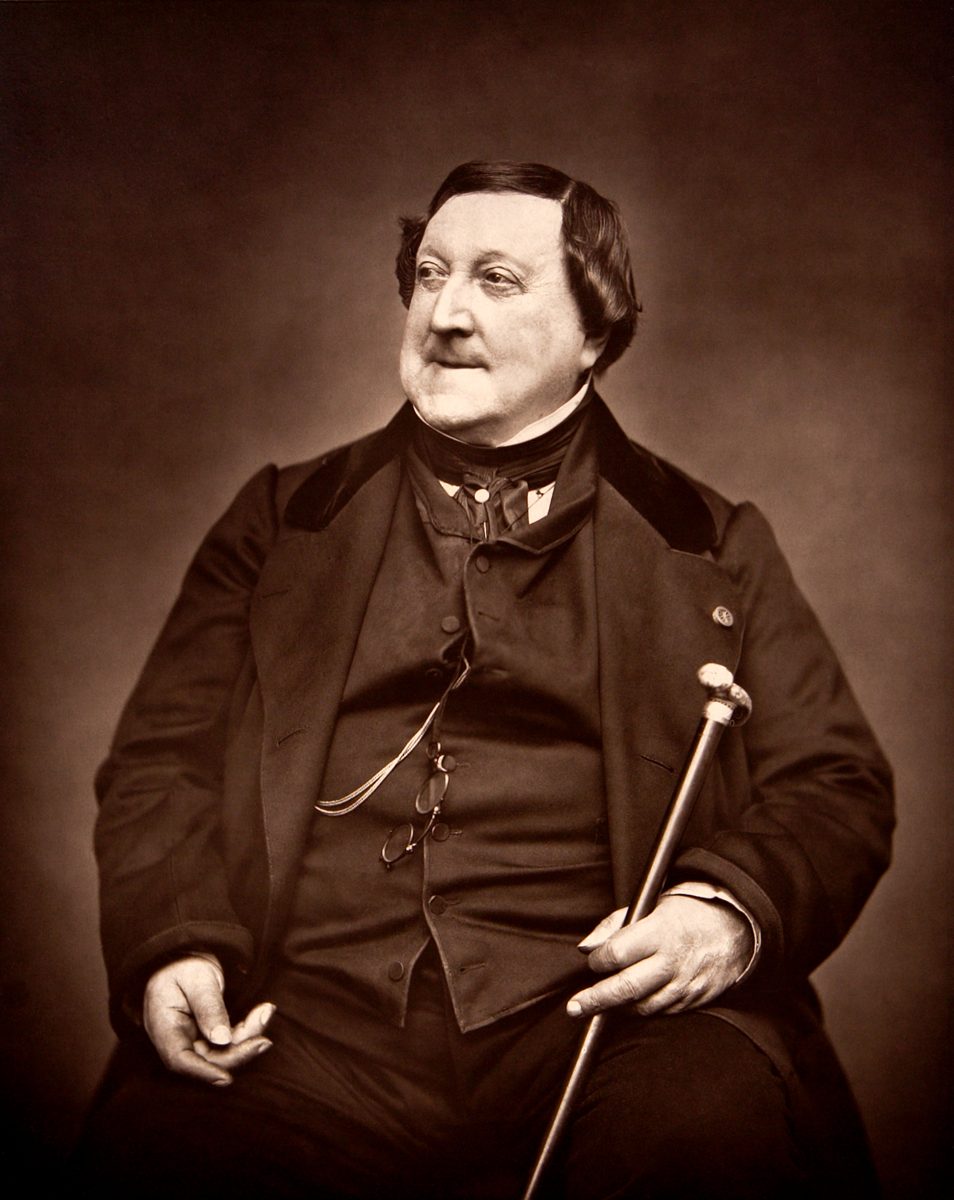
The passage most often quoted as the first reference comes from Henry Sutherland Edwards' The Life of Rossini, published in London by Hurst and Blackett in 1869. The Italian composer had died on Friday, November 13, 1868. Edwards wrote that if it was true that Rossini "regarded Friday as an unlucky day, and thirteen as an unlucky number, it is remarkable that on Friday, the 13th of November, he died."
Read that carefully, because most websites misquote it. Edwards isn't describing a single "Friday the 13th" superstition. He's describing two separate bad omens that happened to land on the same day, and he finds the coincidence remarkable. That's exactly what you'd expect if the combined idea hadn't settled in yet.
A decade later the combination shows up as something a reader would recognize. Researchers on the American Dialect Society's mailing list have pointed to an 1880 item in Appletons' Journal describing a man who ignores omens, which ends: "the day is Friday, the thirteenth, and he regards it not." We haven't seen the original page ourselves, so treat it as a strong lead rather than settled fact. Either way, by the 1880s Americans were writing about Friday the 13th as a thing a sensible person might fear.
The Thirteen Club: New Yorkers Who Dined in Defiance
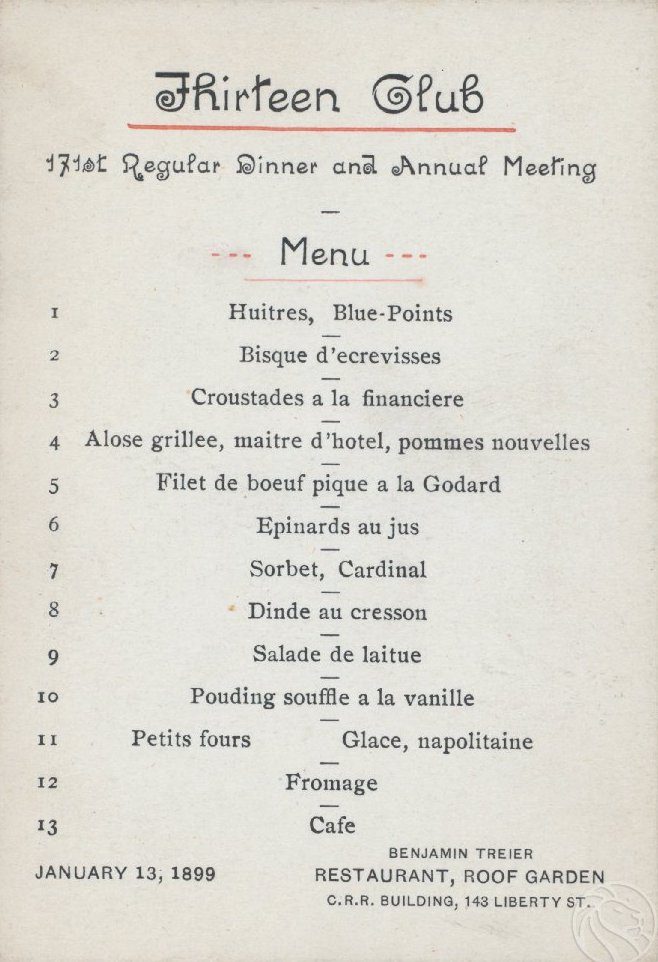
If a superstition is strong enough to mock, it's real. In New York, a Civil War veteran named Captain William Fowler organized the Thirteen Club to do exactly that. Members sat 13 to a table in room 13 of the Knickerbocker Cottage on Sixth Avenue, walked under ladders on the way in and spilled salt on purpose. Newspaper-based histories of the club put the first meeting on Friday, January 13, 1882. You'll see 1880 and 1881 elsewhere, and the sources genuinely disagree, but 1882 has the best support. Membership reportedly reached 169, which is 13 times 13, within about a year.
The club's whole joke depended on everyone in the room knowing which day was supposed to be dangerous. That's why it matters to this history. By the early 1880s, at least in New York, "13" and "Friday" were understood as a matched pair of bad luck worth throwing a party to defy. A hundred-odd years later, tattoo shops would make the same move for the same reason.
Thomas W. Lawson's 1907 Novel
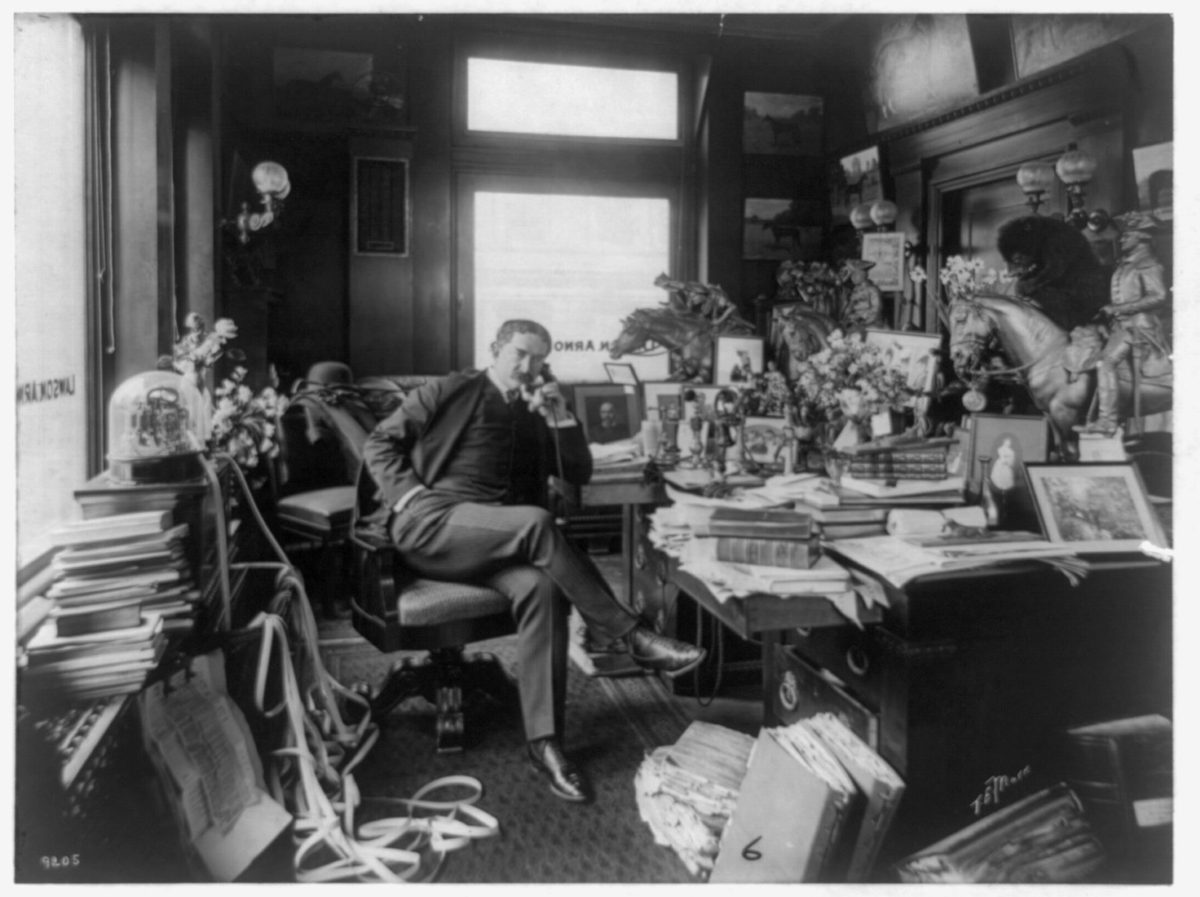
Thomas W. Lawson was a Boston stock operator who made a fortune on Wall Street and then became one of its loudest public critics. In February 1907 Doubleday, Page & Company published his novel Friday, the Thirteenth, which had first run as a magazine serial in 1906. The first line of the book is the title's own date: "FRIDAY, the 13th; I thought as much." The plot follows a broker who uses the superstition to engineer a panic on Wall Street, betting that frightened traders will sell on the unluckiest day of the calendar.
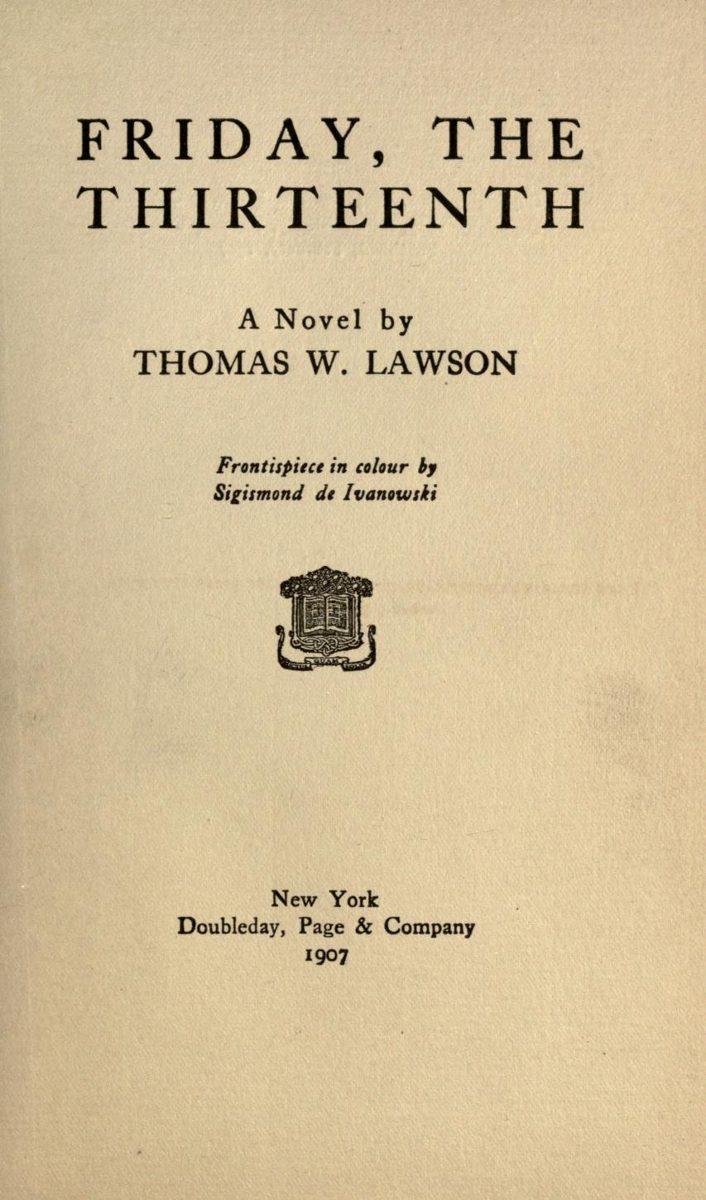
Lachenmeyer argues that Lawson's title is the earliest clear reference to Friday the 13th as a named concept. That's a stretch, given the 1869 and 1880 passages above. What's fair to say is that a famous financier put the exact phrase on a book cover in 1907, and that a lot more people knew it afterward than before.
The schooner that shared his name
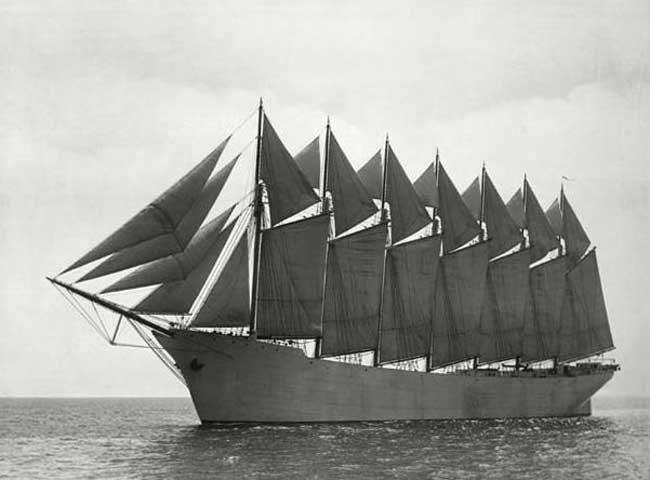
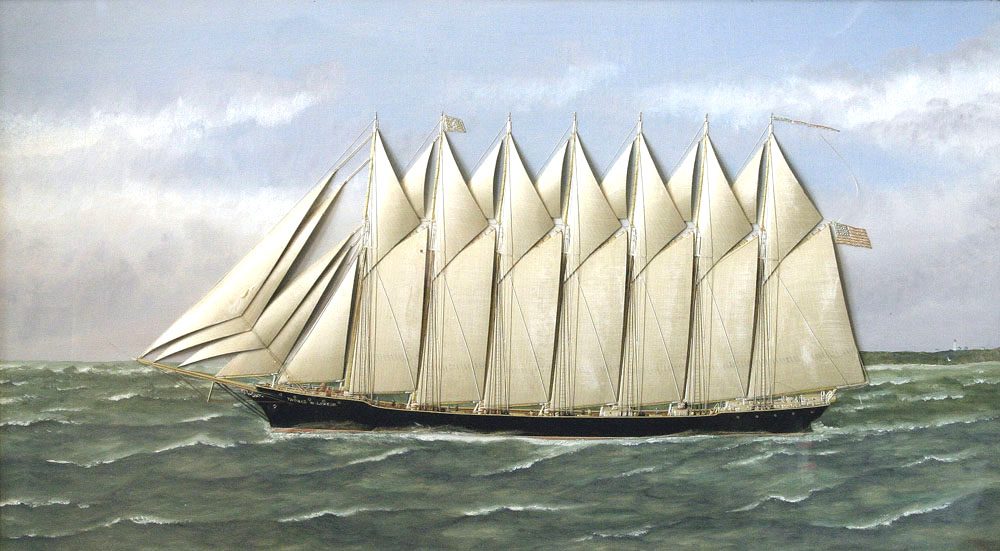
The best coincidence in this whole story is a ship. The Thomas W. Lawson was launched at the Fore River yard in Quincy, Massachusetts, on July 10, 1902. She was the only seven-masted schooner ever built, and she was named after the financier, years before he wrote the novel. In December 1907, the same year the book came out, she was riding out a storm off the Isles of Scilly at the tip of Cornwall. A local pilot came aboard on the evening of Friday, December 13. In the early hours of the next morning she was wrecked on the rocks off the island of Annet. Of everyone aboard, only two survived: Captain George W. Dow and engineer Edward L. Rowe. Her cargo of roughly 58,000 barrels of paraffin oil is often described as the first large marine oil spill.
You'll read online that the ship "sank on Friday the 13th." Strictly, she was lost on Saturday the 14th, after midnight. And we found no evidence that anyone at the time called it a curse. It's a genuine coincidence, and a good one, but it is a coincidence.
Myths Worth Retiring
A tattoo shop is a good place to hear origin stories, and most of the ones about Friday the 13th are wrong. Here's what the evidence says about the popular ones.
- The Knights Templar. King Philip IV of France really did order the mass arrest of the Knights Templar on Friday, October 13, 1307. But no medieval source treats that date as cursed because of it, and historians, as National Geographic reported in 2016, don't consider it the origin of the superstition. The link was attached in the 20th century and got a huge boost from The Da Vinci Code in 2003. Great tattoo imagery, bad history.
- Loki as the uninvited 13th guest. The story goes that Loki crashed a feast of twelve gods in Valhalla and caused Baldr's death. In the medieval Norse sources, Loki does engineer Baldr's death, but not as a 13th guest at a dinner. That framing is a modern retelling.
- The Last Supper "explains" Friday the 13th. It explains part of why 13 at the table is unlucky. It says nothing about why the 13th of the month on a Friday would be.
- Lawson's novel started it. It spread the phrase. The idea was already in print decades earlier.
- The 1980 slasher movie came out on a Friday the 13th. Friday the 13th, directed by Sean S. Cunningham and written by Victor Miller, opened on Friday, May 9, 1980. It was made for a little over half a million dollars, opened at number one, and did more than any book or club to tie the date to horror. That's also why so many Friday-the-13th flash sheets lean slasher.
What the Numbers Actually Say
How often it happens
Every year has at least one Friday the 13th and never more than three. The rule is simple: any month that starts on a Sunday has one. 2026 has the maximum, three, in February, March and November, and the February–March back-to-back only happens in a common year that starts on a Thursday. The next one after this November is August 13, 2027.
Here's the strange part, and it's a real piece of math, not trivia filler. The Gregorian calendar repeats exactly every 400 years. Across those 4,800 months, the 13th falls on a Friday 688 times, which is more than any other day of the week. Mathematicians published the proof in the American Mathematical Monthly in 1933. The 13th of the month is, very slightly, most likely to be a Friday.
Is it actually unlucky?
The most quoted study is a 1993 paper in the BMJ titled "Is Friday the 13th bad for your health?" The authors compared Friday the 13ths with Friday the 6ths in one region of England. Fewer cars were on the road on the 13th, but hospital admissions from transport accidents were higher, 65 against 45, and they concluded the risk "may be increased by as much as 52%." Two things matter here. It ran in the BMJ's Christmas issue, which is traditionally light-hearted, and the numbers were tiny. Later and larger studies of emergency rooms and surgery outcomes found no Friday-the-13th effect.
In 2008, the Dutch Centre for Insurance Statistics looked at the other side and found fewer accident reports on Friday the 13ths than on ordinary Fridays over the previous two years, about 7,500 against 7,800. Their statistician guessed that people are simply more careful, or stay home. If the day has any effect, it may be making people safer.
The fear has a name, or two
Fear of the number 13 is triskaidekaphobia, a word first recorded in American psychology writing around 1910. Fear of Friday the 13th specifically is paraskevidekatriaphobia, which, by his own account, was coined by Asheville, North Carolina therapist Donald Dossey. He's also the source of the widely repeated estimates that millions of Americans fear the day and that hundreds of millions of dollars in business are lost each time it comes around. Those numbers trace back only to Dossey, without a published method, so we'd treat them as a good story rather than data.
How Friday the 13th Became a Tattoo Holiday
Dallas, 1995
The modern tattoo tradition starts in Texas. In a 2017 VICE article headlined "How Friday the 13th Became Black Friday for Tattoos," Oliver Peck described throwing his first big Friday-the-13th party in 1995 at Pair O' Dice, a Dallas shop that's since closed. It ran 24 hours. The deal was a small tattoo for $13 plus a $7 tip, so $20, and the design was usually the number itself. The Philadelphia Inquirer and USA Today later reported the same origin.
In 1996 Peck and Dean Williams opened Elm Street Tattoo in Deep Ellum, and the Friday-the-13th marathon became the shop's signature. You'll see the tradition's start dated to 1993 or 1996 in some local news coverage. Our best read is that 1996 refers to the first event at Elm Street and 1993 to Peck tattooing 13s before it became a production. The mid-1990s in Dallas is the part every account agrees on.
Peck has always been clear that he didn't invent the idea of tattooing a 13 on the date. He told VICE that tattoo artist Dave Lum's Halloween specials were part of his inspiration. We couldn't independently confirm more about Lum's shop or city, so we'll leave the credit exactly where Peck put it.
The 2008 record
On Friday, June 13, 2008, Peck tattooed 415 people in 24 hours at Elm Street Tattoo, from midnight to midnight, a total recognized as a Guinness world record and reported by the Associated Press. You'll sometimes see 415 attached to the 1995 party. It belongs to 2008. The AP also noted that by then the shop had been running its Friday-the-13th marathon for years.
New York and everywhere else
The idea traveled the way flash always has, artist to artist. Michelle Myles, co-owner of Daredevil Tattoo on New York's Lower East Side, told DNAinfo in 2013 that she believed Daredevil was among the first New York shops to adopt it, around 2000. By 2013 Daredevil was offering more than 30 designs at $13 plus the "traditional $7 tip for good luck" and tattooing over 200 people in a ten-hour day. By 2017 VICE was calling Friday the 13th the tattoo industry's Black Friday, and the name stuck.
Not every shop loves it. When the Philadelphia Inquirer surveyed local studios in 2018, prices had already drifted to $31 (13 backwards), $40 with tip, and $50 minimums, and a few well-known shops sat the day out entirely. One owner who kept running it summed up the mood in the industry: he didn't like it, but it's part of the business. Sociologist David C. Lane, who studies tattoo workers, told Colorado Public Radio in 2024 that the tradition's origin is "probably more like a folklore history" than something you can fully document. That's fair. The Dallas story is the best-documented beginning, not proof nobody did it earlier.
The sailor story
Ask around a shop and someone will tell you sailors got 13s as a reverse charm, so bad luck would see it was already there and keep moving. Peck repeated a version of it to VICE. It's good tattoo lore, but we've found no historical documentation of it, so file it with the Templars.
A note on crediting Oliver Peck
Peck went on to judge the TV competition Ink Master from 2012. In January 2020 he left the show after old photos of him in blackface surfaced; he apologized publicly, and the network said it was appalled. We're including that because a history page that leaves it out would be incomplete, and because crediting someone for a piece of tattoo history isn't the same as endorsing them. The tradition outgrew any one person a long time ago.
Timeline at a Glance
- 1307: The Templar arrests happen on a Friday the 13th, but nobody links the date to bad luck until the 20th century.
- Late 1300s: Chaucer's "on a friday fil al this myschaunce" (unlucky Friday).
- 1600s: The taboo against 13 at dinner is recorded in England.
- 1869: The Rossini biography notes he died on Friday, November 13 (1868).
- 1880: Appletons' Journal reportedly uses "Friday, the thirteenth" as an ill-omened day.
- 1882: New York's Thirteen Club holds its first meeting (dates vary from 1880 to 1882).
- 1907: Lawson's novel Friday, the Thirteenth is published; the schooner Thomas W. Lawson is wrecked in the early hours of December 14.
- 1933: The proof that the 13th falls on a Friday more often than any other weekday is published.
- 1980: Friday the 13th, the film, opens on May 9.
- 1993: The tongue-in-cheek BMJ study is published.
- 1995: Oliver Peck's 24-hour Friday-the-13th party at Pair O' Dice, Dallas.
- 1996: Elm Street Tattoo opens in Deep Ellum; the marathon becomes annual tradition.
- c. 2000: Daredevil Tattoo in New York adopts the day.
- 2008: 415 tattoos in 24 hours at Elm Street, a Guinness record.
- 2026: Three Friday the 13ths: February, March and November.
Getting a Friday the 13th Tattoo Without Regretting It
We've watched a lot of these days from behind the counter, and the honest version is this: a flash-day tattoo can be a great piece or a forgettable sticker, and the difference is mostly decided before you get in line.
Size it for year ten, not day one
Friday-the-13th flash is drawn small so the shop can tattoo a lot of people, and small is where line work gets into trouble. Ink spreads a little under the skin over the years. A "13" with tight counters inside the 3, or script under about an inch tall, tends to close up and read as a smudge a decade later. Ask the artist to go a little bigger or a little bolder. Traditional-style flash survives so well for a reason: heavy outlines and solid black, which is the whole logic of traditional tattooing.
Pick the design for the placement
Fast, cheap placements on flash day are the outer forearm, the calf, the upper arm and the ankle. Fingers, the side of the hand and feet fade and blow out faster, and a busy day is the wrong time to negotiate that conversation. If you've been wanting a hand piece, book it properly on another day.
Don't let the crowd change your standards
The needle, gloves and setup should be the same at 11 p.m. on Friday the 13th as at noon on a Tuesday: single-use needles opened in front of you, a clean barrier-wrapped station, a registered artist. In California, every body art practitioner has to be registered with their county health department, and a legitimate shop will be happy to show you. If a line is so long that the shop is cutting corners, it's not worth the $13.
Tip like it's a real tattoo
The $7 tip was baked into the original Dallas deal, and it's a nice reminder that the artist is the one doing twelve hours of repeat work. If you're paying flash-day prices, round up. Our tattoo tipping guide covers what's normal the rest of the year.
Then heal it like any other tattoo
A small flash piece still needs a proper aftercare routine. Follow the same steps you would for a big custom piece; our tattoo aftercare guide walks through the first two weeks day by day.
Motifs that suit the day
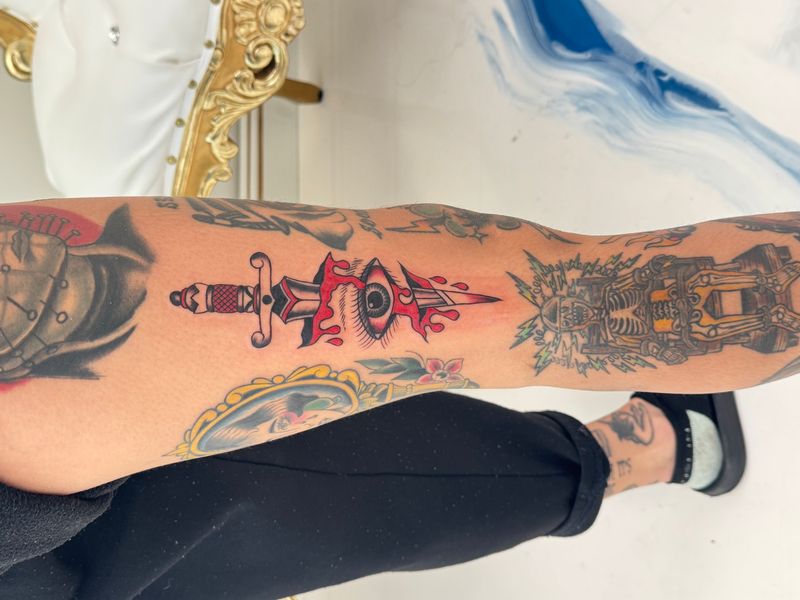
The number 13 is the classic, and plenty of shops still require it. Beyond that, the day's imagery is luck and omen: black cats (see our cat tattoo ideas), horseshoes, dice, skulls, daggers, eyes and moths. If you'd like something with a little more meaning than a number, our pages on skull tattoo meaning and dagger tattoo ideas are good places to start, and the tattoo flash guide explains how pre-drawn sheets work and why seasonal flash is often available only on the day.
Friday the 13th at Apollo in Santa Monica
We run our own Friday the 13th event, and this year it carries through to Black Friday, November 13–30, 2026, covering gold piercing and prepaid tattoo hours. All the details and terms are on the Friday the 13th event page. If you're planning something bigger than a flash piece, start with our tattoo inquiry form or book a consultation. We're at 2625 Main St in Santa Monica, and we'd much rather talk you into the right size on a quiet Tuesday than rush it on the busiest night of the year.
Sources
We checked every claim on this page against the sources below and left out anything we couldn't verify. Where the record disagrees, we've said so above.
- H. Sutherland Edwards, The Life of Rossini (London: Hurst and Blackett, 1869). Project Gutenberg text.
- Thomas W. Lawson, Friday, the Thirteenth (New York: Doubleday, Page & Co., 1907). Internet Archive scan.
- Geoffrey Chaucer, Nun's Priest's Tale, Caxton print. De Montfort University Caxton project.
- Nathaniel Lachenmeyer, 13: The Story of the World's Most Popular Superstition (Thunder's Mouth Press, 2004).
- Becky Little on Friday the 13th and the Knights Templar, National Geographic, 2016.
- American Dialect Society list (ADS-L) discussions of early "Friday the 13th" citations, October 2007.
- History of the Knickerbocker Cottage and the Thirteen Club, Daytonian in Manhattan, 2017 (Thirteen Club).
- "Thomas W. Lawson (ship)," Wikipedia.
- Scanlon TJ et al., "Is Friday the 13th bad for your health?", BMJ 1993;307:1584. PubMed abstract.
- Reuters report on the Dutch Centre for Insurance Statistics findings, June 2008, via DutchNews.nl.
- Beca Grimm, "How Friday the 13th Became Black Friday for Tattoos," VICE, October 13, 2017.
- Kristen Balderas on Philadelphia shops' Friday the 13th specials, Philadelphia Inquirer, July 2018.
- Associated Press, Dallas Guinness record report, June 2008, via NBC News.
- Serena Solomon on Daredevil Tattoo's Friday the 13th day, DNAinfo, December 2013.
- Stina Sieg, Colorado Public Radio, syndicated via NPR member station VPM, December 13, 2024.
- Minyvonne Burke on Oliver Peck leaving Ink Master, NBC News, January 2020.
- Images: Wikimedia Commons, Library of Congress, New York Public Library and the Internet Archive. All public domain; credits in the captions.
Friday the 13th Tattoo FAQ
Who started the Friday the 13th tattoo tradition?
It's most credibly traced to Dallas tattooer Oliver Peck, who threw a 24-hour Friday-the-13th party at Pair O' Dice tattoo in 1995 and continued it at Elm Street Tattoo, which he co-founded with Dean Williams in 1996. Peck has said he wasn't the first to tattoo a 13 on the date, but he turned it into an event that other shops copied.
Why are Friday the 13th tattoos $13?
The price is the joke: you pay the unlucky number on the unlucky day. The original Dallas deal was $13 for the tattoo plus a $7 tip, $20 in total. Many shops now charge more, such as $31, $40 or a $50 minimum, because materials and setup cost the same whatever the price.
Why is Friday the 13th considered unlucky?
It combines two older superstitions: Friday as an unlucky day (tied to the Crucifixion, recorded by Chaucer in the 1300s) and 13 as an unlucky number (tied to 13 at the Last Supper, recorded in England in the 1600s). Written references to the combination appear in the 19th century, and a 1907 novel called Friday, the Thirteenth helped popularize the phrase.
Did Friday the 13th come from the Knights Templar?
No. The Templars really were arrested on Friday, October 13, 1307, but no medieval source treats that date as unlucky because of it. Historians consider the link a 20th-century addition, popularized by The Da Vinci Code.
How many Friday the 13ths are in 2026?
Three: February 13, March 13 and November 13. That's the most any year can have. The next one after that is August 13, 2027.
What are popular Friday the 13th tattoo designs?
The number 13 is the classic and is still required at many shops. Other common flash includes black cats, horseshoes, dice, skulls, daggers, eyes and moths, usually drawn in a bold traditional style so a small piece holds up over time.
Is a Friday the 13th flash tattoo safe?
It should be exactly as safe as any other tattoo: single-use needles opened in front of you, a clean barrier-wrapped station, and an artist registered with the county health department, which California requires. If the shop is cutting corners to keep the line moving, walk away.
Does Apollo do a Friday the 13th event?
Yes. In 2026 our Friday the 13th event runs from November 13 through Black Friday, November 30, at our Santa Monica studio. Details and terms are on our Friday the 13th event page.