Tattoo Ideas
Shoulder Tattoo Ideas
Rounded, muscular, low-movement, and the anchor point for nearly every sleeve we build. The shoulder flatters almost any design, which is exactly why so many people start there and then keep going. How the curve, the sun, and your future plans all pull on the same patch of skin.
Book a consultationWhy the Shoulder Ages So Well
Ask any artist where they would put a tattoo they want to still look sharp in twenty years and the deltoid cap comes up fast. The skin there sits over dense muscle rather than over a joint that folds, it does not stretch and slacken the way a stomach or inner arm can, and the dermis is thick enough to hold crisp line work without the ink spreading much over time. Weight fluctuation shows up on the shoulder far less than almost anywhere else on the torso or arm.
The trade-off is exposure. In Los Angeles you are wearing short sleeves and tank tops most of the year, and the top of the shoulder catches direct overhead sun in a way the inner arm never does. UV is the single biggest fading factor for well-healed tattoos, and it hits the deltoid cap hardest. A black-and-grey piece on a shoulder that never sees sunscreen will look noticeably softer at ten years than the same piece on a thigh. This is not a reason to avoid the placement — it is a reason to be realistic about maintenance.
Three Different Placements, Three Different Design Problems
The Deltoid Cap
This is the classic. The rounded dome of the outer shoulder naturally suits compositions that are circular or radial: mandalas, ornamental rosettes, geometric medallions, koi and wave compositions that curl around themselves, floral clusters that read from every angle. A design with a strong center point and radiating detail sits on that dome like it was grown there. Square, flat, poster-style designs are the harder ask here, because the moment the arm moves the edges skew.
The Shoulder Blade
Flatter, broader, and much more forgiving of rectangular or asymmetrical compositions. Scapula placements handle wide-format work well — a spread of botanicals, script paired with imagery, an animal in profile, wing or feather motifs that follow the bone line. Two things to know: the shoulder blade is closer to bone in places, which some clients find sharper to sit through, and it is the least visible spot on your own body. You will only ever see it in a mirror, which makes it a good choice if you want something private, and a frustrating one if you wanted a piece you can look at daily.
The Front Shoulder and Clavicle Edge
Where the deltoid meets the chest, designs get to flow rather than sit. This is where sleeve pieces usually reach across when someone eventually extends onto the pectoral. Work that runs toward the collarbone gets thinner and more delicate by necessity — that skin is thinner and moves differently — so plan small detail there rather than heavy black fill.
The Sleeve Question You Should Answer Before Your First Session
The most common regret we hear about shoulder tattoos has nothing to do with the tattoo itself. It is that a great standalone piece was placed in a way that boxes in everything that comes after. A shoulder tattoo is the natural top anchor of a half or full sleeve, and if you tattoo a tight, self-contained circle right in the middle of the deltoid with hard edges and no negative space around it, every future artist has to design around a wall.
You do not need to commit to a sleeve. You do need to say out loud whether one is even a maybe. If it is, we design the shoulder piece with breathing room, softer outer boundaries, and a background language — smoke, water, foliage, texture — that can be extended downward later without looking bolted on. If a sleeve is genuinely off the table, we can make the shoulder piece tighter and more self-contained, which often looks better in isolation. Both are correct answers. Guessing is what causes problems. If you're still gathering direction, our broader collection of tattoo ideas is a useful place to see how motifs behave at different scales.
Stencils, Curves, and Why the Placement Session Matters
A flat drawing applied to a curved surface will distort. This is basic geometry, and it is also the most common reason a shoulder tattoo looks slightly off without the client being able to say why. A circle stenciled onto a relaxed arm becomes an oval when the arm raises. A straight line drawn across the deltoid bows.
Good practice looks like this: the stencil goes on with the arm in a neutral standing position, and then we check it with the arm raised, crossed, and hanging. Some designs need to be split and re-wrapped in sections rather than applied as one sheet. You should expect to stand in front of a mirror and move before any needle touches you — and you should feel free to say the placement looks wrong, because ten minutes of stencil adjustment is cheaper than a lifetime of a crooked centerline.
Style Directions That Genuinely Suit the Shoulder
- Ornamental and mandala work — the radial symmetry and the dome of the deltoid are made for each other, and heavy dot shading ages gracefully here.
- Japanese-influenced compositions — traditional Japanese design already assumes body curvature; koi, peonies, waves, and clouds were built to wrap.
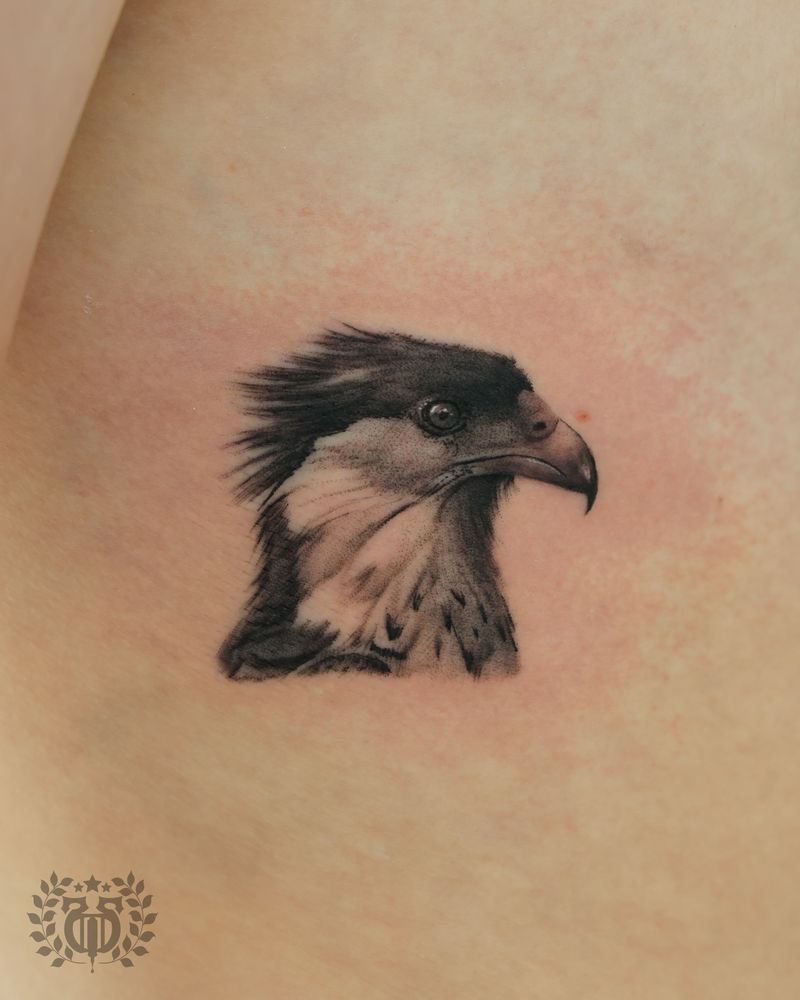
- Black-and-grey realism — the flat-ish outer plane of the deltoid gives a portrait or animal enough uninterrupted room to read clearly.
- Fine-line botanicals — beautiful, but be honest with yourself: fine line on a sun-exposed shoulder is the combination most likely to need a touch-up down the line.
- Neo-traditional — bold outlines and strong color hold up exceptionally well against UV, which makes it a smart LA choice.
Healing a Shoulder Is Mostly About Straps
The shoulder heals easily in every respect except one: friction. Backpack straps, purse straps, gym bags, seatbelts, sports bra bands, and the strap of a laptop bag all land squarely on a fresh deltoid or scapula piece. Rubbing lifts scabs early, and lifted scabs are how you get patchy healing that needs a touch-up.
Plan for two to three weeks of not carrying anything on that side. Sleep on the other shoulder. Skip contact sports and heavy pressing at the gym for the first week or so, because the muscle flexing under a healing tattoo does not help. And keep it out of the ocean and the pool — Santa Monica is a hard place to follow that rule in summer, which is one honest argument for booking shoulder work in the fall or winter.
Long term, sunscreen is the whole game. Once healed, a high-SPF habit on that one spot will do more for how your tattoo looks in fifteen years than any aftercare product you buy in the first month. When you're ready to talk through size, wrap, and how it fits your future plans, you can book a consultation and we'll map it on your actual shoulder rather than on paper.
The shoulder cap is where a sleeve either terminates or carries on onto the chest and back, which makes it a boundary decision as much as a design one. Both directions are mapped out in our sleeve tattoo guide and our back tattoo guide.
Shoulder tattoo: straight answers
Does a shoulder tattoo hurt?
The deltoid cap is generally considered one of the easier placements because there is dense muscle between the needle and the bone. It gets sharper as you move toward the shoulder blade, the top of the collarbone, and the inner edge near the armpit. Most people describe the outer shoulder as a solid mid-range sit rather than a difficult one.
How long does a shoulder piece take?
A palm-sized ornamental or floral piece is usually a single three-to-four hour session. A full deltoid cap with detailed shading typically runs one to two sessions. If it is being designed as the top of a future sleeve, we often plan the shoulder as its own session so the composition can be reviewed healed before extending downward.
Should I get the shoulder tattooed first if I want a full sleeve?
Frequently, yes. The shoulder anchors the composition and sets the visual weight for everything below it, so building from the top down keeps the flow consistent. What matters more than order is telling your artist about the sleeve plan up front so the shoulder piece is designed with open edges rather than hard boundaries.
Will a shoulder tattoo fade faster than other placements?
It can, purely because of sun exposure rather than anything about the skin itself. The top of the shoulder catches direct overhead UV constantly in Southern California. The skin quality there is excellent for holding ink, so with consistent sunscreen a shoulder tattoo ages as well as almost any placement on the body.
What designs work best on the rounded part of the shoulder?
Radial and circular compositions suit the dome naturally — mandalas, rosettes, geometric medallions, and floral clusters with a strong center. Japanese-style work also wraps beautifully because it was designed around body curvature. Flat, rectangular, poster-style designs are the ones that tend to skew when the arm moves.
Deltoid or shoulder blade — which should I choose?
Choose the deltoid if you want to see the tattoo yourself, want it visible in a t-shirt, and might extend into a sleeve later. Choose the shoulder blade if you want something more private, want a wider or more rectangular composition, and do not mind that you will only see it in a mirror. The blade also stays covered more easily in professional settings.
Can I wear a backpack while my shoulder tattoo heals?
Not on that side, for at least two to three weeks. Strap friction is the number one cause of patchy healing on shoulder placements because it lifts scabs before they are ready to come off. Switch the bag to the other shoulder, or carry it by hand, until the surface has fully closed and stopped peeling.
How much of my shoulder does a piece need to cover to look right?
There is no rule, but very small designs floating in the middle of a large deltoid often read as unbalanced because the surrounding open skin dwarfs them. Either commit to filling the cap as a defined shape, or place a smaller design closer to a natural edge where it has something to relate to. We work this out on your body with a stencil rather than deciding from a drawing.