Piercings
Flat Piercing
The flat is the broad plate of cartilage below the helix rim — a favourite anchor for a curated ear. Honest cartilage healing, flat-back jewelry, and needle-only work from the Fakir-certified piercers at Apollo in Santa Monica.
Book a piercingPlacement
Flat cartilage below helix rim
Pain level
4–6 / 10
Healing
4–12 months
Jewelry
16g flat-back stud
Min. age
13+
The basics
What is a flat piercing?
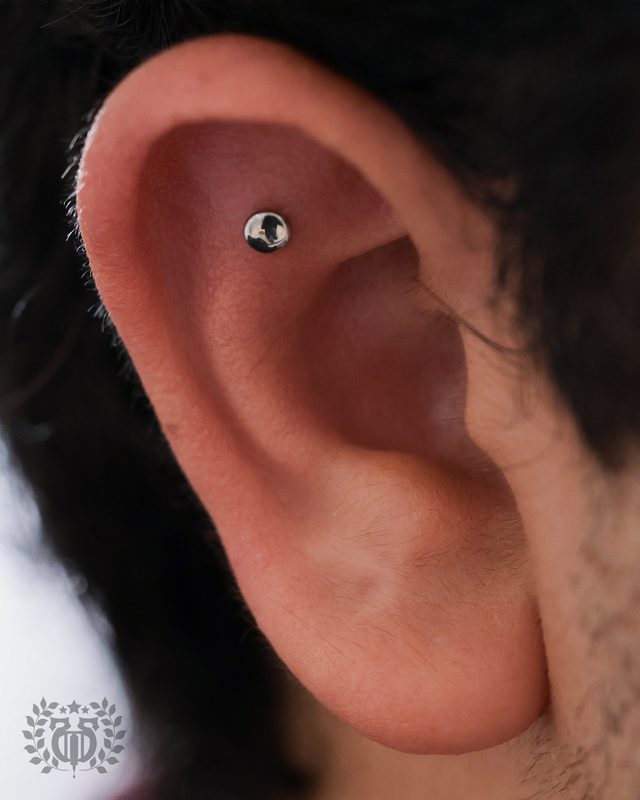
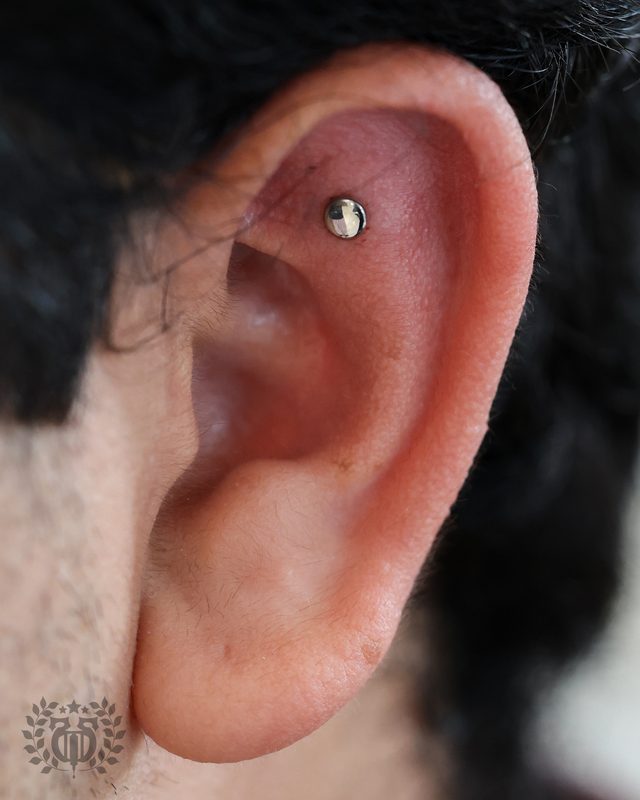
A flat piercing goes through the flat — the broad, flat plate of cartilage on the upper ear, tucked between the outer helix rim and the inner antihelix ridge. It's called "flat" because that section of the ear genuinely is: a smooth, level surface that makes an ideal canvas for a single statement gem or a cluster of small ones. It's one of the most popular piercings for building a curated ear, and it sits comfortably alongside a helix or conch. For the local and pricing view, see our flat piercing in Los Angeles page.
At Apollo
Where the flat sits — anatomy
Picture the upper ear: the raised outer edge is the helix, and just inside it a curved ridge — the antihelix — rises up. The flat plane between those two features is the flat. Because it's a broad, even surface, a piercer has room to place a gem exactly where it flatters your ear, and to add a second or third in a deliberate arrangement. Placement is a real skill here: we mark against your individual anatomy and the angle you'll actually see in the mirror, not a one-size template.
How it feels
Does a flat piercing hurt?
It's cartilage, so it's more than a lobe — most people rate a flat around a 4 to 6 out of 10. It's a firm pressure and a quick crunch rather than a sharp sting, over in a second or two. Cartilage has fewer nerve endings than soft tissue, so the piercing itself is brief; the bigger commitment is the healing, not the moment.
Healing
Healing — the realistic version
Here's the honest part: cartilage heals slowly. A flat piercing takes 4 to 12 months to fully heal, and it heals from the outside in, so it can look settled long before the channel is actually mature. The most common reasons a flat gets angry are sleeping on it, snagging it, and changing the jewelry too early — so patience is the whole game. A firm bump beside a healing cartilage piercing (an irritation bump) is usually a response to pressure or trauma, not infection; the fix is almost always to stop disturbing it and let it calm down, which we'll coach you through.
Jewelry
Jewelry: flat-backs and gem ends
We pierce every flat with a 16g implant-grade titanium (ASTM F-136) flat-back stud. The flat disc behind the ear is what makes cartilage healing bearable — there's nothing on the back to press into your head when you lie down. We do not put a ring or hoop on a fresh flat: a ring moves constantly, drags on a cartilage wound, and dramatically slows healing. The front end can be a plain ball or, more often on a flat, a gem, cluster, or shaped end — this is where solid 14k/18k gold and designer pieces from BVLA (Body Vision Los Angeles) really shine. As with every piercing we fit long for swelling and build a downsize into the plan.
At Apollo
The flat in a curated ear
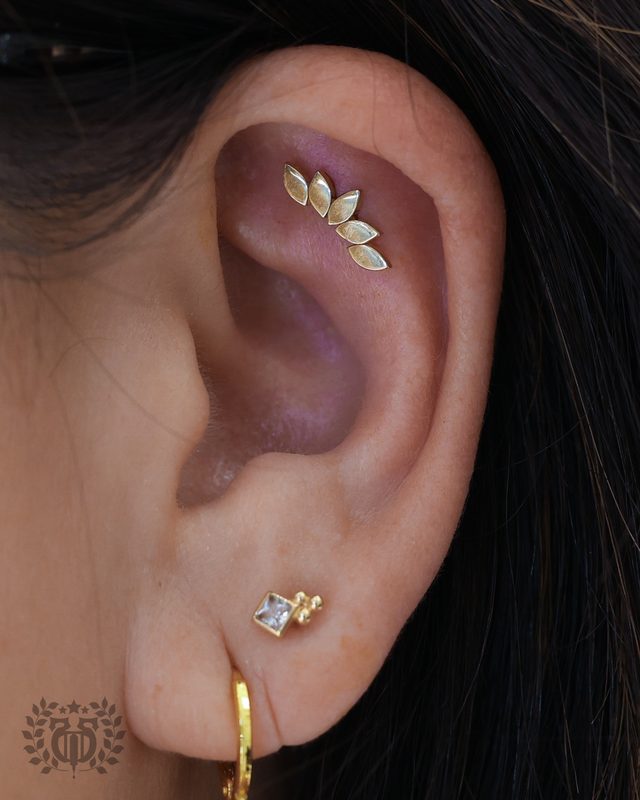
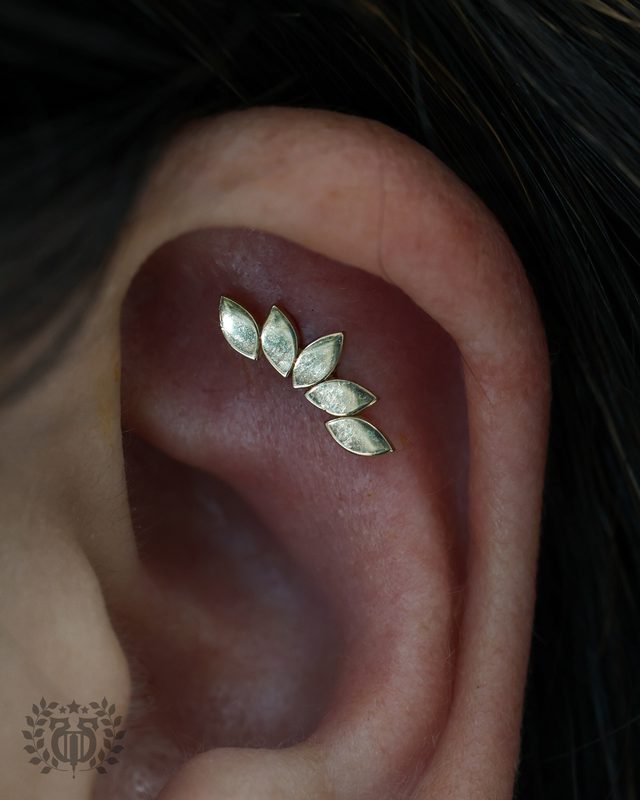
The flat is prime real estate for curation because of that broad, level surface. A single well-placed BVLA gem reads as a floating point of light; a trio of graduated ends becomes a constellation. If you're planning a full curated ear, tell us at consultation — we'll map the flat, helix, and conch together so the whole ear is composed rather than added to piecemeal. Our ear piercing chart shows how all 15 placements sit relative to one another before you commit.
Gun vs needle
Why never a gun on cartilage
A piercing gun should never touch cartilage, full stop. A gun blunt-forces a stud through with spring pressure, which shatters and crushes cartilage instead of making a clean channel — that causes worse scarring, longer healing, and a much higher chance of a bump or rejection. It also can't be sterilised. Every flat we do is pierced with a single-use needle by a Fakir-certified piercer. This is the core reason to choose a professional studio over a kiosk.
Aftercare
Aftercare — sleep is the hard part
Clean with sterile saline twice a day and otherwise leave it alone — no twisting, no rotating. The genuine challenge with any upper-ear cartilage piercing is sleep: rolling onto it is the number-one cause of irritation bumps. A travel pillow with a hole in the middle, or training yourself onto the other side, makes an enormous difference. Keep hair products, phone screens, and dirty pillowcases off it, and skip pools and the ocean until it's healed. Full routine is in our piercing aftercare guide.
At Apollo
Age & booking
We pierce cartilage from around 13+ with a parent present for minors; we'll confirm readiness at consultation and the accompanying adult needs photo ID. When you're ready, book a flat piercing, call (310) 331-0605, or catch a piercing event to see the full BVLA wall. Browse the rest of our piercing services too.
Our standards
Why get pierced at Apollo
Every piercing at our Santa Monica studio is done with a single-use sterile needle — never a piercing gun, which can't be sterilized and crushes cartilage. We install only implant-grade titanium (ASTM F-136), solid 14k/18k gold, or niobium, placed and checked by a Fakir-certified senior piercer. Your fresh jewelry is sized long for swelling, and a downsize follow-up is built into every piercing so it settles cleanly.
For flat piercing cost and the jewelry choices that drive it, see our piercing prices guide.
Questions
Frequently asked questions
What is a flat piercing?
A flat piercing goes through the flat plate of cartilage on the upper ear, between the outer helix rim and the inner antihelix ridge. That broad, level surface makes it an ideal spot for a single statement gem or a cluster, which is why it's a favourite for curated ears.
Does a flat piercing hurt?
It's cartilage, so more than a lobe — most people rate it a 4 to 6 out of 10. It's a firm pressure and a quick crunch rather than a sharp sting, over in a second or two. The real commitment is the healing time, not the moment of piercing.
How long does a flat piercing take to heal?
Cartilage heals slowly: plan on 4 to 12 months for full healing. It heals from the outside in, so it can look settled well before the channel is mature. Sleeping on it, snagging it, and changing jewelry too early are the main reasons a flat gets irritated.
What jewelry is used for a flat piercing?
A 16g implant-grade titanium flat-back stud — the flat disc behind the ear means nothing presses into your head when you lie down. We don't use rings on a fresh flat. The front is usually a gem, cluster, or shaped end, and once healed you can choose solid gold or designer pieces like BVLA.
Can a flat piercing be done with a gun?
Never. A gun blunt-forces a stud through and crushes cartilage instead of making a clean channel, causing worse scarring, slower healing, and a higher chance of bumps or rejection — and it can't be sterilised. Every flat we do is pierced with a single-use needle by a Fakir-certified piercer.
I keep hearing about bumps on cartilage piercings — what are they?
A firm bump beside a healing flat is usually an irritation bump, a response to pressure or trauma (most often sleeping on it), not an infection. The fix is almost always to stop disturbing it — use a travel pillow, don't change the jewelry early — and let it calm down, which we'll coach you through.
Studio portfolio
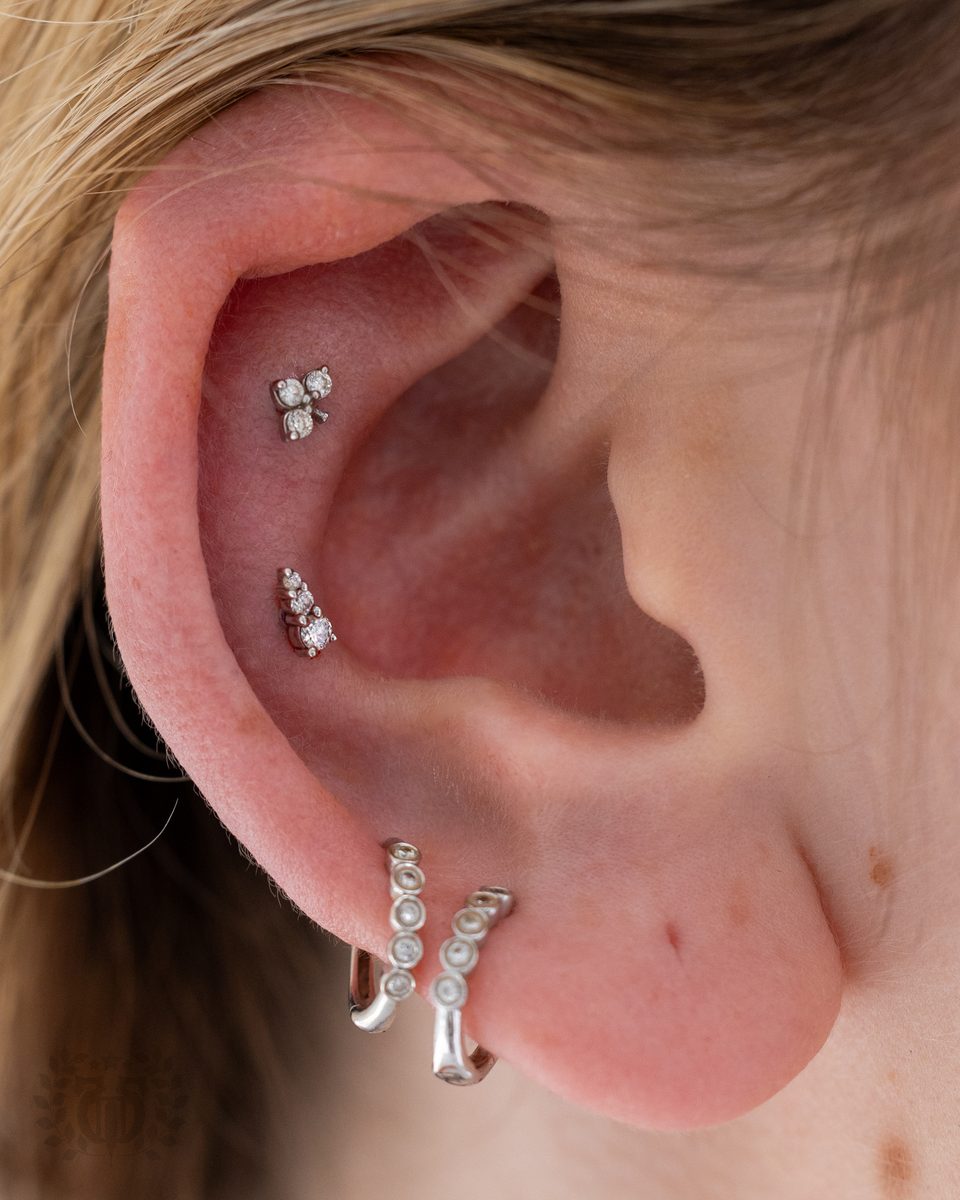
Flat Piercings at Apollo
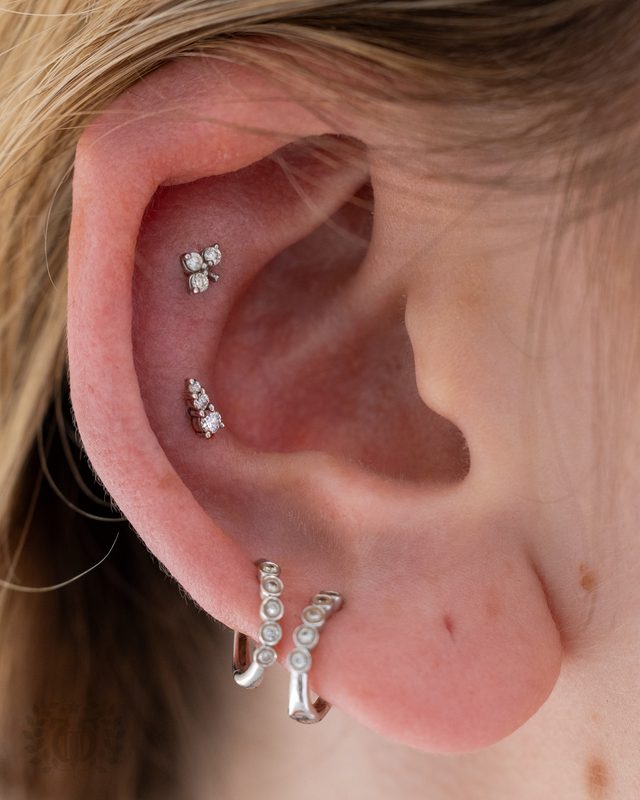
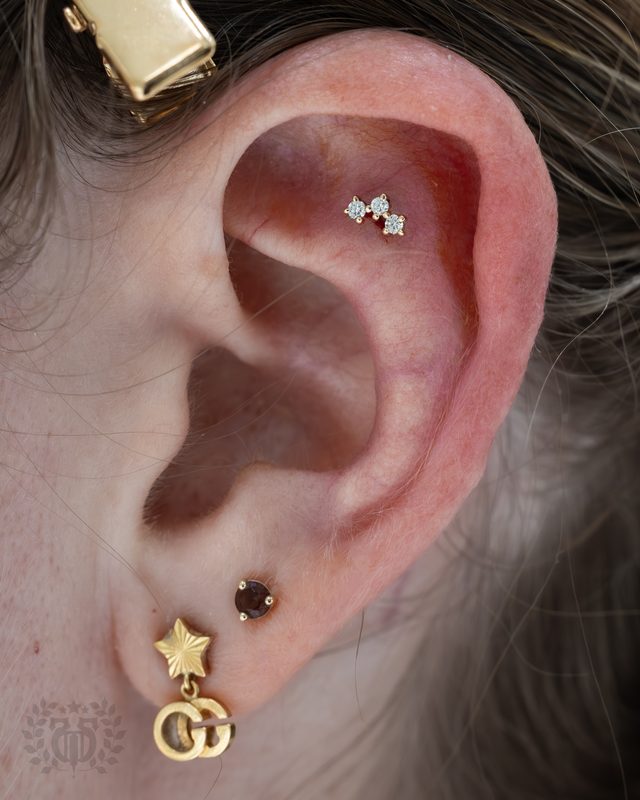
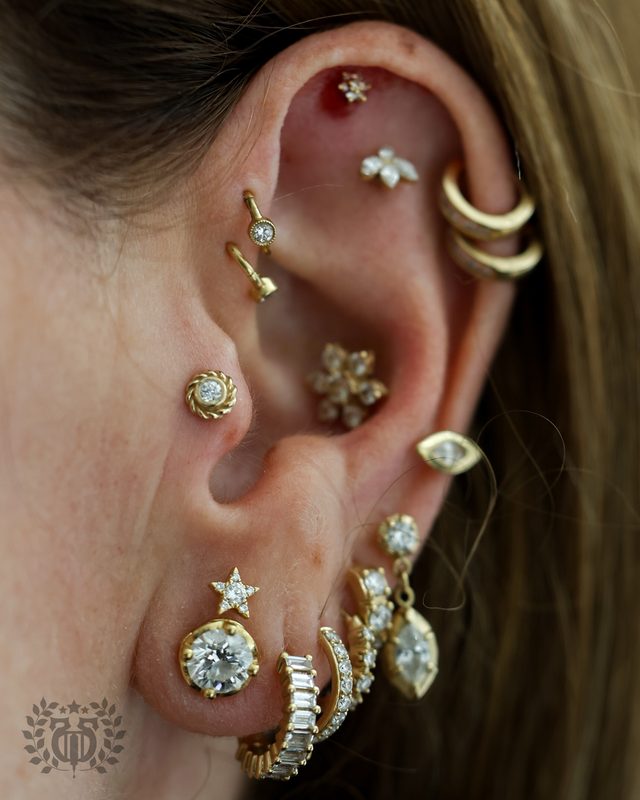
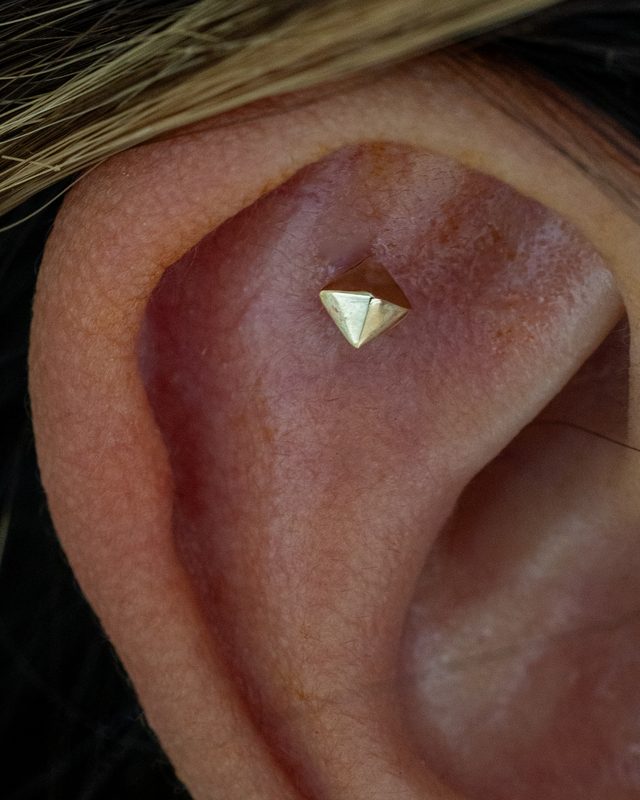
Real work from our piercing chairs — implant-grade titanium and gold, placed freehand by our Fakir-certified piercers.