Tattoo Ideas
Cover-Up Tattoo Ideas
Old ink does not disappear. It gets outvoted. Everything that makes a cover-up work is decided in the drawing: value, density, and where the new design's darkest areas land relative to the old one's. How cover-ups actually work, when to laser first, and the design directions that hide old work best.
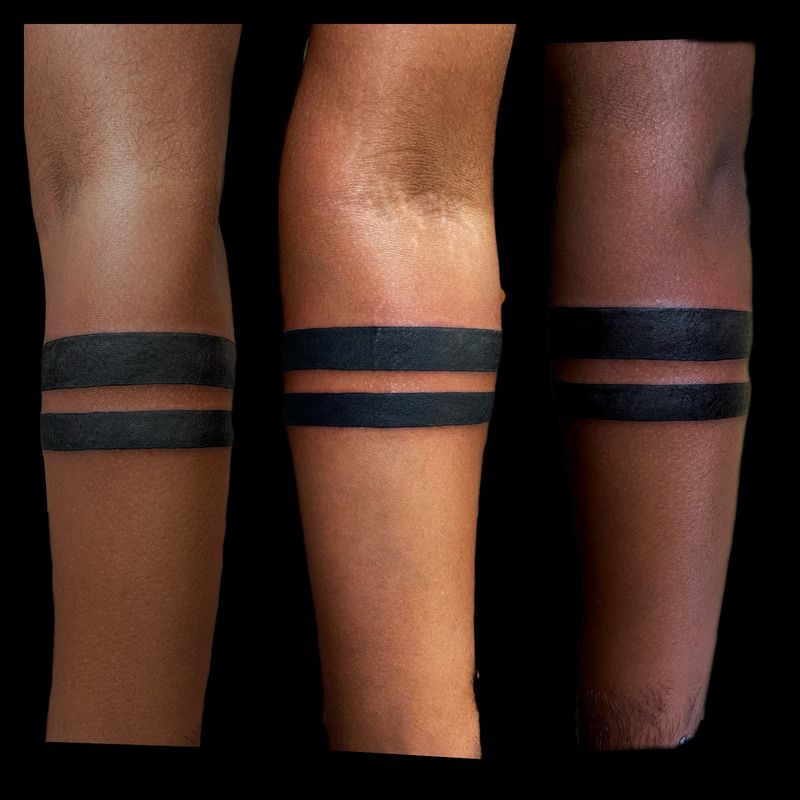
Book a consultationLet's start with the part most people don't hear until they're already in the chair: a cover-up is not an eraser. It's a magic trick built on contrast. New ink has to be darker and denser than what's underneath, which is why the old tattoo's color, saturation, and size dictate almost everything about your options. A faded, thin, gray-blue piece gives an artist enormous freedom. A heavy black tribal band or a saturated old-school anchor gives far less, because there's only so much "darker" to go.
The other rule that surprises people is size. To break up the recognizable shapes of the old tattoo, a cover-up almost always needs to be bigger than the original — sometimes considerably so. The new design uses negative space, flow, and strategically placed dark areas to camouflage the lines you want gone. That's why a coin-sized name often becomes a palm-sized floral piece. Bigger isn't upselling; it's physics.
Should You Laser-Lighten First?
Here's the honest middle path many people skip: a few sessions of laser tattoo removal don't have to erase the old piece completely — they just have to lighten it enough to expand your options. Knocking a dark tattoo down by 50–70% can be the difference between "we can only do solid blackwork here" and "we can do a soft watercolor peony with real color in it." If your old tattoo is very dark, very saturated, or in a spot where you want a delicate result, a consult about laser-fading first is usually worth it.
You don't always need it. Plenty of cover-ups happen in a single design with no laser at all. But when an artist suggests a few removal sessions first, it's almost always to give you a better-looking, less compromised final tattoo — not to sell you more.
Cover Up Tattoo Ideas: 14 Design Directions That Hide Old Ink
Below are the cover up tattoo ideas we reach for most often, grouped by what each one is genuinely good at hiding. Use them as a starting vocabulary for your consult, not a fixed menu — the best design always responds to your specific old tattoo.
Botanical and Floral Fields
Roses, peonies, chrysanthemums, and leafy filler are the workhorses of cover-ups for good reason. Organic shapes have no "correct" outline, so they absorb irregular old linework, and clusters of blooms let an artist place dark centers and shadows exactly where the old ink is strongest. Great for names, small script, and faded lettering.
Blackwork and Ornamental
When the old tattoo is dark and stubborn, solid blackwork and ornamental patterns are often the cleanest answer. Bold fills, dotwork, and decorative borders simply sit on top of the old saturation instead of fighting it. Excellent for heavy tribal, old solid bands, and badly blown-out lines.
Dark-to-Light Realism
Realism cover-ups use the old tattoo's darkest areas as the shadows of a new subject — a portrait, an animal eye, a storm cloud. Because realism is built from gradients, an experienced artist can map the existing dark spots into the deepest values of the new image. Best for medium-saturation pieces where there's room to build lighter midtones around the dark zones.
Watercolor Over Faded Work
Watercolor and soft color washes look airy, but they only work over lighter old ink — usually after some fading or on already-faded tattoos. Splashes, drips, and color bleeds can disguise pale gray shadows beautifully, but they can't hide strong black on their own. This is a classic "laser-lighten first, then cover" candidate.
Geometric and Mandala Camouflage
Precise geometry and mandalas hide old ink through pattern and repetition. The eye reads the symmetry, not the irregular shape buried underneath, and dense linework plus dot-shading can mask a surprising amount. Strong for round or blob-shaped old tattoos and for anyone who wants structure over imagery.
Big Cats and Animals
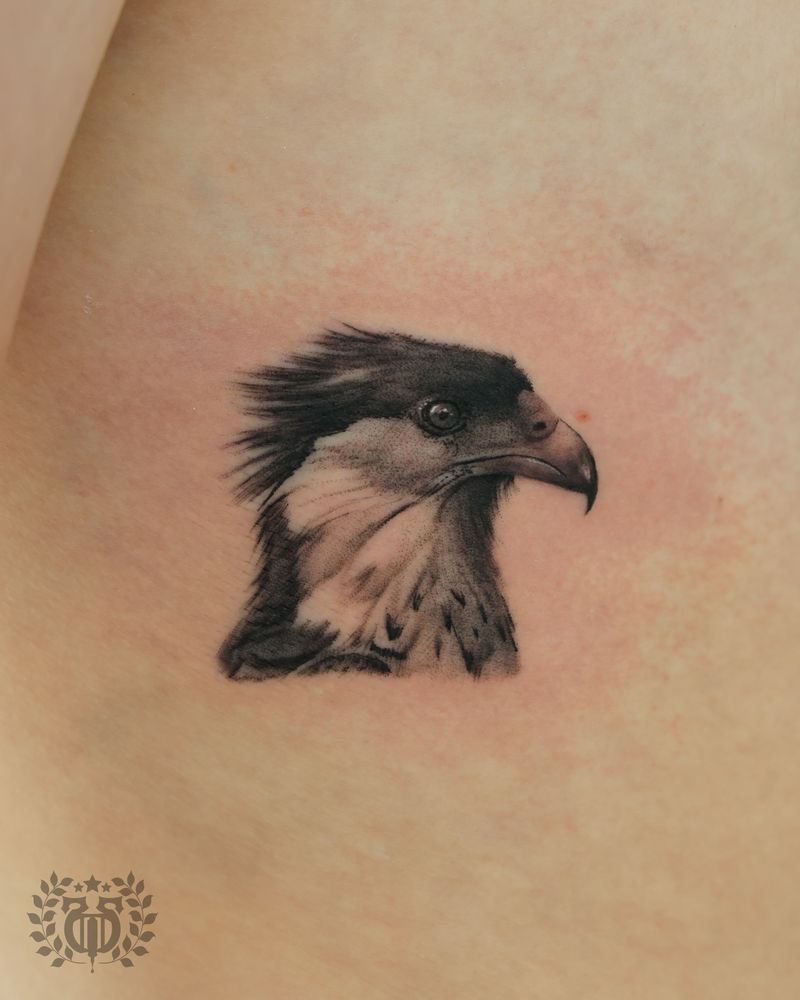
Tigers, panthers, wolves, and bears bring built-in dark masses — manes, stripes, fur shadows — that an artist can position over the heaviest parts of the old tattoo. The natural patterning gives lots of "permission" to place black, making animals one of the more forgiving directions for medium-to-dark cover-ups. The crawling panther earned its reputation here specifically: read why the panther became traditional tattooing's default cover-up before you settle on a subject.
Dragons and Koi for Arms
Few subjects flow around a forearm or bicep like a dragon or koi. Their long, curving bodies, scales, and surrounding water or smoke let an artist route the design around old ink, hide problem areas under dark scaling, and use flow to break up rigid old shapes like bands or lettering. A go-to for arm and half-sleeve cover-ups.
Mandala and Pattern Sleeves
When a single piece can't cover everything, expanding into a sleeve changes the math entirely. A connected field of mandalas, ornamental filler, and blackwork gives the artist room to bury the old tattoo inside a much larger composition where it simply disappears into the pattern. The honest trade-off: more time, more sessions, more commitment.
Lettering Into Imagery
An old word or name doesn't always have to vanish — sometimes it transforms. Existing letters can be absorbed into banners, ribbons, or the bark of a tree, or reworked into a new word with imagery grown around it. This works best when the original lettering is thin and not too dark.
Smoke, Shadow, and Cloud Blending
Smoke, fog, and cloud work is the connective tissue of cover-ups. Soft gray washes don't just look atmospheric — they bridge a new subject to the old dark areas so nothing reads as a "patch." Smoke is rarely the whole tattoo, but it's often what makes a big-cat, dragon, or skull cover-up actually disappear at the edges.
Skulls, Roses, and Neo-Traditional
The skull-and-roses pairing endures because it combines a naturally dark, high-contrast subject with the organic forgiveness of florals. Neo-traditional styling adds bold outlines and saturated shading that sit confidently over older work. A strong choice when you want something graphic and permanent-looking rather than soft.
Nature Scenes and Landscapes
Mountains, waves, forests, and night skies use large areas of value — dark ridgelines, deep water, starry black — that can be arranged over the heaviest old ink. Landscapes also scale gracefully, so they're a natural fit when the cover-up needs to grow past the original footprint.
Insects, Birds, and Botanical Hybrids
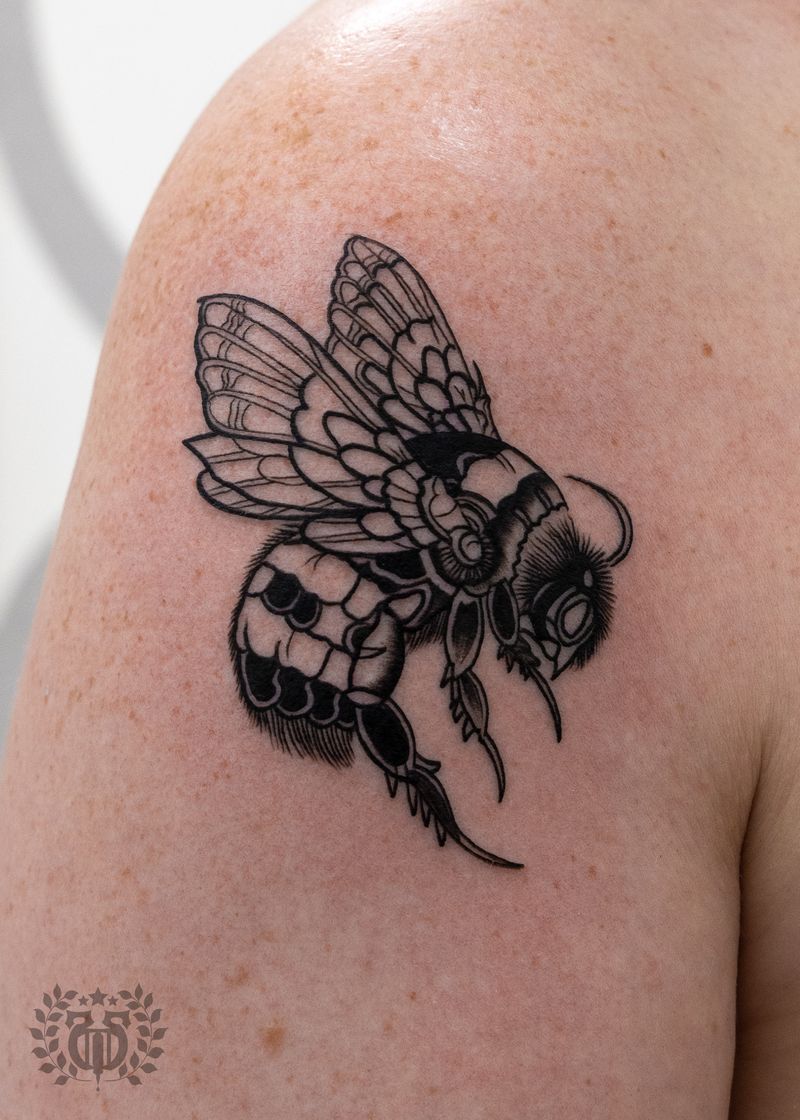
Moths, butterflies, ravens, and hummingbirds combined with foliage give you both dark structure (wings, bodies) and soft organic filler in one design. The symmetry of wings can be centered over a focal point of old ink, while leaves and petals soften the surrounding area.
Abstract and Brushstroke Blackwork
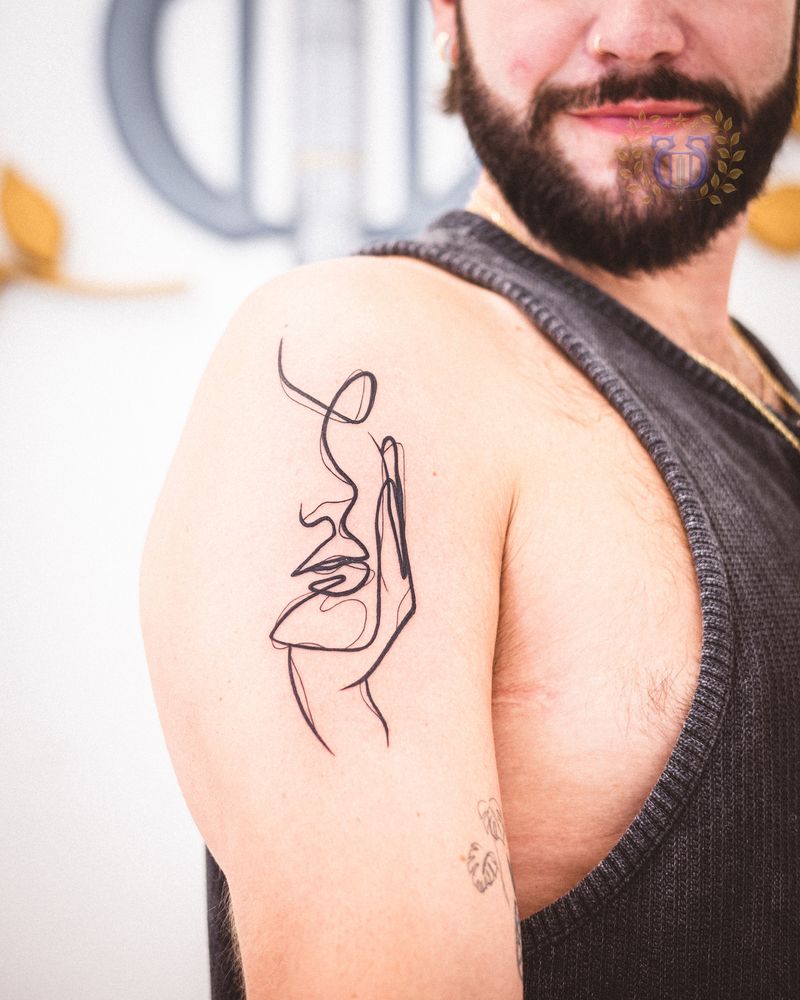
For the design-forward client, abstract black shapes, brushstroke marks, and negative-space compositions can cover old ink while reading as intentional modern art. This direction leans heavily on the artist's eye, but it's powerful for awkwardly placed or oddly shaped old tattoos that resist traditional imagery.
Setting Honest Expectations
A good cover-up should look like a great tattoo first and a cover-up never. But a few truths keep the process smooth:
- Plan for darker and bigger. If you're attached to pastel colors or a tiny design, a cover-up may not be the right tool — laser removal or a laser-then-cover plan might serve you better.
- Some old ink shows in certain light. Even excellent cover-ups can reveal a faint ghost of the original under harsh, direct light. A skilled artist minimizes this; honesty about it up front is the sign of a good one.
- Color choices are constrained. The old tattoo's color influences what new colors will read true. Greens over red, for instance, behave differently than over black.
- Healing matters more than usual. Cover-ups pack a lot of ink into the skin, so follow aftercare closely and expect a longer settling period before the piece looks its final best.
What to Bring to a Cover-Up Consult
The consult is where a cover-up is won or lost, and you can make it dramatically more productive by arriving prepared:
- Clear photos in good, natural light — and ideally the actual tattoo in person, so the artist can read its true darkness and saturation.
- The story. How old is it, was it ever touched up, has it faded, and have you had any laser before? It all changes the plan.
- Reference images of styles and subjects you love, plus any colors or themes you want to avoid.
- An open mind on size and placement. The more flexible you can be, the more options your artist has to make the old ink truly disappear.
If you're still gathering inspiration, browse our broader collection of tattoo ideas and see the range of tattoos our artists create — it's a good way to spot the styles that speak to you before you walk in. When you're ready, the next step is simple and low-pressure: bring us the old piece and the story behind it, and we'll tell you honestly what's possible. Book a cover-up consultation at Apollo in Santa Monica and let's design something you'll be glad lives on your skin.
Cover-up tattoo questions we hear at the consultation table
Can any tattoo be covered up?
Most can, but not all in a single session. Very dark, heavily saturated, or large old tattoos may need a few laser-lightening sessions first to give the artist enough room to design a clean, attractive cover-up rather than just a darker patch.
Does a cover-up have to be bigger than the original tattoo?
Almost always, yes. A cover-up needs extra room to break up the old tattoo's recognizable shapes using flow, negative space, and strategic dark areas. Expect the new design to be at least somewhat larger than the original.
Will the old tattoo still show through?
A well-executed cover-up hides the old ink under normal conditions, though a faint ghost can sometimes appear in harsh, direct light. Laser-lightening first and choosing the right design dramatically reduce how much the original shows.
Do I need laser removal before a cover-up?
Not always. Many cover-ups are done in one design with no laser. But if your old tattoo is very dark or you want delicate colors or a soft style, a few laser sessions to lighten it first will give you a much better final result.
What colors work best for covering old tattoos?
Darker, more saturated colors and solid blacks cover most reliably. Light and pastel colors, including watercolor styles, generally only work over already-faded ink, which is why lightening first expands your color options.
How long does a cover-up tattoo take?
It depends on size and complexity. Small cover-ups may be a single session, while sleeves or detailed realism pieces often need multiple appointments. Your artist will map out a realistic timeline during the consultation.
How should I care for a cover-up while it heals?
Follow your artist's aftercare instructions closely, since cover-ups pack more ink into the skin and can take a bit longer to settle. Keep it clean, moisturized, and out of direct sun, and avoid picking as it heals.
What should I bring to my cover-up consultation?
Clear photos in natural light (or the actual tattoo in person), the history of the piece including any past laser work, reference images of styles you like, and an open mind about size and placement.