Tattoo Ideas
Bicep Tattoo Ideas
Train hard and the canvas changes shape underneath the tattoo. That is the bicep's one real complication, and it is why the inner-versus-outer decision matters more here than the drawing does. What holds up on a curved, high-movement muscle, how a bicep piece behaves as the anchor for a future sleeve, and what we would talk you out of.
Book a consultationWhy the Bicep Ages Better Than Most Placements
Three things make skin hold ink well over decades: low friction, low sun exposure, and stable thickness. The bicep scores well on all three. It spends most of its life under a sleeve, it does not rub against waistbands or watch straps, and the dermis there is thicker and more consistent than the skin on hands, feet, or ribs.
What that means in practice: a bicep piece done at a reasonable scale with solid line weight will still read cleanly at fifteen or twenty years. Compare that to the same design on the side of a finger, which may need touch-ups within a year. If you are choosing between placements for something you want to keep forever, the bicep is a genuinely good answer, not just a default one.
Inner Versus Outer Bicep
Outer bicep is the flat, slightly convex panel most people picture. It sits at the natural angle of view when your arm hangs, so it reads well in daily life and in photos. The skin is tougher, the session is comfortable for most people, and it takes detail readily. This is where we put the anchor piece of most sleeves.
Inner bicep is a different animal. The skin is thinner, there are more nerve endings, and it sits close to the brachial nerve bundle. It hurts more, especially in the last third of a session. The upside is that it is almost never sun-exposed, so pigment stays saturated. The downside is that thin, soft skin spreads fine linework faster than firm skin does. Delicate single-needle script that looks perfect on the inner bicep at three months can soften noticeably by year five. If you want inner bicep lettering, we push for slightly heavier line weight and more space between letterforms than the reference photo usually shows.
Bicep Tattoo Ideas That Actually Suit the Shape
The Bicep Band
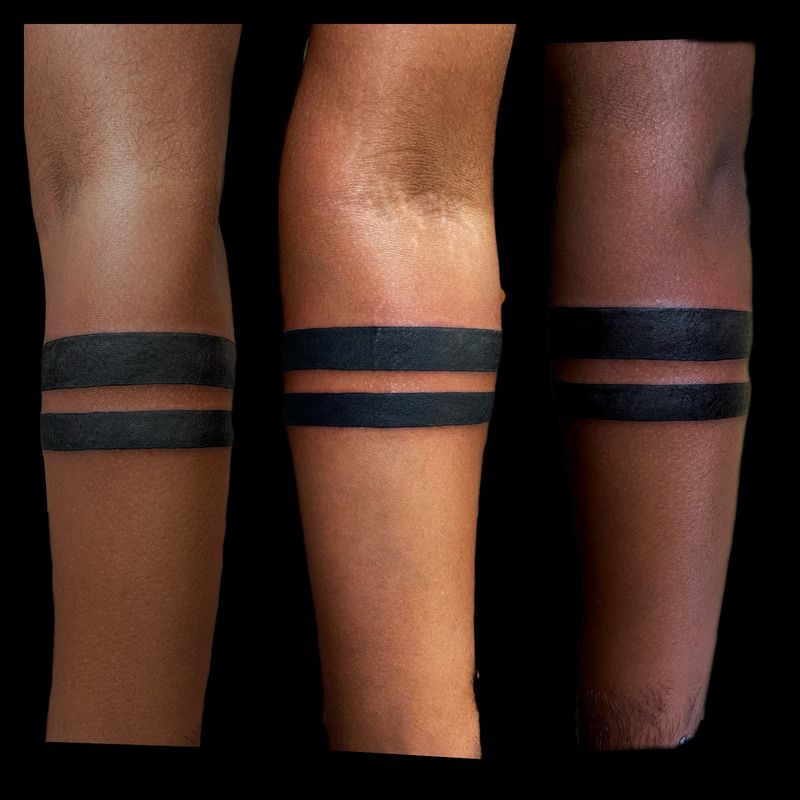
A band that wraps the upper arm is the most requested bicep design we see, and the one most often executed badly. The problem is geometry: your arm is a cone, not a cylinder. A band drawn as a straight horizontal line will look like it is sloping downward from the front and upward from the back. Good bands are drawn on the body with a slight angle correction so they read level from the natural viewing angle.
Solid blackwork bands are the most durable option and hold up for decades with essentially no maintenance. Ornamental and geometric bands with negative space are more interesting to look at but need enough gap between elements that the pattern does not close up as ink settles. Rule of thumb we use: negative space gaps in a band should be at least as wide as the lines around them.
Vertical Panels and Flowing Subjects
The bicep is taller than it is wide when the arm hangs, so subjects with vertical flow sit naturally. Snakes, koi, florals on a stem, feathers, waves, and standing figures all work. Anything with a strong horizontal axis, like a landscape or a wide banner, will need to wrap or be scaled down enough to lose detail. When someone brings us a wide reference, we usually redraw it on a diagonal so it climbs the muscle instead of fighting it.
Blackwork, Illustrative, and Fine Line
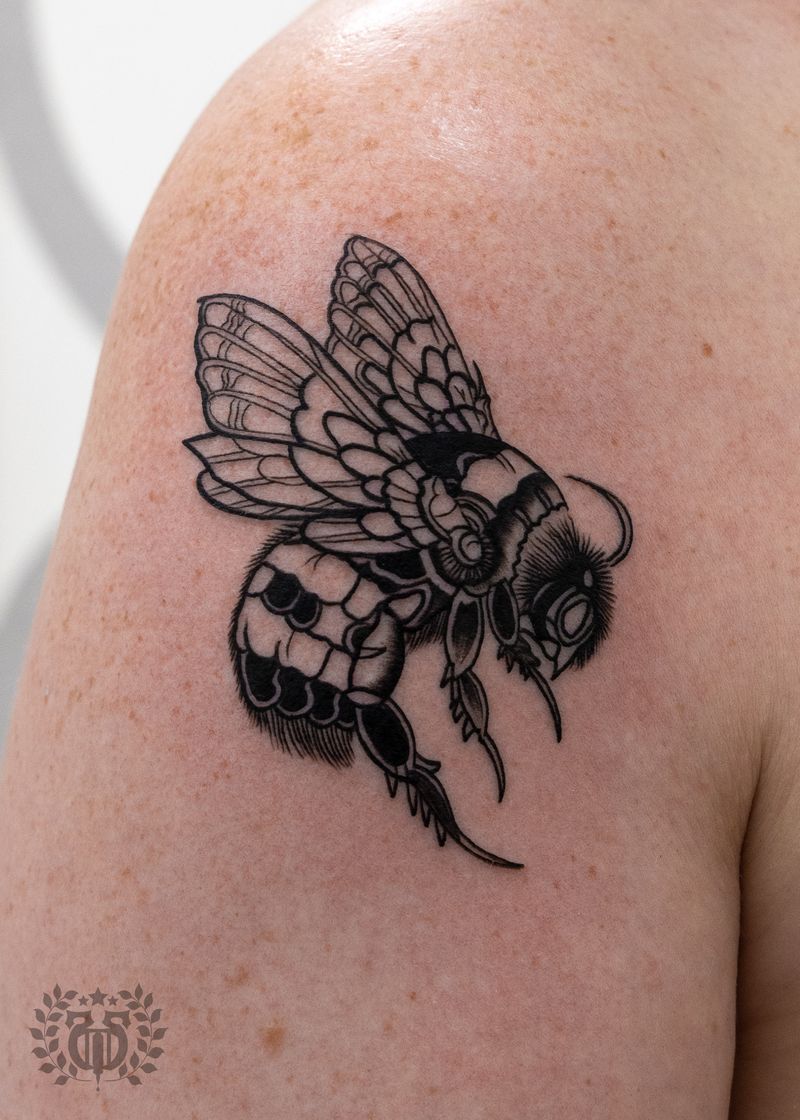
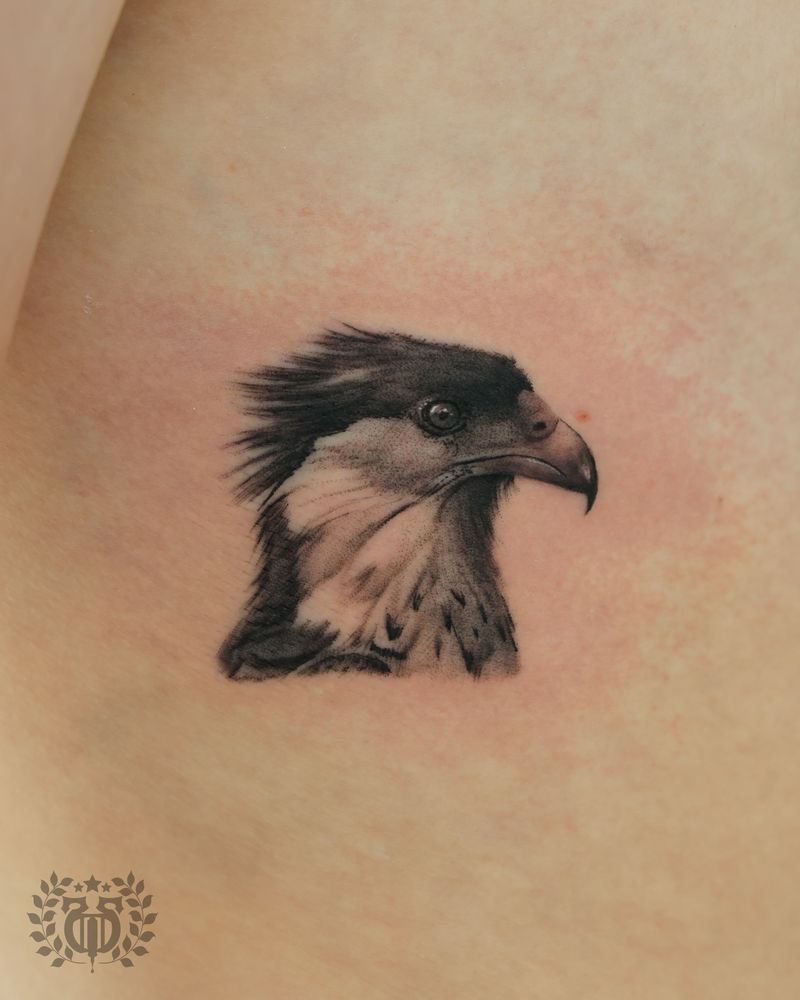
Blackwork and bold illustrative styles are the safest bets for a bicep because they use line weight to carry the design. Neo-traditional and American traditional pieces sit particularly well here since the bold outline gives the tattoo structure as it ages. Fine line and micro-realism are possible, but on the outer bicep we would rather size the piece up a little and keep the internal detail readable. If you want a small, delicate piece and are set on it, the outer bicep near the deltoid is a better bet than the inner arm.
Cover-Ups and Reworks
A lot of first tattoos live on the bicep, which means a lot of cover-up conversations happen here too. The good news is that the space and skin quality give an artist real options. Faded old work can often be absorbed into a larger blackwork or floral composition without any laser at all. Dark, saturated, or heavily lined originals usually need two or three laser sessions first. We will tell you honestly which category yours falls into at consultation rather than promising a cover-up that would end up as a dark blob.
Size, Sessions, and Muscle Change
A typical outer bicep panel runs about four to seven inches tall and gets finished in one sitting of three to five hours. A full bicep wrap or a piece that continues into the shoulder is usually two sessions. Bands vary widely: a simple solid band can be under two hours, while an ornamental wrap with detail work is a half-day.
Training matters more than people expect. If you are actively bulking or plan to gain significant size, the belly of the muscle is where stretch happens. Designs with a lot of tight parallel linework across the middle of the muscle will distort first. Compositions with organic shapes and varied spacing handle growth gracefully. Significant weight loss has a similar effect in reverse. This does not mean waiting until your body is finished changing, which never actually happens. It means choosing a design whose structure tolerates a few millimeters of movement.
Planning a Bicep Piece as Part of a Sleeve
Even if you are certain you only want one tattoo, we will ask where a second one would go. The bicep is the structural center of a half sleeve, and a piece placed too high, too low, or too centered can make future work awkward to connect. Leaving a little breathing room at the deltoid and near the elbow ditch costs you nothing now and saves a compromise later. Browse more tattoo ideas if you want to see how single pieces grow into full arms, or look through our tattoos portfolio for finished sleeve work.
Healing a Bicep Tattoo
Bicep heals are among the easiest. Sleep position rarely irritates it, clothing is loose over the upper arm, and the area does not flex constantly the way an elbow or wrist does. Two honest warnings, though. First, skip heavy pressing and pulling for about a week. Bench, overhead press, and pull-ups stretch the bicep and shoulder skin and can pull at a fresh tattoo, and gym equipment is not clean. Second, Santa Monica sun is deceptive. Marine layer or not, UV is doing damage. Once healed, sunscreen on the arm is the single biggest factor in whether your black stays black at year ten.
Talk It Through First
We would rather spend twenty minutes with your arm in front of us than guess from a text thread. Bring your references, your training plans, and any existing work. We will map placement on your actual arm, tell you honestly whether the design needs to grow or simplify, and quote real session time. Book a consultation and we will start there.
Because the outer upper arm carries the primary focal subject in most sleeves, a bicep piece is the single decision most likely to shape a future arm. Our sleeve tattoo ideas page explains how that panel relates to the rest.
Things worth knowing before your bicep tattoo
Does a bicep tattoo hurt?
The outer bicep is one of the more comfortable placements on the body, and most people describe it as very manageable for a three to four hour session. The inner bicep is noticeably sharper because the skin is thin and there are more nerve endings. If it is your first tattoo, the outer bicep is a genuinely easy place to start.
Will my bicep tattoo stretch if I gain muscle?
Some distortion is possible, but it is usually far less dramatic than people fear. Stretch happens at the belly of the muscle, so tight parallel linework across the center is the most vulnerable. Designs with organic shapes and varied spacing absorb growth without looking wrong.
How long does a bicep tattoo take?
A standard outer bicep panel is typically three to five hours in one sitting. A full wrap or a piece that connects into the shoulder is usually split across two sessions. A simple solid band can be done in under two hours.
Why do armband tattoos sometimes look crooked?
Because the arm is a cone, not a cylinder. A band drawn as a perfectly level line will appear to slope when viewed from the front or the back. It needs to be drawn directly on the body with an angle correction so it reads straight from a natural viewing angle.
Can I get fine line work on my inner bicep?
You can, but go in knowing the trade-off. Thin, soft inner arm skin spreads delicate lines faster than firm skin does, so very fine script can soften over five to ten years. We recommend slightly heavier line weight and more space between elements than most reference photos show.
Is the bicep a good spot to start a sleeve?
It is the best spot, in our opinion. The bicep is the structural center of a half sleeve and the most comfortable large area to work on. Just leave a little breathing room near the deltoid and elbow ditch so future pieces can connect cleanly.
When can I go back to the gym after a bicep tattoo?
Give it about a week before heavy pressing, pulling, or anything that stretches the upper arm. Light lower body work is usually fine sooner. The bigger concern is hygiene, since shared equipment and sweat are a real infection risk on an open tattoo.
Do you cover up old bicep tattoos?
Often, yes. Faded or lightly lined work can frequently be absorbed into a larger blackwork or illustrative composition with no laser at all. Dark and heavily saturated originals usually need a few laser sessions first, and we will tell you straight which category yours is in.