Lore & Meanings
Butterfly Tattoo Meaning
Ancient Greek used a single word, psyche, for both the soul and the butterfly. That double meaning sits underneath every modern reading of this tattoo, and it is why an image people dismiss as decorative keeps turning up on memorial pieces, on recovery pieces, and on first tattoos marking a hard line between before and after.
Book a consultationAsk ten people what a butterfly tattoo means and you'll get ten answers, most of them right. That's the point of the symbol. A butterfly starts life as a caterpillar, dissolves almost completely inside the chrysalis, and rebuilds itself into something that flies. Few images in nature carry that much built-in narrative, which is exactly why it has stayed in heavy rotation across every tattoo style for decades.
The core butterfly tattoo meaning: transformation and rebirth
At its center, the butterfly tattoo meaning is transformation. The metamorphosis from larva to winged adult is the cleanest metaphor we have for personal change, so people reach for it after the milestones that split a life into "before" and "after."
The specifics vary, but the throughline is consistent:
- Rebirth and new beginnings — leaving a marriage, a city, an addiction, or an old version of yourself.
- Freedom — the release that follows escaping something heavy. The open wings do a lot of work here.
- Hope after hardship — recovery from illness, grief, or a stretch that nearly broke you.
- The soul — an ancient reading we'll get to below, and the reason so many memorial pieces use a butterfly.
None of this is filler symbolism invented for tattoo flash. It's old, and it shows up across unrelated cultures, which is part of why the image feels universal rather than trendy.
Cultural and regional readings
The butterfly means slightly different things depending on which tradition you're drawing from, and naming the one you want helps your artist build a piece that reads correctly.
Greek "psyche": the soul on wings
In ancient Greek, the same word — psyche — meant both "butterfly" and "soul." Psyche, the mortal woman loved by Eros, is depicted with butterfly wings. If you want a butterfly that means the soul or the spirit specifically, this is the lineage you're tapping, and it pairs naturally with fine-line or classical-statue styling.
Japanese symbolism
In Japanese culture the butterfly (chō) carries layered meaning: young womanhood, marital joy when two appear together, and the souls of the living and the dead. That last reading makes it a strong fit inside Japanese-style (irezumi) work alongside peonies, cherry blossoms, or koi.
The monarch: migration and memory
The monarch's multi-generational migration across North America has turned it into a symbol of journey, perseverance, and remembrance. In several traditions monarchs are tied to returning souls, which is why a monarch frequently anchors memorial tattoos.
The blue morpho
That electric, almost unreal blue isn't pigment — it's light refracting off the wing's microstructure. Symbolically the blue morpho leans toward dreams, the surreal, and transformation that feels almost magical. It's a gift to a color-saturated watercolor or realism piece.
Memorial butterflies
Across many of these traditions the butterfly stands in for a person who has passed. People bring a loved one's birth month, a meaningful color, or a date worked subtly into the wings. If your piece is memorial, tell your artist up front — it changes how we handle negative space and longevity.
Two things people attach to the butterfly that are not ancient
Both of these come up in consultations most months, and neither is quite what people think.
The butterfly effect. This is meteorology. Edward Lorenz, working on weather prediction at MIT, gave a talk to the American Association for the Advancement of Science in 1972 under the title Predictability: Does the Flap of a Butterfly's Wings in Brazil Set Off a Tornado in Texas? The title was suggested by a colleague, Philip Merilees. Lorenz's argument was pessimistic: differences too small to measure make long-range forecasting impossible. People wear it as the optimistic inverse, that one small good act ripples outward forever. That's a fine reason to get the piece. It just isn't what the phrase originally claimed, and it dates to the 1970s, not to antiquity.
The total-dissolution story. The version everyone repeats is that the caterpillar liquefies into nothing and rebuilds from scratch. The real process is stranger, and we think better. Much of the larval body does break down inside the chrysalis, but clusters of cells called imaginal discs are already present in the caterpillar, carrying the future wings and legs. Laboratory work with moths has shown that an avoidance learned in the larval stage can survive into the adult insect. So the honest metaphor isn't erasure and replacement. It's a violent reorganisation around something that was there the whole time.
If you're getting this for a stretch you came out of changed, that second version is the one to hold onto. It also argues for showing the chrysalis, or the caterpillar, somewhere in the composition, which almost nobody does.
What butterfly tattoo colors mean
Color shifts the message as much as species does. These are the common readings, useful as a starting point rather than a rulebook:
- Black / blackwork — elegance, mystery, mourning, or simply a graphic choice that ages well. Black butterflies don't have to be somber; in blackwork they read bold and architectural.
- Blue — calm, hope, the spiritual, and (via the morpho) dreams. One of the most requested directions.
- Purple — spirituality, royalty, and transformation; a frequent memorial and survivor choice.
- Red — love, passion, and in some readings a deceased loved one or a strong life force.
Worth knowing: bright colors are gorgeous on day one but ask more of you over time. Reds and purples can shift faster than black, and they show sun damage sooner. That's not a reason to avoid them — it's a reason to commit to sunscreen.
Best tattoo styles for butterflies
The same insect looks like five different tattoos depending on the style. Here's how each direction behaves in practice.
- Fine-line — delicate, minimal, popular on the forearm or behind the ear. Stunning fresh, but the thinnest lines are the first to soften. Size it up slightly and avoid cramming detail into a tiny footprint.
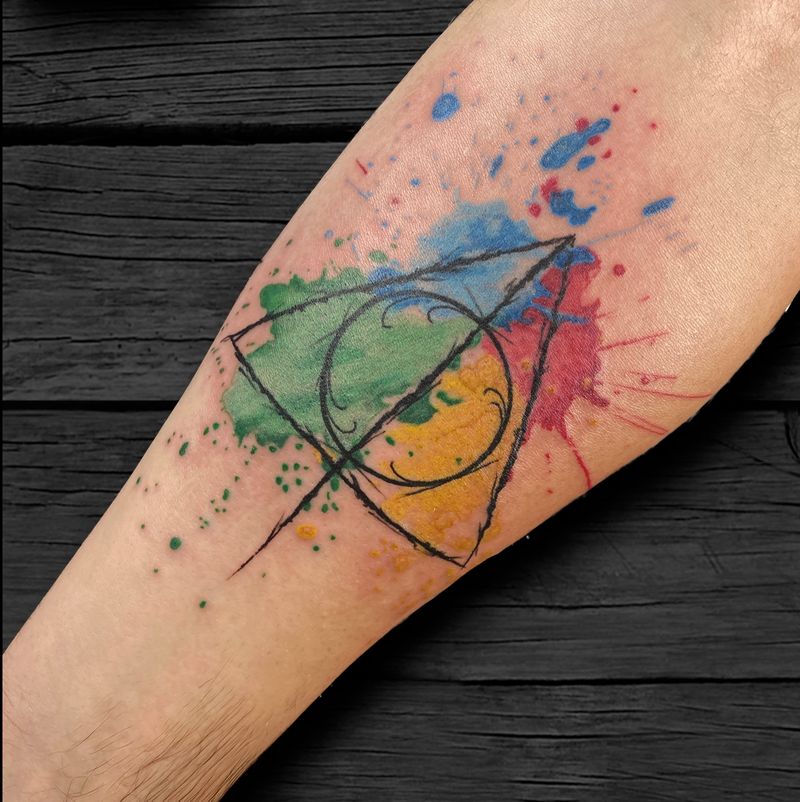
- Watercolor — splashes, drips, and bleeding color, beautiful for blue morphos and abstract pieces. Pair loose color with at least some structural linework so it doesn't blur into a smudge over the years.
- Realism / micro-realism — photographic wings with true depth. The most demanding style to execute and to maintain; it wants scale and an experienced hand.
- Blackwork — high contrast, no color to fade, ages exceptionally well. The most durable choice on this list.
- Neo-traditional — bold outlines, saturated color, decorative framing. A sweet spot: striking, full of personality, and built to last because the linework carries the design.
Placement, scale, and how delicate wings age
Placement is where romance meets biology. A butterfly can go almost anywhere, but each spot has tradeoffs.
- Shoulder — flattering canvas, follows the curve of the deltoid, easy to hide or show. Forgiving long-term.
- Spine — dramatic and symmetrical, and the centerline suits a butterfly perfectly. Expect more discomfort over bone, and budget more than one session for a large piece.
- Ribs — elegant and elongating, also one of the more painful placements and prone to stretching with weight change.
- Ankle — discreet and classic, but lower-leg tattoos see more friction from shoes and socks, so fine detail needs care.
- Behind the ear — intimate and small, but the skin is thin and the area sees sun; keep it simple and plan on a touch-up someday.
- Hand — bold and visible, and the fastest-fading location on the body. Hands take heavy wear and need bolder lines plus realistic touch-up expectations.
The honest tradeoff is detail versus scale. Butterfly wings are intricate, and intricate work needs room. Pack realistic veining and gradient color into a two-inch tattoo and the lines will blur together as they settle, because tattoos spread slightly under the skin over years. A larger piece holds detail; a smaller piece should lean on cleaner shapes and a little more open space. Black and bold linework outlast fine pastel detail every time — so if longevity is the priority, design accordingly.
What to bring to your consultation
A good consult turns a vague idea into a piece that's yours. Come with a few things:
- The meaning you want it to carry — transformation, memorial, freedom — so the species, color, and style line up with the message.
- Reference images you like (and ones you don't), which tell us more than words.
- Placement and rough size, even approximate.
- Hidden details — a date, initials, a birth-month color — that you'd like woven in.
- Your lifestyle, honestly: sun exposure, job, and how visible you want it. That shapes both placement and how we build for the long haul.
If you're weighing a butterfly, the most useful next step is a conversation with an artist who can match the symbolism to a design that ages well on your body. Book a consultation at Apollo in Santa Monica and we'll talk through species, style, color, and placement before any needle touches skin. You can also browse our tattoos and dig deeper into meanings & symbolism to sharpen your idea first.
Butterfly tattoo questions we hear at the consultation table
What does a butterfly tattoo mean?
At its core it means transformation, rebirth, and freedom — change after a major life chapter. Depending on culture and color it can also represent the soul, hope after hardship, or a loved one who has passed.
What does a blue butterfly tattoo mean?
Blue butterflies lean toward calm, hope, and the spiritual, and the blue morpho specifically evokes dreams and an almost magical transformation. Blue is one of the most requested butterfly directions.
Are butterfly tattoos a memorial symbol?
Often, yes. Because the butterfly has long symbolized the soul across Greek, Japanese, and other traditions, it's a common memorial choice. People work in a birth month, a date, or a meaningful color to honor someone specific.
Do small, detailed butterfly tattoos age well?
Fine detail in a tiny butterfly tends to blur as the ink settles under the skin over the years. For longevity, either size the piece up so the detail has room, or lean on cleaner shapes and bolder linework rather than dense veining.
What's the best style for a butterfly tattoo?
It depends on your goal. Fine-line and watercolor are delicate and beautiful but need care; blackwork and neo-traditional age the best thanks to strong linework; realism is striking but demands scale and an experienced artist.
Where's the best placement for a butterfly tattoo?
The shoulder, spine, and ribs suit the symmetry of wings, the ankle and behind-the-ear work for discreet pieces, and the hand is the boldest but fastest-fading. Each spot trades visibility and drama against pain and longevity.
Does butterfly tattoo color affect the meaning?
Yes. Black reads elegant or graphic, blue suggests hope and dreams, purple signals spirituality and transformation, and red points to love or remembrance. Brighter colors also tend to need more sun protection to stay vivid.
How long does a butterfly tattoo take?
A small fine-line butterfly can be done in under an hour, while a large detailed back or rib piece may need multiple sessions. Your artist will give you a realistic estimate at the consultation based on size, style, and placement.