Tissue depth is what decides this, not the photo you brought in. Almost every genital piercing depends on a specific fold or band of tissue being present, deep enough to hold a bar and mobile in the right direction. Some people have plenty of it. Some have very little, and no amount of wanting a particular placement changes what's actually there. So the first appointment is a look and a conversation, not a needle.
That consultation is $100, happens behind a shut door with one piercer, and takes about fifteen minutes. We'll tell you which placements your anatomy supports, which ones we'd decline and why, what the jewelry has to be, and what the first fortnight genuinely feels like. Fees are quoted once we know the placement. You can book afterwards, or go away and think about it — plenty of people do exactly that.
Book Your Genital Piercing 5000+ clients
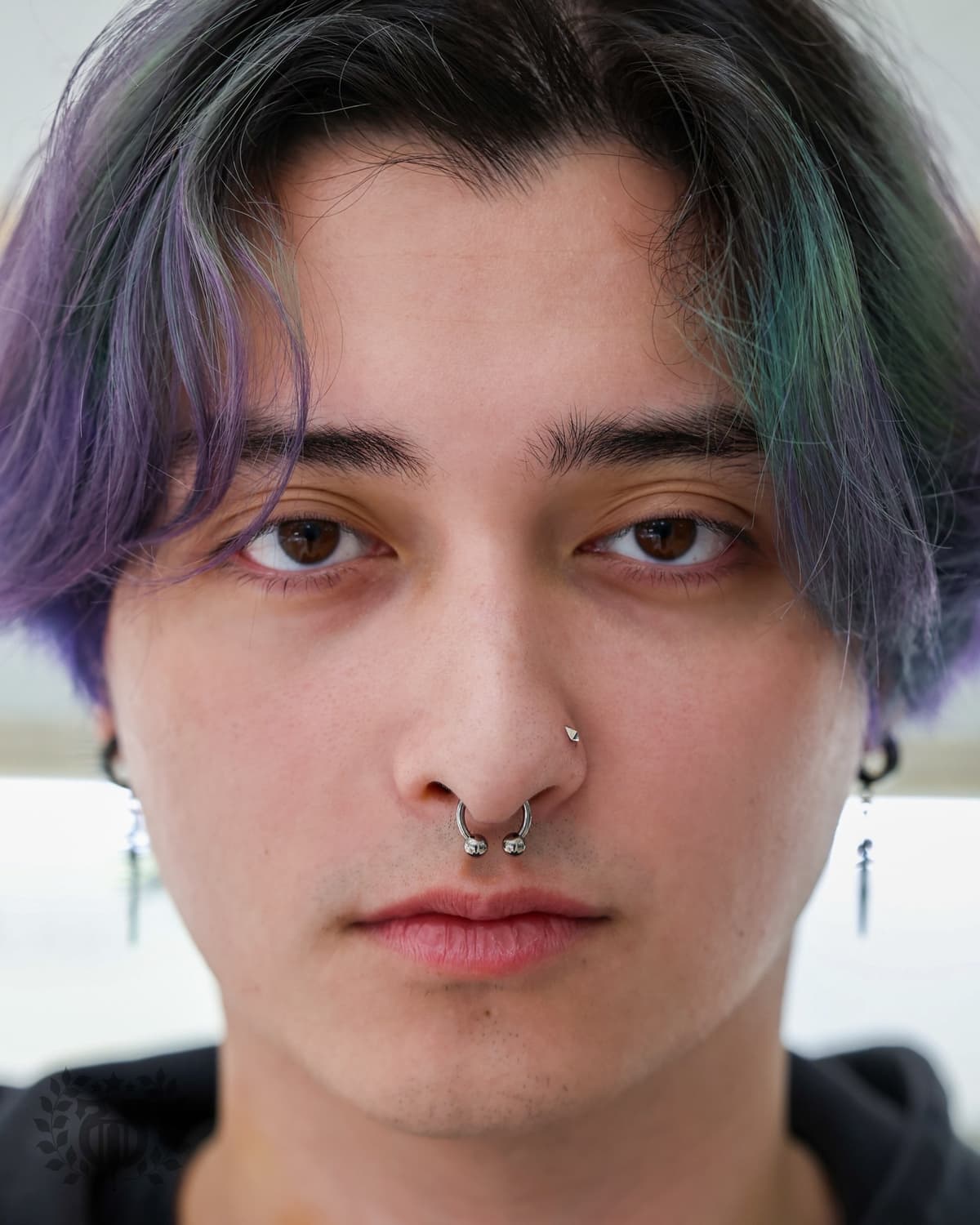
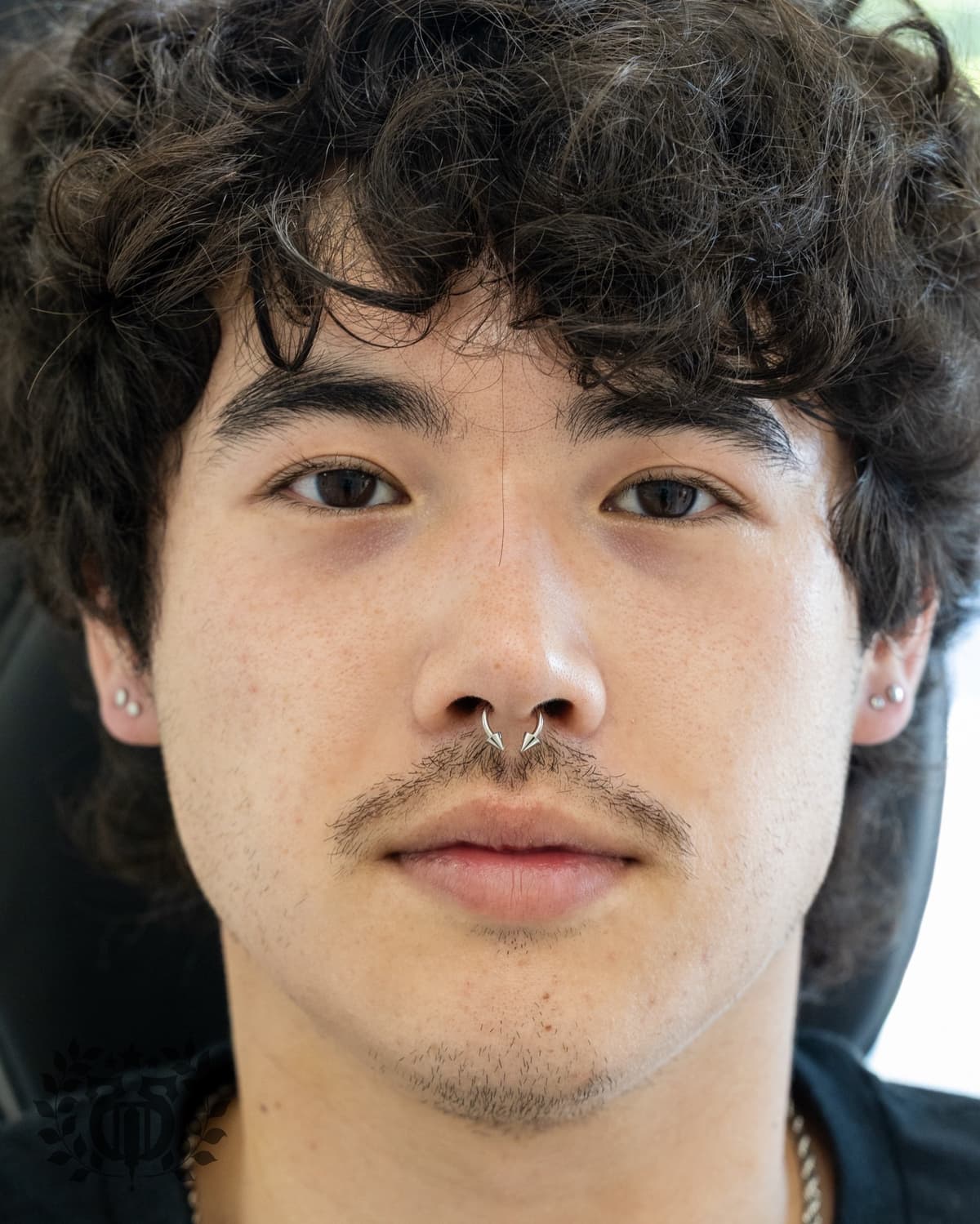
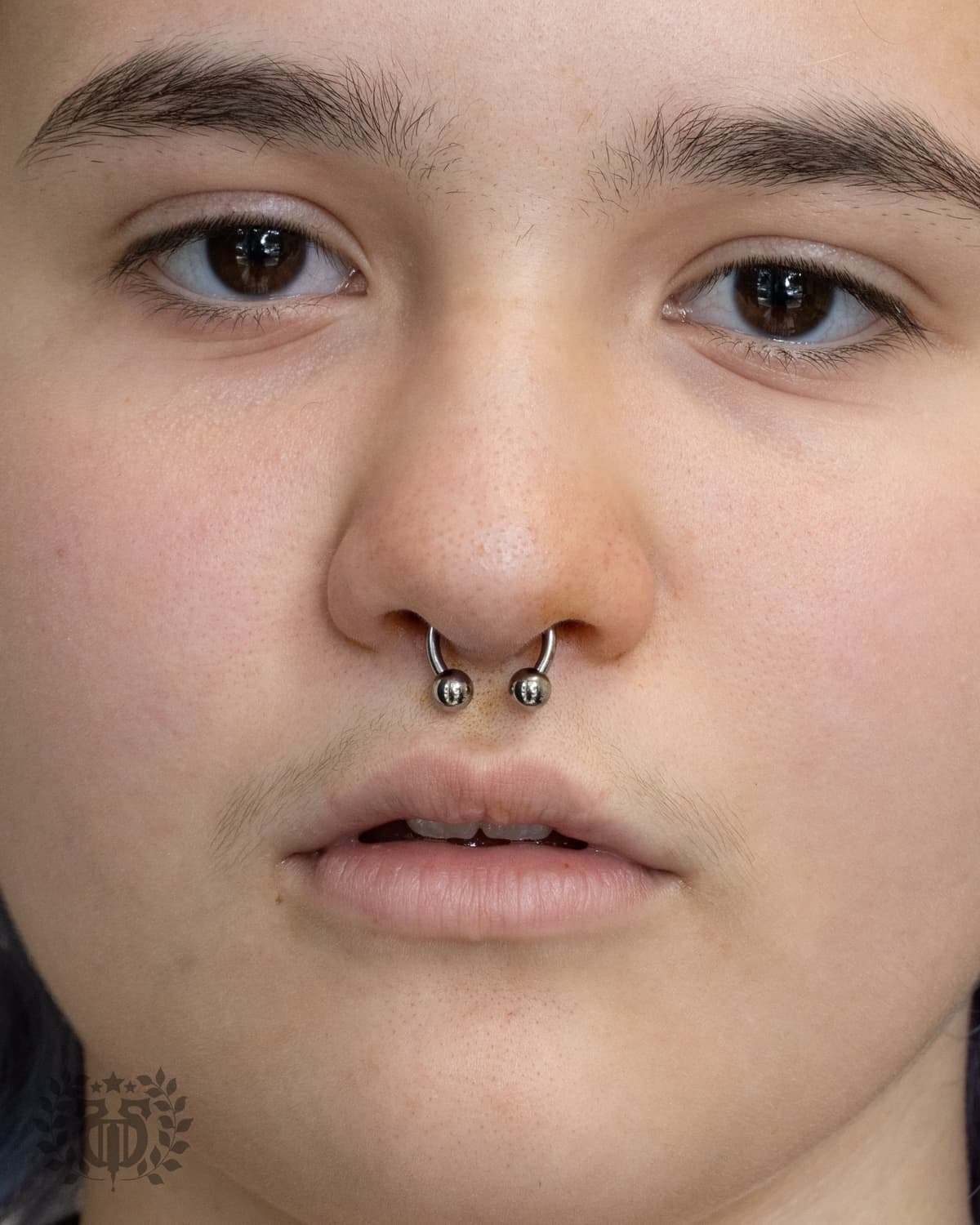
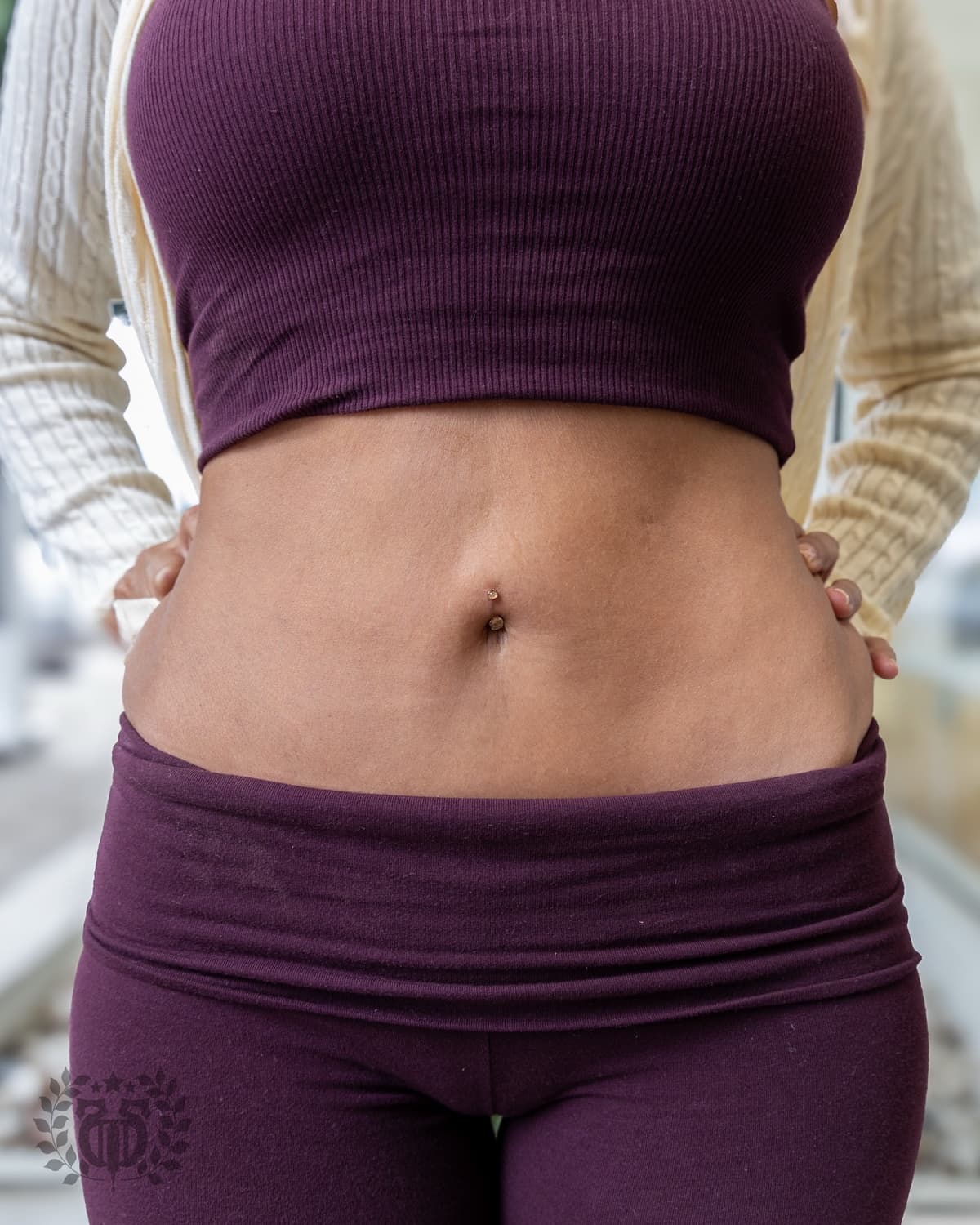
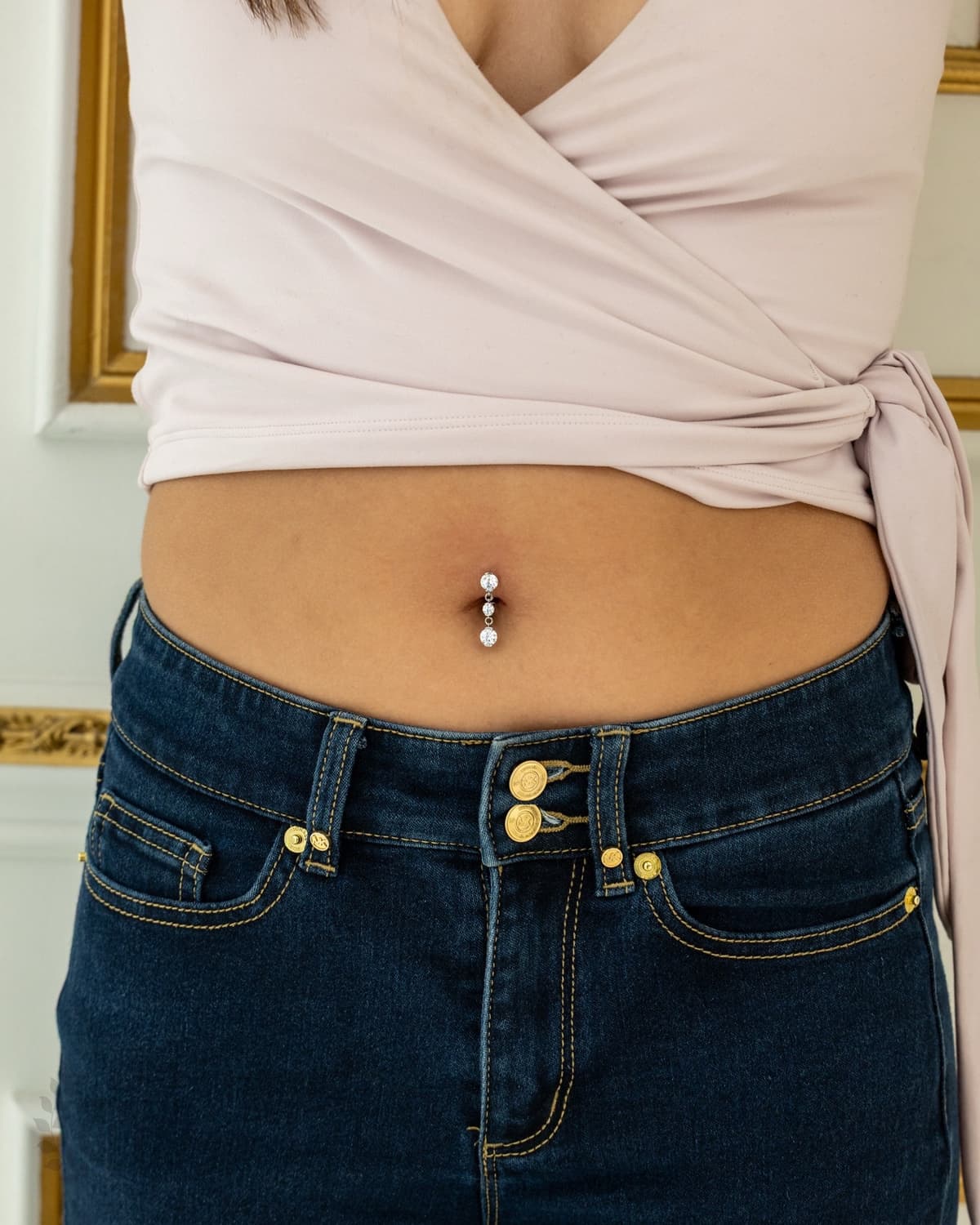
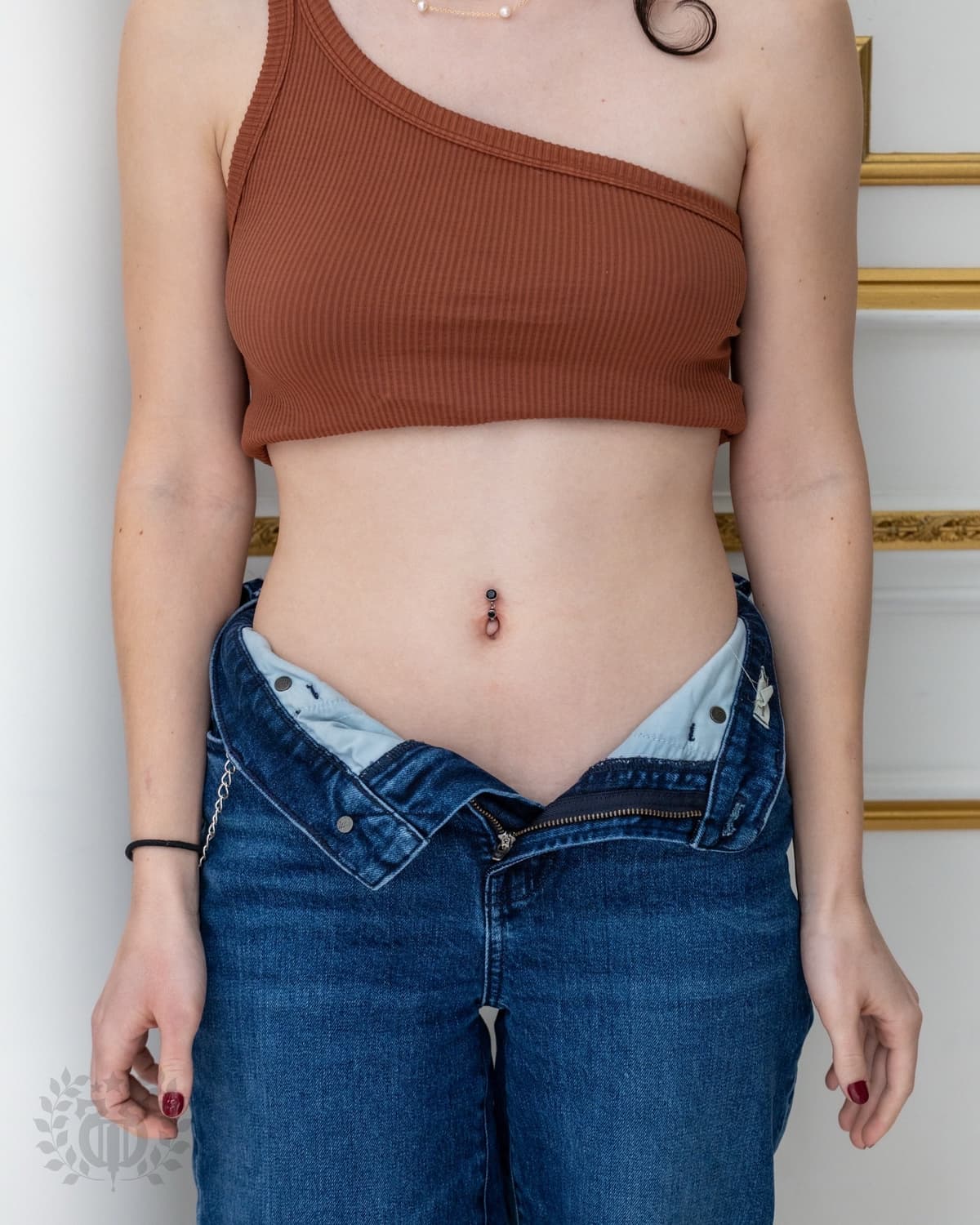
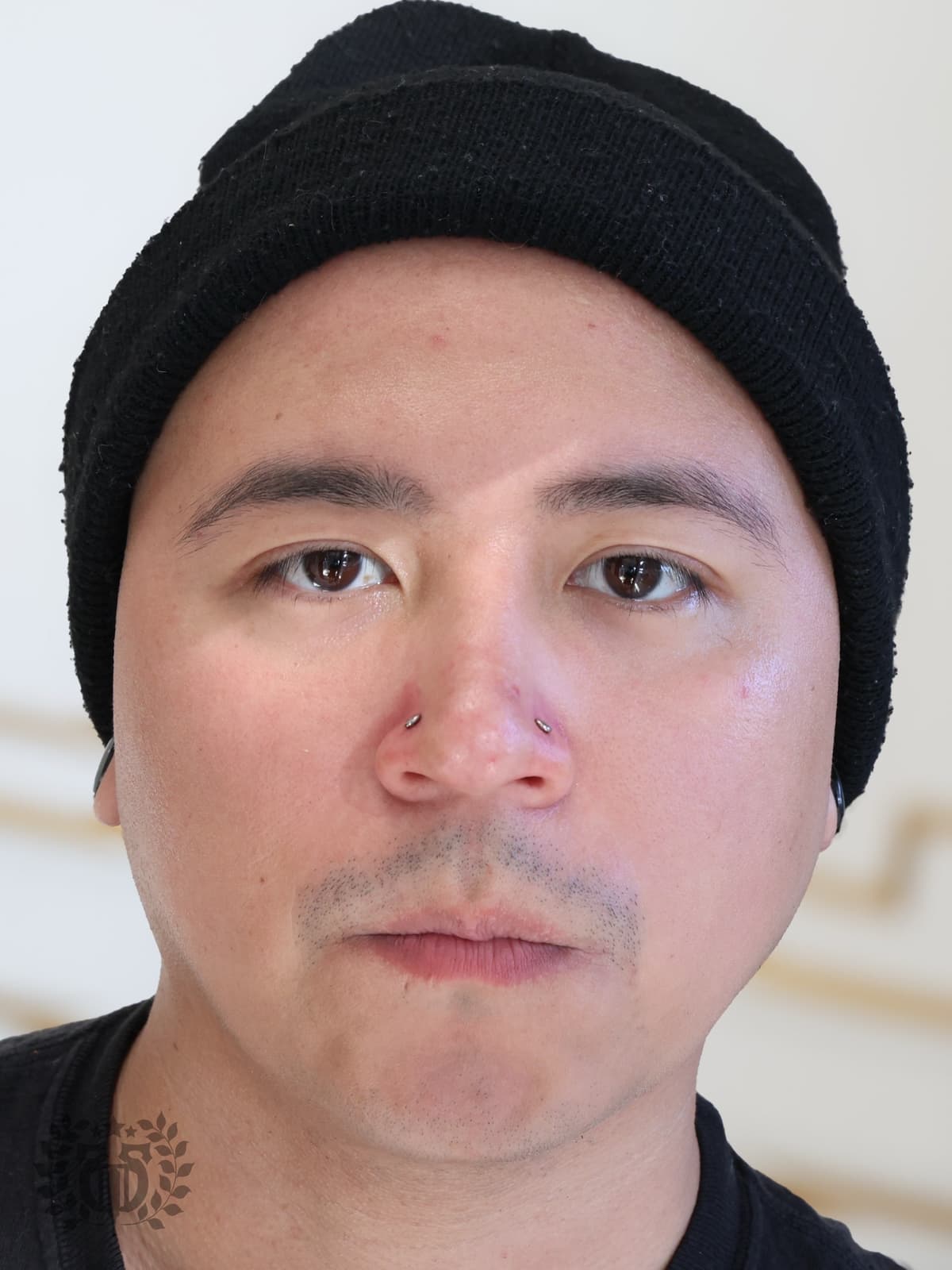
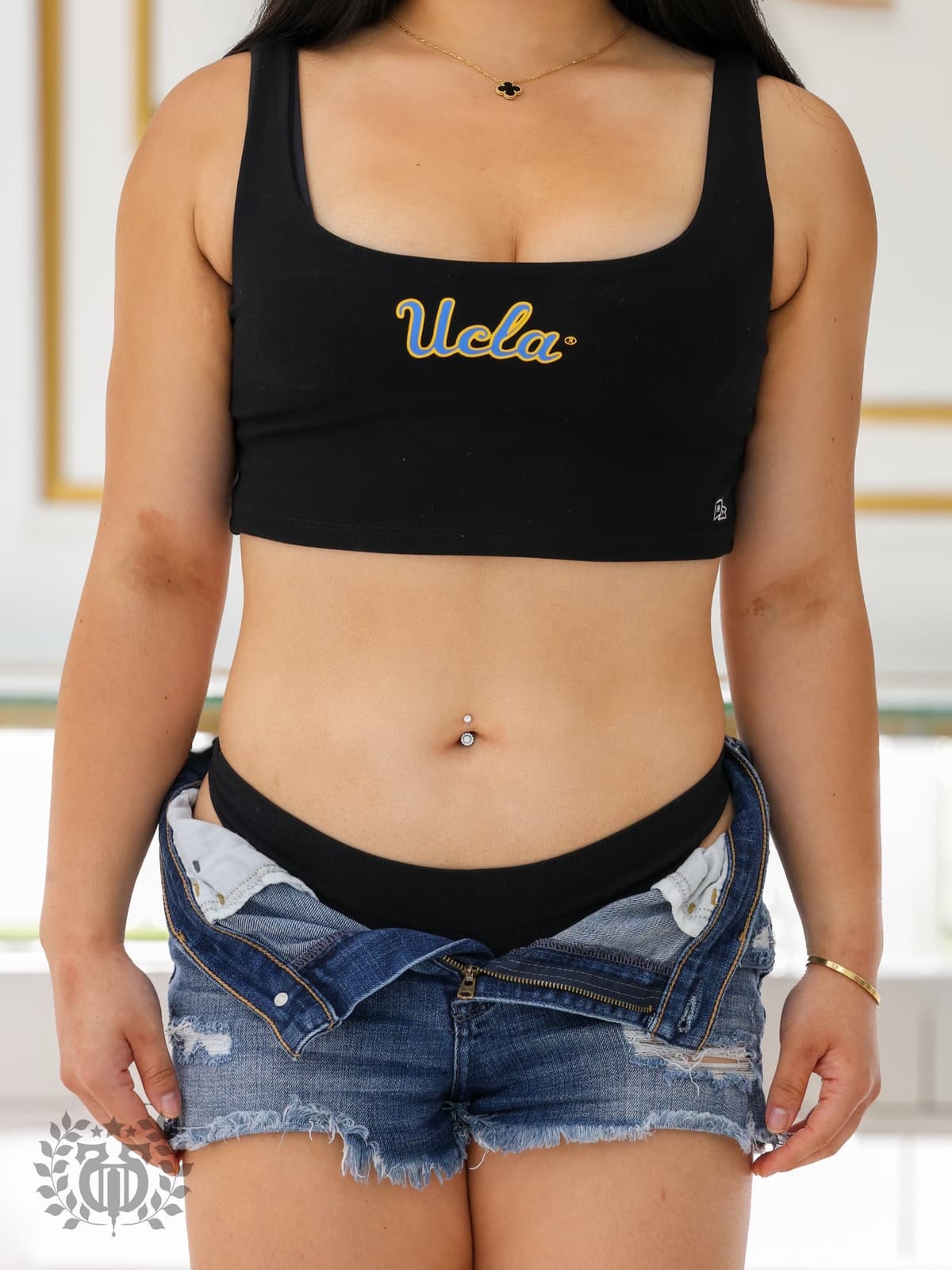
Six things a piercer is looking at before anyone talks about which piercing you're having
Ear piercings are mostly a question of taste. You point at a spot on the rim, the cartilage there is broadly the same thickness on everybody, and the piercer's job is to make it look good. Genital work does not run that way. Here, the tissue either supports a given placement or it doesn't, and that is settled before aesthetics enter the conversation at all.
Take the hood check that decides a VCH. The hood has to lift far enough away from what's underneath for a bar to pass through cleanly and sit without pressing. On a lot of people it does, easily. On some it doesn't, and pushing ahead anyway gives you a piercing that's uncomfortable to wear and slow to heal. That check takes about twenty seconds and it is not a matter of opinion.
The same logic runs through everything else. A frenum needs enough depth of tissue that a bar can be set into the body of it rather than skating just under the surface. A Christina is a surface piercing crossing a curve, so the real question isn't whether it can be done but how long it'll survive on your particular anatomy and how you'd feel about losing it. A Prince Albert is decided by where the urethra sits relative to the tissue beneath it.
Then there's the half of the assessment that has nothing to do with anatomy. What do you wear. Do you cycle, lift, swim, sit still for nine hours. Are you in a job where you're on your feet. A placement that would heal beautifully on somebody with a desk job and loose cotton can be a running battle for somebody in tight synthetics on a bike five days a week. None of that shows up in a photo on a screen, and all of it changes what we'd recommend.
Here's the part people don't expect: we say no fairly often, and we say "not that one, but this one" more often still. Neither is a brush-off. It's the only honest answer available once you've actually looked, and it's the reason this page keeps pointing you at a consultation instead of a booking button for a specific placement.
Most of these placements need a specific fold, hood or band of tissue with enough depth to hold a bar. Some people have plenty of it. Some have almost none, and no amount of wanting the piercing changes that.
Skin that slides over what's underneath heals differently from skin that's anchored. We pinch, lift and watch how the tissue behaves before deciding whether a bar can sit in it without being dragged.
A waistband, a cycling saddle, a nine-hour desk chair. Half of what decides whether a genital piercing settles is what presses on it for the other twenty-three hours of the day.
Some of these placements are read against a midline and some are not visible to anyone but you. We mark to the anatomy in front of us rather than to a diagram, and we hand you a mirror before anything opens.
Surface placements migrate. Urethral placements bleed for a fortnight. Ladders take multiple appointments. If the honest version of a placement doesn't fit your life right now, better to hear it before the needle.
Very often the thing that suits your anatomy is next door to the thing you searched for. We'll tell you which one and why, and you're free to disagree and think about it.

Apollo's Premium Jewelry Partner
Handmade in Los Angeles since 1996. Lifetime guarantee. Implant-grade gold, platinum, and titanium. Over 3,000 original designs in our case — ask your piercer for a tour.
See the BVLA story →Five placements that get grouped under one heading and have almost nothing in common with each other. Different tissue, different jewelry, wildly different healing.
A short bar passing vertically through the clitoral hood. It only works if the hood lifts away from what's underneath, which is the single check that decides candidacy. Of everything on this list it also heals the fastest.
Sits vertically where the outer labia meet. It's a surface piercing, so the body spends its time trying to push the bar back out. Longest heal here and the one most likely to be lost.
A straight bar through the tissue on the underside of the shaft. How deep the piercer sets it is the whole craft — too shallow and it works its way out, too deep and it's uncomfortable to wear.
Enters the urethra and exits underneath. Starts on a thicker gauge than anything else we do, and the first fortnight is genuinely messy in a way nobody warns people about.
Two quite different piercings sharing a name. Inner labia tissue is thin and mucosal and settles quickly. Outer labia is thicker skin that takes far longer and objects to friction from clothing.
Clear next step
Free, private, about fifteen minutes. You leave knowing what your anatomy supports and what it doesn't.
Recommended first step
Start with a private anatomy-first booking path for intimate piercing services.
Four placements, four completely different clocks. This is the table to read before you pick one.
| Piercing Type | Location | Initial Healing | Full Healing | Pain Level |
|---|---|---|---|---|
| Christina | Surface of pubic mound | 3-6 months | 6-12 months | 4-5/10 |
| VCH | Vertical clitoral hood | 4-6 weeks | 2-4 months | 4-5/10 |
| Prince Albert | Underside of glans | 4-6 weeks | 3-6 months | 5-6/10 |
| Frenum | Underside of shaft | 6-8 weeks | 3-4 months | 4-5/10 |
 5000+ clients
Fifteen minutes, one piercer, a shut door. Most of it is talking.
Before anything else. You're in a private room with one piercer, and the conversation starts fully clothed while we ask about your work, your clothing and what you've read.
Gloves on, a short assessment of the tissue, and that's it. We're checking depth, mobility and whether the placement you want is supported. Nothing is pierced at a consultation unless you ask.
Yes, no, or here's a different placement that would work. If we're saying no we tell you what we're seeing rather than hiding behind policy language.
Gauge and length are decided from your measurements, not pulled from a drawer afterwards. Implant-grade titanium, ASTM F136, opened in front of you.
You see the mark before a needle appears. Single-use sterile needle, autoclaved reusable tools, EPA-registered disinfectant on every surface between clients, and a studio licensed and inspected by LA County.
The honest version, so you know before you drive across town
We do hood piercings, both vertical and horizontal. Inner and outer labia. Christina, with the migration conversation held first. Frenum singles and frenum ladders built up over several sessions. Lorum. Prince Albert. Guiche. Those are the placements that come up week in, week out, and between them they cover almost everything people arrive asking for.
What gets declined is rarely a placement in the abstract — it's a placement on a particular person. A hood that doesn't lift enough to clear a bar. A frenum with so little depth that the bar would be sitting almost on the surface, which is a slow way of arranging your own rejection. A Christina on somebody whose clothing and daily routine would be dragging at it constantly, where the honest prediction is measured in months rather than years.
There are also placements that are simply less forgiving than their internet reputation suggests, and where we'd rather talk you through the failure modes than take the booking on the day. Triangle and fourchette both depend heavily on anatomy that a lot of people don't have; a dydoe needs a specific ridge to anchor to. If you ask about one of those, expect a longer conversation and a genuine possibility that the answer is no.
The other category: not now. Skin that's actively irritated, a shave or wax from that morning, a course of treatment your doctor should weigh in on first, or a piercing right next door that hasn't finished healing yet. None of those are permanent refusals. They're a date change.
The instinct you brought from ear piercing — thinner is daintier, daintier is better — is exactly backwards here
Thin jewelry in tissue that moves behaves like a wire. Every time the tissue shifts, and here it shifts constantly, that thin bar concentrates all its load along a narrow line of the channel wall. Over weeks that's enough to cut slowly through healing tissue, which is how a piercing that was never infected still ends up working its way out.
Heavier gauge spreads the same load across more surface. It's more stable, it's less inclined to be dragged sideways by clothing, and it gives the channel a fair chance to build a lining. That's why starter jewelry here is thicker than anything you'd wear in an ear, and why the sizing is done off your measurements rather than picked out of a tray.
Length matters just as much. Starters are cut long on purpose so swelling has somewhere to go, which means the piece you leave with looks bulkier than the finished result. Once the swelling has settled we downsize it, and a downsized bar is both more comfortable and far less likely to snag.
The consultation is $100. The piercing fee is quoted in the room, once we know which placement your anatomy actually supports and what jewelry it needs.
Jewelry sold separately
Jewelry sold separately
Jewelry sold separately
Jewelry sold separately
Jewelry sold separately
Jewelry sold separately
Jewelry sold separately
Nipple work is the one intimate placement with a fixed fee, because the anatomy varies far less: $75 for one, $125 for both. Everything else on this page is quoted after the assessment, and jewelry is always priced separately from the piercing itself. Ask at the consultation and you'll get a number before you commit to anything.
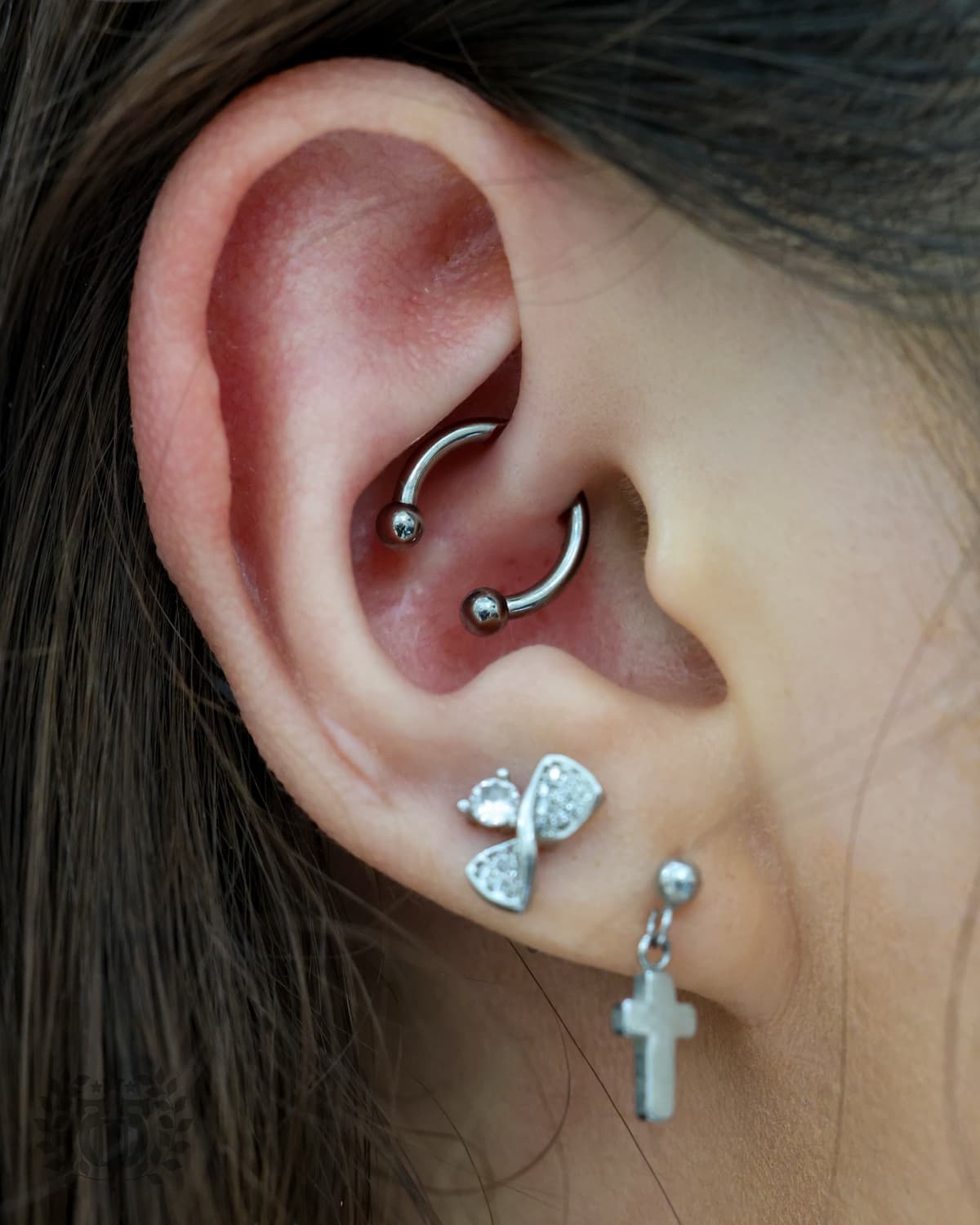
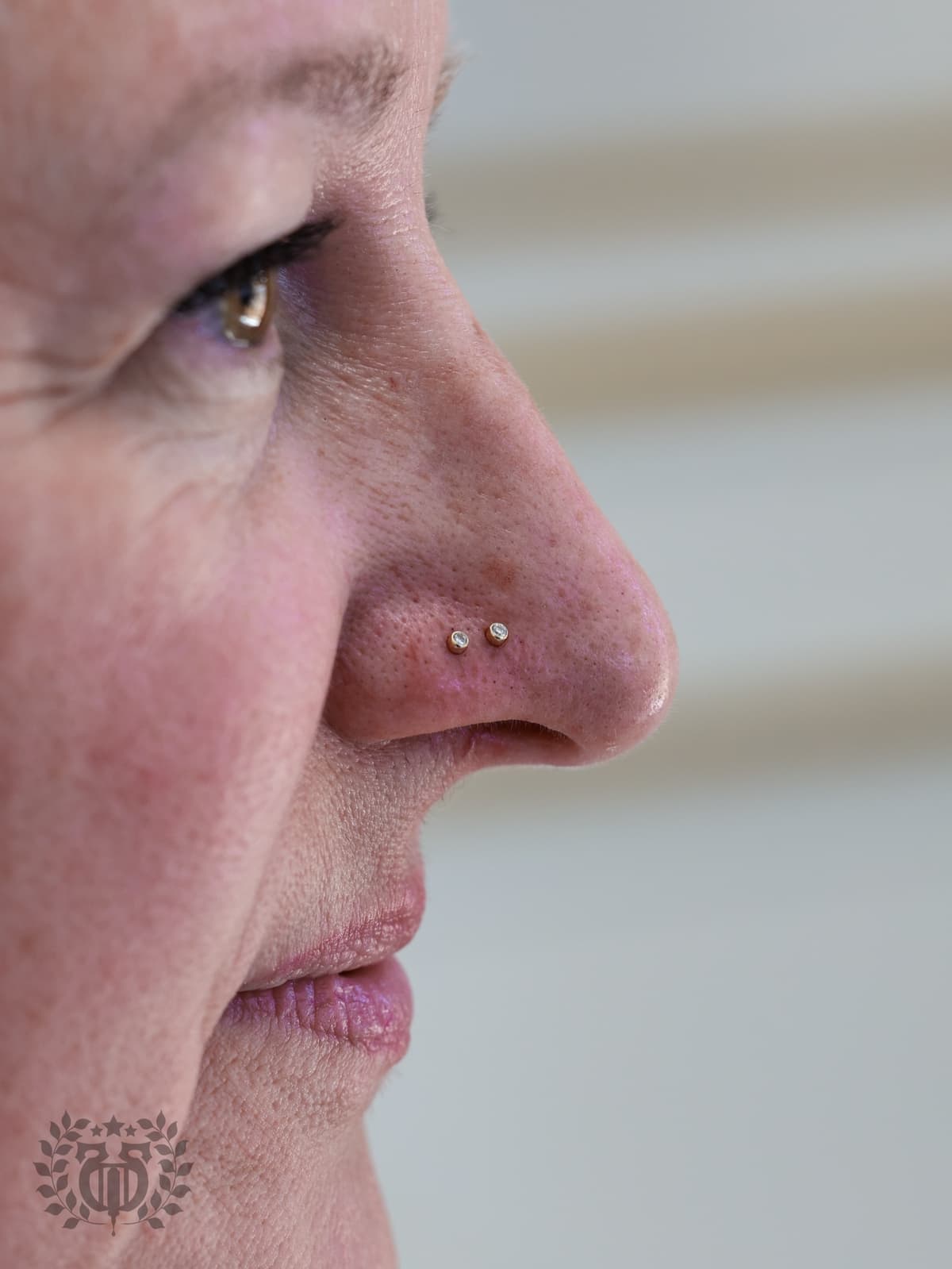
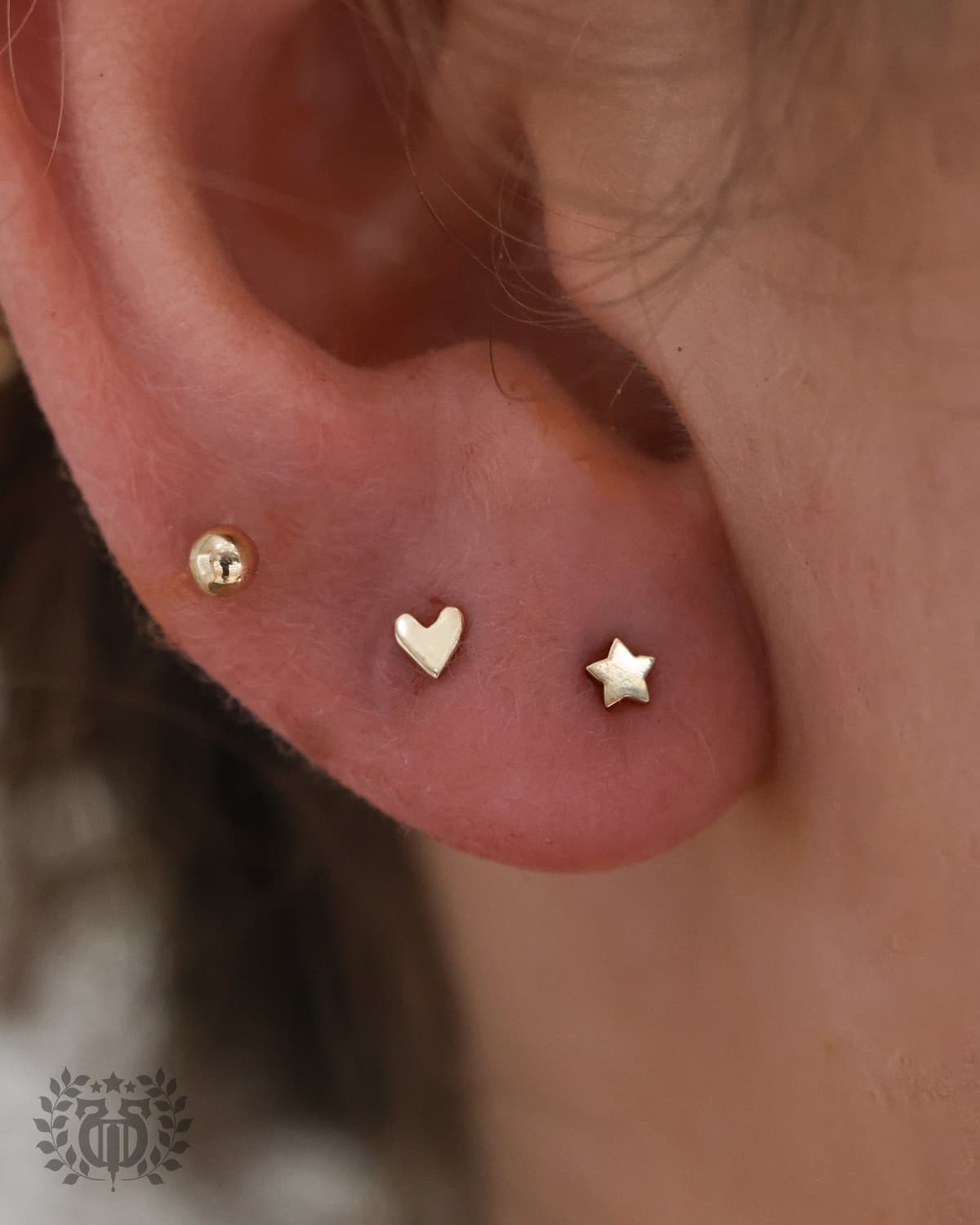
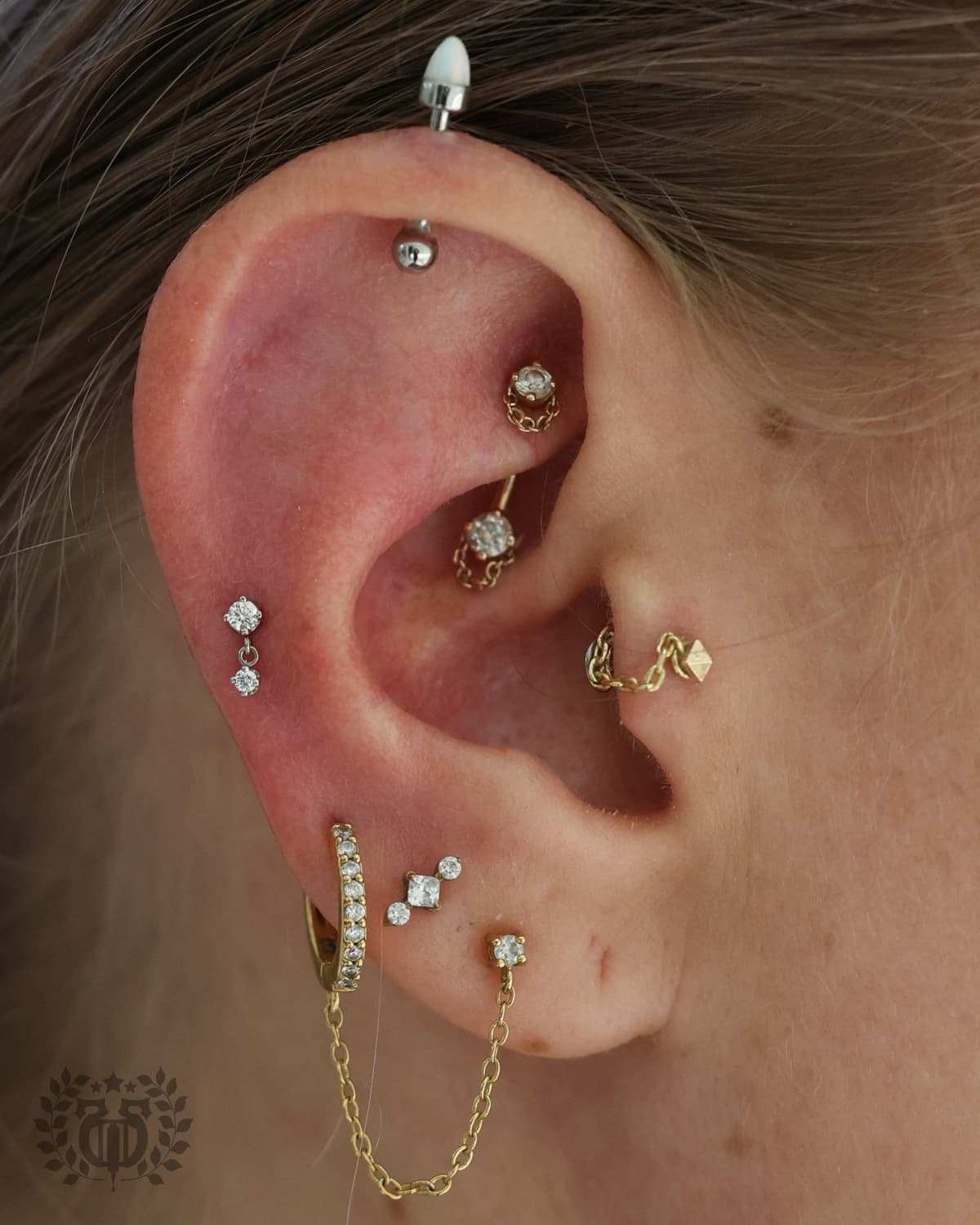
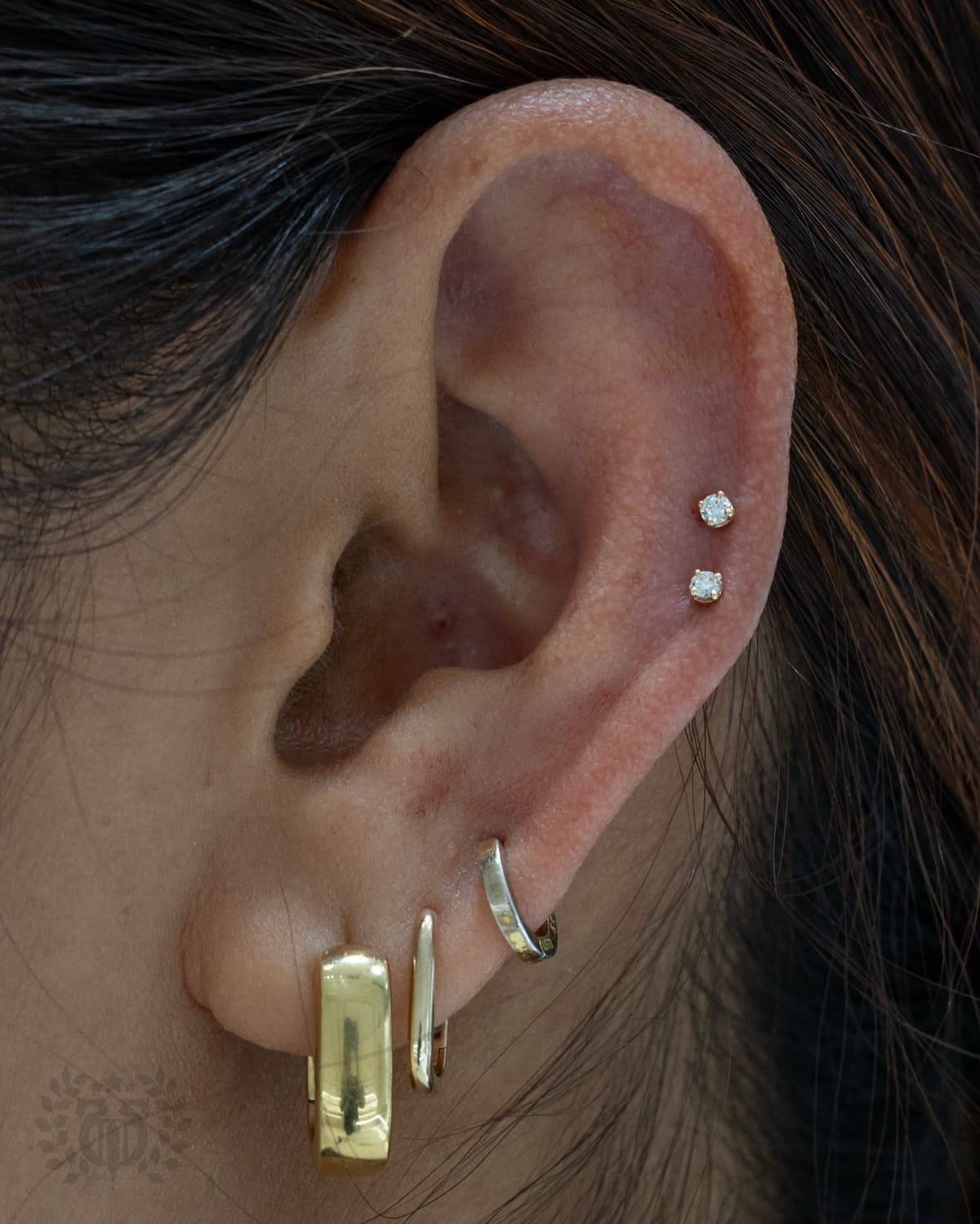
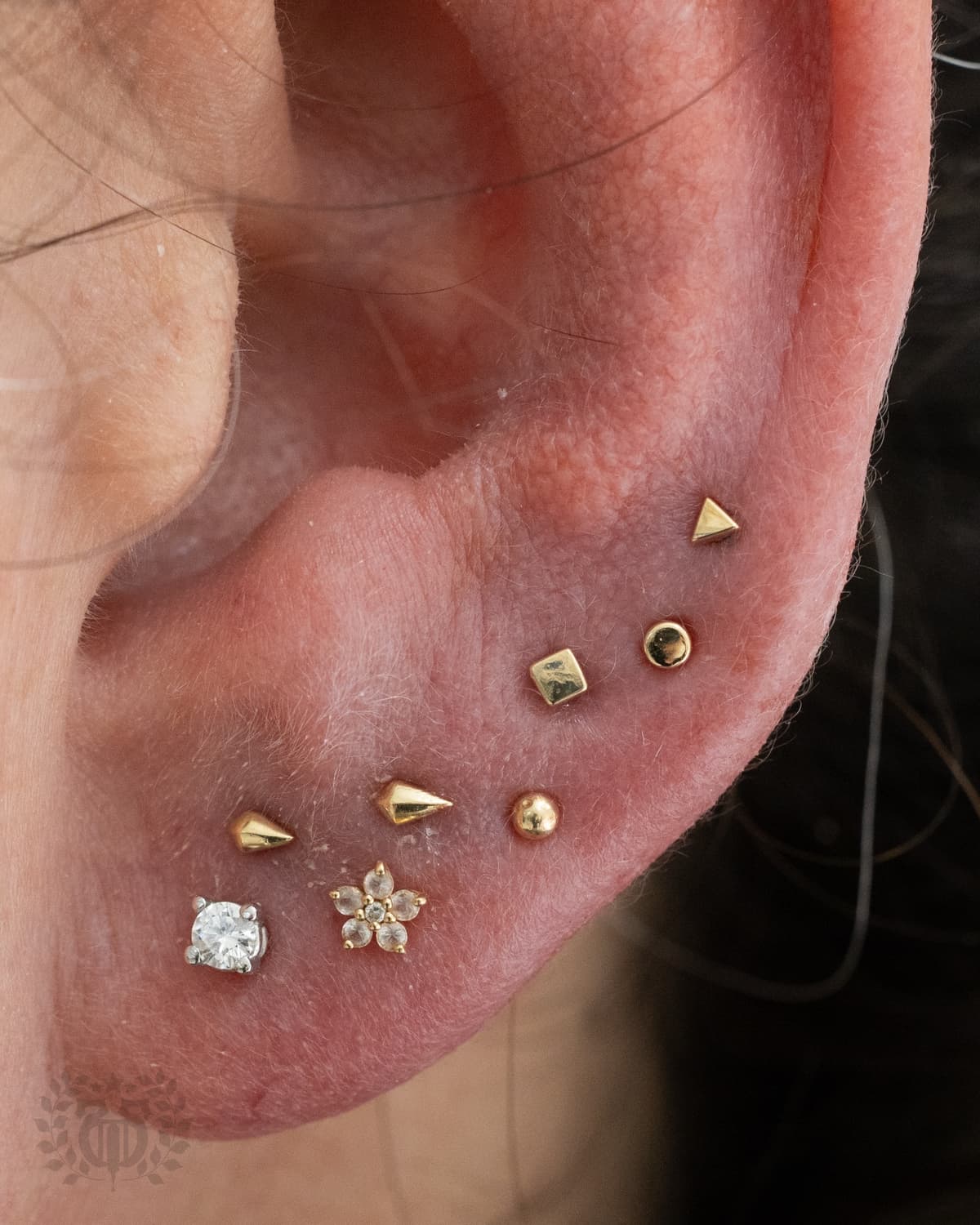
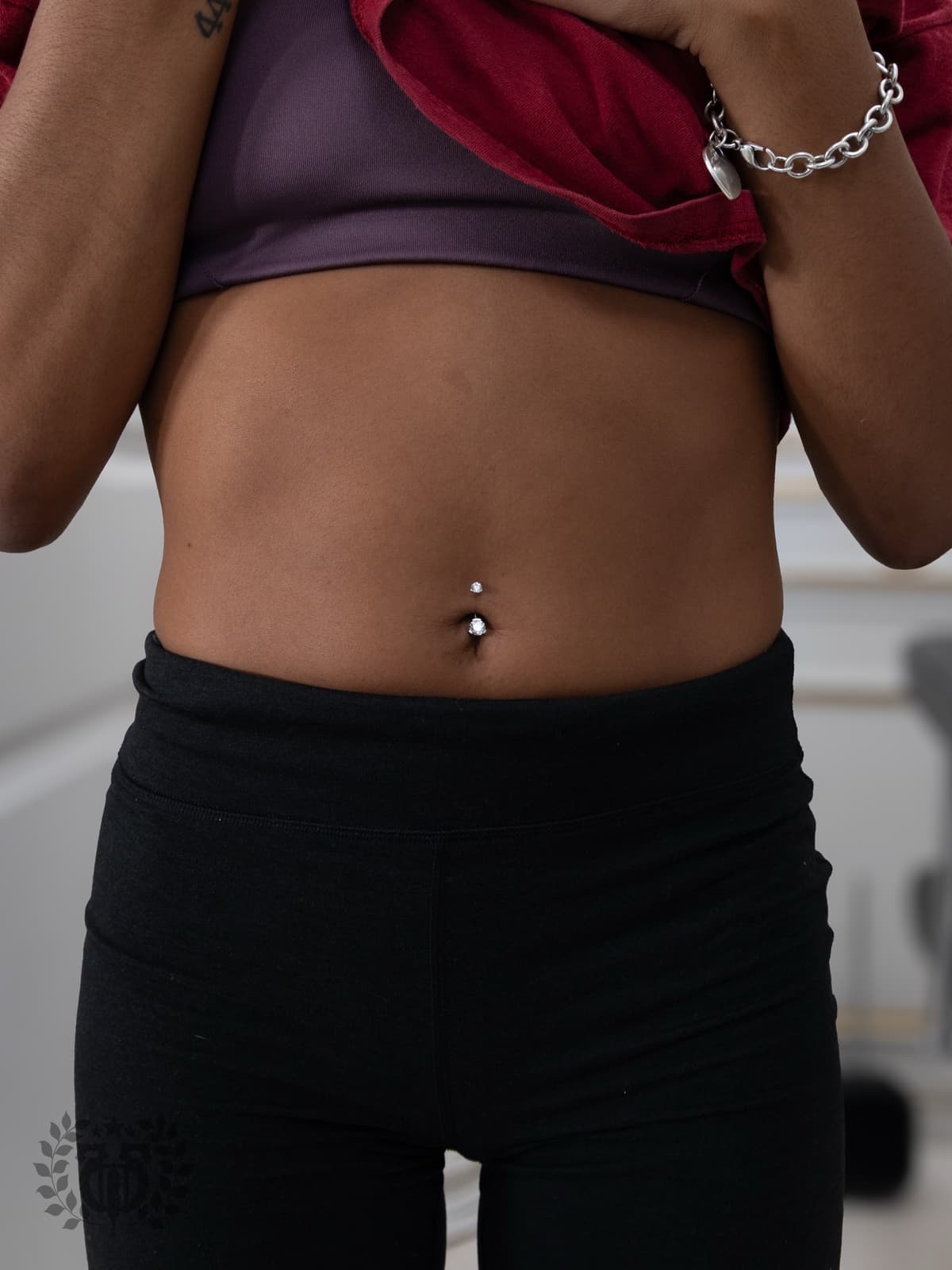
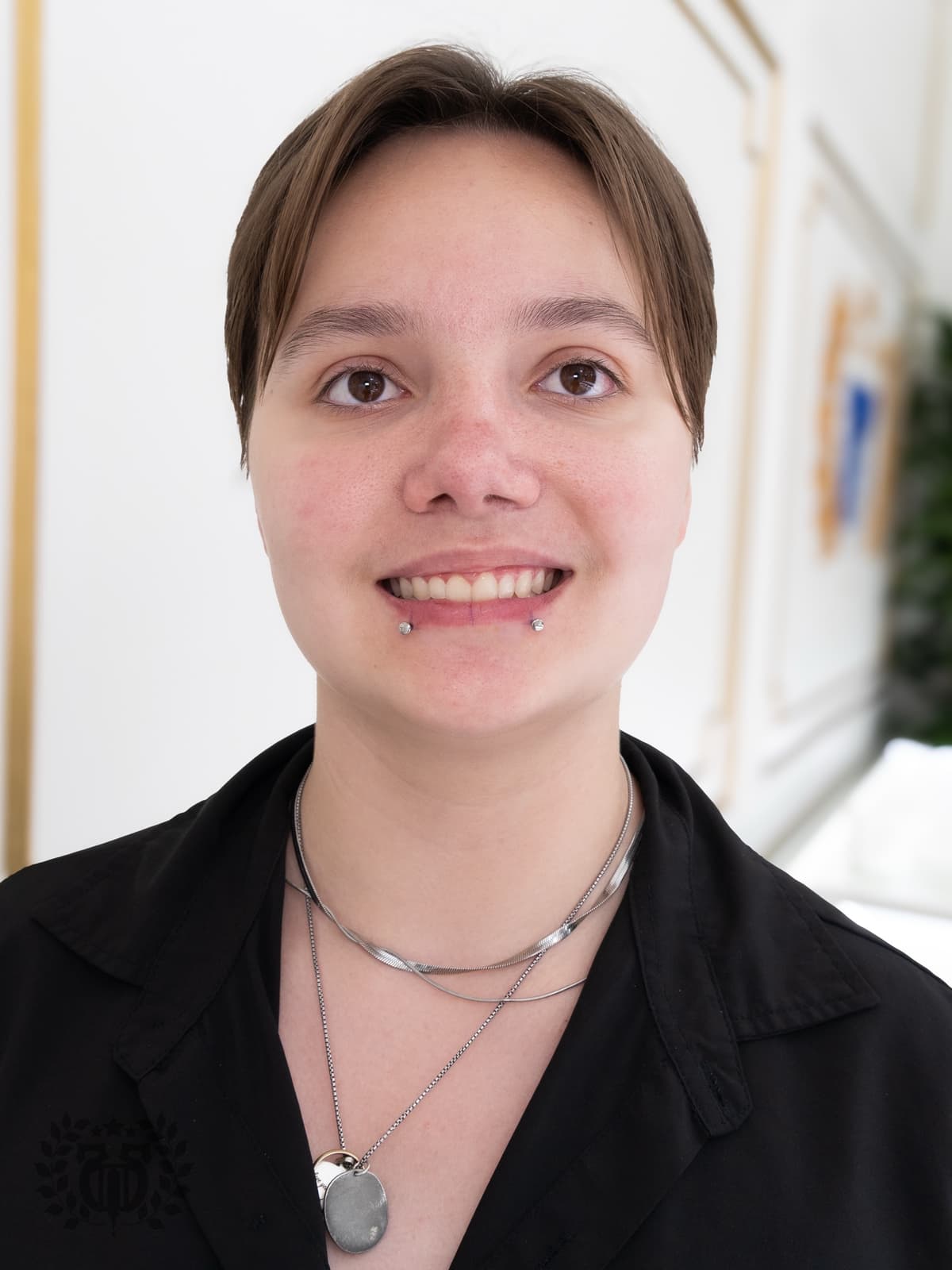
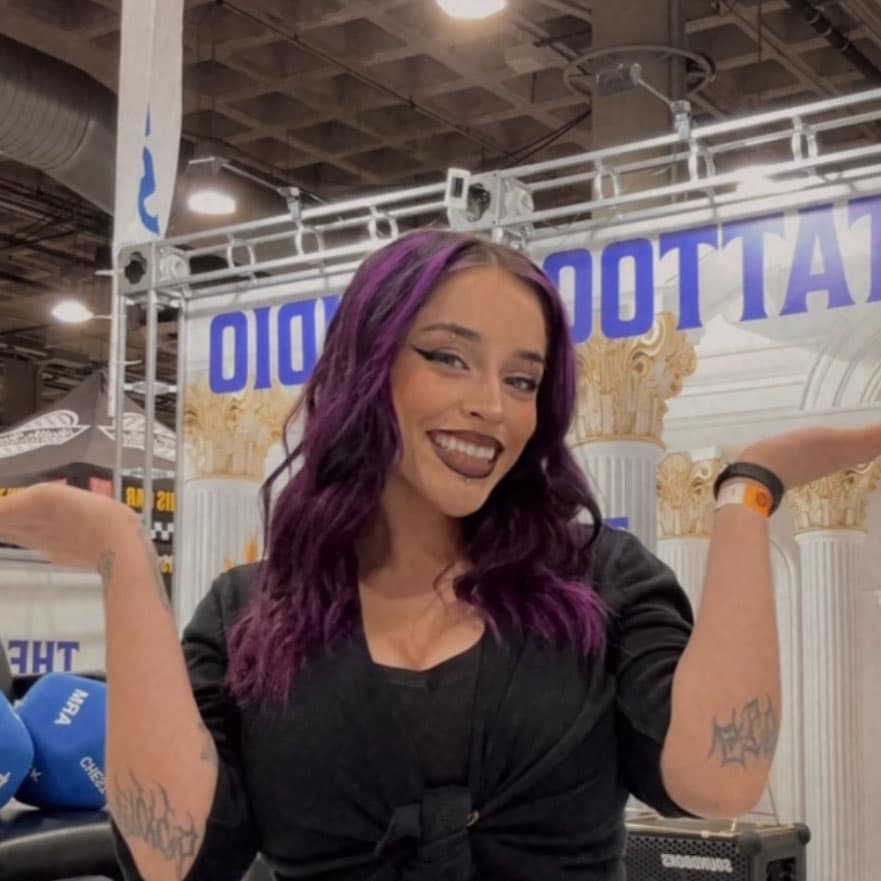 Senior Piercer
Senior Piercer
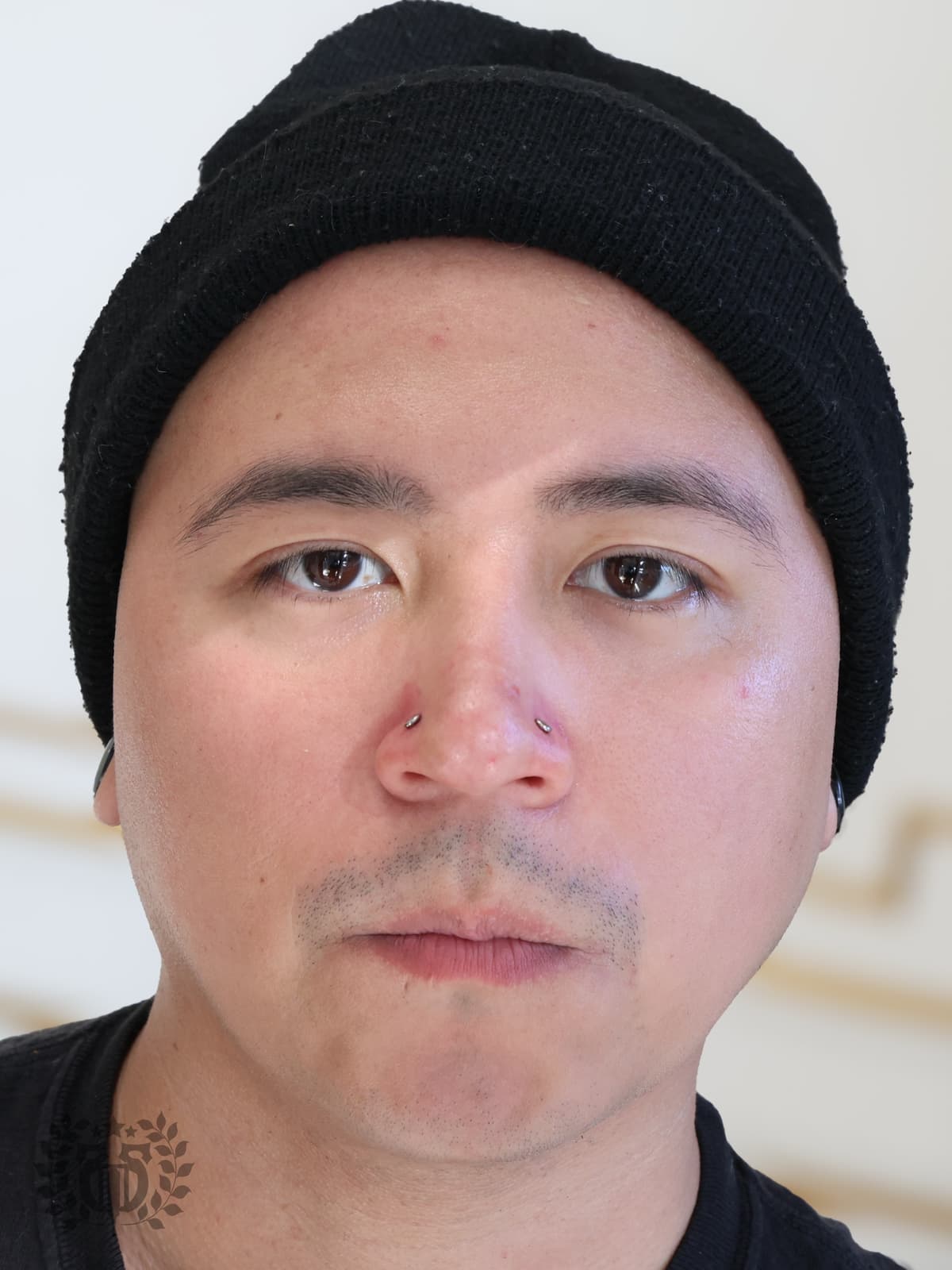
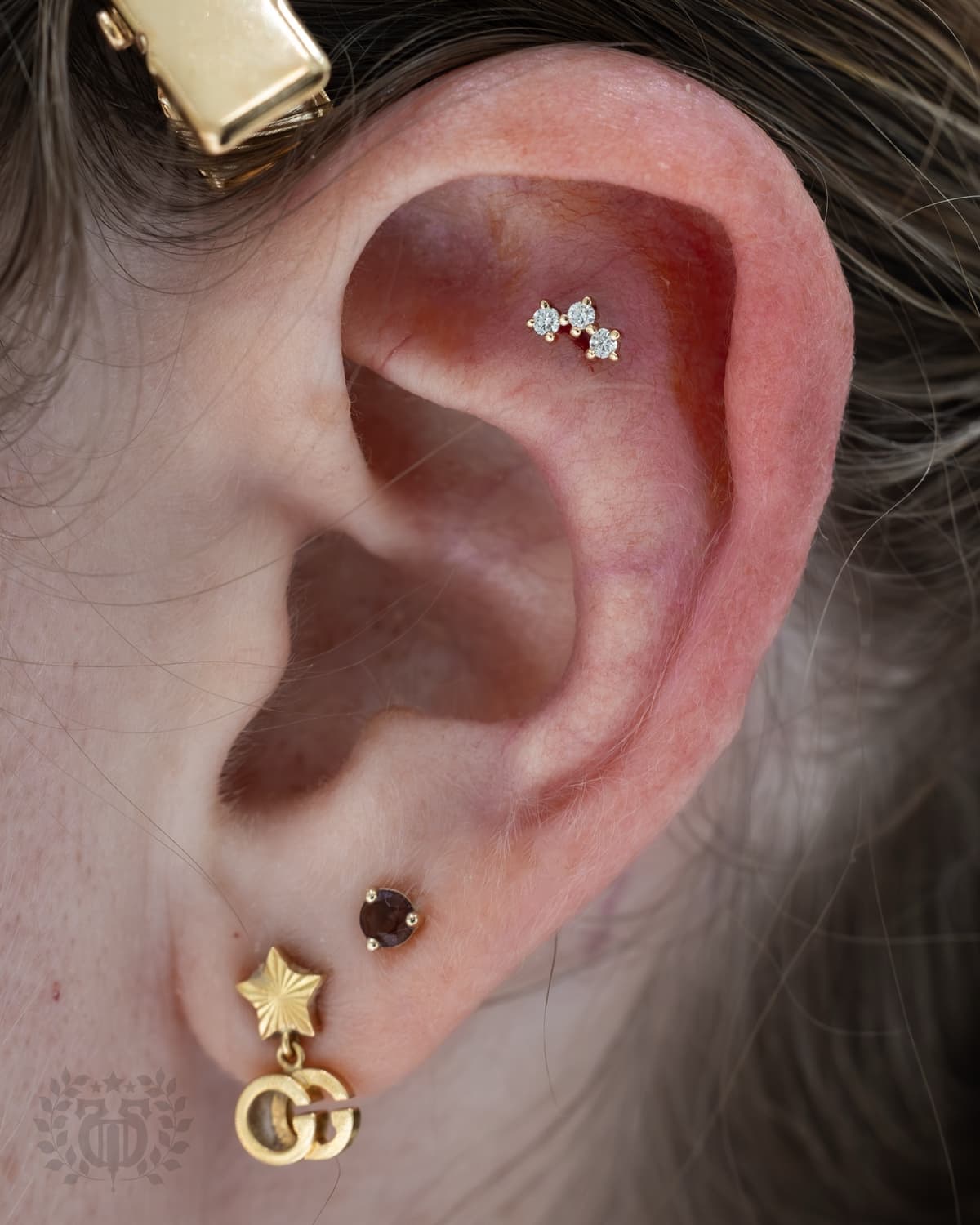
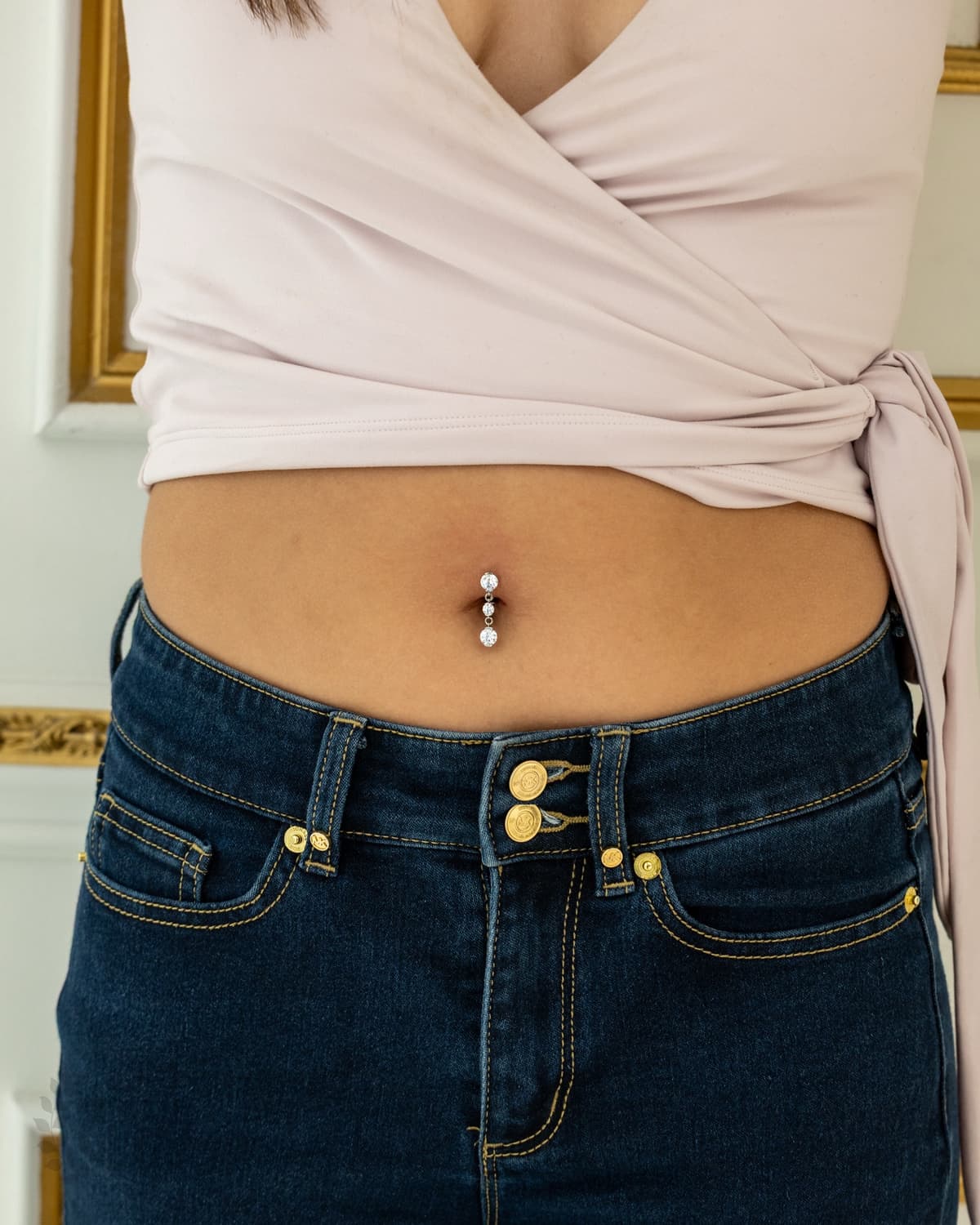
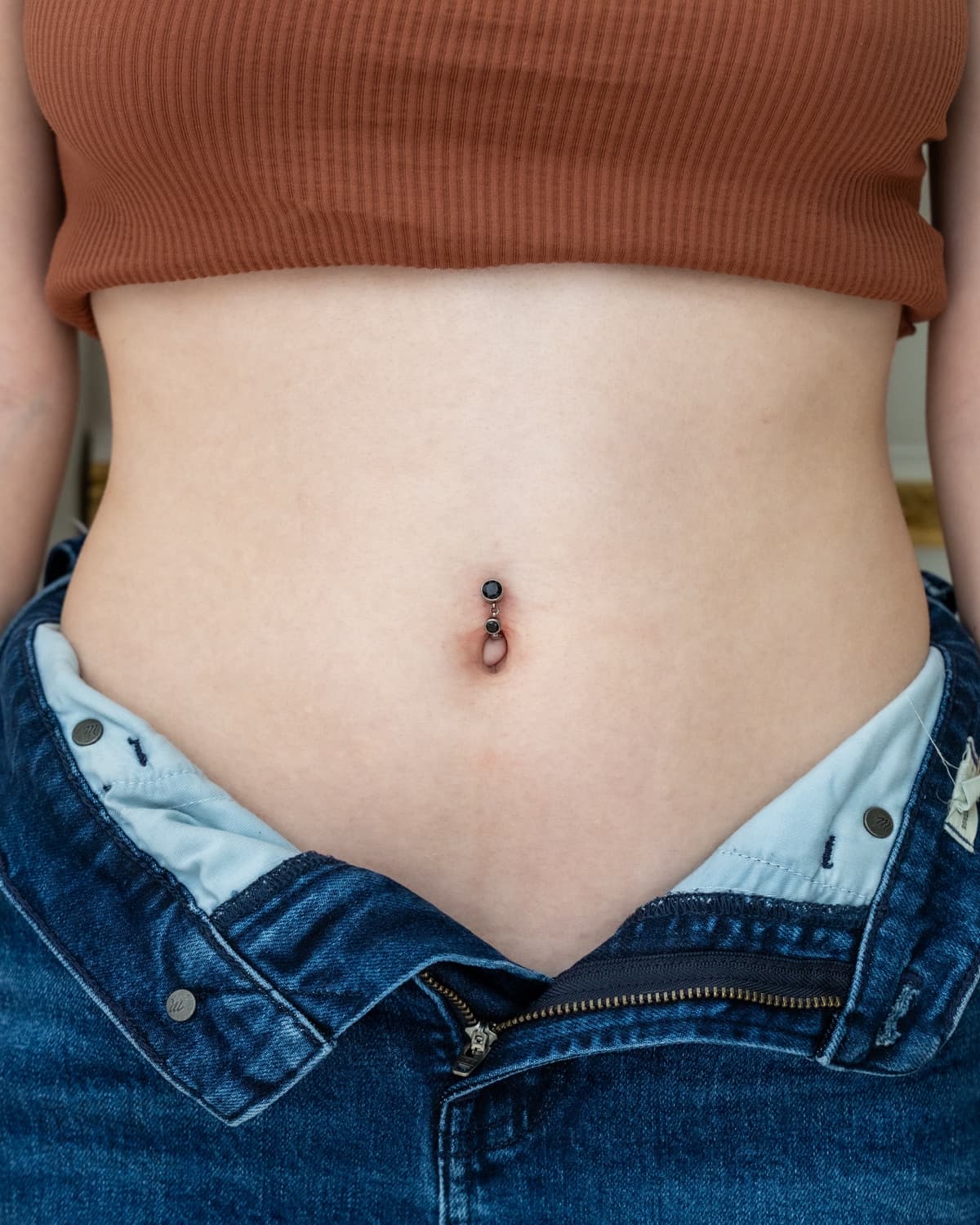
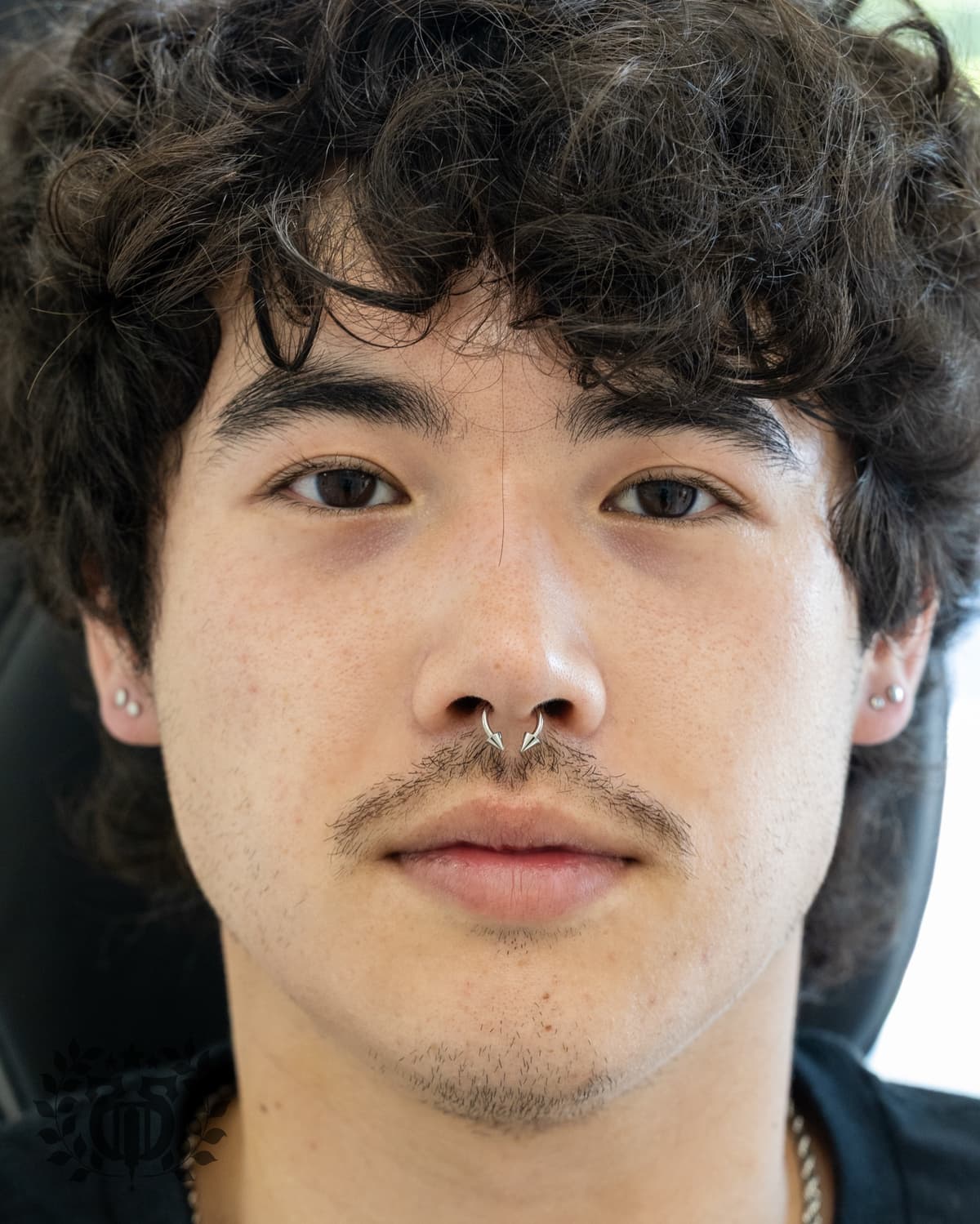
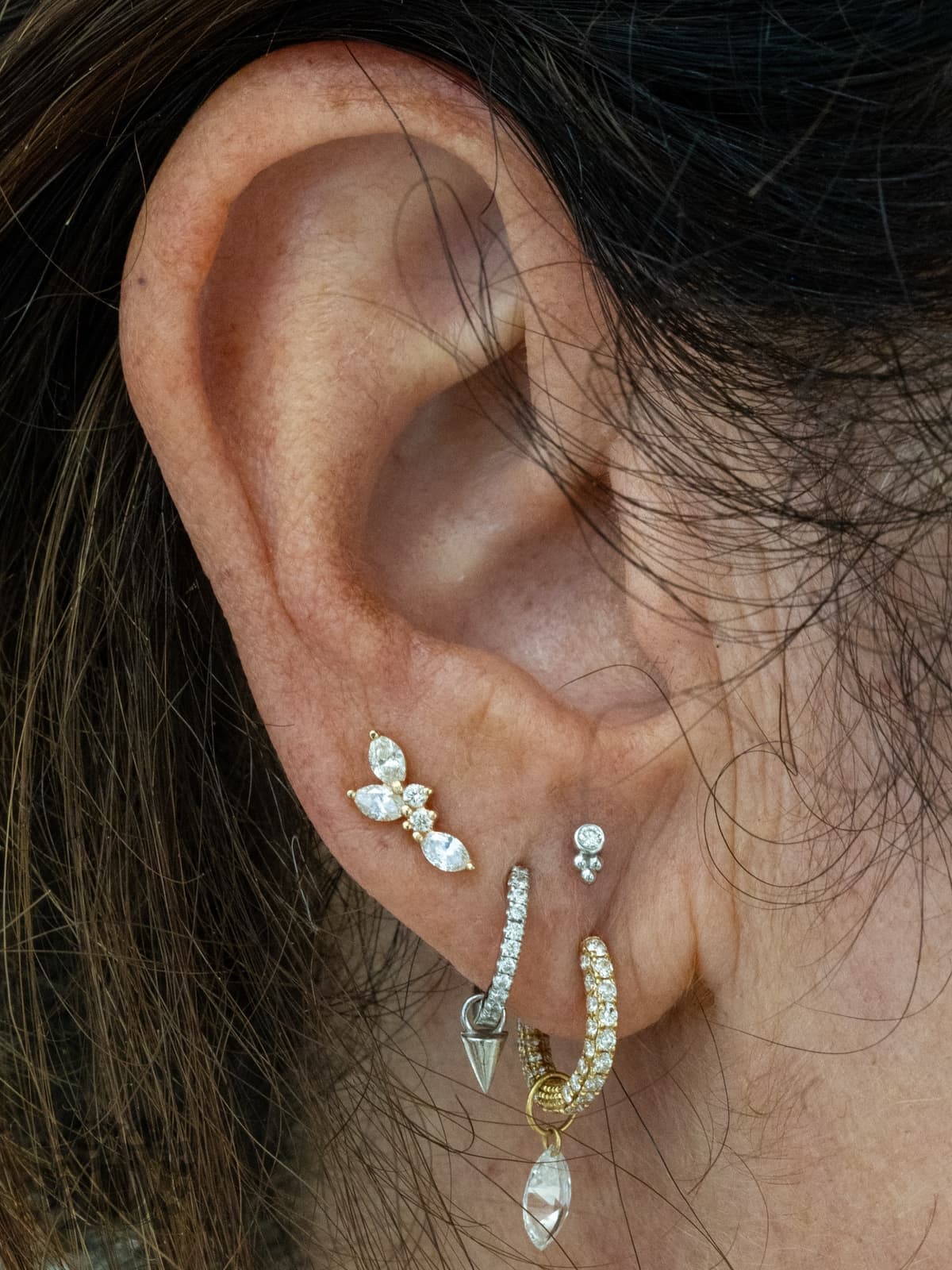
Bunny Vogt, a dedicated Senior Piercer at our studio since 2019, is known for her artistic eye and expertise in body piercing. She excels at facial piercings, navel work, ear styling and curation, and creating balanced piercing arrangements that reflect each client's unique style.
 Founder
Master Piercer
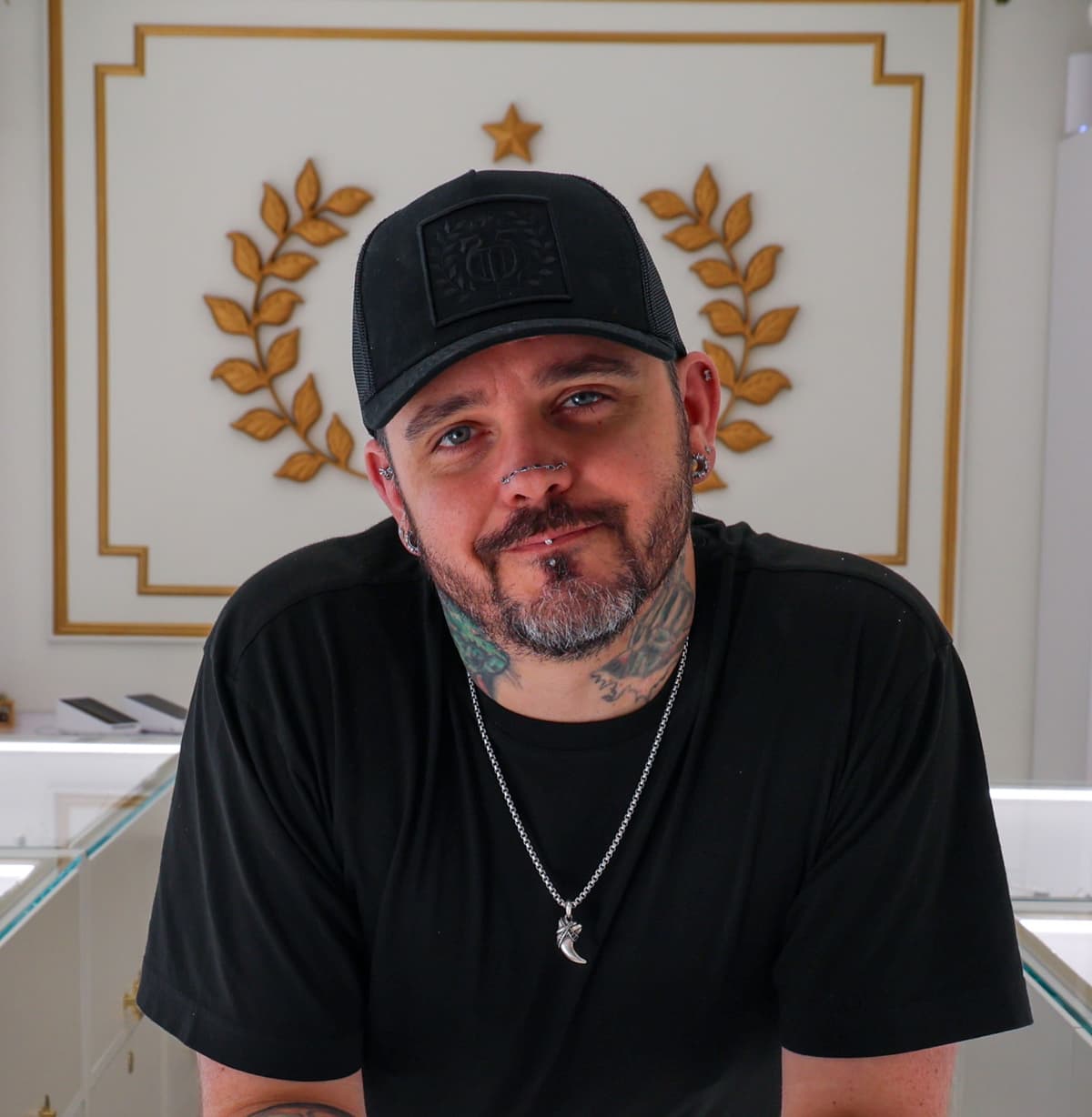
Blue Mason, our Master Piercer and studio founder since 2004, brings over two decades of body piercing expertise. Specializing in advanced and genital piercings, Blue's technical mastery ensures perfect placement every time. His extensive experience with intimate piercings makes him LA's most sought-after piercer for genital work.
Nobody announces why you're here. You check in like anyone else, and the whole thing happens behind a door that stays shut. Most first visits end with a booking rather than a piercing, and that's the intended outcome.
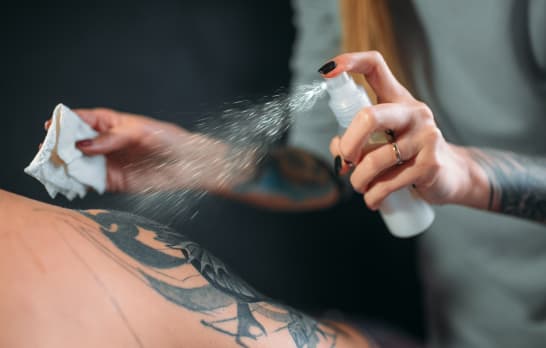
Sterile saline twice a day, and otherwise hands off. That's the whole cleaning routine, and the people who get into trouble are almost always the ones doing more than that rather than less — tea tree oil, antibacterial soap, a good scrub in the shower, all of which strip the tissue that's trying to build a channel.
What's specific to these placements is everything happening around the piercing rather than to it. Cotton underwear, loose, changed daily. Pat dry with kitchen roll rather than a bath towel, because towel loops catch on a bar and a snag sets healing back a week. No baths, pools, hot tubs or the ocean until you're properly healed — a shower is fine from day one. Rinse off soap residue rather than letting it sit. Sleep in something loose. If you cycle or lift, expect to modify that for a few weeks and ask us how long for your particular placement, because the answer for a hood piercing and the answer for a Christina are nowhere near each other.
Barrier protection until the piercing is genuinely healed, not merely comfortable. Comfortable arrives months before healed, and that gap is where most avoidable problems live.
Book AppointmentTenderness peaks in the first few days and then falls away faster than people expect. The bar looks too long because it is, deliberately. Cotton underwear, saline twice a day, showers rather than baths. A urethral placement will bleed intermittently through the first fortnight and that on its own is not a problem.
This is where the paths split hard. A hood piercing may genuinely be finished. A frenum is well on the way. A Christina is nowhere near, and this is the window where migration shows itself if it's going to. Come in for the downsize once the swelling has gone — a bar with slack in it is a bar that catches.
Different placements arrive here months apart. Once yours has, solid gold ends and threadless tops are on the table, and a ring becomes an option where a bar was necessary before. Bring it to us for the first change and we'll show you how it comes apart.
We're open 8am to 8pm seven days a week and we do take walk-ins, so nobody is going to turn you away at the door. But this is the category where turning up unannounced most often ends in a return trip, and it's fairer to explain why than to just say "appointments preferred".
Reviews are public, so nobody names a placement. They do tell you how the room felt.
"wow!!! go here!!!!! I promise.... loved this place, we came in as walk-ins. very clean and professional. Bunny was our piercing specialist. Not only was she attentive and patient when finding jewelry, she also was incredibly professional and knowledgeable when piercing. I really liked the vibe of this place. 10/10 would recommend!!!!!"
"I needed a couple piercings removed for an MRI and was so relieved to see a shop that opened early. My piercer, Blue, came in an hour and a half before his usual schedule to do it for me, too. While I waited I had a nice conversation with their tattoo artist :) you can tell they both love what they do and are skilled at their craft."
Reviews from Google · Read all 623 on Google
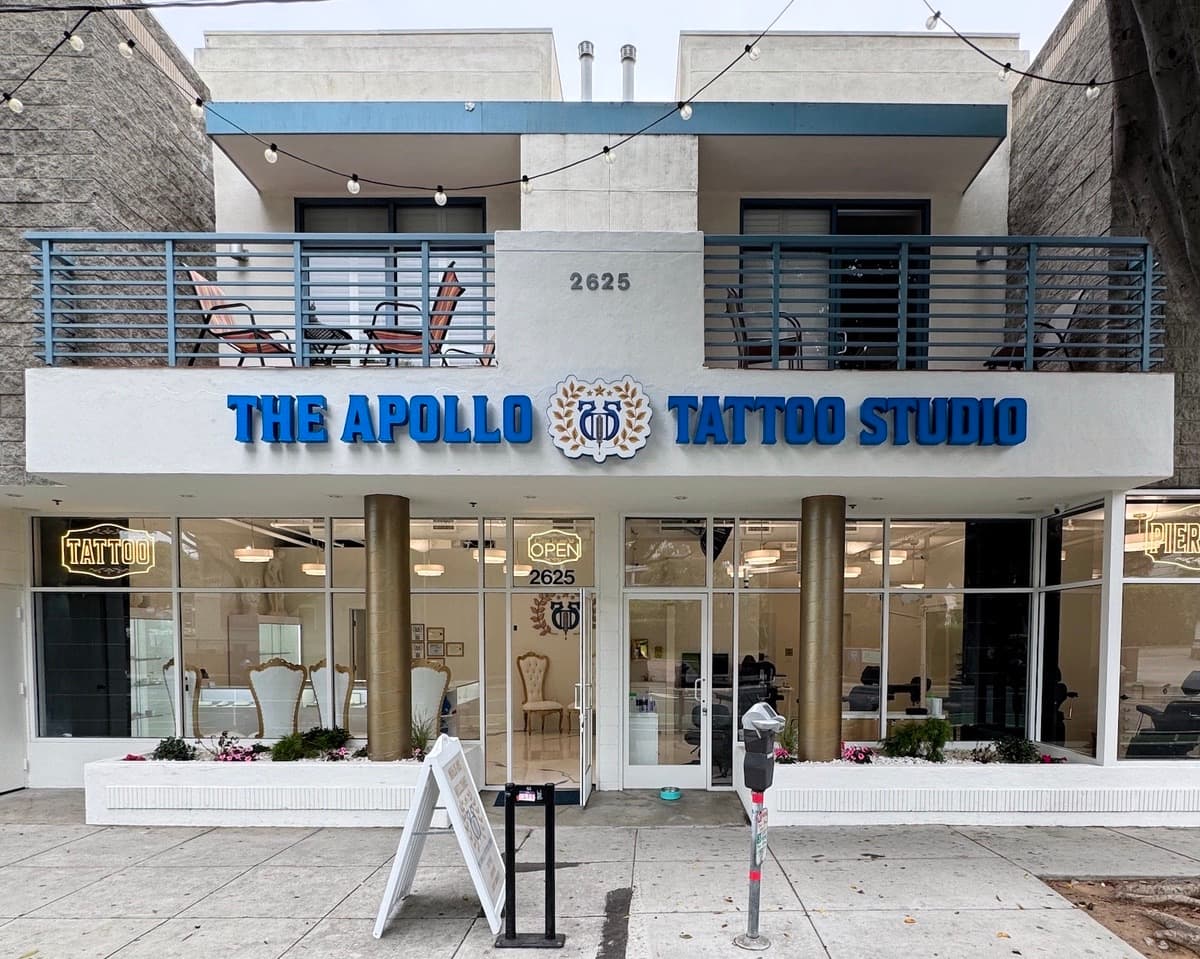
5000+ clientsWe're at 2625 Main Street, open 8am to 8pm every day. You check in at the same counter as everyone else and nobody reads your appointment out loud. From there it's a private room with the door shut, and staff who aren't part of the piercing don't come in. Parking on Main is metered and fills up in the afternoon, so give yourself ten minutes either side.
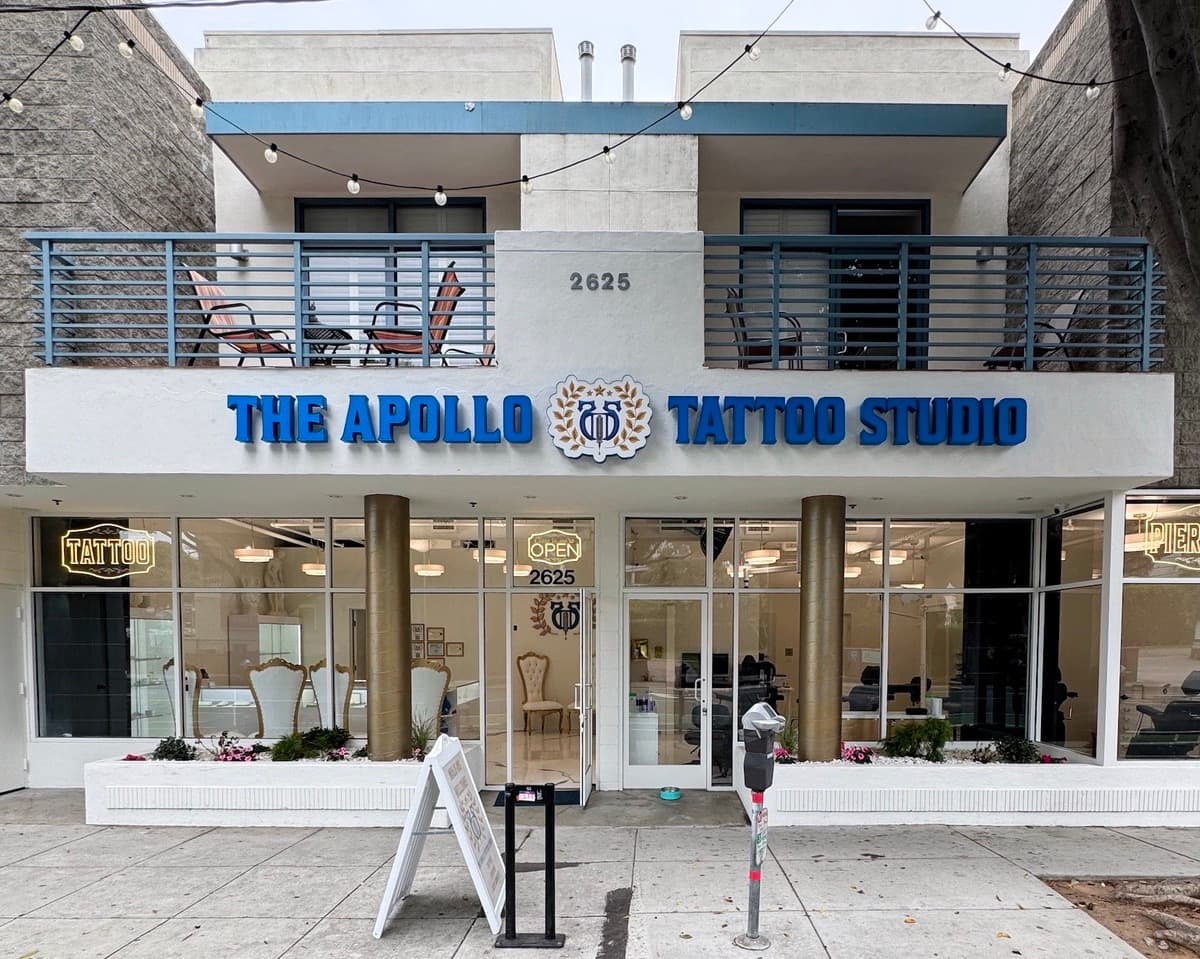
Santa Monica, CA
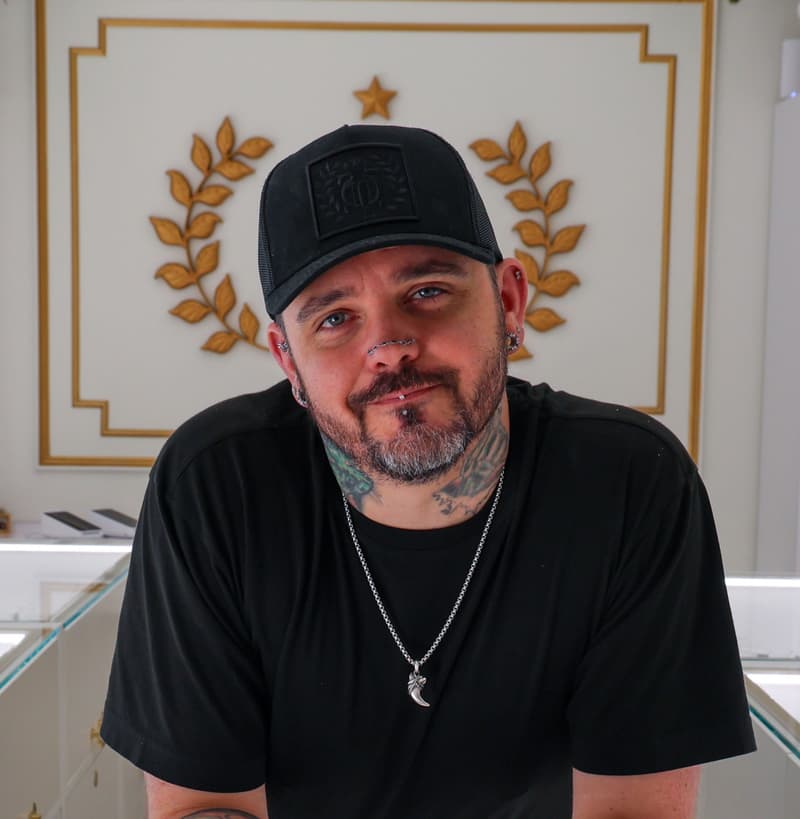
Apollo was founded by Blue Mason in 2007. With 20+ years of body art experience, Blue brings master-level expertise to every piece. Read Blue's story →
Asked in the room every week, roughly in the order they come up. None of them will surprise us.
You can book, but the placement isn't settled until someone has looked. Most of these piercings depend on a specific piece of tissue being present, mobile enough and deep enough — a hood that lifts, a frenulum with enough body to it, a fold that sits proud rather than flat. Plenty of people arrive set on one thing and leave having been shown that a neighbouring placement suits their anatomy far better. That's not a sales move. It's the only order the decision can be made in.
You come in, we take you into a private room with the door shut, and you describe what you're after. We ask about your job, your underwear, whether you cycle, whether you sit at a desk for nine hours. Then a brief look at the anatomy, with gloves on and nothing else happening. We tell you what's possible, what we'd advise against, what jewelry it needs and what the healing actually looks like week by week. You can then book, go away and think, or decide against it. No piercing happens at that visit unless you ask for it.
Regularly. Some anatomy simply doesn't support a given placement — the tissue is too shallow, the angle would put pressure in the wrong direction, or the piece you want would sit somewhere it would be caught by clothing every day. We'd rather say so in a five-minute look than pierce something that migrates out in four months. When we decline a placement we'll usually offer the nearest thing that would work, and if nothing would, we say that too.
Because until we know which placement your anatomy supports, and which jewelry that placement needs, any number is a guess. Genital work is quoted at the consultation, and the consultation itself is free. Jewelry is always priced separately from the piercing — that's true across the studio, but it matters more here because these placements start on heavier gauge bars than an earlobe would.
Your piercer, and you. Occasionally a second piercer if we're setting up something more involved, and we'd ask first. The door is shut for the whole appointment. Staff who aren't part of the piercing don't come in, and nothing about your visit gets discussed on the shop floor.
It depends heavily on the placement, which is why we go through it individually rather than giving one number. As a general shape: a hood piercing is often the shortest wait, a Prince Albert needs a little longer because of where it passes, and a surface piercing like a Christina needs the longest hands-off period of anything on this page. Barrier protection until the piercing is genuinely healed, not just comfortable. Your partner's bacteria are the thing we're keeping out of an open channel.
Thin jewelry in tissue that moves acts like a cheese wire. A heavier gauge spreads the load across more of the channel wall, so the tissue isn't being cut into every time you sit down or roll over. It's the opposite instinct to ear piercing, where thin is normal. You will notice the weight for the first week or two and then stop noticing it entirely.
Some placements sit near nerve-rich tissue and some don't, and people report very different things — including nothing at all. We won't promise you an outcome, because we can't know it and anyone who does is selling. What we can tell you honestly is which placements are positioned near sensitive tissue by their nature and which are decorative, and we'll be plain about which is which for the one you're considering.
Tell the clinician you have a piercing and where. Implant-grade titanium is generally handled without drama, but the decision belongs to the radiographer or surgeon, not to us. If they ask you to remove it and the piercing is young, come back afterwards and we'll help you get jewelry back in. A well-healed channel usually tolerates a short spell empty. A fresh one often doesn't, so don't leave it days.
Sterile saline, twice a day, and otherwise leave it alone. Plain water in the shower to rinse off soap residue. What causes trouble is over-cleaning: alcohol, tea tree oil, antibacterial hand soap, hydrogen peroxide and daily scrubbing all strip the tissue that's trying to build a channel. Pat dry with something disposable rather than a bath towel. Cotton underwear rather than synthetics for the first stretch.
Three things, in order of how often we see them. Snagging — clothing, waistbands, towels — which sets healing back every time it happens. Migration, mostly on surface placements where the body treats the bar as something to push out. And irritation from jewelry that was never downsized after the swelling went, so it has slack in it and rocks. Frank infection is much rarer than the internet suggests, and it looks different: spreading heat, thick discharge, fever.
No, and please don't do either the same day — freshly shaved skin has thousands of tiny openings in it, which is not what you want next to a new piercing. Shower before you come, wear clean loose clothing, and that's enough. If you shave regularly, leave it a couple of days either side of the appointment.
18, with government-issued photo ID at the appointment. There is no parental-consent route for any of this work and no exceptions to the ID requirement. Bring the physical card, not a photo of it.
To the studio, yes, and plenty of people do. Whether they come into the room is your call — some people want a hand to hold and some very much don't. If they do come in, they sit where we point them, because people who faint tend to be the ones standing over the piercer's shoulder.
Apollo sits at 2625 Main St in Santa Monica, a block from the beach and easy to reach from anywhere on the Westside. Here's roughly how long it takes to get to us for tattoos and piercings:
There's metered street parking on Main Street and Ocean Park Blvd, plus a public lot on 2nd Street a short walk away. We recommend giving yourself an extra 10 minutes to park on weekends — Main Street gets busy with the farmers market and beach traffic. If you're running late, text us at the studio and we'll hold your appointment.
The assessment is free, it's private, and leaving without booking anything is a normal outcome.
Recognized in Santa Monica's Most Loved 2025 & 2026


We'll respond within 24 hours
Or reach us directly:
We use cookies to run this site, remember your preferences, and understand how it's used. Read our Privacy Policy for full details.