One end of this piercing lives inside the urethra. That single fact separates a Prince Albert from everything else in this category and drives every decision that follows — the gauge we start you on, how far back the exit sits, and why the first fortnight is genuinely messy in a way nobody puts on a website. The bar crosses the floor of the passage and exits underneath, a short way back from the tip.
Two things people are surprised by. The starting bar is thicker than they expected, because thin metal in soft mobile tissue cuts rather than sits. And the healing is quicker than they expected, because this is well-supplied mucosal tissue — the trap being that comfortable arrives long before healed. We go through the first ten days in detail at a free private consultation, and quote the fee once we know the gauge and the placement.
Book Your PA Piercing 5000+ clients

Six things that follow from one end of the bar being inside a passage rather than on a surface
Nearly every piercing people compare this one to is a surface piercing. An earlobe, a nostril, a frenum — the needle goes through some tissue and both ends come out into the open air. A Prince Albert doesn't work like that. The needle enters at the urethral opening, travels a short distance inside the passage, and exits downwards through the underside of the glans. One end is on the outside. The other end is in a tube with fluid running through it several times a day.
That's not a warning; it's just the fact that explains the rest of the page. It's why urination sprays or splits at first, since there are now two exits and no reason for the fluid to prefer one. It's why the first fortnight involves intermittent bleeding, because the tissue there is richly supplied with blood and easily disturbed. And it's why the same piercing heals surprisingly quickly, since that blood supply is also what builds a channel fast.
The placement decision is the exit position — how far back from the tip the underside opening sits. A few millimetres changes how the jewelry hangs, how visible it is under clothing, how a ring sits versus a curved bar, and how the stream behaves once healed. It's read from your anatomy in the room, marked, and shown to you before anything is opened.
The other decision is gauge, and it's the one that most contradicts what people arrive expecting. Urethral tissue is soft and mobile. A thin bar in it acts like a wire, loading a narrow line of the channel wall every time anything moves, and it cuts slowly rather than settling. Heavier metal spreads that load. Start at a sensible gauge and you also have a channel that can be enlarged in steps later; start too thin and any future stretching means rebuilding a damaged channel first.
Then there's the part of the consultation that isn't anatomical at all. We describe week one properly — the dark underwear, the folded kitchen roll, sitting down for a fortnight, the evening you should keep clear afterwards. A small number of people hear that and decide the timing is wrong for them right now. That is a completely sensible response and it's precisely why we say it before the needle rather than after.
Not through the outside of anything. The bar crosses the underside of the passage and exits behind the tip, which is why this piercing behaves unlike every other placement in the studio.
A few millimetres decides how the jewelry hangs, how it sits under clothing and how the stream behaves afterwards. That distance is chosen from your anatomy, not from a standard.
Urethral tissue is soft and mobile. Thin bars concentrate load along a narrow line and cut rather than sit, which is why the starting gauge here is heavier than anything else we do.
Started at a sensible gauge, the channel is stable enough to enlarge in steps if you want to. Started too thin, it has to be rebuilt first, which is a slower and worse experience.
Intermittent bleeding, a split stream and dark underwear. Every one of those is normal and temporary, and hearing it beforehand is the difference between planning and panicking.
Different profiles under clothing and different amounts of movement. We'll tell you which suits the gauge and the exit position, and you can change once the channel is established.

Apollo's Premium Jewelry Partner
Handmade in Los Angeles since 1996. Lifetime guarantee. Implant-grade gold, platinum, and titanium. Over 3,000 original designs in our case — ask your piercer for a tour.
See the BVLA story →A PA against its neighbours — and why the gauge you start on decides what is available to you years from now.
In through the urethral opening, out through the underside a short way back. Heavier gauge from day one, a messy fortnight, then one of the quicker heals in the studio.
Same entry, opposite exit, and considerably more demanding. Longer to settle and less forgiving of impatience. We'd usually want you to have lived with a standard PA first.
A straight bar through tissue on the underside of the shaft, set to a measured depth. Frequently weighed against a PA and completely different in every respect that matters.
Through the ridge at the edge of the glans, usually as a pair. Entirely dependent on that ridge being pronounced enough to anchor to, and a lot of people's isn't.
Sits in scrotal skin, which is thin and highly mobile. That mobility is the whole design problem — placement has to account for tissue that never holds one shape for long.
The decision that most contradicts what people walk in expecting
Everything you learned from ear piercing points the wrong way here. In an ear, thinner reads as neater and the tissue is stable enough not to care much either way. In the urethra, thin is the thing that causes damage.
The reason is load. A bar sitting in soft, mobile tissue is carrying its weight along whatever surface touches the channel wall. Make that bar thin and the contact narrows to something close to a line, so every movement concentrates pressure along the same few millimetres. Tissue under that kind of repeated point-loading doesn't heal around the object — it slowly gives way in front of it. Nothing gets infected, nothing hurts especially, and the channel just ends up thin-walled and unhappy.
Increase the gauge and the same weight is spread over a much larger contact area. The bar stops cutting and starts sitting. It's also physically more stable, so it moves around less inside a channel that's trying to build a lining, and stability is most of what early healing needs.
There's a second argument that only matters years later. If you ever decide to stretch a PA — and plenty of people do, because this tissue takes to it well — the starting gauge is the foundation you're building from. A channel begun at a sensible size can be enlarged in steps with weeks between them. A channel begun too thin has usually been damaged along the way, and the first job is repairing it rather than stretching it.
What this means in the chair: the bar we hand you will look heavier than the one you pictured. It will feel like more metal than you expected for the first fortnight. Then you stop noticing it, and the channel that results is the one worth having.
Clear next step
Free and private. We describe the messy fortnight in detail, read the placement, and quote the fee before you commit.
Recommended first step
Start with a private anatomy-first booking path for intimate piercing services.
One goes through the urethra and one sits in the surface of the shaft. The healing tells you how different they are.
| Piercing Type | Location | Initial Healing | Full Healing | Pain Level |
|---|---|---|---|---|
| Prince Albert | Underside of glans | 4-6 weeks | 3-6 months | 5-6/10 |
| Frenum | Underside of shaft | 6-8 weeks | 3-4 months | 4-5/10 |
 5000+ clients
Said plainly, because being told this on day three helps nobody
Day one. There will be blood. Not a flood, but more than you get from an ear, and it comes and goes rather than stopping cleanly. Wear dark underwear, keep a folded piece of kitchen roll in it, and change it as often as you need to. Plan a quiet evening at home rather than a shift on your feet or a night out.
Days two to five. The bleeding tails off into intermittent spotting, usually triggered by movement or by getting up after sitting still. Meanwhile urine is coming out of two openings, so the stream splits or sprays unpredictably. The fix is entirely undignified and entirely effective: sit down. Almost everyone does for the first fortnight and stops thinking about it by the end of the second week.
Days five to fourteen. Spotting becomes occasional, then stops. The stream starts behaving more predictably, and you learn where light pressure redirects it. Swelling settles enough that the bar stops feeling like a foreign object. This is also when people start feeling fine and considering resuming things, which is early — the outside looks settled well before the channel is.
What isn't part of the normal picture: bleeding that's getting heavier rather than lighter after the first few days, thick discoloured discharge, spreading heat, a fever, or difficulty passing urine at all. None of those are the ordinary mess described above. Ring us, or your doctor, the same day.
Practical things worth having in the house before you go: dark underwear that supports rather than hangs, kitchen roll, sterile saline, and nothing planned for that evening. People who prepare for this fortnight find it a non-event. People who don't tend to spend day three convinced something has gone wrong.
Before anything else we describe the messy part in detail — bleeding, split stream, dark underwear — because a few people hear it and decide the timing is wrong. Better now than on day three.
How far back the exit sits changes how the jewelry hangs and how it behaves under clothing. That measurement comes off your anatomy in the room, with the mark shown to you before anything opens.
Heavier than you would expect and chosen for tissue that moves. Implant-grade titanium, ASTM F136, and sized so the channel could be stretched later if you ever want to.
A sterile receiving tube guides the needle so the exit lands exactly on the mark. Single-use needle opened in front of you, autoclaved reusable tools, LA County licensed and inspected.
Not just a leaflet. What to expect at day one, day three and day ten, what counts as normal bleeding versus a reason to ring us, and when to come back for the downsize.
Three shapes, three quite different experiences under clothing
The consultation is $100, and it happens first because the gauge and the placement have to be settled before a number means anything.
Jewelry sold separately
Jewelry sold separately
Jewelry sold separately
Jewelry sold separately
No headline figure is printed here, deliberately. What a PA costs moves with the gauge your anatomy calls for and the jewelry style you settle on, and both of those are decided in the room. Jewelry is priced separately from the piercing throughout the studio. Later stretching appointments are quoted the same way, and you will always have a number in front of you before you agree to anything.
 Senior Piercer
 Senior Piercer
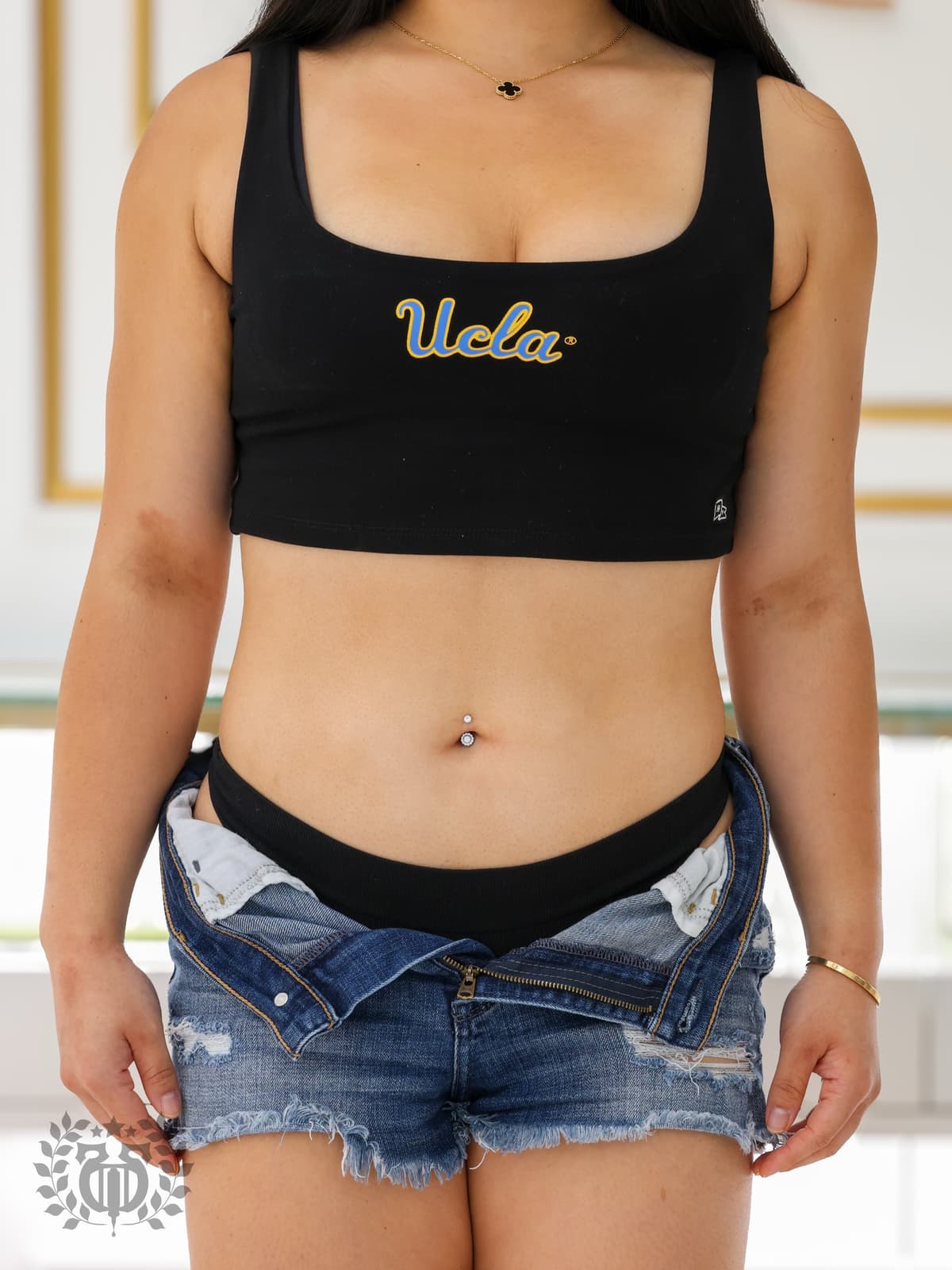
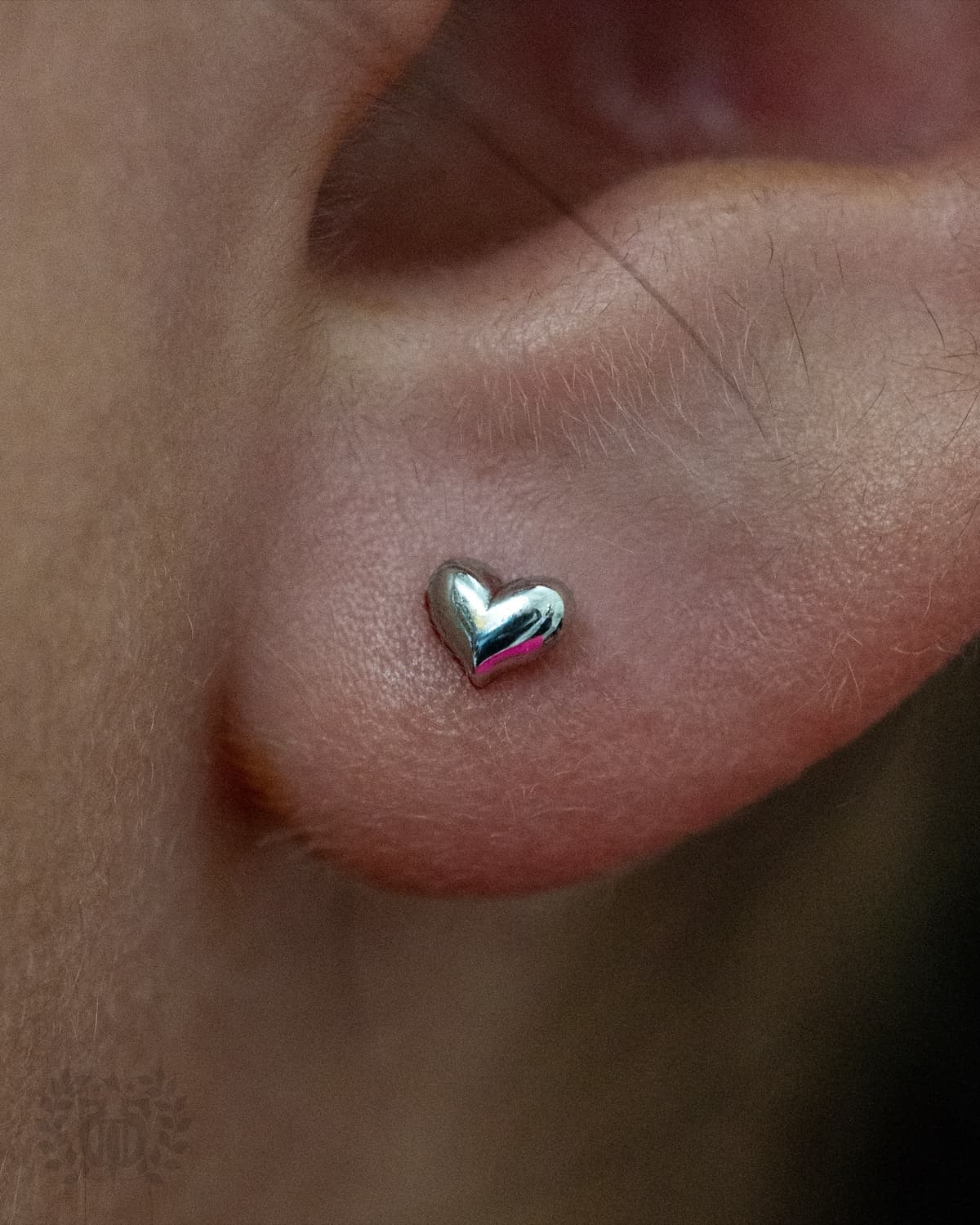
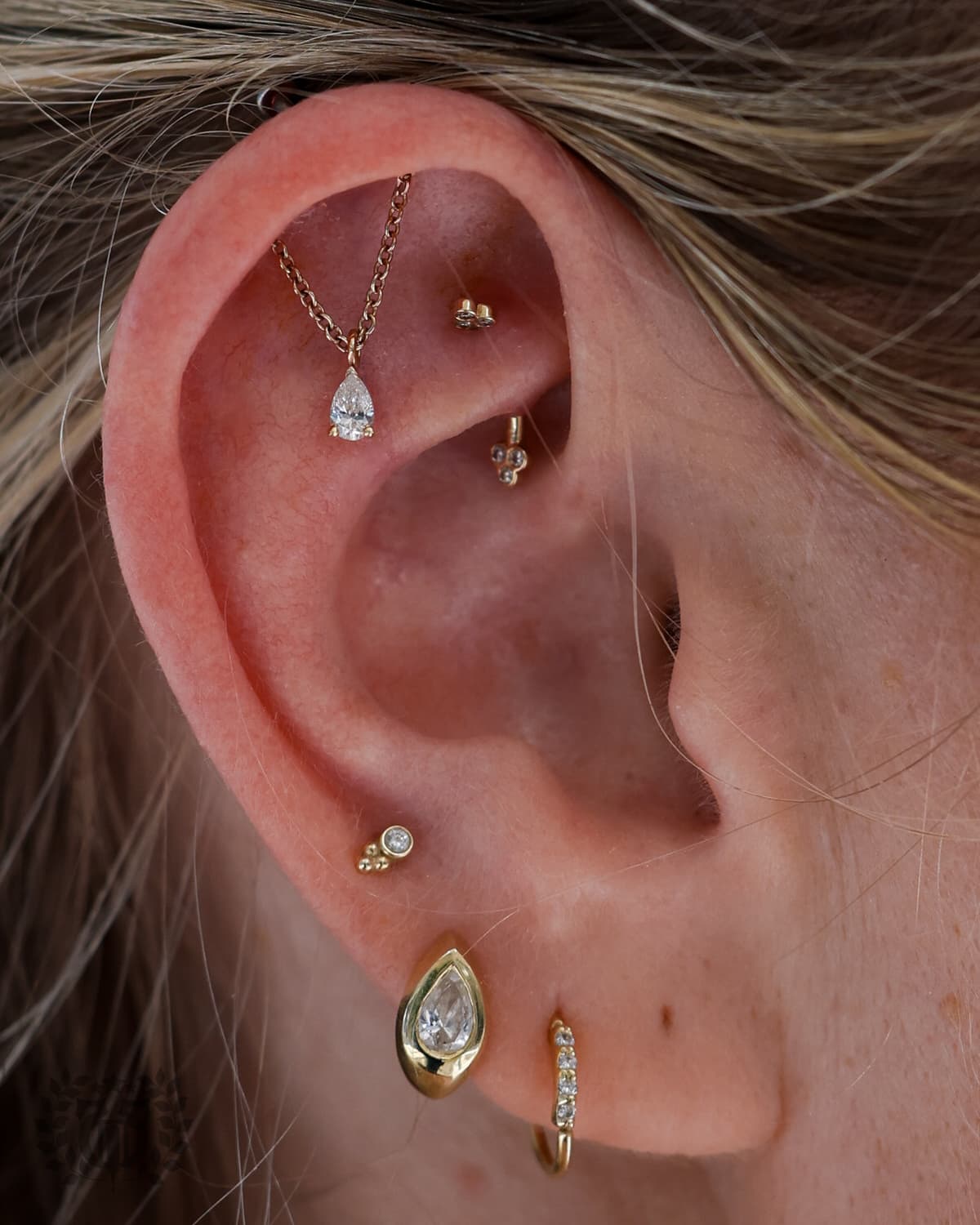
Bunny Vogt, a dedicated Senior Piercer at our studio since 2019, is known for her artistic eye and expertise in ear styling and curation. She excels at facial piercings, navel work, and creating balanced piercing arrangements that reflect each client's unique style.
 Founder
 Master Piercer
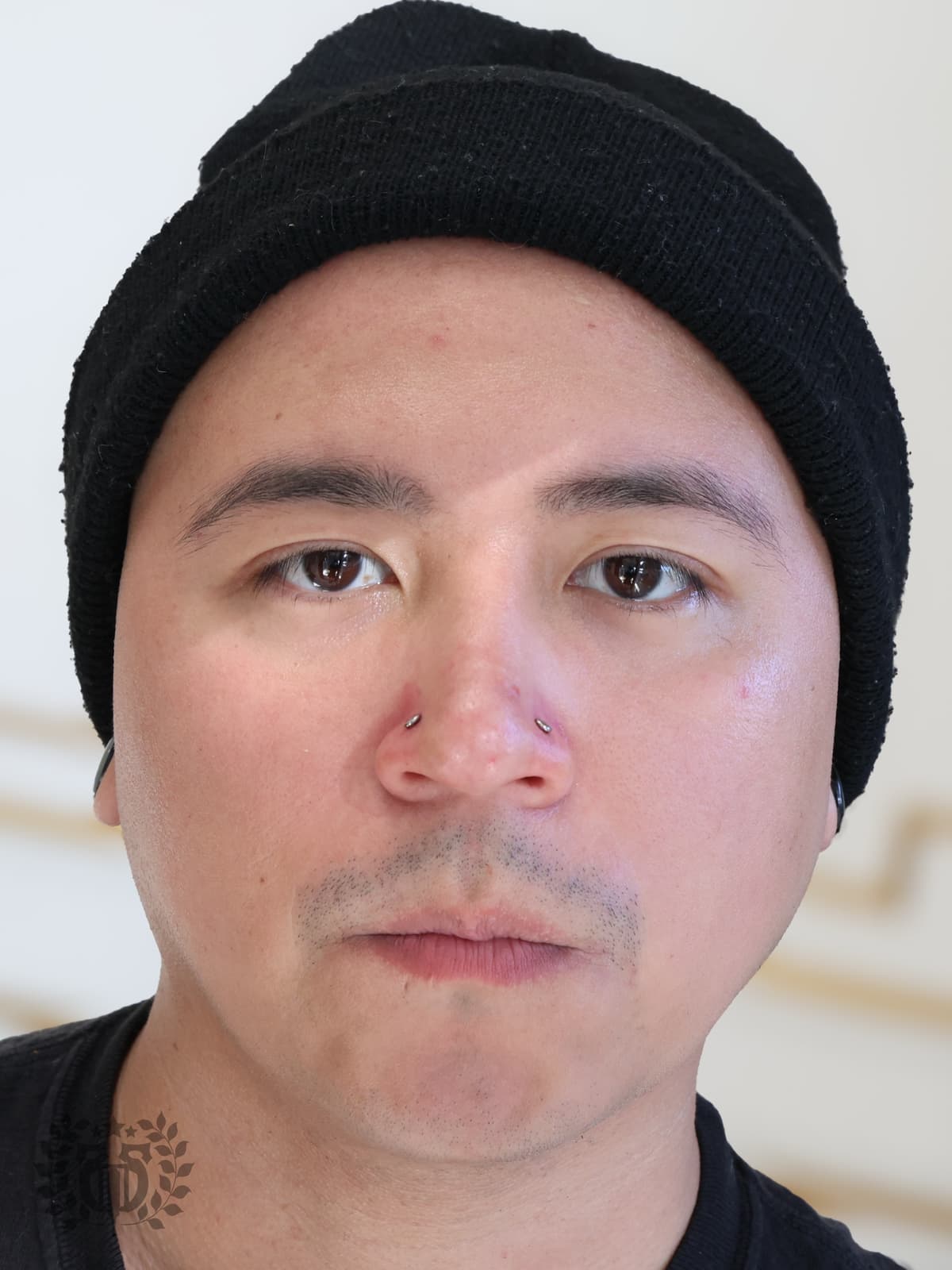
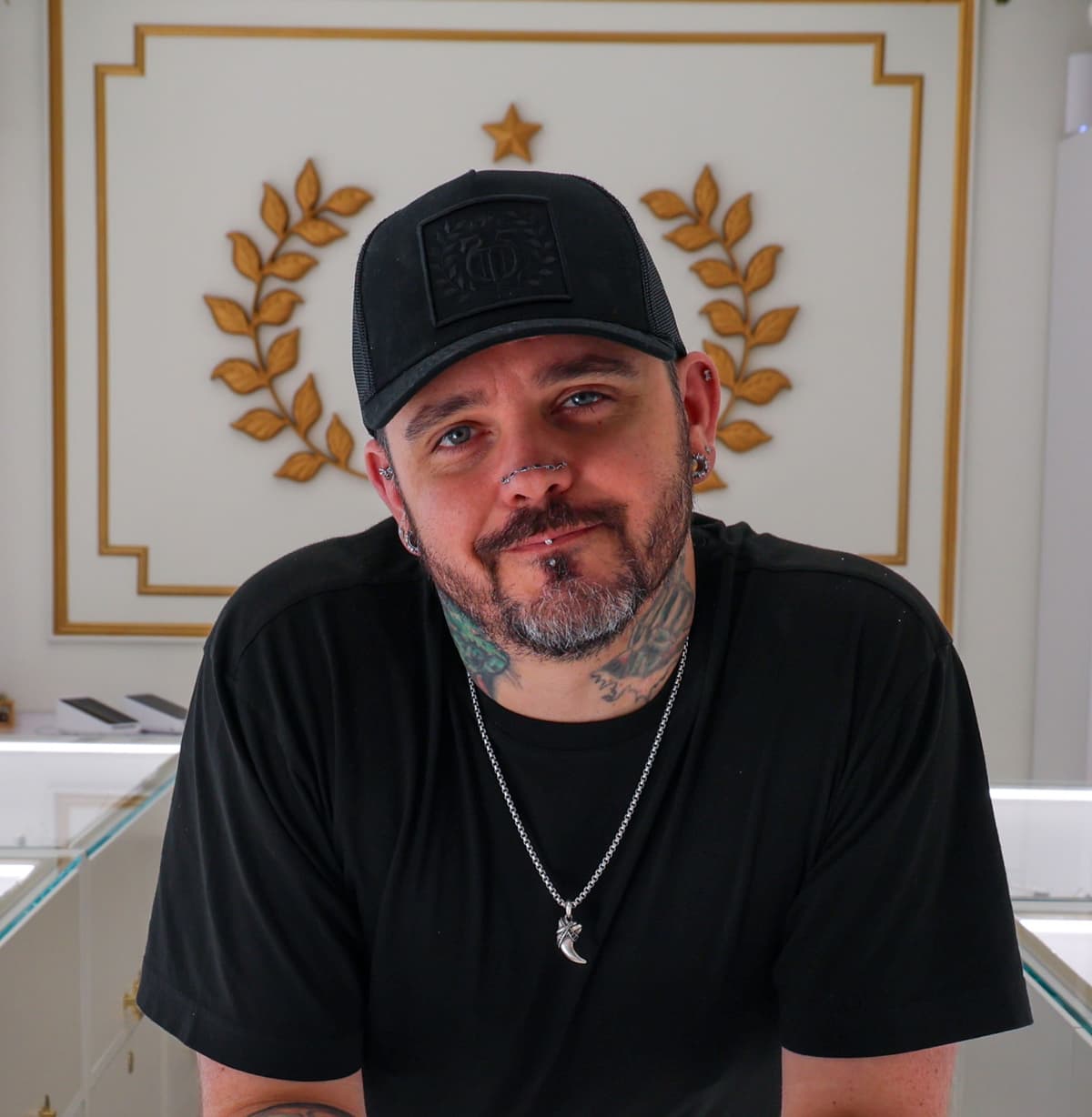
Blue Mason, our Master Piercer and studio founder since 2004, brings over two decades of body piercing expertise. From simple nose piercings to advanced genital work, Blue's technical mastery ensures perfect placement every time.
Short in the chair and heavy on conversation beforehand. The piercing itself is over in a second or two; the briefing about the fortnight afterwards takes considerably longer, and that's the right way round.
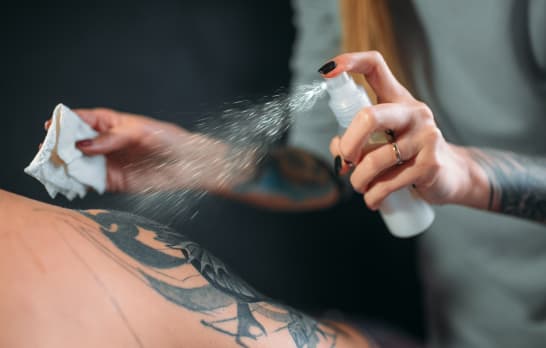
Sterile saline twice a day on the outside, plain water in the shower, and that's the whole routine. Nothing goes into the urethra — it flushes itself every time you use it, and pouring saline or anything else through it does no good and plenty of harm. Antibacterial soap, alcohol and hydrogen peroxide all strip the tissue that's trying to line the channel.
What's specific to this one is the laundry. Dark, supportive underwear rather than loose boxers, changed daily, with kitchen roll folded in for the first several days. Pat dry with something disposable; towel loops catch on a heavy ring. Skip baths, pools and hot tubs while it's fresh — showers from day one are fine. Sit to urinate for a fortnight and save yourself the bathroom archaeology.
Then the timing trap. This heals quickly, which means it feels finished before it is. Barrier protection when things resume, be gentle about it, and come back for the downsize once the swelling has gone rather than leaving a long bar to swing about in a settled channel.
Book AppointmentIntermittent bleeding for the first several days, heaviest at the start and triggered by movement. Two openings means the stream splits, so sit down and stop thinking about it. Dark supportive underwear, kitchen roll, saline twice a day, and an easy evening on day one. All of this is the normal version.
Spotting becomes occasional and then stops, and you work out where light pressure redirects the stream. Swelling has gone, which means the starter bar now has slack in it — come in for the downsize rather than letting a long bar swing in a healing channel. Resuming things comes later than feeling fine does.
Settled, and now the options open up: a different jewelry shape, a solid gold end, or the first step of stretching if that's where you're heading. One size at a time and weeks between steps, never days. Bring the first change and the first stretch to us so you can see what ready is supposed to feel like.
Open 8am to 8pm every day, walk-ins taken when a room is free. Of everything in this category, this is the one where the timing of your week matters as much as the timing of our diary.

Public reviews, so nobody names a placement. Several mention being told exactly what was coming.
"Highly recommend. You get what you pay for- is on higher end but quality of the work is worth it. Blue did amazing work bringing my watercolor piece to life. All the staff are great and personable/knowledgeable. Working on the piece, Blue is very detail oriented and I really underestimated time, but in this case to get a stunning piece definitely is worth taking the extra time"
"My absolute favorite studio to visit. Ramel El (Raa) and I worked together the past few months on a sleeve that makes me incredibly proud to have found this gem of a place and master of an artist. It was above and beyond. Would recommend Apollo and Raa to anyone that wants art they’ll cherish for the rest of their life. Can’t wait to start the next project with him soon."
Reviews from Google · Read all 623 on Google
5000+ clients2625 Main Street in Santa Monica, open 8am to 8pm seven days. You check in at the counter like anyone else and nothing about your appointment is said out loud. Worth thinking about the trip home rather than just the trip here — a long drive straight afterwards is less comfortable than a short one, and metered parking on Main gets tight through the afternoon.

Santa Monica, CA
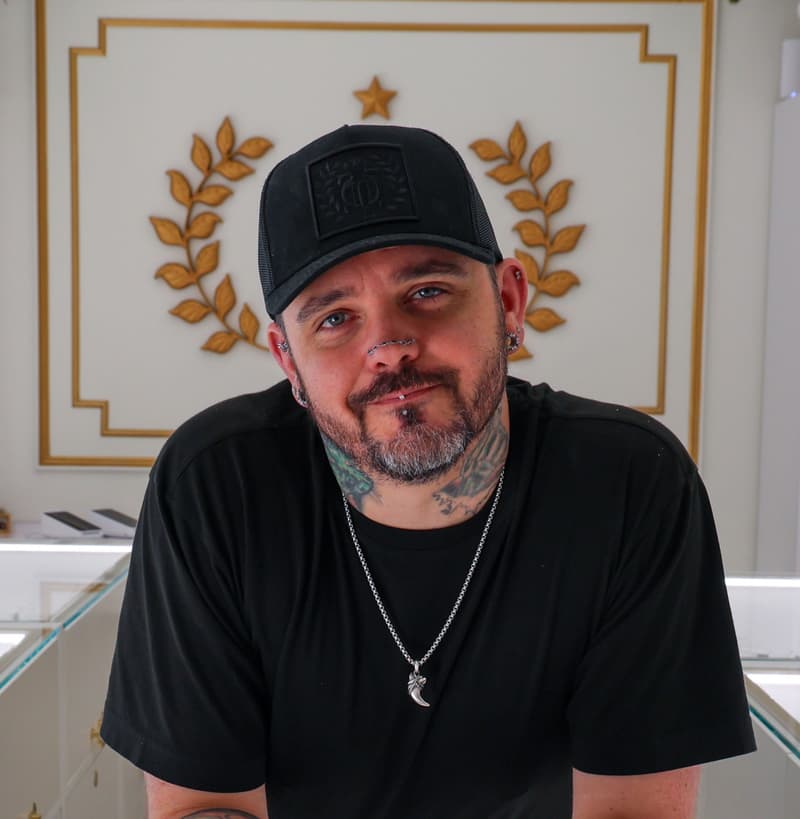
Apollo was founded by Blue Mason in 2007. With 20+ years of body art experience, Blue brings master-level expertise to every piece. Read Blue's story →
Mostly about the plumbing and the first fortnight, which is exactly what people should be asking.
It enters through the urethral opening and exits through the underside of the glans, a short distance back from the tip. So the bar passes through the floor of the urethra rather than through the outside of anything. That's the fact that makes this piercing behave differently from every other genital placement: one end of it lives inside a passage that has fluid moving through it several times a day.
Because thin jewelry in this tissue behaves like a wire. The urethral wall is soft and it moves, and a thin bar concentrates all its load along a narrow line, which cuts rather than sits. A heavier starting gauge spreads that load and gives the channel a stable object to build around. It also means the channel is usable if you ever want to stretch, whereas a channel started too thin has to be rebuilt.
Messier than anyone tells you. There will be intermittent bleeding for the first several days — not dramatic, but enough that you want dark underwear and a folded piece of kitchen roll to hand. Urine will come out of two openings until things settle, which means the stream sprays or splits. Sitting down solves it entirely and most people just do that for a fortnight. None of this is a complication. It's the normal first chapter and it passes.
Largely, and people adapt faster than they expect. Once healed, most find that light pressure below the piercing directs the stream, or they simply carry on sitting. What doesn't happen is any change to how the bladder or the plumbing works — the piercing adds an opening, it doesn't alter function. Public urinals are the thing worth thinking about in advance rather than discovering.
Excellent blood supply and mucosal tissue, which is the same reason a hood piercing settles fast. It's genuinely one of the quicker heals in the studio despite being the one that looks most alarming on day three. The catch is that quick healing tempts people to resume everything early, and comfortable arrives well before healed here.
A ring is the traditional choice, moves the most and is the easiest to clean, but it's also the most obvious under thin clothing. A curved bar is lower profile and the usual answer for someone who wants it invisible at work. A horseshoe sits between the two and lets you reposition the balls. Start with what your piercer recommends for the anatomy and the gauge; you can change to any of the others once the channel is established.
Yes, and PAs stretch more readily than most piercings because of the tissue. The rules are the usual ones and they matter: fully healed first, one size at a time, and weeks between steps rather than days. Skipping a size or forcing it produces a thin, damaged channel that never sits right afterwards. Come to us for the first couple of steps and we'll show you what "ready" feels like.
Not in practice. A reverse PA exits through the top of the glans rather than the underside, and it takes considerably longer to settle. It's the more demanding of the two by some distance, and we'd generally suggest living with a standard PA first — both because it tells you how your tissue behaves and because a lot of people find the standard one is what they actually wanted.
Several weeks minimum, then barrier protection for a good while beyond that. Two specific things to know here: this piercing bleeds more readily than others if it's disturbed early, and the jewelry is heavier than what your partner may be expecting. Be gentle and be communicative when you resume. Ask us for a specific timeframe at your appointment.
Quoted at the consultation, and the consultation is $100. The gauge your anatomy calls for and the jewelry style you choose both move the number, so a figure over the phone would be made up. Jewelry is priced separately from the piercing. Call (310) 331-0603 and we'll get you booked in for a look.
A long-established PA usually shrinks rather than closing outright, but a young one can tighten up within hours. If a clinician asks you to remove it for a procedure, do as they say — that call is theirs — and then come back to us promptly. We can also fit a retainer if you need it out of sight for a while rather than out altogether.
Sterile saline twice a day and plain water in the shower, and that's genuinely all. The urethra rinses itself every time you use it, so there's no case for flushing anything through it. What causes problems here is over-cleaning: antibacterial soap, alcohol and hydrogen peroxide all strip the tissue trying to line the channel. Pat dry with something disposable, wear supportive cotton, and leave the jewelry alone.
Shower beforehand, eat a proper meal, and skip alcohol for the previous day — people who turn up on an empty stomach are the ones who go grey in the chair. Wear supportive underwear rather than loose boxers for the trip home, and dark rather than white. Bring photo ID. Give yourself an easy evening afterwards; this is not a piercing to have on your lunch break before a long shift.
18 and over, with government-issued photo ID at the appointment. No exceptions and no parental consent route. Bring the physical card, not a picture of it on your phone.
Apollo sits at 2625 Main St in Santa Monica, a block from the beach and easy to reach from anywhere on the Westside. Here's roughly how long it takes to get to us for tattoos and piercings:
There's metered street parking on Main Street and Ocean Park Blvd, plus a public lot on 2nd Street a short walk away. We recommend giving yourself an extra 10 minutes to park on weekends — Main Street gets busy with the farmers market and beach traffic. If you're running late, text us at the studio and we'll hold your appointment.
Free, private, and rescheduling after the briefing is a perfectly normal outcome.
Recognized in Santa Monica's Most Loved 2025 & 2026


We'll respond within 24 hours
Or reach us directly:
We use cookies to run this site, remember your preferences, and understand how it's used. Read our Privacy Policy for full details.