The thing almost nobody is told before they book: a septum piercing does not go through cartilage. Below the hard divider in your nose, just above where the septum meets your lip, sits a short run of thin soft membrane. That's the sweet spot, and it is the entire reason a septum hurts less and heals faster than the cartilage piercings people compare it to. Miss it and you have a slow, sore, cartilage piercing instead. Find it and you have a three-to-four-month heal.
Finding it is done with fingers rather than a ruler. We pinch down the septum until the tissue changes from firm to obviously soft, check that the soft window sits where your columella actually hangs, and mark from there. Then a receiving tube goes in, the needle goes through in a second, and your eyes water whether it hurt or not. You'll leave in an implant-grade titanium horseshoe that flips up out of sight when you need it to.
Book Your Septum Piercing 5000+ clients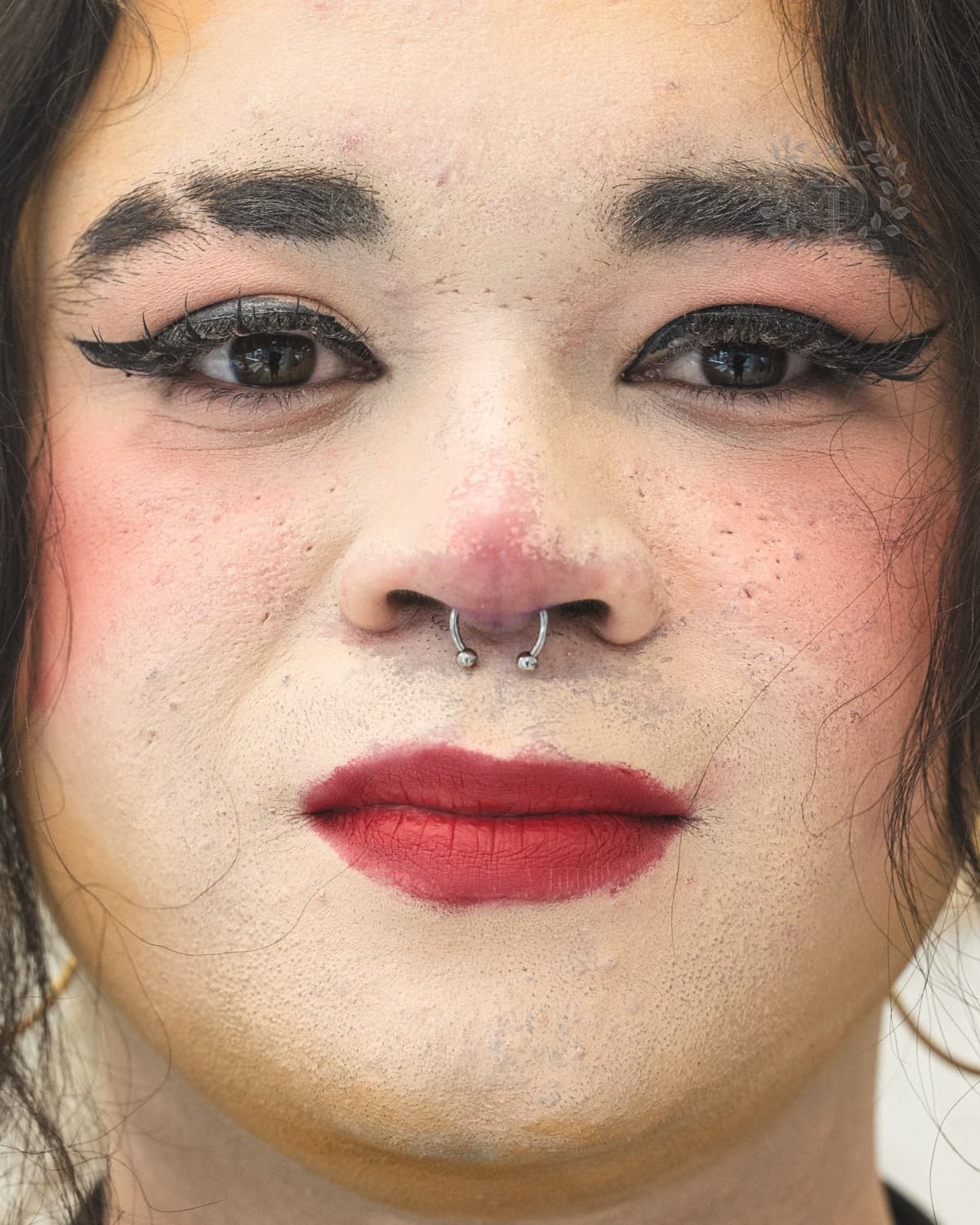
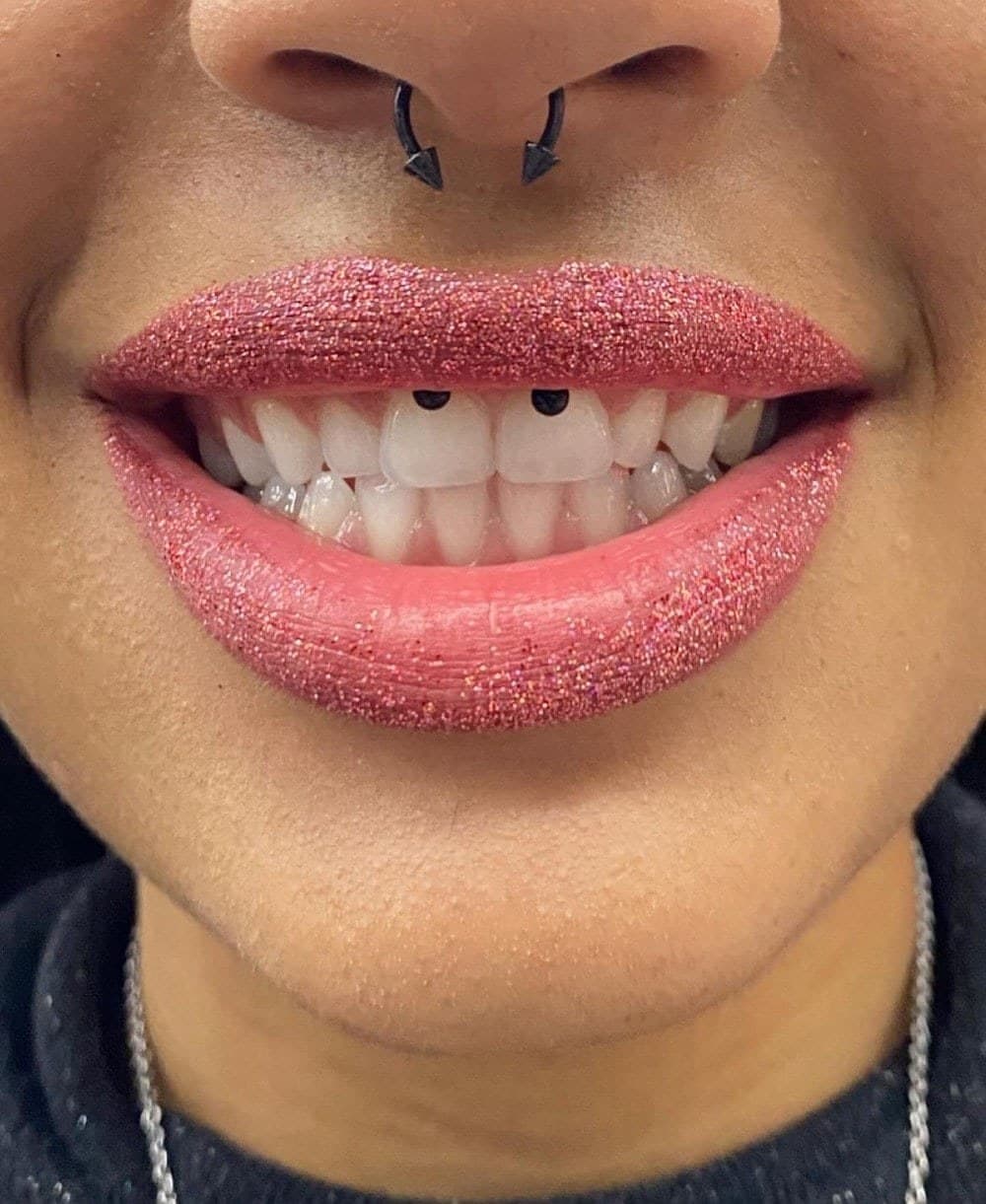
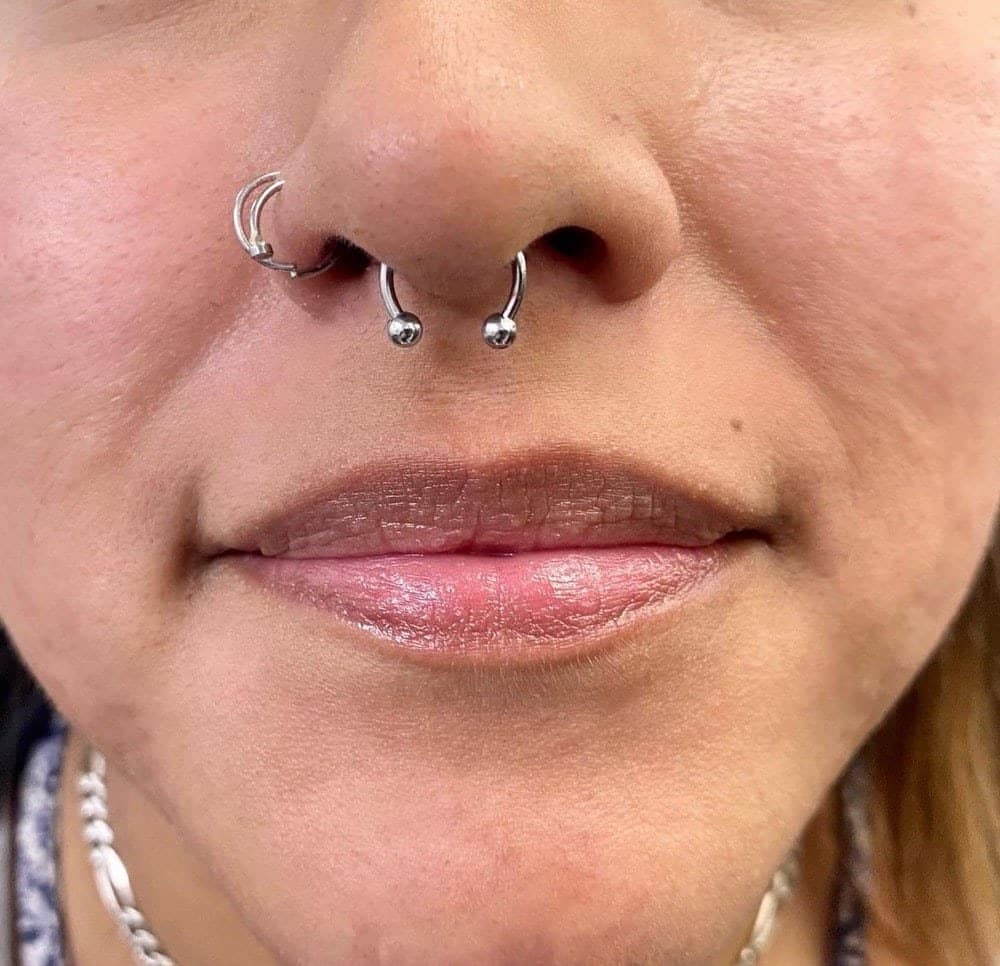
Everything else on this page follows from one anatomical fact, so it's worth spending a minute on it.
Put a thumb and finger either side of your septum and pinch gently, starting up near the bridge. It's firm. Now walk down towards the tip of your nose. At some point, usually a few millimetres above where the septum meets your upper lip, the tissue changes character completely. It goes thin and soft and pliable between your fingers. You have just found what piercers call the sweet spot, and it's the only place a septum piercing belongs.
What's above it is septal cartilage: dense, stiff, and poorly supplied with blood. Cartilage doesn't heal the way skin does. It has no direct blood supply of its own, so repair happens slowly from the edges, which is why cartilage piercings anywhere on the body run six months to a year and are so unforgiving about being knocked. Put a needle through septal cartilage and you have given somebody a slow, sore, high-maintenance piercing that will complain for a year.
The soft membrane below it is a different tissue with a proper blood supply. It's why a septum done correctly is one of the faster heals we do, three to four months and sometimes six, and why people who braced for the worst walk out saying it was nothing. That gap between expectation and reality is almost entirely down to whether the piercer found the right centimetre.
Here's the catch. That window is not the same size on everyone. Some people have a generous soft area with plenty of room to place within; others have a narrow band sitting higher or lower than average, and a couple of millimetres of drift puts you into cartilage at one end or too close to the tip at the other. It isn't something you can eyeball from across a counter, and it certainly isn't something a stud gun could ever be aimed at. It's found by feel, on your nose, before anything is marked.
So when you sit down, expect a piercer to spend a minute with gloved fingers on your nose, working down until the tissue gives. Expect them to look at whether that soft window is actually centred behind where your columella hangs, because on a fair number of faces those two things sit slightly apart and somebody has to decide which one wins. And expect to be told if your anatomy makes this awkward, rather than finding out afterwards.
Gloved fingers walk down the septum until firm becomes soft. That transition is the top of your window, and it's in a slightly different place on every person who sits in the chair.
Some people have a centimetre of usable soft tissue. Some have a couple of millimetres. The narrower it is, the more the placement is decided by anatomy rather than by preference.
Drift up and you're into dense cartilage and a year-long heal. Drift down and the jewelry sits too close to the tip and looks low. The good placement lives between those two errors.
The pass has to be level and perpendicular or the ring hangs at a tilt forever. We check the angle from below as well as head-on, because head-on hides a slant remarkably well.
A tube supports the tissue and catches the needle. Clamps crush what they hold and distort the very landmark you spent a minute finding, which is a good reason we don't own any.
Gauge and diameter get chosen against your septum first. A horseshoe that's too tight presses on fresh tissue; one that's too big swings and catches. Neither is a problem you want to discover at home.

Apollo's Premium Jewelry Partner
Handmade in Los Angeles since 1996. Lifetime guarantee. Implant-grade gold, platinum, and titanium. Over 3,000 original designs in our case — ask your piercer for a tour.
See the BVLA story →Two numbers decide whether a piece looks right on you: the gauge, which is the thickness of the metal, and the diameter, which is measured across the inside of the ring and is where almost everyone guesses wrong.
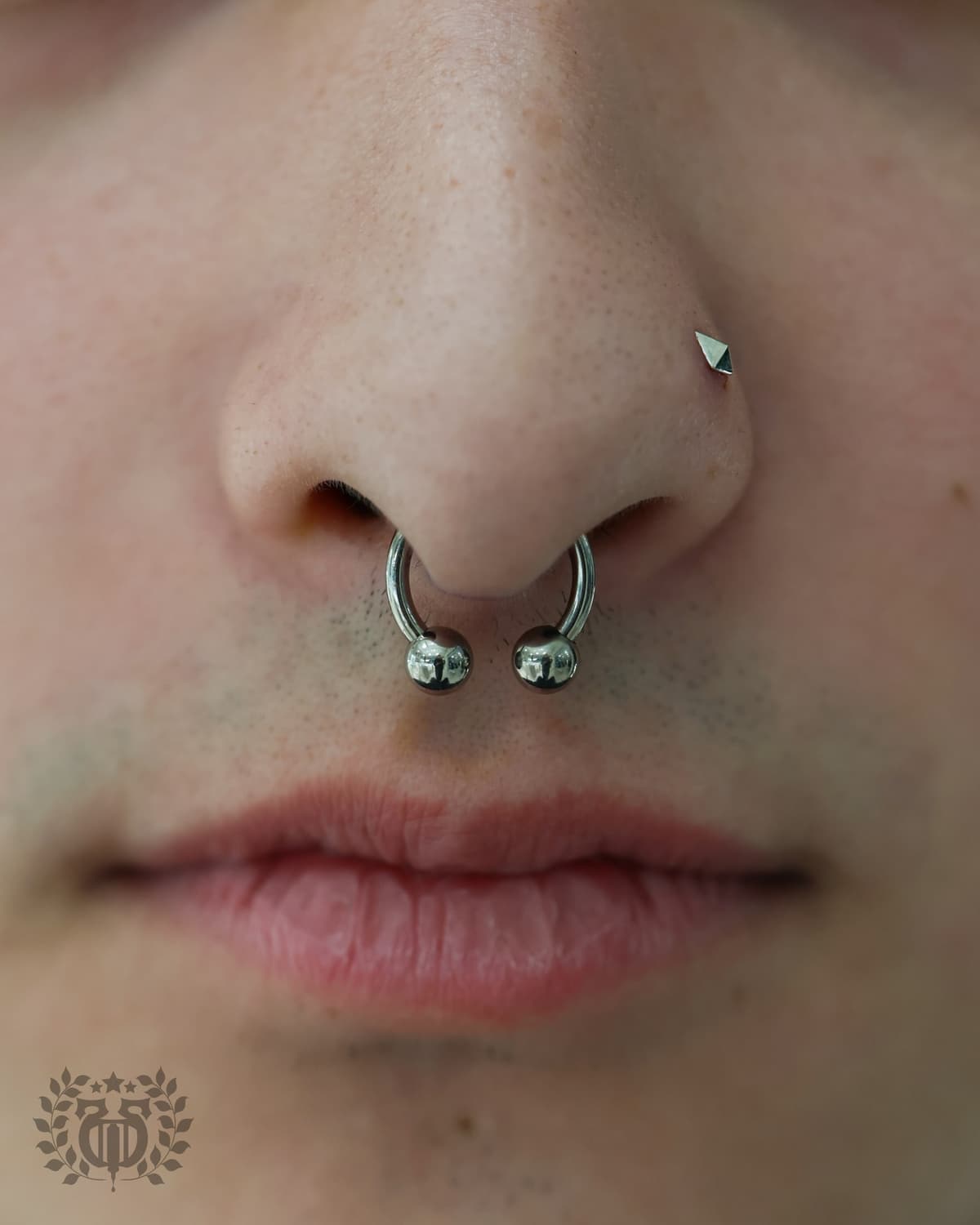
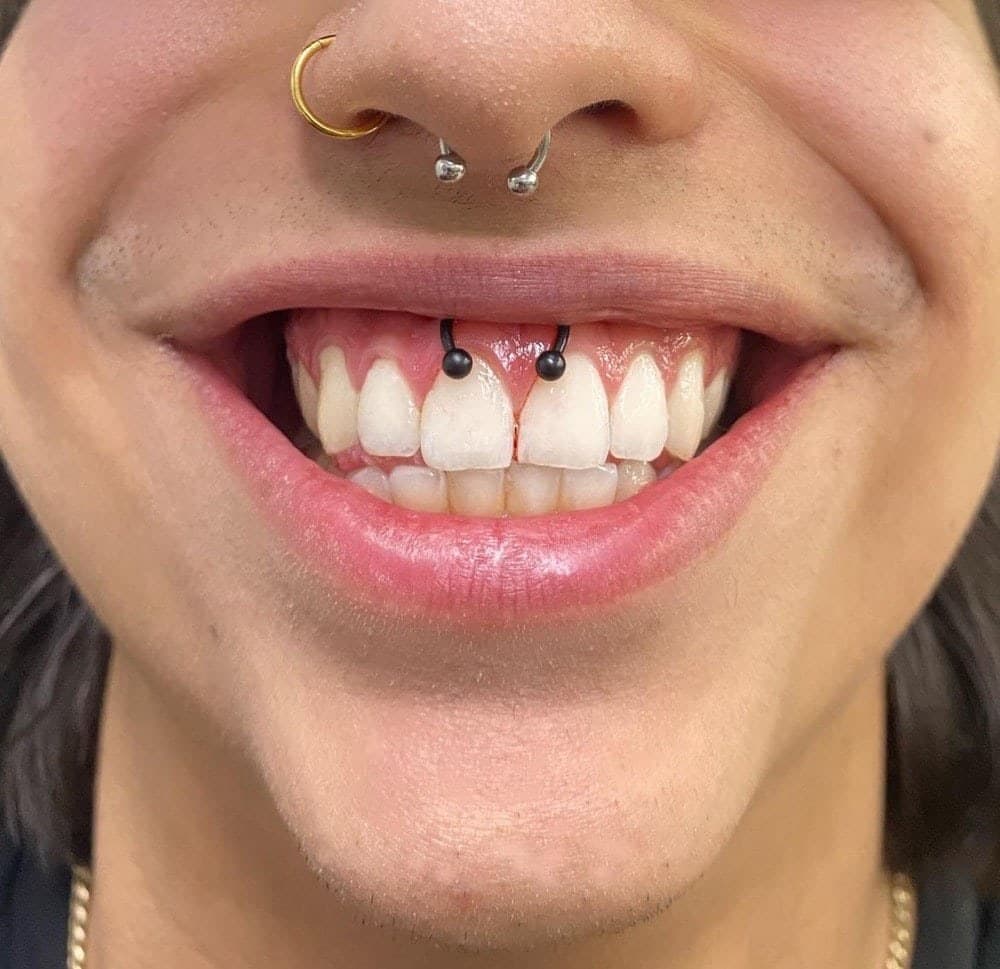
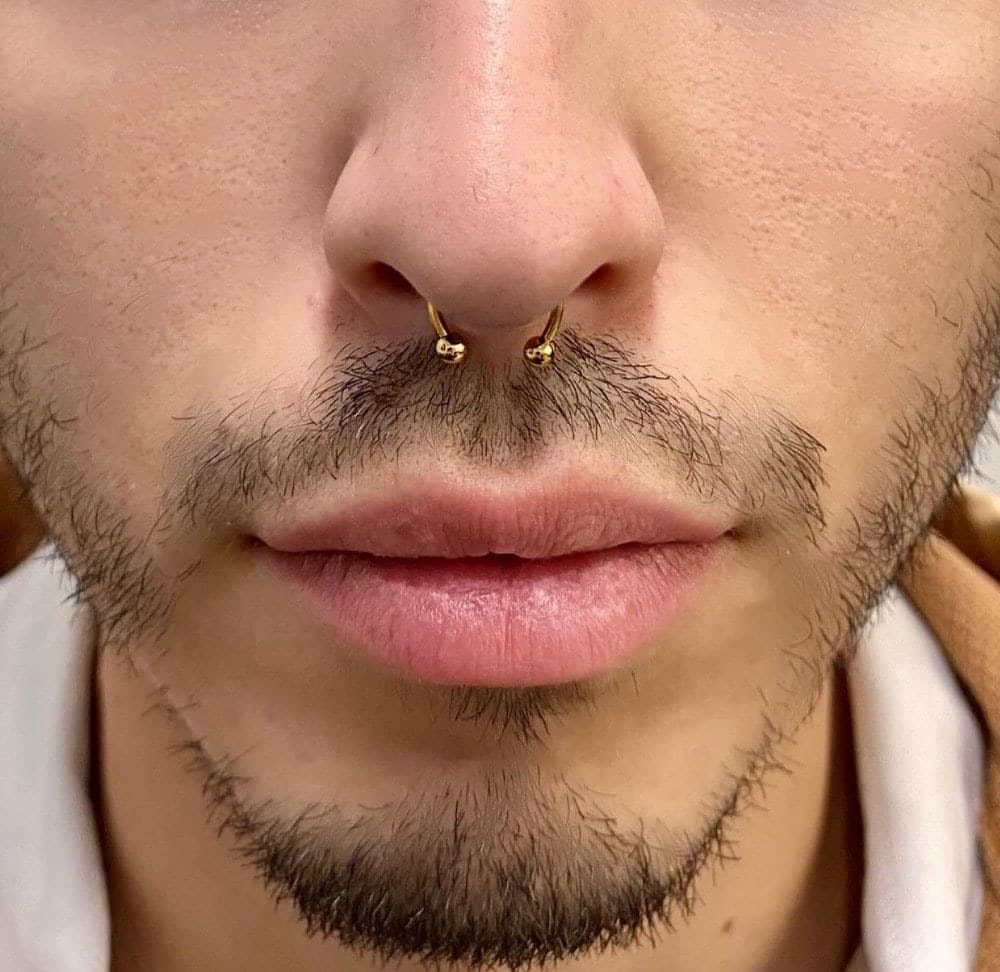
What most people leave in. Open at the bottom, a ball threaded on each end, and it rolls up inside the nostrils when you want it gone. 8mm suits a lot of noses and some need more, which is why we size it against your face rather than assuming. Titanium, always, for the first few months.
A hinged segment that snaps shut, so there are no balls to lose down a sink. The catch is sizing: a decorated clicker in a heavy gauge fills far more space than a plain ring of the same stated diameter, so an 8mm can read as small on one piece and enormous on another. Hold it against your nose before you buy it. Best once you're past initial healing.
A ring held shut by tension on a single bead. It gives the cleanest continuous line of anything you can put in a septum. It also requires ring-opening pliers and a steady hand, and the bead is small, round, and lives on your bathroom floor the moment you try this over a sink. Let us change it the first time.
A staple-shaped bar that tucks entirely up inside and shows nothing but two tiny ends you have to look for. Titanium versions are fine to heal in if your job needs it from day one; clear and flesh-tone ones are best kept for once you're settled. Tell us at the appointment if you need to be invisible at work and we'll start you accordingly.
Clear next step
Two minutes with gloved fingers tells us whether your window is generous or narrow, and it costs nothing to find out.
Recommended first step
Choose a facial or oral piercing appointment with clearer placement guidance.
Every piercing heals differently — here's what to expect
| Piercing Type | Location | Initial Healing | Full Healing | Pain Level |
|---|---|---|---|---|
| Septum | Tissue between nostrils | 6-8 weeks | 3-6 months | 4-5/10 |
| Nostril | Side of the nose | 2-3 months | 6-9 months | 3-4/10 |
 5000+ clients
Entry and exit are both on mucous membrane, which is the reason the sterile routine here has a couple of steps a lobe piercing doesn't
The inside of each nostril gets cleaned before anything is marked, because there is no outer surface on this piercing. Every millimetre of the channel is internal.
The pinch test happens first, then the dots go on, then you look. Marking before finding is how a septum ends up in cartilage.
Pre-sterilised, sealed, and the pouch gets broken where you can see it. Nothing that touches this piercing has touched anybody else.
A tube braces the septum and catches the needle. Clamps squash soft tissue out of shape, which is the last thing you want after spending a minute locating it precisely.
Hospital-grade autoclave for reusable tools, EPA-registered disinfectant on surfaces between clients, bloodborne-pathogen-certified piercers, and an LA County licence on the wall. Ask and we'll show you.
The reason half our septum clients book at all, and the part of it people get wrong in week two
A septum is the only facial piercing you can genuinely make disappear, and that's why people with conservative jobs, court appearances, uniformed work and family weddings end up choosing it over a nostril. But "flip it up" covers two quite different things, and knowing which one you need changes what we put in on day one.
Flipping a horseshoe means rotating the open ring so it tucks inside the nostrils. It works, and from straight ahead it reads as nothing. From below, or across a table when somebody tips their head, the two balls are visible sitting in the nostrils. Good enough for most workplaces. Not good enough for a job where somebody is going to be looking closely.
A retainer is the honest answer. It's a staple-shaped bar: two short arms that sit up inside and a bridge across the bottom, with nothing decorative on it at all. Put one in and there is nothing to spot from any angle. Titanium retainers are fine to heal in, which matters if you need to be invisible from the very first week rather than in three months. Clear and flesh-tone ones are more discreet again but are better saved for a settled piercing.
The timing rule is the bit people ignore. Six to eight weeks before you start flipping regularly, and not before. In the first weeks the channel is a soft raw tube, and rolling metal through it every morning and every evening does exactly what you'd expect: it irritates, it swells, and it turns a fast-healing piercing into a slow one. If your job means you cannot be visibly pierced from day one, say so when you book. We'll start you in a retainer instead and you'll never need to flip anything.
Nobody warns you about this one, and then it happens around week three and you assume something has gone badly wrong
Here's what's going on. Your nose produces sebum and sheds skin cells continuously, and a septum piercing gives all of that a warm, enclosed, poorly ventilated place to collect on a piece of metal. Leave it a few days and the mixture develops a smell that people describe, accurately and without affection, as cheese. It is common enough that piercers have a nickname for it. It is not a sign that you are unclean and it is not, by itself, a sign of infection.
What actually fixes it is dull. Saline rinses reach further up than you think, and once the piercing is healed, taking the jewelry out and washing it properly with soap and warm water clears the smell in one go, because most of the residue is on the metal rather than in you. Smooth, well-finished titanium collects less than cheap steel with a rough surface, which is one of the practical arguments for good jewelry that has nothing to do with allergies.
What is worth paying attention to is the difference between smell and infection, because they get confused constantly and one of them needs a doctor.
The fee covers the assessment, the sterile needle, the piercing, a titanium starter and every follow-up visit. Jewelry beyond the starter is priced on its own.
Jewelry sold separately
14K gold clicker or ring
Premium designer jewelry
For hiding at work
What's Included: Professional consultation, sterile single-use needle, implant-grade starter jewelry, detailed aftercare instructions, free follow-up consultations.
 Senior Piercer
 Senior Piercer
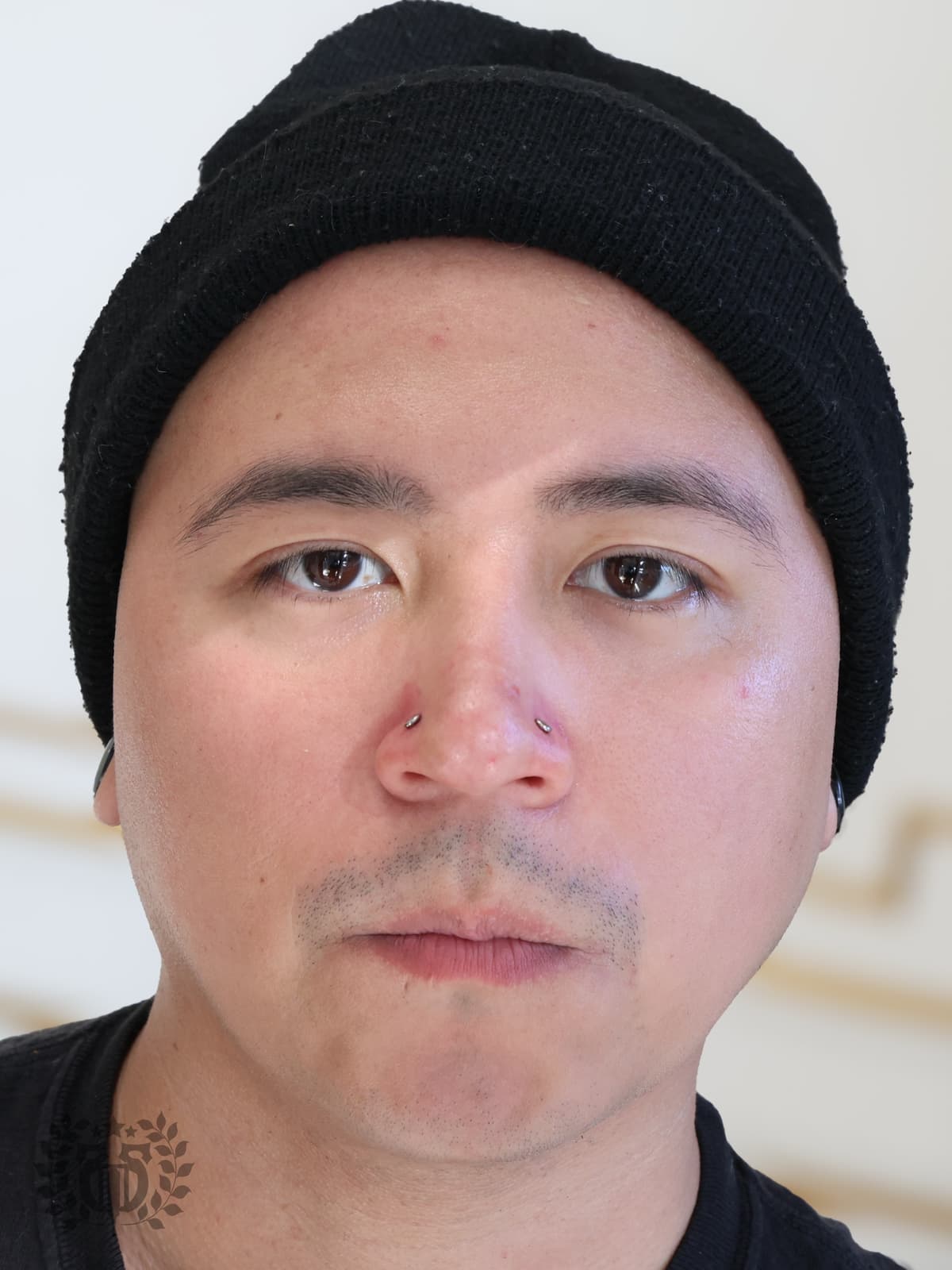
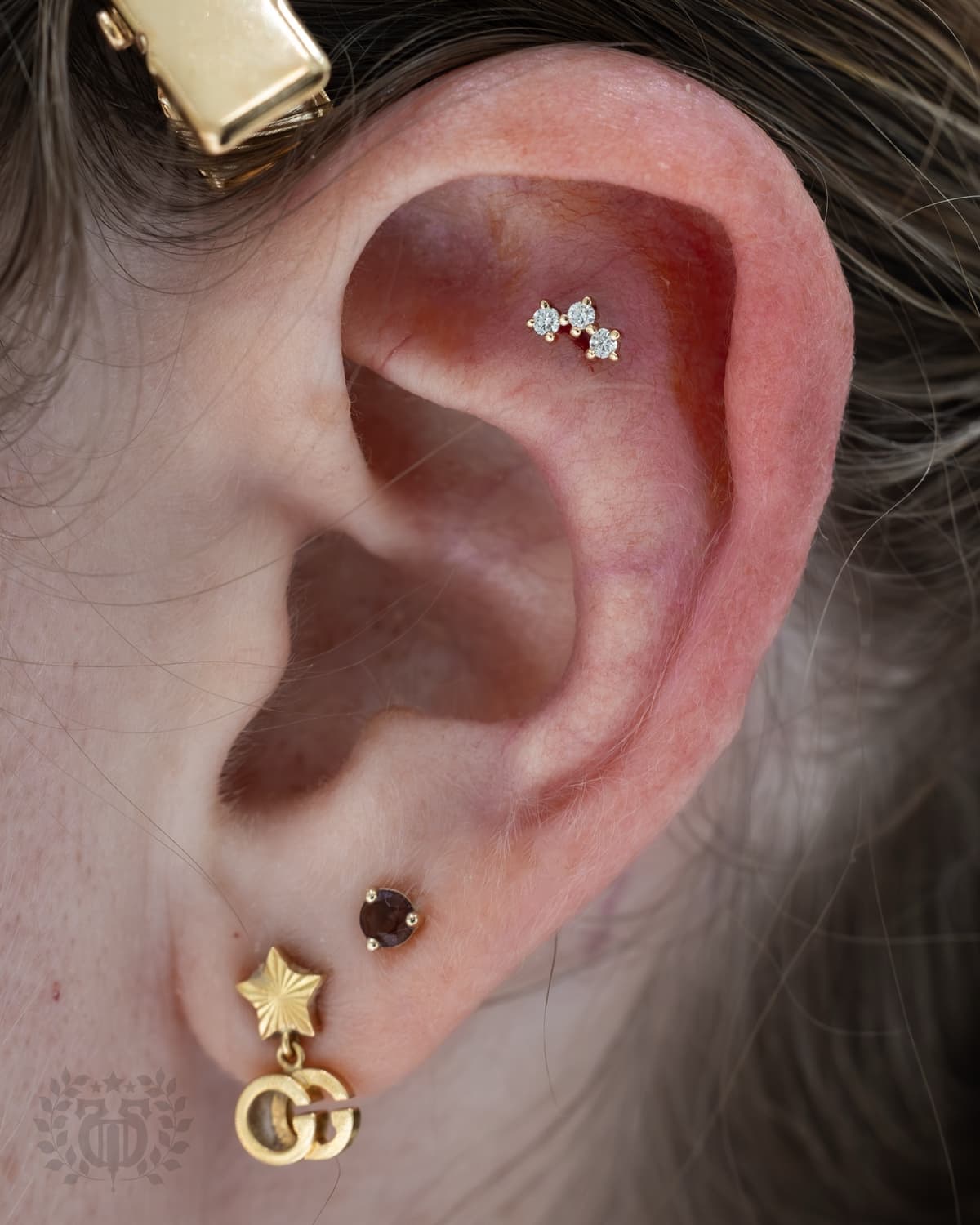
Bunny Vogt, a dedicated Senior Piercer, specializes in septum piercings and ear styling and curation at our Los Angeles studio since 2019. Her gentle technique and expertise in finding the sweet spot ensures a comfortable piercing experience every time.
 Founder
 Master Piercer
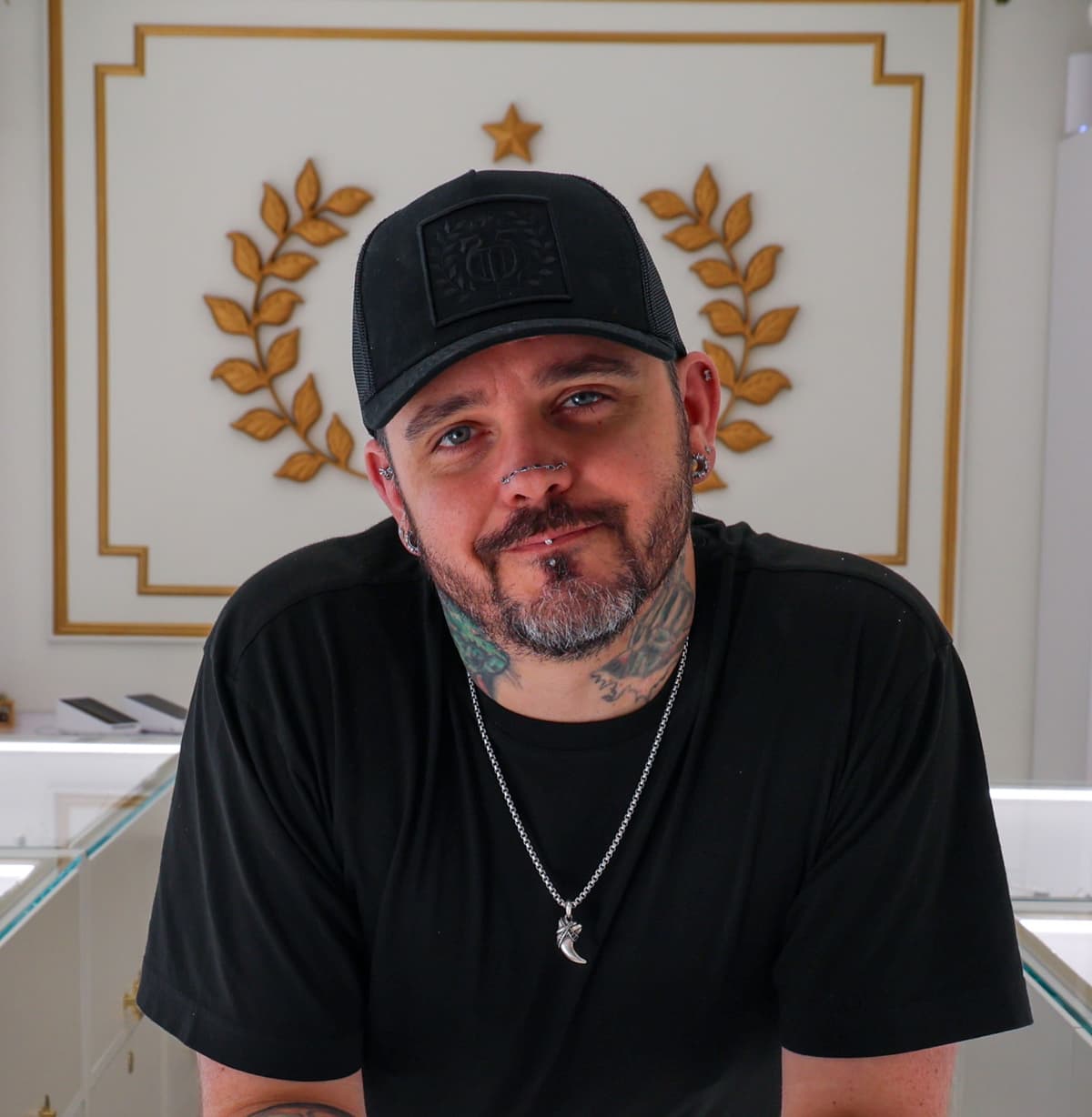
Blue Mason, our Master Piercer and studio founder, has performed thousands of septum piercings and advanced genital work over 20+ years. His precision and expertise ensures perfect placement through your sweet spot.
Two anatomical things send people to this page worried, and neither is the disqualifier they've been told it is. What they do affect is how straight the finished piercing looks, which is a conversation worth having before the needle rather than after.
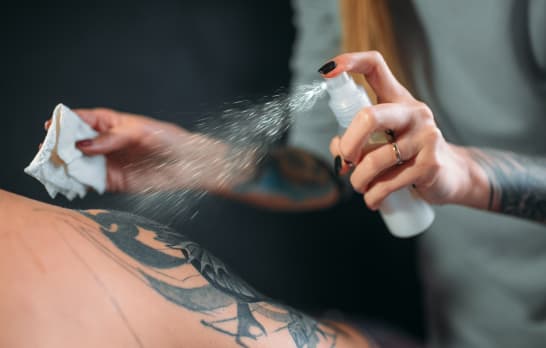
This piercing has no outside. Both openings sit up inside your nose, which means spraying saline at your face achieves nothing much. Tip your head back, spray up into each nostril, and let it run down over the channel. That's the whole cleaning routine, twice a day, and you can stop as soon as it's genuinely healed.
The rest is restraint. No flipping for six to eight weeks, and no rotating the ring to loosen crust. Don't touch it with unwashed hands, which is harder than it sounds on a piercing that sits directly under your own nose. Blow gently, one side at a time, then rinse. Skip pools, lakes, hot tubs and the ocean until it's settled. Expect a smell around week three and don't panic about it. If you must be invisible at work, ask us for a retainer instead of flipping a horseshoe every morning, because that habit is the single most common reason a septum that was healing perfectly starts to sulk.
Book AppointmentSore for a few days, a bit swollen, and your eyes may water when you bump it. Saline up both nostrils twice a day. Absolutely no flipping, no rotating, no showing people how it moves. Sneezing is unpleasant for the first week and then stops being an event.
Somewhere around week six to eight it stops being tender and will tolerate being rolled up for an evening or a shift. Occasional, not constant. This is also the window where the smell shows up and people assume the worst; it's sebum on metal, not infection. Still no jewelry changes, still nothing submerged in a pool.
Healed for most people in this window, six months for some. Now the clicker you've been eyeing is reasonable, and gold is on the table. Come in for the first change so we can check the channel and show you the angle it wants on the way back in. After that, swap between horseshoes, clickers and retainers as often as you like.
It's a quick piercing once the sweet spot is found, so turning up unannounced usually works. Open 8am to 8pm, seven days. A few things worth knowing before you drive over.
Verbatim reviews from Apollo's Google Business Profile
"First time getting a tatoo and did it with my teenage son. We both had tatoo artist Hannah who was great. Professional, knowledgeable and thorough talking us through each step of the process. I loved the experience. We highly recommend her!"
"I had an emergency situation with one of my back dermals and Blue was wonderful! Was ready to help and got me in and out with no stress. Even with the removal process I hardly felt it🙏😩"
Reviews from Google · Read all 623 on Google
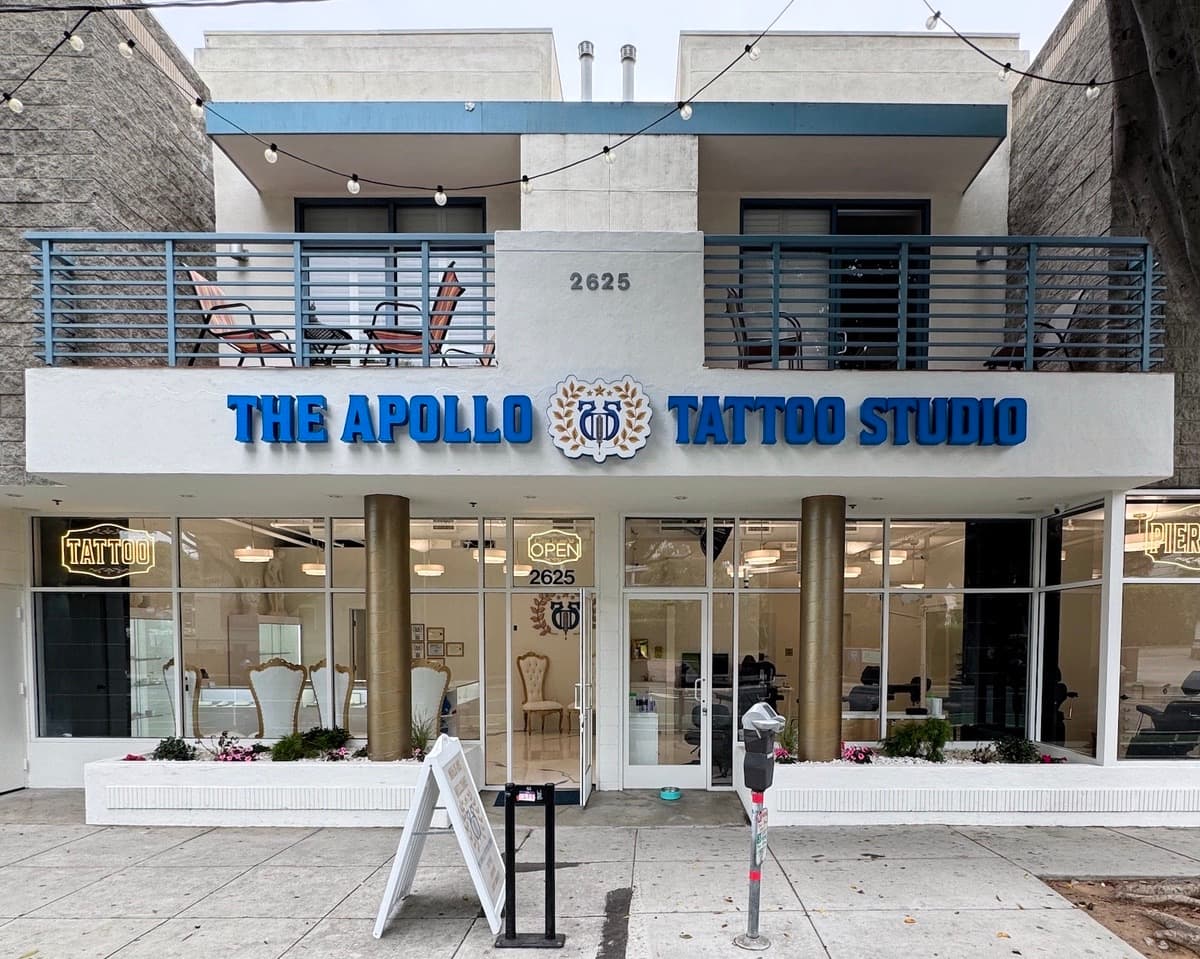
5000+ clients2625 Main Street in Santa Monica, 8am to 8pm every day of the week including Sundays, which catches people out in a good way. A septum takes about twenty minutes counter to door, so it fits in a lunch break if the meters cooperate.
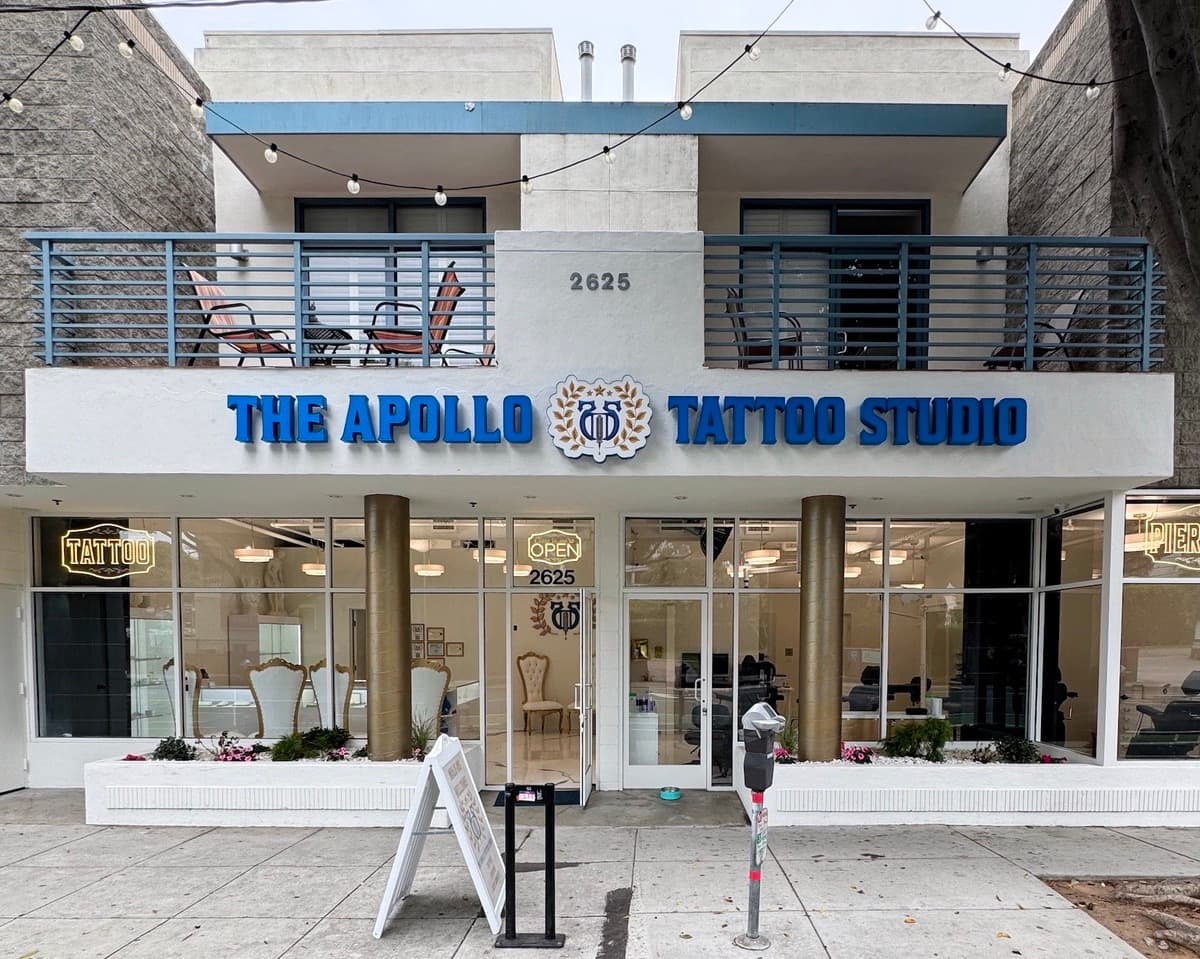
Santa Monica, CA
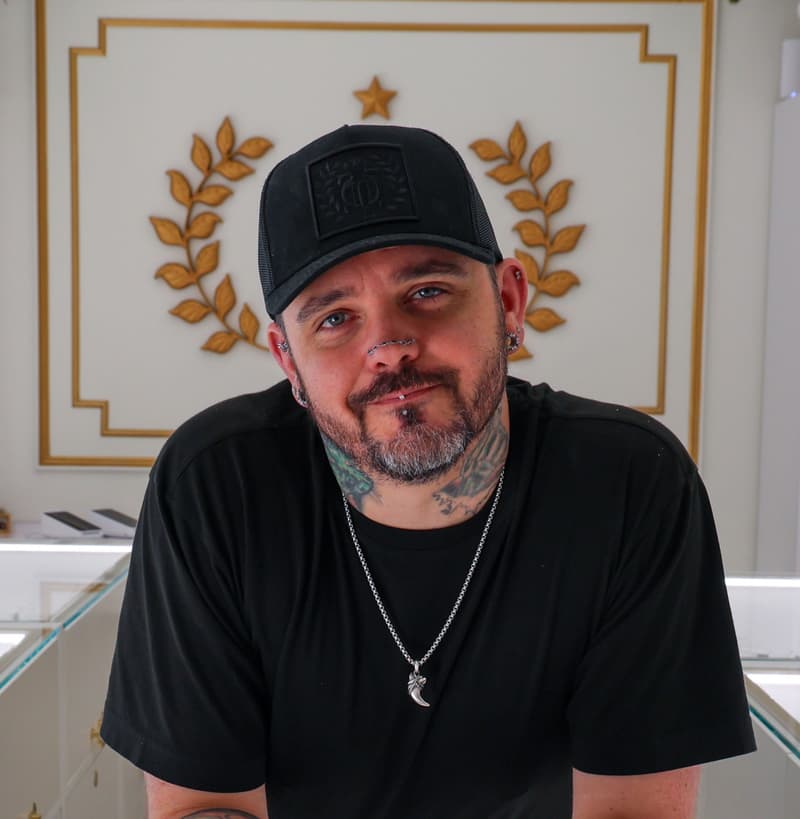
Apollo was founded by Blue Mason in 2007. With 20+ years of body art experience, Blue brings master-level expertise to every piece. Read Blue's story →
Starting with the cartilage question, which is the first thing almost everybody asks, and ending with the one about smell, which is the one nobody wants to ask out loud.
Not if it's done properly. Below the hard cartilage that divides your nose, and just above where the septum meets your upper lip, there's a short run of thin, soft membrane. That's the sweet spot, and it's the only thing we pierce. Cartilage is dense, poorly supplied with blood, slow to heal and genuinely painful to pass a needle through. The soft spot is none of those things, which is why a septum that hurt far less than you expected was probably placed correctly, and one that hurt enormously probably wasn't.
Fingers, mostly. We pinch the septum gently between a gloved thumb and finger and move down from the bridge until the tissue goes from firm to noticeably soft and thin. That transition point is what we're after, and it's different on everybody. Some people have a generous window, some have a narrow one sitting higher than average. We also look at where your columella hangs and whether the soft area is centred behind it, because those two don't always agree.
Less than people brace for, when the placement is right. A sharp pinch, a second, done. What catches everyone off guard is that your eyes stream immediately and uncontrollably. That's a nerve reflex firing, not your body reporting pain, and it happens to people who barely felt the needle. Bring a tissue, don't wear mascara you care about, and don't read anything into it.
Usually not. A deviation is in the cartilage, and we're not piercing cartilage. What it does affect is symmetry: if the cartilage leans, the soft tissue behind it can sit off-centre, and a piercing that goes through the true sweet spot might then look very slightly crooked relative to the tip of your nose. Sometimes we can split the difference. Sometimes we tell you what the compromise is and let you choose. Either way you hear about it before anything is opened, not after.
Better than any other facial piercing, yes. A horseshoe flips up inside the nostrils and mostly disappears, though the two balls can still be visible if somebody is looking up at you. A staple-shaped retainer is the proper answer, because it sits flat inside and reads as nothing. What you can't do is flip it in the first six to eight weeks. The channel is still forming, and rolling the jewelry through it every morning is the fastest way to make a well-behaved septum angry.
Because sebum, dead skin cells and ordinary nasal secretions collect on the jewelry inside a warm, enclosed space, and given a few days that mixture develops a distinctly cheesy smell. It's so common it has a nickname among piercers. It doesn't mean infected, it doesn't mean you're dirty, and almost everyone gets it at some point. Saline rinses and, once healed, taking the jewelry out and washing it will clear it. What isn't the smell of sebum: thick yellow-green discharge, heat, throbbing and spreading redness. That's a doctor, same day.
Three to four months for most people, and up to six for some. Initial healing at six to eight weeks is when it stops being tender and starts tolerating a careful flip. It is not the point where you can start swapping clickers in the bathroom. Come to us for the first change. It's quick, we check the channel while we're there, and a septum channel takes a specific angle on the way back in that's much easier to learn with somebody doing it for you once.
Eight millimetres suits a lot of noses and is a common starting horseshoe, but it genuinely varies, and a diameter that flatters a wide nose looks oversized on a narrow one. The thing to know is that the number is measured across the inside of the ring, so an 8mm clicker and an 8mm captive bead ring can sit quite differently depending on how thick the metal is. Try before you buy. We'll hold pieces up against your face rather than have you order something off a screen and hope.
No. The jewelry hangs below the airway rather than in it, and a properly placed septum has no bearing on how you breathe. Hay fever and colds are just an inconvenience: blow gently, one nostril at a time, and rinse with saline afterwards. If you get flattened every spring, pick a month when you can breathe rather than piercing into eight weeks of tissues.
The septum takes to stretching better than most placements, and plenty of people go up a gauge or two over the years. Not while it's healing though, and not in a hurry once it is. Wait until it's fully settled, go up one size at a time, and give it months between steps rather than weeks. Come in and we'll do it with proper tapers instead of you forcing a thicker ring through and tearing the channel.
Different tissue, different timeline, different set of daily annoyances. A nostril goes through a curved flap above the crease and takes four to six months; a septum goes through soft membrane and is usually settled at three to four. The septum hides better and hurts less. The nostril is easier to clean and doesn't smell. Plenty of people end up with both, and if you're doing that, do them separately rather than in one sitting.
Apollo sits at 2625 Main St in Santa Monica, a block from the beach and easy to reach from anywhere on the Westside. Here's roughly how long it takes to get to us for tattoos and piercings:
There's metered street parking on Main Street and Ocean Park Blvd, plus a public lot on 2nd Street a short walk away. We recommend giving yourself an extra 10 minutes to park on weekends — Main Street gets busy with the farmers market and beach traffic. If you're running late, text us at the studio and we'll hold your appointment.
Find the soft window and this is one of the easiest things we do. Miss it and it's a year of trouble. That's why we spend the first minute with our fingers on your nose rather than a marker.
Recognized in Santa Monica's Most Loved 2025 & 2026


We'll respond within 24 hours
Or reach us directly:
We use cookies to run this site, remember your preferences, and understand how it's used. Read our Privacy Policy for full details.