Nobody teaches you how to judge a piercing studio, so most people judge on the shopfront and the star rating and hope. That's a shame, because the things that actually matter are visible from the counter in about five minutes and almost none of them are aesthetic. Is the health permit displayed? Can you see where tools are sterilised? Does anything come out of a drawer already opened? Can whoever's serving you name the materials standard for the metal going into your body?
What follows is the checklist we'd hand a friend who was going somewhere else — the questions, the answers that should worry you, and what the paperwork on the wall does and doesn't guarantee. Apollo is at 2625 Main Street in Santa Monica, open 8am to 8pm seven days, needle only, implant-grade titanium starters with jewelry priced separately. Use the list on us, or on anywhere else. Call (310) 331-0603 with a question and nobody will try to book you.
Book Your Piercing 5000+ clients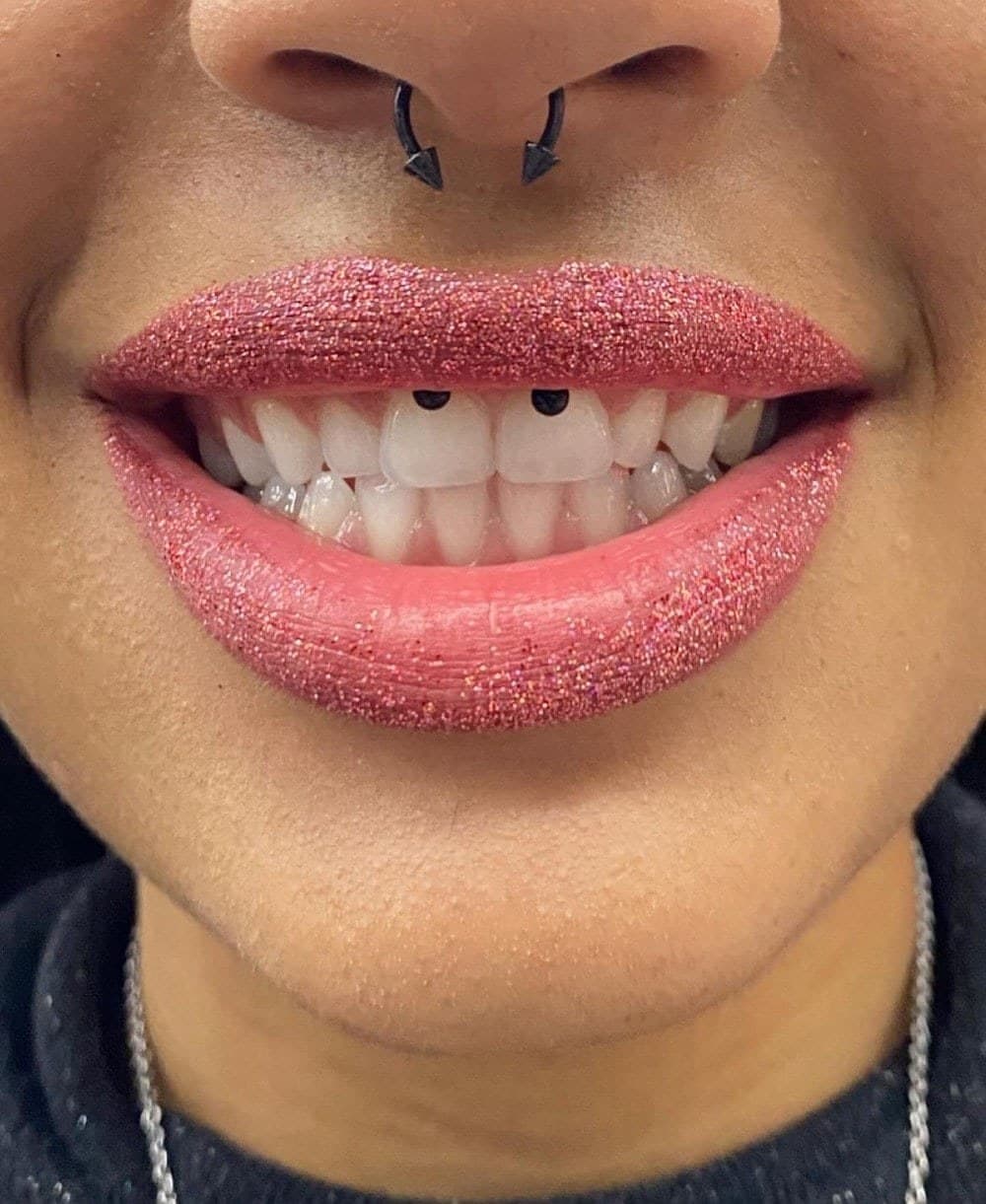
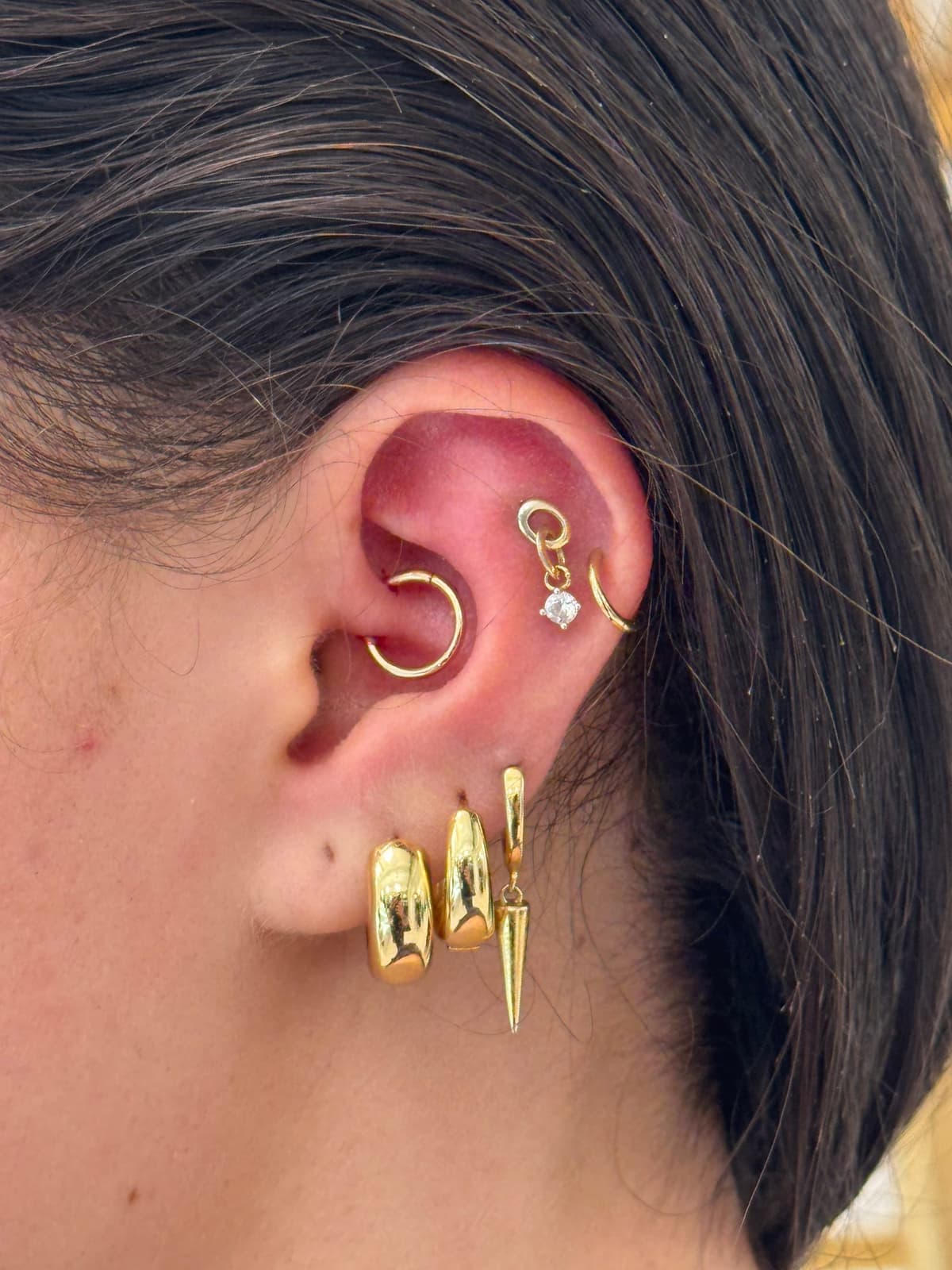
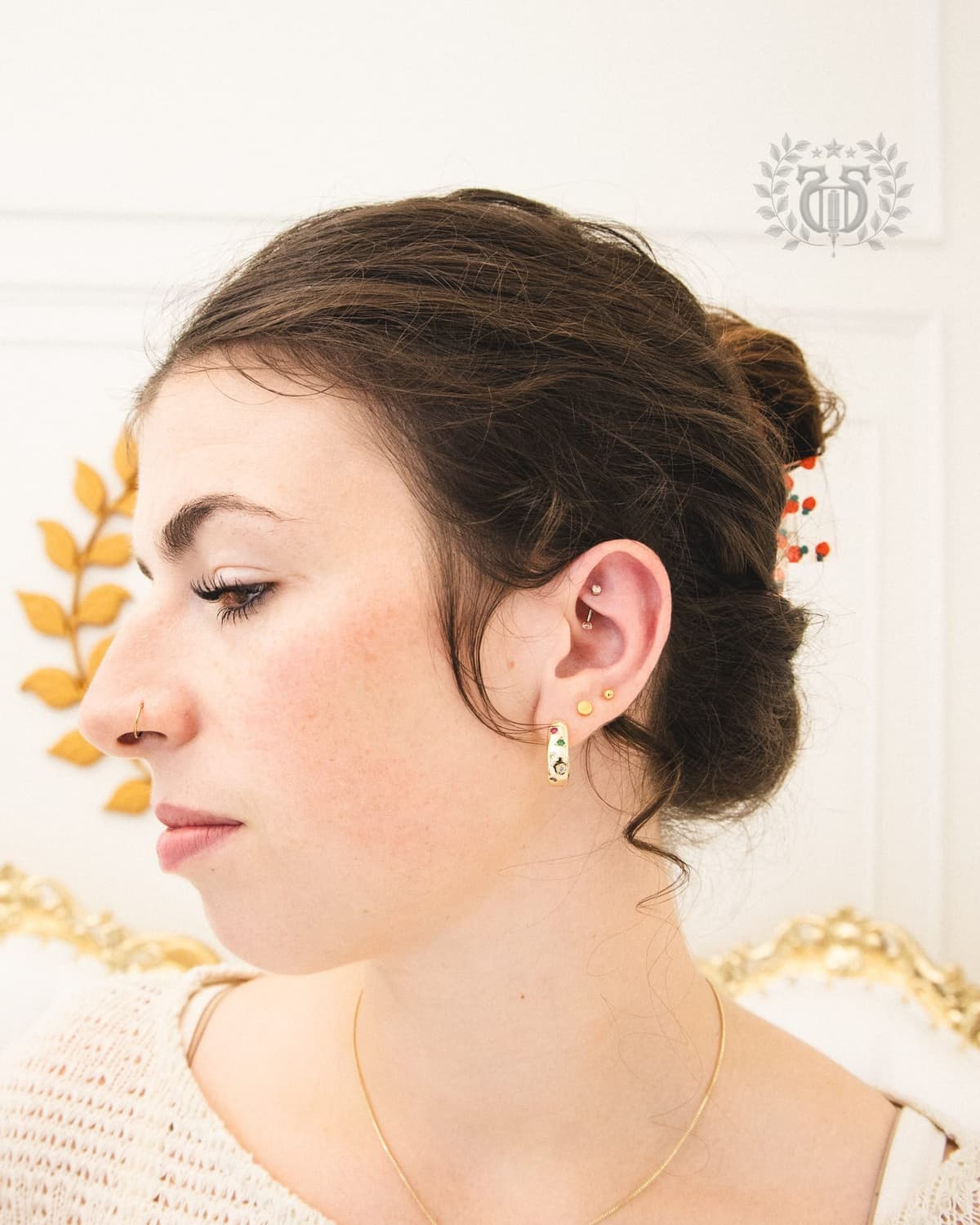
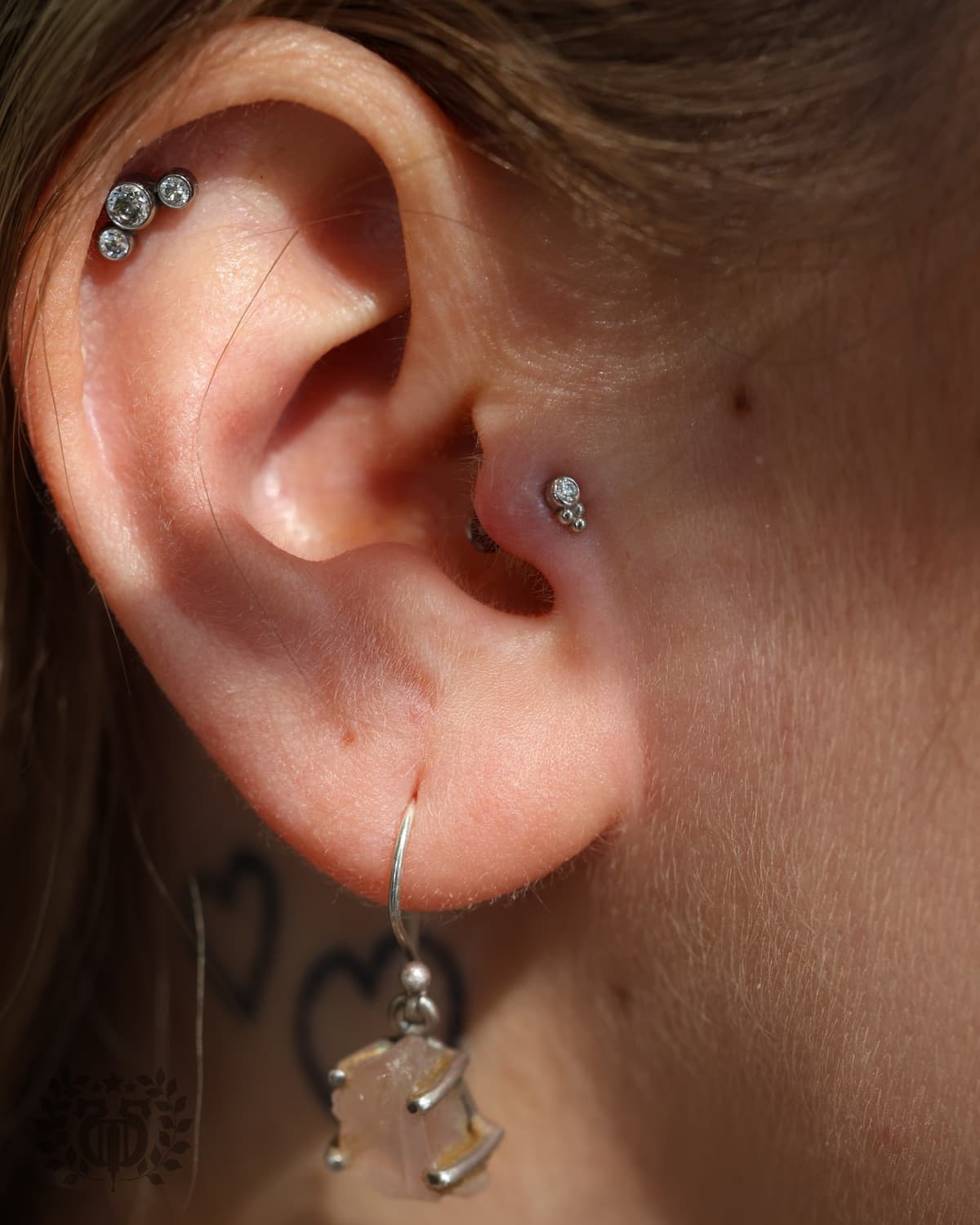
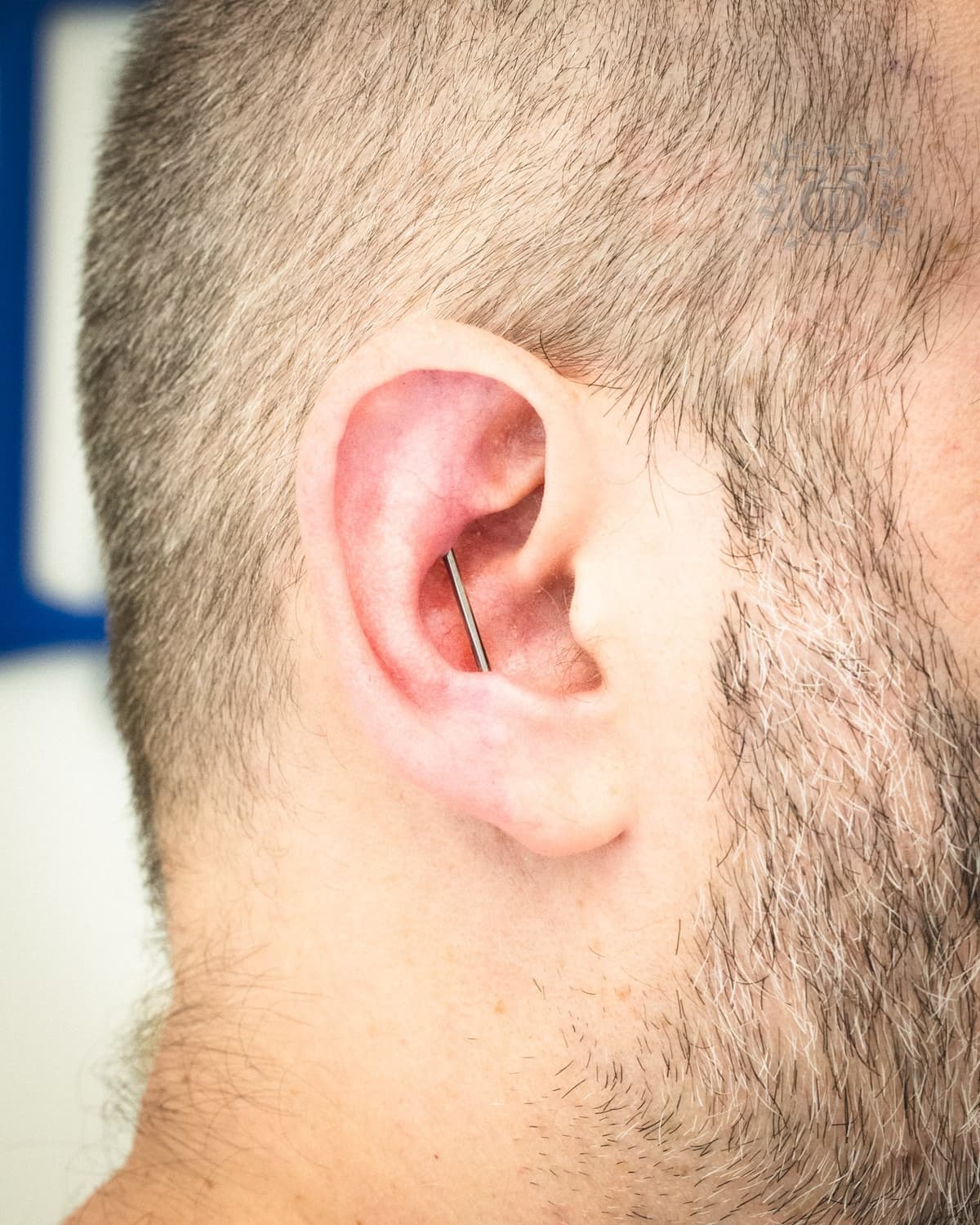
Six checks you can make from the counter, in about five minutes, before any money changes hands.
Choosing a piercing studio is one of the few consumer decisions where the thing you're buying goes inside your body and stays there for a year. And almost nobody has been given a way to judge it. So people fall back on the shopfront, the Instagram grid and the star average — none of which correlate especially well with whether the needle is single-use.
The good news is that the real signals are unusually easy to read. Piercing is a regulated trade with visible infrastructure, so a studio doing it properly has physical evidence of that fact sitting in the room with you: a permit on the wall, an autoclave, sealed packs, a jewelry case you can ask questions about. A studio cutting corners has to hide things, and hiding things is conspicuous.
Here's the thing to internalise before you walk in anywhere. Every check below is a question you are entitled to ask, and the reaction you get is as informative as the answer. Somebody who is proud of their sterilisation protocol will walk you to the autoclave. Somebody who isn't will change the subject, or make you feel awkward for having asked. That second reaction is data. Use it.
It's also worth being honest about what you can't check. You cannot assess a piercer's technique by watching them, because the needle pass takes about a second and looks the same whether it was angled correctly or not. You cannot tell good jewelry from bad by looking at it — a mirror polish tells you nothing about the alloy underneath. And you cannot tell from a five-star review whether the reviewer's piercing is still in, because people review the experience on the day and the outcome shows up nine months later. So the checks that follow are all proxies: they measure whether a studio operates like one that cares, on the reasonable assumption that studios which sterilise properly also tend to place properly.
One more thing. Price is a poor signal in both directions. Expensive doesn't mean careful, and cheap doesn't always mean careless. What price does tell you is where the corners are, and the specific pattern to watch for is an all-in figure that bundles the jewelry in — because the only way to hit a low all-in number is with a cheap starter, and a cheap starter is the thing that sits in an open channel for the entire heal.
Run the list. It works here and it works anywhere else.
In LA County a body-art facility must hold a permit and be inspected, and the permit is meant to be displayed where the public can see it. If you have to hunt for it, or it's expired, that's the end of the assessment. Ours is on the wall.
Ask to see the autoclave. A studio that processes its own reusable tools will show you without hesitation and can tell you how often it runs spore tests. A studio that gets cagey about the back room is telling you something.
Needle, jewelry and gloves should come out of sealed packs broken in front of you. A tray laid out before you sat down is a tray you can't verify. Asking them to start again is a completely reasonable request.
"Implant-grade" on its own is a word. ASTM F136 for titanium and F138 for steel are standards. A piercer who quotes them without pausing is a piercer who buys from manufacturers who publish mill certificates.
Ask whether your anatomy supports the placement you want, and see whether you get a look at your own ear or a sales answer. Rooks, industrials and navels are all genuinely ruled out on some bodies. Never being refused isn't a service, it's a warning.
If anyone tells you to rotate the jewelry, use tea tree oil, or clean with alcohol or peroxide, their information is decades out of date. Sterile saline, twice daily, hands off. That's the whole modern answer.
Apollo's Premium Jewelry Partner
Handmade in Los Angeles since 1996. Lifetime guarantee. Implant-grade gold, platinum, and titanium. Over 3,000 original designs in our case — ask your piercer for a tour.
See the BVLA story →Breadth isn't automatically a virtue — but a studio that only does lobes and nostrils is a different proposition from one that handles the whole range.
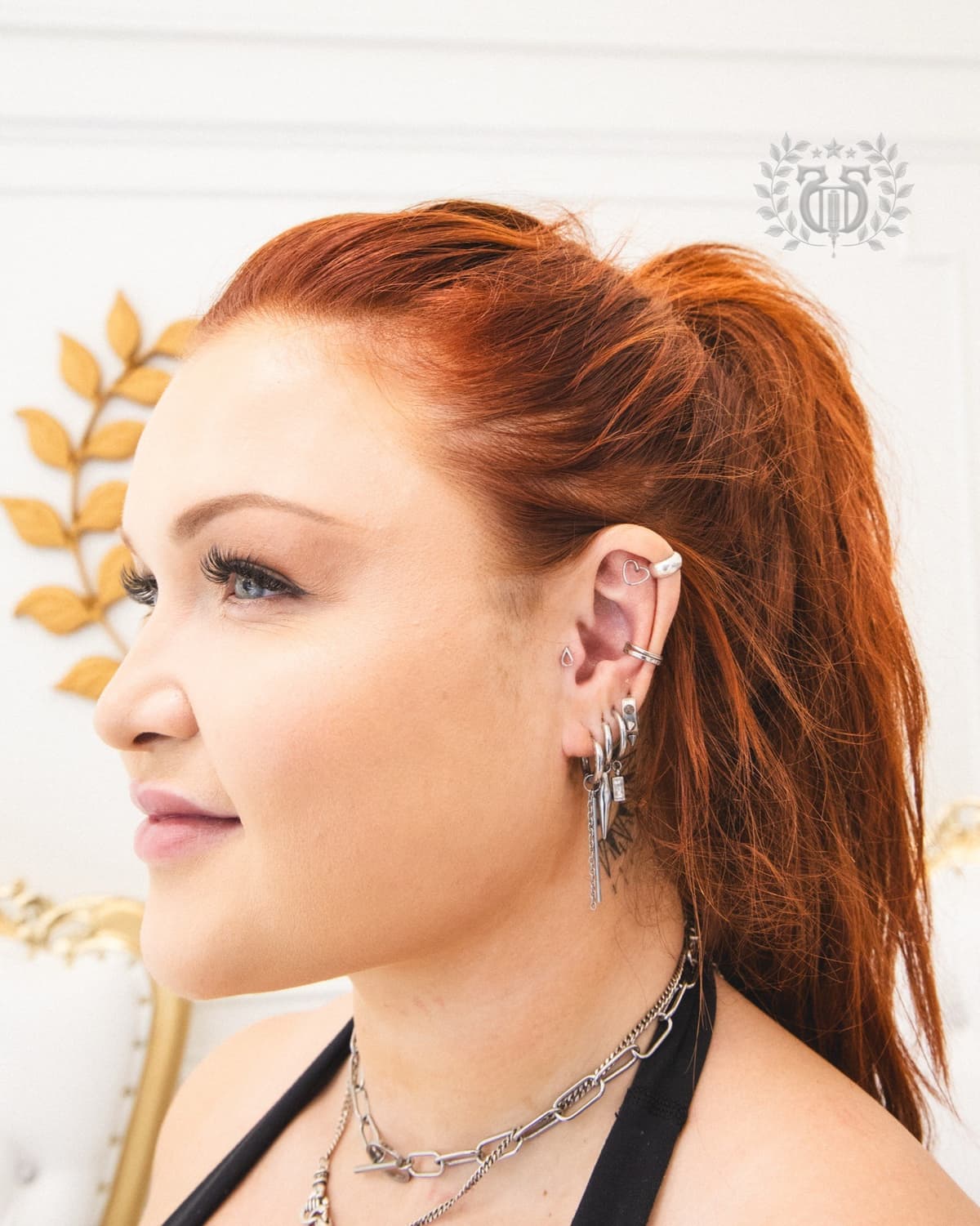
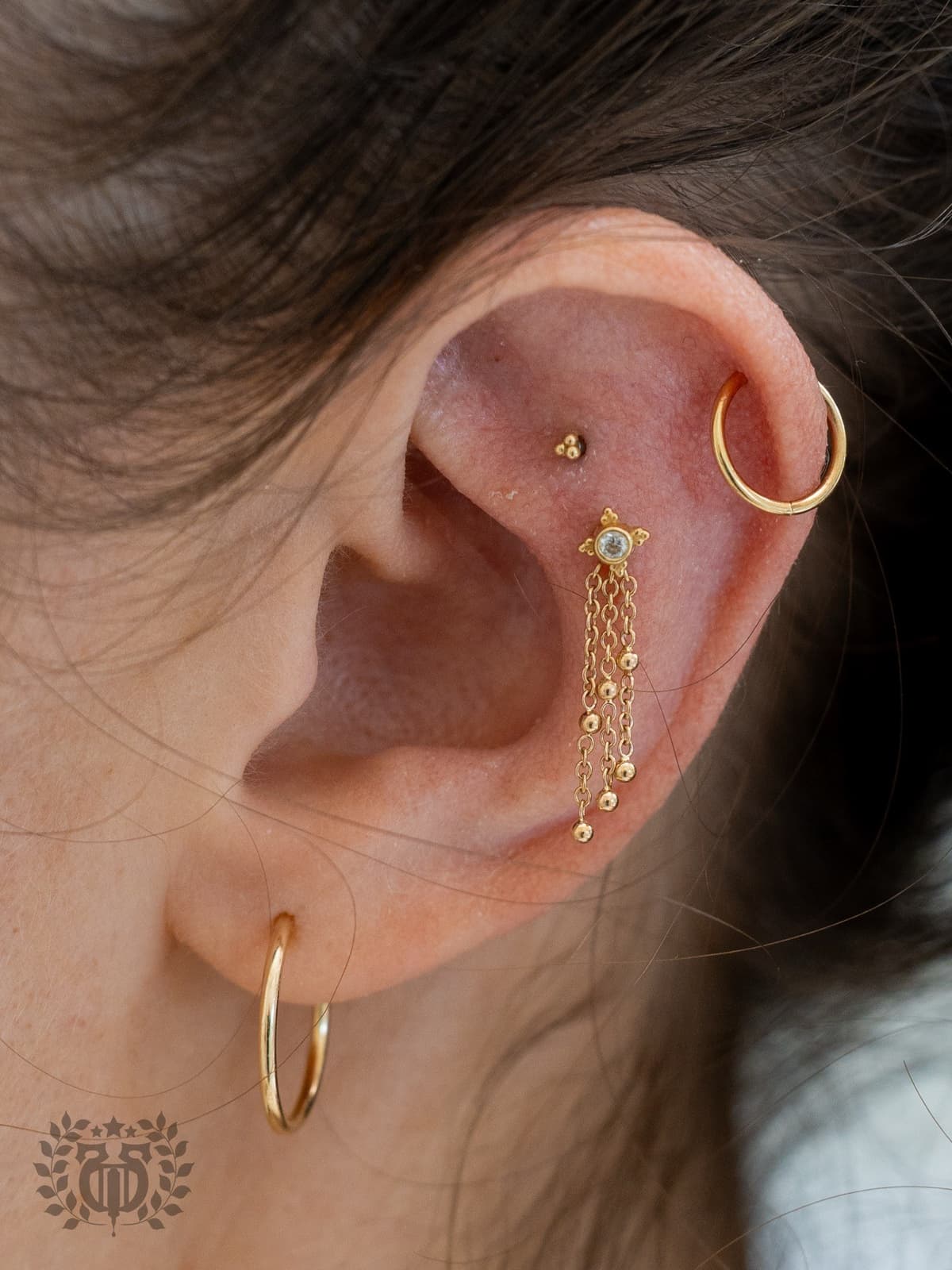
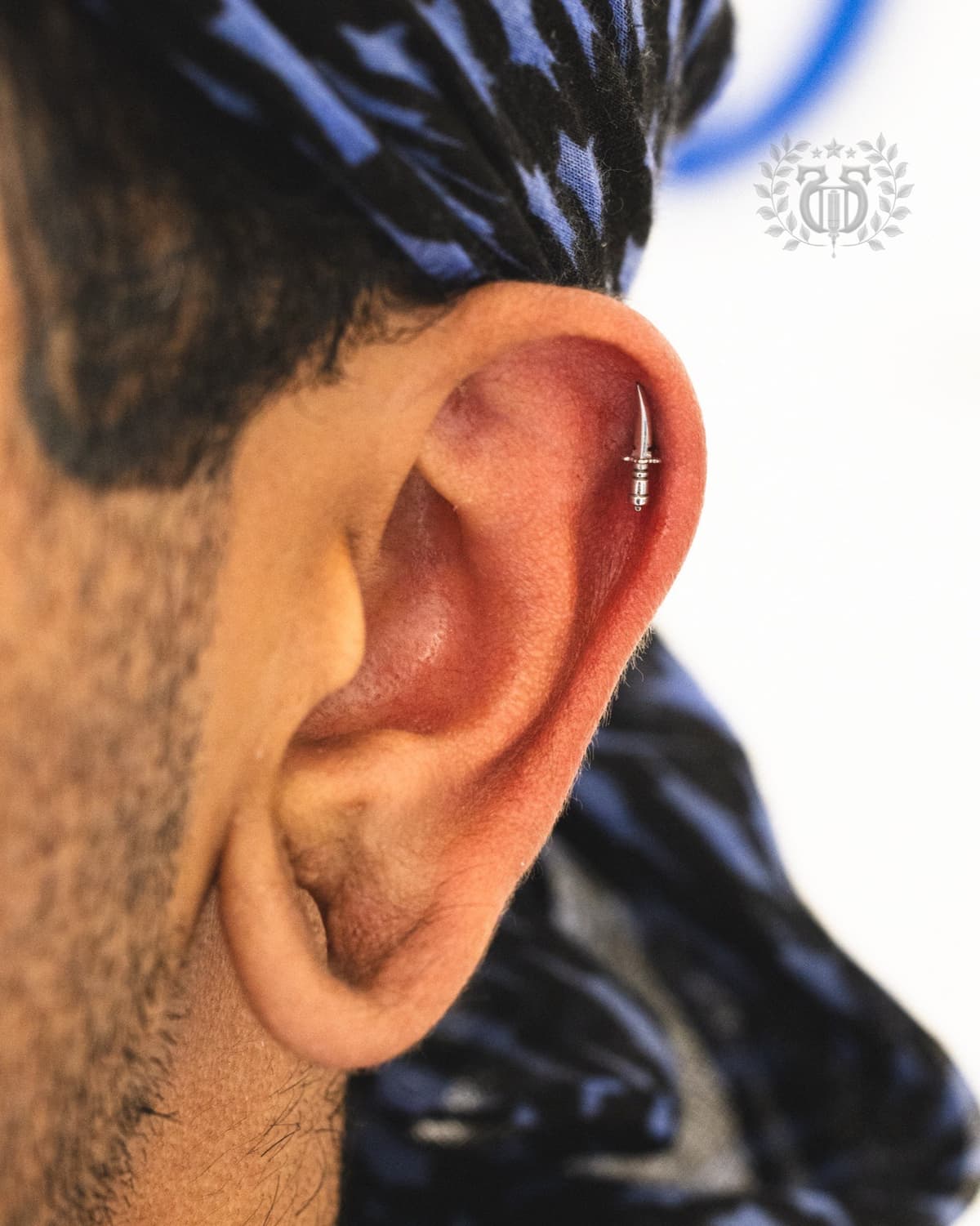
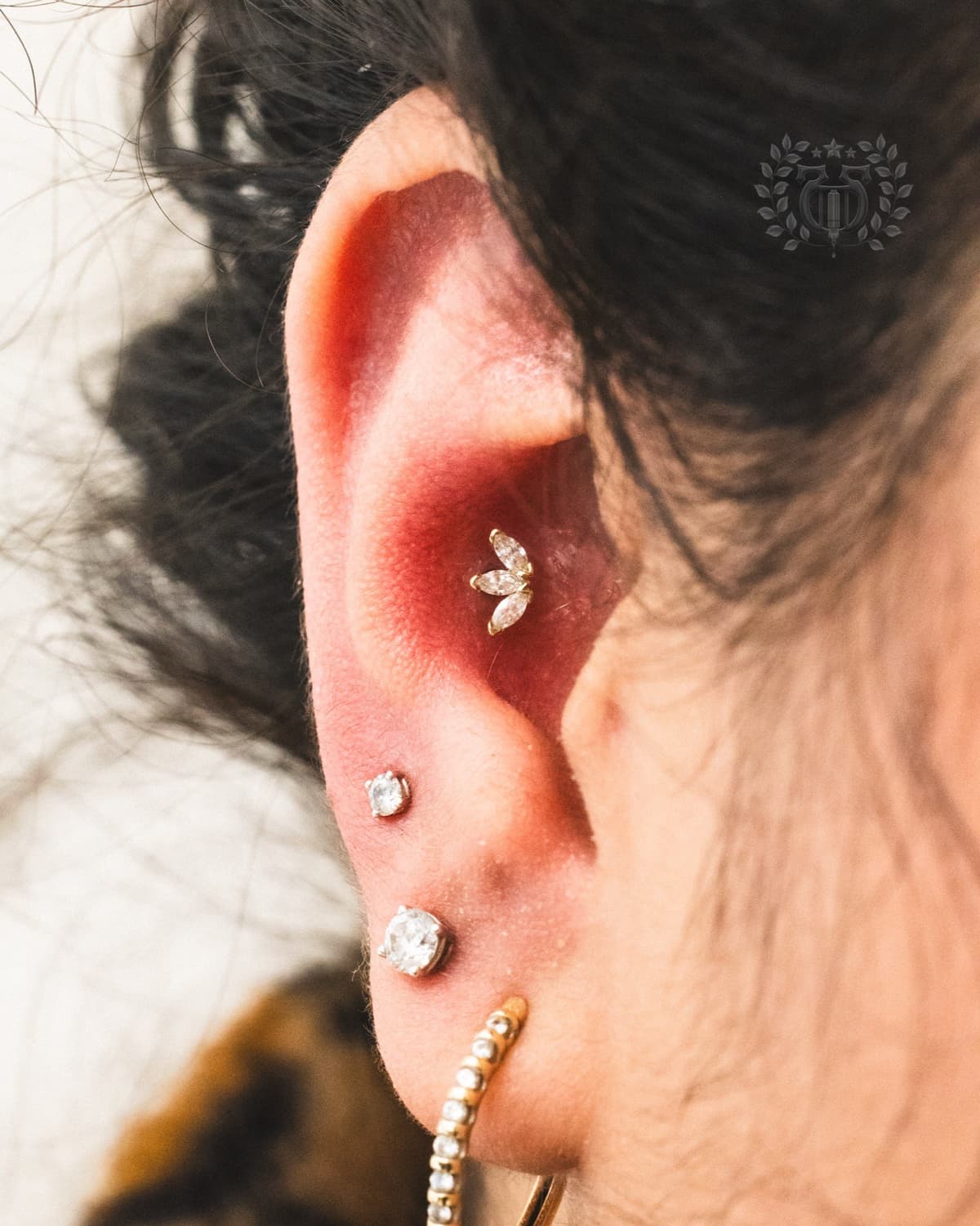
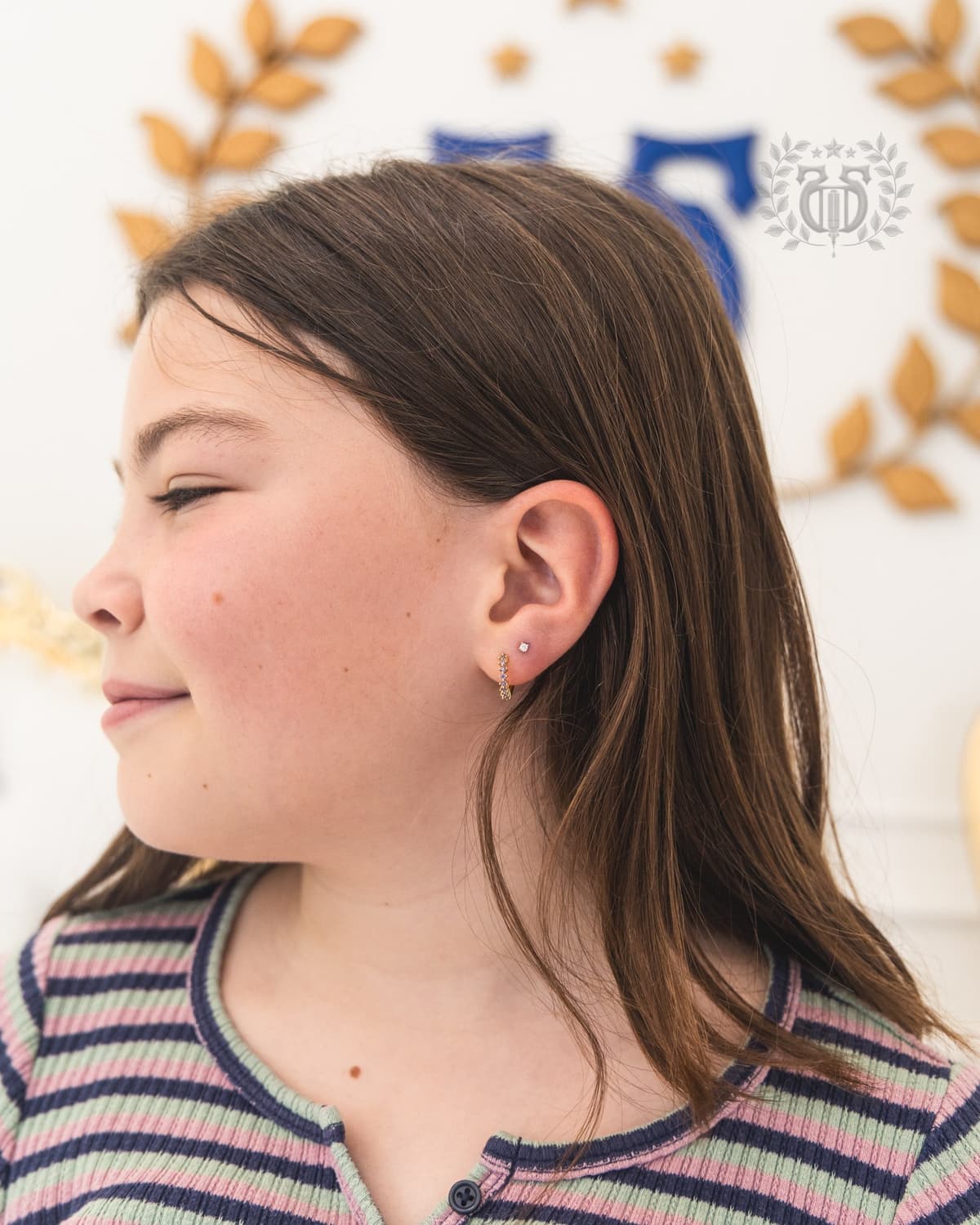
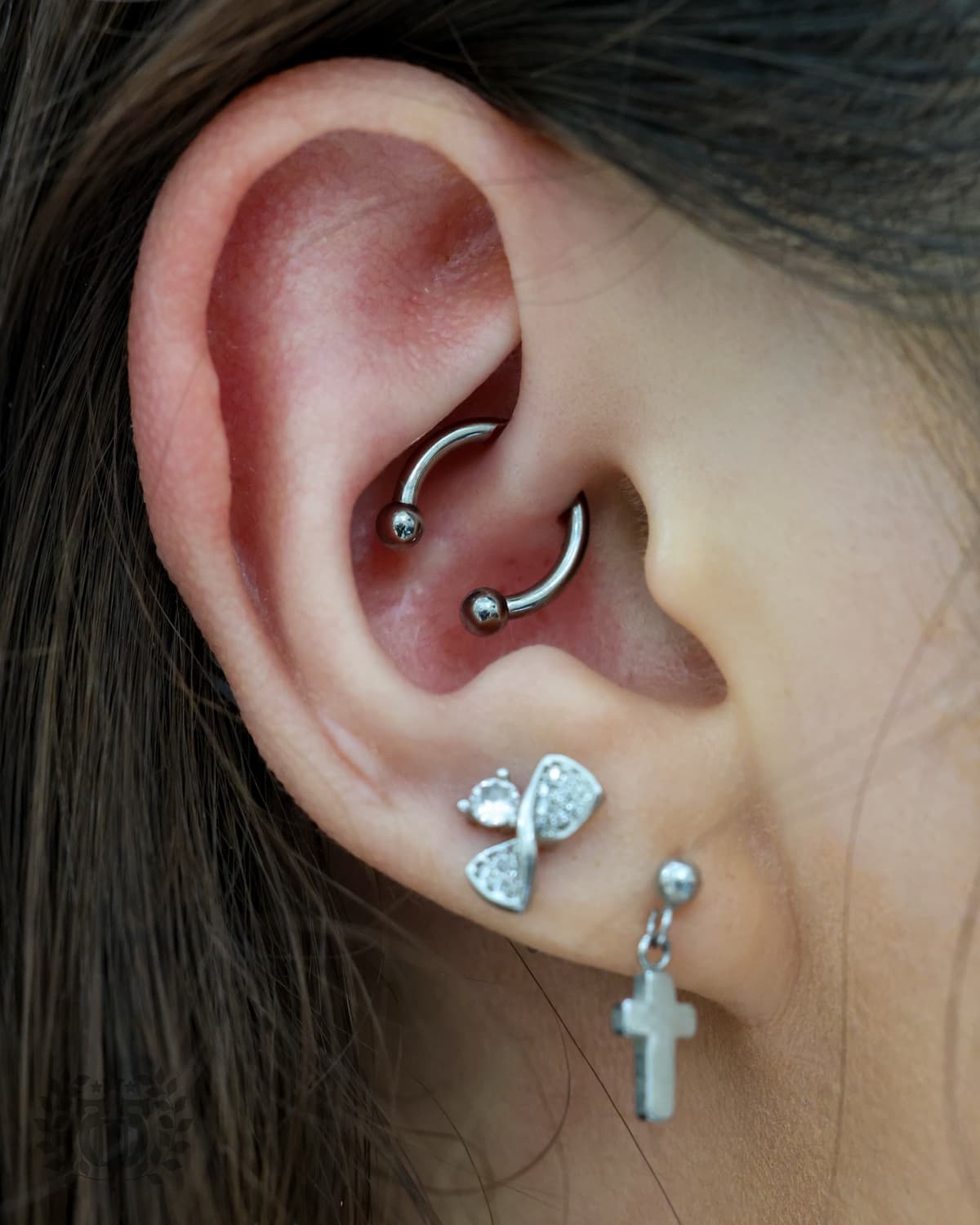
Lobe, helix, tragus, conch, daith, rook, industrial, and more. We specialize in ear curation for the perfect setup.
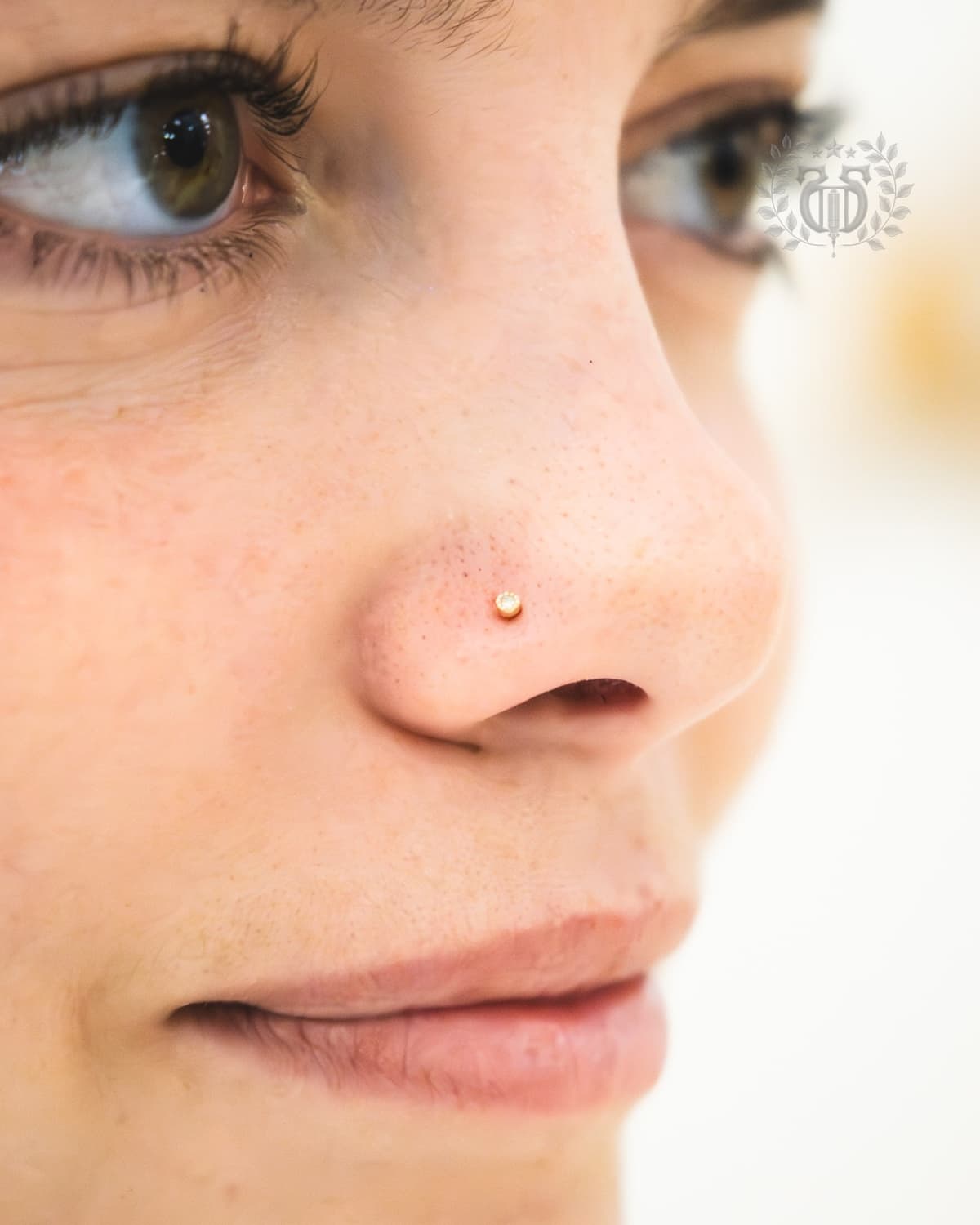
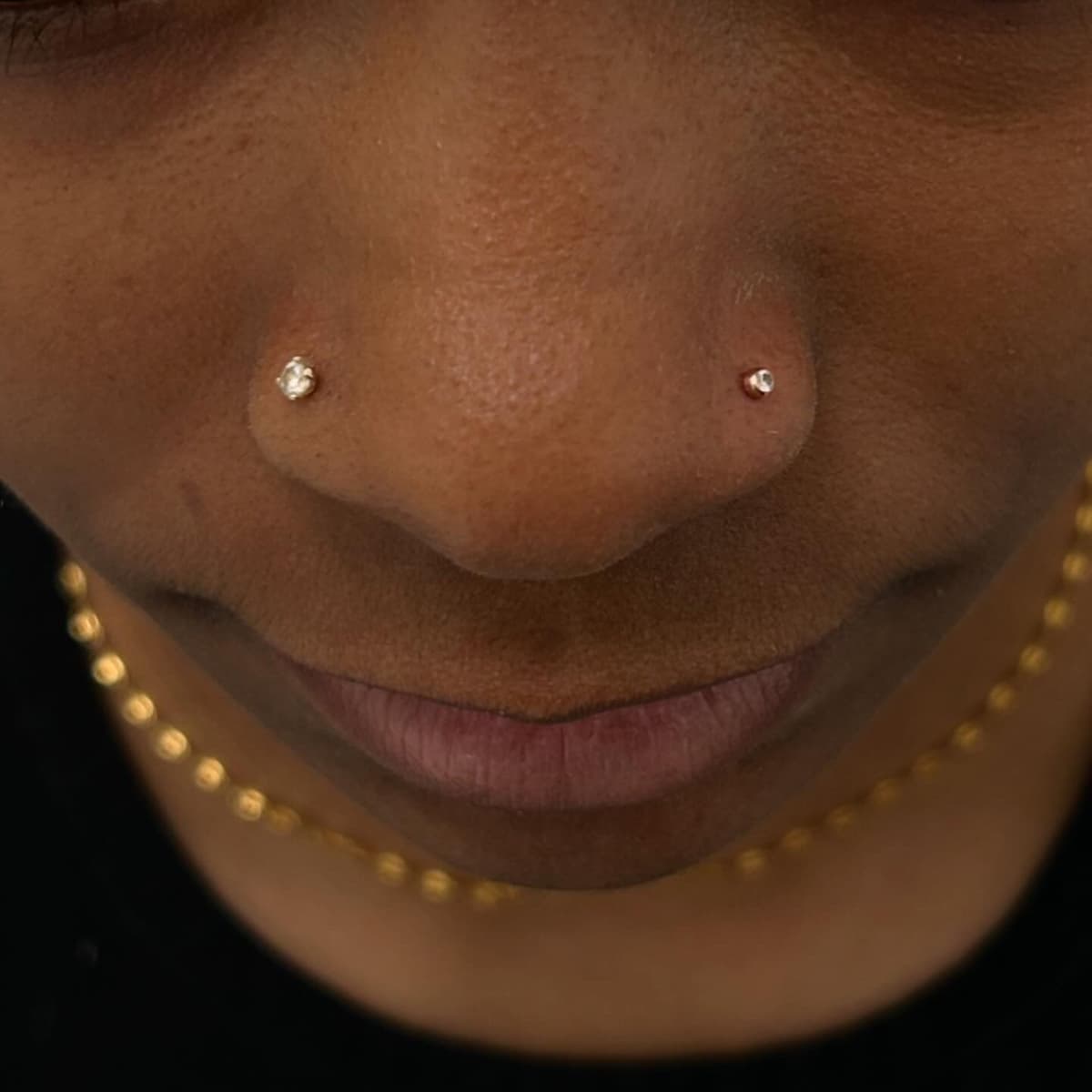
Nostril, septum, bridge, and high nostril piercings. Precise placement for optimal healing and aesthetics.
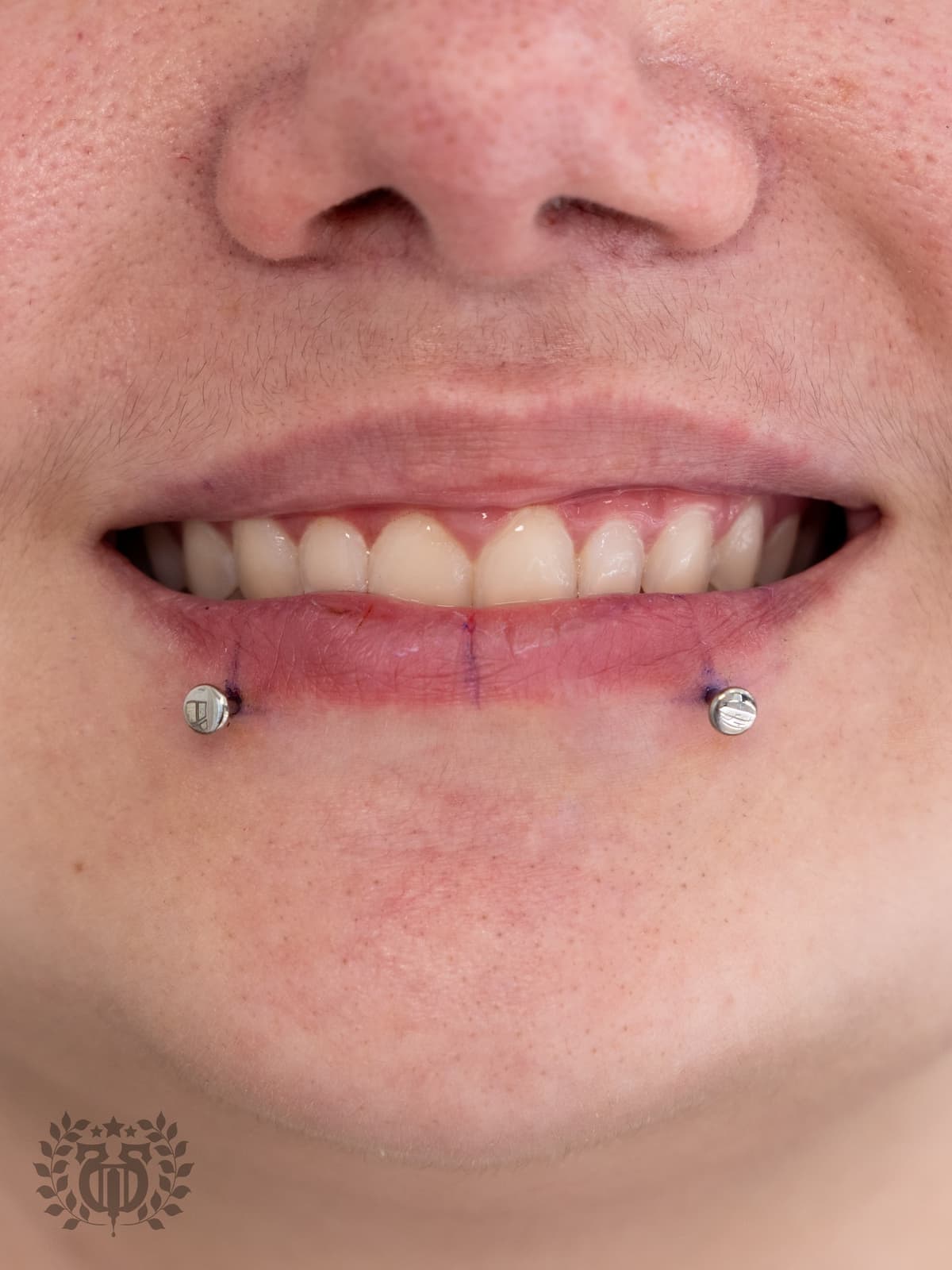
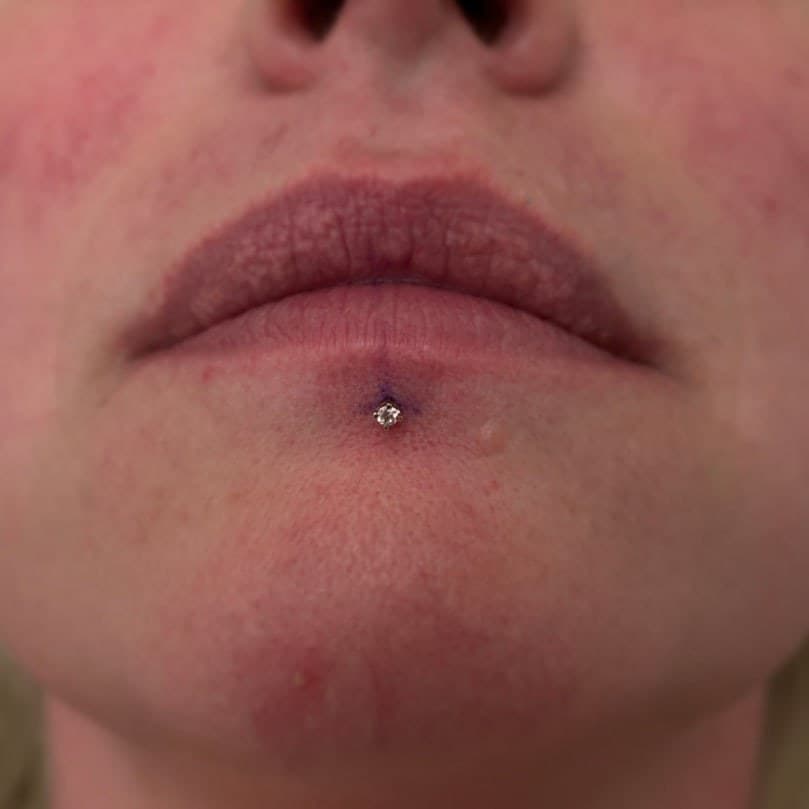
Labret, Monroe, Medusa, snake bites, and tongue piercings. Expert technique for oral and lip placements.
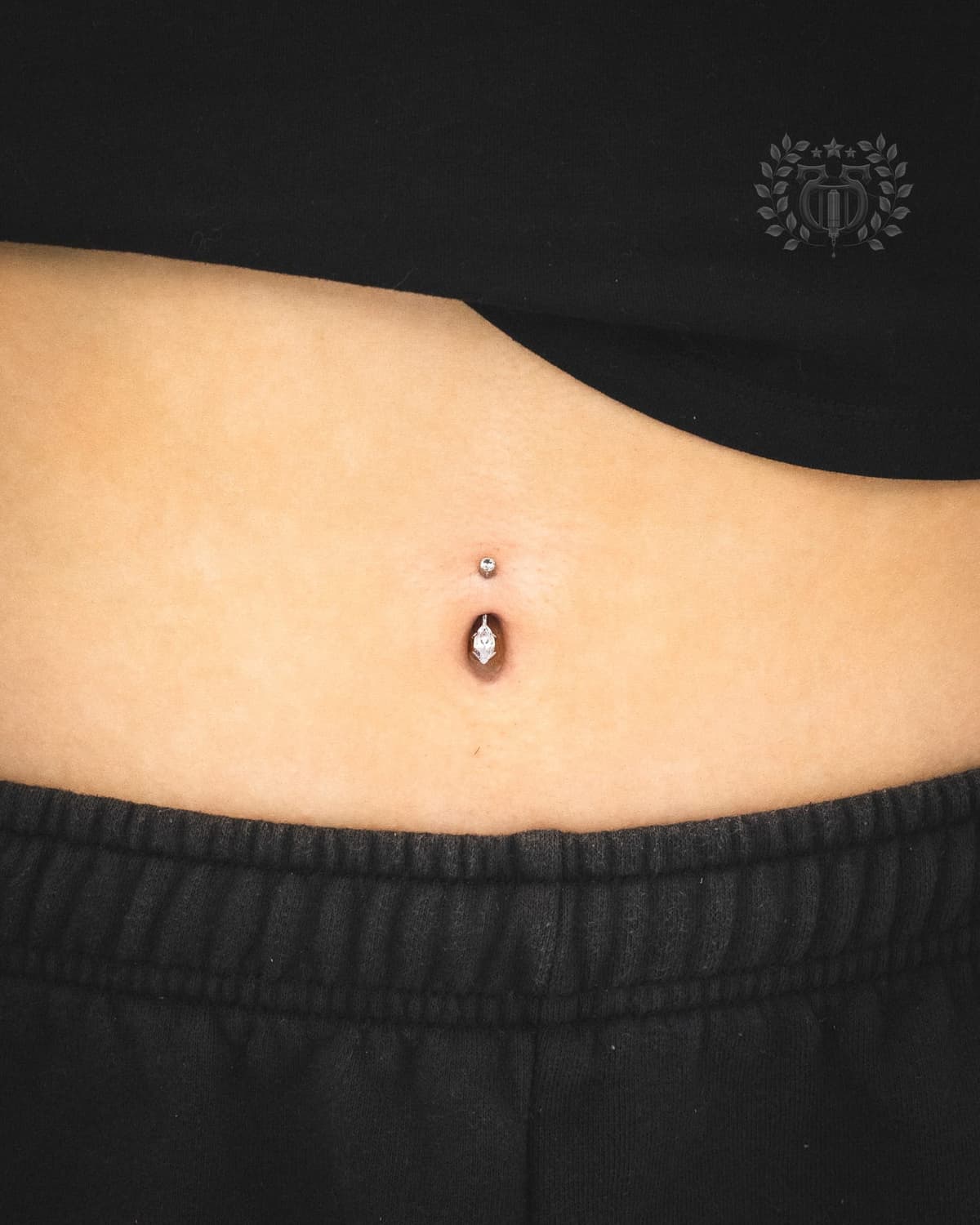
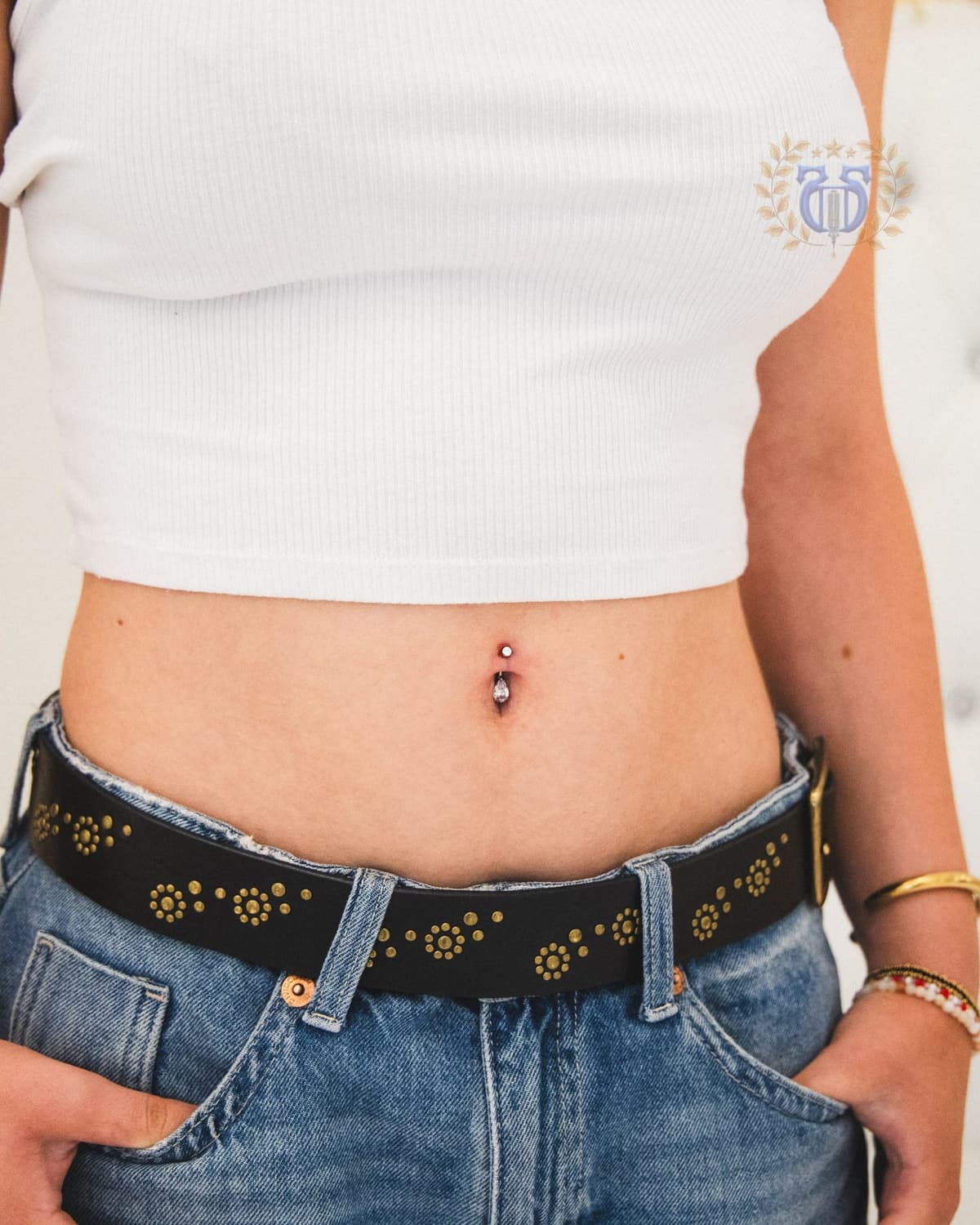
Navel, nipple, dermal anchors, and surface piercings. Professional body modification with premium jewelry.

Safe, gentle ear piercing for children ages 5+. Needle-only technique, patient piercers, and premium starter jewelry.
Flexible booking paths
Walking in to inspect a studio without being pierced is a completely normal thing to do
Popular starting point
Reserve a body piercing appointment with jewelry, placement, and timing confirmed.
A piercer who can't give you a healing window for the placement you want hasn't done many of them
| Piercing Type | Location | Initial Healing | Full Healing | Pain Level |
|---|---|---|---|---|
| Lobe (Classic) | Soft tissue, lower ear | 6-8 weeks | 3-6 months | 2/10 |
| Stacked Lobe | Multiple lobe piercings | 6-8 weeks | 4-6 months | 2/10 |
| Transverse Lobe | Horizontal through lobe | 2-3 months | 6-10 months | 4/10 |
| Upper Lobe | Above classic lobe | 6-8 weeks | 4-6 months | 2-3/10 |
| Helix | Upper outer rim cartilage | 3-4 months | 6-12 months | 4-5/10 |
| Forward Helix | Front upper cartilage near temple | 3-4 months | 6-12 months | 5-6/10 |
| Hidden Helix | Tucked under rim | 3-4 months | 6-12 months | 5/10 |
| Flat | Flat cartilage area (between rook & rim) | 3-4 months | 6-12 months | 6-7/10 |
| Tragus | Small flap over ear canal | 3-4 months | 6-12 months | 4-5/10 |
| Anti-Tragus | Above lobe, opposite tragus | 4-6 months | 9-12+ months | 6-7/10 |
| Conch (Inner) | Center bowl of ear | 3-4 months | 6-12 months | 5-6/10 |
| Conch (Outer) | Lower center, near anti-helix | 3-4 months | 6-12 months | 5-6/10 |
| Daith | Innermost fold above ear canal | 3-4 months | 9-12+ months | 5-6/10 |
| Rook | Upper inner fold above daith | 3-4 months | 9-12+ months | 6-8/10 |
| Snug | Inner ridge of anti-helix | 4-6 months | 9-12+ months | 7-8/10 |
| Industrial | Two holes connected by barbell | 4-6 months | 9-12+ months | 6-7/10 |
| Orbital | Two holes connected by ring | 4-6 months | 9-12+ months | 6-7/10 |
| Nostril | Side of the nose | 2-3 months | 6-9 months | 3-4/10 |
| Septum | Tissue between nostrils | 6-8 weeks | 3-6 months | 4-5/10 |
| Bridge | Skin across nose bridge | 2-3 months | 6-9 months | 5-6/10 |
| Eyebrow | Above the eye | 2-3 months | 6-9 months | 3-4/10 |
| Anti-Eyebrow | Cheekbone surface, below outer brow | 6-8 weeks | 6-12 months | 4-5/10 |
| Lip / Labret | Below lower lip | 6-8 weeks | 3-6 months | 3-4/10 |
| Monroe / Madonna | Upper lip (left or right) | 6-8 weeks | 3-6 months | 4/10 |
| Medusa (Philtrum) | Center upper lip | 6-8 weeks | 3-6 months | 4-5/10 |
| Tongue | Center of tongue | 4-6 weeks | 2-3 months | 4-5/10 |
| Snake Eyes | Horizontal tongue tip | 4-8 weeks | 4-6 months | 6-7/10 |
| Smiley | Upper lip frenulum | 4-8 weeks | 2-3 months | 3-4/10 |
| Navel (Belly Button) | Above or below navel | 3-6 months | 6-12 months | 4-5/10 |
| Nipple | Through nipple tissue | 3-6 months | 9-12 months | 6-7/10 |
| Dermal / Microdermal | Single-point surface anchor | 1-3 months | 3-6 months | 3-4/10 |
| Christina | Surface of pubic mound | 3-6 months | 6-12 months | 4-5/10 |
| VCH | Vertical clitoral hood | 4-6 weeks | 2-4 months | 4-5/10 |
| Prince Albert | Underside of glans | 4-6 weeks | 3-6 months | 5-6/10 |
| Frenum | Underside of shaft | 6-8 weeks | 3-4 months | 4-5/10 |
 5000+ clients
Everything else on this page is a judgement call. This one isn't.
If a studio uses a gun on anything, for anyone, you can stop the assessment there. Not because needles are a stylistic preference among piercers, but because of what the two devices physically do to tissue — and because of what a plastic device cannot do in an autoclave.
A blunt stud is forced through by spring pressure. Soft tissue tears rather than parting cleanly; cartilage fractures. The damage isn't visible from outside, which is exactly why the practice survives.
The body of a gun is plastic and does not survive an autoclave cycle. Wiping it down between clients is not sterilisation, and aerosolised blood from a previous client is the well-documented reason this matters.
A hollow needle takes out a tiny channel of tissue and leaves an opening the jewelry fits into. Nothing is compressed or displaced, which is why a needle piercing settles faster and scars less.
Gun studs come as a preloaded cartridge in one length. A needle piercing takes a post cut for your tissue plus the swelling arriving on day two, which is a thing a cartridge cannot do.
The most common defence of guns is that they're quick and children can't sit still. We pierce lobes from age five with a needle, one at a time, with a parent present. Speed is not a reason to fracture somebody's ear.
Worth having. Also worth understanding, because people credit it with far more than it does.
"Licensed and inspected" appears on nearly every piercing studio's website in this county, including ours, and it's usually treated as the end of the safety conversation. It shouldn't be. It's the beginning of one.
Body art in California runs under a state framework administered locally, which in this county means the LA County Department of Public Health. A studio operating legally holds a facility permit, its practitioners are individually registered, and the whole thing is subject to inspection. Practitioners are required to hold current bloodborne-pathogen training. All of that is real and all of it is checkable — the permit is meant to be displayed where the public can see it, and if it isn't on the wall, that alone answers your question.
Here's what it covers well. Infection control: sterilisation procedures, single-use items, surface disinfection, sharps handling, hand hygiene, the physical separation of a procedure area from a retail floor. Record keeping and client consent. Training for the people holding the needle. These are the things that stop somebody catching something in a piercing chair, and they are the things the framework was built to address.
Here's what it does not cover. Nobody is inspecting whether your piercer can read a nostril crease. There's no examination on which ears can support a rook. No inspector will ever assess whether the post length in your fresh conch leaves room for the swelling arriving on day two, or whether the jewelry is ASTM F136 titanium or a shiny alloy shedding nickel into an open wound. A permit says a studio is clean and following the rules. It says nothing at all about whether the work is good.
That gap is exactly why the rest of this page exists. Regulation clears a floor, and the floor is genuinely important — a studio without a permit is not a studio you should be in. But two shops on the same street can both hold identical, valid, current permits and produce completely different outcomes, because everything that determines whether a piercing heals well sits above the line the inspector is checking.
So use the licence as a gate rather than a verdict. Is it on the wall, is it current, does it name this address? Good — now go and ask about the jewelry, watch what happens when you ask to see the autoclave, and find out whether they'll tell you no. That's where studios actually separate.
The display cabinet is the most honest thing in a piercing shop, if you know what you're looking at.
Every figure below is the piercing service only. Jewelry is chosen and priced separately, on purpose.
Two studios quoting the same all-in number can be selling completely different things, because the jewelry is where the cost actually varies and bundling it hides that. We split it so you can see both halves: a fixed fee for the assessment, the needle pass and the follow-up, and a jewelry price that depends entirely on which piece you pick.
Compare like for like when you're shopping around. A cheap all-in quote and a service fee plus a titanium end you chose are not the same transaction — in the first one, somebody else has decided what goes into your body based on what the price could absorb.
Service fee — jewelry separate
Service fee — jewelry separate
Service fee — jewelry separate
Service fee — jewelry separate
Service fee — jewelry separate
Service fee — jewelry separate
Service fee — jewelry separate
Service fee — jewelry separate
Service fee — jewelry separate
Service fee — jewelry separate
Service fee — jewelry separate
Service fee — jewelry separate
Service fee — jewelry separate
Service fee — jewelry separate
Service fee — jewelry separate
Service fee — jewelry separate
Service fee — jewelry separate
Service fee — jewelry separate
Service fee — jewelry separate
Service fee — jewelry separate
Service fee — jewelry separate
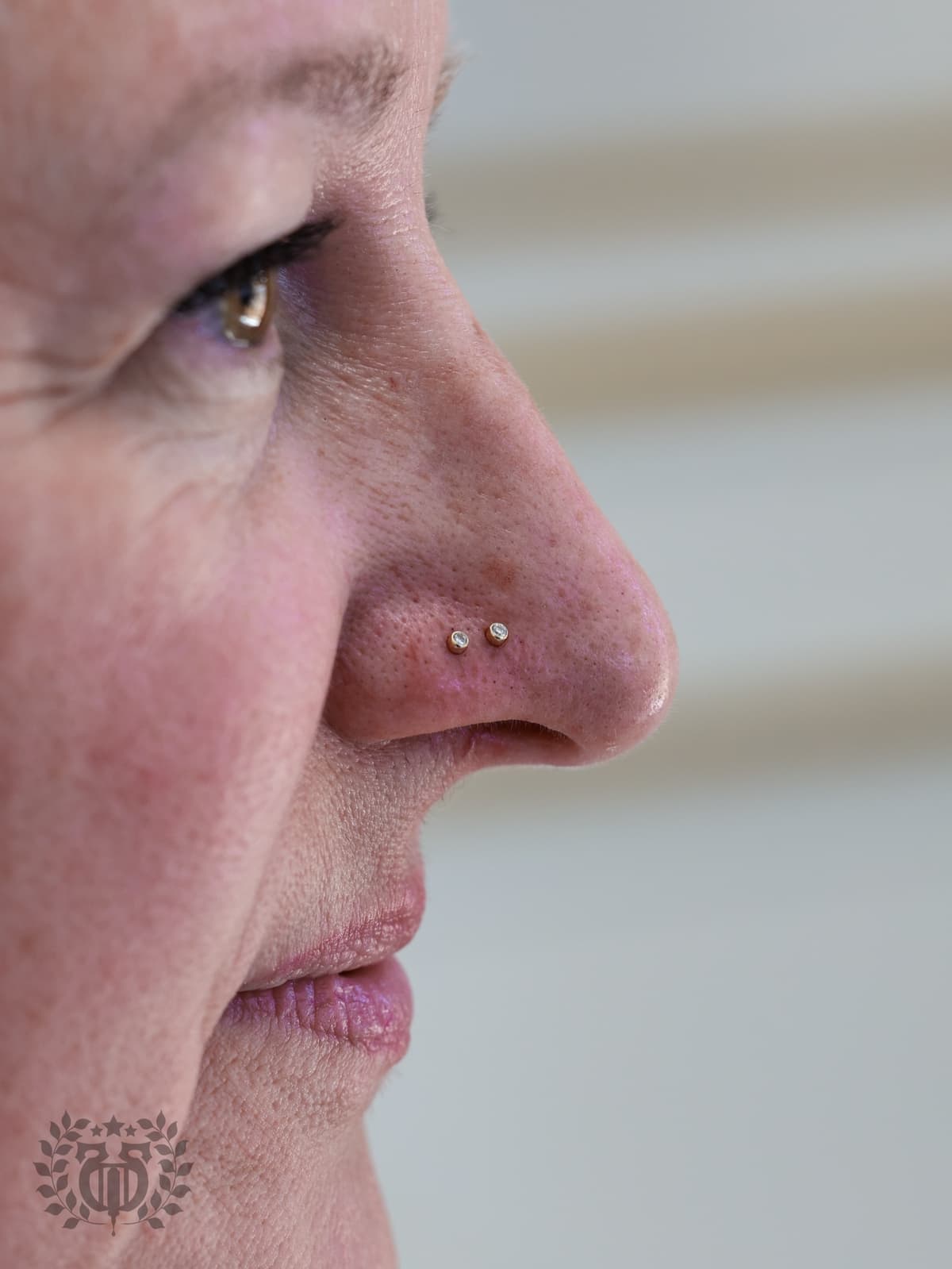
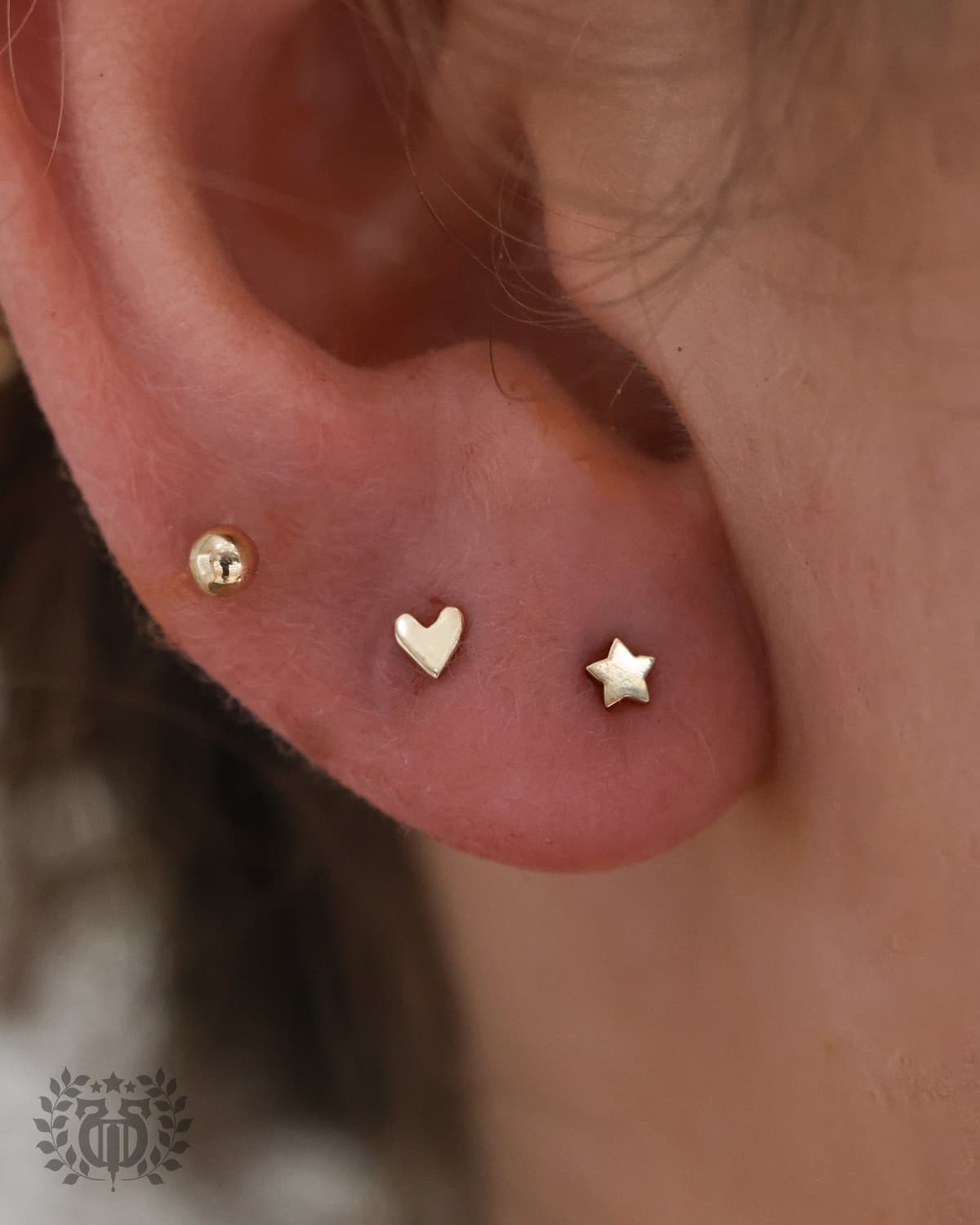
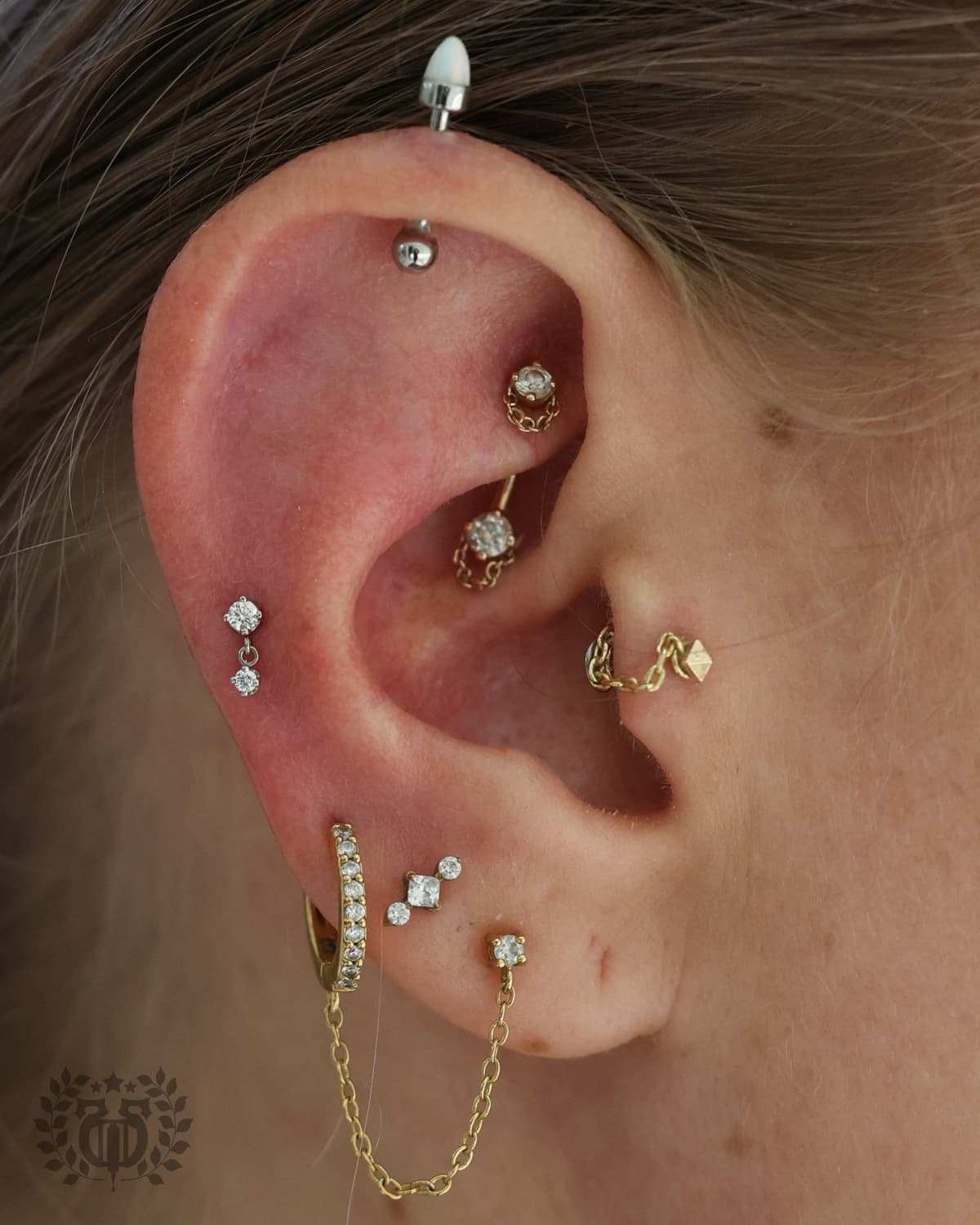
What the jewelry adds: Starter ends are implant-grade titanium and are the modest end of the range. Solid-gold BVLA pieces, Industrial Strength and Anatometal work run considerably higher, and custom BVLA can be ordered. You choose per placement, so two people paying the same $75 fee can walk out wearing very different things. Genital placements aren't listed here on purpose — those fees are confirmed at a private consultation, because what's possible varies far too much by anatomy to quote from a board. For placement-by-placement detail, the full body-piercing menu lists every region, and the cartilage planning page covers ear sequencing.
 Senior Piercer
 Senior Piercer
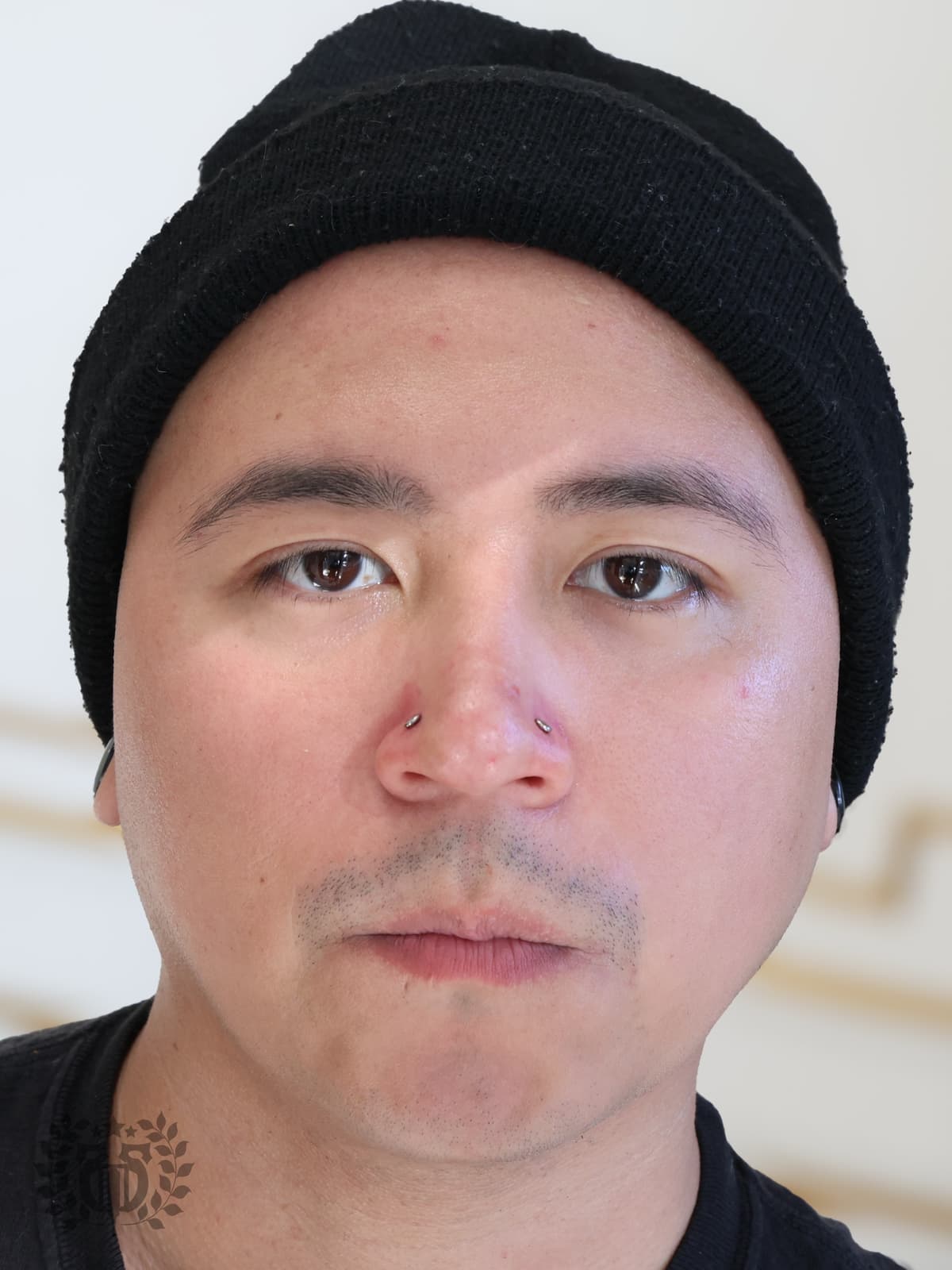
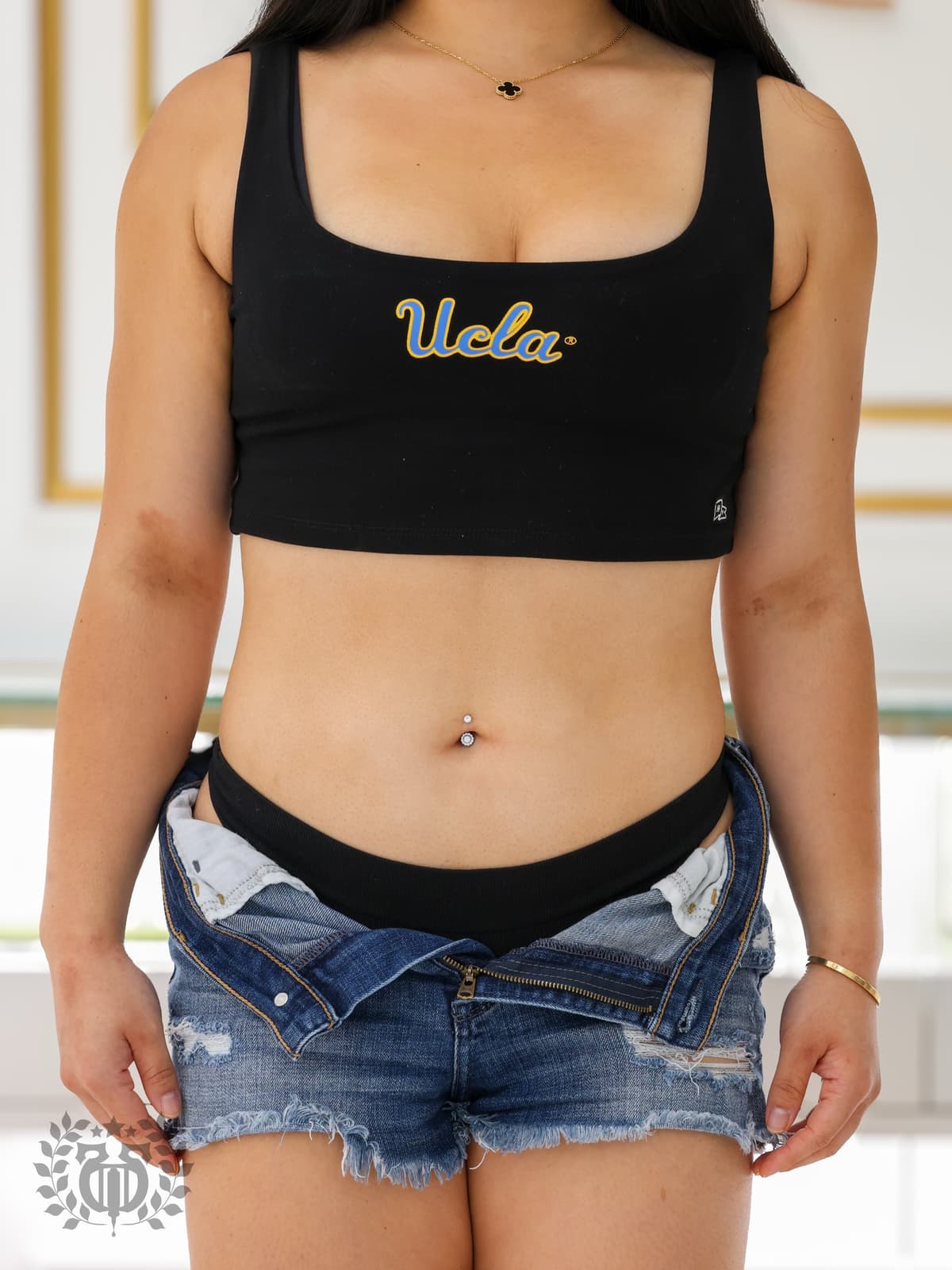
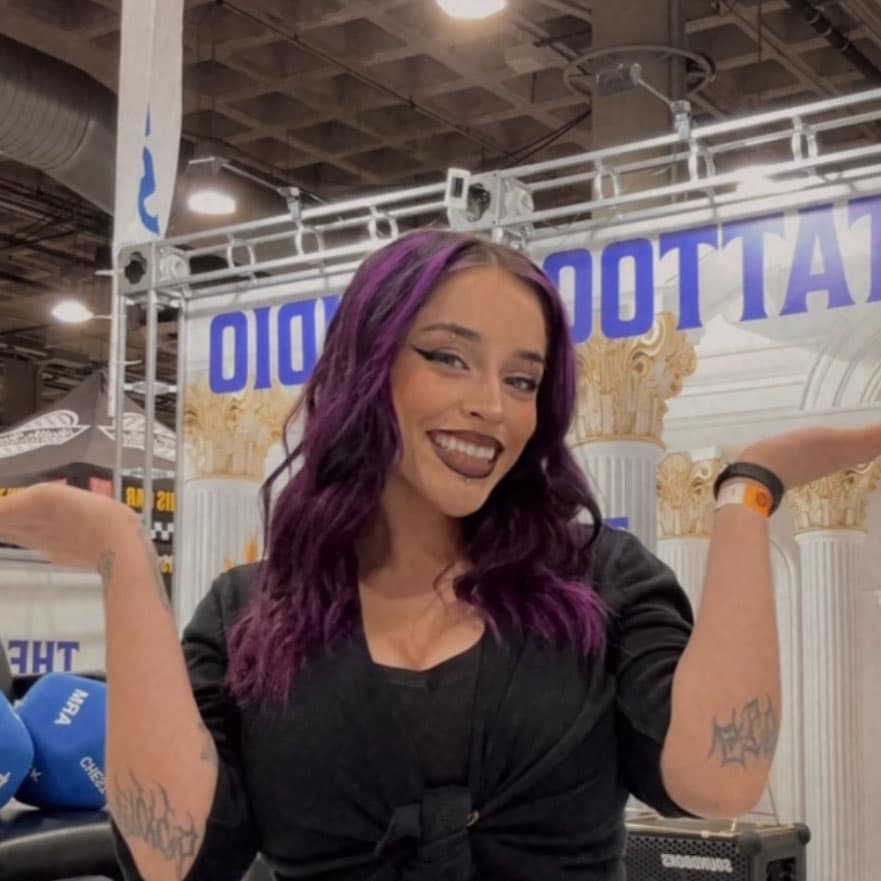
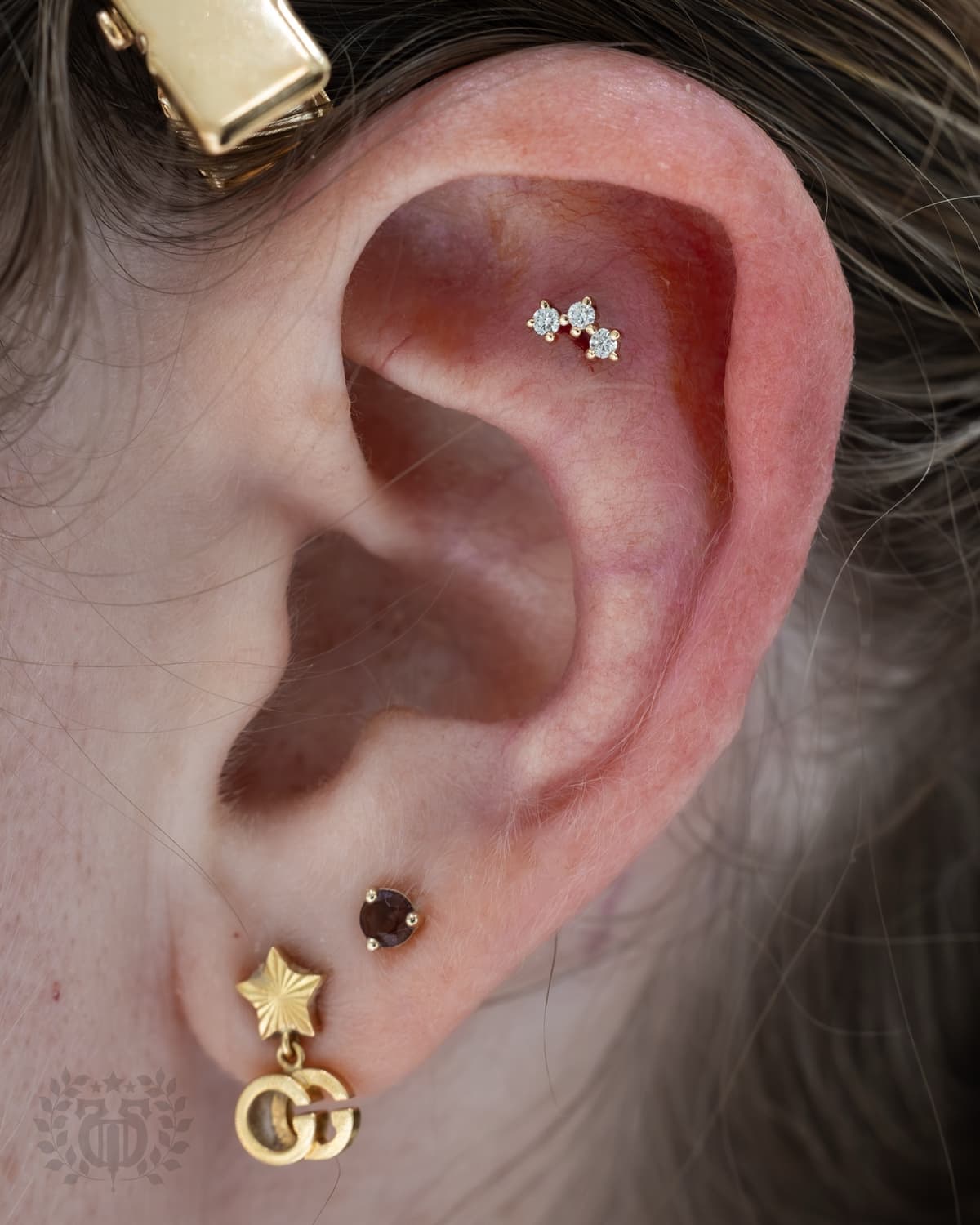
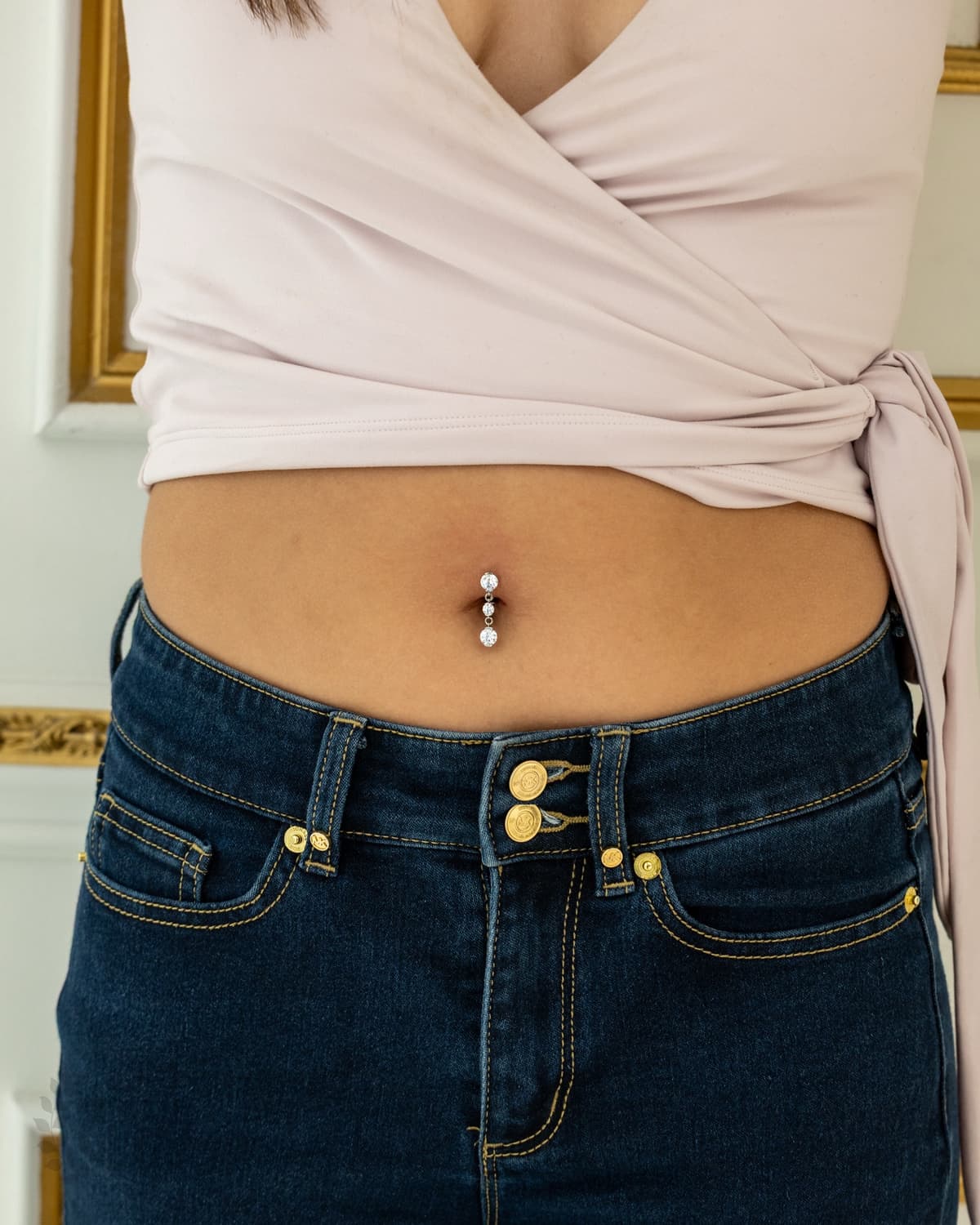
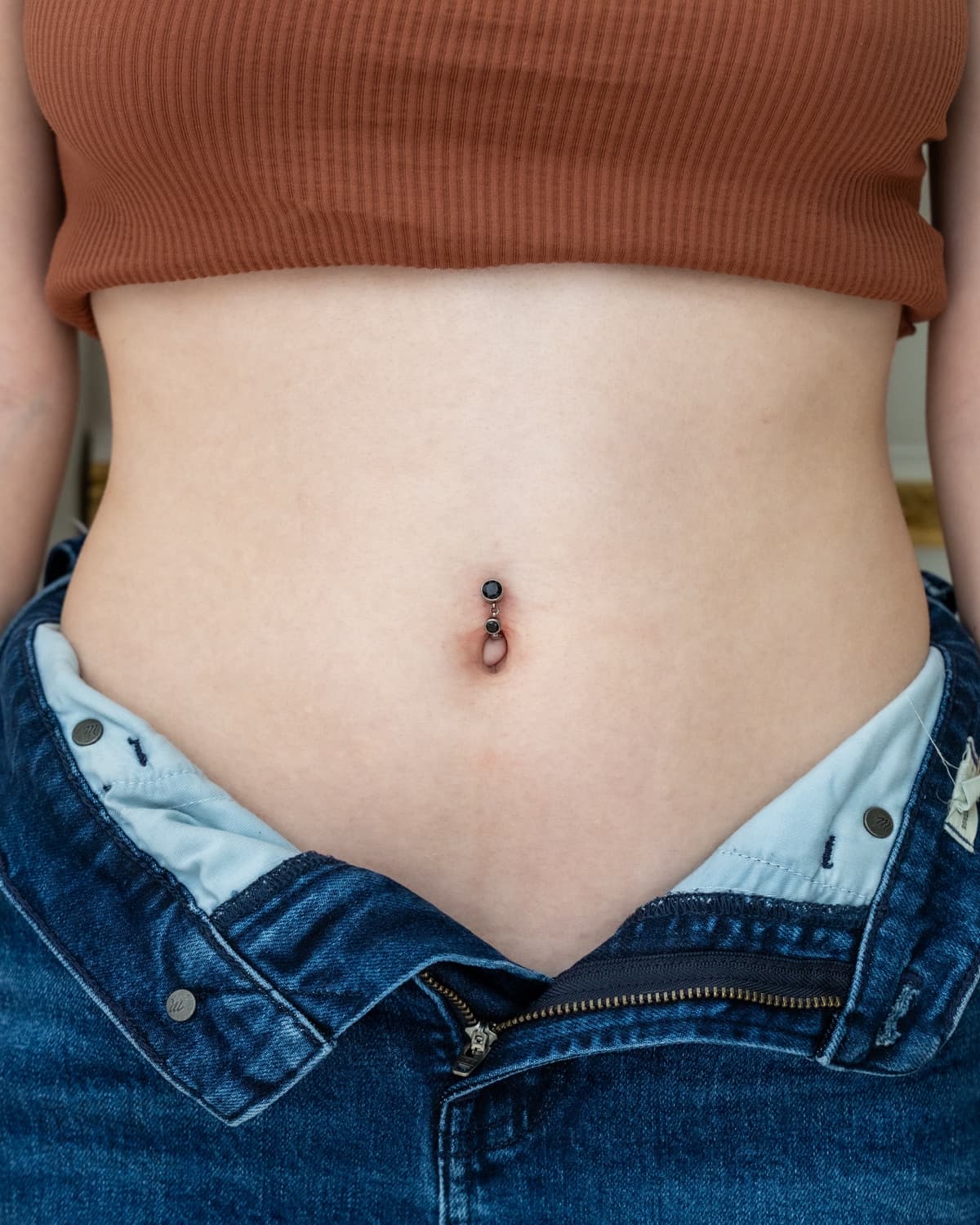
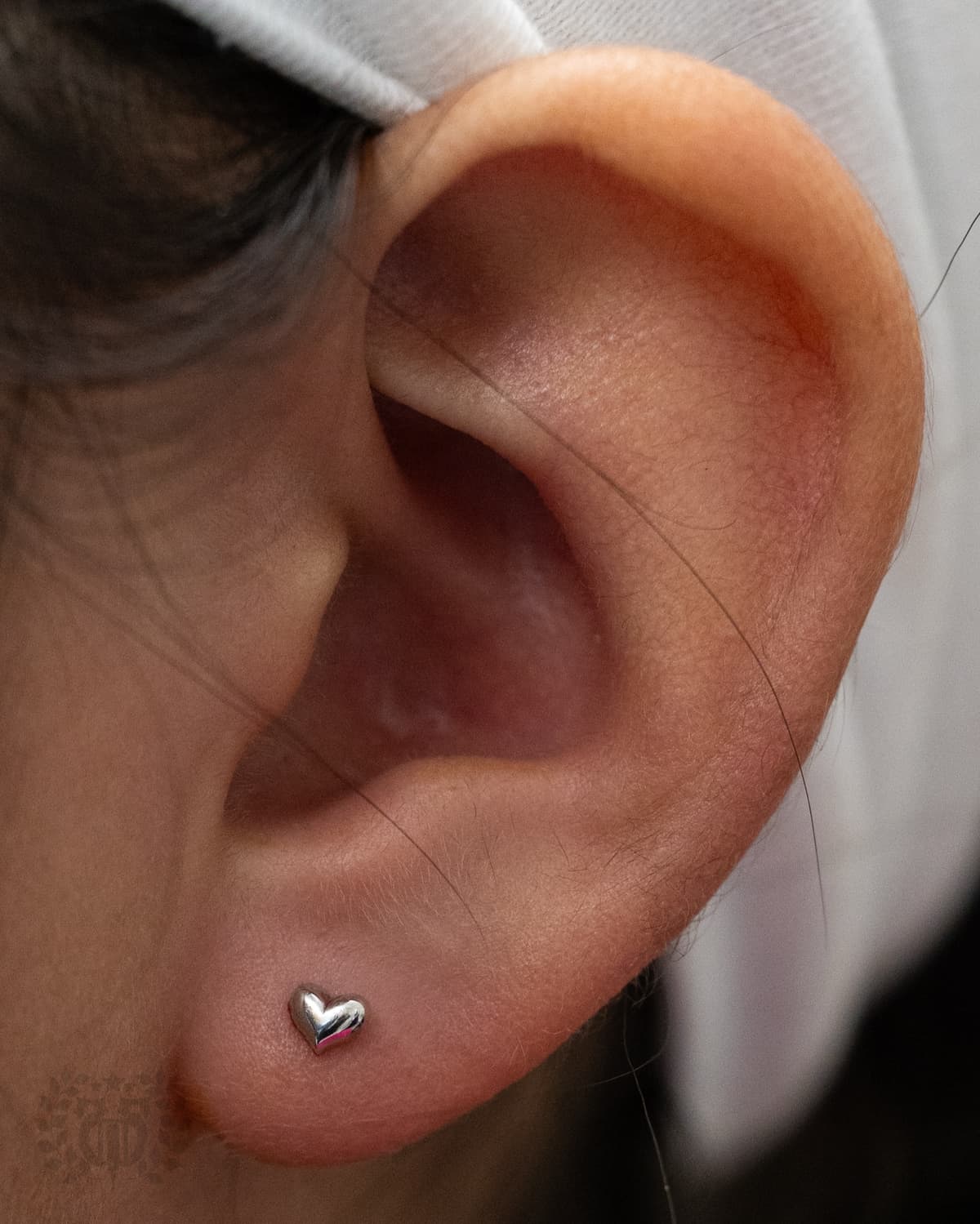
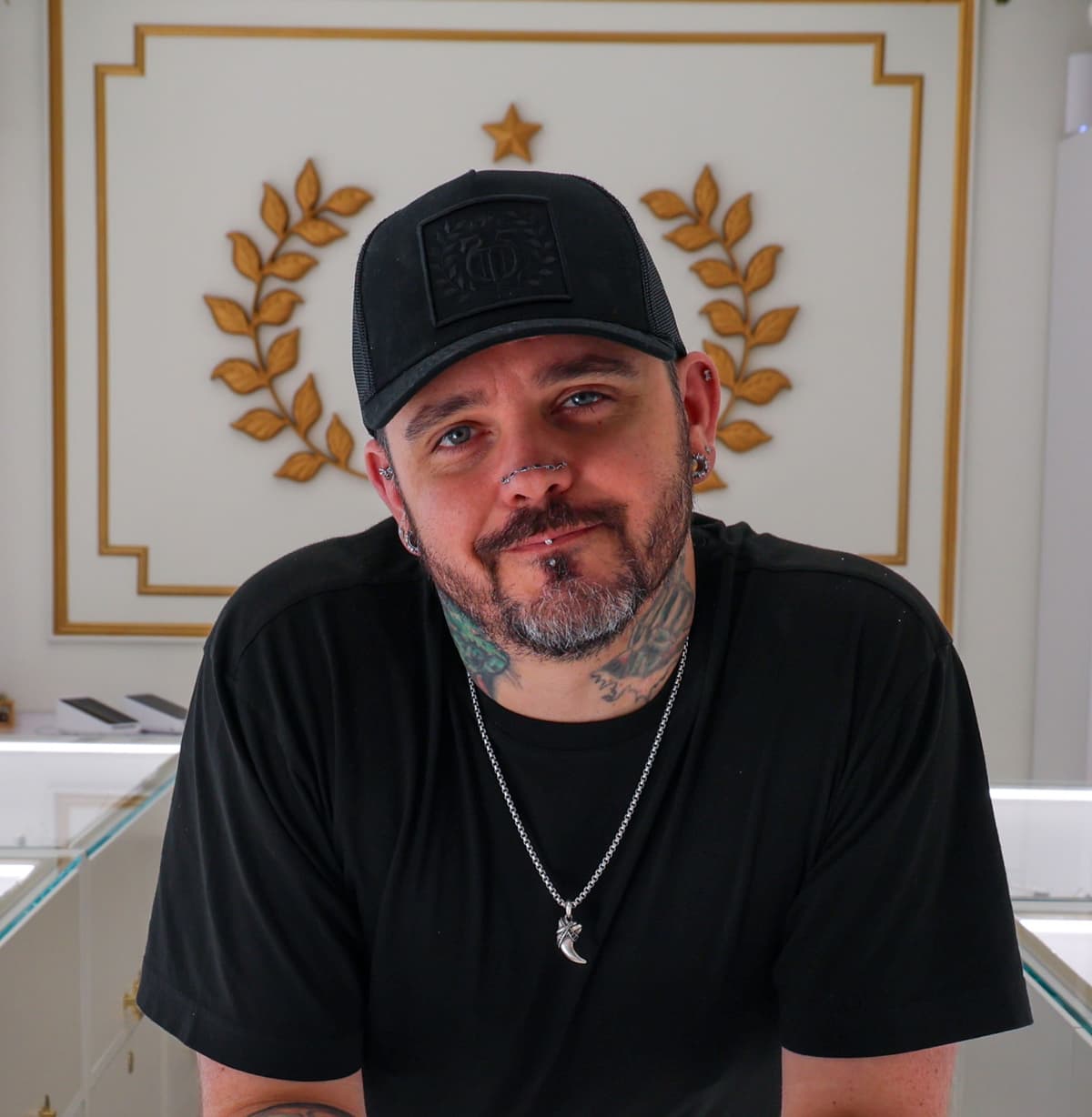
Bunny Vogt has been a Senior Piercer here since 2019 — ears, nostrils, septums, navels, dermals. Worth knowing when you're comparing studios: ask how long the person piercing you has been at that shop, not how long the shop has existed. Those are different numbers and only one of them is about your appointment.
 Founder
 Master Piercer
Blue Mason founded the studio and is a Fakir-certified Master Piercer. Fakir certification is one of the things you can ask about anywhere: named training from a recognised programme is checkable in a way that "years of experience" is not.
Six of them, none awkward, all answerable in a sentence by anybody who knows their trade. Ask them here or ask them somewhere else — the point is that you leave with answers rather than an impression.


Aftercare advice is where out-of-date studios reveal themselves, because the guidance changed years ago and plenty of shops never updated. What you should be told: clean twice a day with sterile saline, front and back, pat dry with something disposable, and otherwise leave it alone.
What should set off alarms: rotate or twist the jewelry, use alcohol, use hydrogen peroxide, apply tea tree oil, apply antibiotic ointment, make a saltwater soak at home. Every one of those is either useless or actively damaging to a healing channel, and hearing them means the studio's information is a decade or two old.
You should also leave with two specifics rather than a generic leaflet: a healing window for your particular placement, and a date to come back and have the starter post shortened once the swelling drops. A studio that doesn't mention downsizing hasn't thought past today.
Book AppointmentAsk what normal looks like for your placement and when it should stop. Soft tissue settles within days; cartilage peaks around forty-eight hours and stays tender longer. A studio that can't give you a window can't tell you when something has gone wrong either.
The date you come back to have the long starter post swapped for a shorter one. This is the check that separates studios who finish the job from studios who took the money. It should be offered to you, not requested by you, and it shouldn't cost anything.
Lobes at six to eight weeks, cartilage anywhere from six to twelve months, most body placements the same. If a studio tells you a cartilage piercing will be ready in eight weeks, they are either guessing or selling. Get the number for your placement before you leave.
This is the part people don't realise they're allowed to do. You can walk into any studio, ask your questions, look at the case, look at the licence, and leave without being pierced. Nobody reputable will mind. Here's how the visits differ.
Verbatim reviews from Apollo's Google Business Profile
"It was very clean. And everyone was very friendly. Was very excited about getting my first piercing."
"This is my go to piercing spot! Great jewelry selection and ear curation. Blue is great!"
Reviews from Google · Read all 623 on Google
5000+ clients2625 Main Street, Santa Monica. The permit is on the wall, the autoclave is out the back, and you are welcome to inspect both without booking anything.
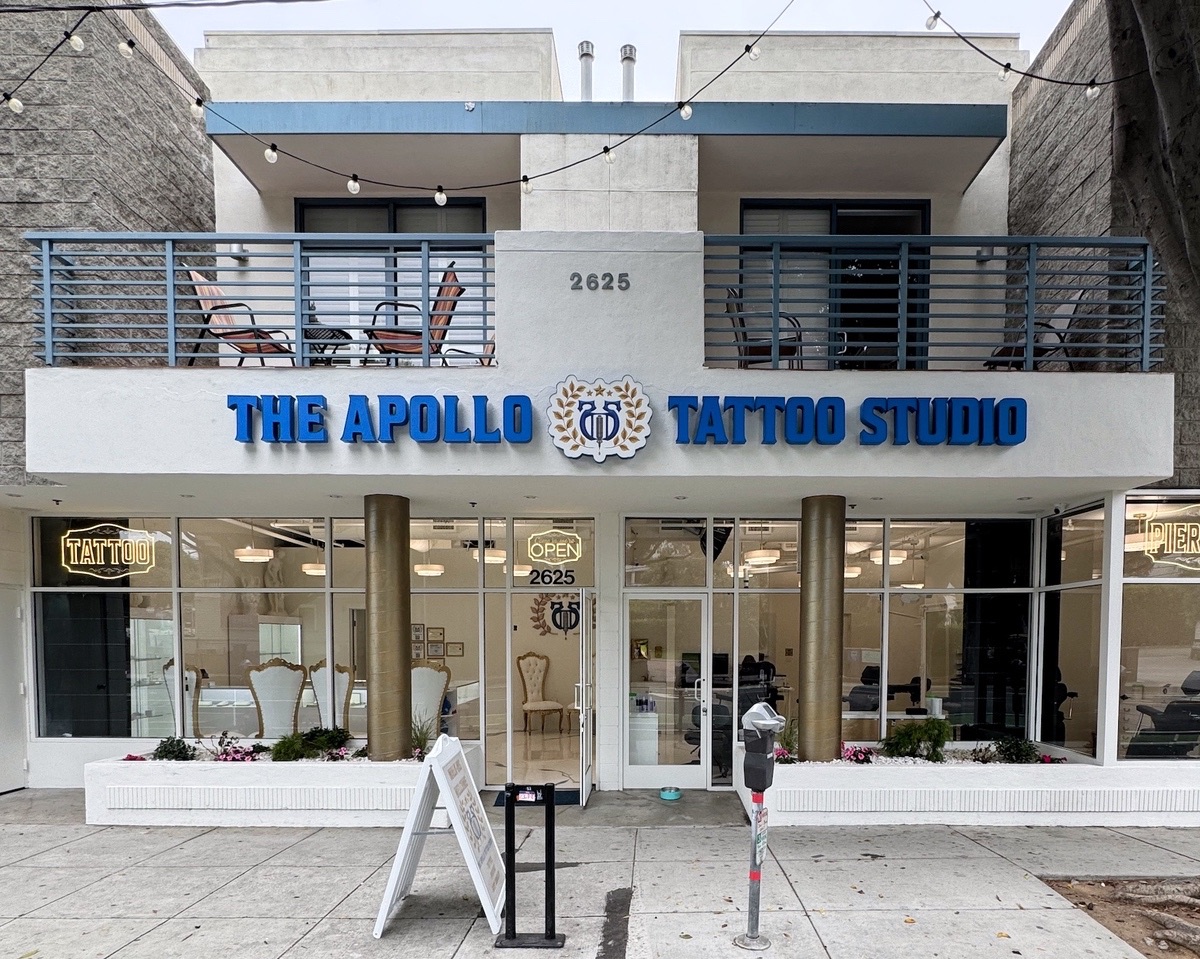
Santa Monica, CA
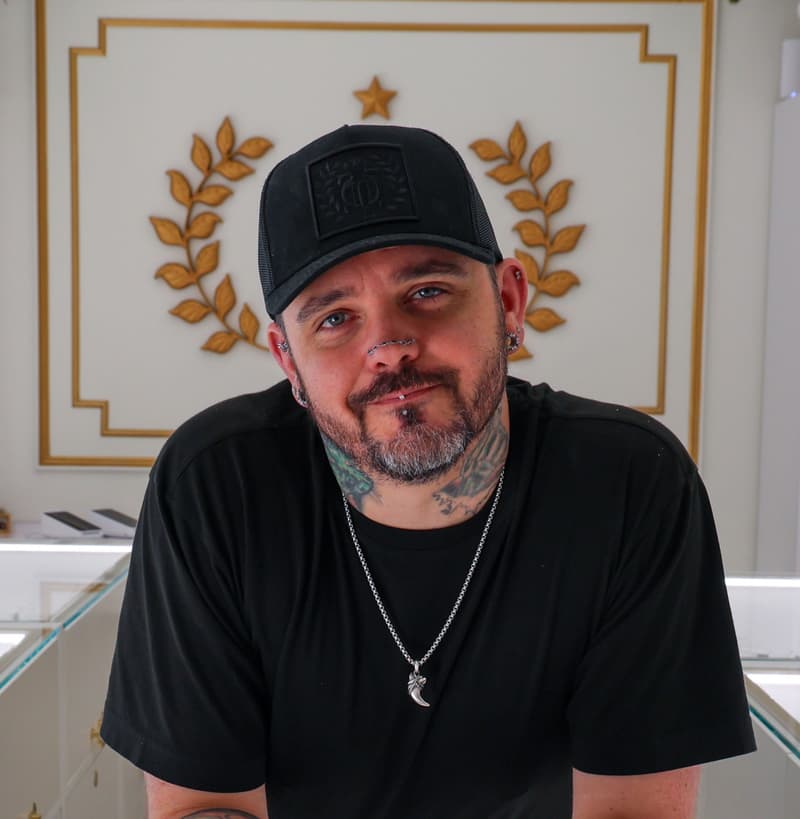
Apollo was founded by Blue Mason in 2007. With 20+ years of body art experience, Blue brings master-level expertise to every piece. Read Blue's story →
Answered as generally as we can, so they're useful wherever you end up booking.
More than you'd think, and most of it without asking anything. Is the piercing station visibly separate from the retail floor? Are the surfaces clear rather than cluttered? Can you see an autoclave, or a sterilisation area at all? Is the health department licence on the wall where the public can read it? Is anybody visibly rushing? Then ask one question — "what jewelry would go in a fresh piercing here?" — and listen for whether the answer contains a standard, a material and a brand, or whether it's vague. That single question separates studios faster than any review site.
Sometimes, and sometimes it's the most expensive thing in the room. The trap is the all-in price that includes jewelry, because the only way to make that number work is to use the cheapest possible starter. Mystery-metal jewelry sitting in an open channel for six to twelve months is the single most common cause of the irritation, swelling and scarring that people then spend money trying to fix. A low service fee with good jewelry priced separately is fine. A low all-in number is a signal about what's going in you.
It's a materials standard, not a marketing word. For titanium the one that matters is ASTM F136; for steel it's ASTM F138. A studio holding to it can tell you the designation without looking it up, and can usually show you mill certificates from the manufacturer if you ask. Beware "surgical steel" used on its own, which is a category rather than a grade and covers alloys that shed nickel. Ask which standard, not whether it's good quality.
Yes, and it's not a favour. Needle, jewelry and gloves come out of sealed packs and those seals get broken where you can see it. That's the moment you can verify the needle is single-use rather than taking somebody's word for it. If a piercer has already laid out an opened tray before you sat down, ask them to start again with fresh packs. A good one will do it without being annoyed. The reaction to that request is itself informative.
No. Some placements need anatomy that not everyone has — a rook needs a pronounced ridge, an industrial needs two points that line up, a navel needs a defined upper lip of skin to sit under, a smiley needs enough frenulum to be worth piercing. A piercer who never says no either isn't checking or doesn't mind selling you a piercing that will migrate out. Being told no, with a reason you can see on your own body, is a mark of a studio worth using.
A parent or guardian must be present with their own valid state or federal photo ID, the minor's original birth certificate, and photo ID for the minor.
5+: earlobes. 13+: simple cartilage, helix only. 14+: complex cartilage and nostril. 16+: septum, eyebrow, navel. 18+: bridge, surface and dermals, lip, tongue, nipple, genital.
A studio that waves the paperwork through for a minor is telling you how it handles the rules it thinks nobody is checking.
Yes, 8am to 8pm, seven days, first come first served and worked in around booked appointments. Some things are better booked — nipple work and dermals because they need a private room and a longer slot, anything in the genital category because it's consultation-first, and anatomy-dependent placements like rook, daith and industrial where there's a real chance the answer is no.
Bring it in. A good share of what comes through the door is somebody else's work that's migrating, sitting at a bad angle, or wearing jewelry of the wrong length or material. Often it's fixable with a different post. Sometimes the honest answer is to take it out, let it close, and start again in a better spot. Either way you'll get a straight read rather than a sales pitch, and any studio worth using will do the same.
Never, on anybody, at any age, in any placement. A gun doesn't cut — it forces a blunt stud through by pressure, which tears soft tissue and fractures cartilage. Its plastic body can't go in an autoclave either. Single-use sterile needles here, and the same answer for a five-year-old's lobes as for anything else.
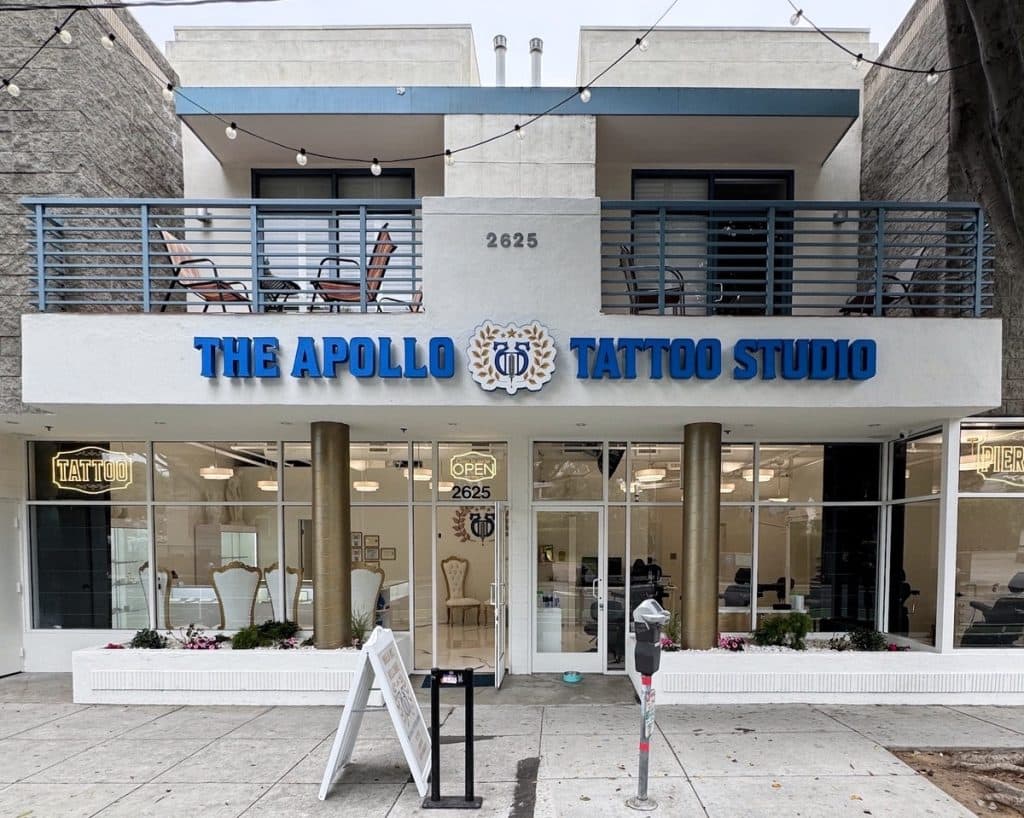
Apollo is a working studio on Main Street in Santa Monica's Ocean Park — Blue Mason, Raa, David DaVinci and Hannah Newman in the tattoo chairs; Bunny Vogt running the piercing room. Implant-grade titanium, solid 14k and 18k gold, and a portfolio you can browse in person before any needle starts.
Walk in or book ahead — we hold same-day slots most days. The sentence is the tattoo. The images are only how it looks.
Apollo sits at 2625 Main St in Santa Monica, a block from the beach and easy to reach from anywhere on the Westside. Here's roughly how long it takes to get to us for tattoos and piercings:
There's metered street parking on Main Street and Ocean Park Blvd, plus a public lot on 2nd Street a short walk away. We recommend giving yourself an extra 10 minutes to park on weekends — Main Street gets busy with the farmers market and beach traffic. If you're running late, text us at the studio and we'll hold your appointment.
Come in and run every one of those six checks on us before you commit to anything. That's the whole point of writing them down.
Recognized in Santa Monica's Most Loved 2025 & 2026

We'll respond within 24 hours
Or reach us directly:
We use cookies to run this site, remember your preferences, and understand how it's used. Read our Privacy Policy for full details.