Run a fingertip along the rim of your ear toward your face and you'll hit a small firm ledge sitting right above the opening. That's the daith, and it's the hardest angle of entry in the whole ear. The needle has to travel beneath that ledge and out above it, on a slant, into a gap about the width of a matchstick, without going anywhere near your ear canal. Which is why a daith piercing takes minutes in the chair when a lobe takes seconds.
Not every ear has a fold worth piercing. Some ledges stand proud with real space beneath them. Others press so tightly against the canal wall that a ring would be squeezed on both faces from day one. So the first thing that happens is somebody turns your head to the light and looks. That assessment is free and it sometimes ends in a no. The piercing itself is $85 at 2625 Main Street in Santa Monica, needle only, implant-grade titanium, open 8am to 8pm every day. And on the migraine question: there is no good evidence, we don't pierce for medical reasons, and we would rather say so on the page than in the chair.
Book Your Daith Piercing 5000+ clients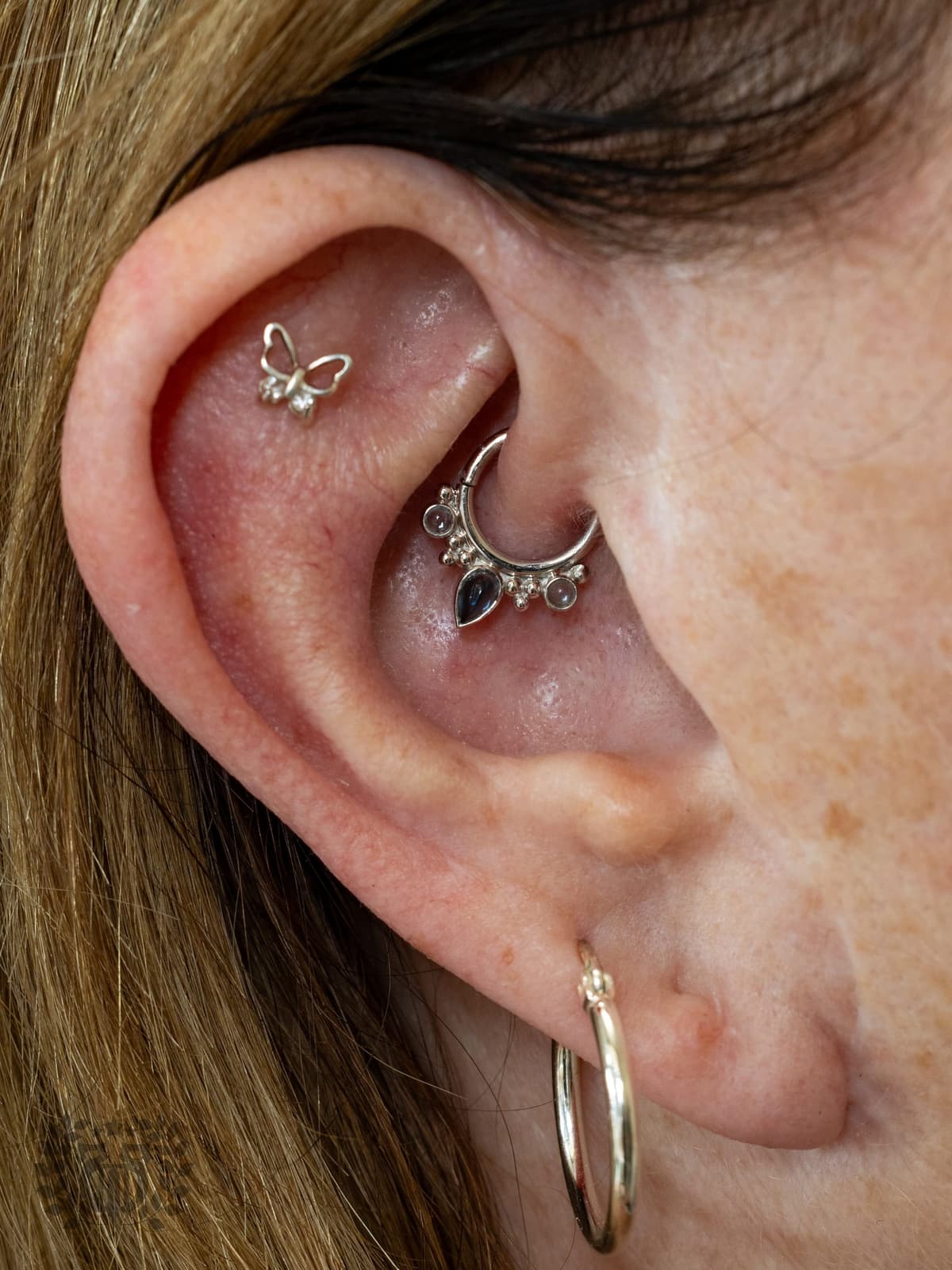
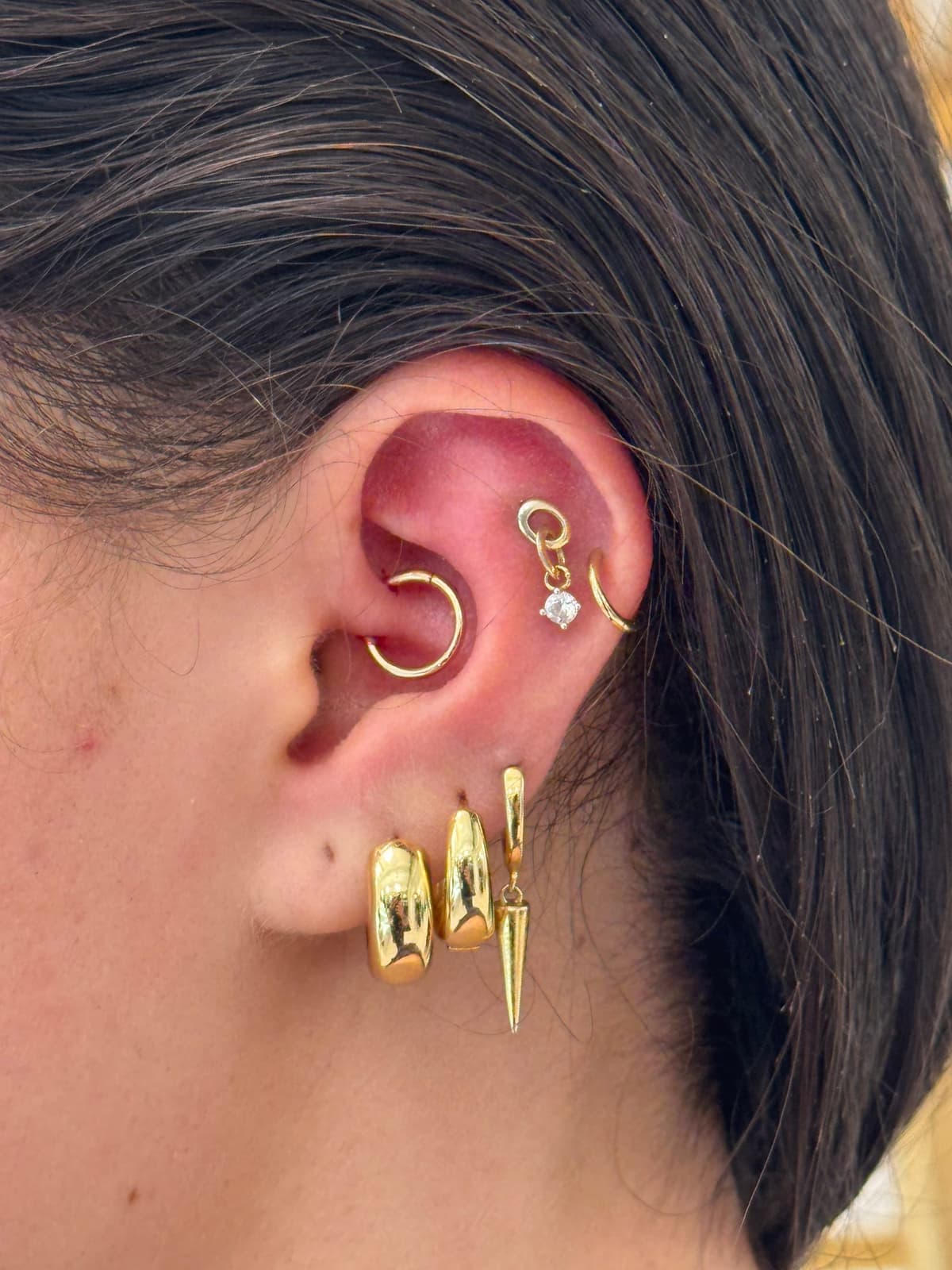
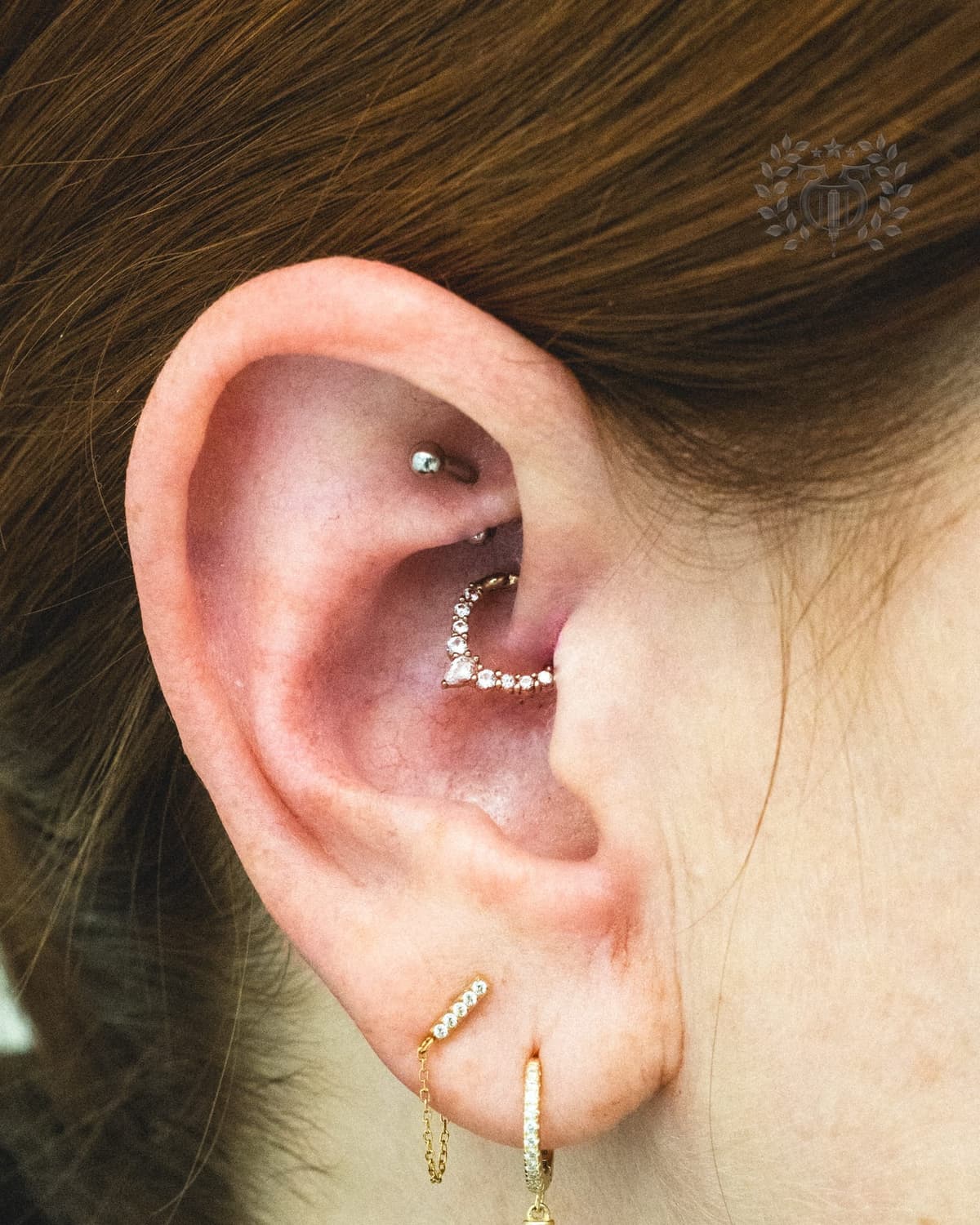
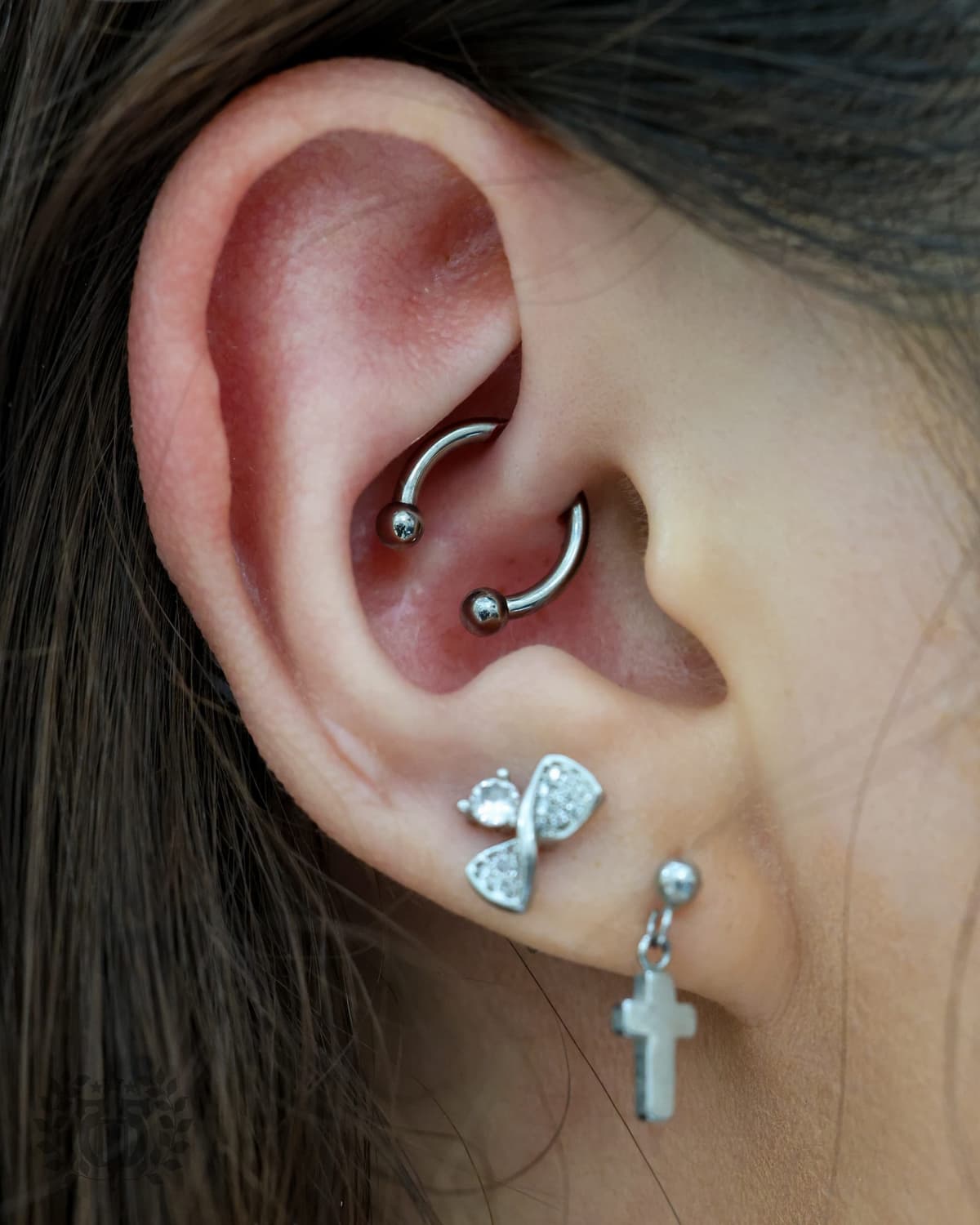
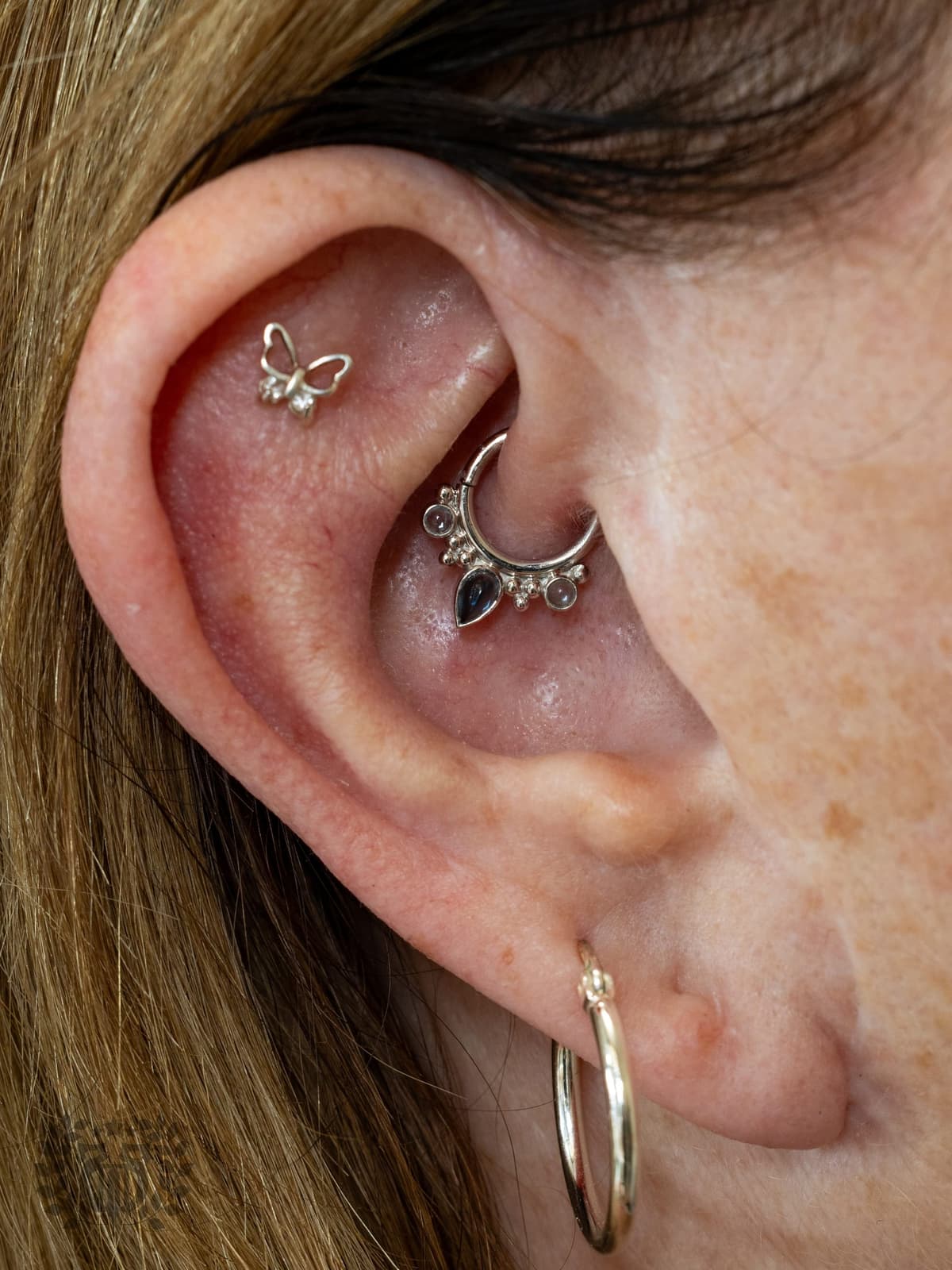
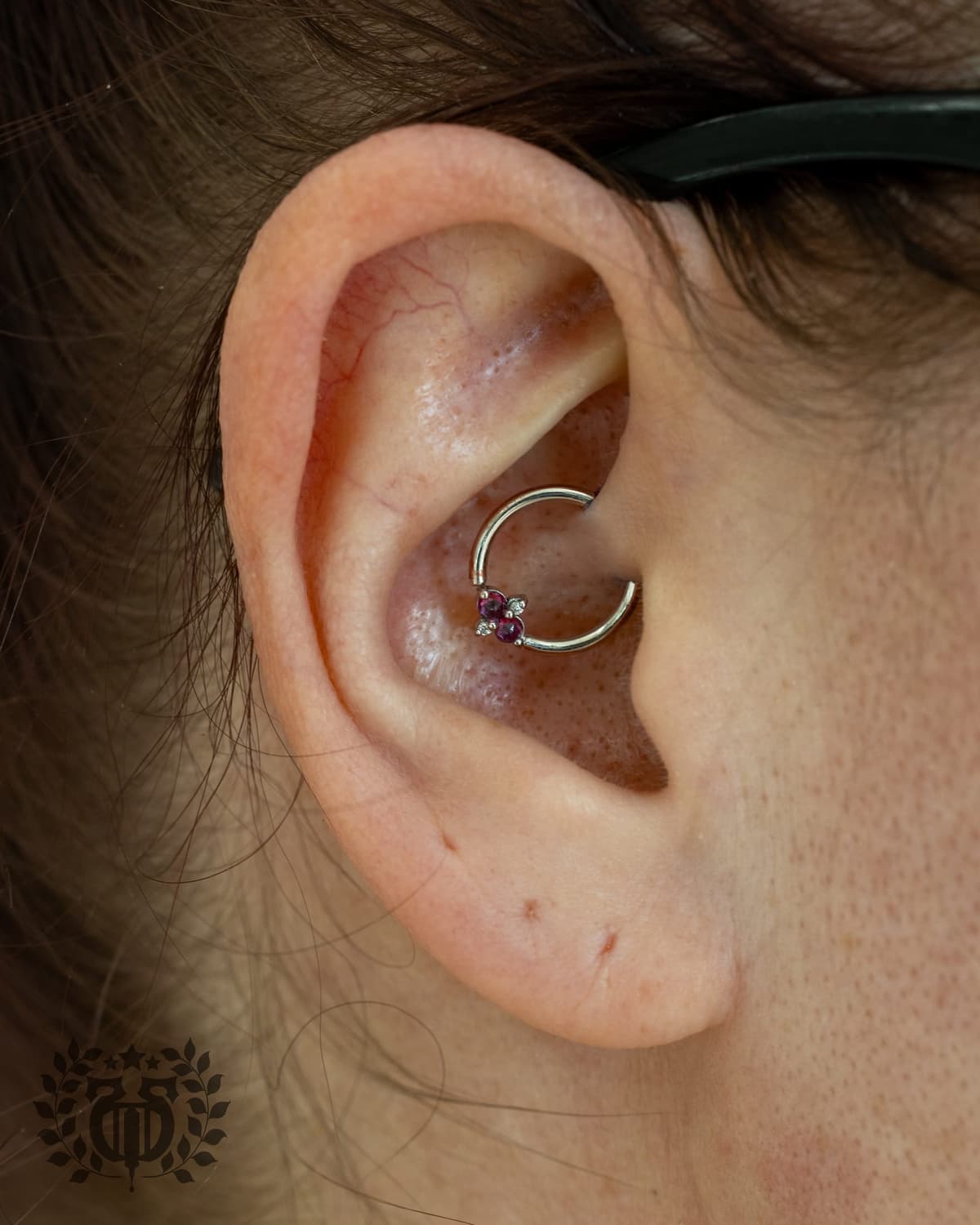
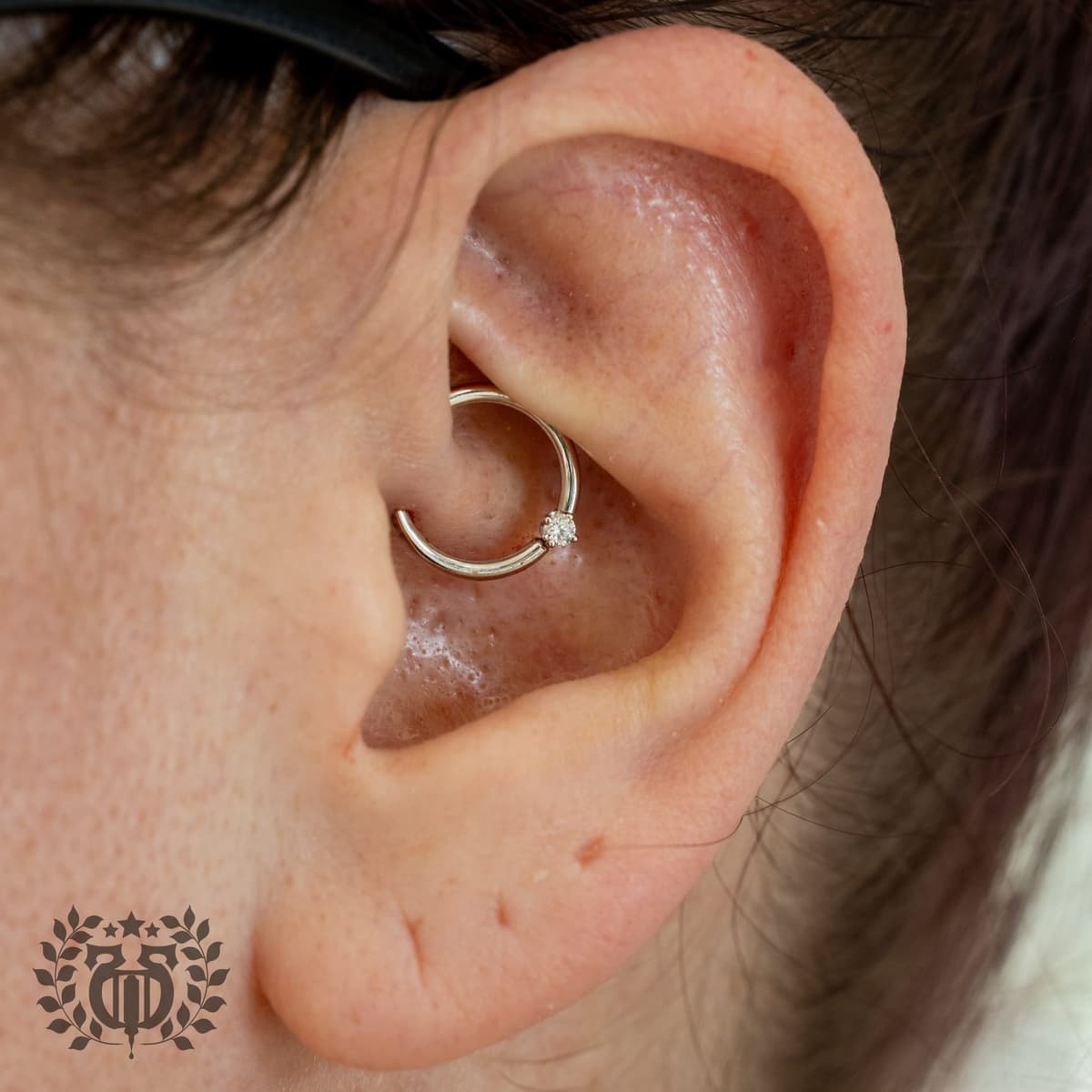
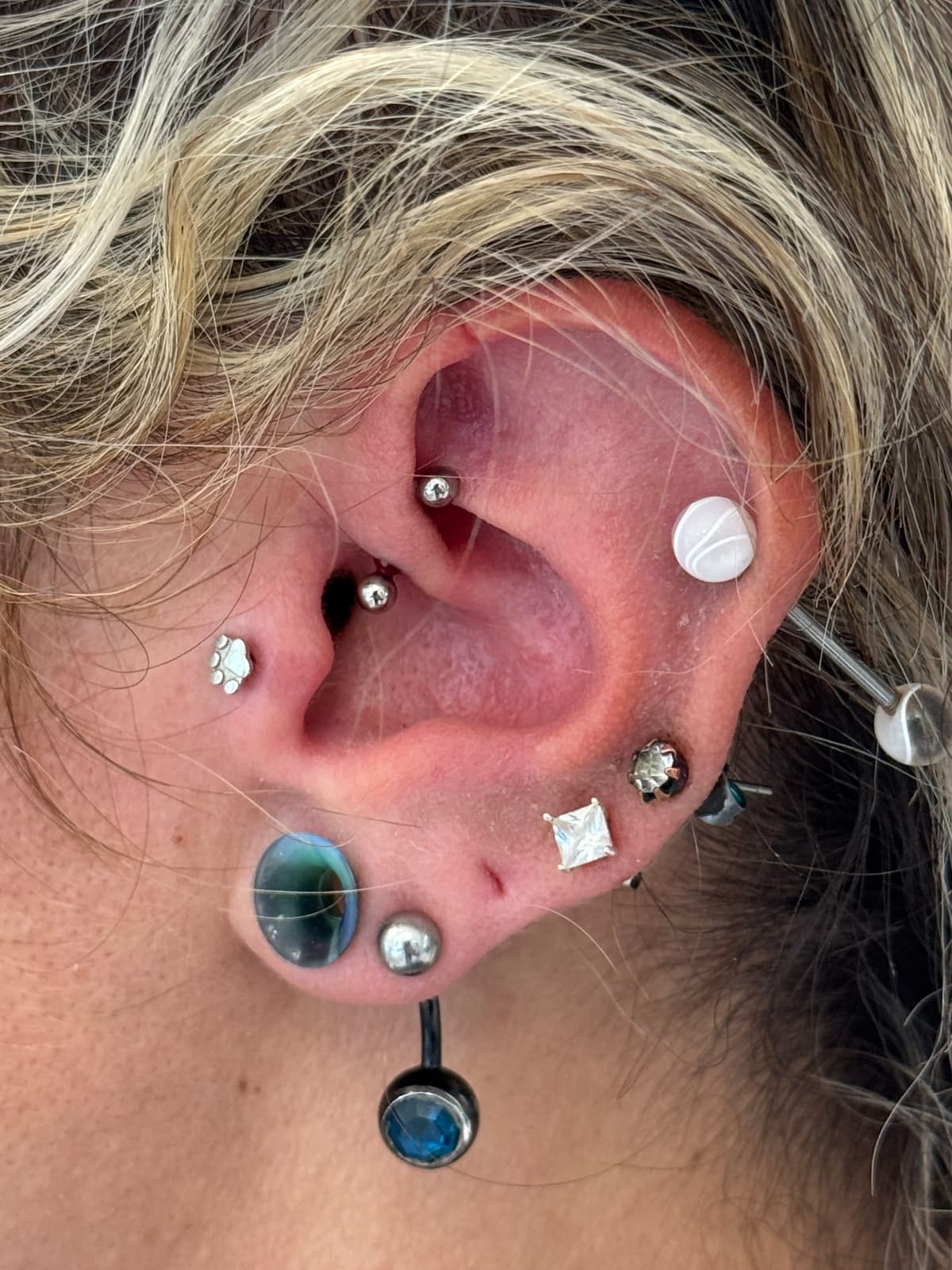
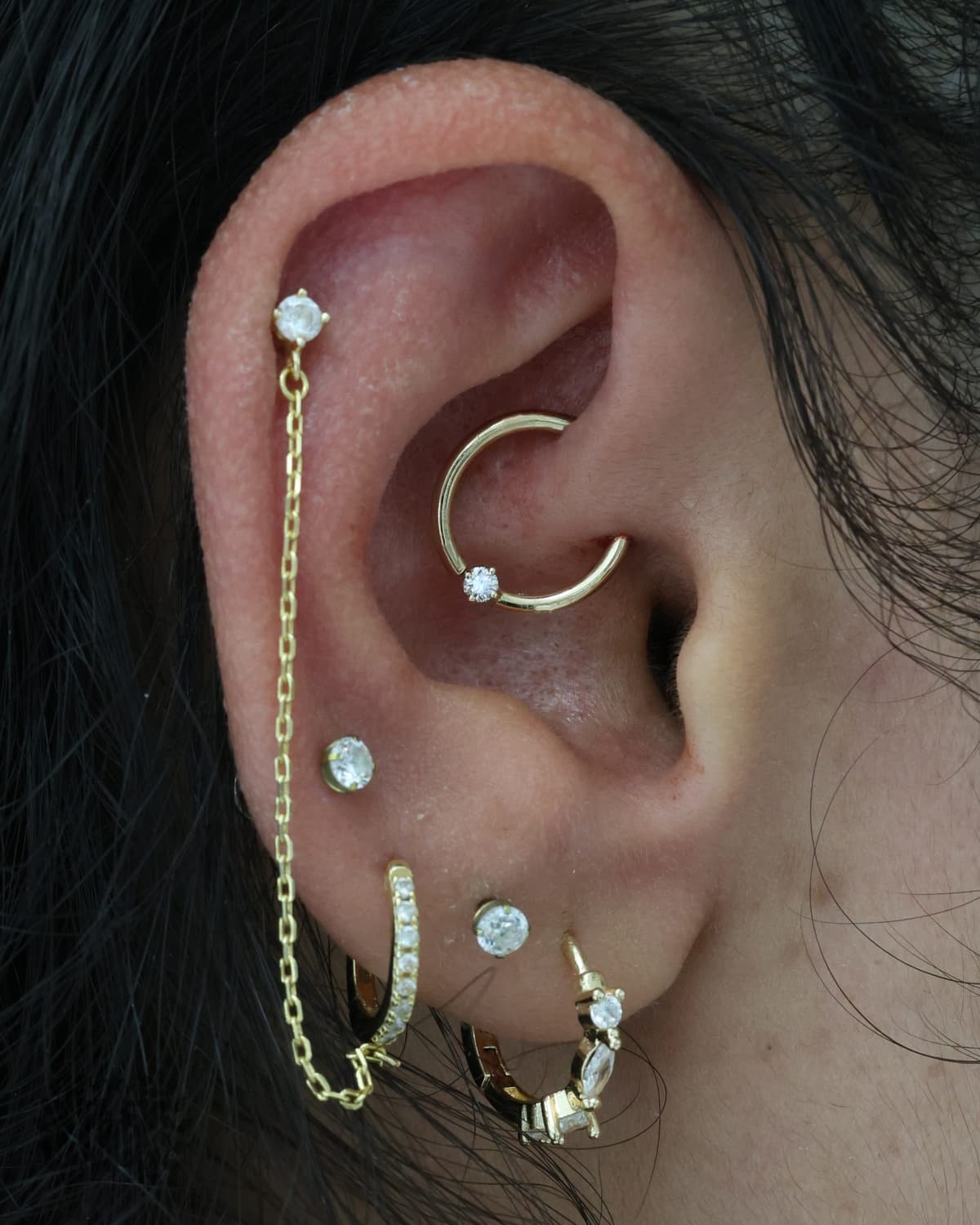
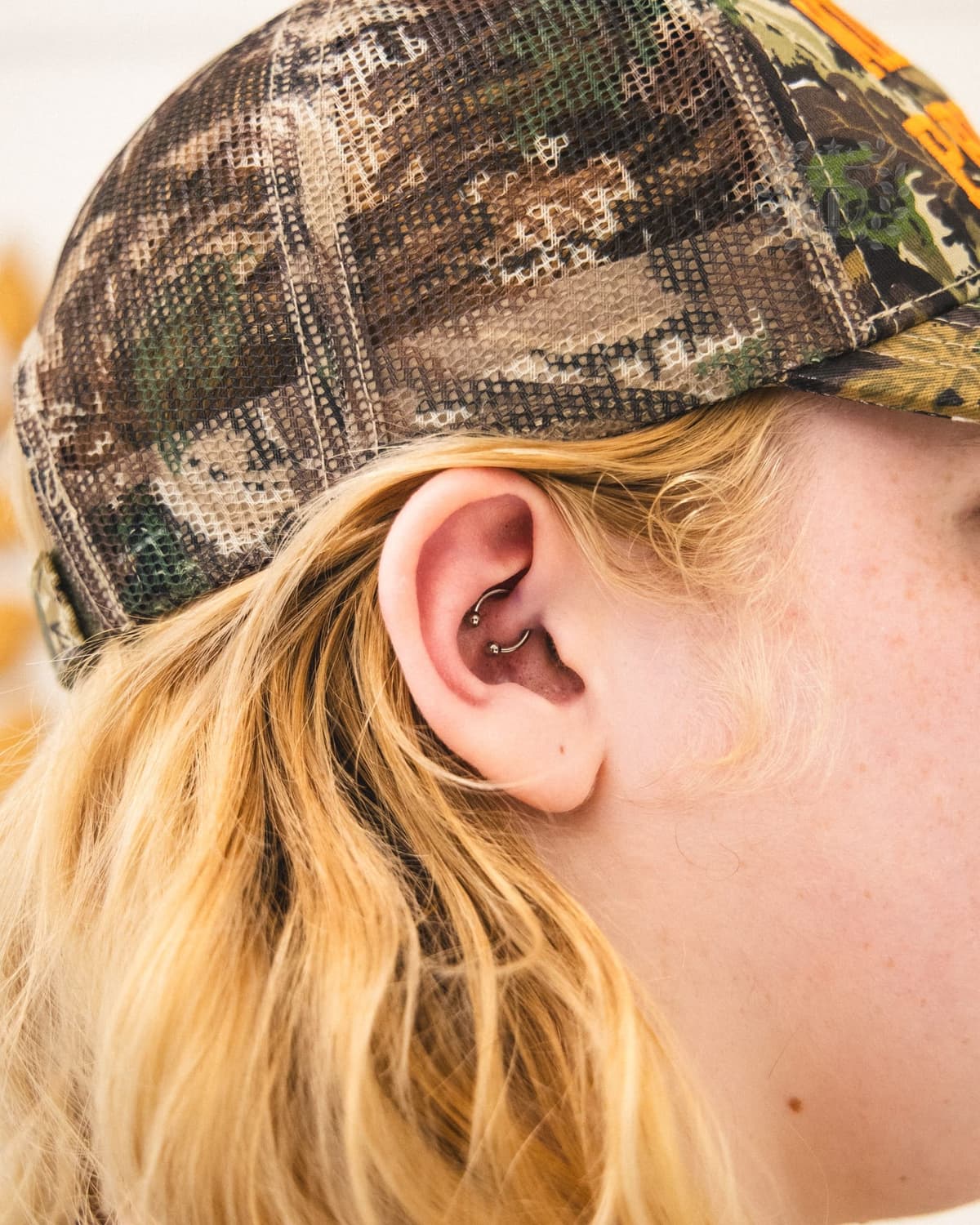
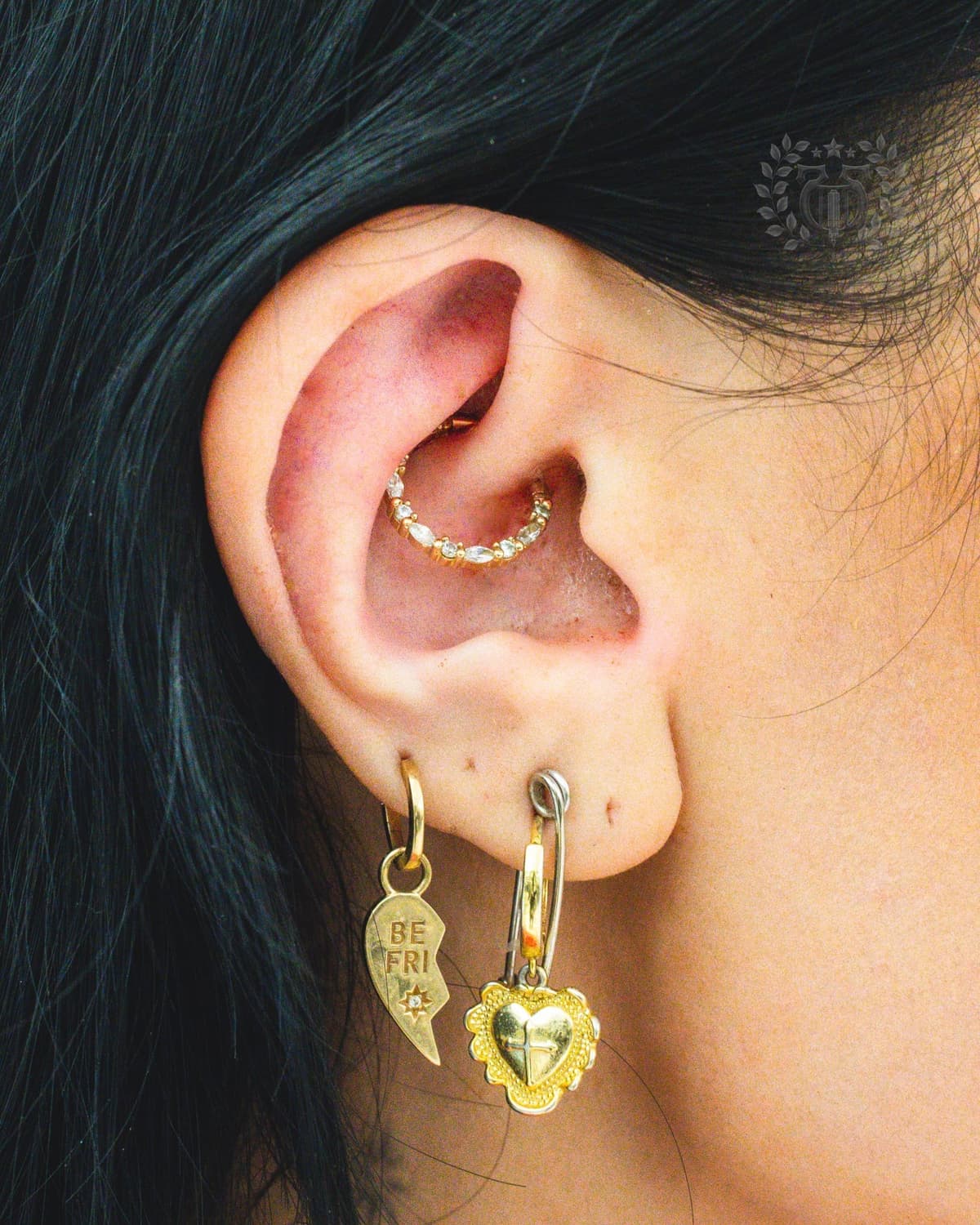
Everything difficult about this piercing comes from one small ledge of cartilage and where it happens to sit.
Anatomically the daith is the crus of the helix: the point where the outer rim of your ear, having travelled all the way round, dives inward and curls back over the opening of the ear canal. It forms a short shelf. That shelf is what a daith ring passes through, and its geometry is unlike anything else you can pierce in an ear.
Compare it with a lobe. A lobe is soft, flat, reachable from both sides, and a needle goes through it perpendicular in a straight line you could take with your eyes shut. Now compare it with a helix: still flat, still approachable head-on, just firmer. The daith is neither. It is dense cartilage, it faces sideways and downward, it is partly roofed over by the rim above it, and the only way through it is a diagonal from underneath.
Two things follow. First, the piercer needs your head turned and held, and needs to seat a receiving tube behind a fold that may only be a few millimetres deep. That is slow work, and from the chair it looks like nothing much is happening. Second, the tissue is thick and gets relatively little blood, so it heals on a nine-to-twelve-month clock rather than a six-week one.
Depth is the thing we are really assessing. A well-defined fold with air beneath it takes a ring cleanly. A fold lying flat against the canal wall leaves a ring pressed into tissue on both faces from the first day, and that piercing spends its whole life angry. You cannot tell which you have from a photograph of somebody else's ear.
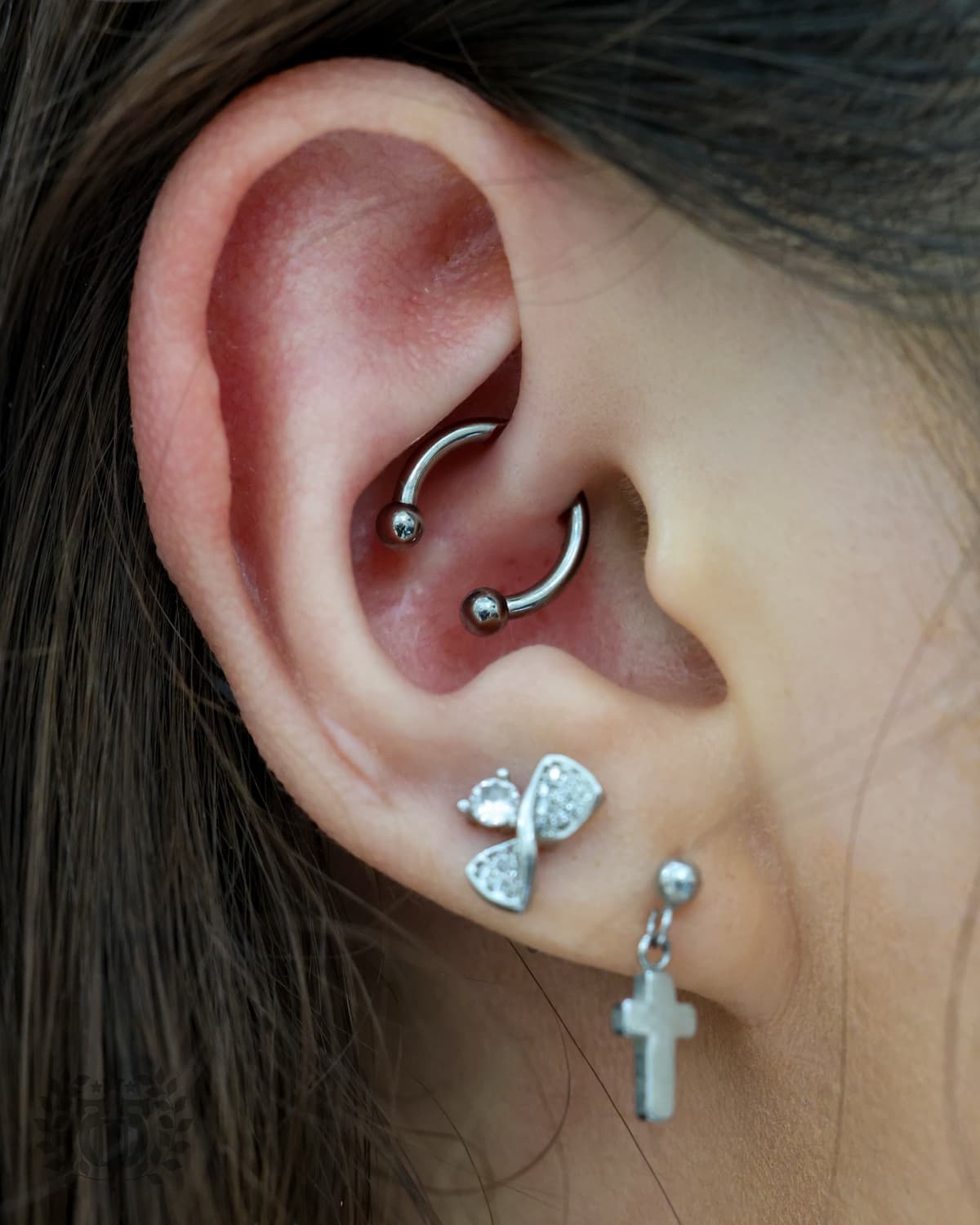
The daith is the little shelf of cartilage where the rim of your ear dives inward and curls back over the canal. Follow your outer rim toward your face with a fingertip and you'll find it as a firm ledge sitting above the opening.
On some ears the ledge stands clear, with obvious space beneath it. On others it's pressed almost flat against the wall of the canal. Depth is the first thing we look at, because it decides whether a ring has anywhere to sit.
This is thicker tissue than a helix or a lobe, with less blood reaching it. That's why the timeline reads 9 to 12 months rather than 6 to 8 weeks, and why it forgives less when it gets knocked.
No other piercing sits this close to the opening of your ear. It shapes everything downstream: the earbuds conversation, how saline runoff has to be directed, why you hear the pass as much as feel it.
A daith reads as almost nothing from straight on, then flashes when you turn. People choose it for exactly that. It also means you'll be checking it in a mirror with your head tilted for the next year.
Single-use needles opened in front of you, a hospital-grade autoclave for anything reusable, EPA-registered disinfectant on surfaces, and bloodborne-pathogen-certified piercers. Licensed and inspected by LA County.

Apollo's Premium Jewelry Partner
Handmade in Los Angeles since 1996. Lifetime guarantee. Implant-grade gold, platinum, and titanium. Over 3,000 original designs in our case — ask your piercer for a tour.
See the BVLA story →Millimetres decide whether a daith ring looks right or looks swallowed. Nowhere else in the ear is diameter this unforgiving: a helix hoop has open air around it, a daith hoop has a ledge above and a canal below.
Whatever ring goes in on day one is a size up from what will eventually look right. The fold swells inward against the ring, so a diameter chosen to look perfect immediately is a diameter that gets buried by the weekend. Expect a little visible clearance, and expect to dislike it slightly.
A ring that looked delicate on someone else's ear can sit half-swallowed on yours, or hang out past the fold like it's escaping. The right diameter is the one that clears the tissue on both faces without floating. We hold options against your ear rather than guessing from a catalogue number.
A clicker snaps shut in one motion, which matters enormously somewhere you can't see. Captive bead rings need a tiny ball held in tension with pliers, deep in a fold, next to your ear canal. That's a fiddly job at the best of times and a bad one on a piercing that's still tender.
Where the fold is tight against the canal, a ring has nowhere to go and a small curved barbell sits better. Less metal, less twist on the channel, nothing wrapping around a ledge that is already crowded. It's a less showy option, and on some ears it's the only one that heals quietly.
Solid 14k and 18k from BVLA and Anatometal, never plated. A daith is a slow heal, and heavy decorative pieces belong on a channel that has fully settled, usually somewhere past the twelve-month mark. Then you get the fitted diameter and the piece you actually wanted in the first place.
Clear next step
Two minutes with your head turned to the light tells us whether there's a daith here worth doing. No obligation either way.
Recommended first step
Book lobes, cartilage, or a styled ear appointment with Apollo.
The rook sits a few millimetres away and heals on a similar clock. Almost nothing else about the two is alike.
| Piercing Type | Location | Initial Healing | Full Healing | Pain Level |
|---|---|---|---|---|
| Daith | Innermost fold above ear canal | 3-4 months | 9-12+ months | 5-6/10 |
| Rook | Upper inner fold above daith | 3-4 months | 9-12+ months | 6-8/10 |
 5000+ clients
None of the extra time is hesitation. It's geometry, and most of it happens before the needle moves.
There is no piercing a daith with you facing forward. Your head is turned, tilted and steadied so the fold opens toward the light and toward the piercer. Half the people who find this piercing awkward find the neck position awkward, not the needle.
The needle has to enter beneath the fold and exit above it, on a slant, missing the ear canal and coming out somewhere a ring can sit level. That line is different on every ear. It gets checked from two angles before anything is marked.
A short tube goes in behind the fold to catch the needle and protect what is behind it. Getting it seated in a tight fold is genuinely the slowest part of the appointment, and it is why a daith takes minutes where a lobe takes seconds.
The pass is a single continuous push through dense tissue at an angle. It sounds louder than it feels, because it's happening next to your ear canal. Then the ring goes in, and the ring going in is the part most people don't even register.
Saline technique for a fold you can't see, the earbuds conversation, and which side to sleep on for the next several months. Come back any time during healing and we'll look at it for free, including if you were pierced somewhere else.
A lot of the people who ask us about a daith mention migraines first. Here is the honest answer, before you book anything.
There is no good evidence that a daith piercing helps migraines. That is the whole answer and we are not going to dress it up. The idea circulated widely enough that a great many people arrive having read it somewhere confident-sounding, and it deserves a straight response rather than a shrug at the counter.
Where does the claim come from? Broadly, from an analogy with acupuncture points, plus a lot of individual accounts online. Individual accounts are not nothing. People are describing something real to them. But headaches wax and wane on their own, and anything you do during a bad stretch will eventually coincide with a better stretch. That is precisely the kind of question a controlled trial exists to settle, and the trials that would settle it have not been done in any convincing way.
So Apollo does not pierce for medical reasons. Not this placement, not any placement. Nobody here is qualified to treat a headache disorder, and nobody here is going to imply otherwise in order to sell an $85 service. If migraines are what is driving this, the person to talk to is your doctor, and that is worth doing regardless of what you decide about your ear.
None of which is an argument against the piercing. Get a daith because you like how it looks tucked into that fold and how it catches when you turn your head. That's a perfectly good reason and it's the only one we'll sell you on. If a piercer tells you otherwise, here or anywhere, that's worth noticing about the piercer.
Three stages, and the middle one is the appointment people forget to come back for
$85 for the daith, assessment included. Jewelry is always separate, so you can start in plain titanium and buy the gold ring once the fold has settled.
Jewelry sold separately
Jewelry sold separately
Jewelry sold separately
Jewelry sold separately
Jewelry sold separately
Jewelry sold separately
Jewelry sold separately
Jewelry sold separately
On jewelry: titanium clickers and curved barbells are the everyday starters. Solid gold and BVLA pieces are priced per item and confirmed at consultation, and on a daith they belong at the end of the heal rather than the beginning. If you would rather plan several ear placements together, the Curated Ear rate covers up to four in one sitting.
 Senior Piercer
 Senior Piercer
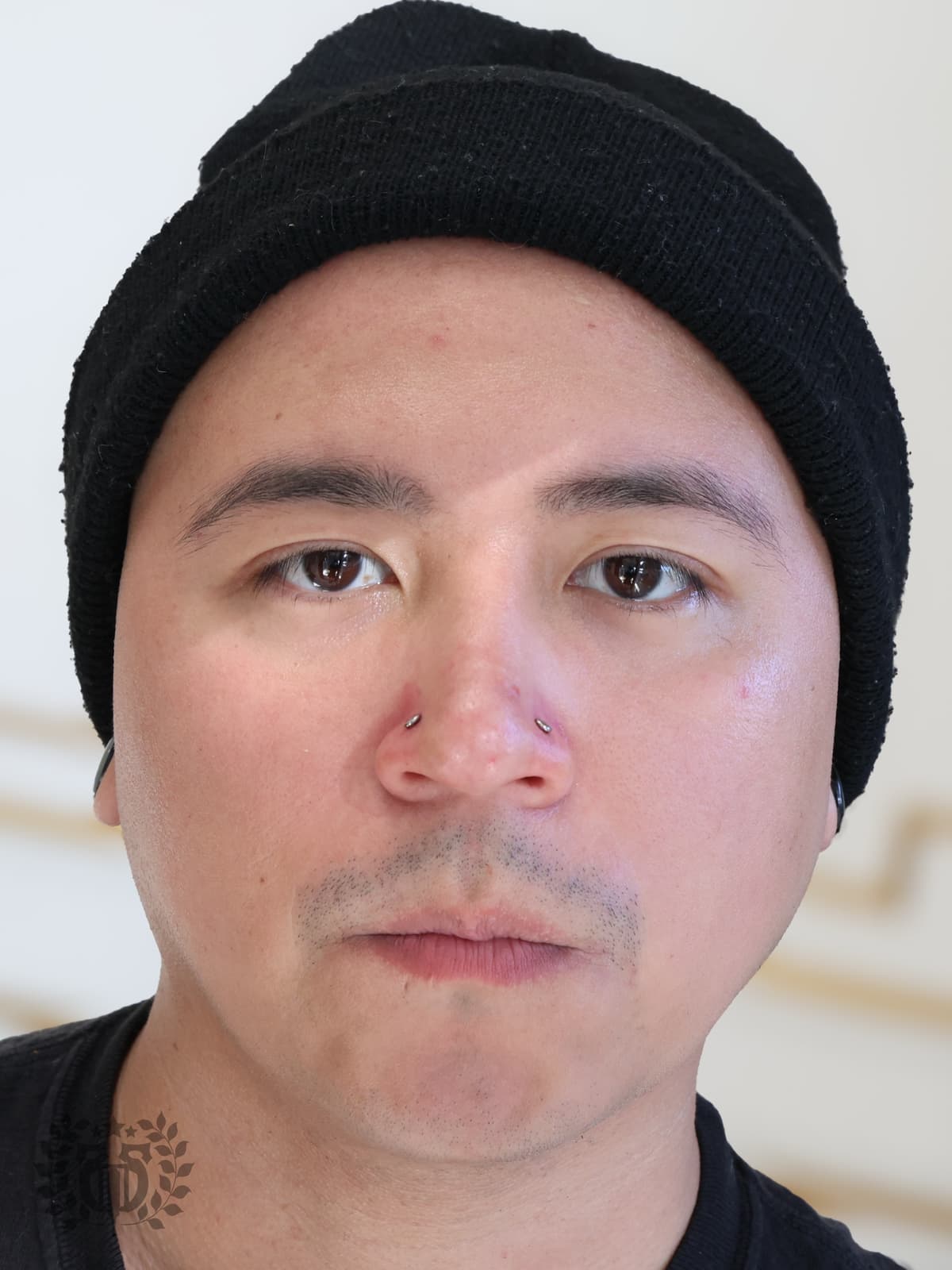
Bunny Vogt has been a Senior Piercer here since 2019 and does a large share of the studio's daiths. Her strength is the unglamorous half of this placement: reading how deep a fold actually sits, seating a receiving tube in a tight one, and picking a starter diameter that still looks right once the swelling has gone.
 Founder
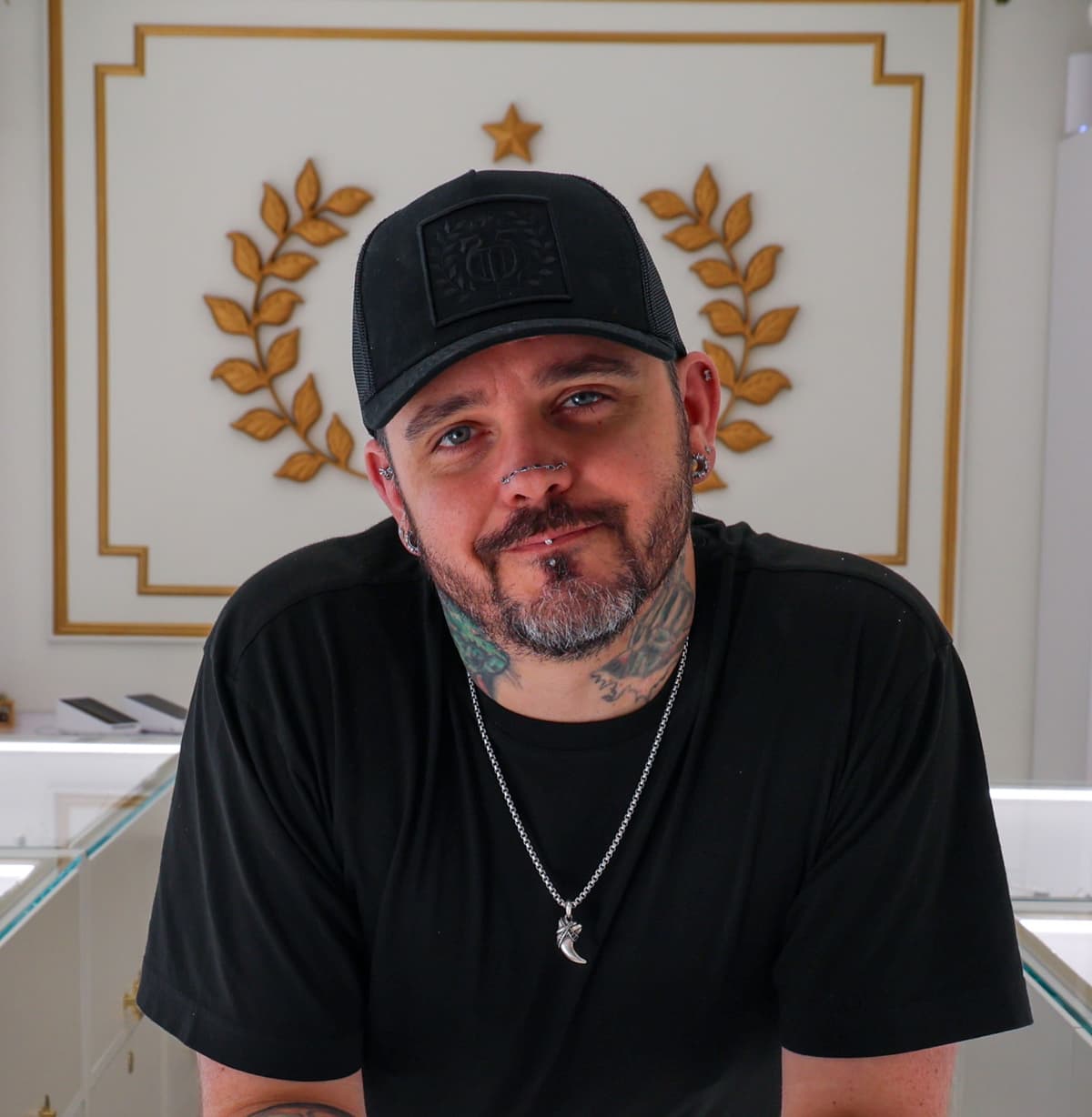
 Master Piercer
Blue Mason founded the studio and is Fakir-certified. He's the one to ask about awkward daiths: folds that curl tight against the canal, ears where a previous piercer angled the channel badly, and the judgement call about when a fold simply isn't worth putting a ring through.
Here's what somebody is actually doing while they turn your head and squint at it. Two minutes, no charge, and a fair number of people leave having been told this isn't the placement for them.
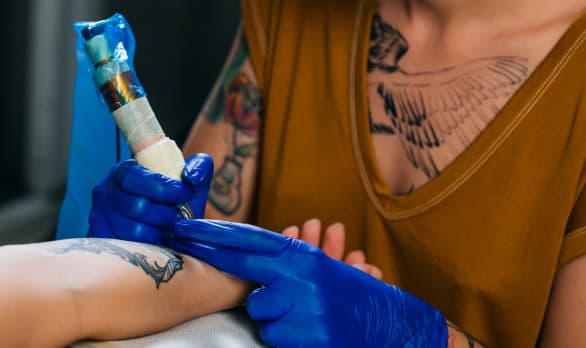

Every other ear piercing you can inspect in a mirror. This one you can't, which changes the routine more than people expect. Cotton buds are out. They pack debris deeper into a fold you have no way of checking, and half the crust you think you're removing gets pushed further in.
Sterile saline spray, twice a day, aimed so it runs through the fold and out. Tilt your head over a sink so gravity takes the runoff away from your ear canal rather than into it, then let it air-dry rather than working at it with a towel. That is the entire cleaning routine. Everything else is restraint: don't rotate the ring, don't push it around to check it moves freely, don't take it out at three months because it feels fine. Cartilage closes from the outside in, so an opening that looks settled can still be raw down the channel.
Then the two things that actually break daiths. In-ear earbuds press directly on the fold and shove the ring sideways every time you seat them, several times a day, for months. And sleeping on that side compresses a ring into cartilage for eight hours at a stretch. A travel pillow with a hole in the middle solves that if you're a side-sleeper. Bumps on a daith are far more often mechanical than infectious. Something is touching it that shouldn't be, and finding out what is usually the whole fix.
Book AppointmentPeak swelling lands around day two or three, and because the fold hugs the ring there is nowhere for it to go. The oversized starter diameter suddenly makes sense. Warm, tender, and your ear may feel slightly blocked on that side. Saline twice a day, sleep on the other side, and put the earbuds in a drawer.
Swelling gone, soreness gone, and the piercing feels finished. It is not. This is the stretch where people start turning the ring, sleep on it once, go back to earbuds, and lose two months. Keep the saline going, and come in when the swelling has settled so we can fit the diameter that actually suits your fold.
Nine to twelve months for most people, eighteen for some, and cartilage is slower than it looks from outside. Once the channel is genuinely closed you can wear heavier set pieces and solid gold clickers without the weight setting anything off. Come to us for the first change and watch how the hinge is worked shut. It's a knack, and it's easier to be shown once than to learn blind.
You can walk in. We're open 8am to 8pm every day and there's often a piercer free. But a daith is one where the useful first step is much smaller than a full appointment, so here is how people usually handle it.
Verbatim reviews from Apollo's Google Business Profile
"I had a problem with my cartilage piercing and came in randomly. Had such a wonderful experience and was taken care of so well. The place is so aesthetically pleasing and not your typical tattoo/piercing place. I never review places but had to review this place!"
"In town visiting my godson (and his parents I suppose!). I live in London these days, got a matching tattoo with my godson's mom. David was great, and Bunny helped me out with some new jewelry for my cartilage piercings. Nice shop, good memories for my visit!"
Reviews from Google · Read all 623 on Google
5000+ clients2625 Main Street in Santa Monica, open 8am to 8pm seven days. Worth knowing before you drive over: the fold assessment is quick, but if you're coming from the Valley or the east side at rush hour, the traffic will take longer than the piercing.
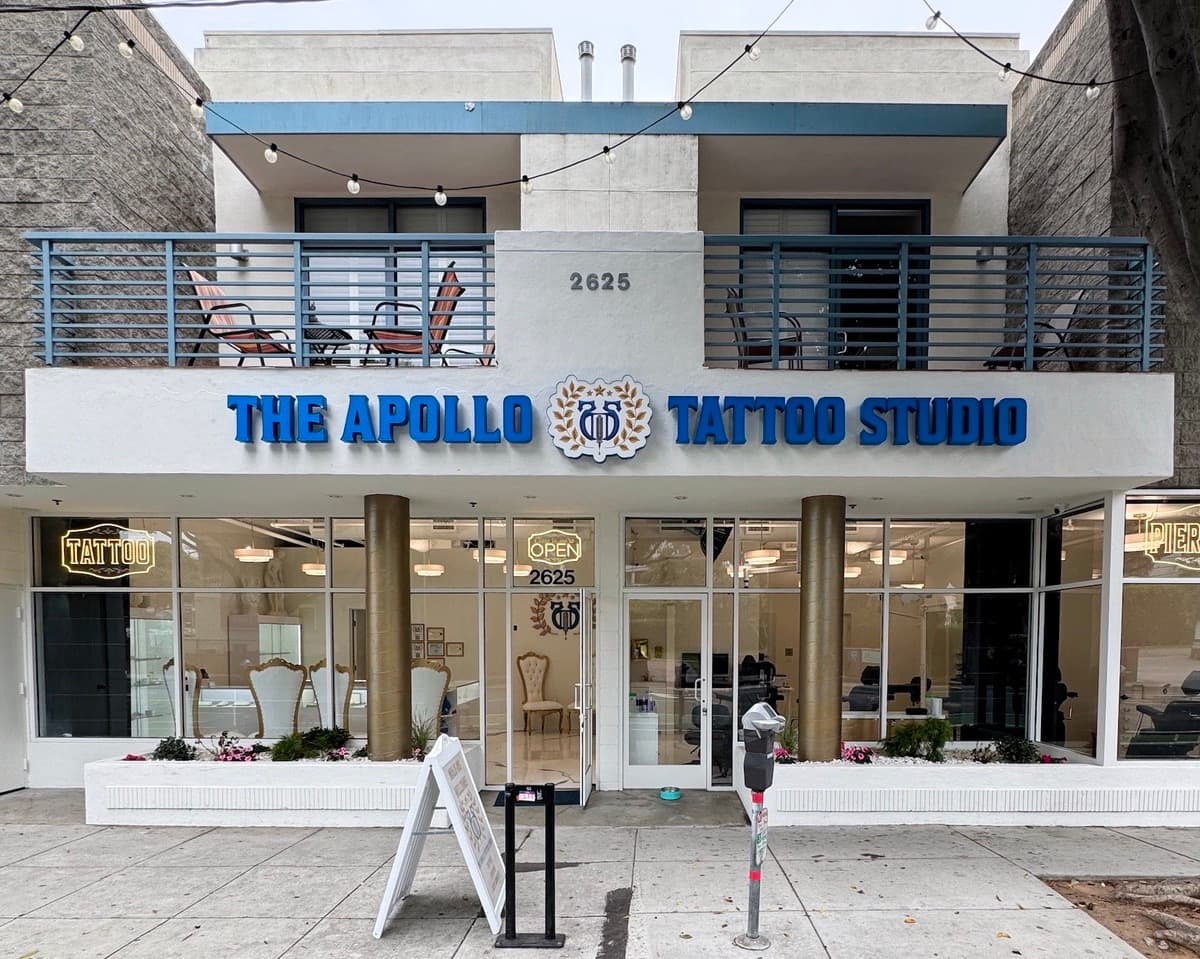
Santa Monica, CA
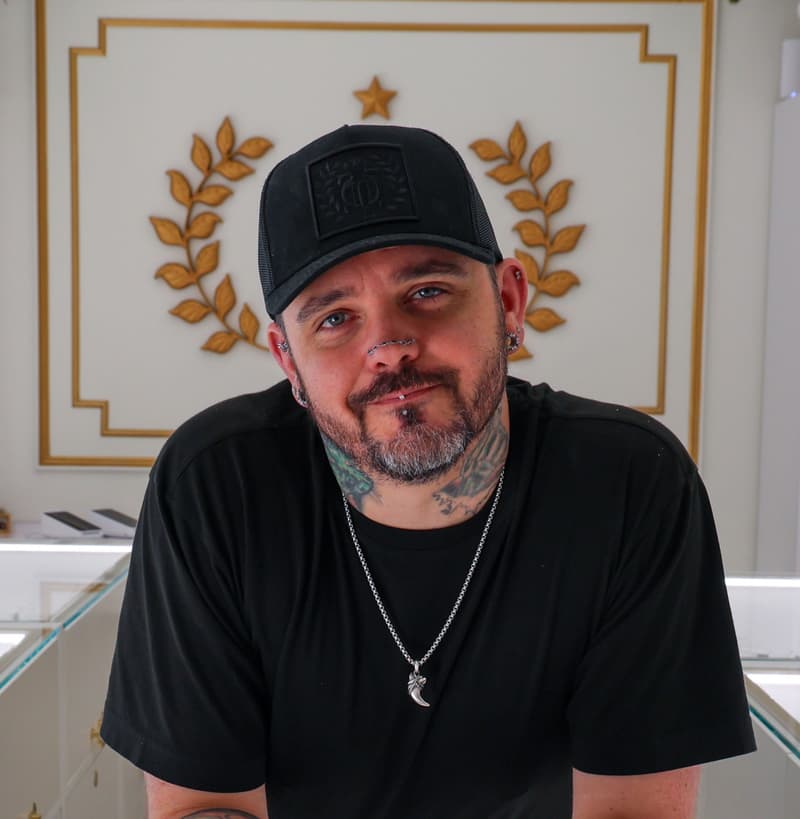
Apollo was founded by Blue Mason in 2007. With 20+ years of body art experience, Blue brings master-level expertise to every piece. Read Blue's story →
Roughly in the order they come up, and the first one is nearly always the same.
There is no good evidence that it does. Some people say theirs improved. There is no controlled research supporting that, and the placement has nothing anatomically in common with the nerves a doctor would treat. We do not pierce for medical reasons and we will not sell you one on that basis. If migraines are what brought you here, talk to your doctor about them, and treat the daith purely as a piercing you either like the look of or don't.
Because the entry angle is the hardest one in the ear. The daith is a fold that curls back over the ear canal, so the needle travels through it at a slant, from below and behind, aiming into a space roughly the width of a matchstick. There is no straight-on shot the way there is on a lobe or a flat helix. Getting the receiving tube seated at the right angle is most of the work. The pass itself is a moment.
Different rather than automatically worse. A helix is a quick sting. A daith is a firmer, deeper pressure that lasts a beat longer, because the fold is dense and the pass is at an angle. Most people describe a dull crunch and then it's over. What actually surprises people is how much it echoes. You are being pierced right next to your ear canal, so you hear it as much as feel it.
That's the question we're answering when we look at your ear. Some folds are deep, well-defined, and sit proud enough to take a ring cleanly. Others are shallow, or curl so tightly against the canal that a ring would be pressed into skin on both sides from day one. A tucked fold isn't automatically a no. A tight one often is. Come in and let someone look at it in decent light before you set your heart on it.
Fresh cartilage swells, and a daith swells into a fold that already hugs it. A ring sized to look perfect on day one will be sunk in the tissue by day four. So the starter diameter is chosen with a millimetre or two of clearance that you can see and probably won't love. Come back once things have settled and we'll fit the diameter that actually looks right on your ear.
Not the in-ear kind, no. An earbud parks itself right against the fold and pushes the ring sideways every time you seat it. That's mechanical irritation on a wound, several times a day, for months. Over-ear headphones are fine as long as the cup isn't clamping. If you commute with AirPods and can't imagine giving that up for the better part of a year, say so before you book. It's a real reason to choose a different placement.
On the other side, for longer than you'd like. If you sleep on both sides or thrash around, a travel pillow with the hole in the middle lets your ear sit in dead space instead of getting compressed. This is the single biggest predictor of whether a daith stays calm. We see far more irritation bumps caused by a pillow than by anything a client did or didn't clean.
Sterile saline spray, twice a day, aimed into the fold so it runs through and out. Not a cotton bud, which just packs debris deeper into a space you can't inspect. Tilt your head so gravity takes the runoff out of your ear rather than into the canal. Then leave it alone. The daith punishes fiddling more than most placements, precisely because you can't see what you're doing to it.
Plan on 9 to 12 months, and some run to 18. The first month feels dramatic. Months two to six feel like nothing is happening, and that middle stretch is where people get bored, start turning the ring, and set themselves back. Cartilage heals from the outside in, so an opening that looks closed can still be raw inside the channel.
They're neighbours with completely different problems. A daith goes through the fold curling over the ear canal, low and tucked, and the difficulty is the angle. A rook goes through the anti-helix ridge higher up, where the difficulty is whether you have a usable ridge at all, and where a ball shows on each of two faces. The healing times are similar. Almost nothing else about them is.
$85 for the piercing itself, which includes having your fold assessed before anything is opened. Jewelry is priced separately, starting with implant-grade titanium clickers and running up through solid gold. If we look at your ear and tell you a daith isn't a good idea, you've paid nothing.
Apollo sits at 2625 Main St in Santa Monica, a block from the beach and easy to reach from anywhere on the Westside. Here's roughly how long it takes to get to us for tattoos and piercings:
There's metered street parking on Main Street and Ocean Park Blvd, plus a public lot on 2nd Street a short walk away. We recommend giving yourself an extra 10 minutes to park on weekends — Main Street gets busy with the farmers market and beach traffic. If you're running late, text us at the studio and we'll hold your appointment.
We look first. If the fold isn't there, you'll hear that instead of a sales pitch.
Recognized in Santa Monica's Most Loved 2025 & 2026


We'll respond within 24 hours
Or reach us directly:
We use cookies to run this site, remember your preferences, and understand how it's used. Read our Privacy Policy for full details.