Put a finger inside the bowl of your ear and push upward. If you meet a raised ledge of cartilage running above the daith, with a groove behind it, that ledge is your anti-helix and it is the only thing a rook piercing can be built on. Some ears have a ridge that stands out like a low wall. Some have a gentle swell with no edge at all. That difference is not cosmetic. It decides whether this piercing is possible.
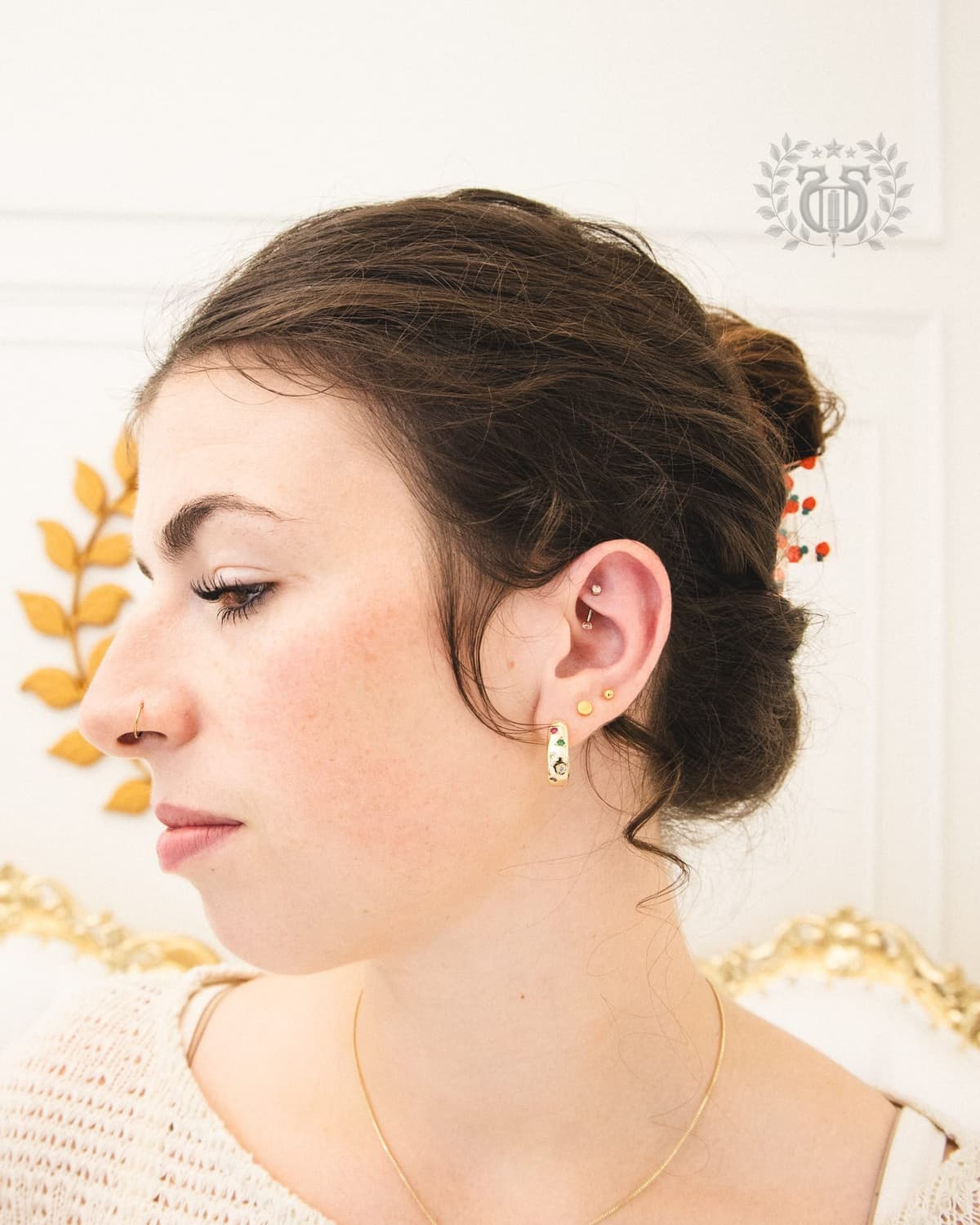
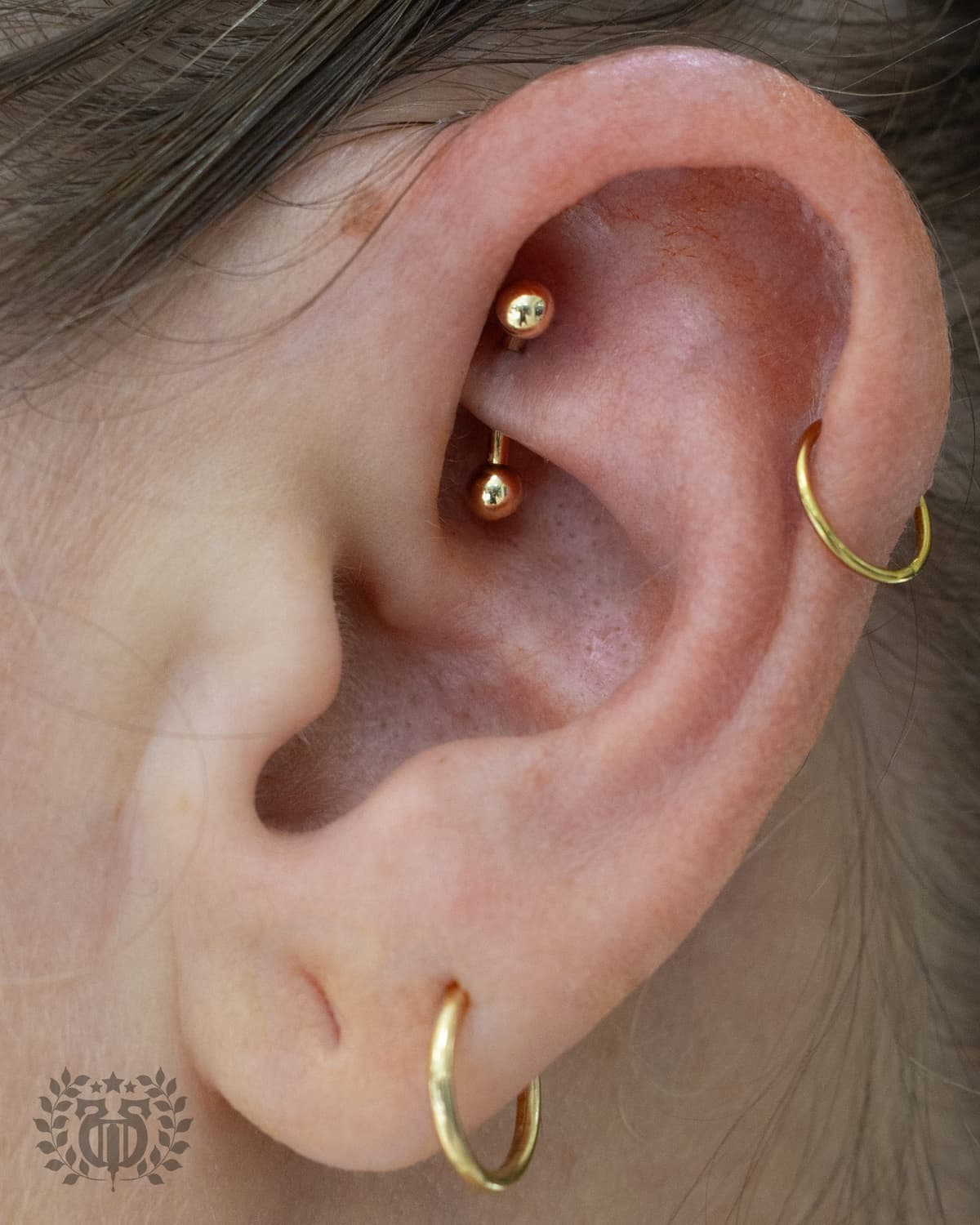
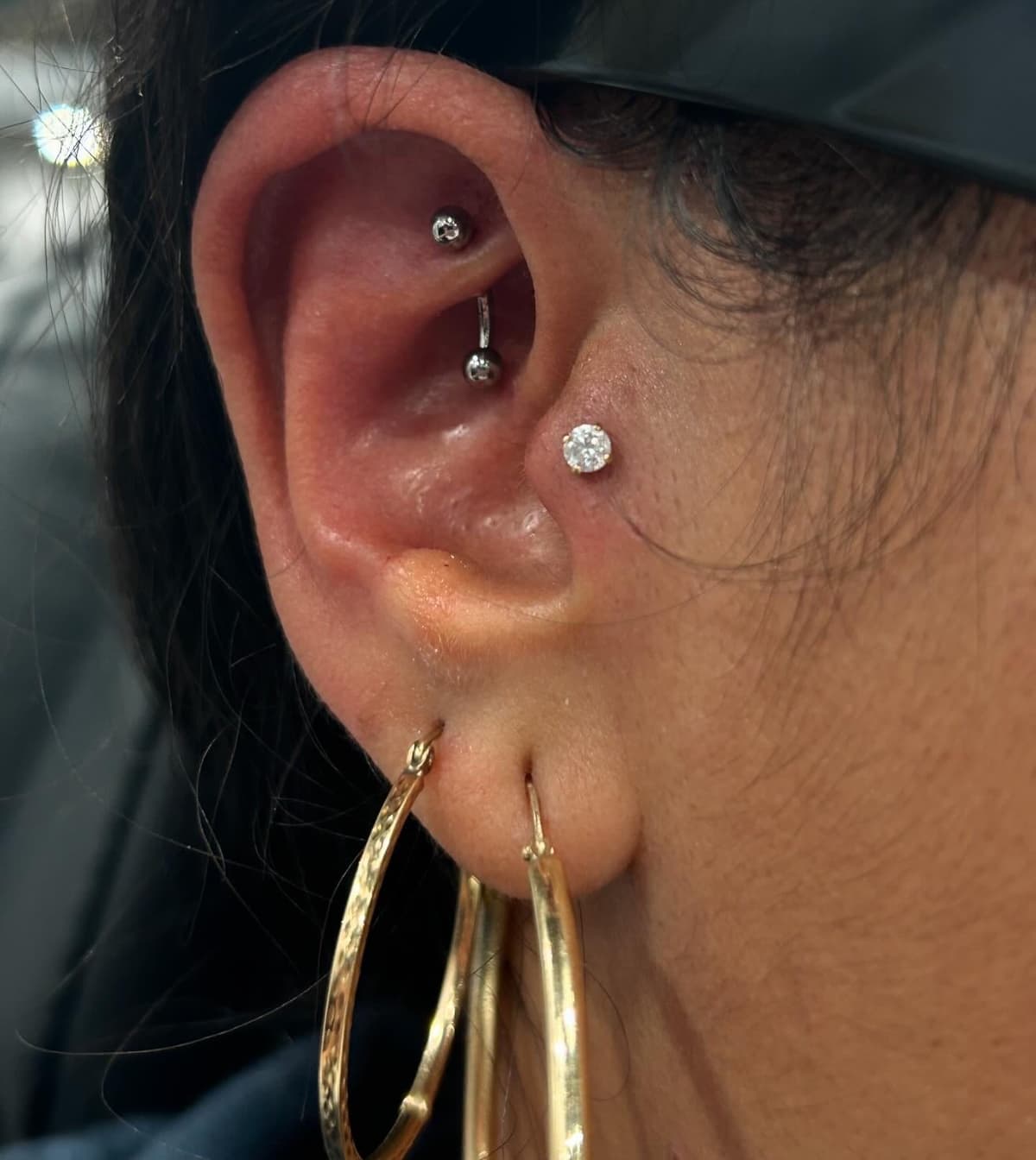
Because the bar crosses a ridge rather than a flat panel, a rook shows an end on each face: one looking out at you in the mirror, one tucked behind, appearing when you turn your head. Two ends means two sizing decisions, and the back one is the one people never think about. It is also the one that starts most of the trouble. The fee is $85 at 2625 Main Street in Santa Monica, needle only, implant-grade titanium, open 8am to 8pm seven days. The ridge check comes first and costs nothing, including when it ends in a no.
Book Your Rook Piercing 5000+ clients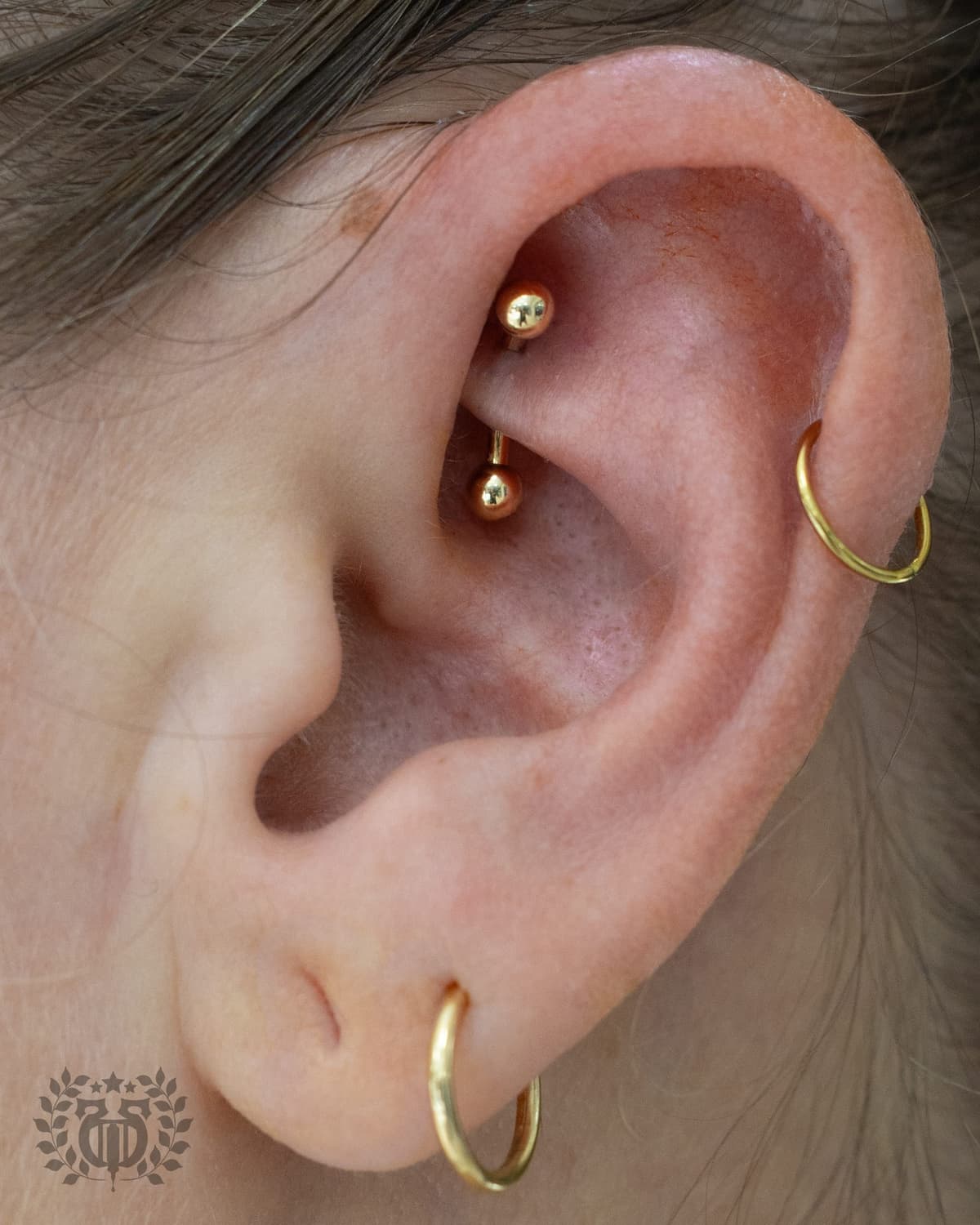
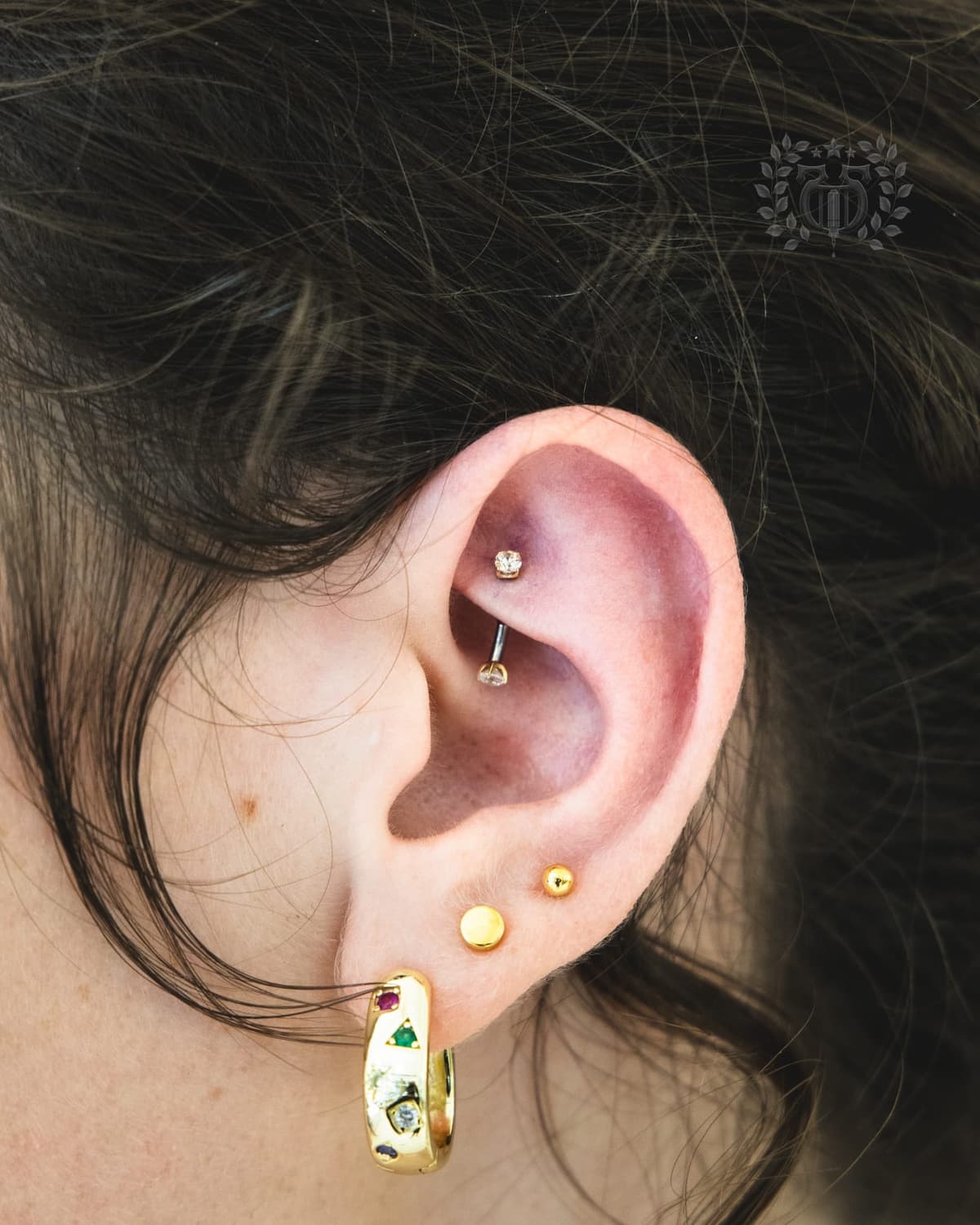
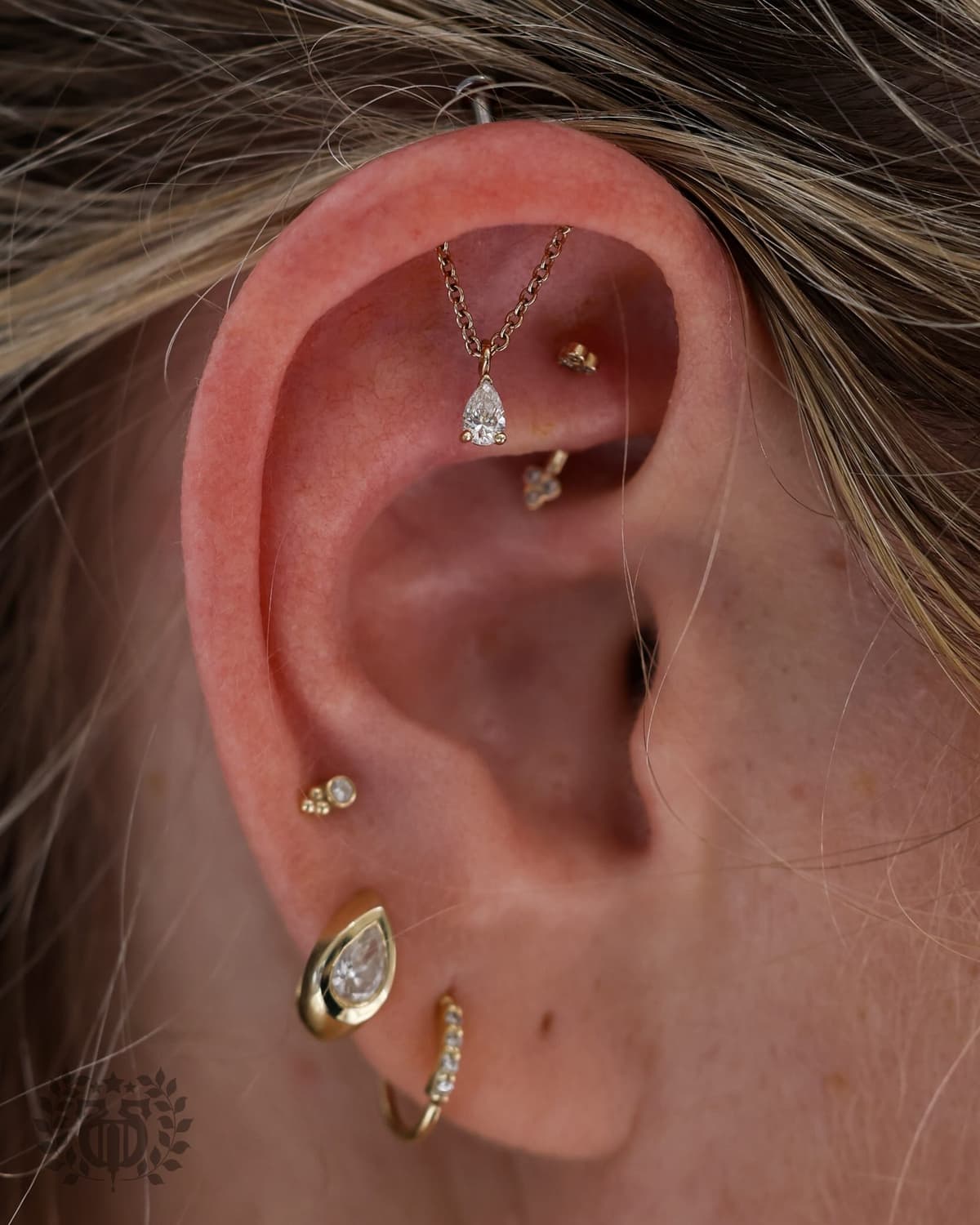
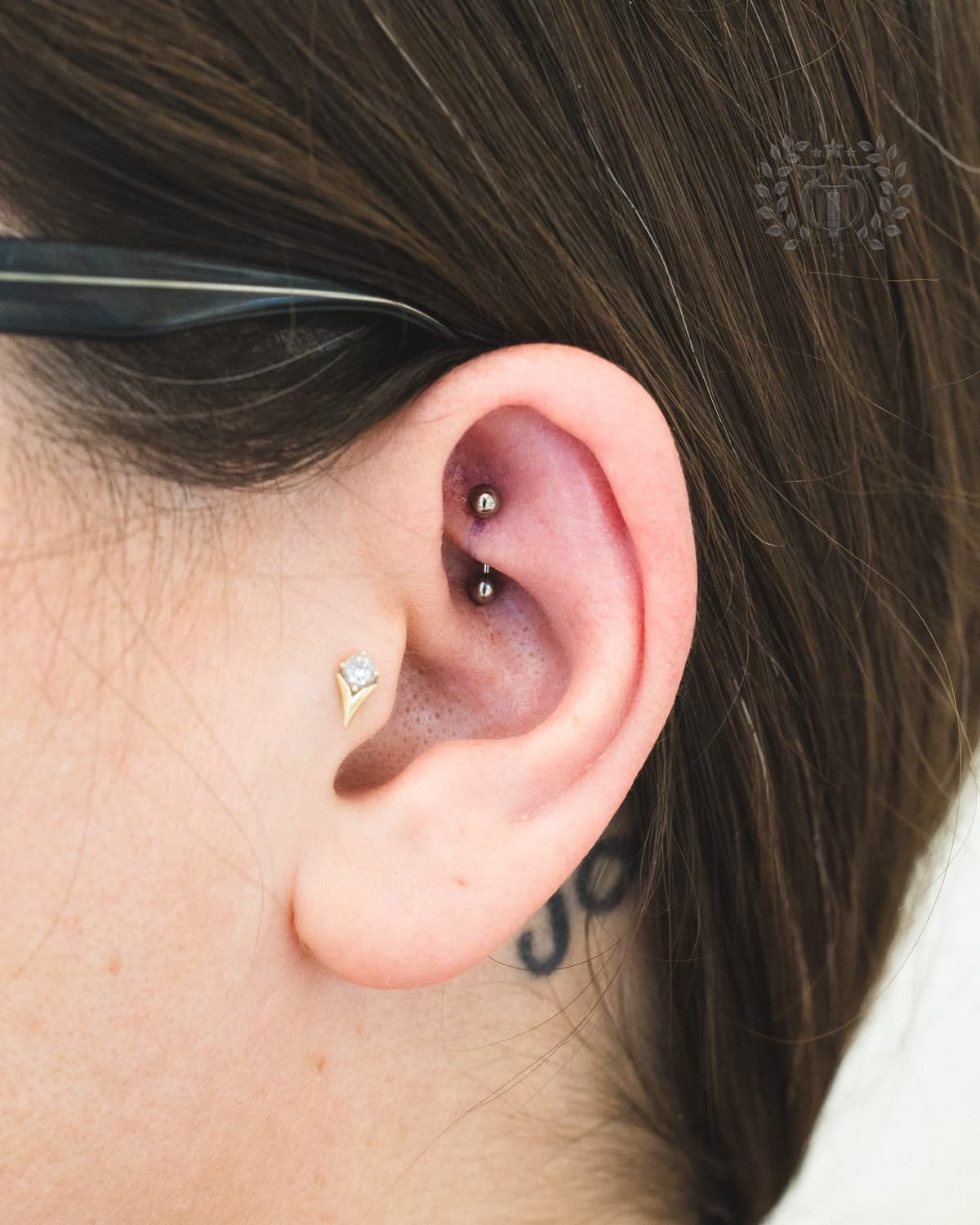
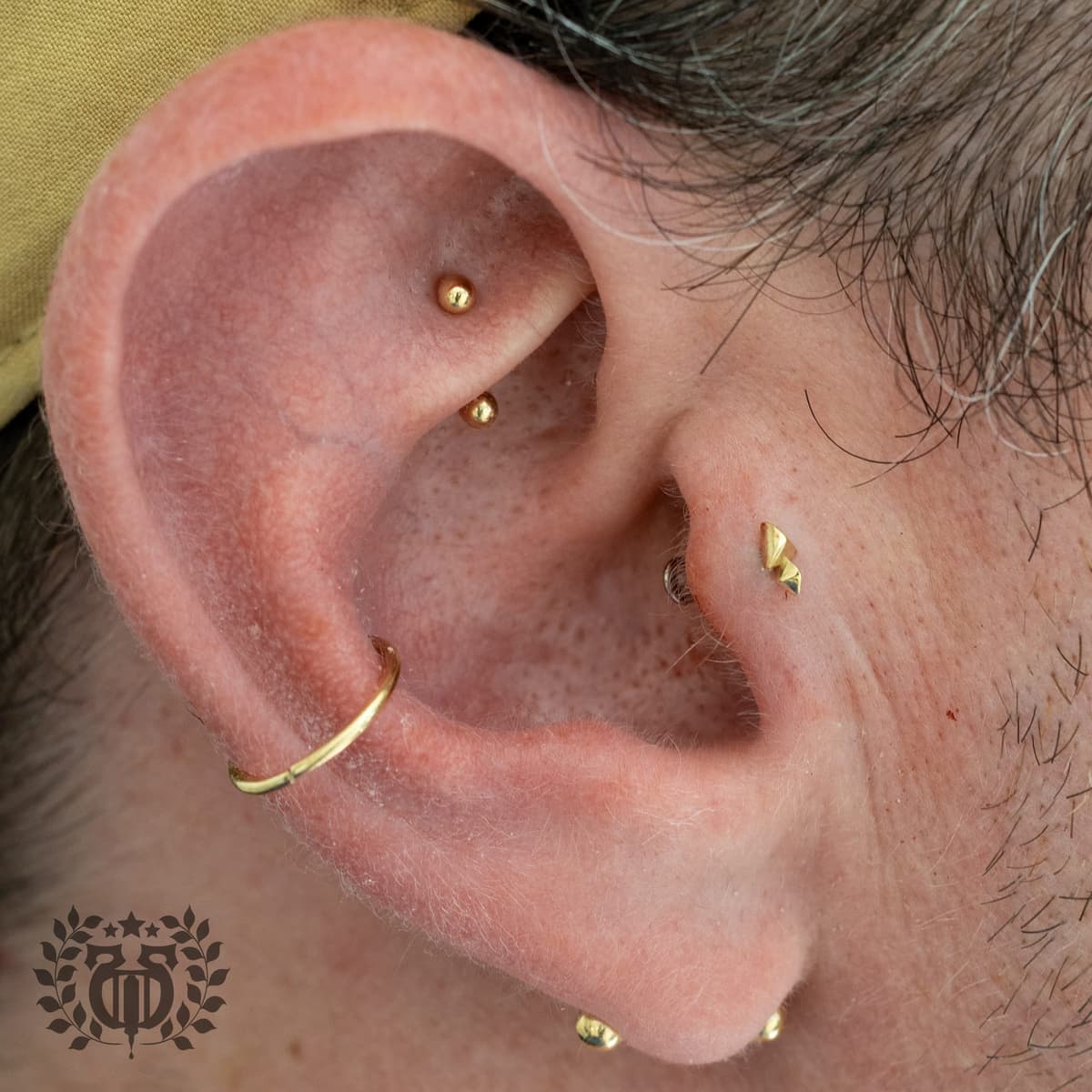
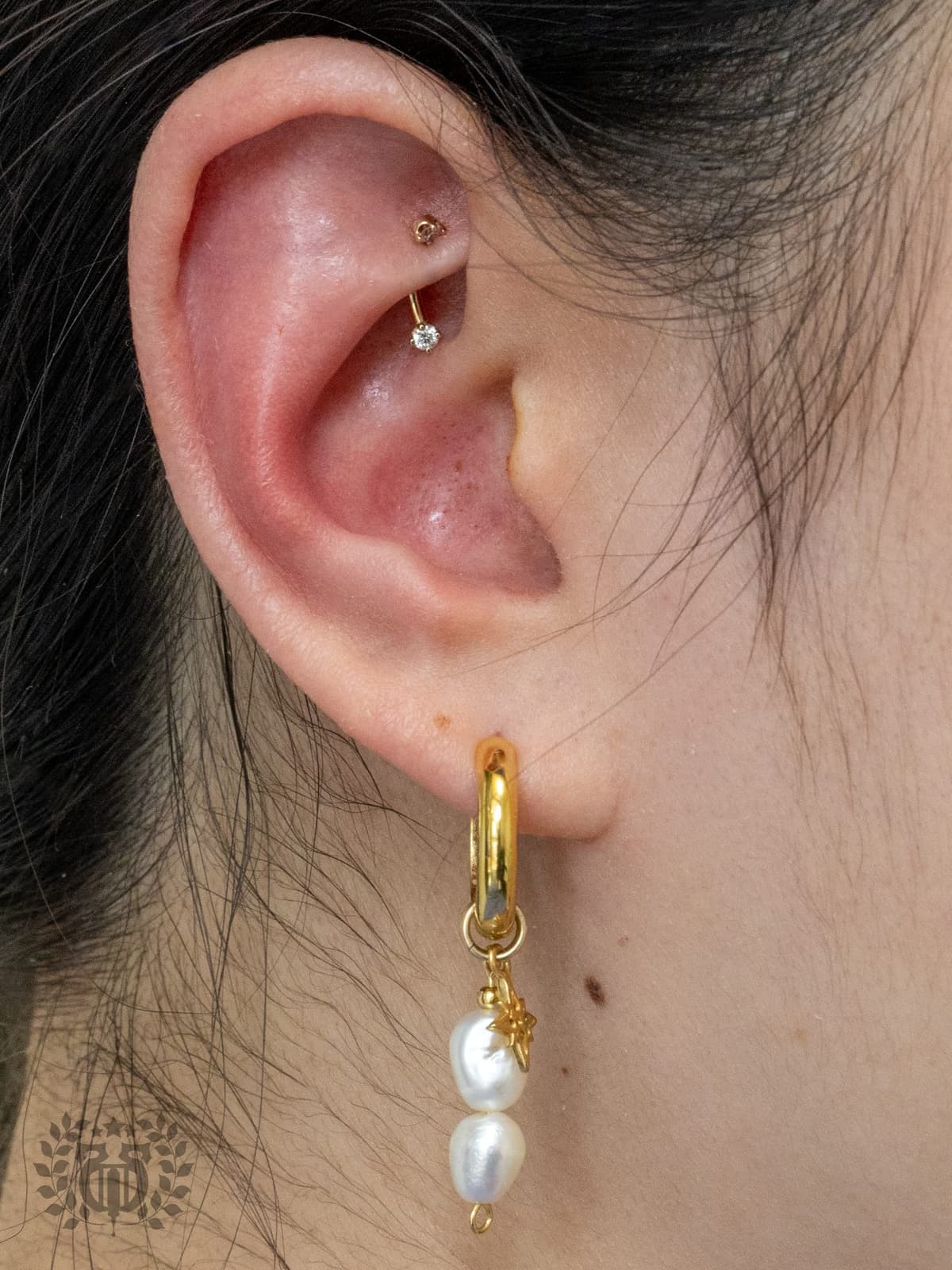
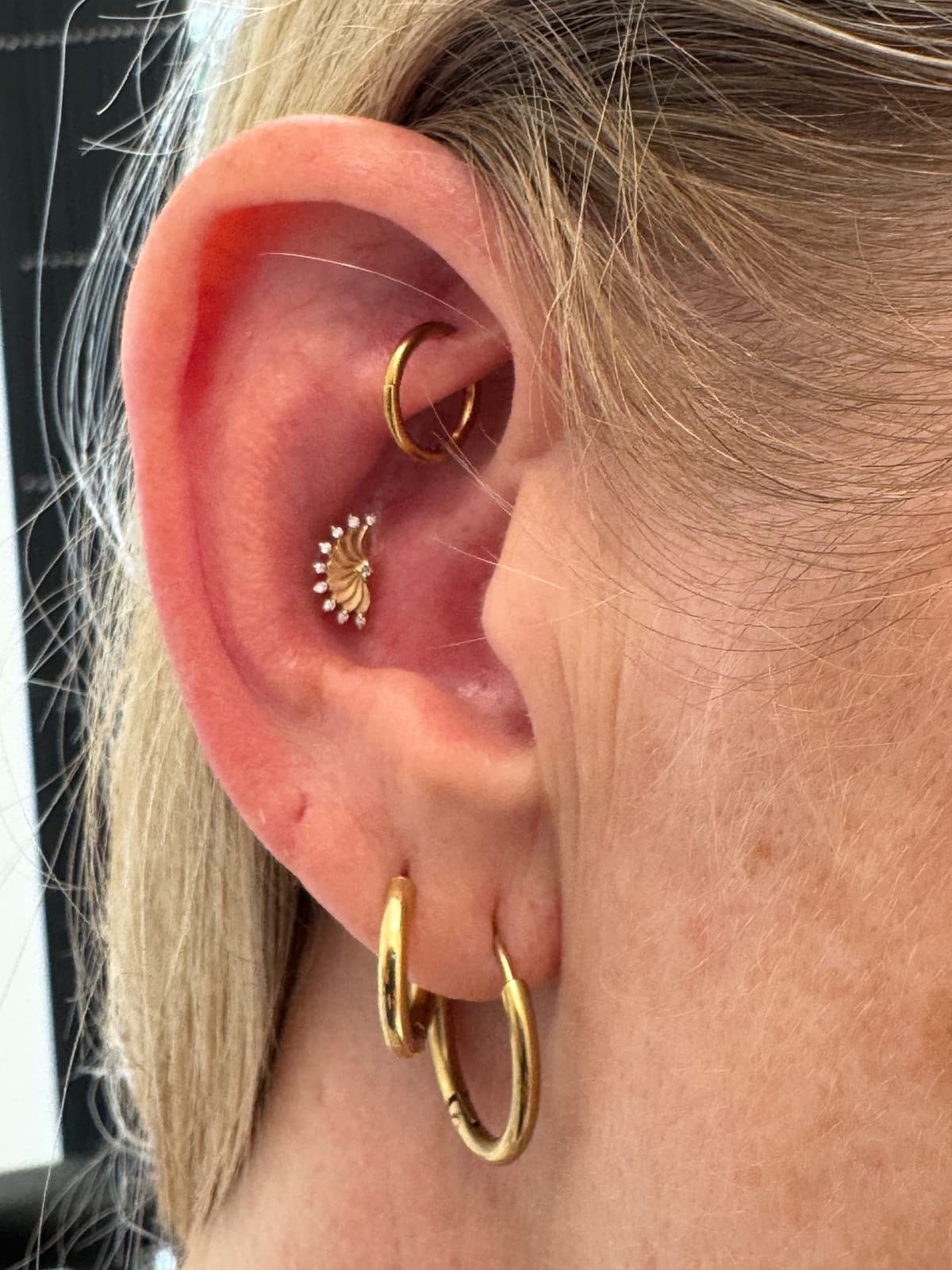
This is the one placement in the ear where the honest answer is sometimes that you simply don't have the anatomy.
The anti-helix is the inner fold of cartilage that runs roughly parallel to the outer rim, forming the raised border of the ear's upper bowl. Where it begins, just above the daith, it thickens into a short ledge. That ledge is the rook. It is one of the few pieces of cartilage in the ear with two usable faces and a groove behind it, and both of those facts drive everything else on this page.
Here's the honest bit. On some ears that ledge is emphatic. You can see it from across a room, there's a clear edge and a real channel behind it, and a curved bar drops through it with a ball sitting comfortably clear on either side. On other ears the same region is a soft rise with no defined edge. Nothing is wrong with those ears. There is simply nowhere for the bar to cross, and no space for the rear ball to rest without pressing.
What that means in practice is that a rook fails at the assessment stage more often than most placements. Not because the piercing is difficult to perform, but because a shallow ridge produces a piercing that is permanently under load and never settles. People come in having seen a rook on someone with an unusually well-defined ear, having assumed it's a matter of choosing it. It isn't.
There is a third category worth naming, and it causes the most disappointment: the borderline ridge. Defined enough that plenty of studios would pierce it without comment, shallow enough that the rear ball sits wedged in a tight groove. That piercing looks fine in a photograph on day one and spends its first year producing bumps nobody can explain. Judging that margin is genuinely the skill in a rook assessment, and it's why we want hands on your ear rather than a photo of it.
You can do a rough version of the check yourself right now. Finger in the bowl of the ear, push up, feel for an edge and a groove behind it. A clear ledge is a good sign. A smooth slope is not. It won't settle the borderline cases, but it will tell you which conversation you're likely to be having.
Push up inside the bowl of your ear. The anti-helix is the raised fold of cartilage running above the daith, with a groove sitting behind it. That ledge is what the bar crosses, and you can feel for it yourself before you ever come in.
Some ridges stand out like a low wall. Some are a soft rise you can barely trace. Some ears run smooth from bowl to rim with nothing to catch at all. Only the first kind takes a rook that heals well, and the difference is obvious to a hand and invisible in a photo.
The bar crosses the whole width of the ridge and has to leave a ball clear on each face. Measure that wrong and the ends either sink into tissue or stand off it. Which is why the bar gets chosen against your ear rather than pulled off a peg.
Behind the ridge there is a channel, and the rear ball has to live in it without being wedged. Ears with a very tight groove need a smaller rear ball, and that call gets made before anything is opened.
This is among the denser tissue in the ear, which is why the clock reads 9 to 12 months rather than weeks. It also means the pass has a distinct crunch to it and a bruised ache afterwards. Both are normal.
Single-use needles opened where you can see them, hospital-grade autoclave for anything reusable, EPA-registered surface disinfectant, bloodborne-pathogen-certified piercers, licensed and inspected by LA County.

Apollo's Premium Jewelry Partner
Handmade in Los Angeles since 1996. Lifetime guarantee. Implant-grade gold, platinum, and titanium. Over 3,000 original designs in our case — ask your piercer for a tour.
See the BVLA story →Most ear piercings show one end and hide the other. A rook shows both, on faces that sit at different depths, which is why the two ends are rarely the same size.
Facing a mirror head-on, the ball on the outer face of the ridge is the piece doing the visible work. It is what people mean when they say they want a particular rook. Size it too large and it dominates the bowl of the ear. Too small and it vanishes into the shadow the ridge casts.
Behind the ridge sits a groove, and the second ball has to live in it. This is the end people never think about and the end that causes most of the trouble. Too big and it is wedged against cartilage for nine months, which is precisely the sustained pressure a rook reacts to.
Symmetry sounds right and mostly isn't. Because the two faces of the ridge sit at different depths and in different amounts of space, a balanced rook usually pairs a larger decorative front with a plain, smaller rear. Matched pairs look tidy in a jewelry tray and crowded in an ear.
Straight on, a rook is a single point floating in the upper bowl. Turn your head and the ridge rotates, the rear end comes into view, and the piercing reads as a bar crossing a fold. Worth holding a mirror at an angle before committing to a look you have only ever seen from one direction.
Solid 14k and 18k from BVLA and Anatometal, never plated, threaded onto the same bar so the channel is not disturbed. Heavier set pieces on the front end belong on a rook past the year mark. Weight on a bar that crosses a ridge acts as a lever, and a lever means pressure.
Clear next step
A minute with a finger on your anti-helix decides whether there's a rook here at all. No charge and no obligation, including when the answer is no.
Recommended first step
Book lobes, cartilage, or a styled ear appointment with Apollo.
Three inner-ear placements within a few millimetres of each other, and three different sets of problems.
| Piercing Type | Location | Initial Healing | Full Healing | Pain Level |
|---|---|---|---|---|
| Rook | Upper inner fold above daith | 3-4 months | 9-12+ months | 6-8/10 |
| Daith | Innermost fold above ear canal | 3-4 months | 9-12+ months | 5-6/10 |
| Snug | Inner ridge of anti-helix | 4-6 months | 9-12+ months | 7-8/10 |
 5000+ clients
Two dots that have to correspond through a piece of cartilage you can only see one side of at a time
A dot on the front of the ridge is only half the job. The exit point on the rear face has to be marked too, and the two have to correspond, or the bar crosses the ridge on a slant and one ball ends up buried.
Front-to-back depth decides bar length. Your piercer will feel the ridge between finger and thumb and pick a bar accordingly, before anything sterile is opened. Two ears on the same head often need different lengths.
Not straight on. Held at an angle, so you see the ridge the way other people will. This is the step where somebody occasionally decides they want the dot a millimetre higher, and that is a fine thing to say.
A needle crosses the ridge in a single push. This is the crunch people mention. It lasts two or three seconds and then it is a dull ache, which will be with you for the rest of the day.
The bar goes in and the rear ball goes on with the groove checked for clearance. If it sits wedged, the ball comes off and a smaller one goes on. That two-minute check is what stops the bump that would otherwise arrive in week six.
Once you understand this distinction, most rook problems stop being mysterious.
People arrive at the studio in month three convinced they have done something wrong. They have been careful. They haven't touched it, haven't twisted it, have been religious about saline. And there's a firm little bump sitting against the ridge anyway.
Almost always the cause is not contact. It is load. Brushing a rook with a fingertip, catching it with a hairbrush, pulling a jumper over your head: those are momentary and the tissue shrugs them off. What a rook cannot cope with is weight applied for a long time. Eight hours a night with a skull pressing a bar into a ridge does far more damage than a hundred accidental knocks, and it does it invisibly, while you are asleep.
Once you've got the idea, the list of real culprits writes itself. Sleeping on that side is the big one. Over-ear headphones with a clamping band, worn through a working day. A phone wedged between ear and shoulder during long calls. A bike or motorbike helmet. A beanie pulled down tight all winter. Reading in bed propped on one hand with your ear against your palm. Each of those holds the same pressure in the same place for an extended stretch, and each of them produces the identical bump.
This is also why a rook is one of the few piercings where we would rather you did one ear and lived with it before booking the second. Having a good side to sleep on for nine months is not a comfort issue. It is the single most effective aftercare measure available to you, and it costs nothing.
So when a bump does appear, the useful question isn't what you have been putting on it. It's what has been resting against it, and for how long. Nine times out of ten, taking the pressure off is the whole treatment. Come in and we'll go through the list with you rather than reaching for the jewelry.
Three separate measurements on one small piece of metal, and every one of them is taken against your ear
$85 for the rook, ridge check included. Jewelry is separate, which means you can start on plain titanium and change only the front end later.
Jewelry sold separately
Jewelry sold separately
Jewelry sold separately
Jewelry sold separately
Jewelry sold separately
Jewelry sold separately
Jewelry sold separately
Jewelry sold separately
On jewelry: the useful thing about a threaded curved bar is that the front end changes without the bar leaving your ear. Solid gold and BVLA ends are priced per piece and confirmed at consultation. A faux rook is a surface-style piercing rather than a rook, so its fee is confirmed in person once we've looked at the skin it would sit on.
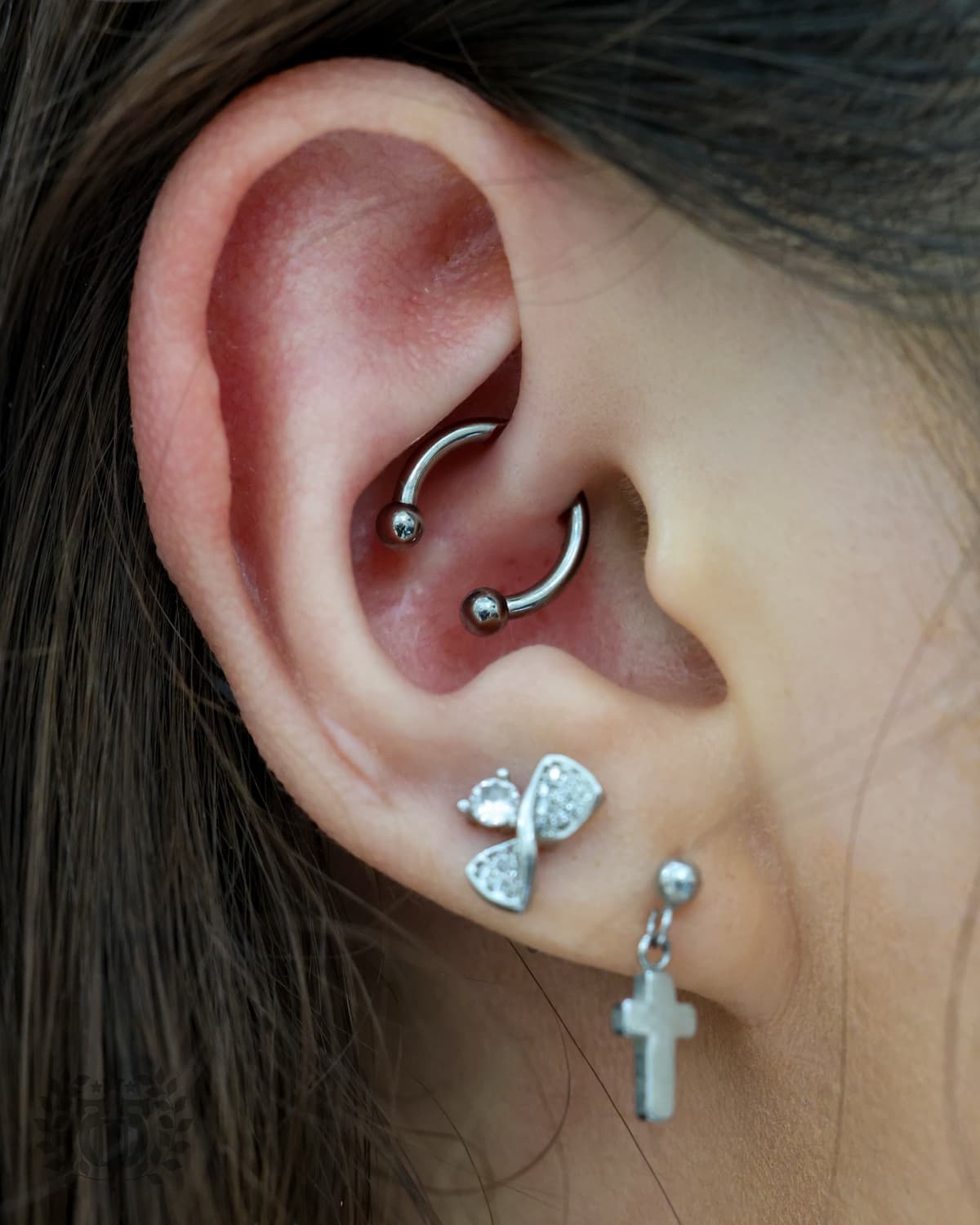
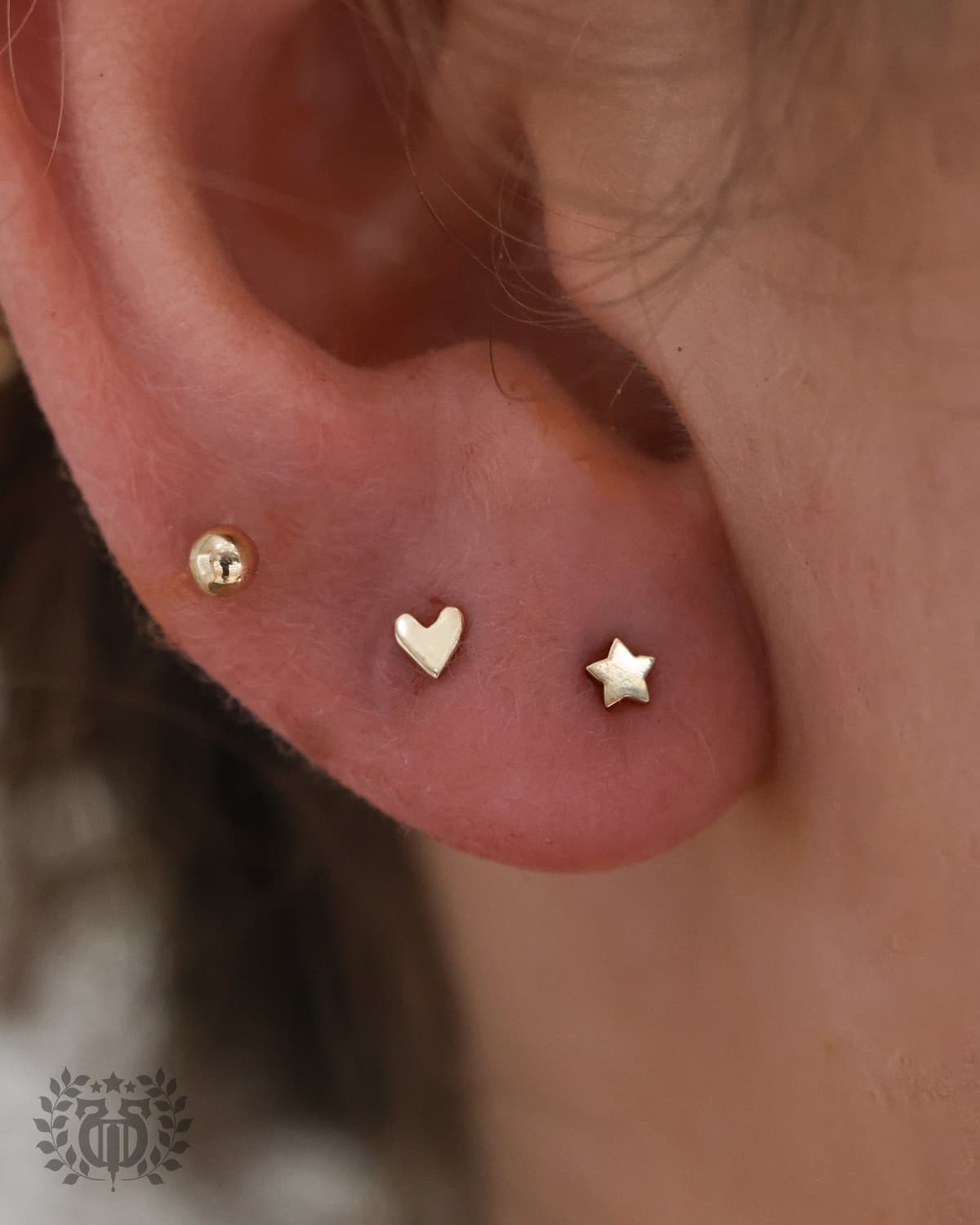
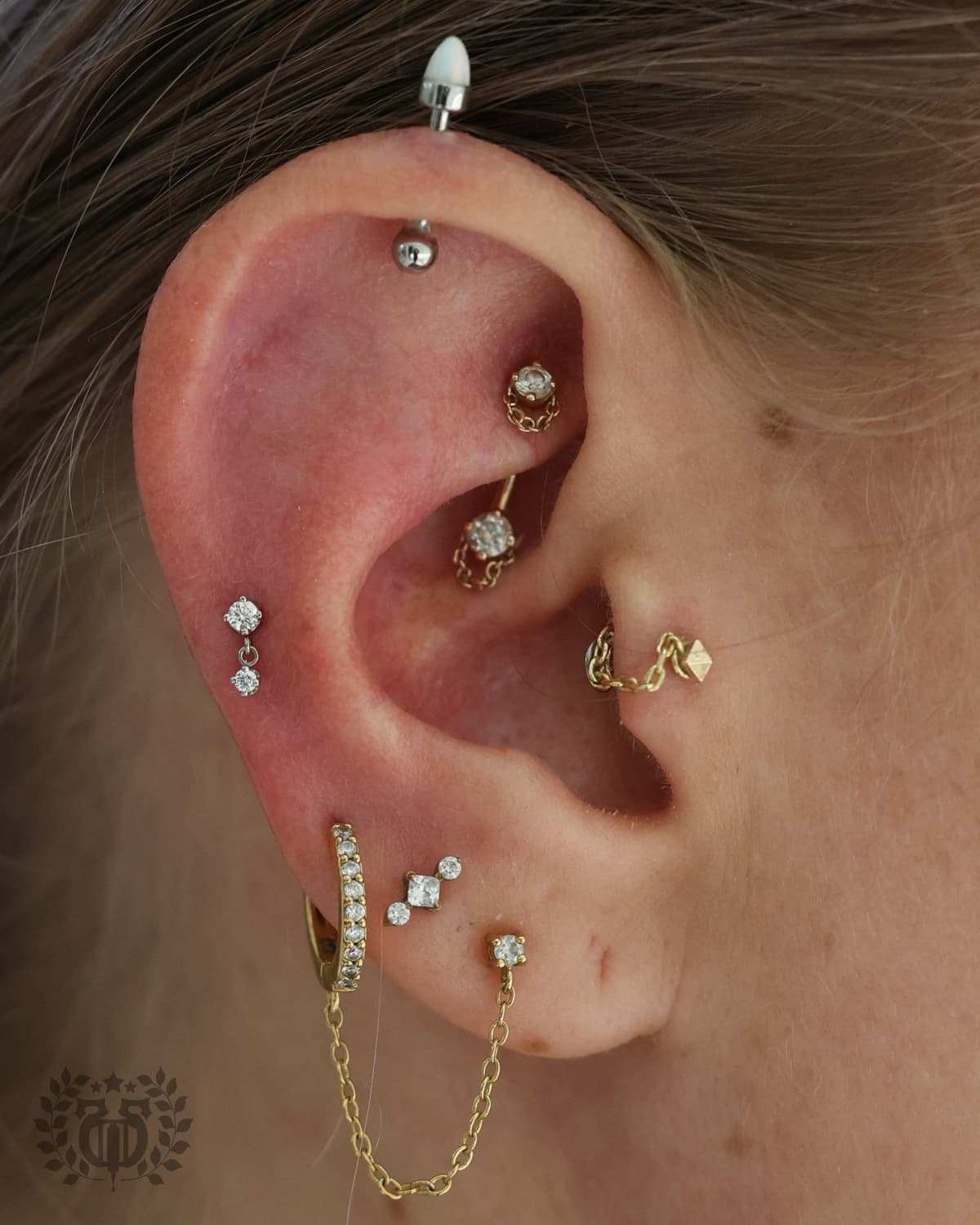
 Senior Piercer
 Senior Piercer
Bunny Vogt has been a Senior Piercer here since 2019 and does most of the studio's ridge assessments. She is direct about it. If the anti-helix isn't prominent enough to carry a bar with a ball clear on each face, she says so and shows you on your own ear, rather than pierce something that will fight you for a year.
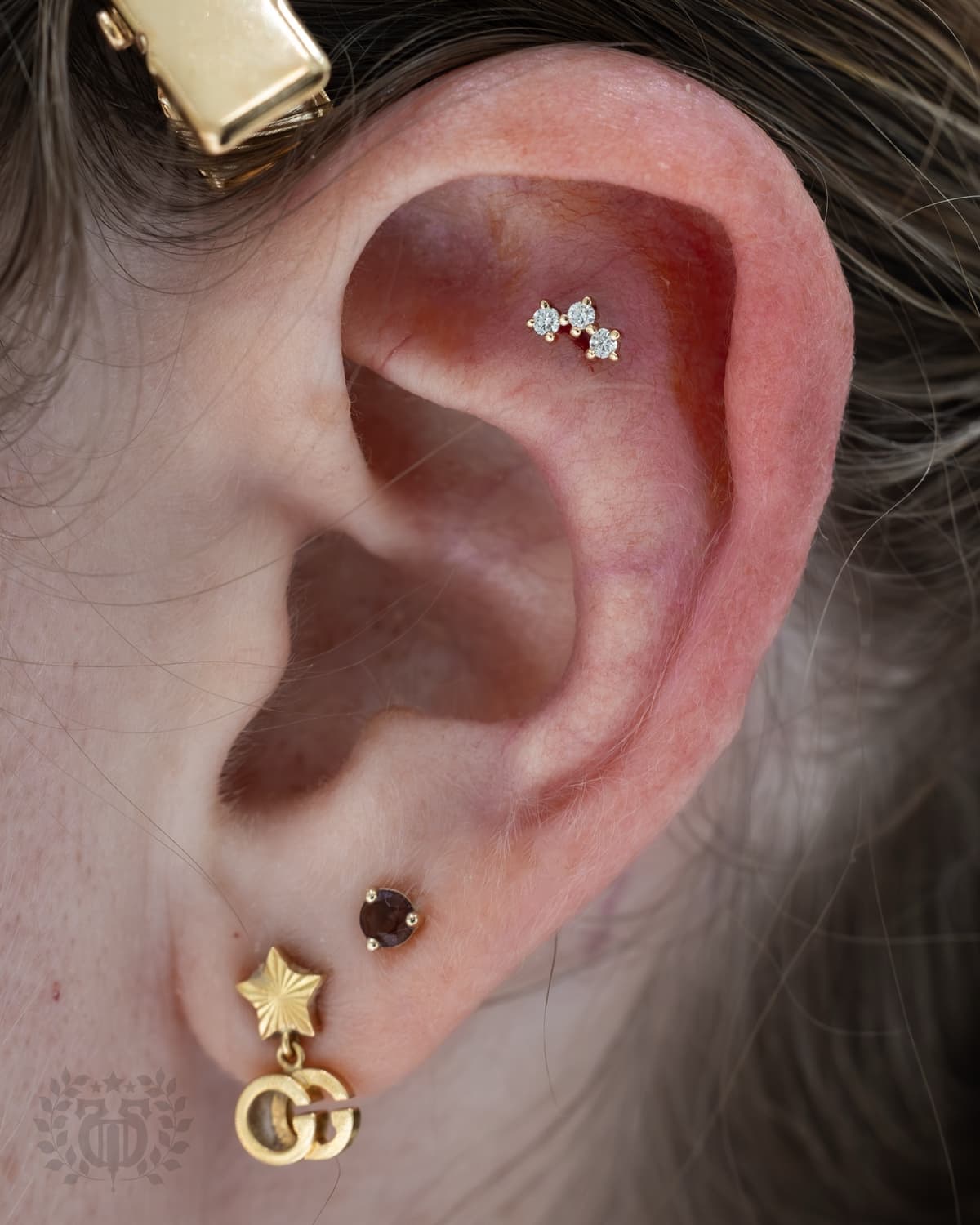
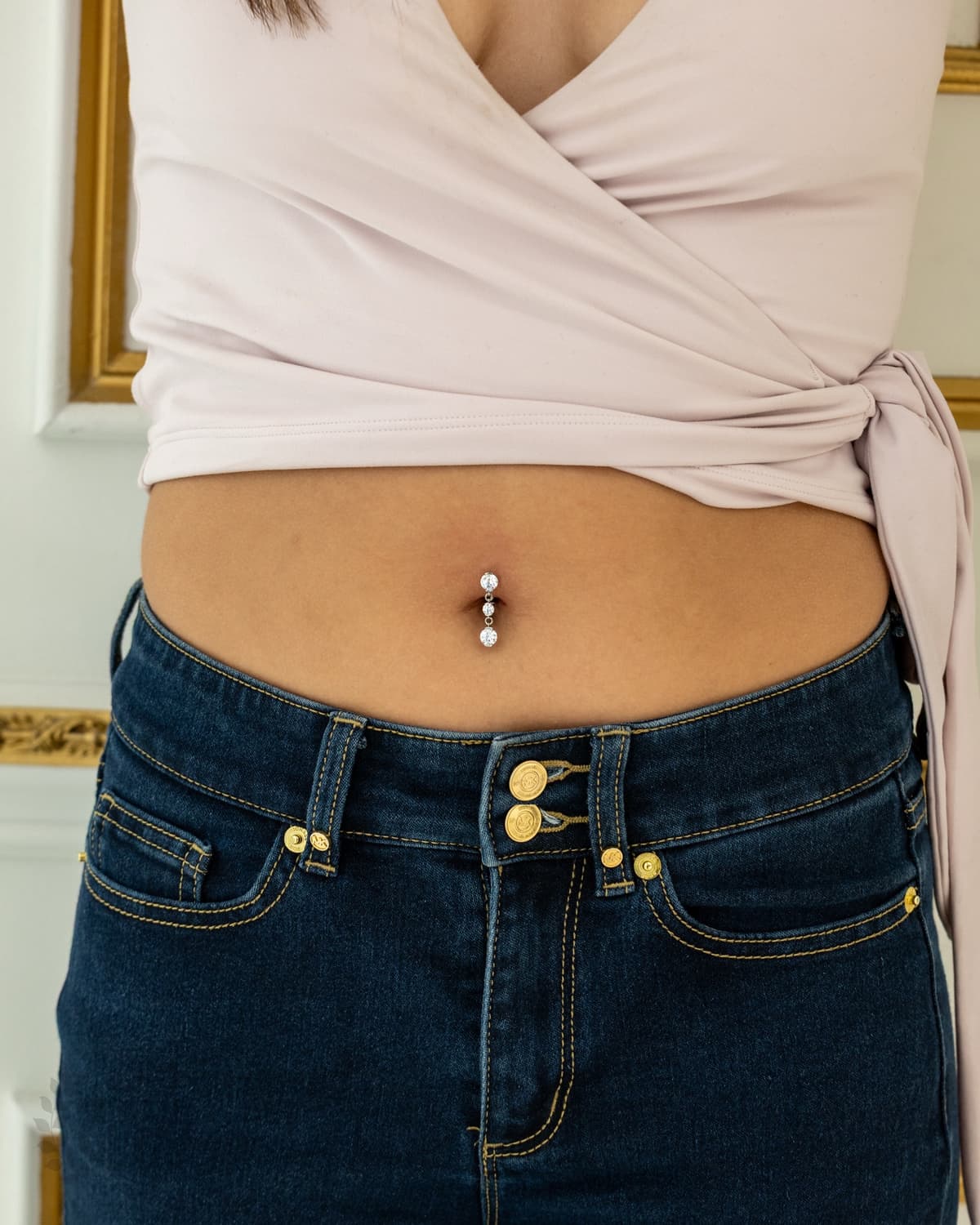
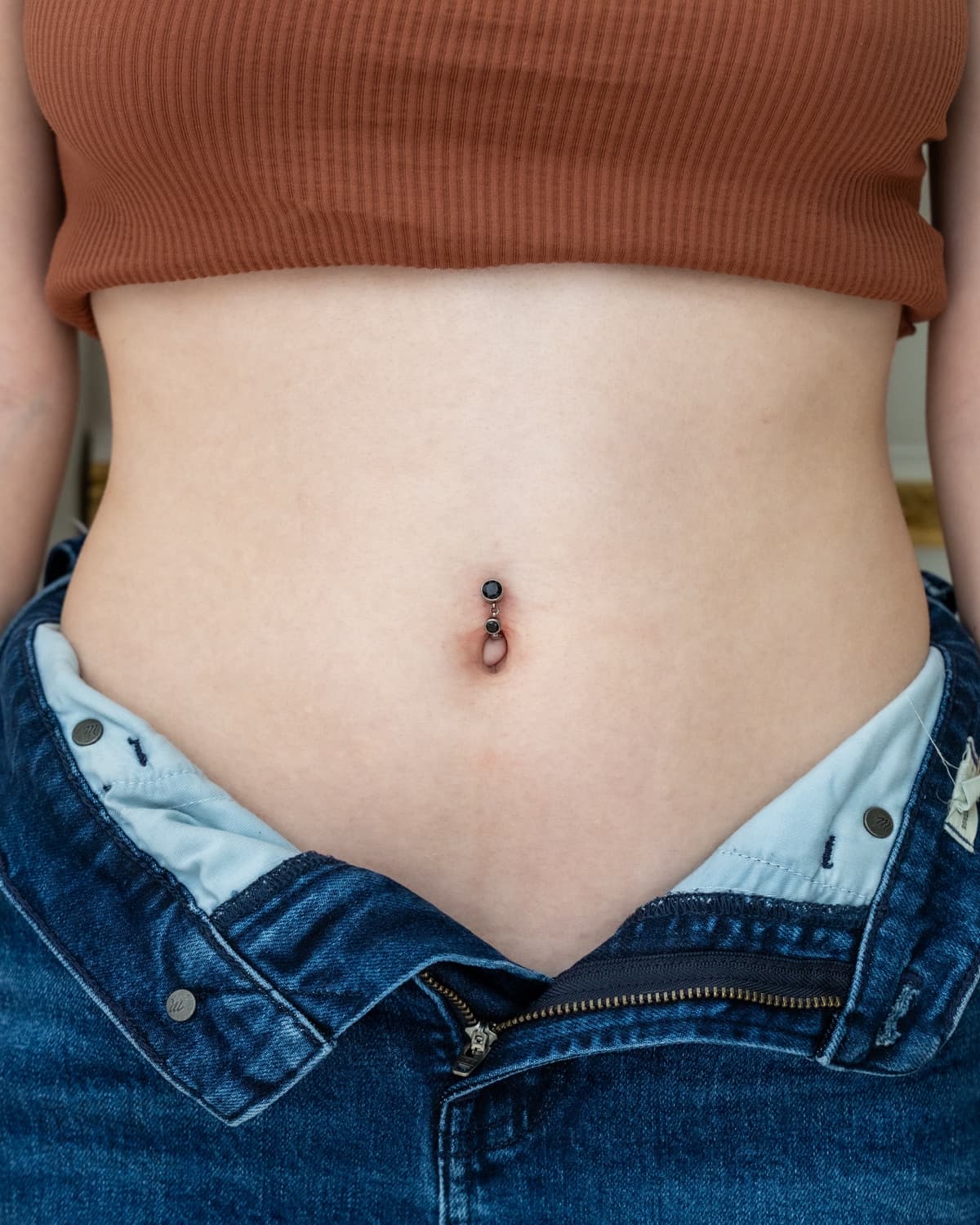
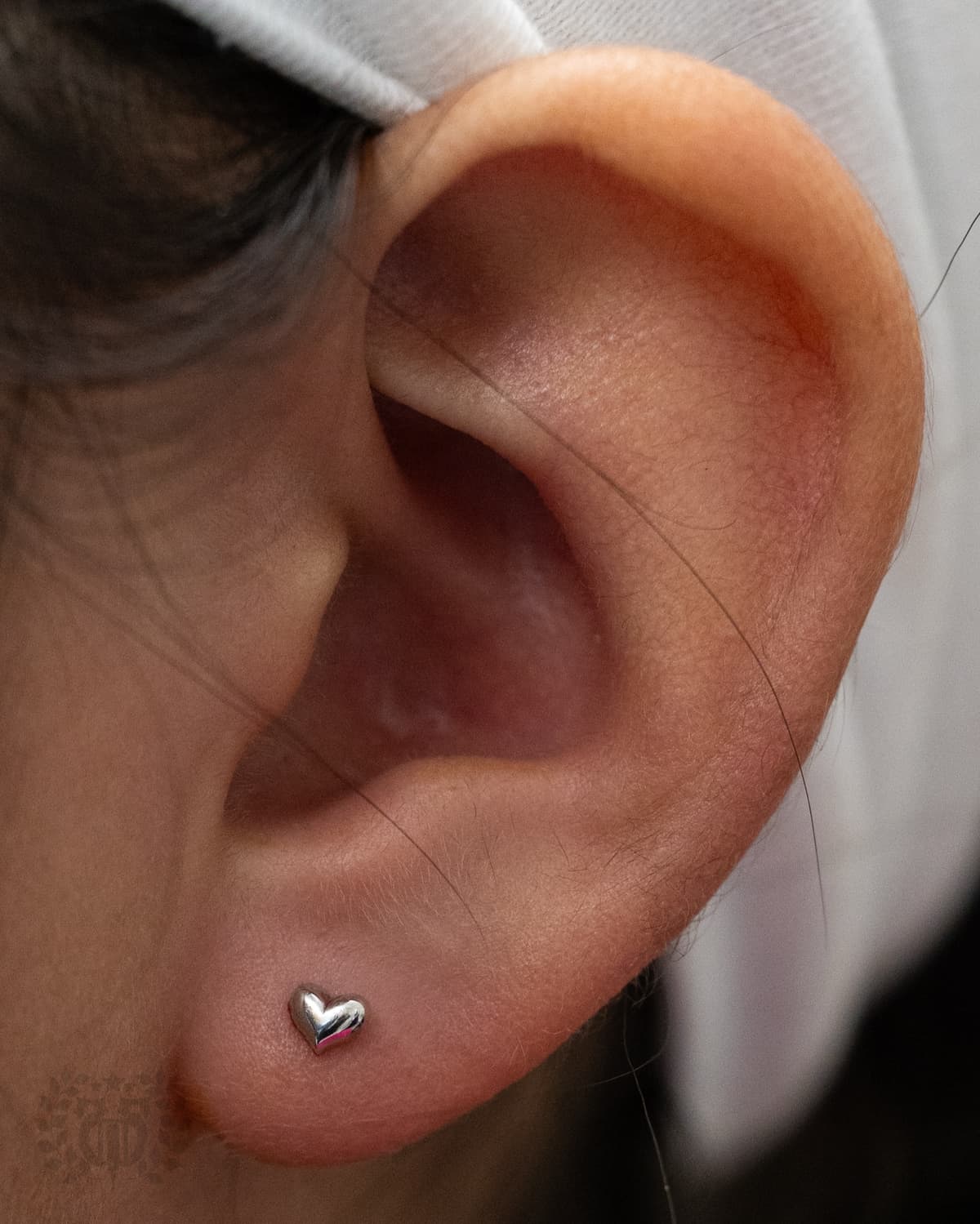
 Founder
 Master Piercer
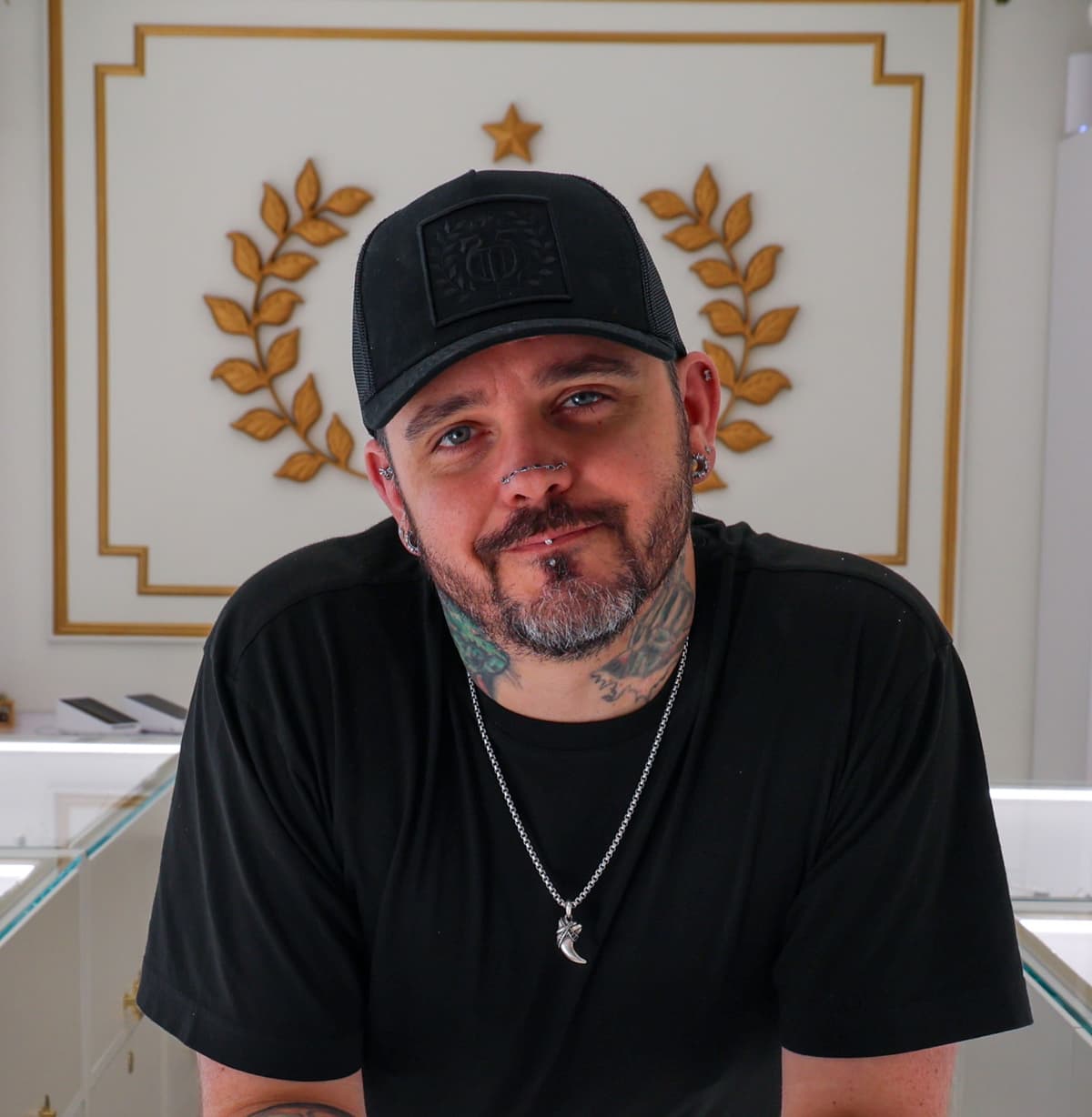
Blue Mason founded the studio and is Fakir-certified. The rook problem he gets asked about most is the borderline ridge: prominent enough that somebody would pierce it, shallow enough that the rear ball ends up wedged in the groove behind. He will tell you which side of that line your ear falls on.
More people get turned down for a rook than for anything else we pierce in an ear. Here is exactly what prompts that, so you can see it coming rather than hear it as a surprise.
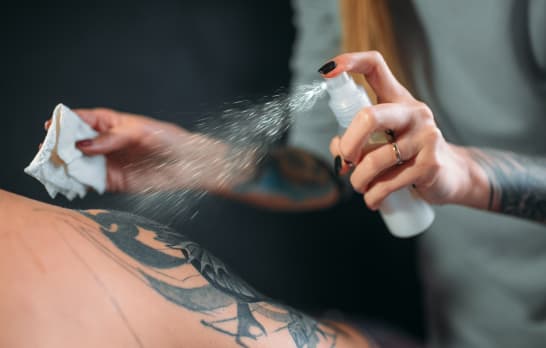
Sterile saline spray twice a day, front and back. That second half gets skipped constantly, because the rear ball is out of sight behind the ridge and people forget there is a second opening at all. Spray so the solution runs across both faces, let it air-dry, and stop there.
Everything else about rook aftercare is about load rather than cleanliness. Don't rotate the bar. Don't lean on it. Sleep on the other side, and if you can't reliably do that, a travel pillow with a hole in the middle will do the job for you. Watch clamping headphones, helmet straps, a phone held against your shoulder, and winter hats pulled down over the ear. Those are the things that produce bumps on a rook, far more often than anything a saline bottle can address.
One more habit worth breaking early: checking whether it moves. A rook sits in dense cartilage and people can't resist testing it with a fingernail every few days. That test is itself the injury. Leave it alone, come in around the three-month mark and we'll look at whether the bar can be shortened, and treat any bump as a question about what has been resting on your ear rather than a reason to take the jewelry out.
Book AppointmentA deep bruised ache for the rest of the first day, then swelling that peaks around day two. The long starter bar earns its keep here. The first night is the one people remember: you will roll onto that side in your sleep and wake up. Set the pillow so you physically can't. Saline both faces, twice daily.
Somewhere around week six a firm little lump appears against the ridge on perhaps a third of rooks. It is almost never infection. It is pressure, and the culprit is usually a pillow, a headphone band or a helmet. Come in, we'll work out which. This is also the window where the bar gets shortened once the swelling is genuinely gone.
Nine to twelve months, longer if it has been leaned on. Once the channel is properly closed you can swap the front end for set gold or a BVLA piece without disturbing anything, and a hoop finally becomes a reasonable idea. Plenty of people find they have grown fond of the bar by then and leave it.
Walk in whenever you like, 8am to 8pm, seven days. But given how often a rook comes back as a no, the sensible order of operations is a bit different from other piercings.
Verbatim reviews from Apollo's Google Business Profile
"Ask for Hannah!! She was so easy to work with, understanding of what I wanted, and worked hard to make my idea work. Even when I was nervous about pricing, she never pressured me or tried to upsell me into something else. SUCH a great experience, and I’m recommending her to everyone I meet!"
"Super professional and friendly people. Very clean space. Loved the work they did for me, and the reasonable price that it cost. Conveniently located in a cool neighborhood just a few blocks from the beach. Really couldn’t be happier with my experience at the Apollo!"
Reviews from Google · Read all 623 on Google
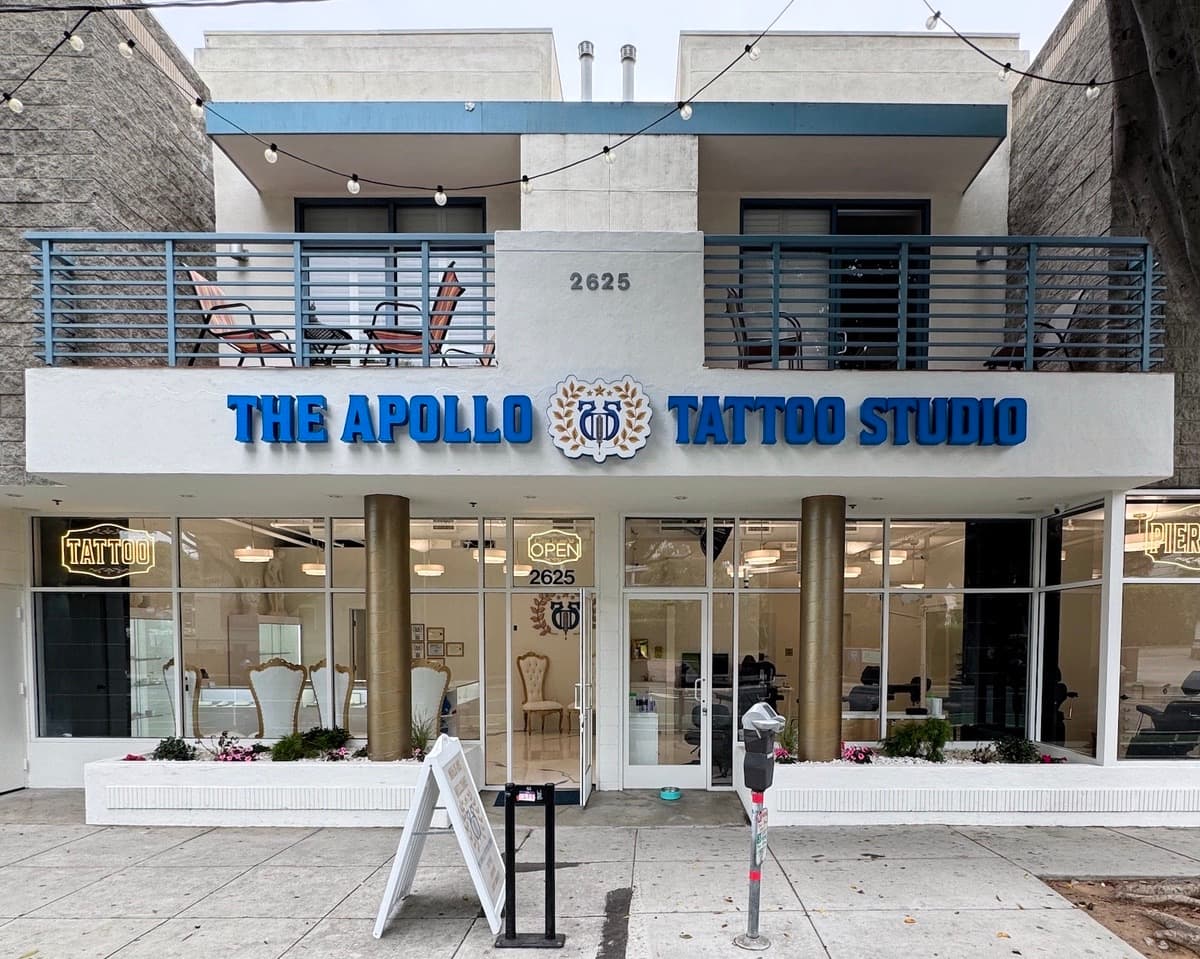
5000+ clients2625 Main Street in Santa Monica, open 8am to 8pm every day of the week. If you're only coming for the ridge check you'll be in and out quickly, so aim for a quieter part of the day and give yourself a few minutes to park on or around Main.
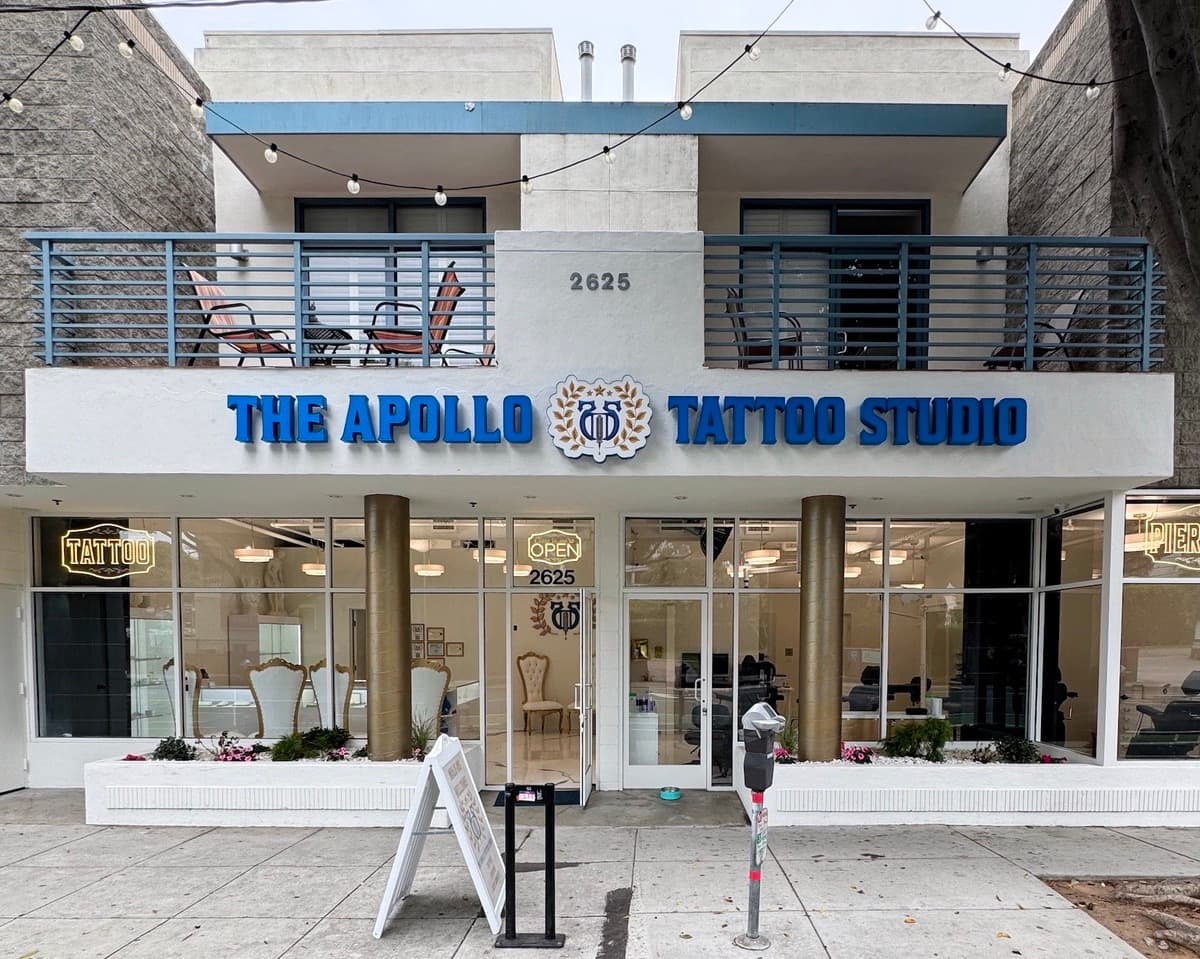
Santa Monica, CA
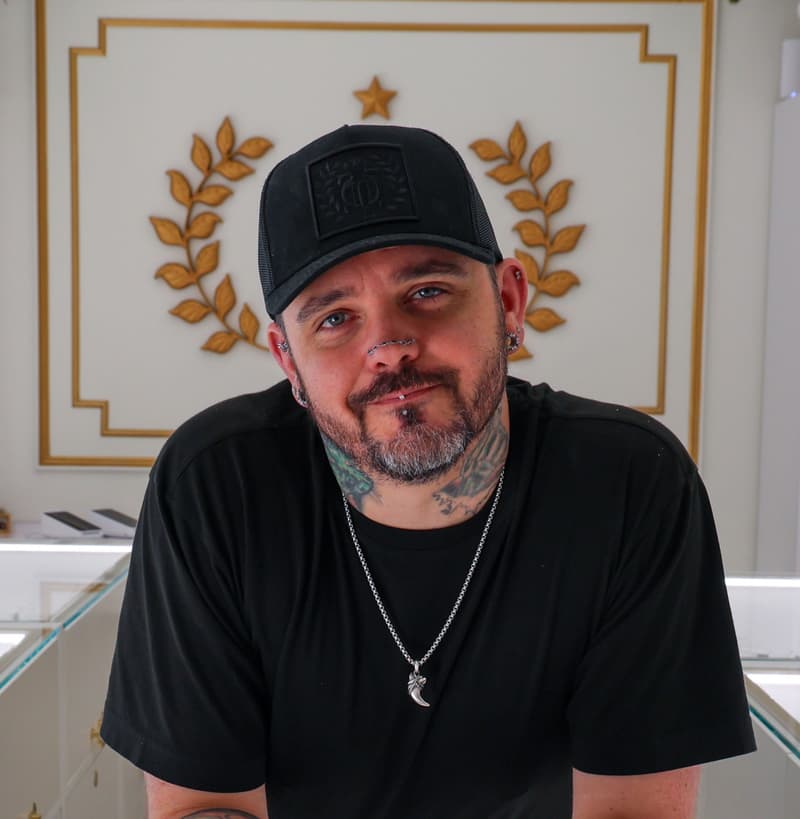
Apollo was founded by Blue Mason in 2007. With 20+ years of body art experience, Blue brings master-level expertise to every piece. Read Blue's story →
Mostly about anatomy, ball sizes and why it aches when you lie down.
Everyone has an anti-helix. Not everyone has one that stands proud enough to pierce. Put a finger inside the bowl of your ear and push upward. If you feel a distinct ridge running like a small ledge above the daith, with a groove behind it, you probably have a usable one. If your finger slides over a broad gentle slope with no clear edge, probably not. Feeling for it yourself is a decent first test, though we'd still want to look before anyone opens a needle.
Because it crosses a ridge rather than a flat plane. The bar enters the front face of the anti-helix and exits the back of it, so one end sits looking out at you and the other sits tucked behind the ridge, coming into view when the ear is seen from a different angle. That's a real design consideration. A rook is two decisions about ball size, not one, and a front ball that looks perfect can be paired with a rear ball that is too big and rubs in the groove behind.
That is the rook in one sentence. Brushing it with a finger or a hairbrush does very little. Sustained load is what it hates: eight hours of head weight through a pillow, a phone clamped between ear and shoulder, a bike helmet strap, a beanie pulled down over the ear all winter. Momentary contact is fine. Pressure held for minutes or hours is what produces the swelling and the bumps. People usually work out which of their habits is doing it once they know to look for duration rather than touch.
More than a lobe, and honest people put it toward the upper end for ear cartilage. The anti-helix is thick and the bar has to cross the whole width of the ridge, so it's a firm sustained pressure with an audible crunch rather than a quick sting. Two or three seconds. What lingers is a deep ache for the rest of the day, a bit like a bruise inside the ear, and that is normal.
No, and we'll say no if you ask. A ring on a fresh rook hangs off a ridge and levers on both openings every time your head moves, which is exactly the sustained pressure this placement can't tolerate. Curved barbell first, for the whole heal. Rings become an option once the channel is genuinely settled, and plenty of people find they prefer the barbell by then anyway.
You can, and we would rather you didn't. A rook is irritated by pressure, and the main source of pressure is a pillow. Having one good side to sleep on for the next nine months is worth more than saving a second appointment. Do one, live with it for a few months, then come back for the other.
Nine to twelve months for most people, longer if it gets leaned on. Cartilage closes from the outside inward, so the opening can look completely settled at month four while the channel through the ridge is still raw. The jewelry stays put until somebody has looked at it.
Less than for a tragus, which sits directly under the bud. A rook is higher and further back, so most earbuds clear it. Over-ear headphones are the ones to think about: a cup that clamps rather than rests puts steady pressure on the exact spot that hates steady pressure. If you wear studio cans all day for work, loosen the headband or expect a bump.
They are neighbours and they behave nothing alike. A daith goes through the fold curling over the ear canal, low down, and the hard part is the angle of entry. A rook goes through the anti-helix ridge above it, where the hard part is whether you have a ridge at all and how the two visible ends get balanced. Similar healing times. Different assessment, different jewelry, different failure modes.
Then we say so and point at what your ear will take: a conch, a forward helix, or a curated set that uses the shape you actually have. There is a surface-style faux rook that mimics the look without needing the ridge. It is not the same piercing and it doesn't last the same way, so we'd talk you through that in person and confirm the fee at consultation rather than quote a number off a page.
$85 for the piercing, ridge assessment included. Jewelry is priced separately, from implant-grade titanium curved barbells up to solid gold ends. If the assessment ends in a no, you have paid nothing.
Apollo sits at 2625 Main St in Santa Monica, a block from the beach and easy to reach from anywhere on the Westside. Here's roughly how long it takes to get to us for tattoos and piercings:
There's metered street parking on Main Street and Ocean Park Blvd, plus a public lot on 2nd Street a short walk away. We recommend giving yourself an extra 10 minutes to park on weekends — Main Street gets busy with the farmers market and beach traffic. If you're running late, text us at the studio and we'll hold your appointment.
We check yours first, and we'll tell you which one you've got.
Recognized in Santa Monica's Most Loved 2025 & 2026


We'll respond within 24 hours
Or reach us directly:
We use cookies to run this site, remember your preferences, and understand how it's used. Read our Privacy Policy for full details.