If you take one thing from this page, take this: a piercing gun does not make a hole in your child's ear, it forces a blunt stud through by spring pressure, and tissue tears around a blunt object rather than parting for it. The mechanism is plastic and cannot go in an autoclave. A hollow needle is sharpened to cut, leaves a clean-walled channel, and goes in the sharps bin afterwards. That is the argument, and it is the reason parents drive across Los Angeles to Ocean Park to get this done properly.
The rest of it is about your child, not about us. They pick the jewelry first, because a child who's chosen something is a participant rather than a patient. The dots go on and they look in the mirror, and if they say no, we stop — no charge and no talking them round. Both lobes are done at the same moment by two piercers when we can, so there's one count instead of two. From age five, $75 for a lobe and $75 for a pair under the two-piercing special, jewelry priced separately. Bring your photo ID, your child's original birth certificate, and their school ID.
Book Your Child's Piercing 5000+ clients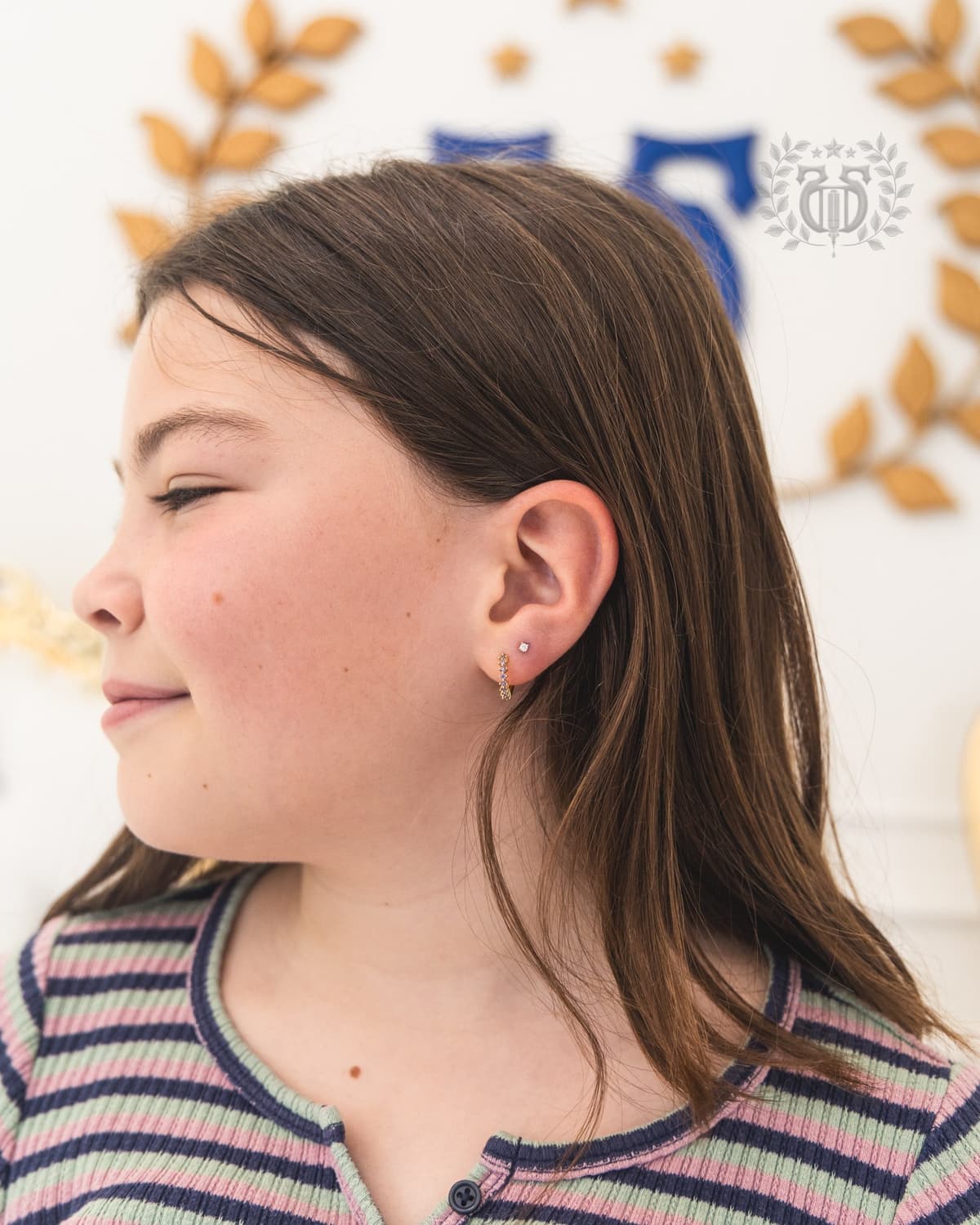
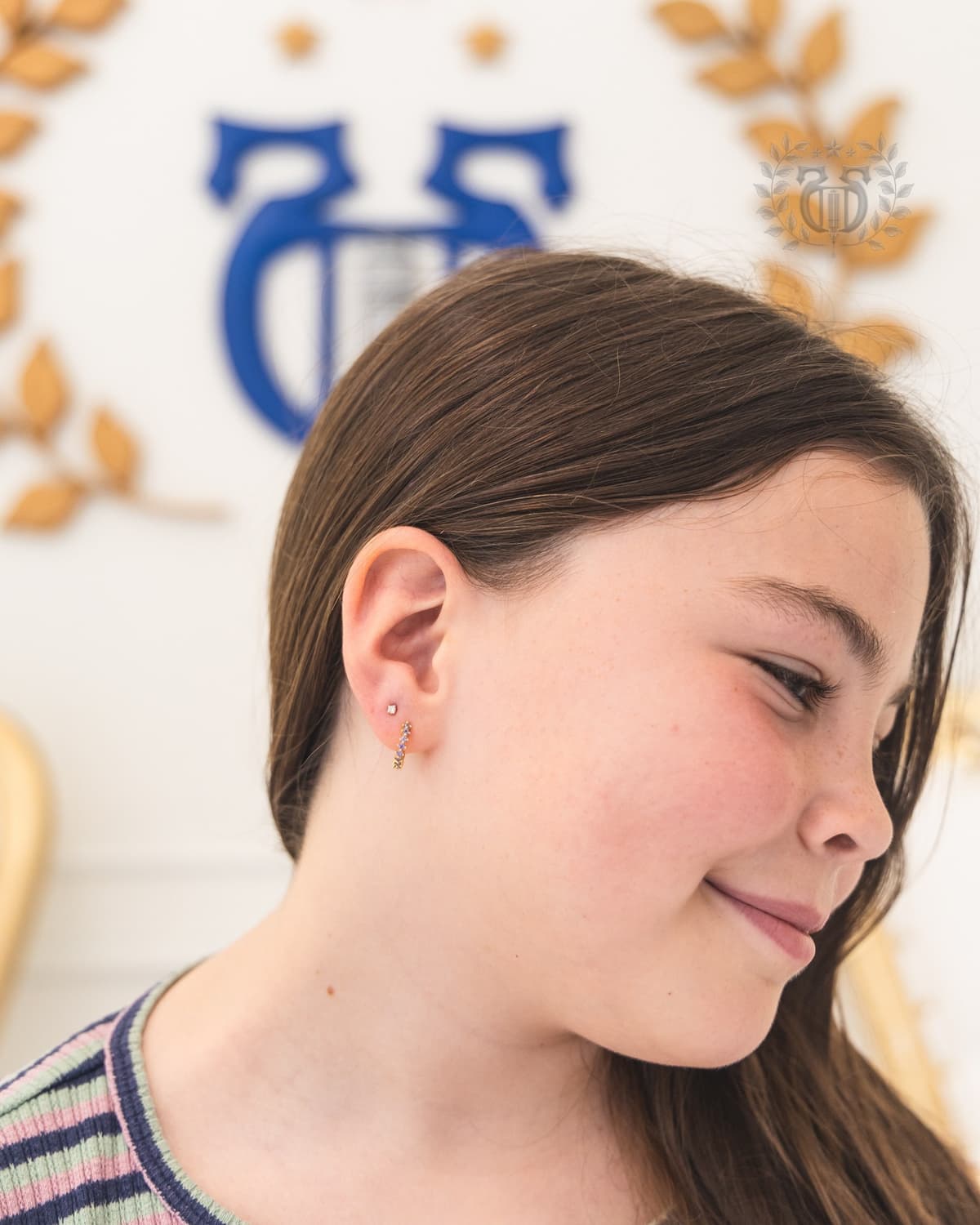
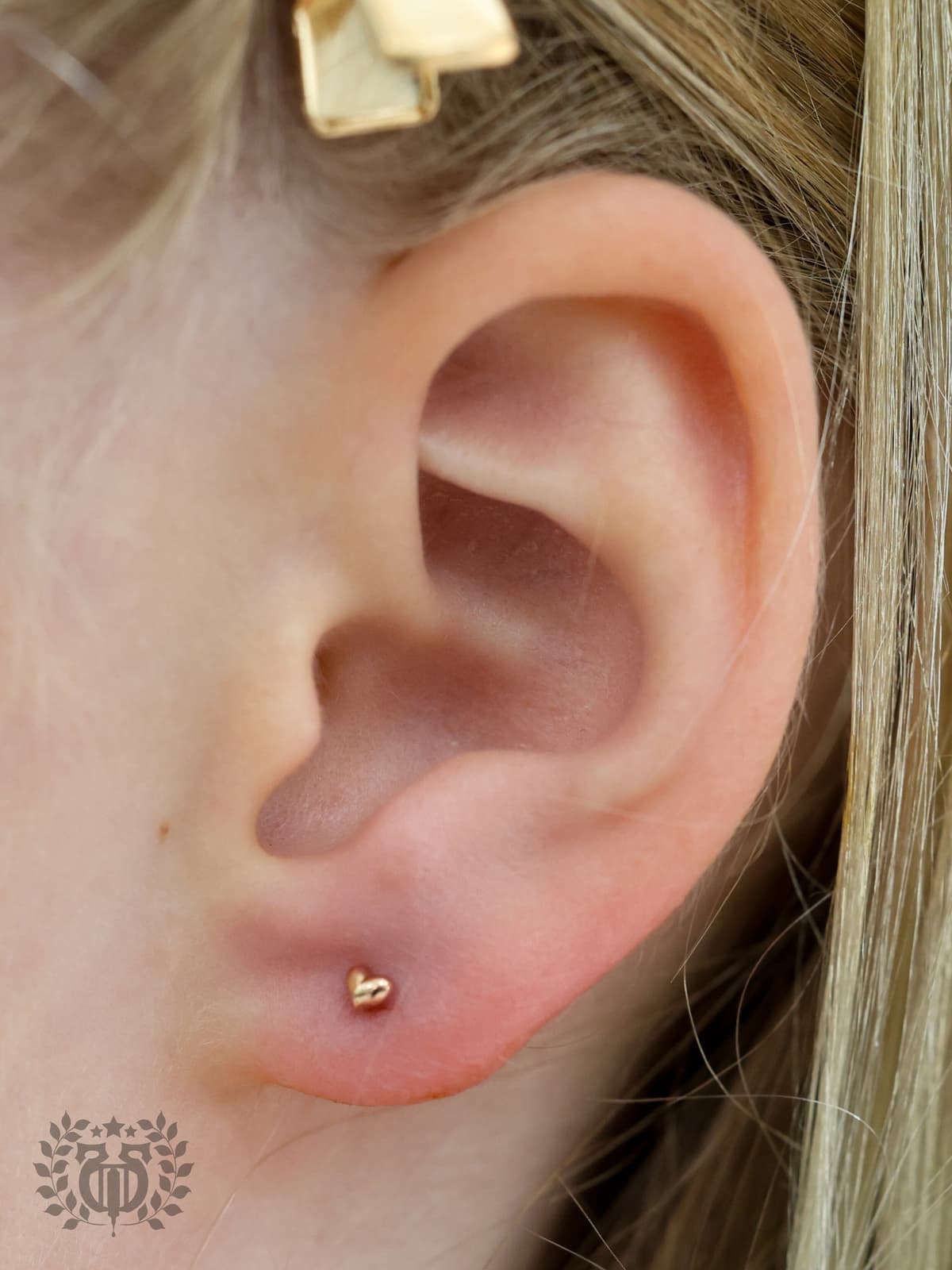
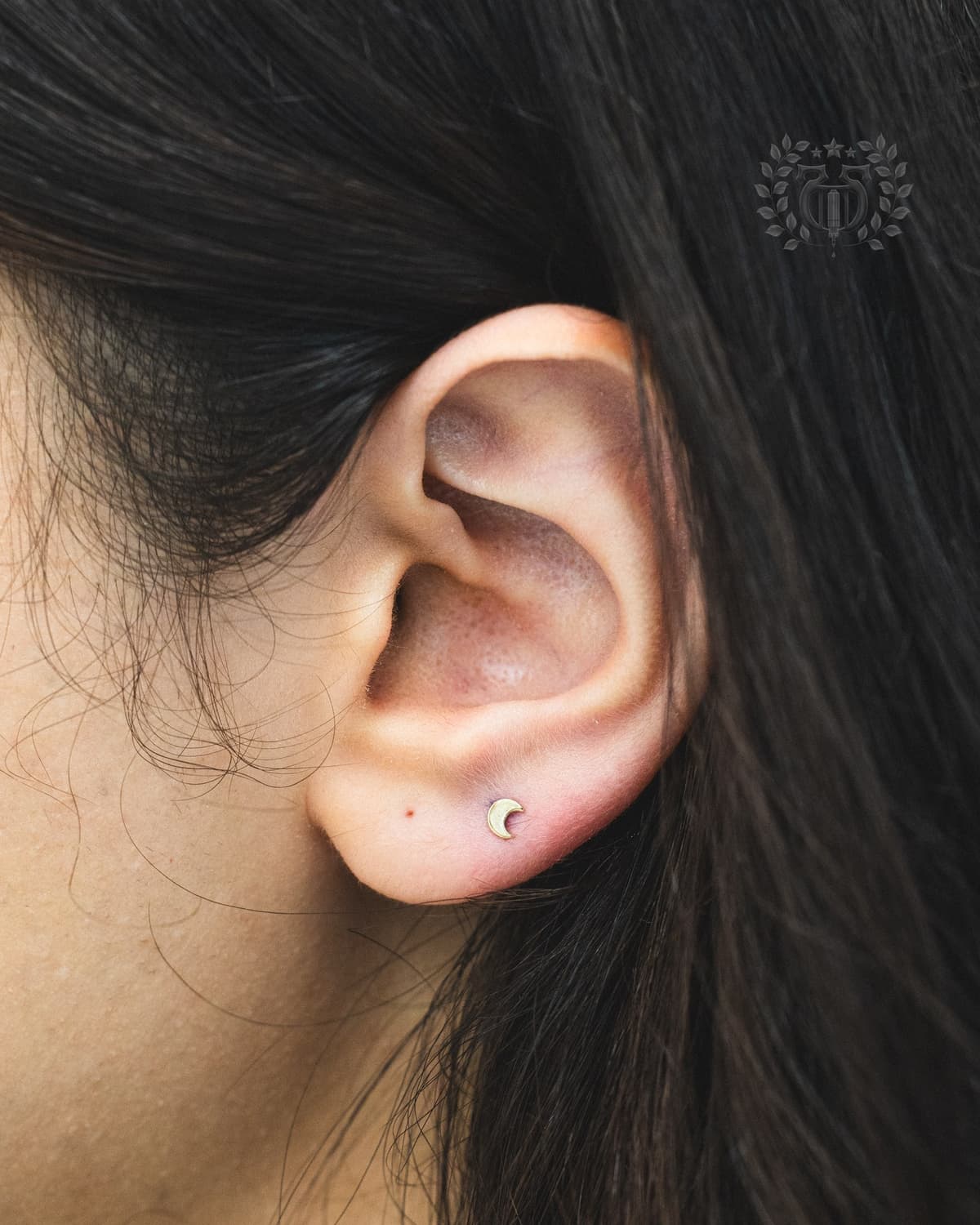
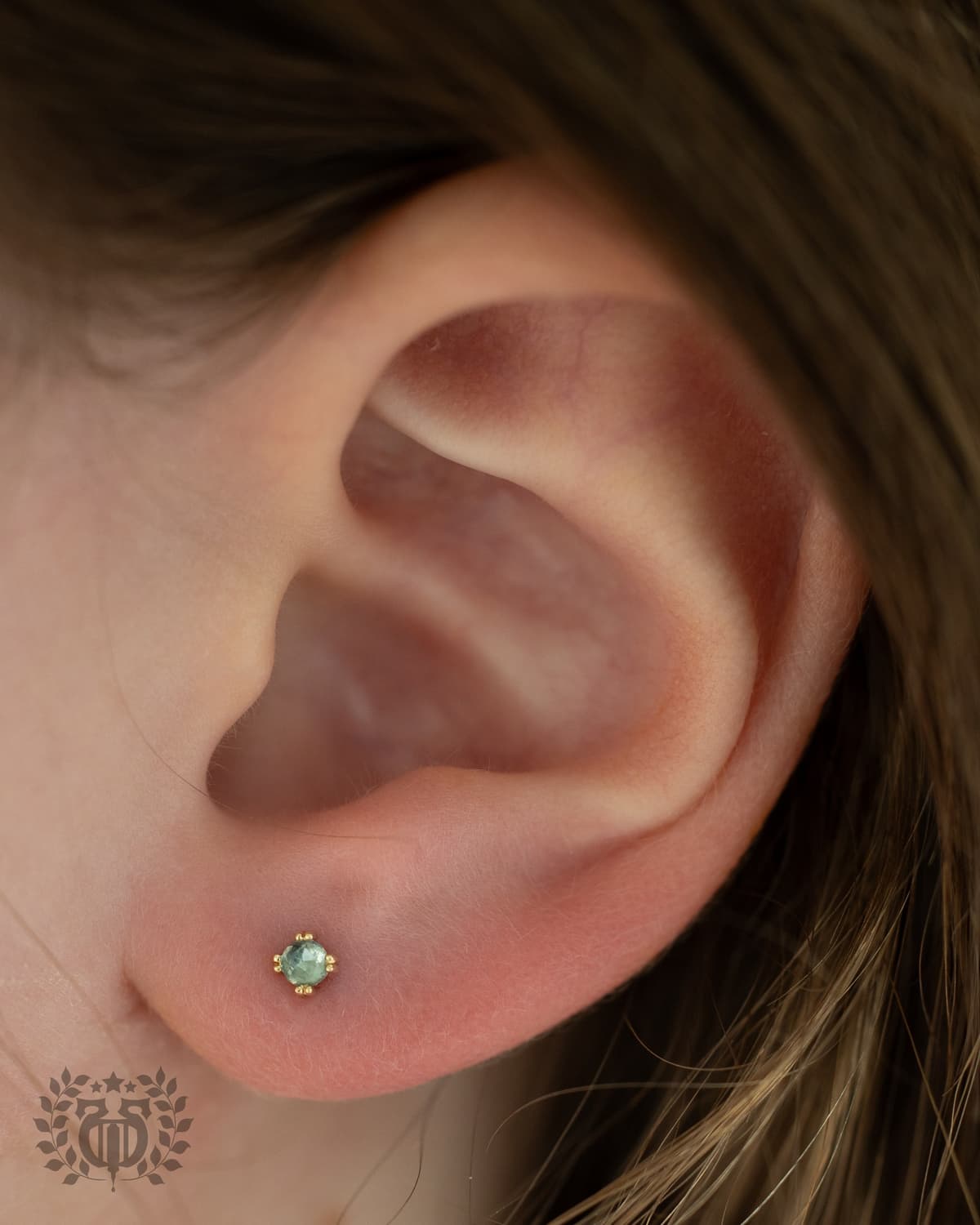
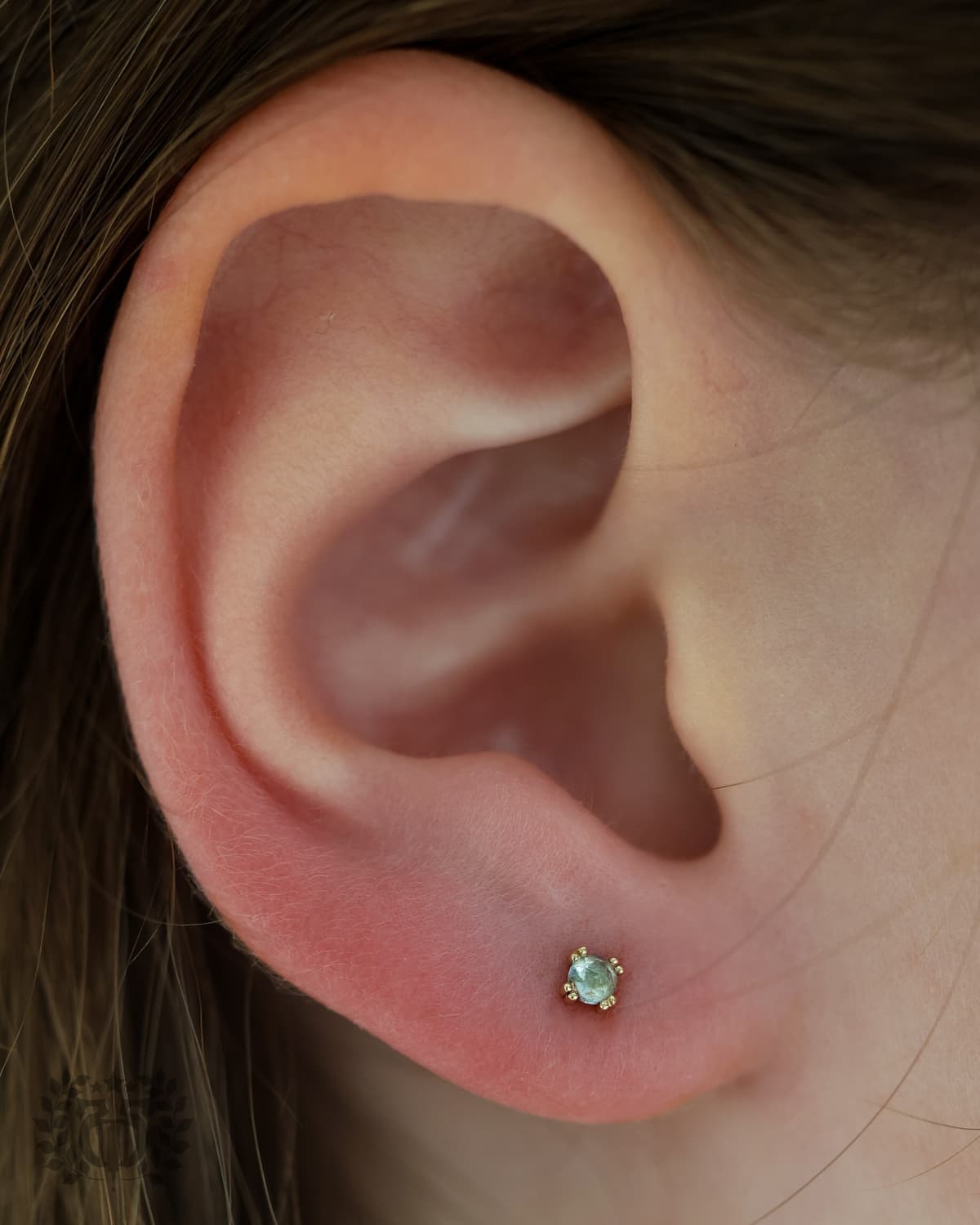
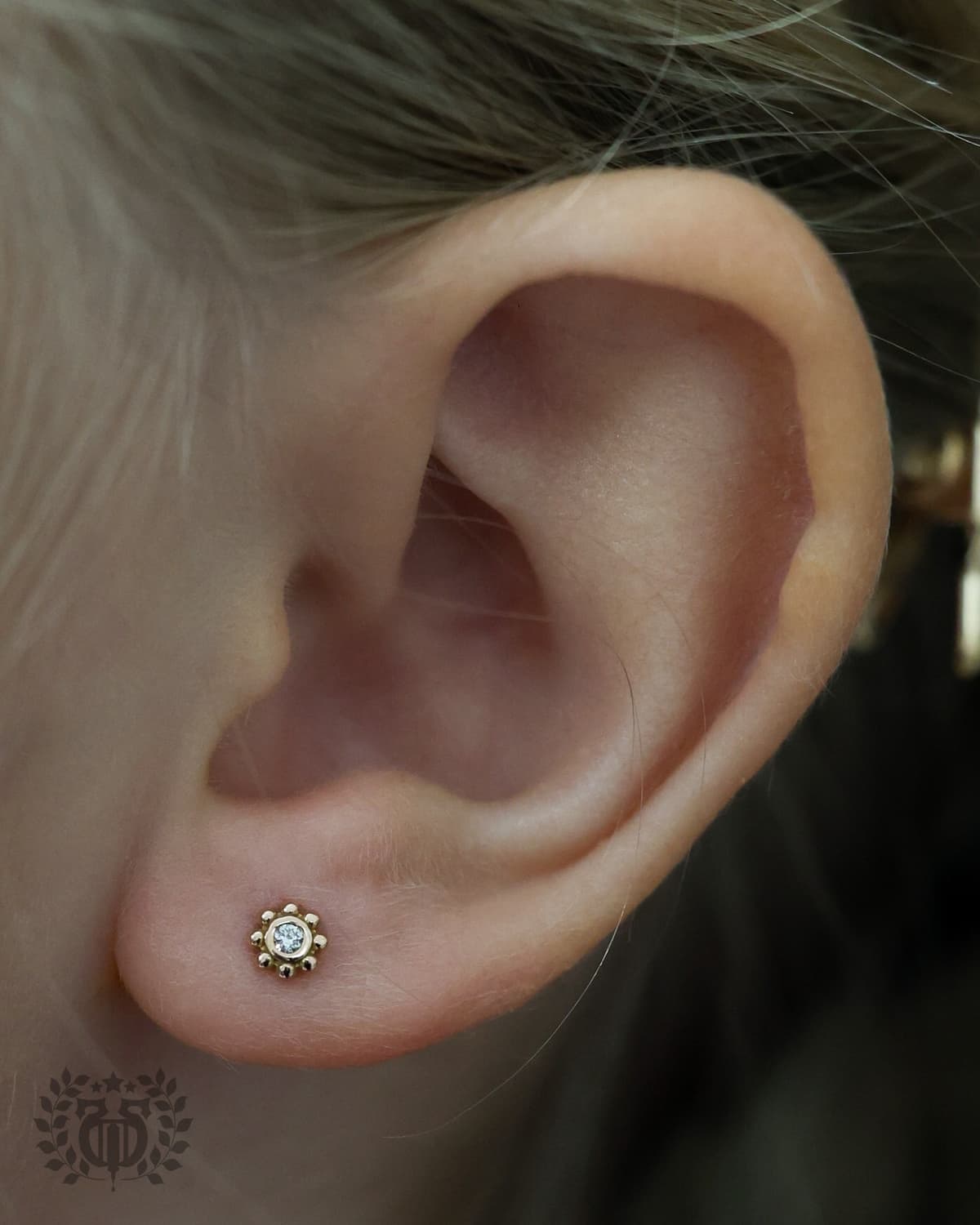
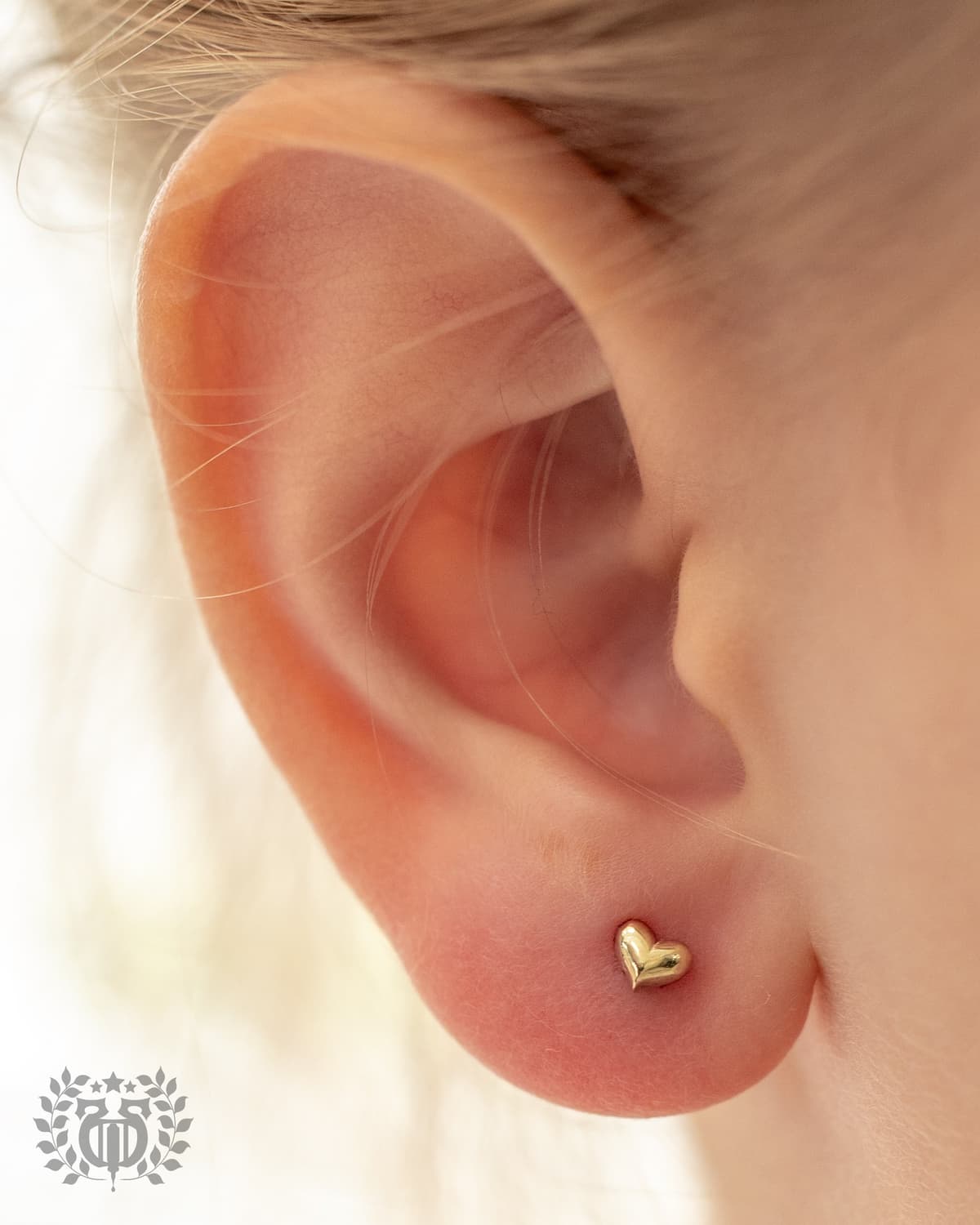
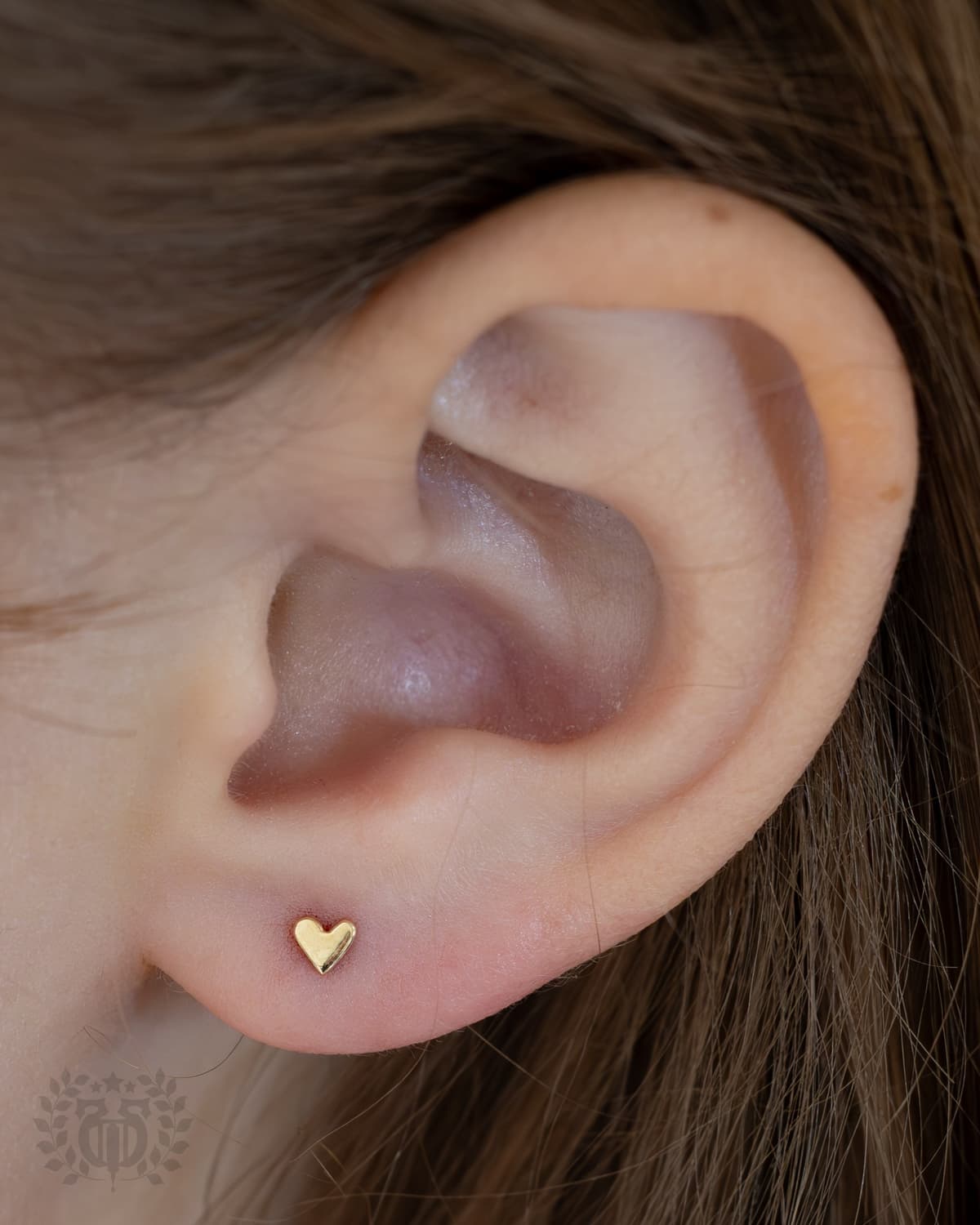
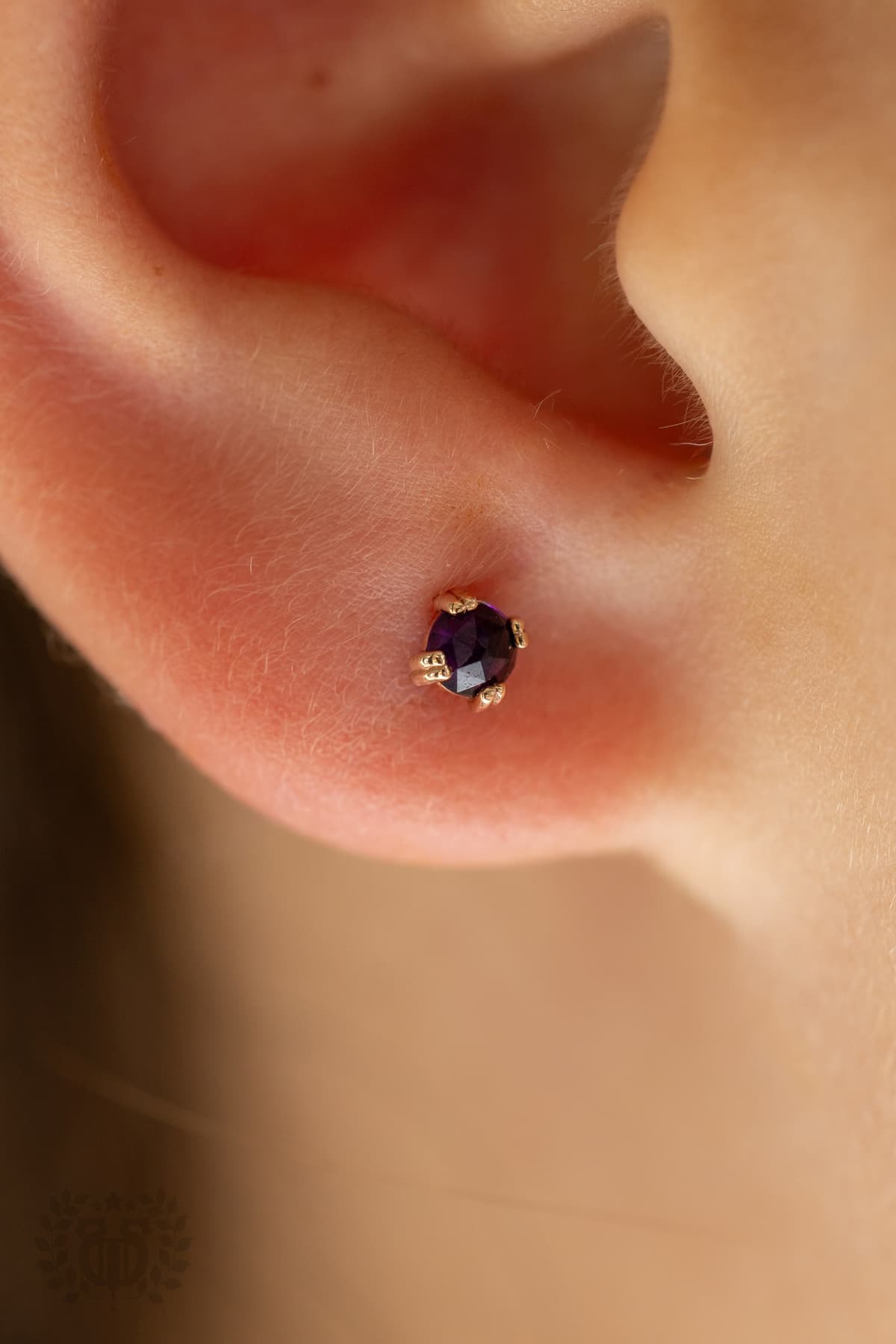
The one thing worth understanding before you choose where to take your child
Most parents arrive having already half-decided, usually because someone told them guns are bad without explaining why. Here's the why, in full, because it's the whole reason this page exists.
A gun doesn't cut, it crushes. The stud it fires has a blunt tip. Blunt objects don't part skin — they push it aside until it gives way, which means tearing and compression around the whole opening. A hollow piercing needle is a sharpened tube: it removes a tiny core of tissue and leaves a channel with clean walls. Your child's body then has a clean edge to heal, rather than a ring of damaged tissue to clear up first. That's why needle piercings tend to settle faster and complain less.
A gun cannot be sterilized. This is the part that surprises people most. Sterilisation means an autoclave — steam under pressure, hot enough to kill everything, hot enough to destroy a plastic mechanism with springs in it. So a gun gets wiped down between customers, and wiping is not sterilising. Our needles are individually sealed, used once, and opened where you and your child can see the packet break. Everything reusable comes out of a hospital-grade autoclave. The studio is licensed and inspected by LA County.
The jewelry that comes out of a gun is wrong for a healing ear. Gun studs are usually butterfly-back, which means a little clutch that sits against the back of the lobe with a gap behind it, and that gap collects hair, shampoo, sweat and discharge. They're also typically pushed home tight against the skin with no allowance for swelling, so as the lobe puffs in the first days the stud embeds. We use a flat-back titanium labret: a smooth disc lying flat against the skin with nothing to trap, run slightly long so there's room for the first week.
And there's the person holding it. A gun is designed so that someone with a short training course can operate it, which is exactly why it turns up at accessory counters. A needle requires someone who understands where a lobe ends and cartilage begins, how to place two dots that will look level on a face that isn't symmetrical, and how to talk a nervous seven-year-old through the next thirty seconds. That's not a criticism of anyone working a mall kiosk — it's a description of two completely different jobs.
Everything else on this page follows from that. The age minimum, the flat-back titanium, the marks being approved before anything happens, the fact that we'll stop if your child changes their mind. It's all downstream of treating a child's first piercing as a piercing, done properly, rather than as a retail transaction with a device attached.
What sets Apollo apart from mall kiosks and other piercing studios in Los Angeles
A gun forces a blunt stud through the lobe by spring pressure, tearing tissue rather than cutting it, and the plastic mechanism cannot go in an autoclave. A hollow needle cuts a clean channel and is thrown away afterwards. On a first piercing that difference is the entire argument.
Jewelry chosen, dots marked, mirror held up, and nothing happens until both of you agree. If a child backs out at that point we stop, there's no charge, and nobody makes them feel bad about it.
When both piercers are free, both lobes go at the same moment. Doing them in sequence means the second one is done by a child who now knows exactly what's coming, and that's the harder five seconds.
Implant-grade ASTM F136 titanium with a flat disc back that sits smooth against the lobe. Butterfly clutches trap hair and discharge in the gap behind the ear, which is much of why gun piercings get grumpy around week two.
Saline twice a day and hands off, taught to them rather than only to you. A kid who feels responsible for their piercing tells a grown-up when something changes. One who doesn't, hides it.
Age minimums that aren't negotiable, because they're about whether a child can understand the process and sustain the aftercare. Parent or guardian present with valid photo ID, the original birth certificate, and the child's own photo ID.
Five is the floor. Whether your particular child is ready is a separate question, and it's yours to answer
We don't pierce children under five, and that's fixed. But plenty of six- and seven-year-olds aren't ready either, and plenty of five-year-olds are. Here's what we watch for, offered so you can make the call at home rather than finding out in the chair.
Whose idea was it? The single best predictor. A child who has been asking for months, who brings it up unprompted, who has opinions about which earrings — that child usually sails through. A child who is here because a parent or a grandparent thought it would be lovely tends to be the one who freezes at the marking stage. Neither is wrong, but they're different appointments.
Can they sit still for a count of five? Not for an hour — for five seconds, on purpose, when asked. That's genuinely all the stillness required. If your child can hold a pose for a photo, they can hold still for this.
Do they understand it will hurt for a moment? Children handle honesty about this far better than reassurance. A kid who has been told "it'll pinch, quite hard, and then it stops" is prepared. A kid who has been told "it won't hurt at all" has been set up to feel betrayed, and that's the one who won't let anyone near the second ear.
Will they let you clean it? Ask before you book. Several weeks of a wet cotton pad or a saline spray on the ears, twice a day, is not much — but it needs to be tolerable. A child who won't let you brush their hair may not be a child who'll sit for aftercare, and a lobe that doesn't get cleaned gets sore.
Will they leave it alone? The main way a child's lobe piercing goes wrong is fiddling. Twisting the stud, tugging it, showing friends by pulling on it. Some kids simply can't help themselves at six and can perfectly well at eight, and you know which yours is.
One last thought, offered without judgement. If you're weighing this up and it feels borderline, waiting six months costs nothing and often turns a difficult appointment into an easy one. Lobes will still be there. We'd far rather see a child who is delighted about it than one who is being brave, and either way we'll take your lead.

Apollo's Premium Jewelry Partner
Handmade in Los Angeles since 1996. Lifetime guarantee. Implant-grade gold, platinum, and titanium. Over 3,000 original designs in our case — ask your piercer for a tour.
See the BVLA story →What we'll do at what age, and why the line sits where it does.
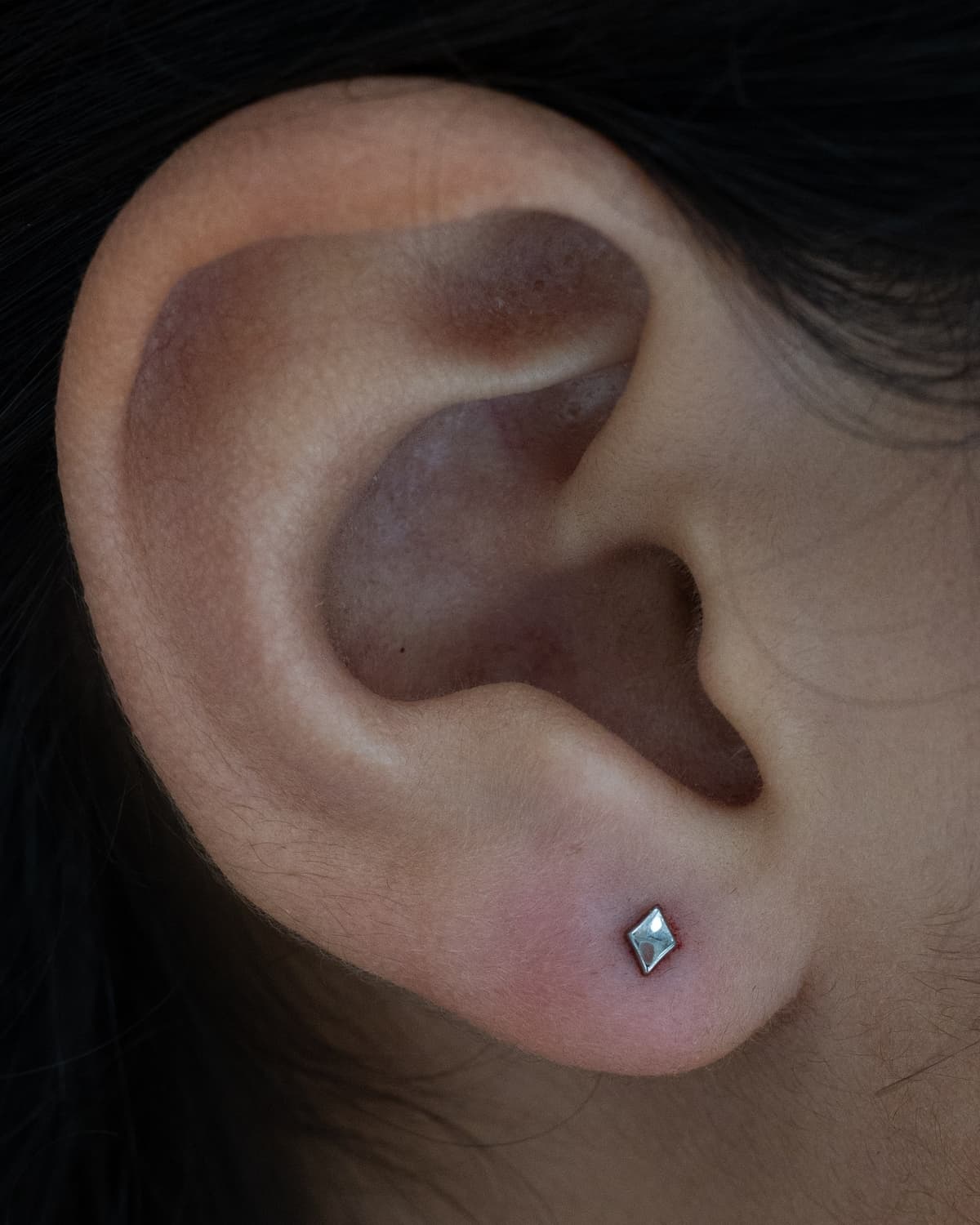
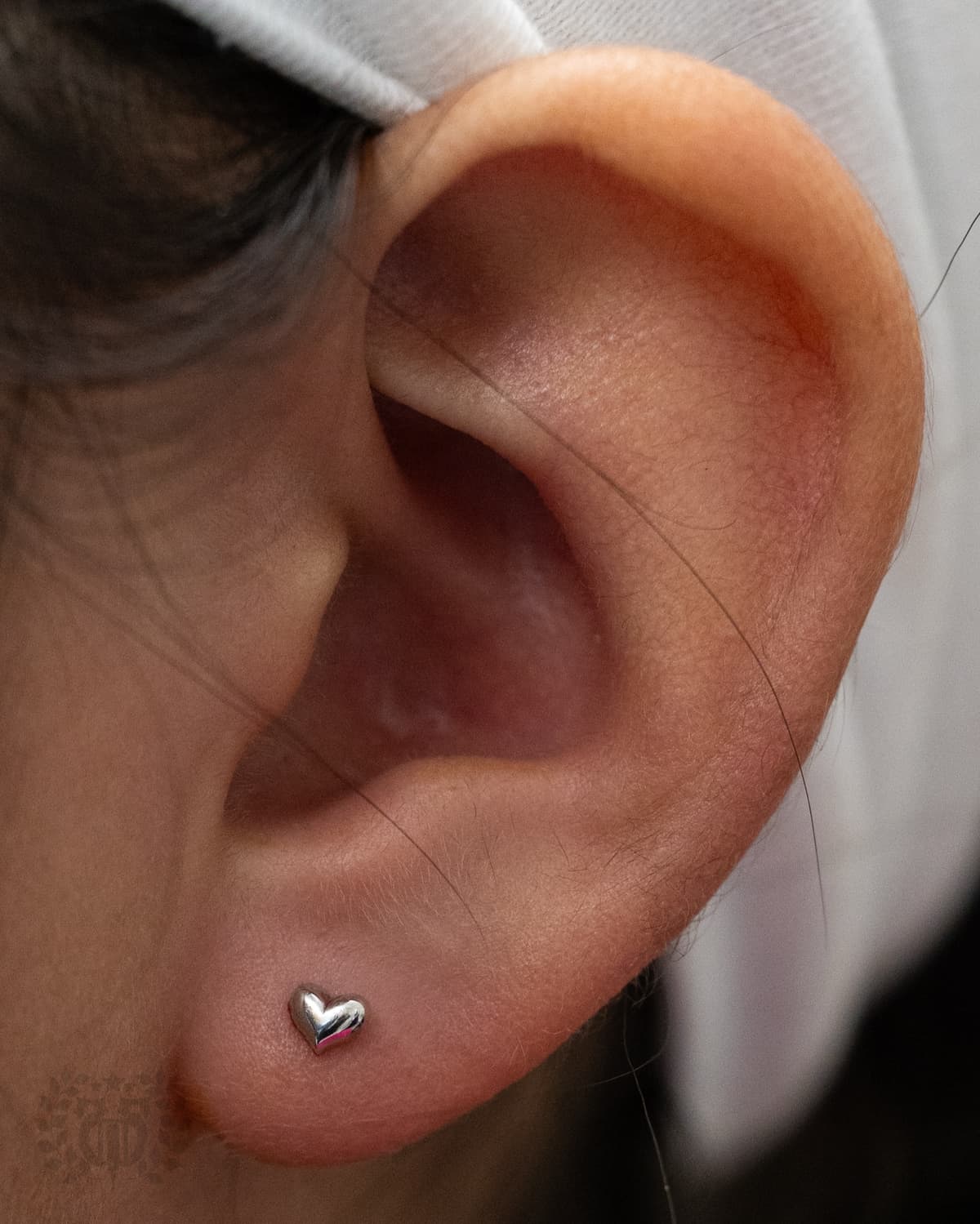
Straight through the soft part of the lobe, where there's no cartilage and the heal is the most forgiving on the ear. Flat-back titanium stud with a little length allowed for swelling. From five years old. $75 for the service.
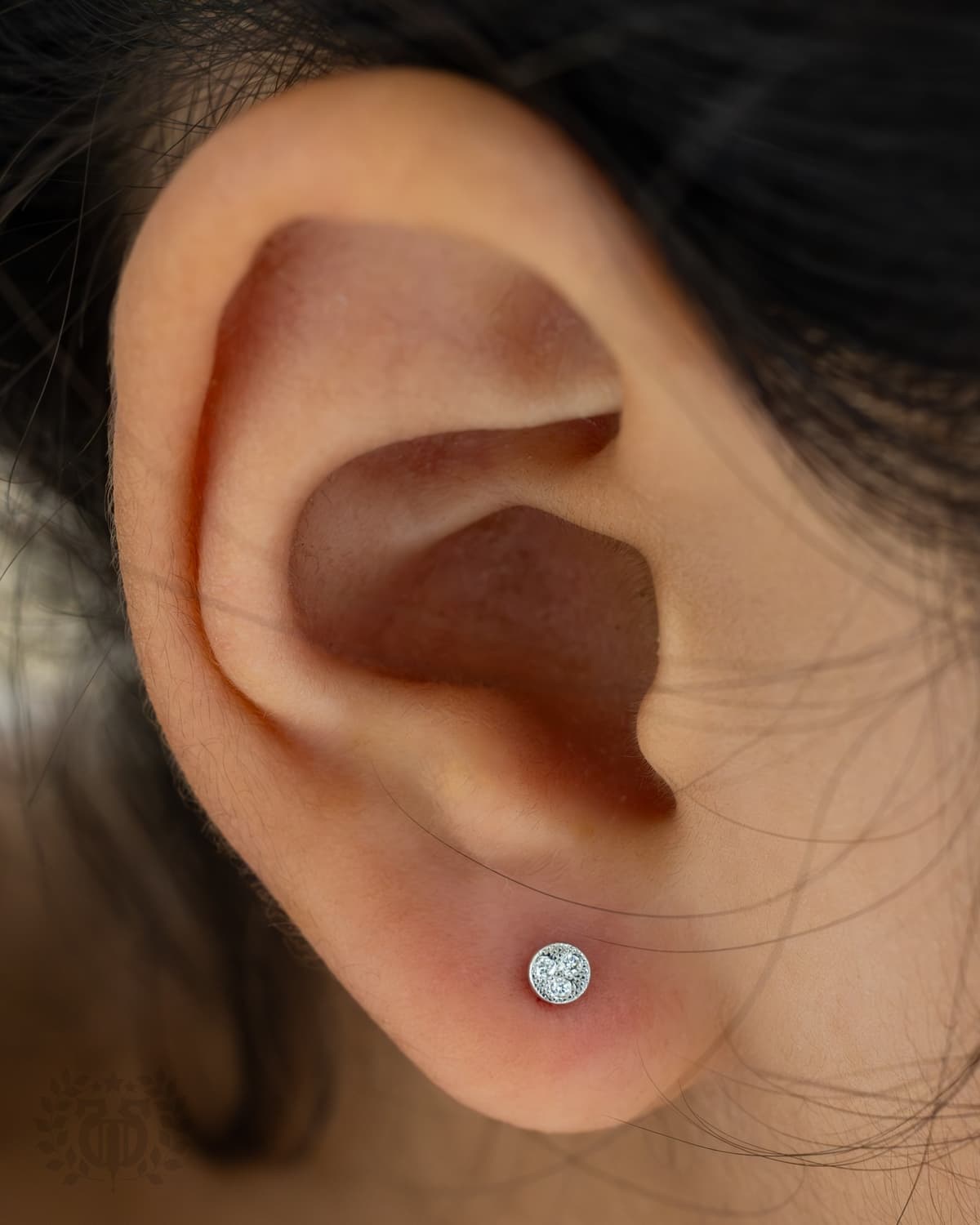
Two piercers, one moment, both lobes. It matters more than it sounds: doing them one after the other means the second one is done by a child who now knows exactly what's coming. Ask for it when you book. Our two-piercing special covers the pair of services at $75.
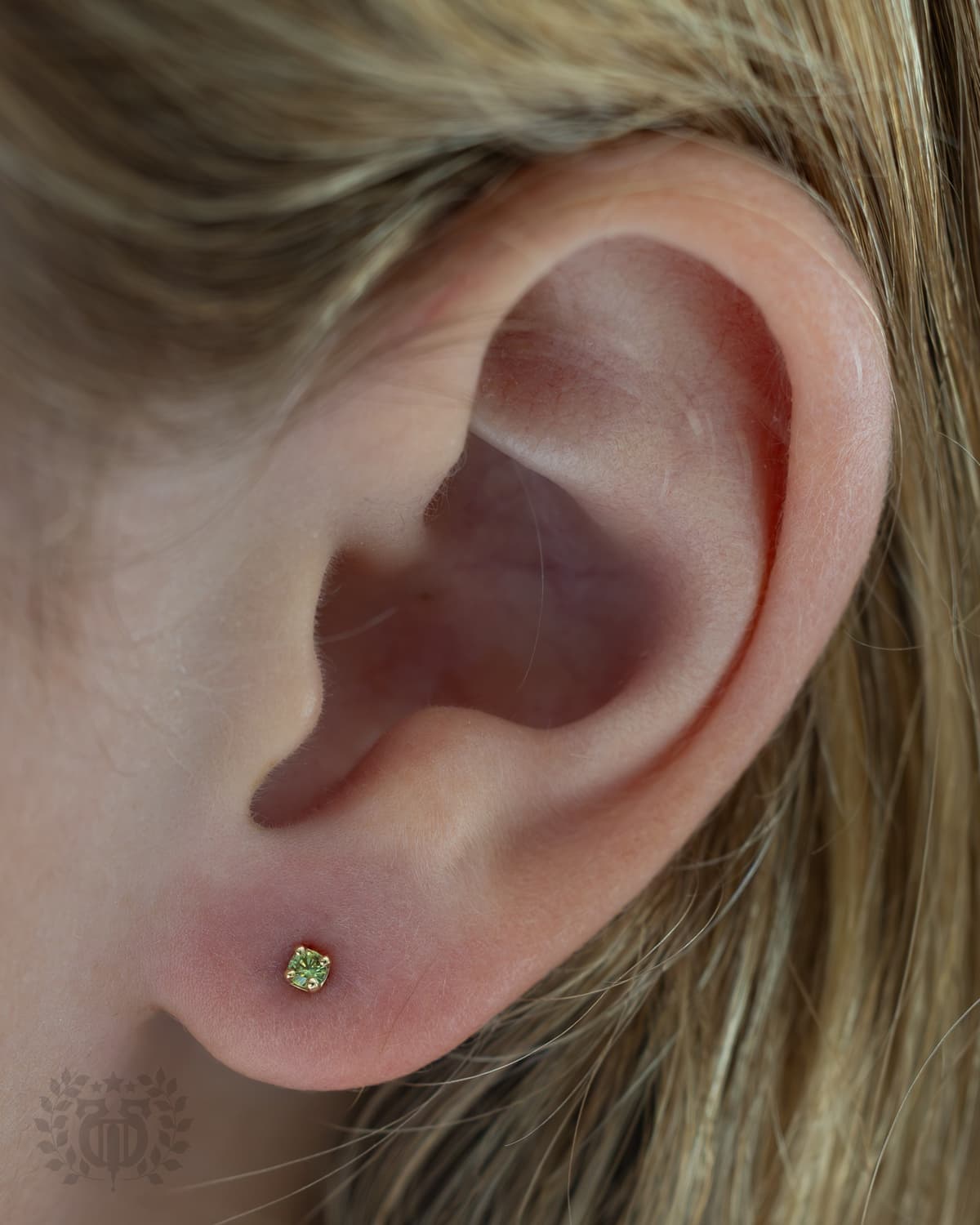
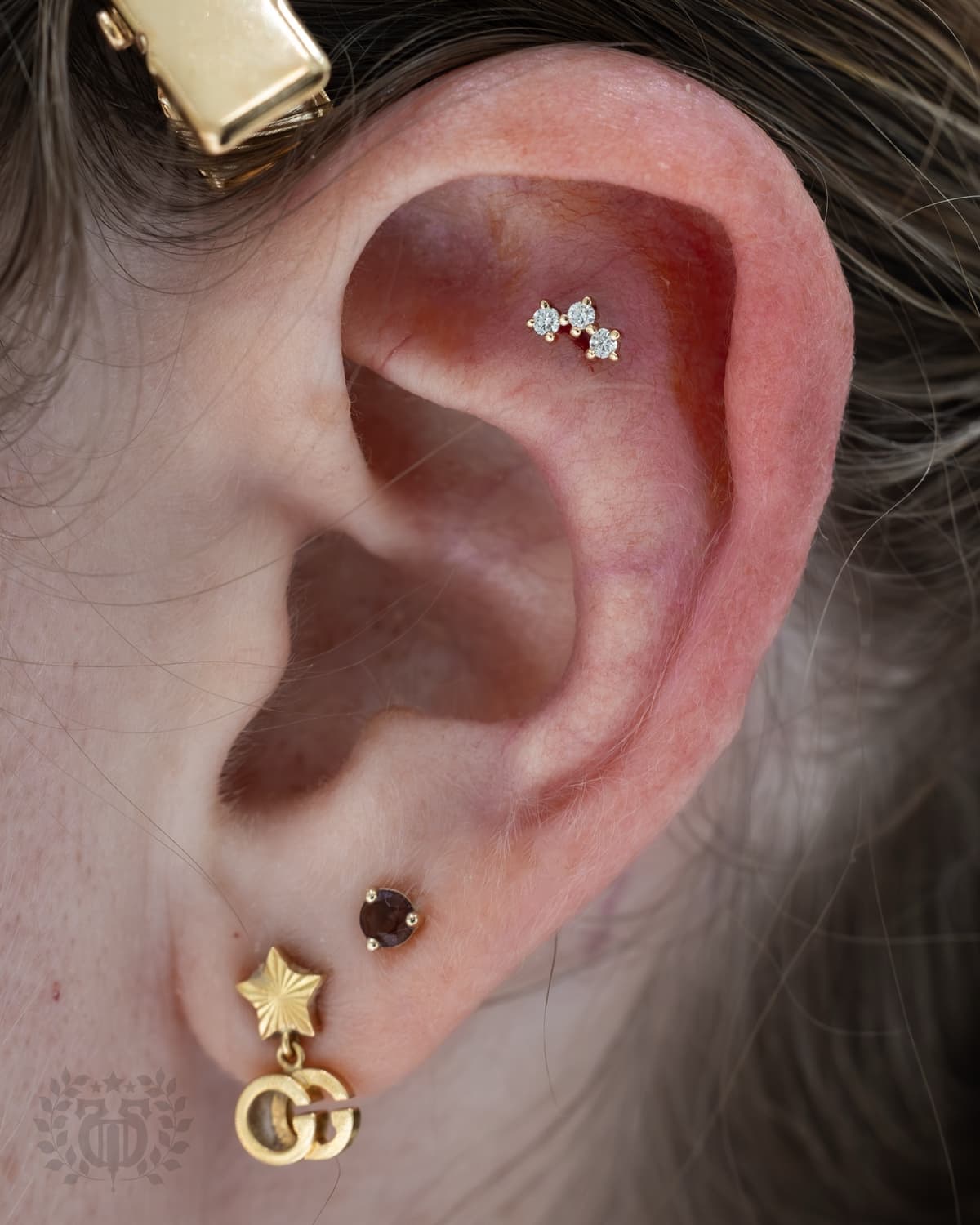
Once the first pair is properly healed, a second row above it is a common next ask — usually from a teenager rather than a five-year-old. The spacing is worth planning rather than eyeballing, because lobes have less room than people think and two studs crowded together rub against each other.
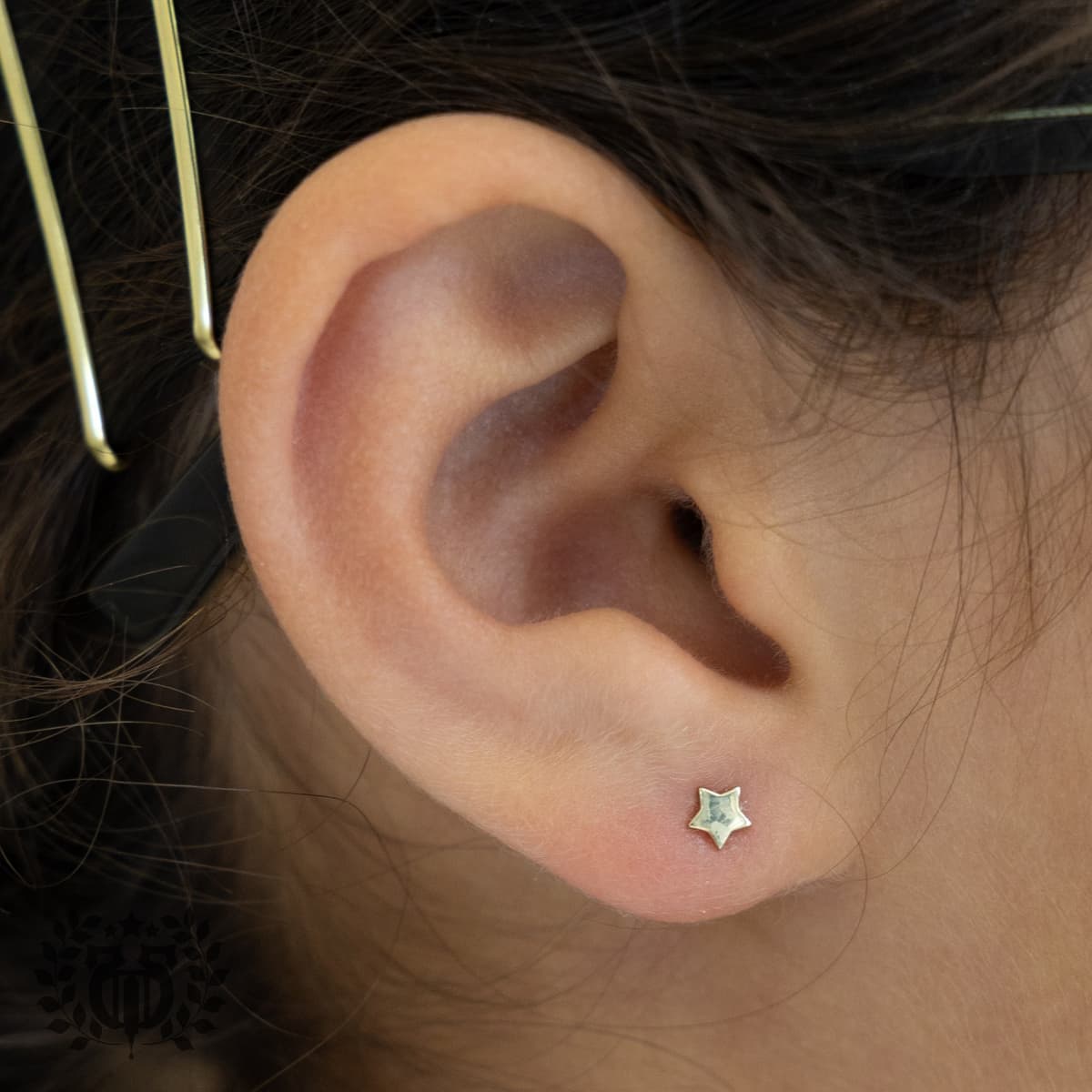
Higher up the lobe but below the point where cartilage starts, so it keeps the easier lobe heal. Worth knowing the difference, because the piercing that looks similar an inch higher is cartilage and behaves entirely differently. Available from five, same as a standard lobe.
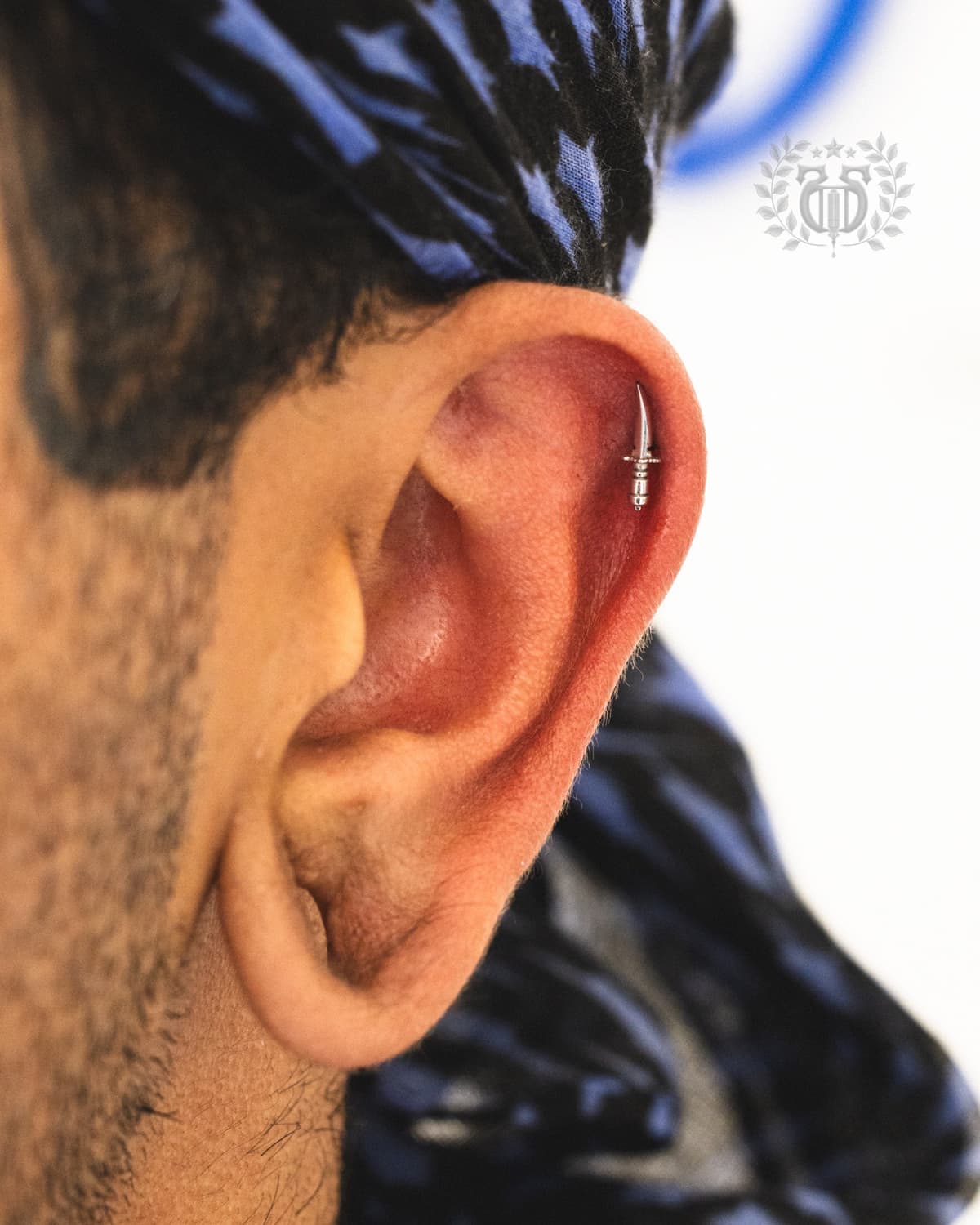
The upper rim, and the first cartilage piercing most people get. The age floor exists because cartilage heals in months rather than weeks and demands aftercare a younger child realistically won't sustain. Sleeping on it, headphones and hair all become factors. Thirteen and up, with the same ID requirements.
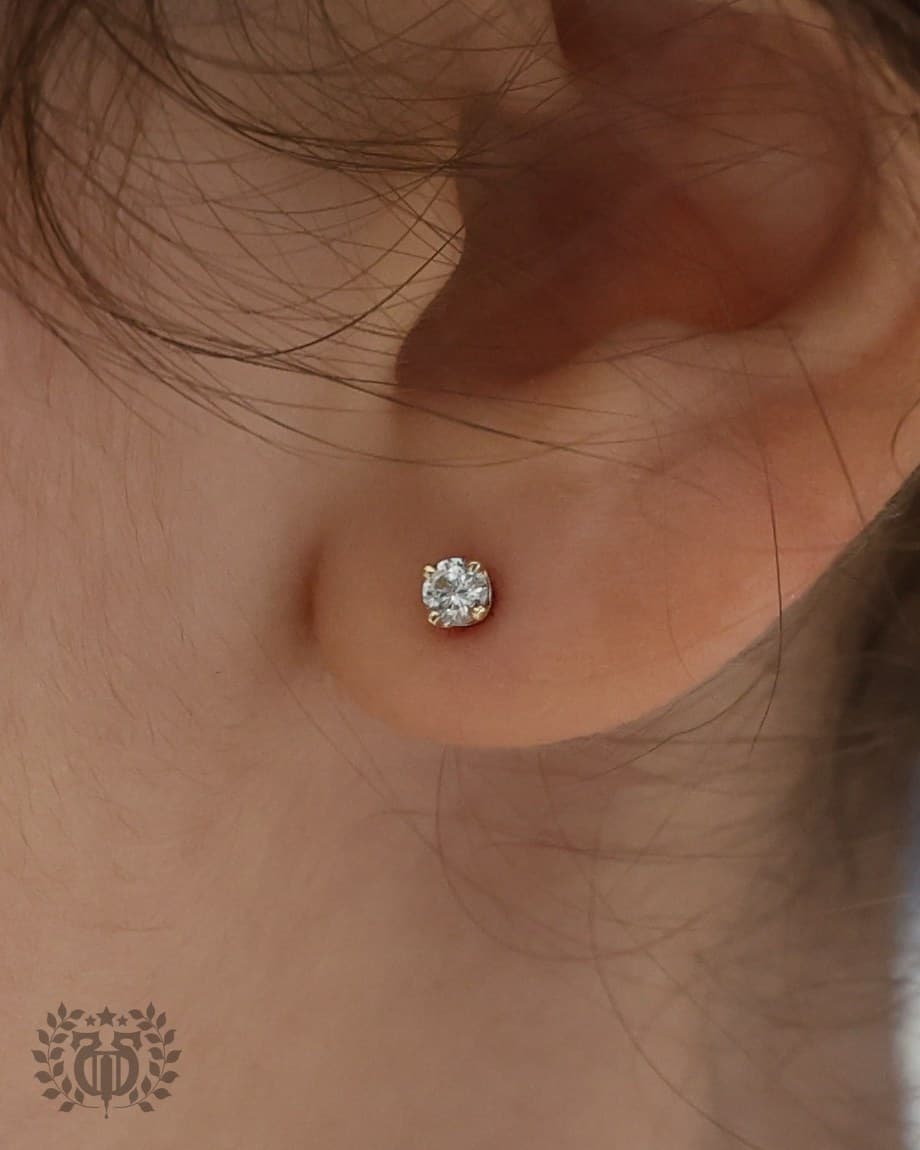
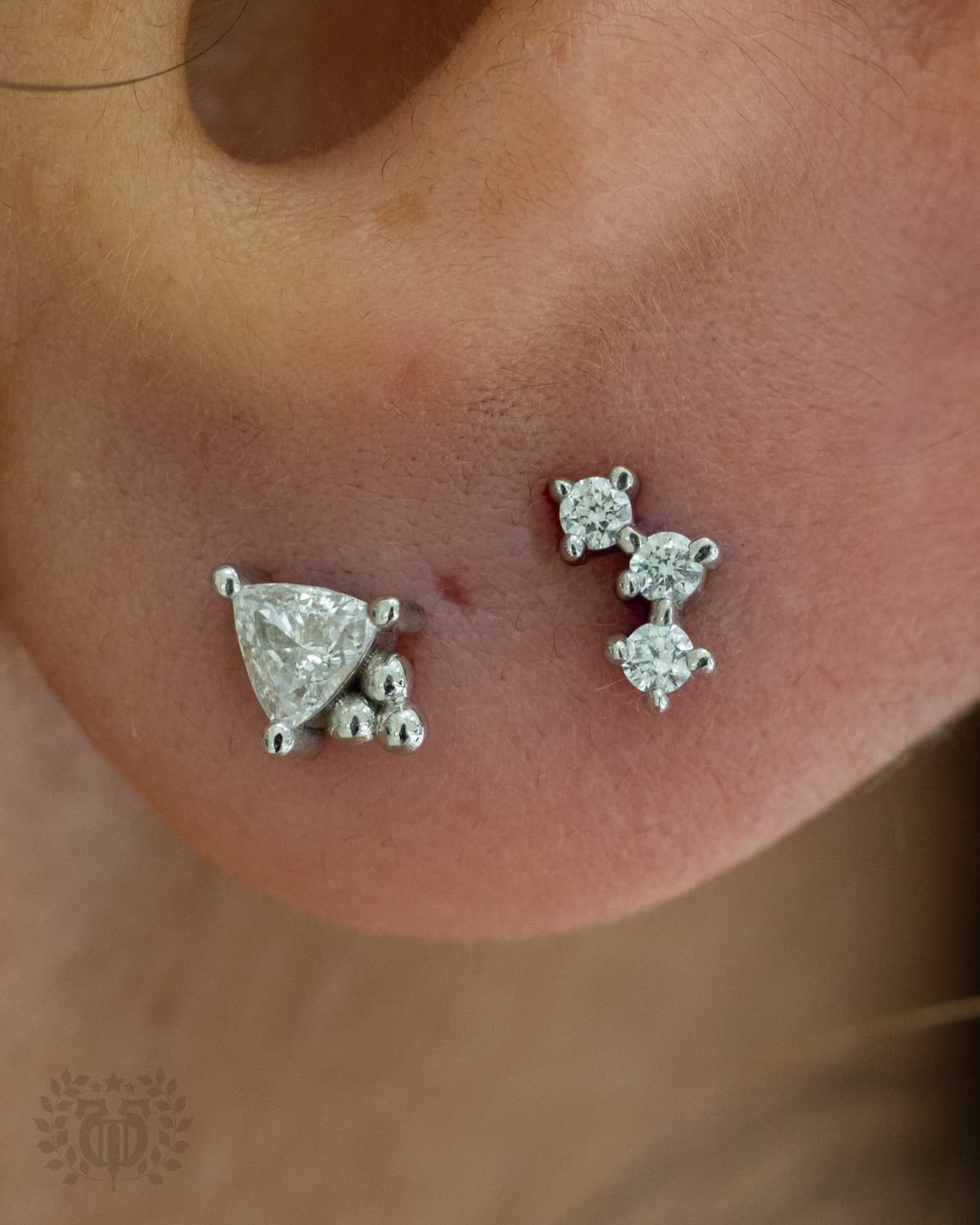
The back of the stud is the part parents never think about and the part that causes most of the trouble. A butterfly clutch traps hair, shampoo and discharge in the gap behind the lobe. A flat disc sits smooth with nothing to catch. Implant-grade titanium as standard, solid 14k gold if you'd rather.
Nearly all of it comes down to one principle: no surprises. A child who knows what the next thirty seconds contain is a child who sits still. So the piercer narrates — this is the pen, these are the dots, now have a look, now I'm going to clean it and it will feel cold, now I'm going to say three and then you'll feel a pinch. Nothing happens that hasn't been described first, and nobody counts down and then goes early to "get it over with." That trick works once and costs you the second ear.
The order is deliberate too. Jewelry gets chosen at the start rather than at the end, which sounds like a small thing and isn't: a child who has picked out a particular gold stud is invested in the outcome and spends the wait thinking about that instead of about the needle. Then the marks go on and they look in the mirror. That's the moment a child stops being something being worked on and becomes the person deciding.
Two piercers at once, whenever we can. The gap between a first and second lobe is where nerve fails, because by then the mystery is gone and they know exactly what's coming. One count of three for both ears removes that problem entirely. Ask for it when you book so we can have both piercers free.
Where you stand matters as well. Parents stay in the room — sit or stand where your child can see your face, not behind them. Say something ordinary. If you're tense they'll read it instantly, and the single most useful thing a parent can do in that room is be visibly relaxed, even if you aren't. Hold a hand, hum something, talk about the sticker afterwards.
And if it all goes sideways: we stop. A child who says no at the marking stage has told us something true. There's no charge for a piercing that didn't happen, no sighing, and no attempt to talk them into it while they're upset. Come back in six months and it'll usually be easy. That has to be genuinely available, otherwise the whole "your child approves it" idea is theatre.
Flexible booking paths
A nervous kid waiting gets more nervous, not less — booking means you walk in and start
Popular starting point
A calmer booking path for parents planning a kids ear piercing visit.
The gap in this table is the reason helix has an age minimum of thirteen and lobes don't
| Piercing Type | Location | Initial Healing | Full Healing | Pain Level |
|---|---|---|---|---|
| Lobe (Classic) | Soft tissue, lower ear | 6-8 weeks | 3-6 months | 2/10 |
| Stacked Lobe | Multiple lobe piercings | 6-8 weeks | 4-6 months | 2/10 |
| Upper Lobe | Above classic lobe | 6-8 weeks | 4-6 months | 2-3/10 |
| Helix | Upper outer rim cartilage | 3-4 months | 6-12 months | 4-5/10 |
 5000+ clients
Six things that happen in front of you rather than in a back room
Sealed, single-use and sterile, with the packet broken where you and your child can both see it. It goes into the sharps bin afterwards and is never used again.
Tools are sterilized in a hospital-grade autoclave — which is precisely what a piercing gun cannot go through, because the heat and pressure would destroy the plastic mechanism.
Every step described to your child in plain words before anyone does it. Surprises are what make kids flinch, and a flinch is the thing you most want to avoid.
You're not waiting outside. Stand where your child can see you, and you're the one who approves the marks before we proceed.
The studio runs under LA County Health Department licence and inspection, with EPA-registered disinfectant on every surface and bloodborne-pathogen-certified piercers.
The chair, the counter, the tray. Nothing about the setup relaxes because the client happens to be small.
Three documents, one of which people forget, plus a couple of practical things
Start with the paperwork, because turning up without it means turning round again. You need your own valid, unexpired photo ID — a state driver's licence, state ID card, military ID or passport. You need your child's original birth certificate, not a photocopy and not a photo on your phone. And you need photo ID for the child, which a school ID satisfies. That middle one is the item people forget, so it's worth digging it out the night before.
The adult present has to be the parent or legal guardian, and the names have to line up with the birth certificate. Grandparents, aunts, older siblings and family friends can absolutely come along, but they can't be the one signing. If your paperwork is complicated — a name change, an adoption, guardianship documents, a passport in a different surname — call ahead and describe it rather than discovering the problem at the counter with a hopeful seven-year-old beside you.
Beyond documents, a few practical things. Feed your child beforehand; a hungry, slightly nervous kid is a much wobblier kid, and that's true at any age. Hair tied back or brought in something you can tie back. If they wear glasses, keep them on for the marking so we can see how the arms sit. And let them choose their outfit if it helps — this is a landmark for a lot of children and turning up feeling good about themselves genuinely changes how the appointment goes.
Finally, decide in advance who's doing the talking. If your child is old enough to answer questions, let them. Piercers ask children directly whether they want this, and a kid who's used to a parent answering for them can freeze at that point simply because they weren't expecting to be asked.
Service fee below; jewelry is chosen by your child and priced on its own
Service fee
Service fee
Service fee
Service fee
Service fee
Service fee
A pair of lobes falls under our two-piercing special, which covers both services at $75. Starter jewelry is implant-grade titanium and priced separately, so what you spend on top depends entirely on whether your child picks a plain end or something in solid gold. If a child changes their mind at the marking stage, there's nothing to pay.
Two minutes a day, split between you and them depending on how old they are
The whole routine is sterile saline on the front and back of each lobe, twice a day, then leave it alone. That's it. No ointment, no rubbing alcohol, no tea tree oil, no hydrogen peroxide, and above all no turning the earring — which is the instruction most grandparents will confidently give you and which is left over from the gun era. Twisting a stud tears the new lining every single time.
Who does it depends on the age. A five- or six-year-old needs you doing the saline while they sit and count to ten. Around seven or eight most children can do it themselves with you standing there. By ten they can generally run it alone if you ask about it at bedtime. Whichever it is, the goal is that your child thinks of it as their job rather than something being done to them — because the child who owns it is the one who says "my ear feels funny" instead of hiding it.
Then there's everything that isn't cleaning, which is where most kids' lobe trouble actually comes from. Hair is the big one: long hair wraps around a stud and gets tugged all day, so tie it back for the first weeks and be careful brushing. Helmets and headguards press directly on the lobe, so check the strap position before a bike ride or a game. Sleeping on one side flattens a stud into the ear all night; a soft pillow and a bit of variety helps. Headphones with over-ear cups sit right on the lobe. Swimming pools and the ocean wait a few weeks; showers are fine straight away.
Things that look alarming and usually aren't: a little pinkness in the first week, a crust that dries at the front of the stud, a lobe that's slightly warm. Things worth bringing in: a lump that's growing, skin that's hot to touch, your child guarding the ear and refusing to let you near, a stud back that's tightened down into the skin, or anything that's still angry a week later. That look costs nothing and takes five minutes, and the answer is nearly always something mechanical we can fix. Real spreading heat and swelling with thick discharge means a doctor rather than a piercer.
Lobes usually settle in around six to eight weeks with the inside continuing to firm up for a few months after. Bring them in for the first earring change rather than doing it at home — we'll look at the piercing while they're here, and if it isn't ready you'll find that out from a piercer rather than from an earring that won't go back in.
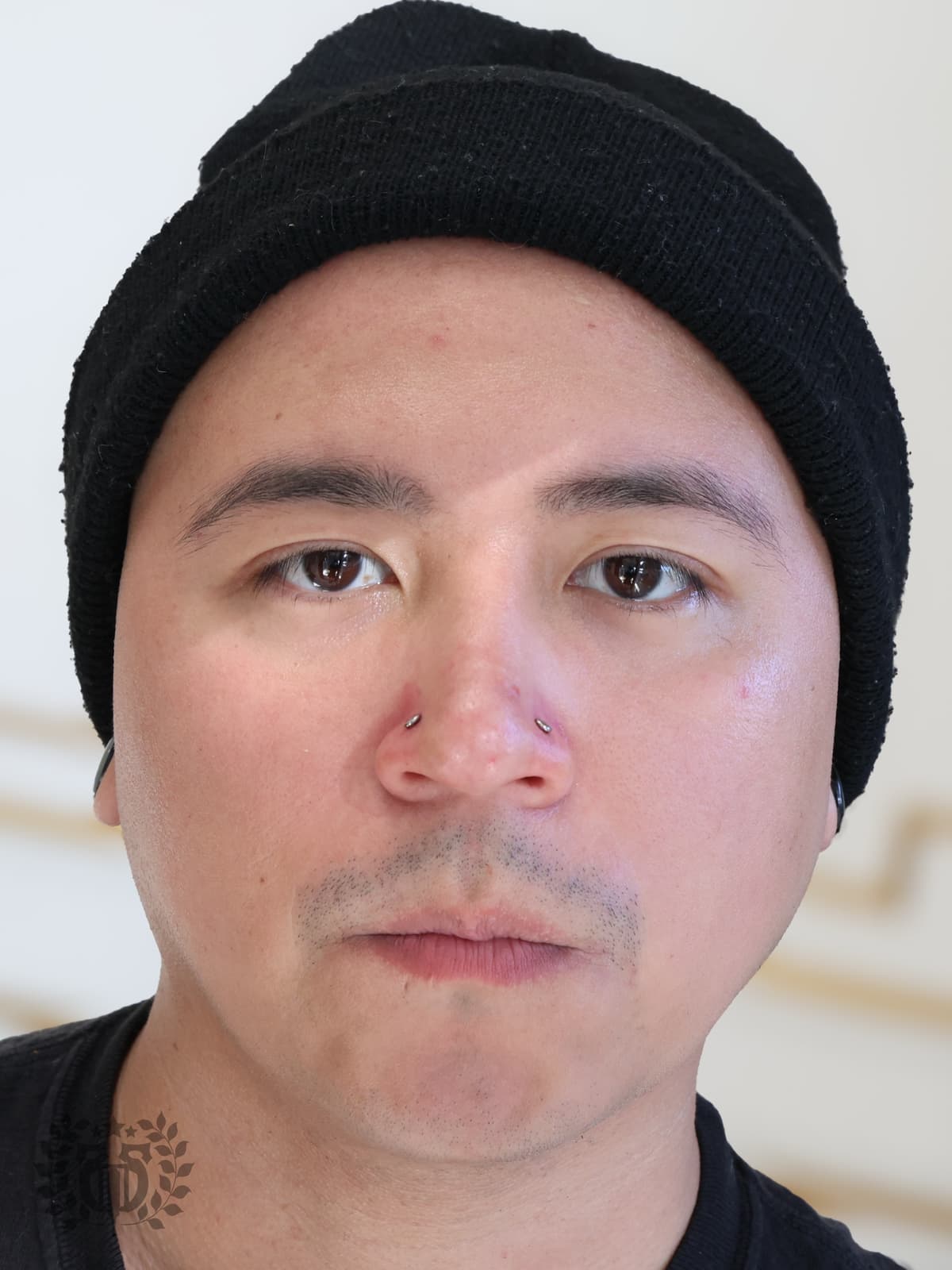
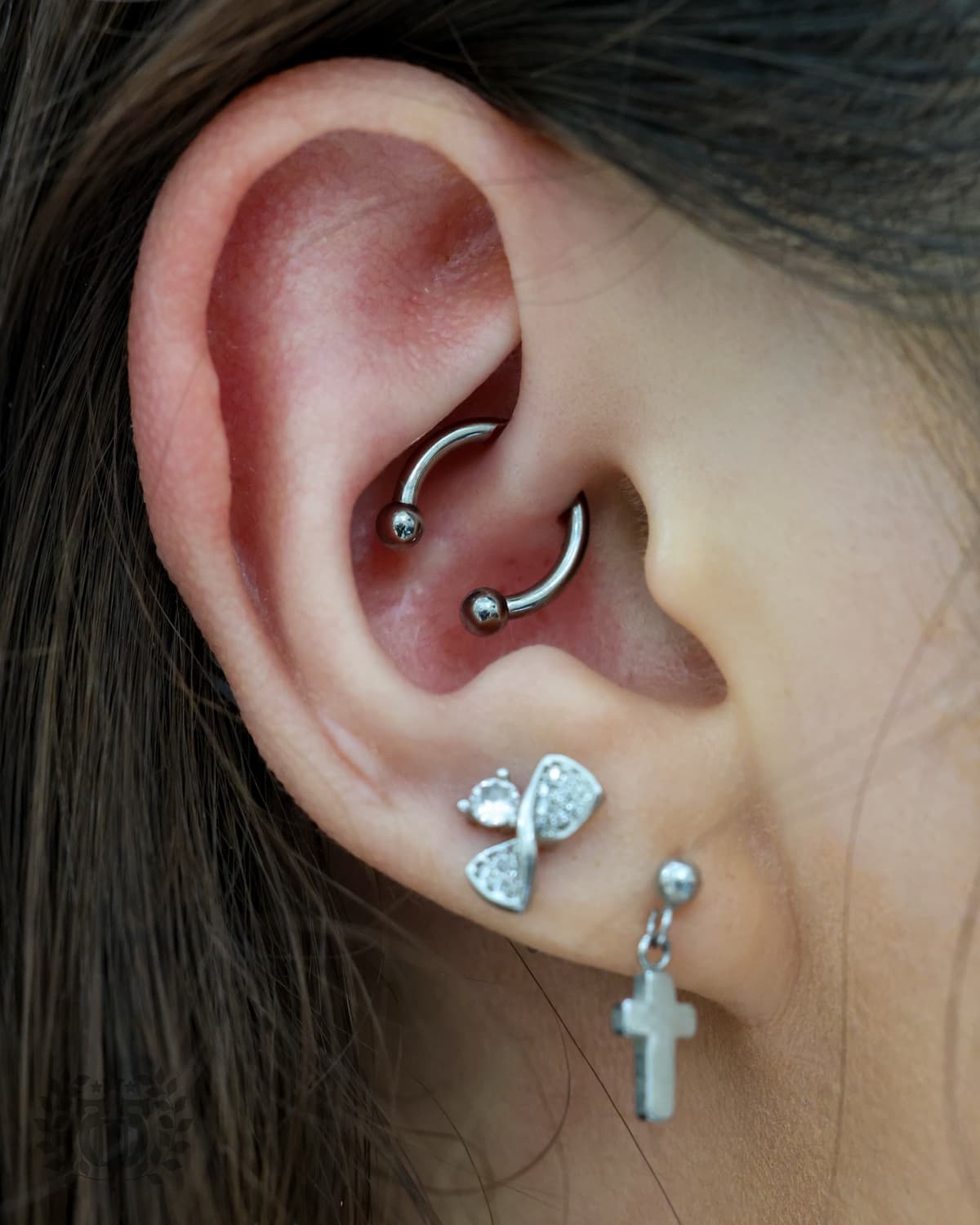
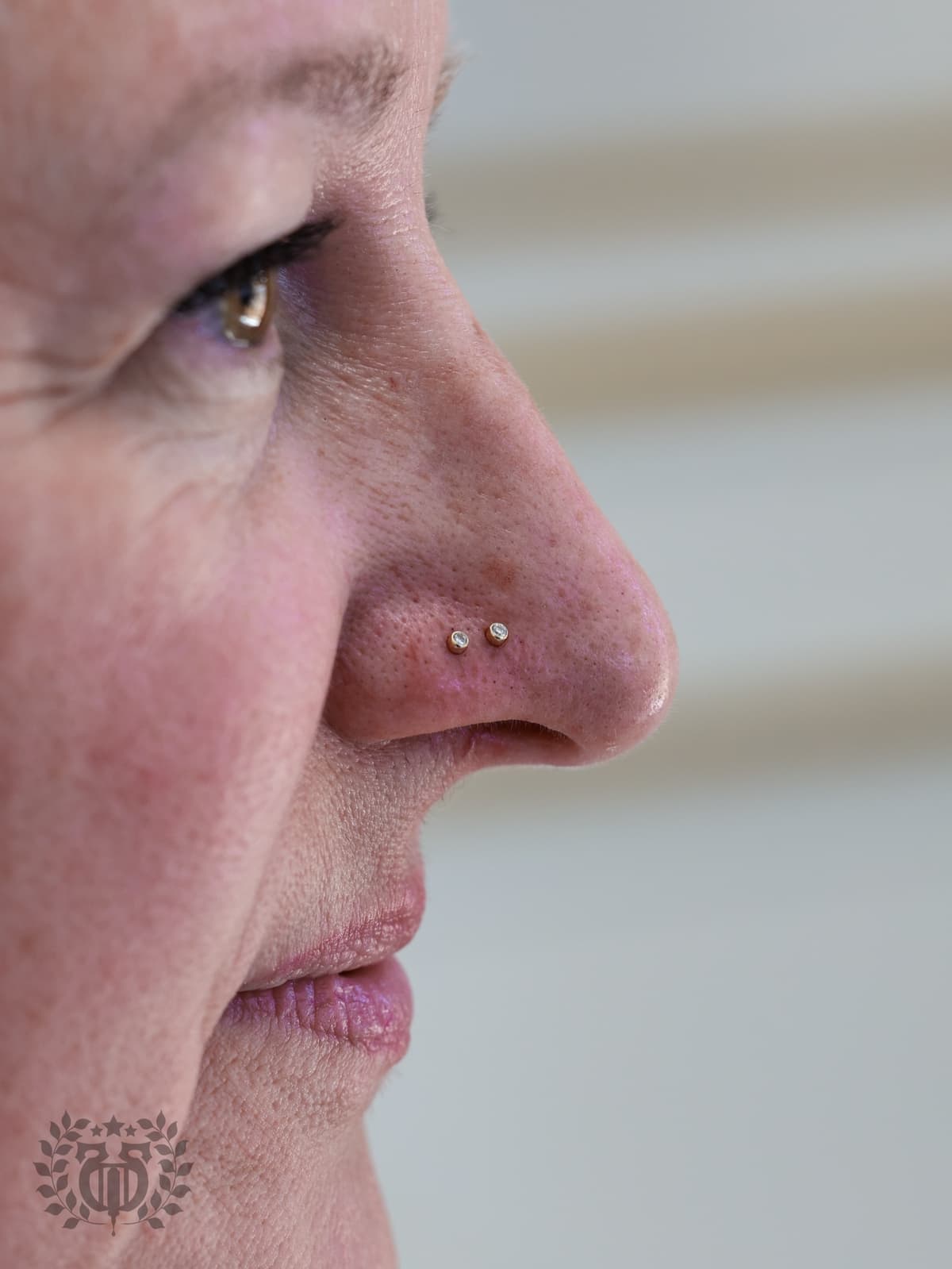
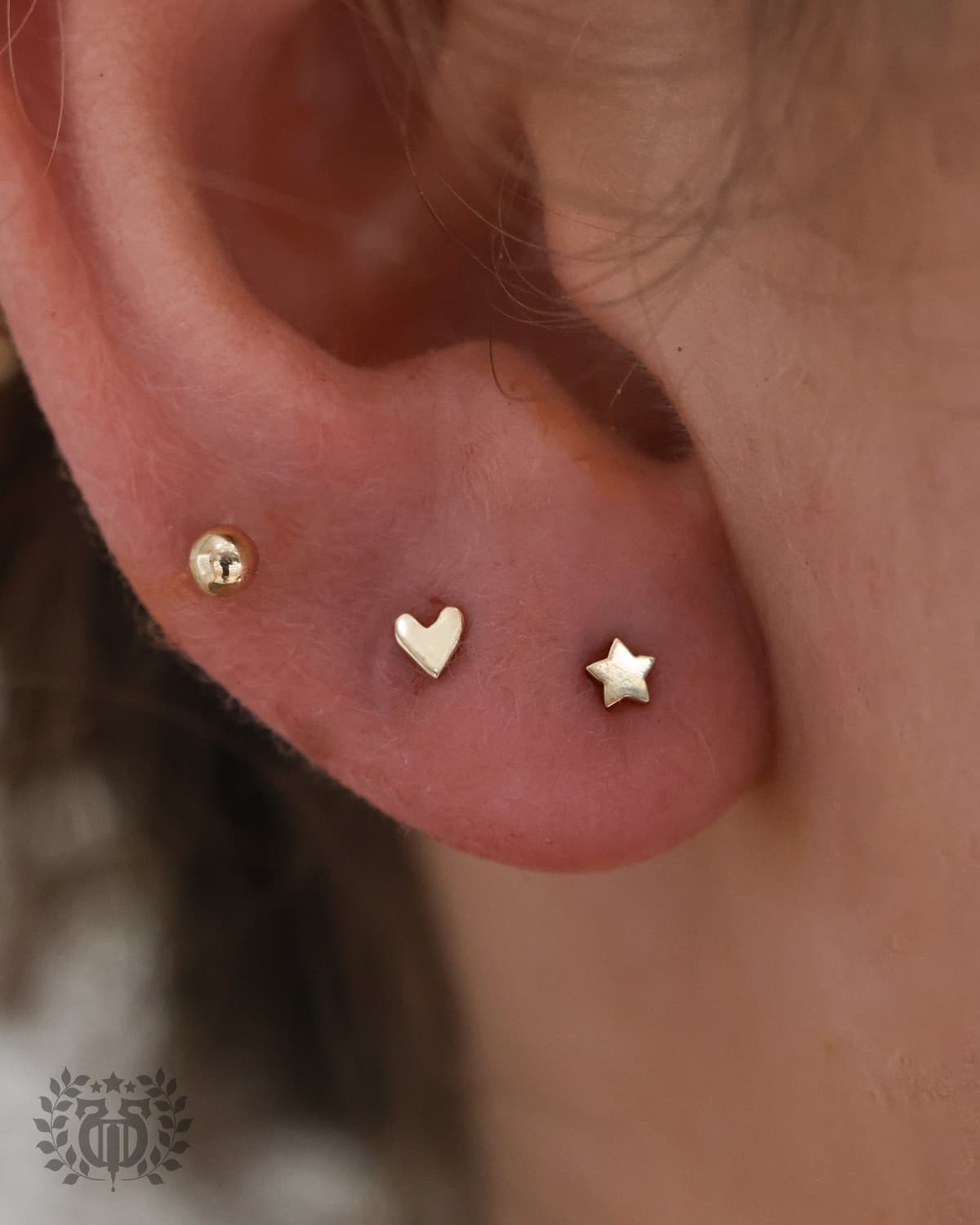
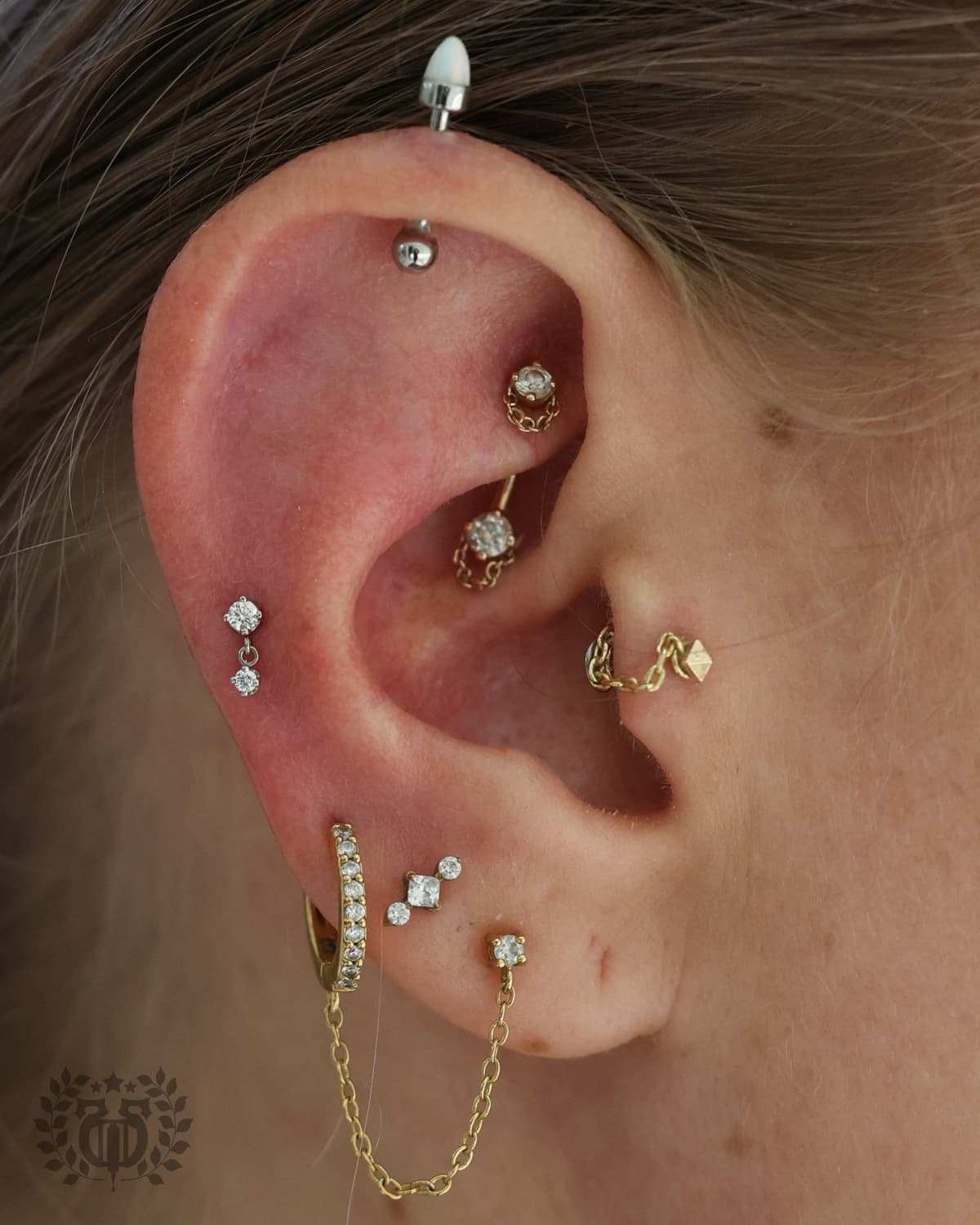
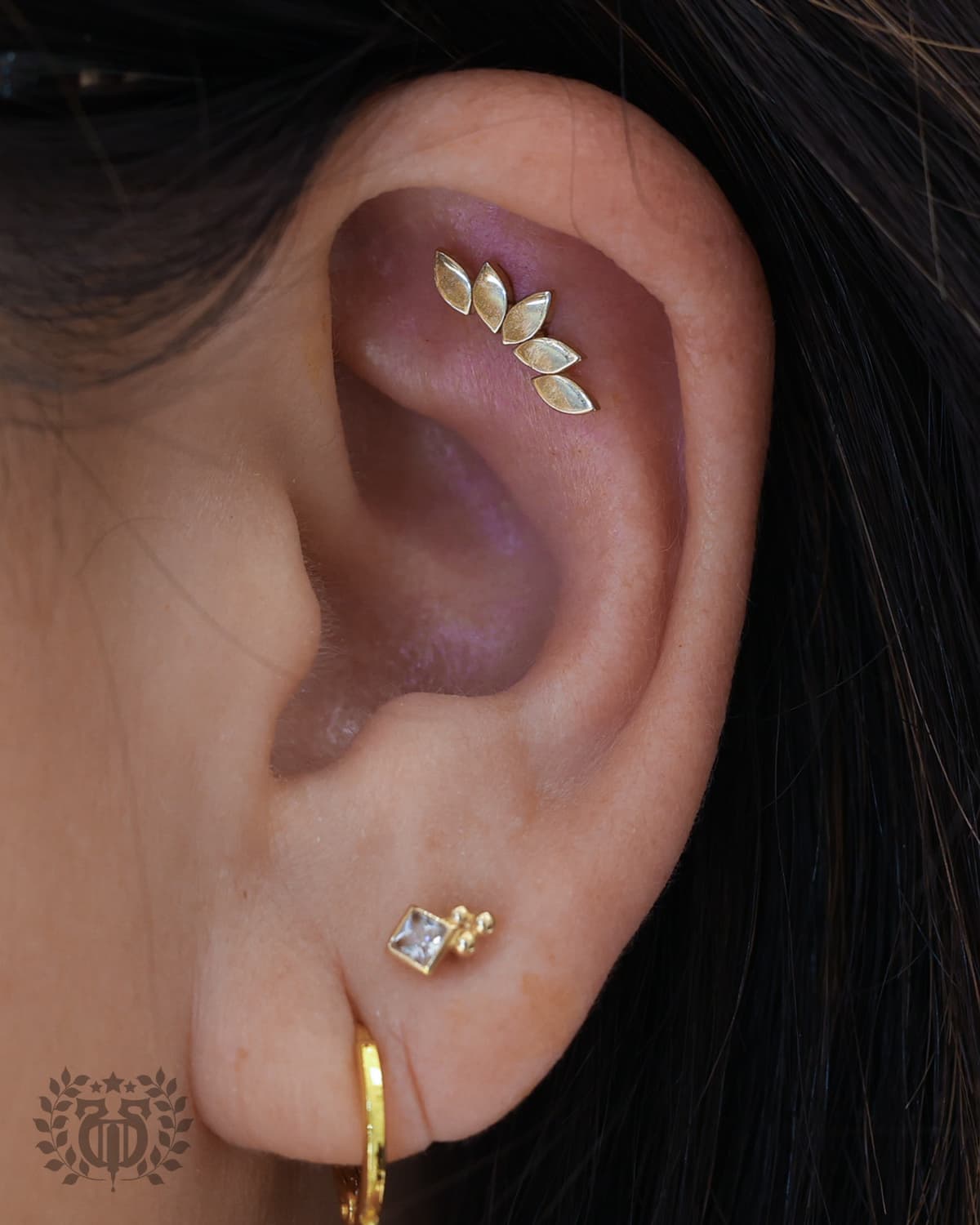
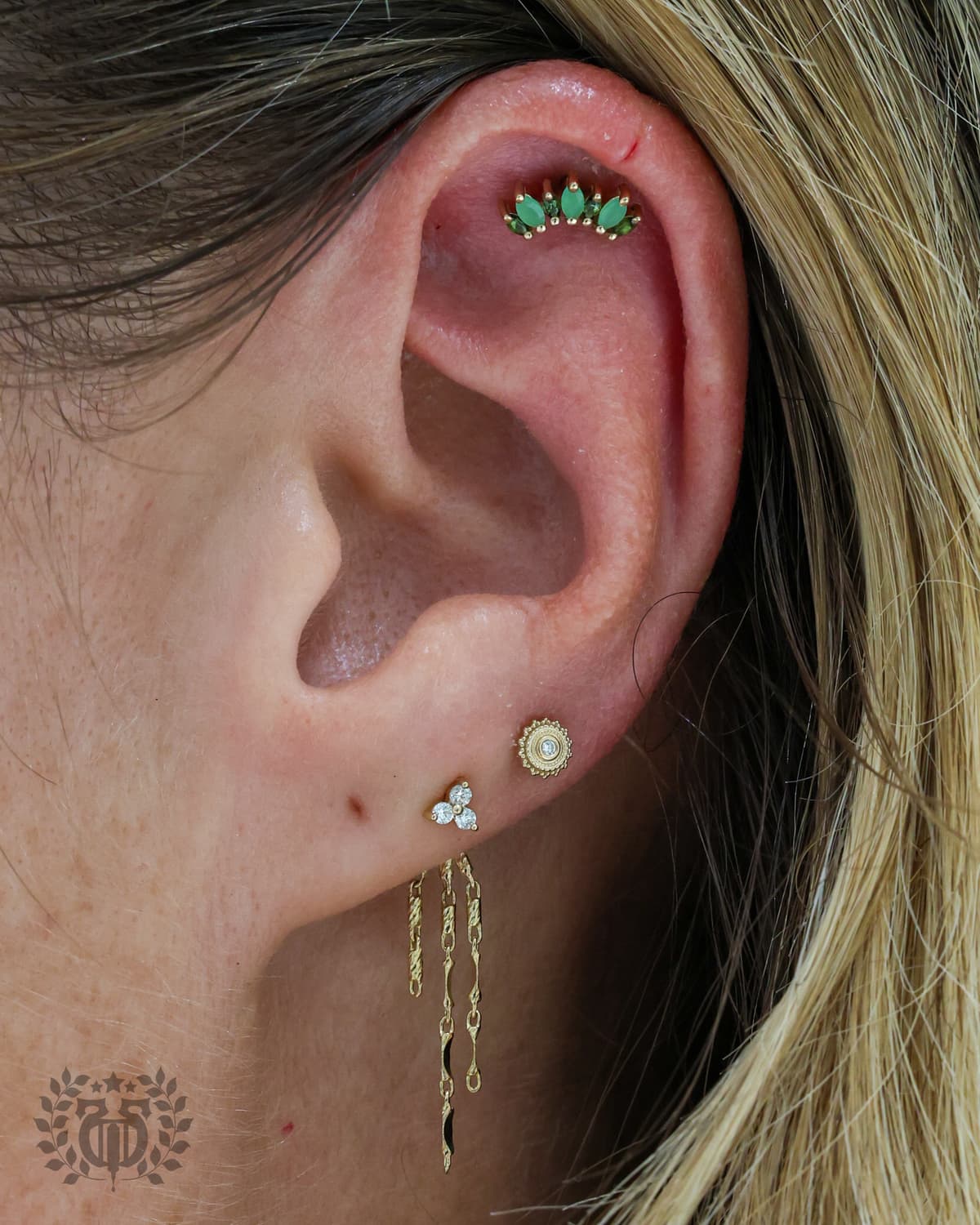
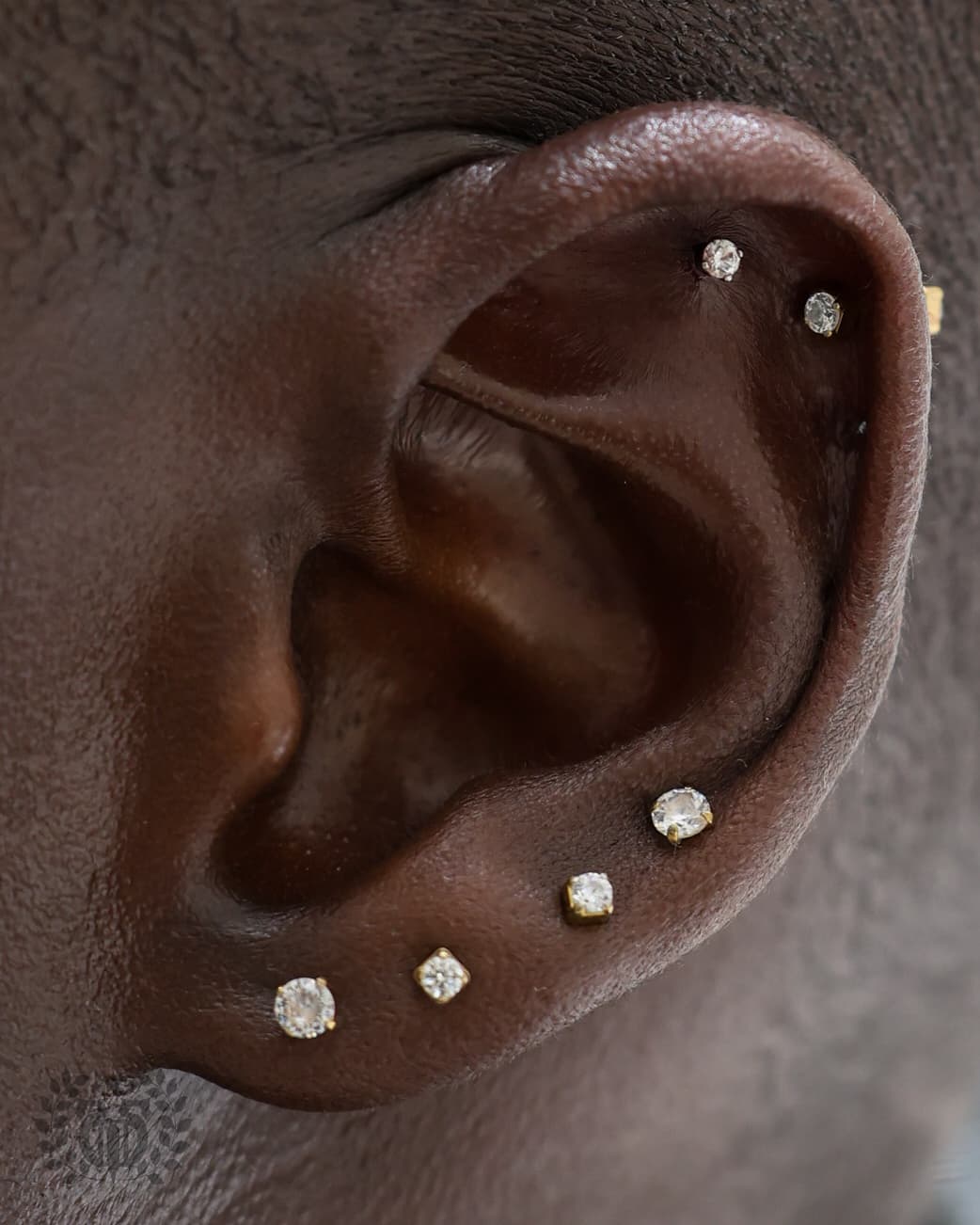
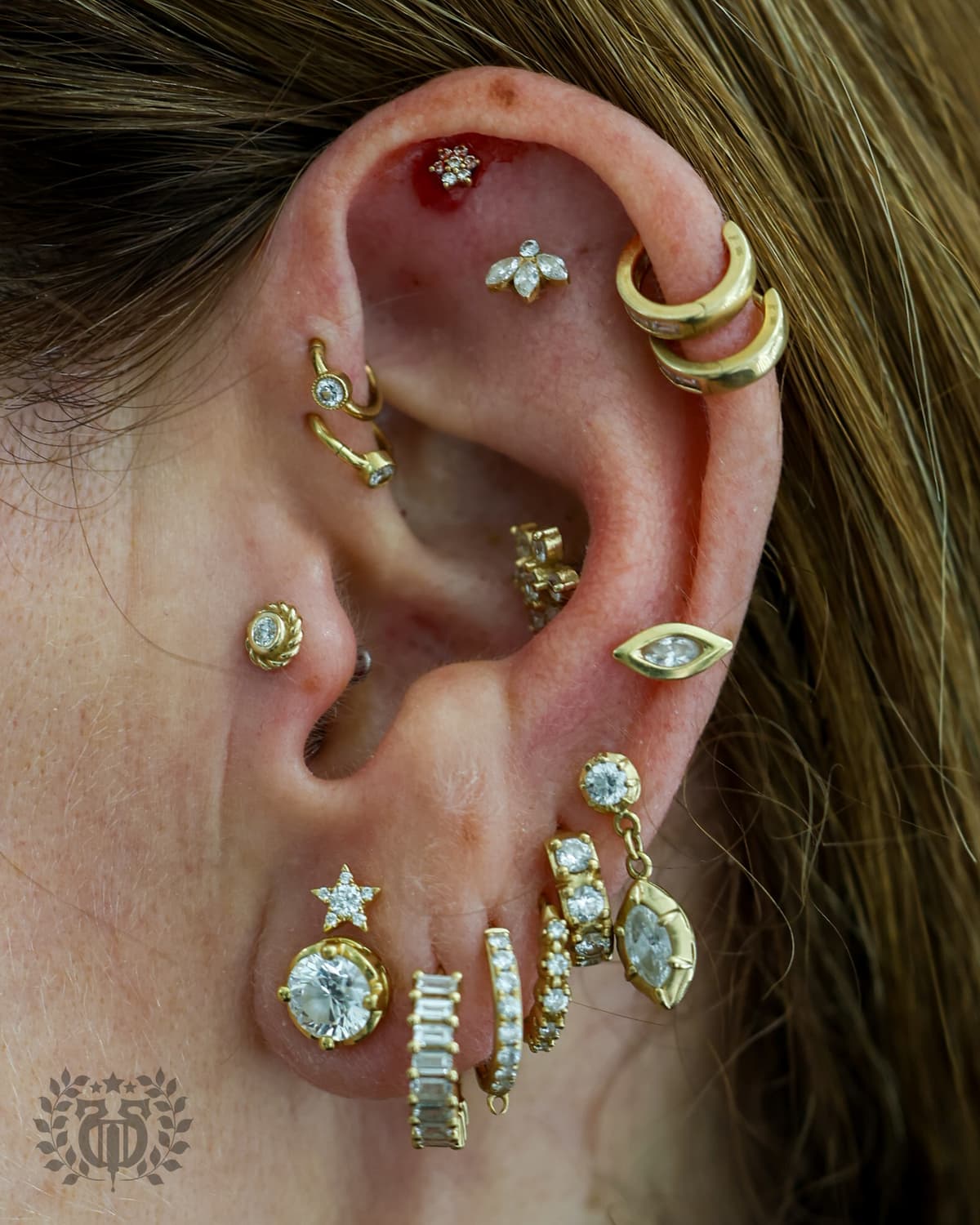
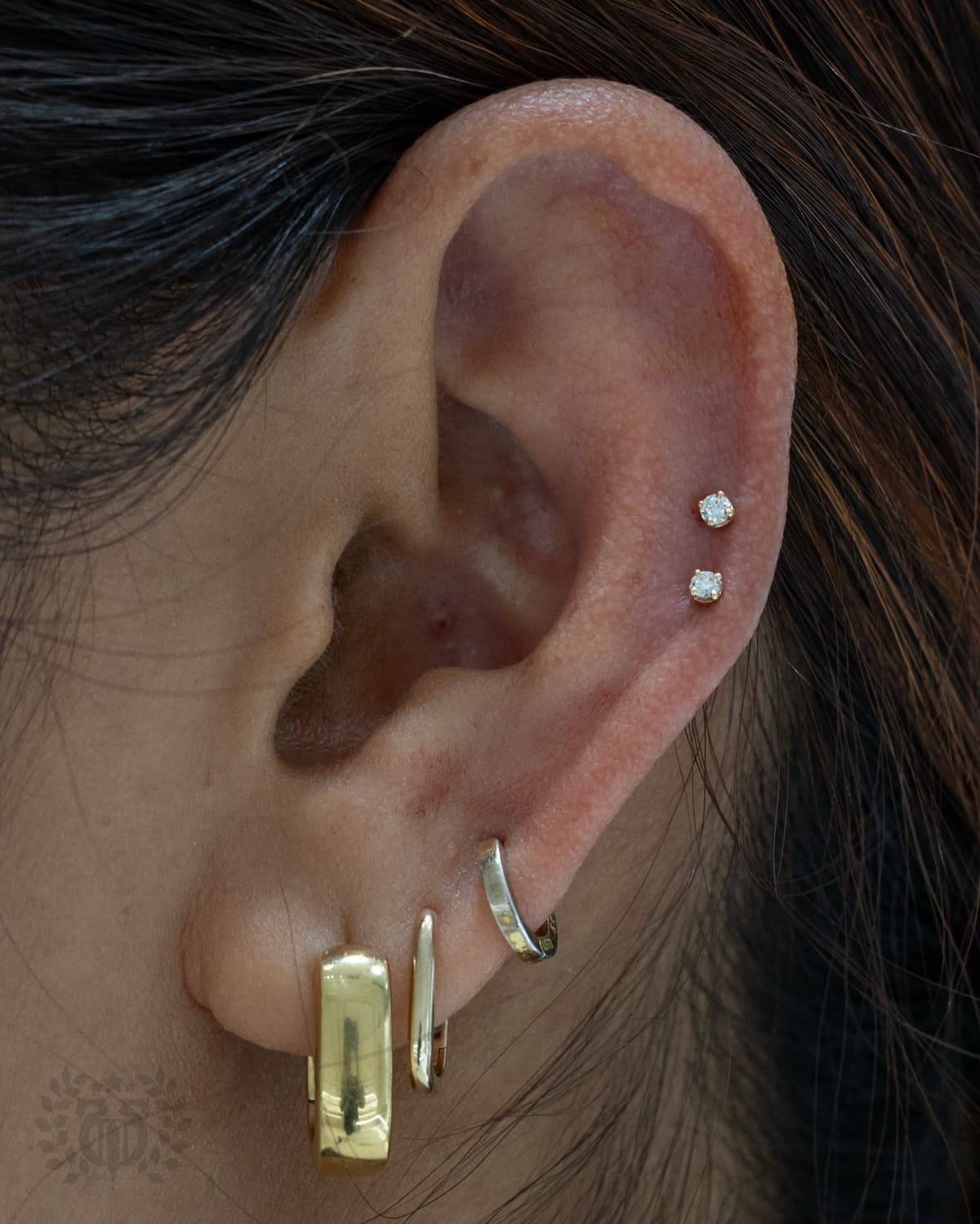
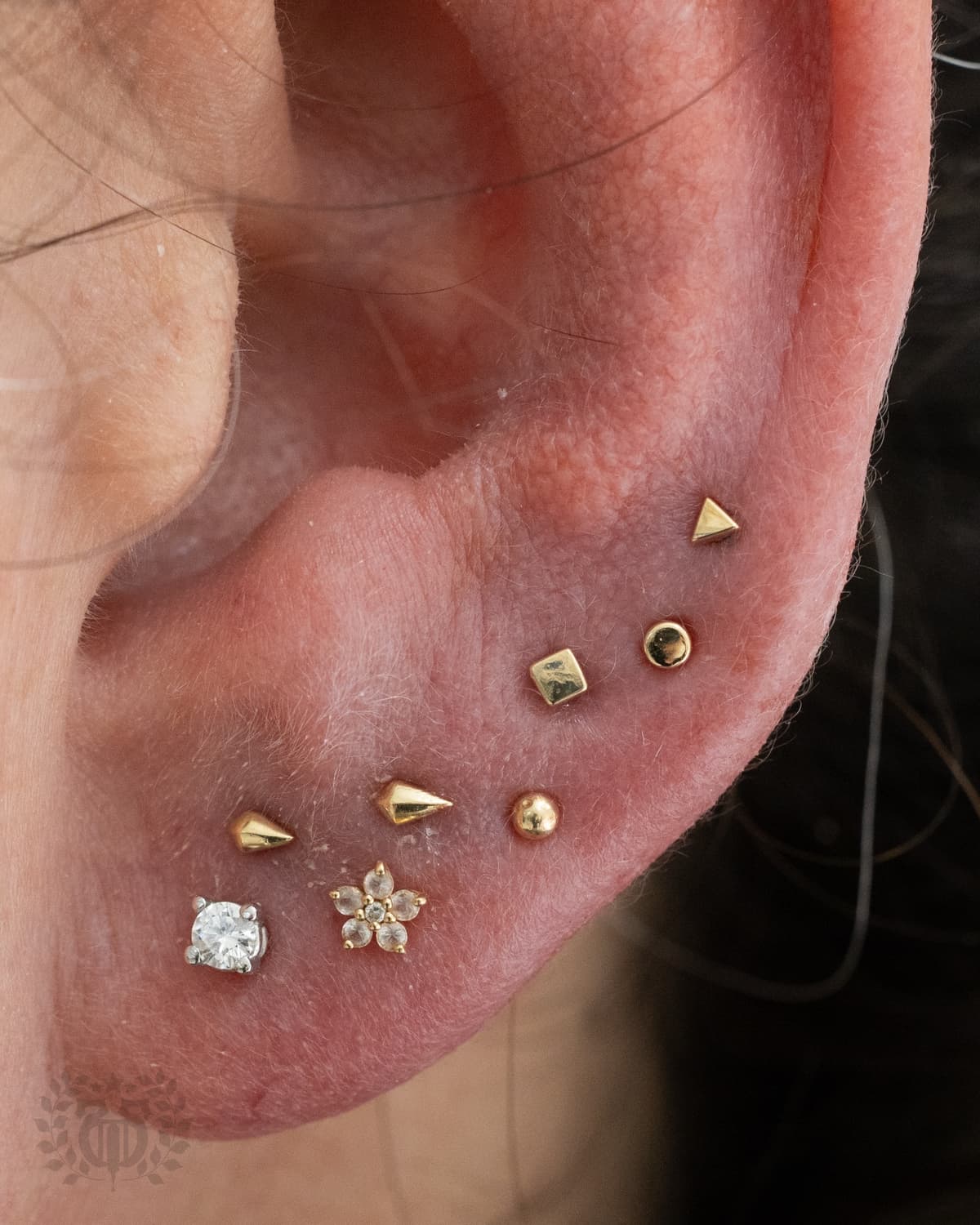
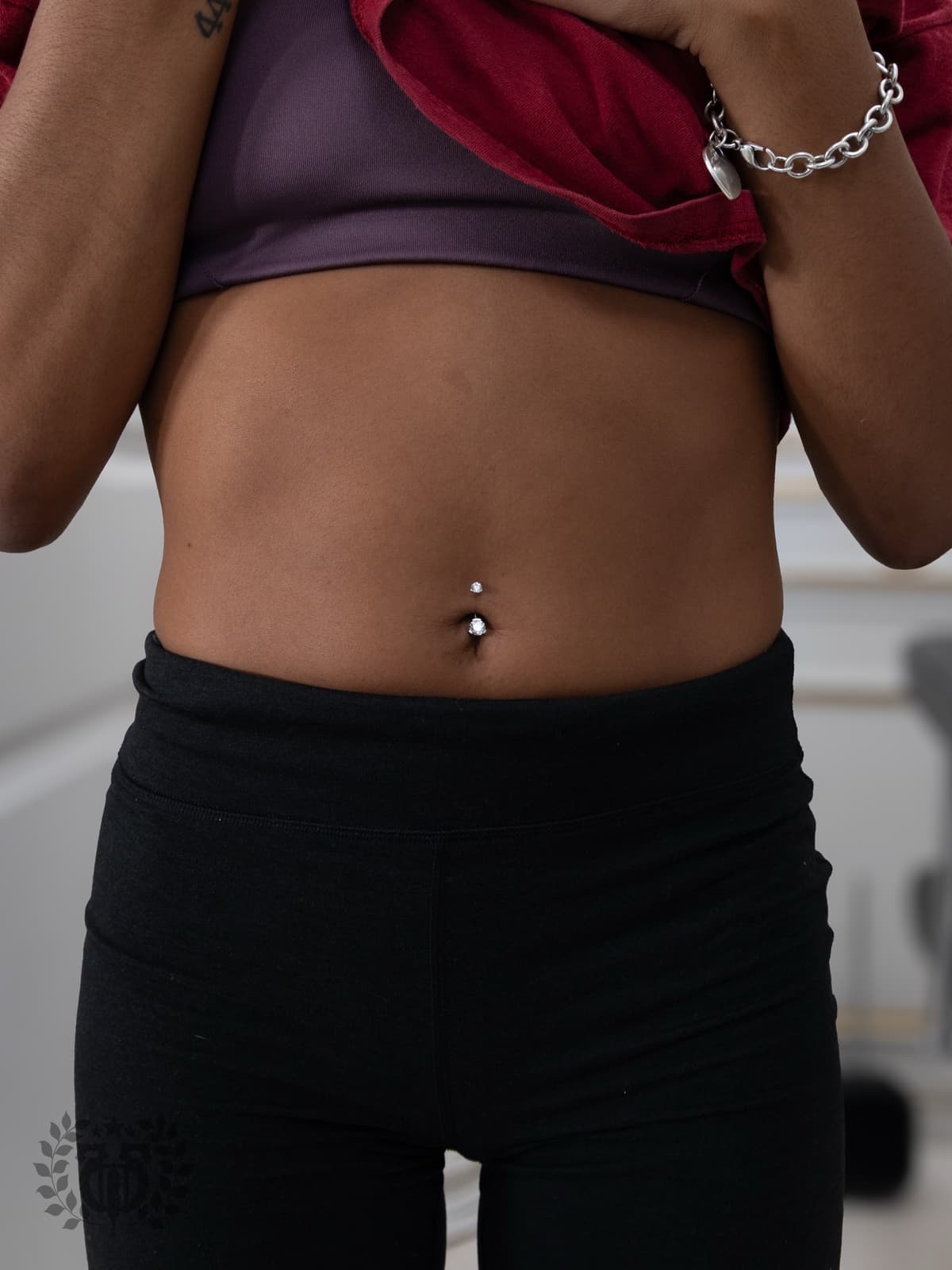

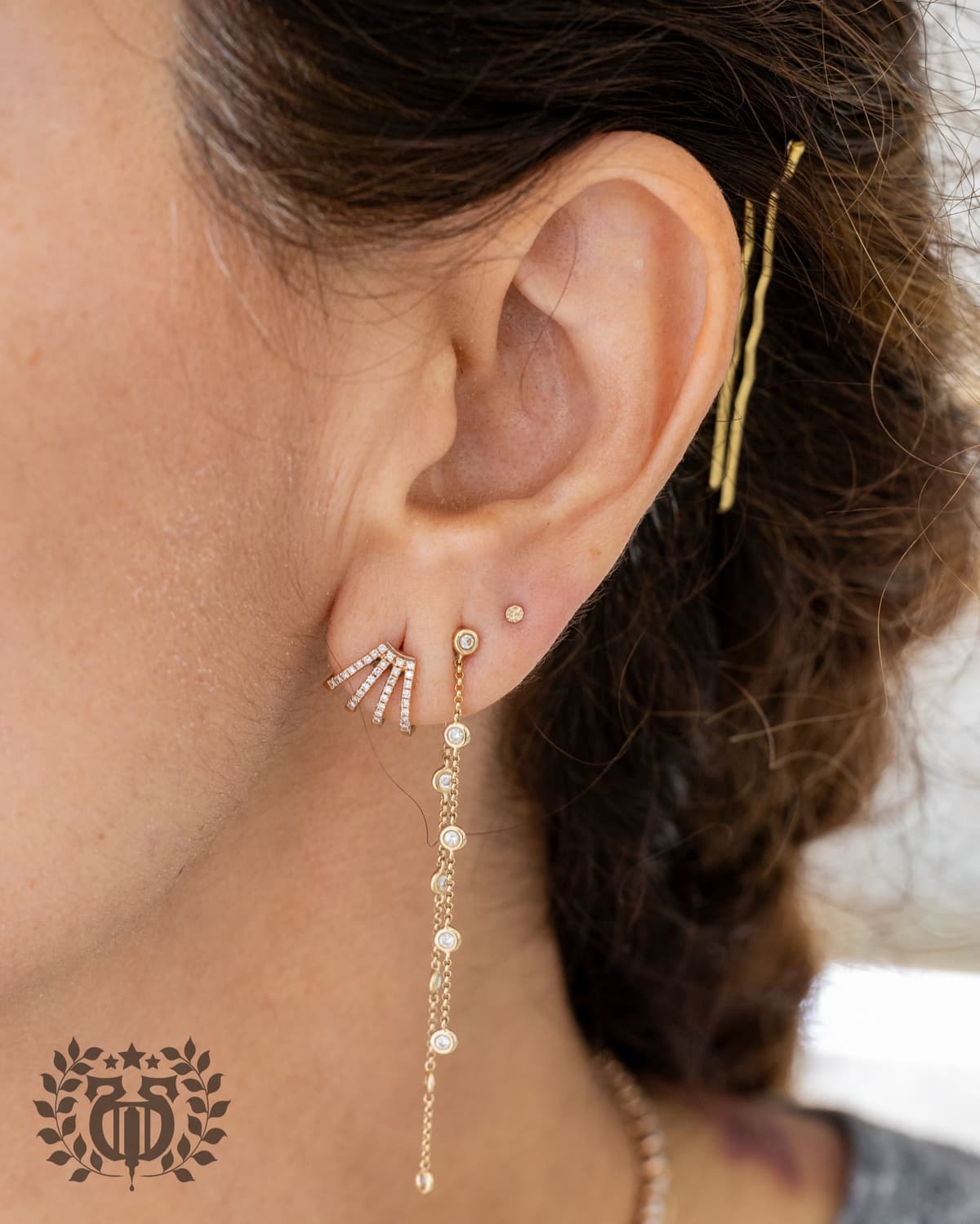
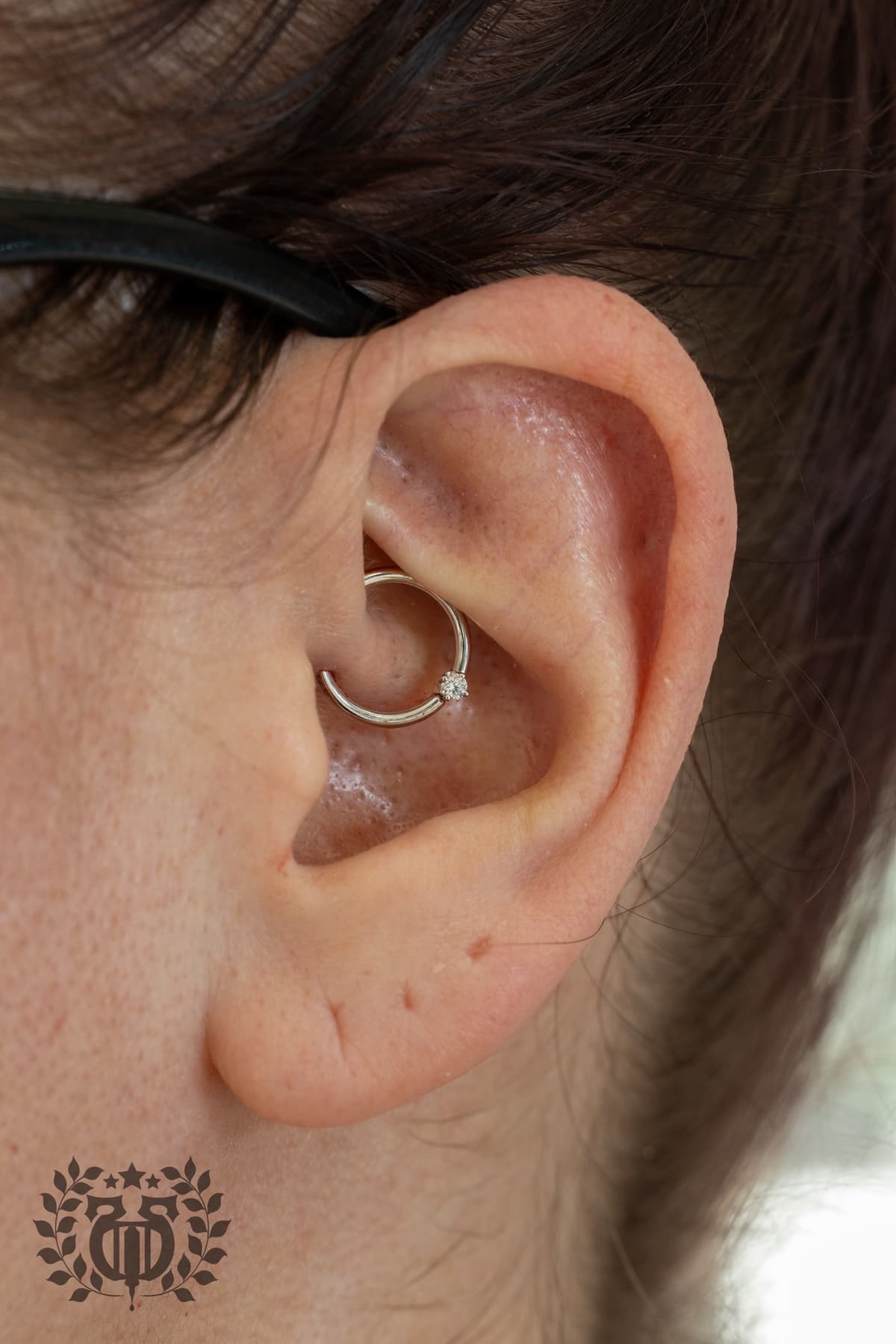
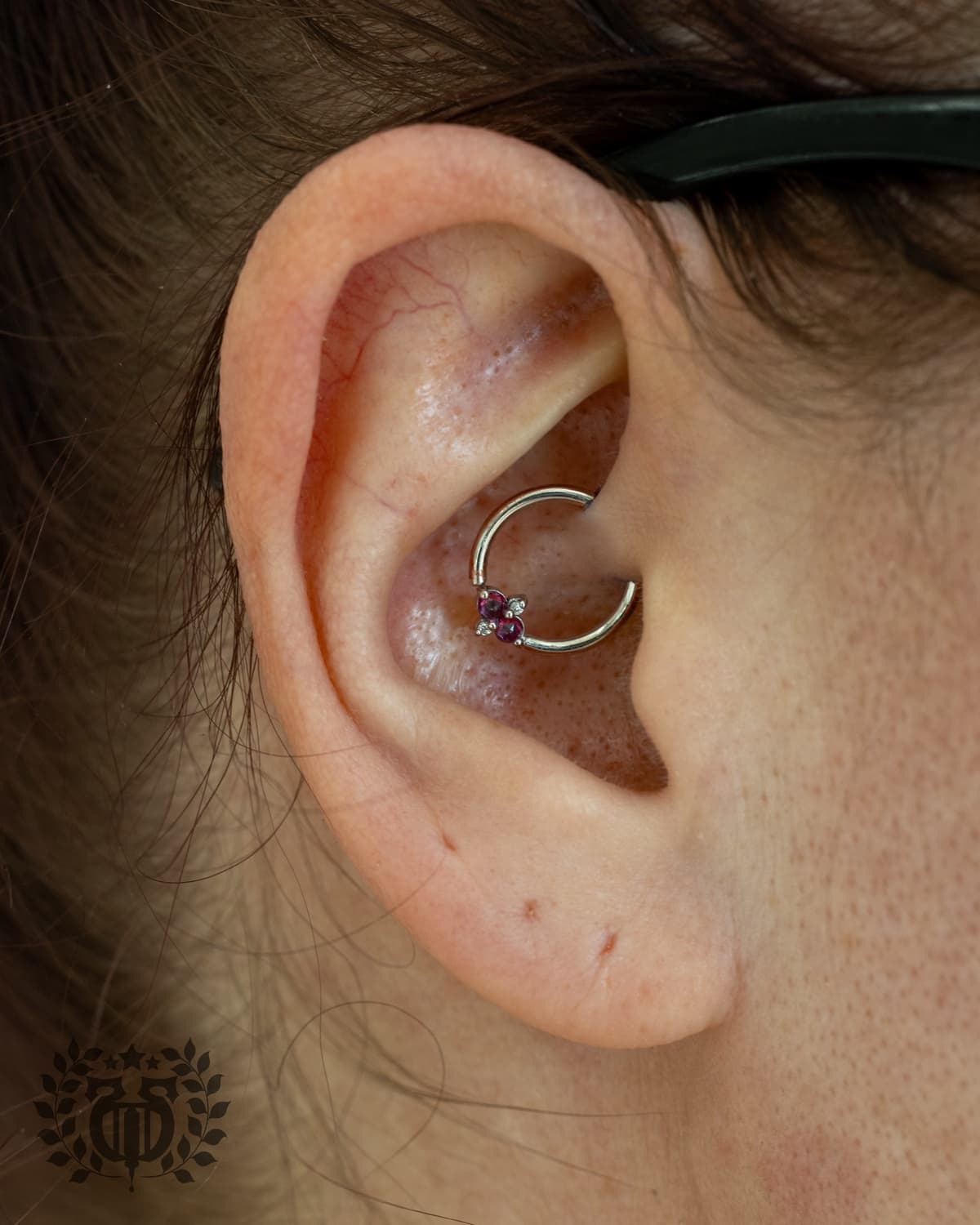
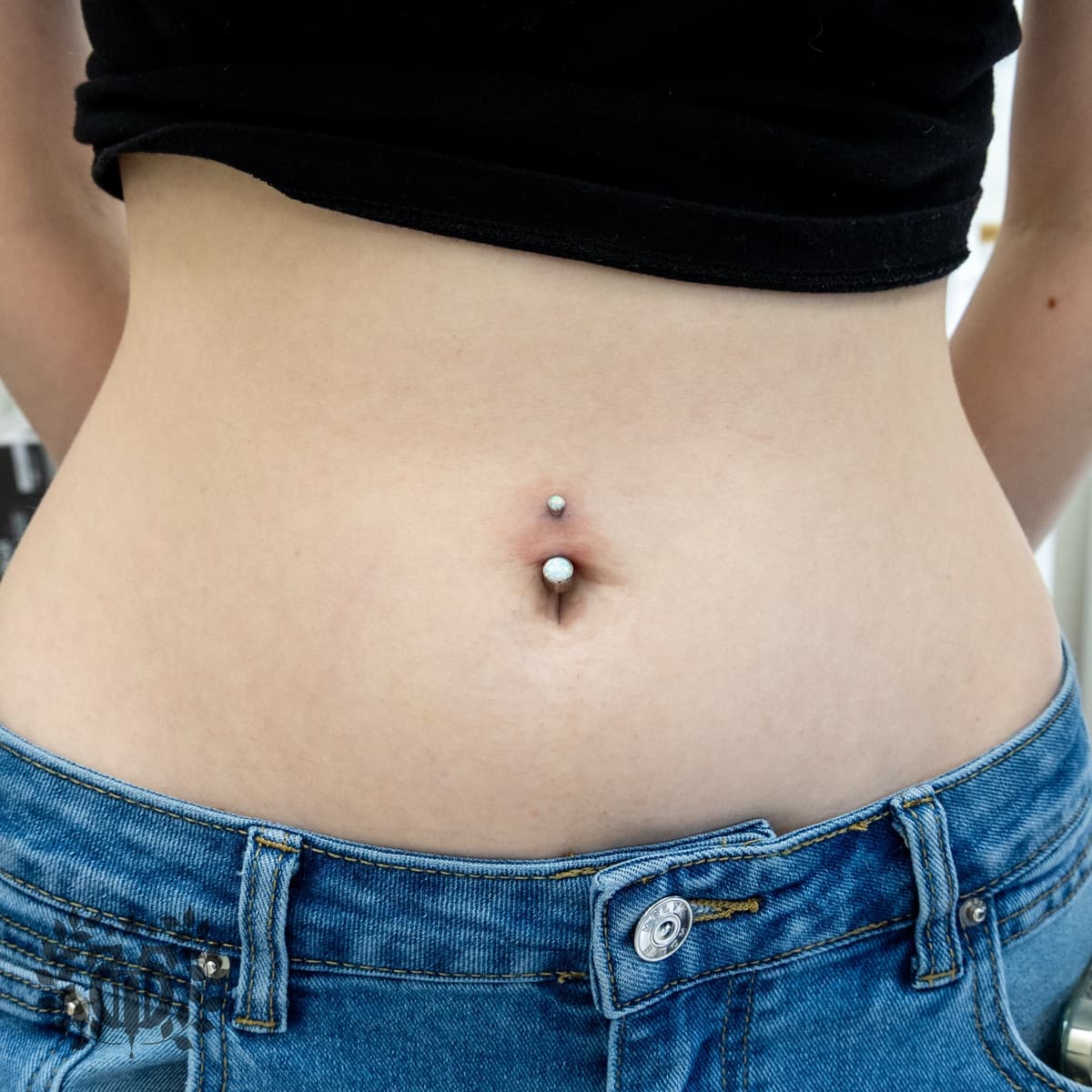
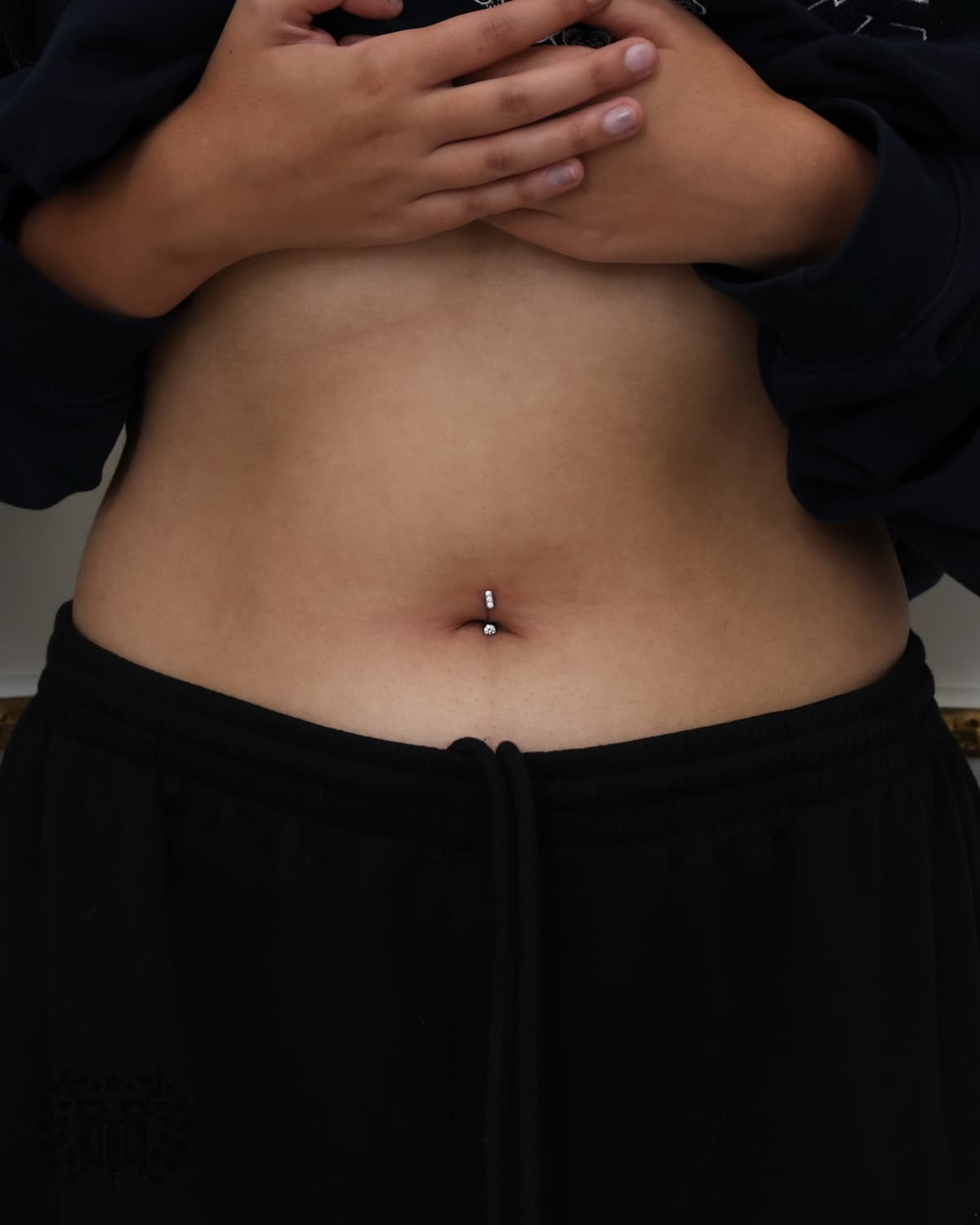

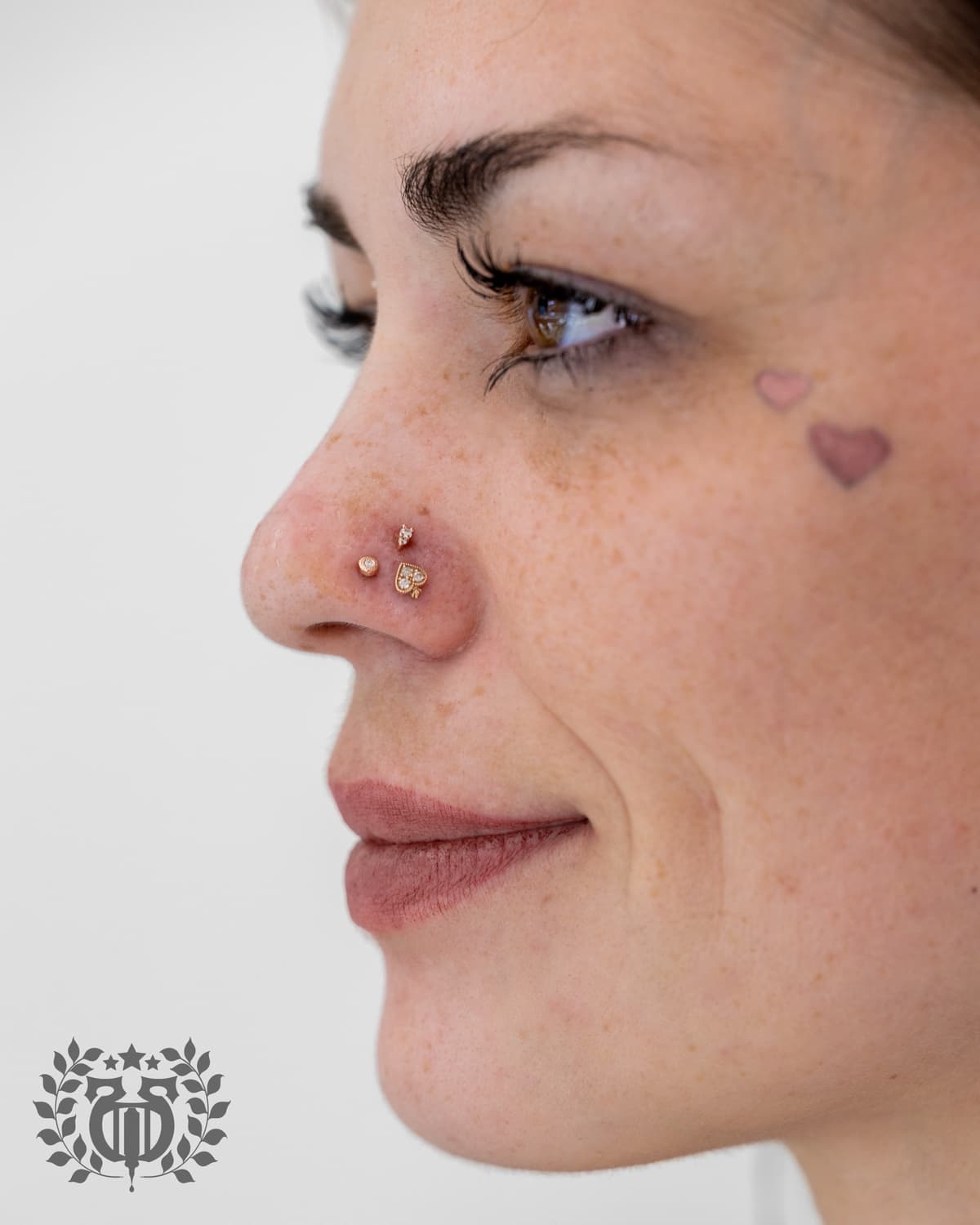
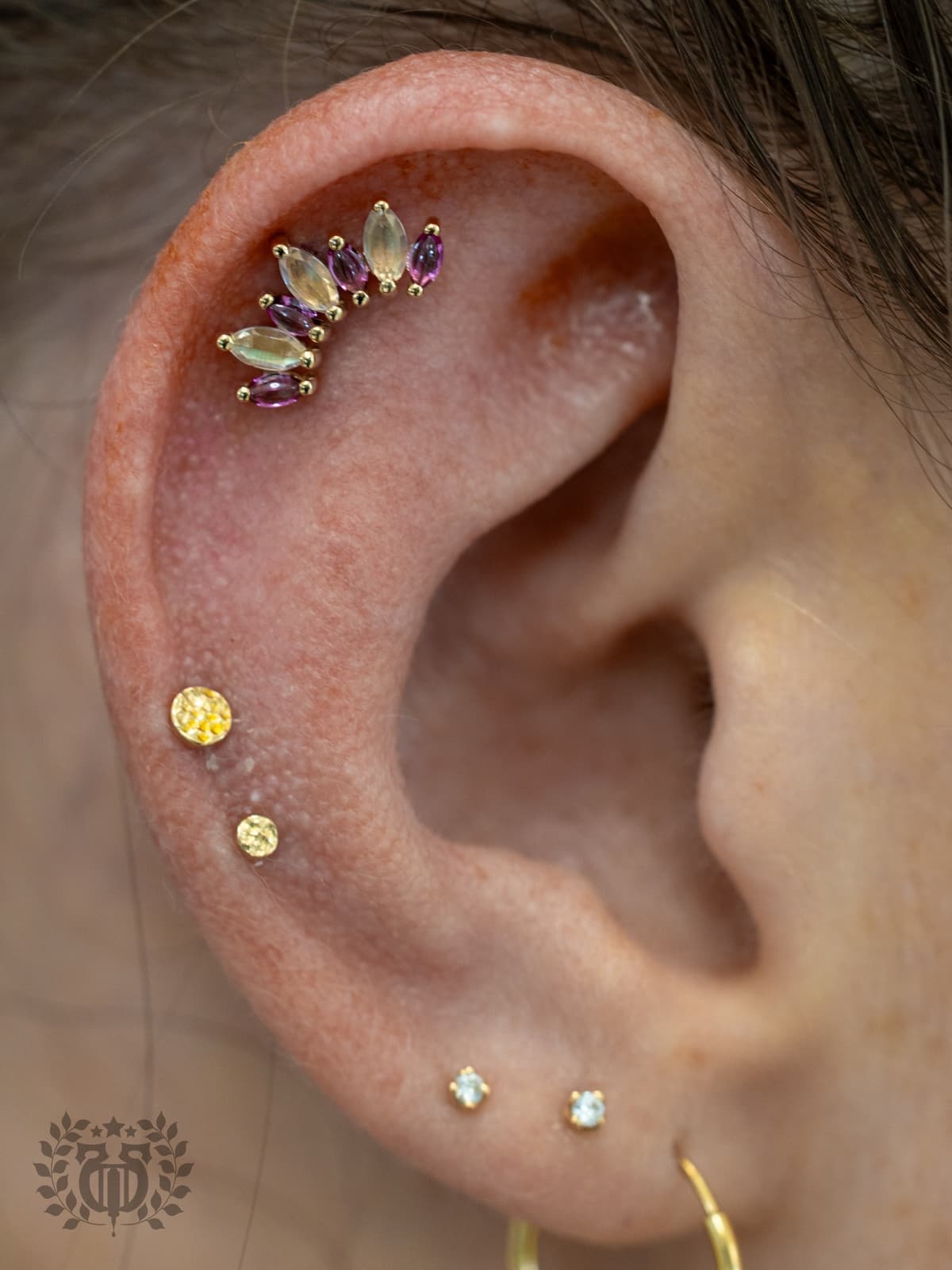
 Senior Piercer
Senior Piercer
Bunny Vogt has been a Senior Piercer here since 2019 and does most of the first-time lobes on children. She works at the child's pace rather than the clock's — jewelry chosen first, every step explained before it happens, and no pressure to go ahead if a kid isn't ready that day.
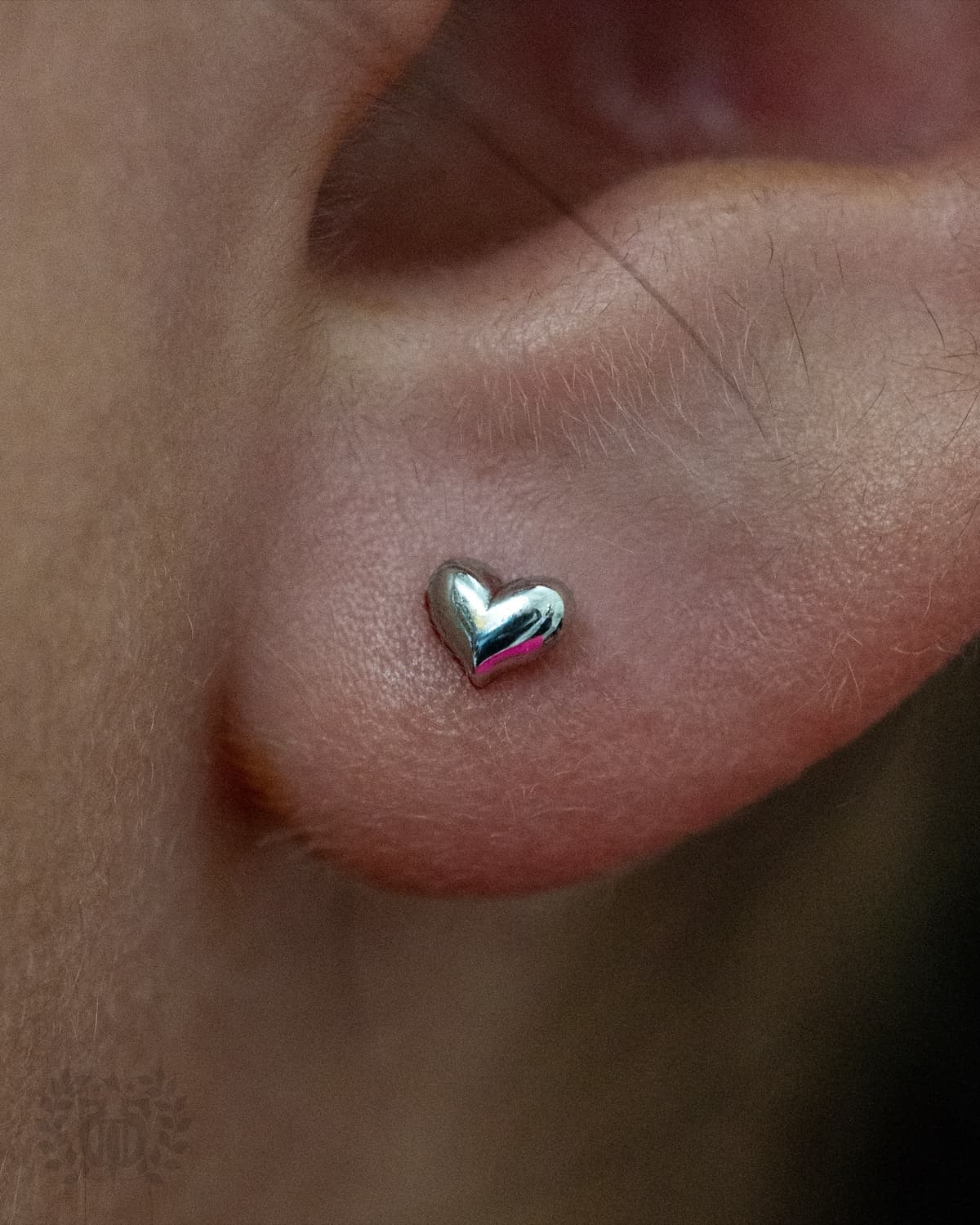
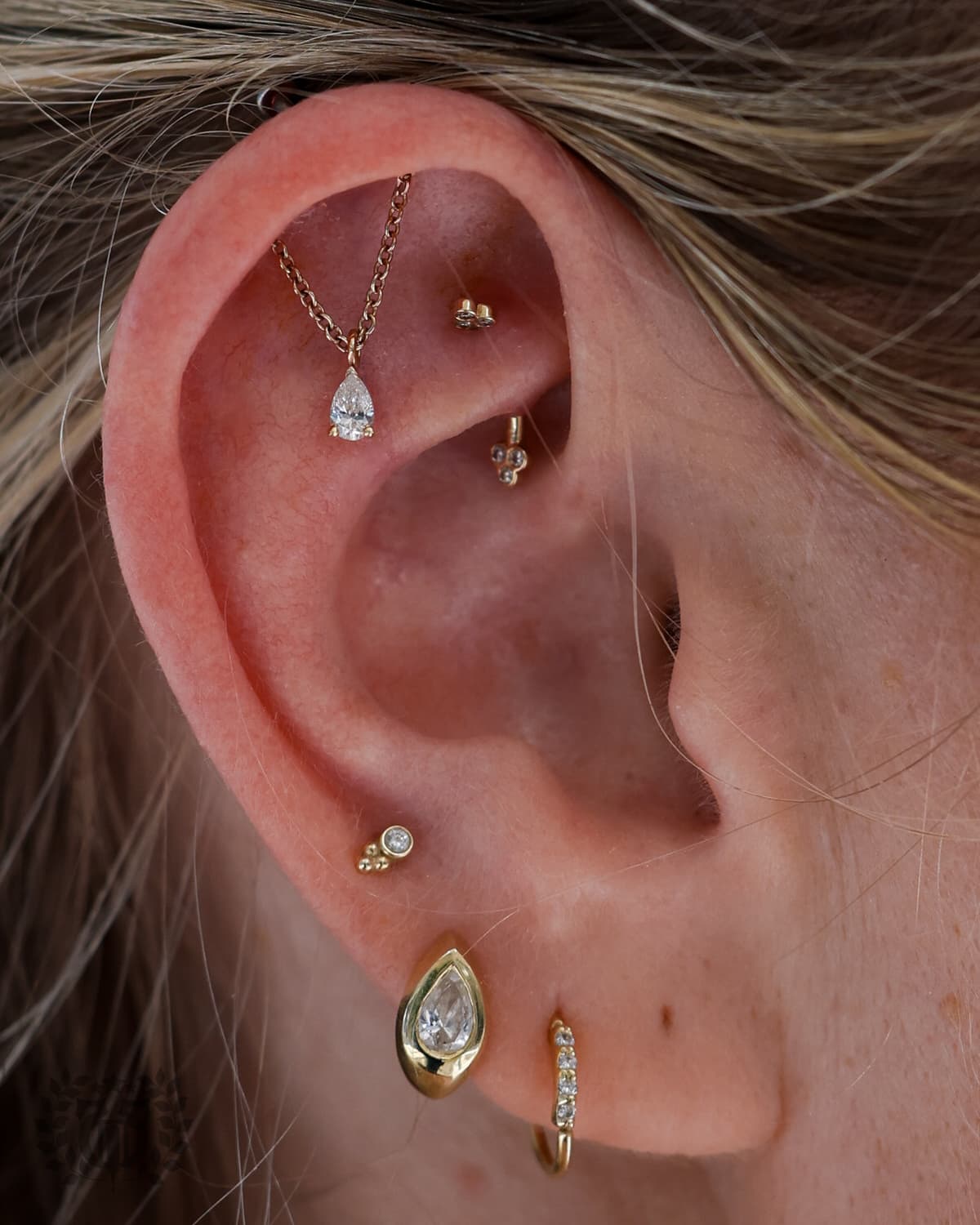
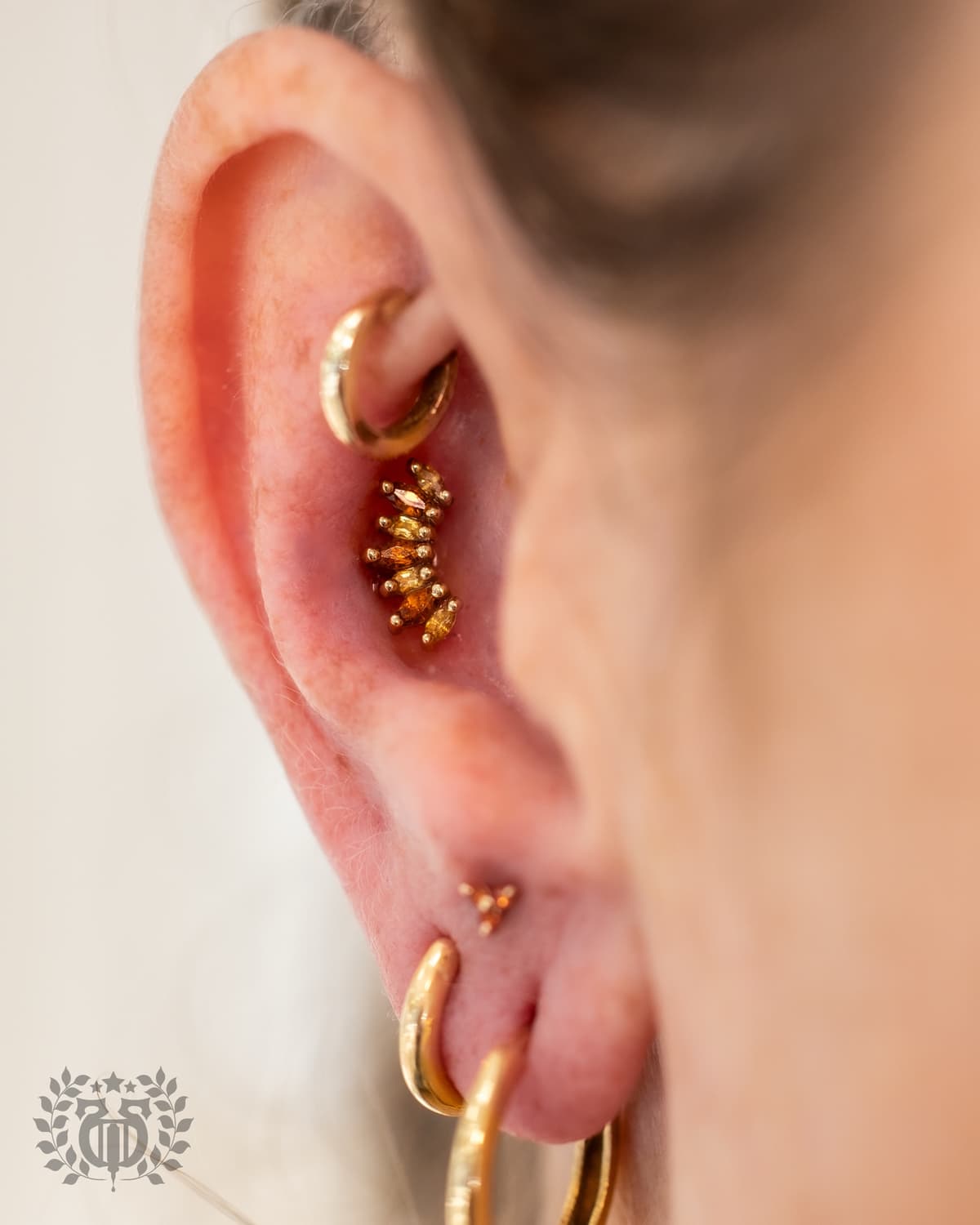
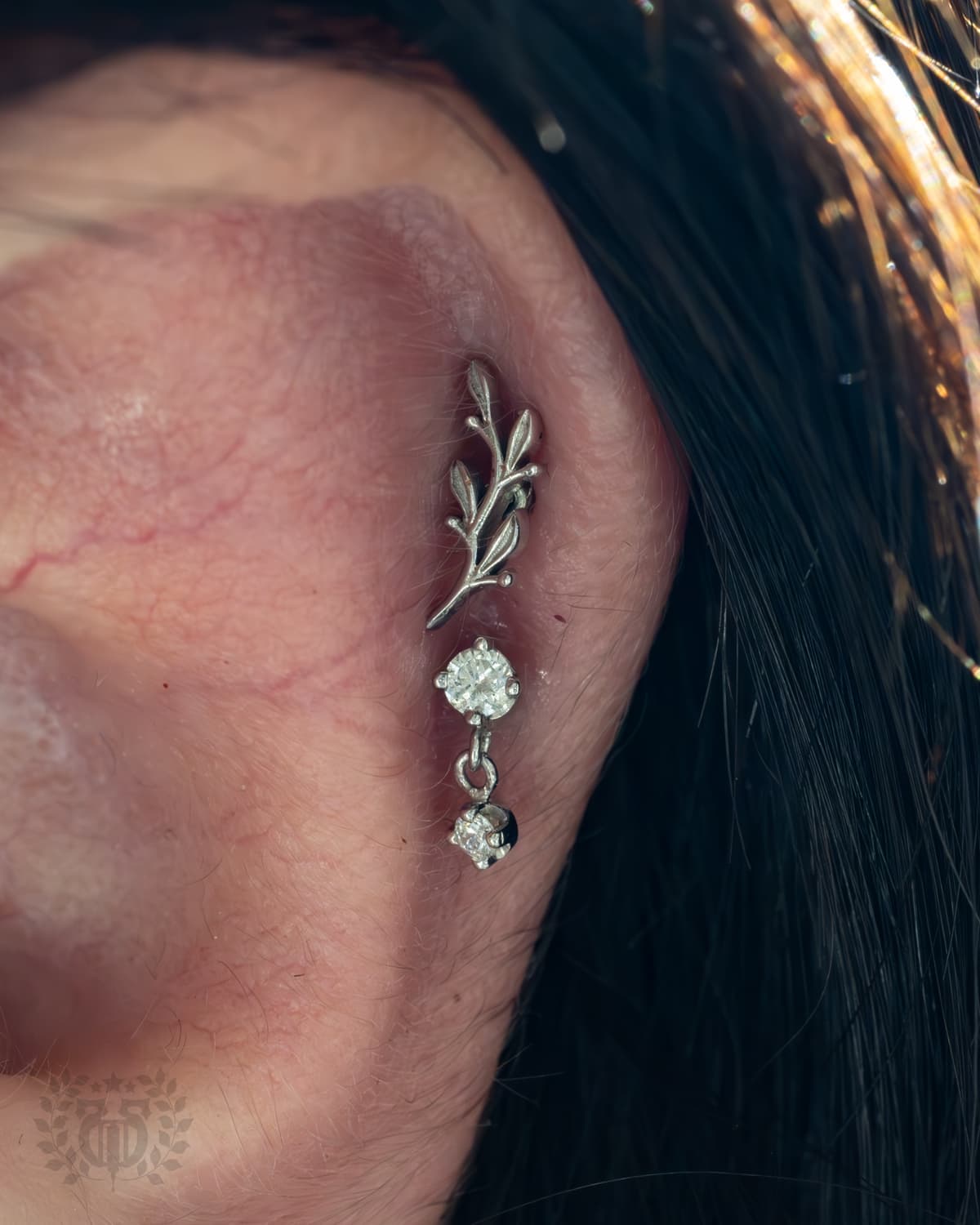
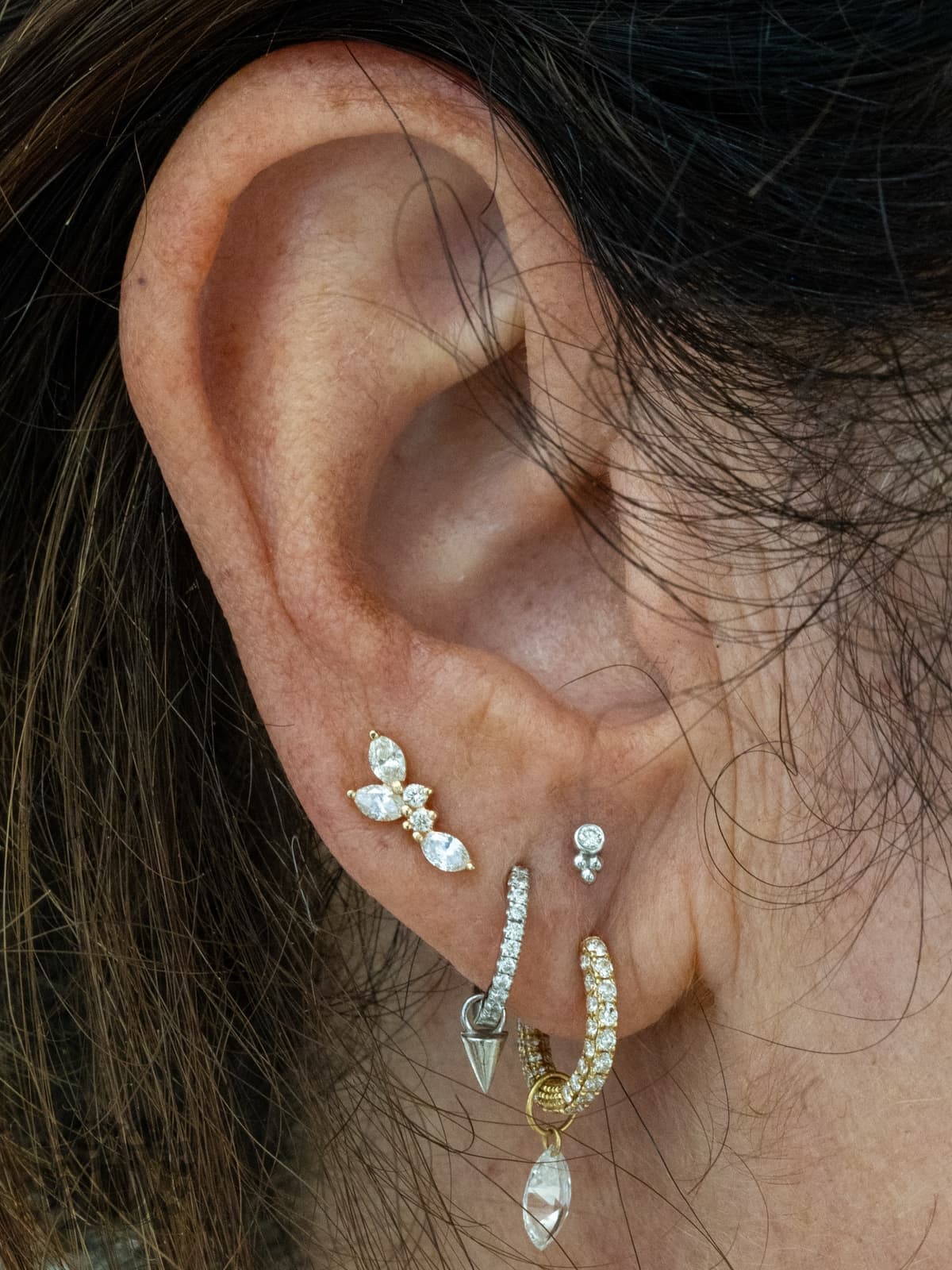
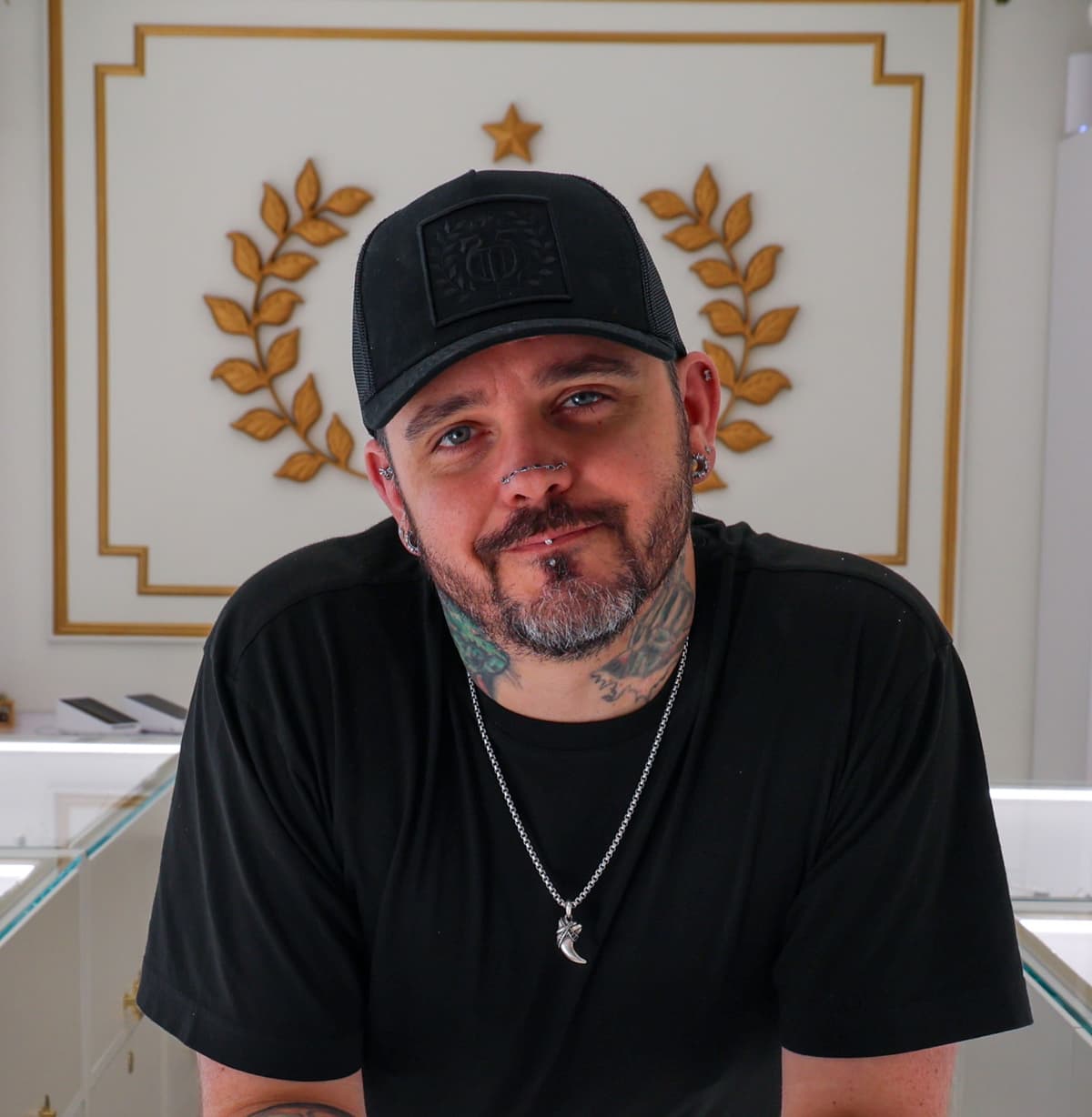 Founder
Master Piercer
Blue Mason, our Master Piercer and studio founder since 2004, combines technical mastery with artistic vision. His portfolio spans complex cartilage arrangements to advanced genital work, ensuring a premium experience for clients of all ages.
Usually about half an hour, most of which is your child getting comfortable rather than anything happening to them. Here's the order, so you can walk them through it in the car.
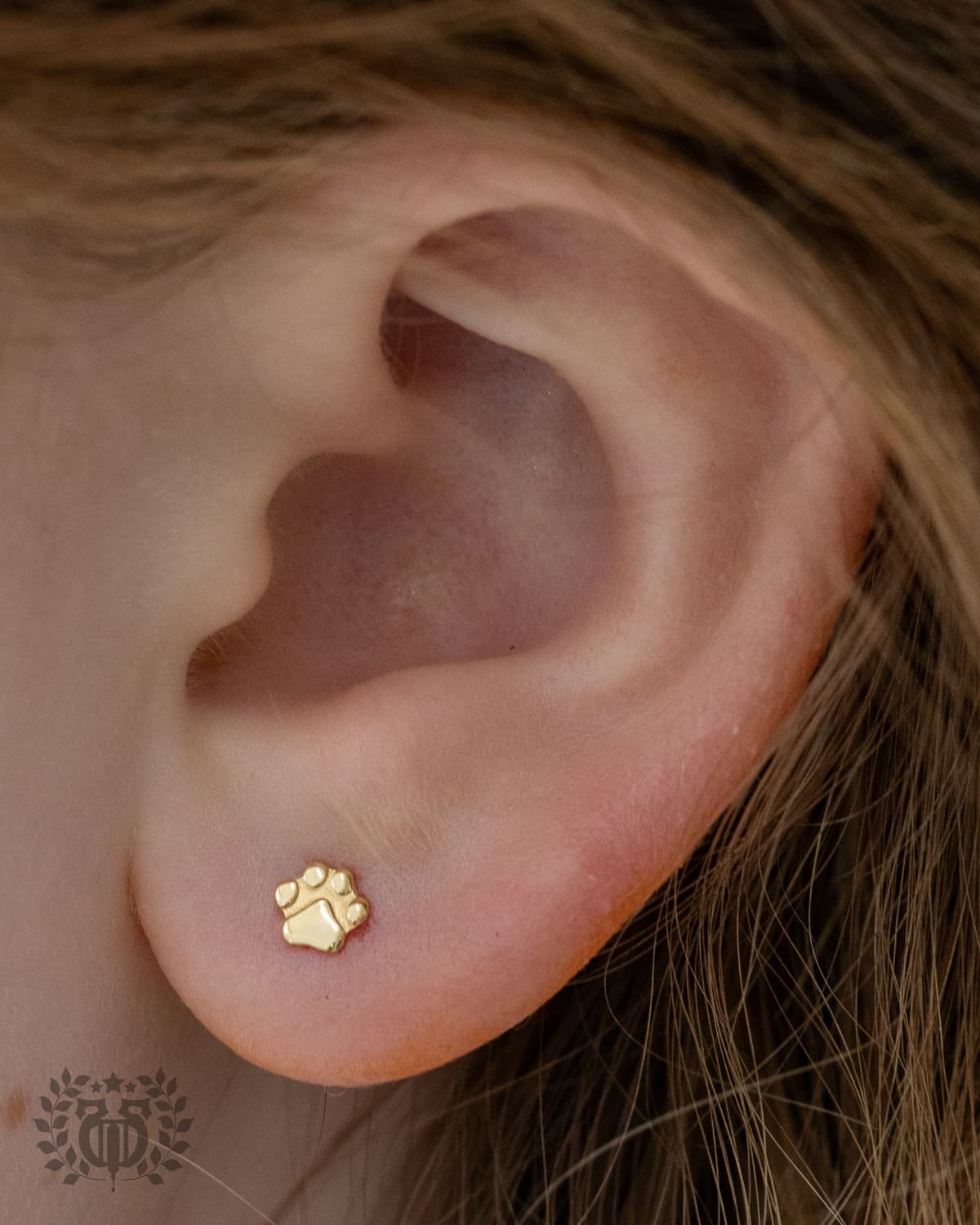
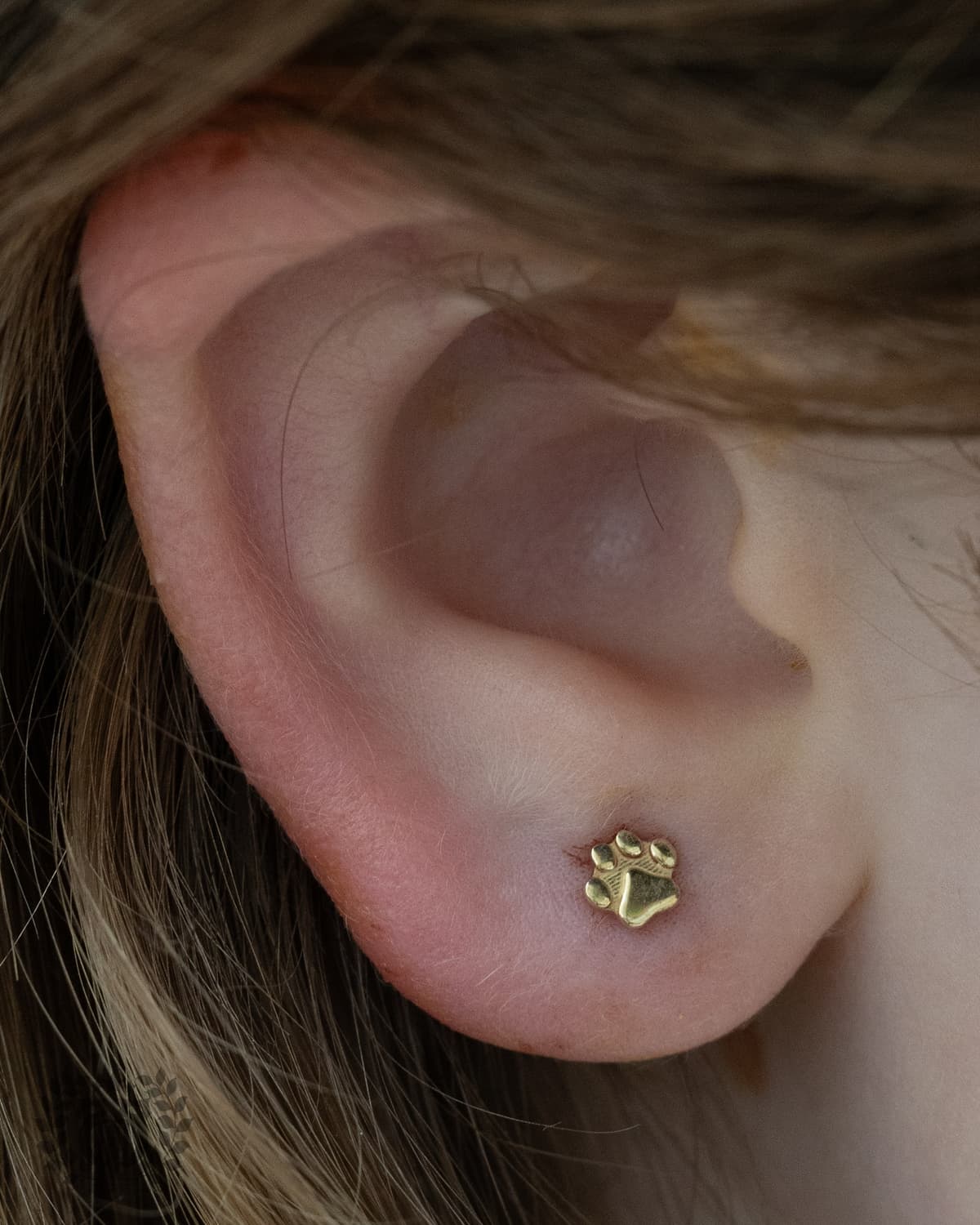
Sterile saline on the front and back of each lobe, morning and evening, then dry and leave it alone. Nothing else goes on it — no ointment, no alcohol, no peroxide, no tea tree oil. And nobody turns the earring, whatever a well-meaning relative tells you. There is nothing to unstick and rotating a stud tears the lining that's forming.
Tie long hair back for the first weeks. Check helmet and headguard straps. Watch out for over-ear headphones, which sit exactly on a healing lobe. Showers from day one, pools and the ocean after a few weeks.
You leave with written instructions and a guide by email, and you're welcome to walk back in at any point during healing to have someone look at an ear you're unsure about. We'd rather see it at week two than hear about it at week eight.
Book AppointmentSaline twice a day, front and back, and then hands off. A little pinkness and a dry crust at the front of the stud is ordinary. Hair tied back. No sleeping face-planted on one side if you can steer them. And nobody twists the earring, however confidently a relative suggests it.
The outside closes up and your child will start asking about new earrings. Not yet — the channel inside is still thin. Keep the saline going, keep hair off it, still no pools or ocean. This is also when the routine gets skipped because everything seems fine, so keep asking at bedtime.
Lobes generally settle in six to eight weeks and keep firming up for a few months. Bring them in for the first change rather than doing it at home — we look at the piercing while they're here, and choosing the second pair is usually a bigger occasion for a child than the piercing itself was.
We take walk-ins seven days a week and we'll happily fit a child in. But a nervous kid sitting in a lobby watching other people go in ahead of them gets more nervous with every minute, not less. Booking means you arrive, sit down and begin — and it means both piercers can be free if you want both lobes done at the same moment.
Verbatim reviews from Apollo's Google Business Profile
"My daughter wanted to get (another) pericing done on her ear. Her normal spot in BH was closed, and we searched and found Apollo. Really happy we did. Bunny is excellent with customers. Very informative, professional, great communicator. Put this nervous dad at ease and made my daughter comfortable as well. Sure, you can find places that are cheaper, but you get what you pay for."
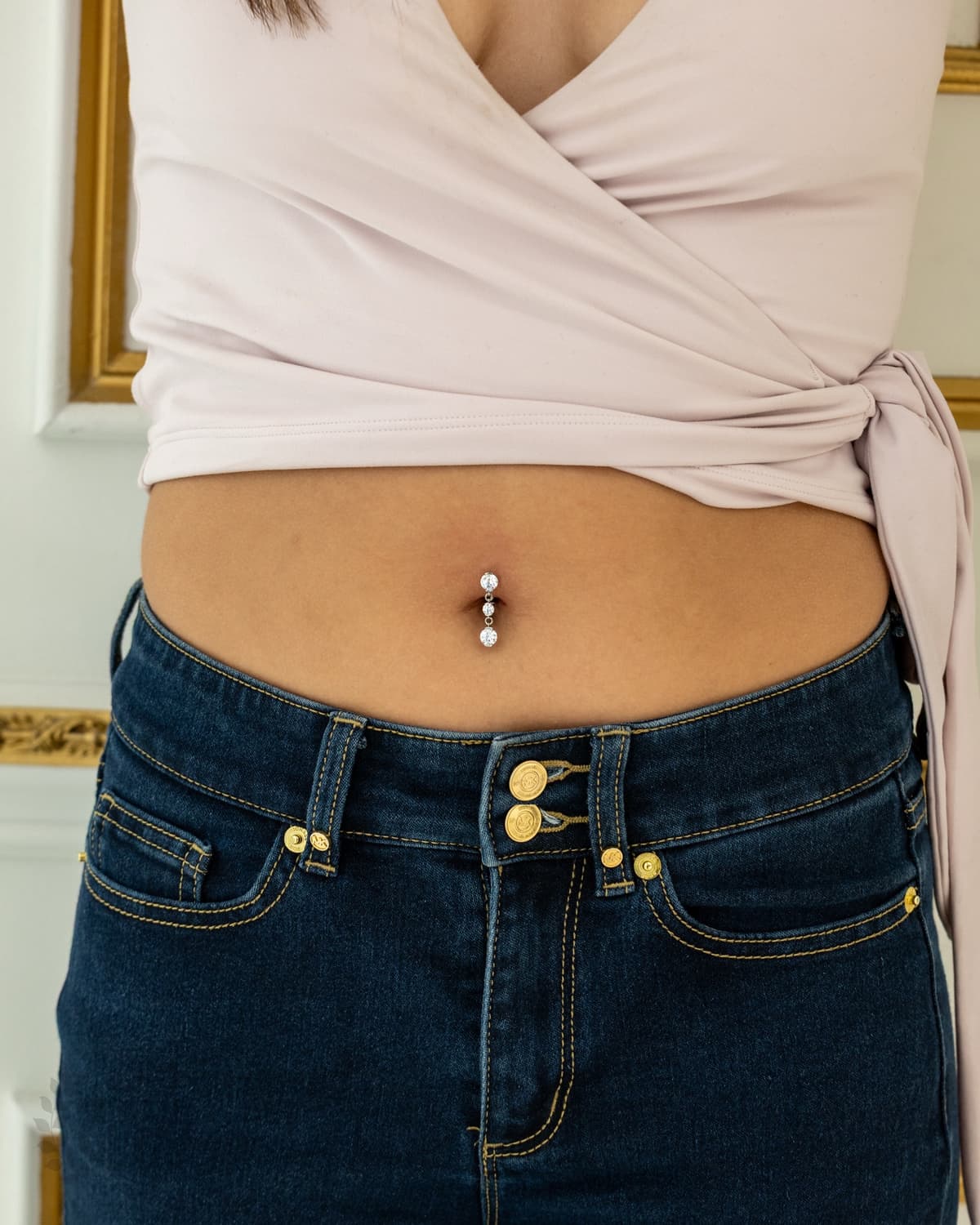
"The professionalism and expertise of the staff at Apollo Tattoo surpassed our expectation. Lesley helped my daughter assess and address the issues she had with her navel piercing. We needed to change the jewelry as it was not medical grade. Highly recommend this establishment."
Reviews from Google · Read all 623 on Google
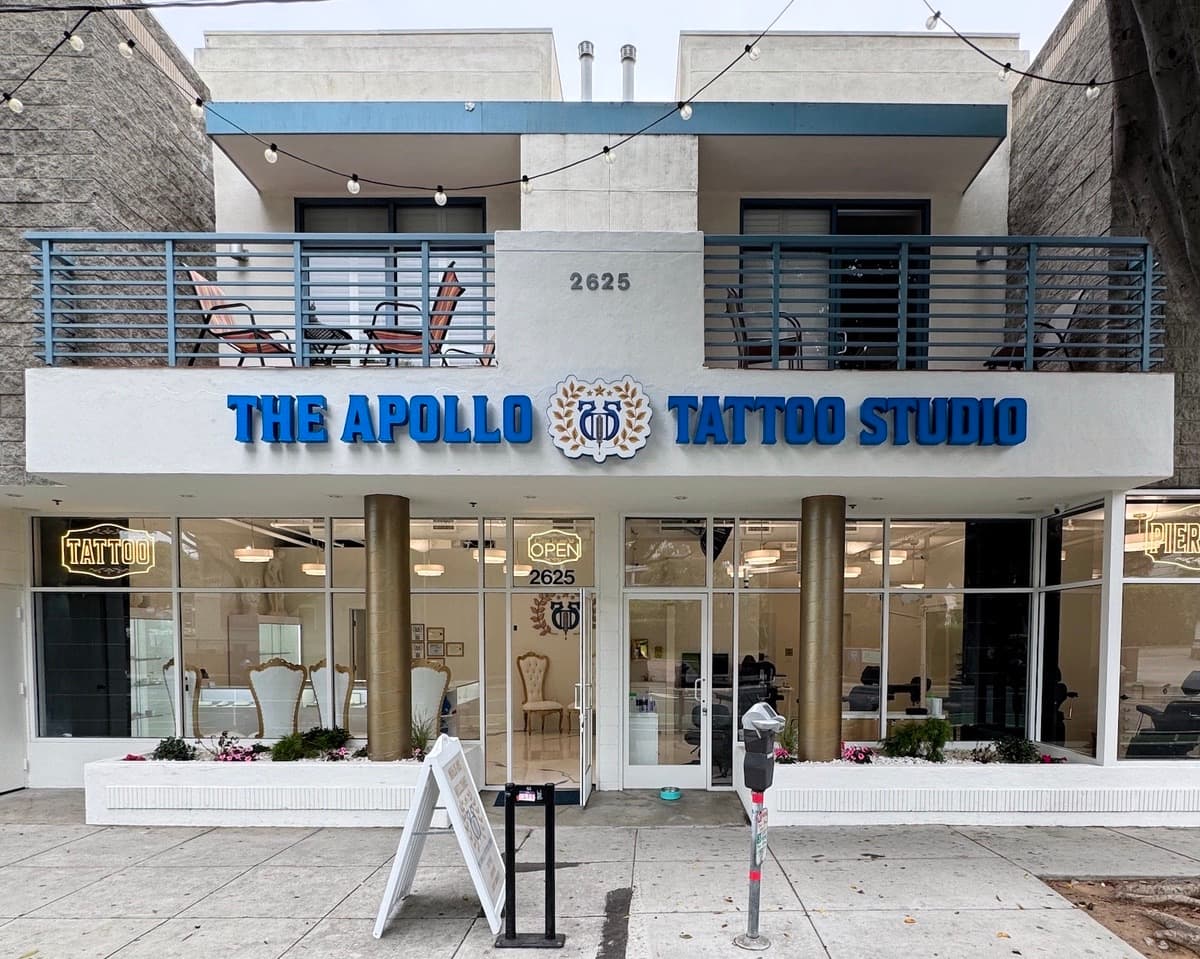
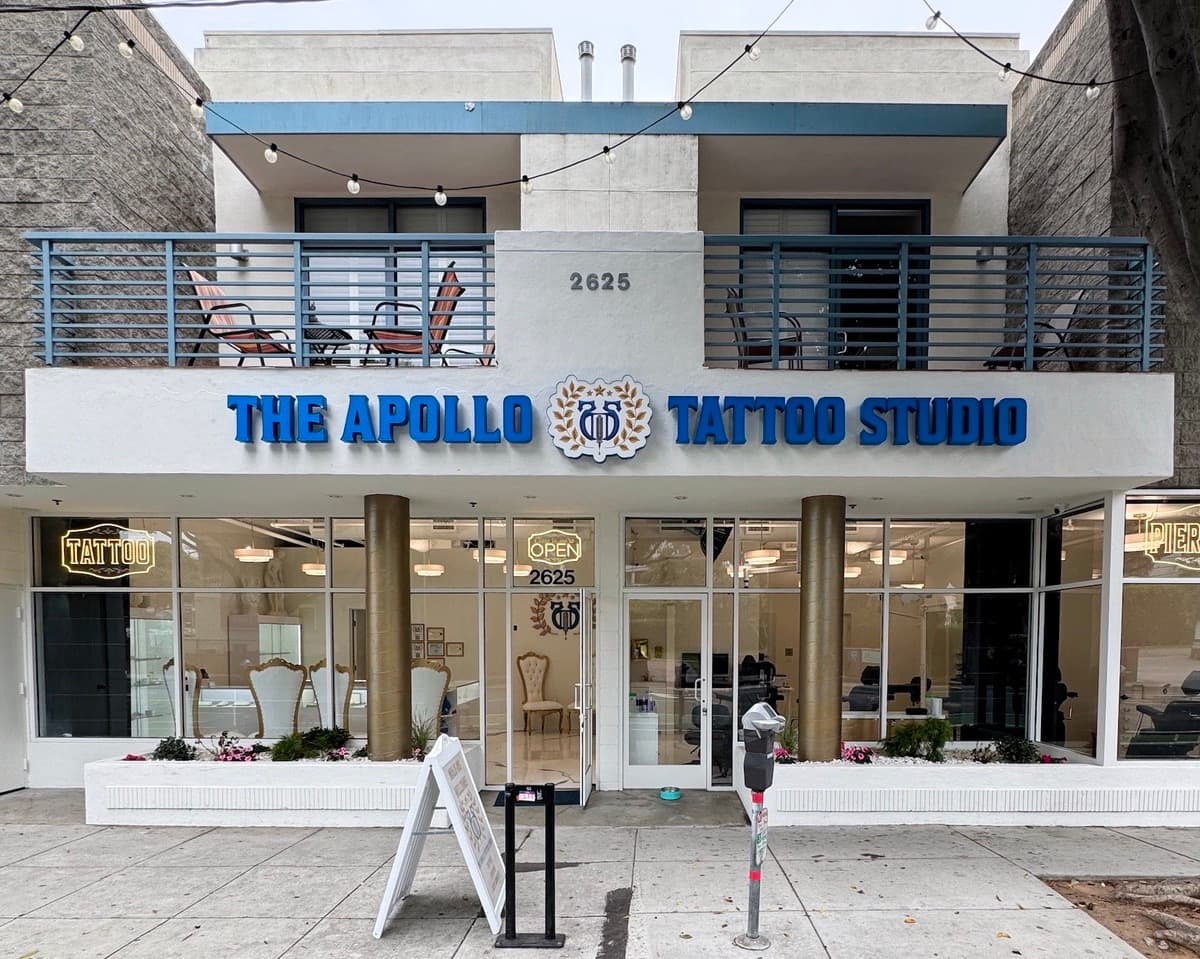
5000+ clients2625 Main St in Santa Monica, at the Ocean Park end and a short walk from the beach — which is worth knowing, because turning the appointment into an afternoon out takes a lot of pressure off a nervous child. Street parking runs along Main and the residential streets toward Neilson Way; a weekday after school is far easier than a Saturday. We're open 8am to 8pm every day, so an earring change or a quick look at a sore ear fits around school without a plan.
Santa Monica, CA
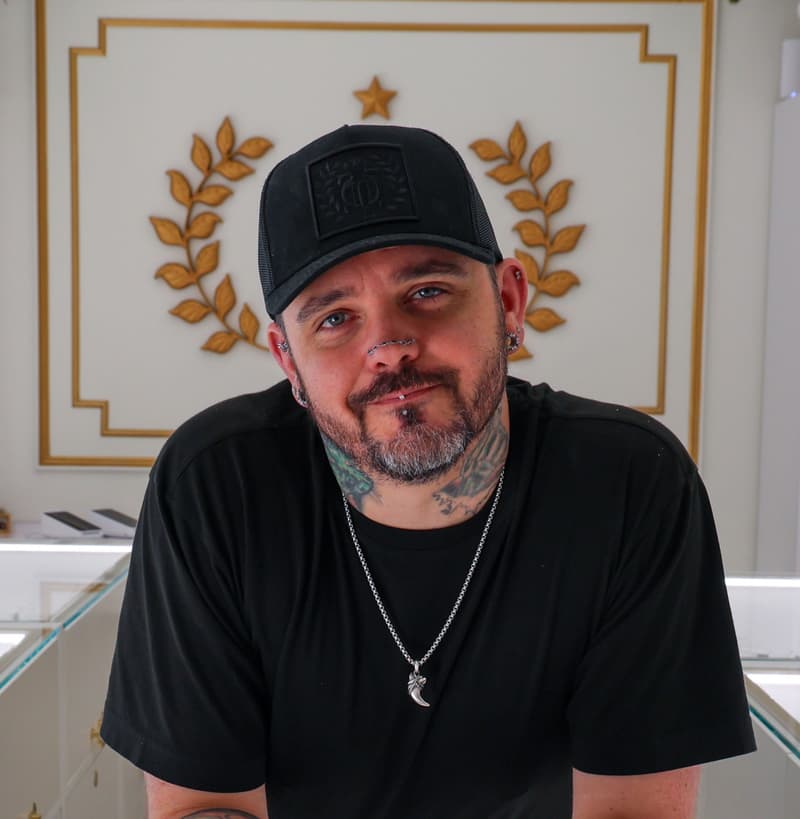
Apollo was founded by Blue Mason in 2007. With 20+ years of body art experience, Blue brings master-level expertise to every piece. Read Blue's story →
Nerves, ages, guns, paperwork, who's allowed to bring them, and what to do when an ear goes pink
Nothing sudden, and nothing they haven't been told about first. They pick the jewelry, which is the part most kids enjoy and which also gets them invested rather than braced. Then they sit, the piercer talks them through each step in plain language before doing it, and dots go on both lobes. You look, they look in a mirror, and you say yes or no. Only then does anything happen. If two piercers are free, both lobes go at the same moment, which means one count of three instead of two. Most kids look surprised afterwards more than anything else.
$75 for a lobe piercing service, and our two-piercing special means a pair of lobes is also $75 for the services. Jewelry is priced separately, so what you spend beyond that is entirely down to whether your child picks a plain titanium end or something gold. Nothing is bundled, and nobody is going to upsell a seven-year-old.
Because the difference between a four-year-old and a five-year-old, for this specific thing, is real. At five most children can be told what is about to happen and understand it, can hold still for the few seconds it takes, and can participate in keeping it clean afterwards rather than having it done to them. That last part matters more than people expect: a lobe piercing needs several weeks of not being fiddled with, and a child who feels like a participant does far better than one who doesn't. We don't pierce under five. That's a policy, not a negotiation, and it isn't about capability on our end.
This is the whole argument, so here it is properly. A gun does not make a hole — it forces a blunt-tipped stud through the lobe by spring pressure. Tissue doesn't part cleanly for a blunt object; it tears and compresses around it, and the healing channel is built out of that damage. A hollow needle is sharpened to cut, so it removes a small core and leaves a clean-walled channel, and the jewelry follows it in without force.
Then there's the equipment itself. A gun is a plastic mechanism that cannot be put in an autoclave — heat and pressure would destroy it. Wiping it down is not sterilisation. Our needles are single-use, individually sealed, and opened in front of you and your child; everything reusable comes out of a hospital-grade autoclave.
And there's what goes in. Gun studs are typically a butterfly-back design that traps discharge and hair against the back of the lobe, and they're usually pushed in tight against the skin with no room for swelling. We use a flat-back titanium stud with a little length allowed for the first weeks. It's a small difference in the case and a large one at week two.
You can turn up — we're open 8am to 8pm, seven days. But with a child we'd genuinely rather you booked, and not for our convenience. A nervous kid sitting in a lobby watching the clock gets more nervous, not less, and the whole approach here depends on moving at their pace rather than against a queue. Book and you walk in, sit down, and start. Call (310) 331-0603 or book online. Weekend afternoons are the busiest.
To schedule an appointment at our Los Angeles kids ear piercing studio, you can call us during business hours at (310) 331-0603, or you can schedule an appointment in advance anytime here:
Schedule Your Piercing Appointment
Have questions or seeking a quote for your new piercing? Call us or fill out the piercing inquiry form below:
At Apollo Tattoo & Piercing Studio, we are committed to providing the highest level of service and care for each and every one of our clients. To uphold this standard of excellence, we offer piercing services to minors under strict guidelines to ensure safety and compliance with legal requirements.
MINOR PIERCING POLICY
Earlobe piercings for minors start at 5 years old. We do not pierce children under 5.
To pierce minors 5 and older, a parent or guardian must present a valid state or federal photo ID (such as a state driver's license, state ID card, military ID, or passport) along with the original birth certificate and a photo ID for the minor in question (e.g., school ID). Please note that expired forms of ID are not recognized as valid.
The specific age requirements for different types of piercings are as follows:
5+ years:
13+ years:
14+ years:
16+ years:
18+ years:
By adhering to these age-specific policies, we ensure a safe and appropriate piercing experience for our younger clients.
If two piercers are free, yes, and it's worth asking for. The problem with doing one and then the other is the gap between them: your child now knows exactly what's coming and has to sit through it a second time. Two piercers working together means one count and it's over. If we can't do it simultaneously that day, doing them in sequence is perfectly fine — plenty of kids handle it without blinking. It's just an easier five seconds when it's one.
Then we stop, and nobody makes a thing of it. This happens, it's completely normal, and a child who backs out at the marking stage is telling you useful information about whether they were ready. There's no charge for a piercing that didn't happen and no lecture on the way out. Come back in six months. We would far rather that than have a kid who was talked into it and spends a month refusing to let anyone near their ears to clean them.
Your own valid, unexpired photo ID — driver's licence, state ID, military ID or passport. Your child's original birth certificate, not a photocopy or a photo of one. And photo ID for the child, for which a school ID is fine. The birth certificate is the piece people forget, and without it we can't proceed, so it's worth checking the night before rather than on the drive over. Full age requirements by placement are in the policy answer below.
The adult present has to be the parent or legal guardian named on the birth certificate, with matching ID. That's not us being difficult — it's the documentation requirement, and it's the same one that protects your child. If custody arrangements or a name change make your paperwork complicated, call ahead and ask before you drive over rather than finding out at the counter.
A flat-back titanium stud, and the flat back is the point. Butterfly backs — the little clutch on a gun stud — sit against the back of the lobe and collect hair, shampoo and discharge in the gap, which is a large part of why mall piercings get grumpy. A flat disc sits smooth against the skin with nothing to trap. Implant-grade ASTM F136 titanium is what we start every child on because it's the most nickel-safe thing available. Solid 14k gold is a fine alternative if you'd rather. Not surgical steel, which contains nickel.
At Apollo Tattoo & Piercing Studio, we are committed to providing the highest level of service and care for each and every one of our clients. To uphold this standard of excellence, we offer piercing services to minors under strict guidelines to ensure safety and compliance with legal requirements.
MINOR PIERCING POLICY
Earlobe piercings for minors start at 5 years old. We do not pierce children under 5.
To pierce minors 5 and older, a parent or guardian must present a valid state or federal photo ID (such as a state driver's license, state ID card, military ID, or passport) along with the original birth certificate and a photo ID for the minor in question (e.g., school ID). Please note that expired forms of ID are not recognized as valid.
The specific age requirements for different types of piercings are as follows:
5+ years:
13+ years:
14+ years:
16+ years:
18+ years:
By adhering to these age-specific policies, we ensure a safe and appropriate piercing experience for our younger clients.
Both, and how you split it depends on the age. A five- or six-year-old needs you doing the saline while they sit still and count. An eight-year-old can usually do it with you watching. A ten-year-old can generally run it themselves if you check in. What you want to avoid is a child who thinks aftercare is something being done to them, because that's the child who hides a sore ear rather than mentioning it. Make it their piercing and their two-minute job, and the whole thing goes better.
Some pinkness and a bit of crust in the first weeks is ordinary and not a reason to panic. Come and show us if it's still angry after a few days, if there's a lump, if the skin is hot to the touch, or if your child is guarding it and won't let you near. That look costs nothing and takes five minutes. In practice the answer is usually a specific cause — sleeping on it, a helmet strap, hair getting caught, a stud back done up too tight — and it's fixable. Genuine spreading heat, swelling and thick discharge means a doctor.
Lobes usually settle in roughly six to eight weeks, with the inside of the channel continuing to firm up for a few months after that. Bring them in for the first change rather than doing it at home — we'll check the piercing while they're here, and if it isn't ready you'll find out from someone looking at it rather than from a stud that won't go back in. After that they can swap things themselves, and picking out their next pair is usually a bigger event than the piercing was.
Showers from day one, no pools or ocean for the first several weeks. School is fine the next day. For sport, the two things to sort out are helmets and hair: a helmet strap or a headguard that presses on a fresh lobe is the commonest cause of a sore ear at week three, and long hair caught around a stud is the second. Tie hair back, check the strap position, and rinse the ears after swimming lessons resume.
Cash, all major credit cards, Venmo and PayPal.
Apollo sits at 2625 Main St in Santa Monica, a block from the beach and easy to reach from anywhere on the Westside. Here's roughly how long it takes to get to us for tattoos and piercings:
There's metered street parking on Main Street and Ocean Park Blvd, plus a public lot on 2nd Street a short walk away. We recommend giving yourself an extra 10 minutes to park on weekends — Main Street gets busy with the farmers market and beach traffic. If you're running late, text us at the studio and we'll hold your appointment.
Blue Mason founded Apollo, is Fakir-certified, and has been in this trade since 2007. Bunny Vogt has been a senior piercer here since 2019 and does most of the first-time lobes. Both of them will take a child's "not today" at face value, both of them explain each step before doing it, and neither of them owns a piercing gun. Needle only, implant-grade titanium, licensed and inspected by LA County. 2625 Main St, Santa Monica, 4.9 stars across 623+ Google reviews.
Recognized in Santa Monica's Most Loved 2025 & 2026


We'll respond within 24 hours
Or reach us directly:
We use cookies to run this site, remember your preferences, and understand how it's used. Read our Privacy Policy for full details.