Two people can want the same piercing and need it placed completely differently. Nipples vary more than any other site we work on — in projection, in how wide the base is, in whether that base is deeper across than it is top to bottom, in how much all of it changes between a warm room and a cold one. There's no standard shape here, which means there's no standard placement, and anyone marking you off a reference photo is guessing.
The other thing worth knowing before you book is the clock. This heals in seasons, not weeks: somewhere between six and twelve months, with the honest caveat that nipples flare and settle repeatedly along the way. A quiet month followed by a sore one is normal here in a way it isn't for an earlobe. Bunny Vogt does most of this work in a private room off the main floor and Blue Mason handles the trickier anatomy; $75 for one, $125 for both, jewelry separate.
Book Your Nipple Piercing 5000+ clients
What a piercer is reading, why it can't be read from a photograph, and why almost nobody is disqualified
Start with the thing people are most anxious about and least likely to say out loud: there is no normal to fall short of. Across the population, nipples differ in projection, in the width of the base, in whether that base is round or oval and which way the oval runs, in whether the tissue sits proud, flat or drawn inward, and in how dramatically all of that shifts between a warm room and a cold one. Piercers see this range every week. Whatever you are worried is unusual about yours, it is almost certainly on the ordinary end of a very wide spectrum.
What actually gets assessed is the base — the ring of tissue where the nipple meets the areola. That's where the bar goes, not through the tip. What a piercer wants is enough depth across that base for a bar to sit inside tissue with clearance at both openings, and a shape that tells them which direction to cross it. On a base that's wider side to side than top to bottom, horizontal is obvious. On a base that's the other way round, a vertical bar has more to hold it, and insisting on horizontal because that's what the internet shows would mean a shallow channel that irritates for a year.
Then there's inversion, which comes up constantly and is far less of a barrier than people fear. Nipples that retract but draw out with cold or stimulation are usually straightforward, and the bar sitting across the base can help hold the tissue forward. Nipples that stay fully retracted, with the tissue tethered down tight, are a different question — sometimes possible, sometimes not, and never something to promise sight unseen. Flat nipples are generally fine for the simple reason that projection isn't what the piercing relies on.
What a piercer is looking for that would give them pause: a base with genuinely minimal depth in every direction, tissue that's tethered so tightly the bar would be under permanent tension, existing scarring across the site, or recent surgery in the area. That last one matters more than the others and it's worth mentioning at the start rather than at the end — reconstruction and reduction change both the tissue and its blood supply, sometimes in ways that don't show from outside.
All of which is a long way of saying: this is a placement where an in-person look is not a formality. It takes a few minutes in a private room with the door shut, you keep your dignity throughout, and you come out with a real answer rather than a hopeful one. If the answer is yes, the same look has already decided your angle and your bar length. If it's no, you've lost nothing but the walk down Main Street.
Projection, base width, base shape, whether the tissue sits forward or flat, how much it changes with temperature. Your piercer reads what's actually there rather than fitting you to a standard, because no standard exists here.
A bar has to pass through the fullest part of the base and come out level on the other side. On a wide base that's often horizontal; on some anatomy it isn't. Choosing the angle to suit the tissue, rather than to match a photo, is most of the job.
Chest tissue moves. Marks that line up while you're lying back can be visibly uneven once you're upright, so we check both, and check them against each other if you're doing a pair.
Off the main floor, one piercer, and a support person if you want one. You stay covered other than at the moment of the pass, and every step is described before it happens.
Nipples swell substantially and the first bar is sized for that. Once the swelling has gone we shorten it, because a long bar in a settled piercing snags on clothing and works the channel from inside.
Single-use sterile needles and receiving tubes opened in front of you, hospital-grade autoclave for tools, EPA-registered surface disinfectant, bloodborne-pathogen-certified piercers. No guns, on any placement, ever.
Including the part nobody warns you about: it gets better, then worse, then better again
Six to twelve months. That range gets printed everywhere and skimmed past, so here's what it means in practice, because nipple healing has a shape that surprises people who've only had ears done.
The first fortnight is the loud part. Real swelling — more than most people expect, which is why the starter bar is long — plus a deep ache that makes seatbelts, hugs and rolling over in bed newly memorable. Crusting at both openings. A soft bra or a snug cotton shirt helps enormously here, because unsupported movement is what turns a manageable ache into a bad week.
Then it goes quiet, and this is the trap. Somewhere in the second month a lot of people conclude they're done. The soreness fades, the openings look closed, and the piercings stop being the first thing you think about in the morning. Underneath, the channel is a thin new lining that hasn't been tested by anything. This is when people go back to bench press, buy a lacy bra, or let a partner near them, and then find out.
Months three to six are where the pattern shows up that makes nipples distinctive: they flare and settle repeatedly. A rough gym week, a new bra with a seam in the wrong place, a cold snap, sleeping badly on one side — any of those can produce a few days of soreness, redness and a bit of discharge, and then it calms back down on its own. That is not rejection and it is not failure. It's a long heal being reminded that it isn't finished. Treat each flare as information about what caused it rather than as a crisis, and the causes get easy to spot.
By six to twelve months you have a piercing that behaves. Sensitivity has usually resolved to wherever it's going to land. Rings become an option. You can stop thinking about which bra you're putting on. The people who reach that point comfortably are, almost without exception, the ones who came back for the downsize when the swelling went and who kept the jewelry supported through months two and three instead of assuming they'd got away with it.
One honest note on timing: this is not a heal to start six weeks before a holiday of ocean swimming, or in the middle of a training block you don't want to interrupt. It's a long project and it does better when the first couple of months are quiet ones.

Apollo's Premium Jewelry Partner
Handmade in Los Angeles since 1996. Lifetime guarantee. Implant-grade gold, platinum, and titanium. Over 3,000 original designs in our case — ask your piercer for a tour.
See the BVLA story →Angle, count and timing — three separate decisions that people tend to make as one.
The usual answer, and usually the right one: the bar crosses the widest part of the base, which is where there's most tissue to hold it and where a straight barbell sits level. Suits the majority of anatomy. $75 for one.
Top to bottom instead of side to side. Whether this works is purely a question of how your base is shaped — some are deeper vertically than horizontally, and on those it's the better route. On others there simply isn't the depth and we'll say so.
A horizontal and a vertical crossing each other. It needs real base size, and it is emphatically staged — the first has to be fully healed before the second goes anywhere near it, because two fresh channels crossing in one small piece of tissue is asking too much of the blood supply.
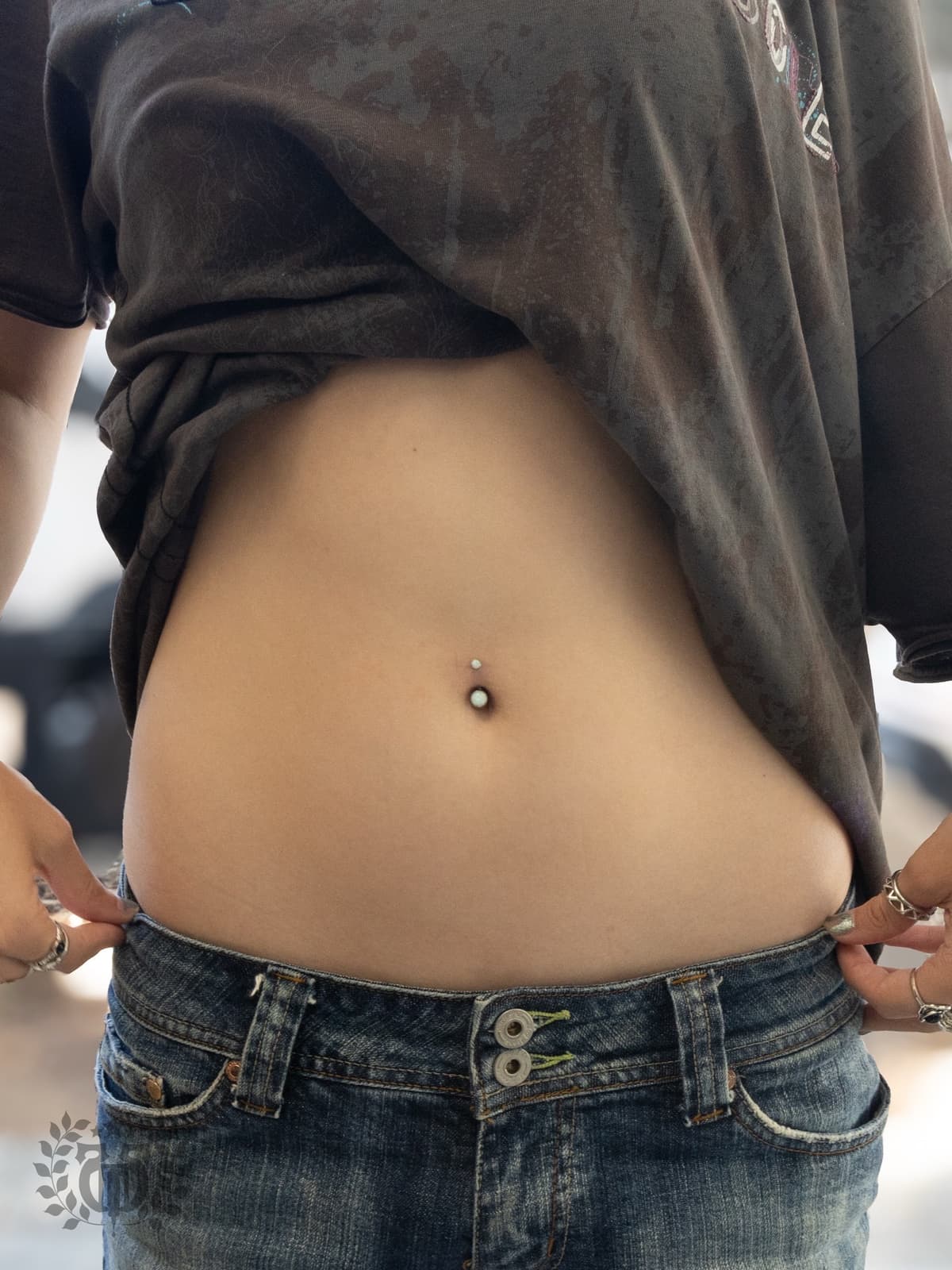
The common choice: one appointment, one marking session so the symmetry is judged side by side, and both heals running together. The cost of that is no comfortable sleeping position for a while. $125 for the pair.
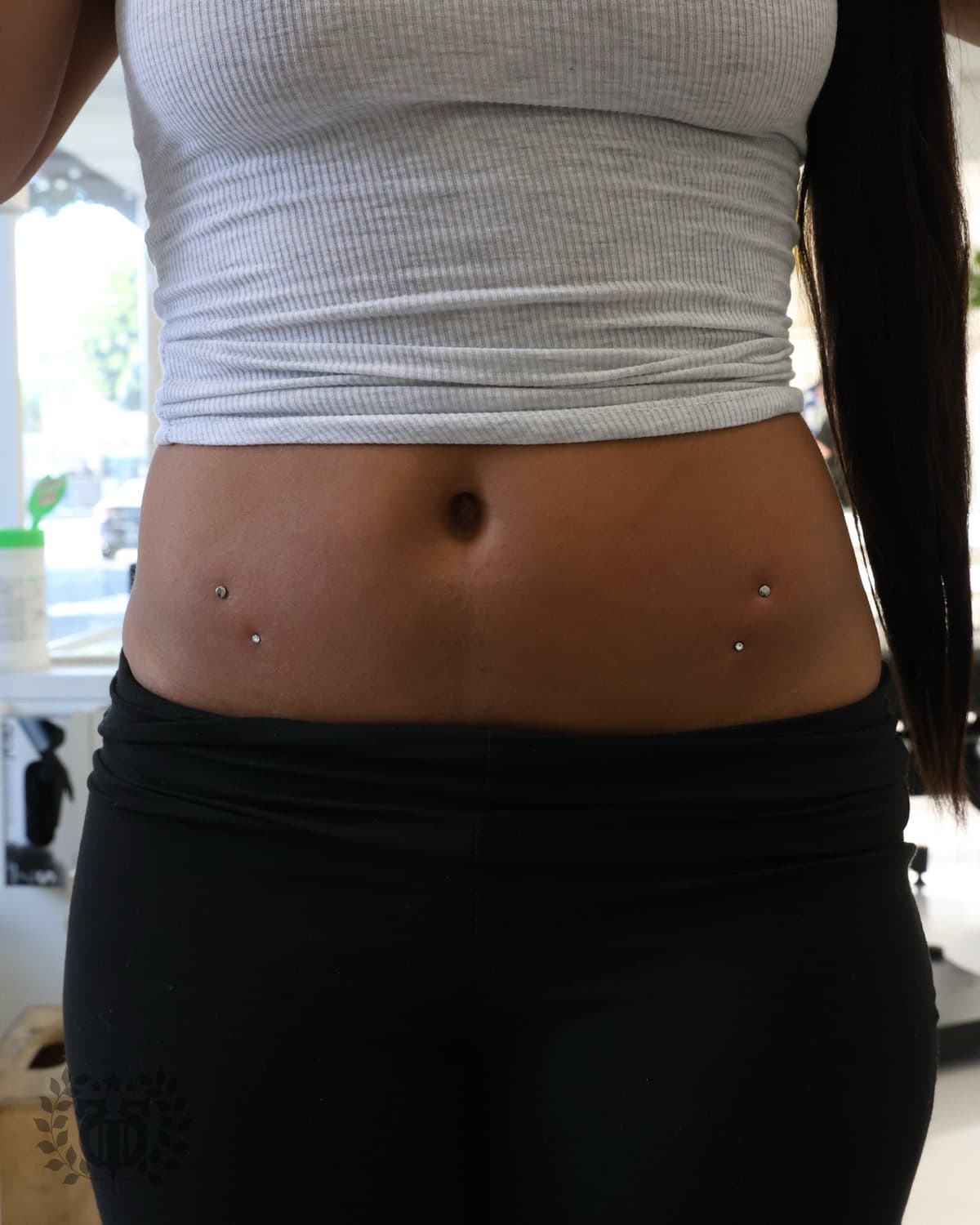
Rings look right on nipples and they are strictly an after piercing. They rotate and swing, which a healing channel cannot absorb. Wait out the full heal, then come in for a ring, a shield or solid gold ends, fitted for diameter rather than guessed at.
Clear next step
Door shut, one piercer, a support person if you want one — and a real answer about your base
Recommended first step
Reserve a body piercing appointment with jewelry, placement, and timing confirmed.
Among the longest heals we do, and the one most likely to flare and settle along the way
| Piercing Type | Location | Initial Healing | Full Healing | Pain Level |
|---|---|---|---|---|
| Nipple | Through nipple tissue | 3-6 months | 9-12 months | 6-7/10 |
 5000+ clients
Six steps from the private room to the downsize appointment
Private room off the main floor, one piercer, and a support person if you'd like one. Nothing is uncovered until the moment it needs to be.
Projection, base width, base shape and how the tissue behaves warm versus cold. This is where the angle gets decided, and it's the reason two people can walk out with bars set differently.
Marks go on, you sit up and look, and if you're having a pair we compare them against each other rather than each in isolation. Chest tissue moves; a mark checked lying down proves nothing.
The tube guides the needle so it exits exactly where the second mark is. Sterile, single-use, opened in front of you, out of a hospital-grade autoclave setup and an EPA-disinfected room.
Implant-grade ASTM F136 titanium, run long because nipples swell more than people expect. Ends chosen low enough not to catch on a bra.
You leave knowing to come back for a shorter bar once the swelling has gone, what a flare looks like versus something worth worrying about, and that a check-over is a walk-in whenever you want one.
Three jewelry decisions, one of which has a deadline attached
Straight bar first, and no ring. A ring rotates and swings, and a healing nipple channel has neither the depth nor the tolerance to absorb that — every swing works the two openings a little wider and drags whatever is on the ring's surface through the channel. A straight barbell can only slide along its own axis. Rings are a genuinely good look on healed nipples and we'll fit you one when you get there.
Gauge next, and this one runs counter to intuition. Nipples are typically pierced heavier than an ear — commonly 14g rather than something fine. A thin bar concentrates all the tissue pressure onto a small cross-section, and in a site that is constantly compressed by clothing that's how you get a bar slowly working its way toward the surface. More metal spreads the load and heals better. Thin bars in nipples are one of the reliable signs of a studio that didn't think about it.
Then length, which is the decision with a clock on it. Nipples swell substantially in the first weeks — more than most people anticipate — so the starter bar is deliberately run long. That's correct on day one and wrong by month two. Once the swelling has gone, that extra length is slack: the bar shifts inside the channel, the ends catch on bra fabric, and every catch is transmitted straight into tissue that's still building a lining. Coming back to have it shortened is included, takes a few minutes, and is comfortably the highest-value thing you can do for these piercings. It is also the thing people most often skip, because by then everything feels fine.
Ends should be flat or low while you're healing, for the same reason: a bra is fabric moving across your chest all day and it will find anything that stands proud. Once you're properly settled, the whole catalogue opens — solid 14k and 18k gold, opals, set stones, shields, and rings fitted here for diameter rather than ordered online and forced in.
Service fee below; jewelry is chosen and priced on its own
Jewelry sold separately
Jewelry sold separately
Jewelry sold separately
Jewelry sold separately
Coming back to have the bar shortened once the swelling has gone is part of what you paid for, not an extra — please come and do it. Gold ends, opals, shields and rings are priced on the piece you choose, and we'll fit them for you rather than have you force a ring into a settled channel at home.
The three practical problems that decide whether the middle of the heal is quiet or miserable
Bras first, because the instinct is wrong. Most people assume the kindest thing for a fresh nipple piercing is to wear nothing at all and let it breathe. In practice, unsupported tissue moves with every step you take, and the jewelry moves with it, which means the channel is being worked continuously all day. A soft, smooth-knit, non-underwired bra or a snug cotton undershirt holds everything steady, and steady is what a healing channel wants. Sleep in one too for the first weeks — it stops the bar catching on bedding when you roll over.
What to avoid is fabric with texture. Lace is the classic offender: it looks harmless and it is essentially a net designed to catch the end of a barbell. Seams that cross the site are the other one, along with anything stiff or embroidered. If you're buying something to heal in, put your hand inside it and feel where the seams run.
Then sport, which needs unpicking into two categories. Impact and bounce is the first: running, jumping, anything where unsupported tissue moves repeatedly. That's manageable from fairly early on, provided you're properly held. The second is pressure and stretch on the chest itself — bench press, push-ups, dips, heavy front-rack work, and the pulling positions in climbing. Those load and stretch exactly the tissue that's healing, and they're the ones to hold back on for a few weeks and then reintroduce gradually rather than going straight back to your usual numbers. Contact sport is a separate conversation and needs actual protection, because a direct hit on a healing nipple piercing is a genuine injury rather than a setback.
Sleep is the third, and it's the one people underestimate because it's eight hours a night for months. If you've had both done there is no comfortable side, and the honest answer is that the first fortnight involves sleeping on your back whether or not you're a back sleeper. If you had one done, the other side becomes your default for a while. Front sleepers have the hardest time of it: a pillow pressed against both ends for a whole night is more sustained pressure than anything the piercing meets during the day, and it's the single most common reason someone shows up at month four with a flare they can't explain.
Which brings up the flare pattern itself, since these three things cause most of them. Somewhere in months two to six, a nipple that had gone quiet gets sore, pink and a bit weepy for a few days. Nearly every time there's a cause you can name if you look back a week: a new bra, a hard chest session, a night sleeping face-down, a bar that should have been shortened by now. Fix the cause and it settles. Come and show us if it doesn't — that's a walk-in, not an appointment, and we would much rather see it early.
Two piercers, both used to this work, neither of them awkward about it
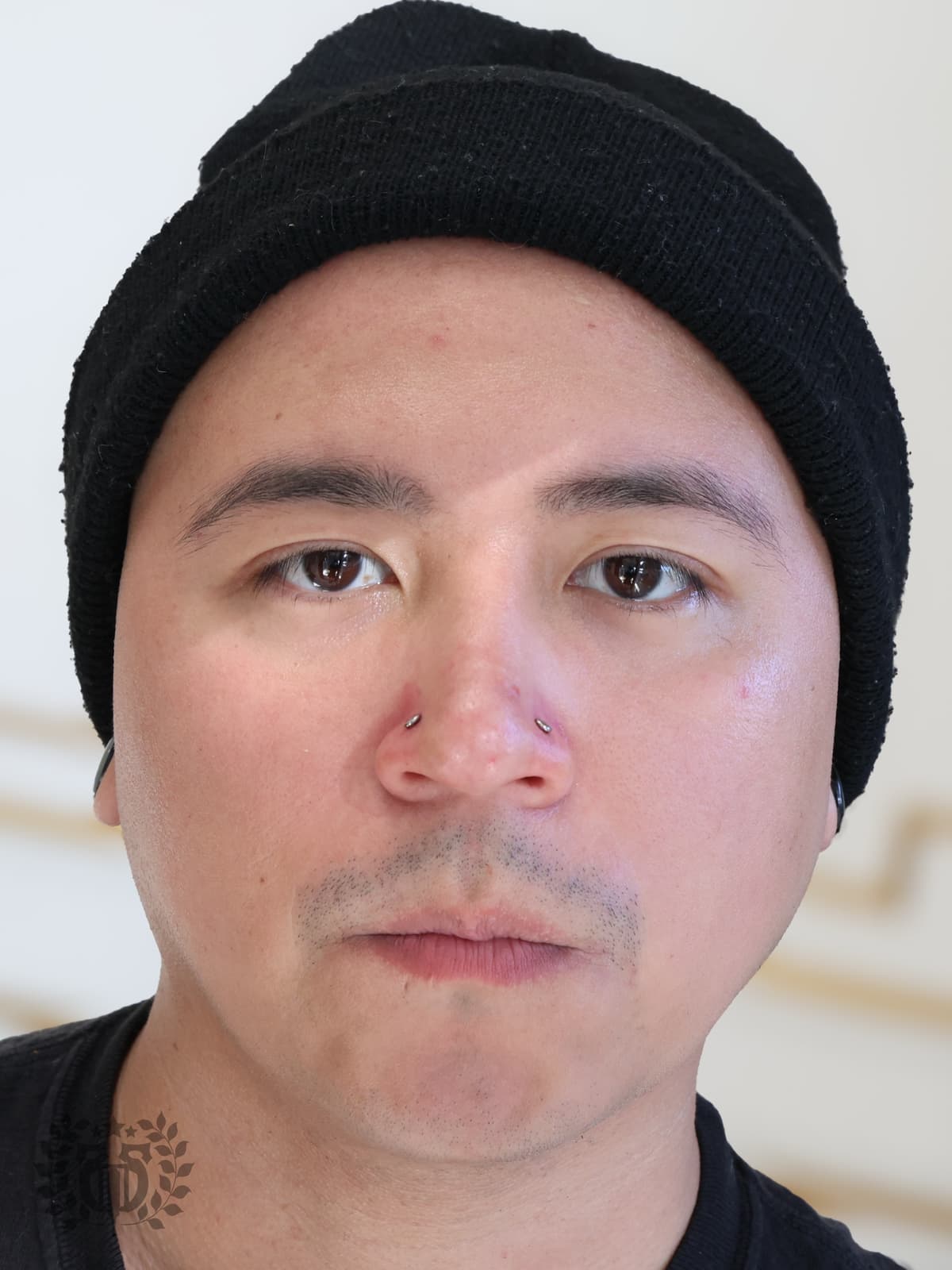
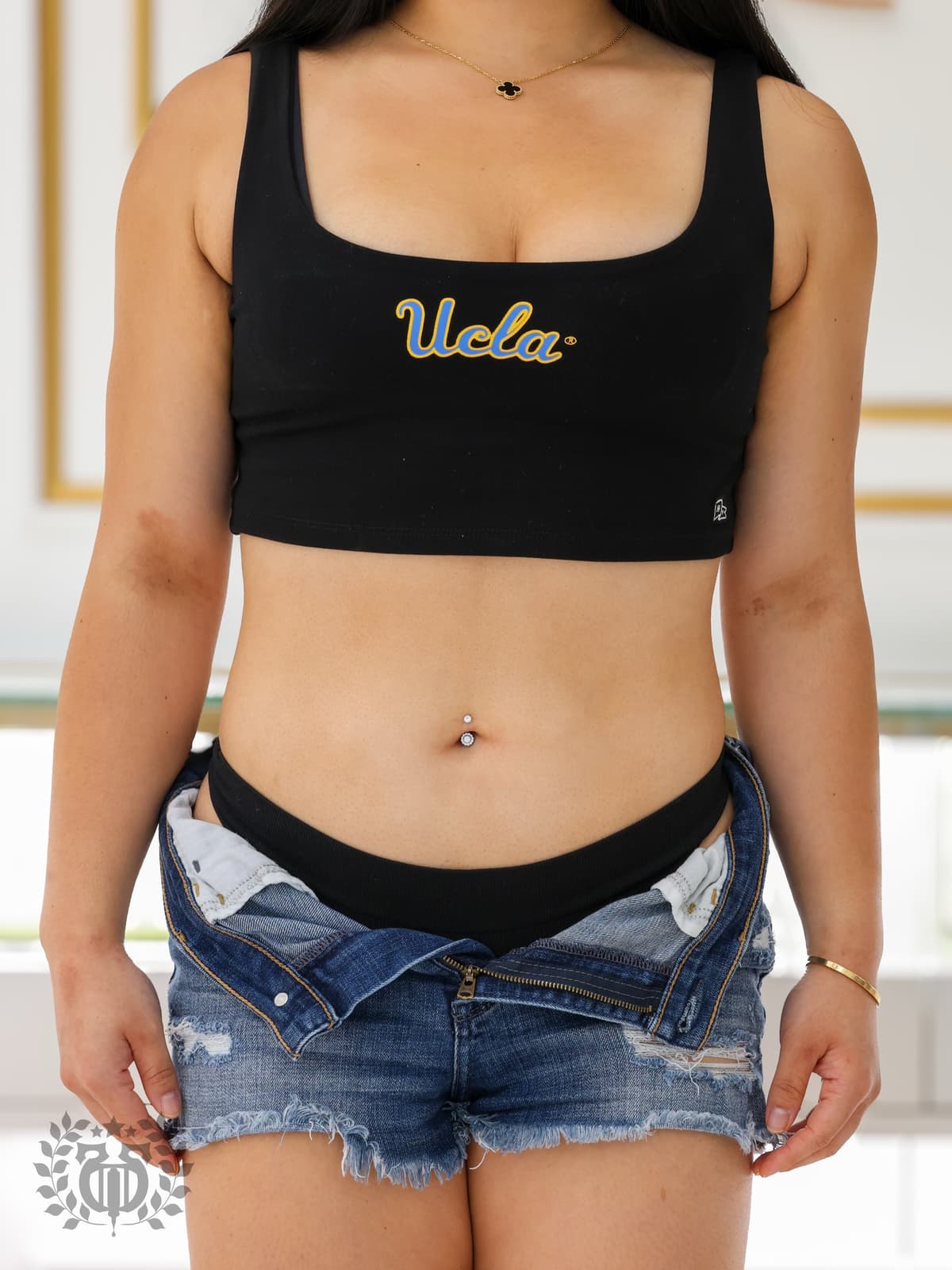
 Senior Piercer
 Senior Piercer
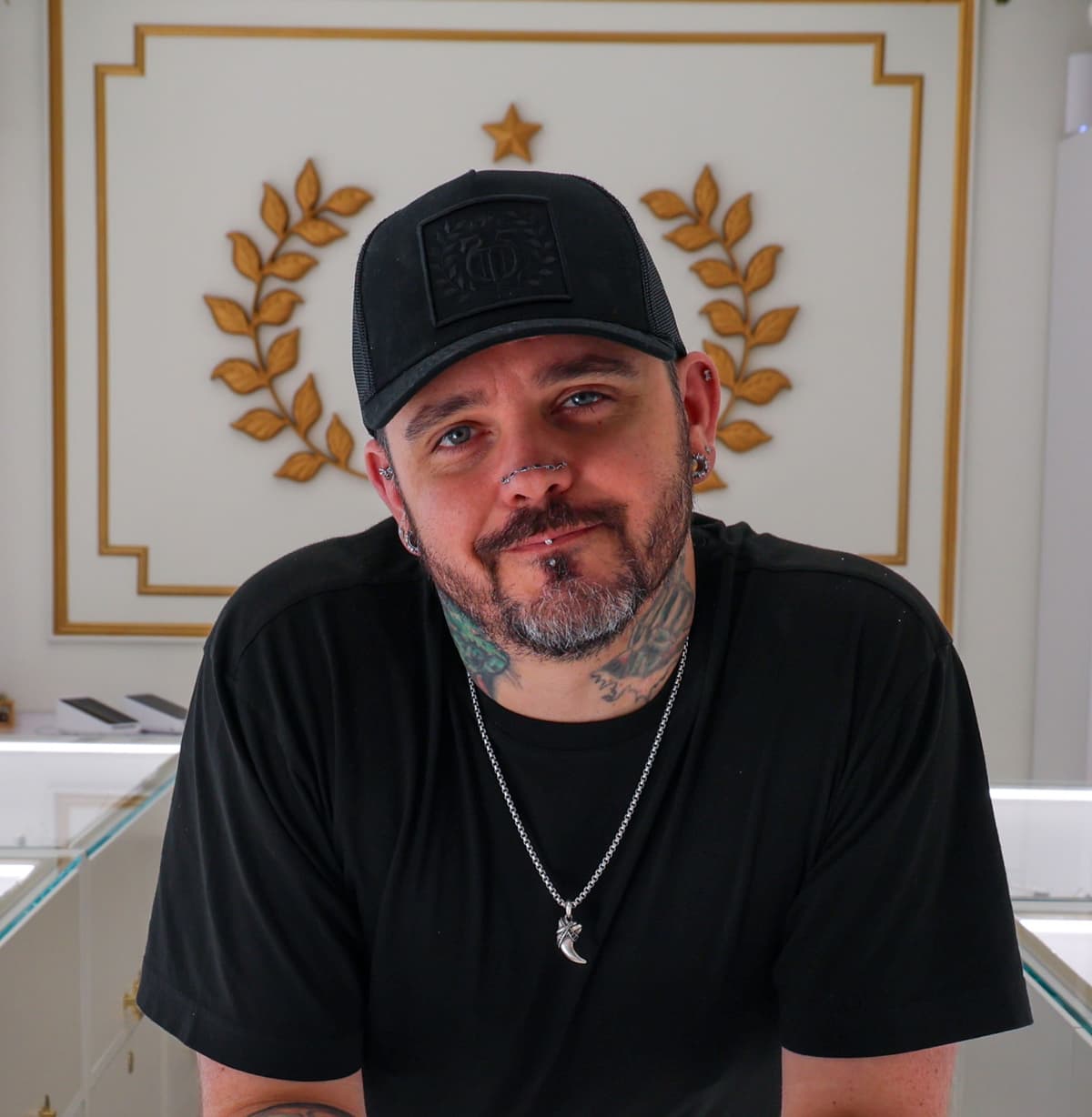
Bunny Vogt, a dedicated Senior Piercer at our studio since 2019, creates a comfortable, professional environment for nipple piercings. Her calm demeanor, expertise in ear styling and curation, and experienced technique help clients feel at ease during this intimate piercing.
 Founder
 Master Piercer
Blue Mason, our Master Piercer and studio founder since 2004, brings over two decades of body piercing expertise including advanced genital work. His professional, clinical approach ensures clients feel safe and respected throughout the nipple piercing process.
Wear something you can open easily and bring a soft bra or a snug cotton shirt to put on afterwards. Nothing here happens without being explained first.
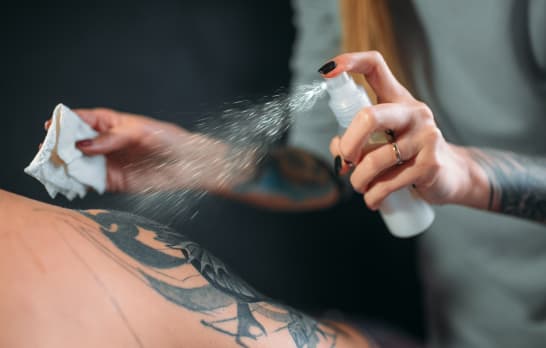
Sterile saline on both openings twice a day, spraying front and back so the ends are covered too. Air dry where you can, or pat with a clean paper towel — not the bath towel, which has been on the rail all week. Never rotate the bar; there's nothing to unstick and turning it grinds the new lining you're waiting on.
The clothing choices matter more than the cleaning does. A soft, smooth-knit bra or a snug cotton undershirt supports the jewelry so it isn't dragged around by ordinary movement, and it's worth wearing one to bed for the first few weeks so nothing catches on the sheets. Lace, seams and textured knits are the fabrics that snag. Change out of a damp sports bra rather than sitting in it.
No oral contact and no rough handling for the whole heal, which really is the whole heal rather than until it stops being sore. And when a flare turns up in month four, come in — it's usually a bra, a bench-press session or a bar that needed shortening, and it's usually fixable in one visit.
Book AppointmentReal swelling and a deep ache that makes seatbelts and hugs memorable. This is why the bar is long. Soft smooth-knit bra or a snug cotton shirt, including in bed. Saline twice a day, front and back. Off your front when you sleep. Hands off entirely unless they're clean and there's a reason.
Swelling goes, soreness fades, and the piercings stop occupying your morning — which is exactly the point at which people go back to bench press and lace. Come in for the downsize now. Expect occasional flares after a hard gym week or a new bra; they settle. Still no swimming, still no oral contact, still no jewelry changes.
Six to twelve months to a nipple piercing that tolerates ordinary life, and some people run longer than that. Have us confirm it's settled before the first jewelry change rather than deciding by how it feels. Then rings, shields and gold are all on the table, and you can stop planning your underwear around it.
The reason to book this one rather than walk in is simple: the private room has to be free. Walk-ins do work, and we'll fit you in when we can, but booking means the room is yours, the piercer you asked for is the one doing it, and nobody is waiting on the door.
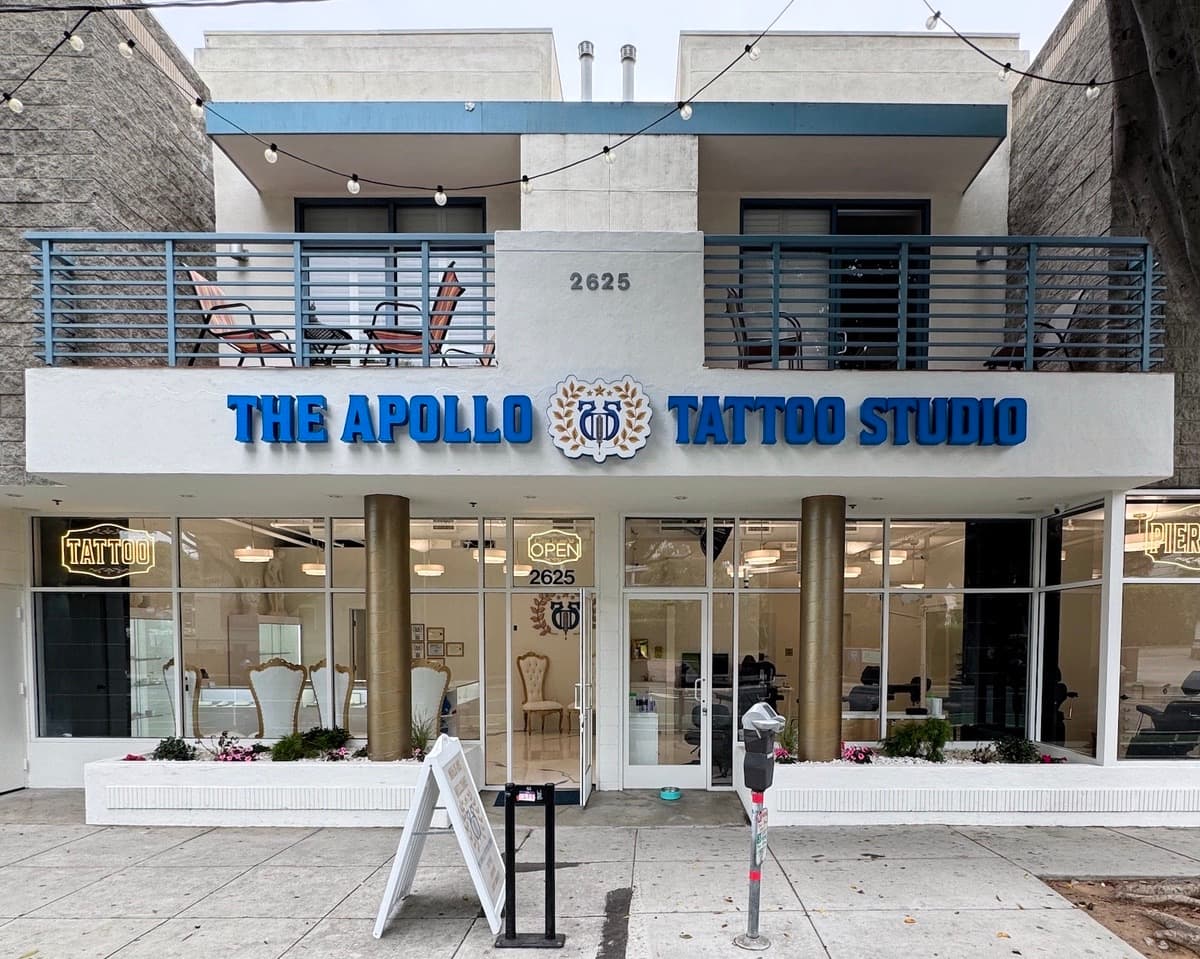
Verbatim reviews from Apollo's Google Business Profile
"I had the best experience with Blue! He made me feel comfortable, was very quick and professional with the whole process. I absolutely love my piercing, thanks a ton!"
"I had a great experience with Steph for my ear piercing! It came out well and she was warm and put me at ease about the whole process. Very easy to work with."
Reviews from Google · Read all 623 on Google
5000+ clients2625 Main St, Santa Monica, at the Ocean Park end and a couple of blocks up from the sand. Street parking on Main and on the residential streets running toward Neilson Way. Open 8am to 8pm every day — worth knowing for a piercing that heals across seasons, because a downsize or a look at a flare fits into an evening rather than needing a plan.
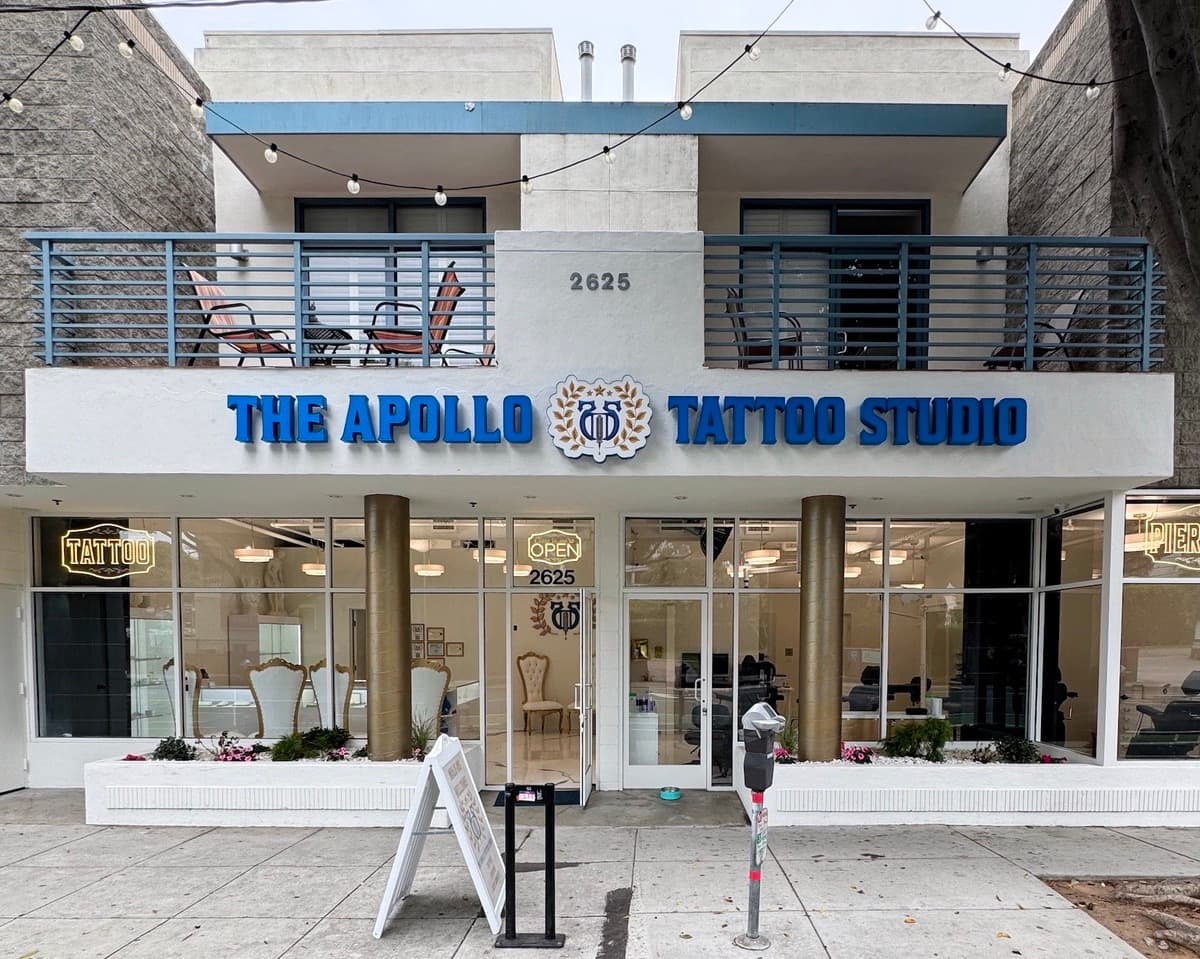
Santa Monica, CA
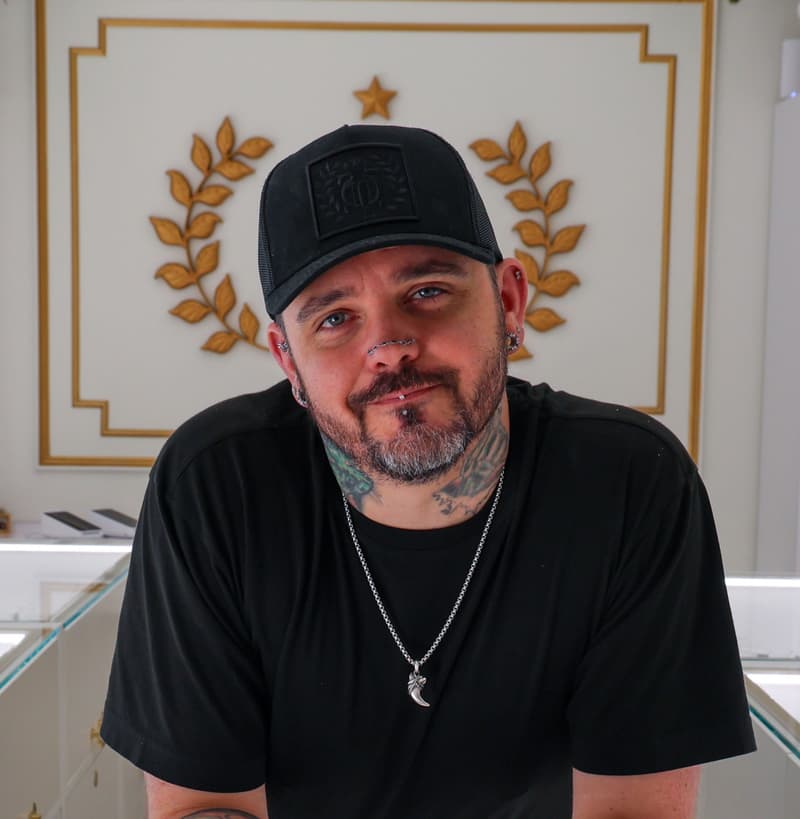
Apollo was founded by Blue Mason in 2007. With 20+ years of body art experience, Blue brings master-level expertise to every piece. Read Blue's story →
Anatomy worries, inversion, bras, the gym, sensitivity and the things people ask once the door is shut
Almost certainly, and this is the question we get asked most often in a private room by someone who has clearly been worrying about it. Nipples vary enormously — in projection, in width, in the shape of the base, in whether they sit flat, forward or inverted, and in how much all of that changes with temperature. There is no standard here to fall short of. What a piercer is actually assessing is whether there's a base with enough depth to hold a bar cleanly and at what angle it should sit, and the great majority of people have that.
Both are common and both are often pierceable. Inversion comes in degrees: one that draws out with stimulation or cold is usually straightforward, one that stays fully retracted needs a proper look and may not be. Flat nipples are typically fine — the bar goes through the base, not the tip. What matters is the base, and we can only judge that in person. Nobody is going to make you feel like a special case for asking.
Sharp and brief, and genuinely up there among the more intense piercings we do. Two to three seconds per side. What most people report afterwards is that the dread was worse than the event, followed by several days of a deep, dull ache that makes seatbelts and hugs memorable. If you're doing both, most people find the second side easier because the unknown is gone.
Think in seasons. Six to twelve months, and unlike many piercings that phrase isn't padding — nipples genuinely stay reactive deep into that range. They also relapse: a nipple that's been calm for two months can flare after a rough week, a new bra, or a heavy gym block, and then settle again. That pattern is normal and it catches people out because it doesn't happen with lobes.
Entirely your call and both are common. A single is $75, a pair is $125. Practically, doing both at once means one appointment, one heal running in parallel, and symmetry decided in one marking session — but also no comfortable side to sleep on for a while. Doing one first lets you learn how your body handles it before committing to the second, and it's easy to match the placement later. There is no right answer, and asymmetry is a perfectly good aesthetic choice rather than an unfinished one.
Come in something you can open or lift easily. Afterwards, a soft, smooth-knit, non-underwired bra or a snug cotton undershirt does more good than going without — gentle support stops the jewelry being dragged by movement, which is the main source of week-one misery. Avoid lace, seams and anything textured that sits over the piercing, because those catch. Sleeping in a soft bra or a shirt for the first few weeks keeps the jewelry from snagging on bedding.
Yes, with support and some sense. Cardio is fine early if you're held firmly; anything where a bar bounces for forty minutes is not. Chest work — bench, push-ups, dips — presses and stretches exactly the tissue that's healing, so give it a few weeks and reintroduce it gradually. Rinse and change out of a damp sports bra rather than sitting in one. Contact sports need a hard think and, at minimum, protection.
Commonly, and usually in the direction people are hoping for once healed. During healing the picture is muddier: some people are more sensitive, some are noticeably less for a period, and some report numbness that resolves over months. Individual variation here is genuinely wide and anyone giving you a confident universal answer is guessing.
Plenty of people breastfeed after having had nipple piercings; the jewelry has to come out for nursing, and milk can come from the piercing openings as well. That said, this is a question for a doctor or lactation consultant rather than a piercer, and we'll say so rather than pretend otherwise. If you're planning a pregnancy soon, the timing conversation is worth having before you get pierced rather than after — a heal this long doesn't want to be interrupted.
Tell the technician you have piercings, and expect to take the jewelry out for a mammogram or an MRI. That's straightforward once healed. It's one more reason not to be in a hurry during the heal — a piercing that isn't settled can close quickly when jewelry is removed, and a retainer isn't always an option in a scanner.
Not while they're healing, and that includes anything oral. A fresh nipple piercing is an open channel and someone else's mouth carries a bacterial load it has no defence against. Beyond infection, the tissue simply doesn't tolerate being handled — a piercing that was settling can be set back weeks. Once healed, ordinary life resumes and this stops being a question.
Yes. Nipple piercings are done in a private room off the main floor, with the door shut, and you're welcome to bring one person with you. Your piercer explains each step before it happens and keeps you covered other than at the moment of the piercing itself. If you'd prefer a particular piercer, say so when you book and we'll arrange it.
Apollo sits at 2625 Main St in Santa Monica, a block from the beach and easy to reach from anywhere on the Westside. Here's roughly how long it takes to get to us for tattoos and piercings:
There's metered street parking on Main Street and Ocean Park Blvd, plus a public lot on 2nd Street a short walk away. We recommend giving yourself an extra 10 minutes to park on weekends — Main Street gets busy with the farmers market and beach traffic. If you're running late, text us at the studio and we'll hold your appointment.
Blue Mason founded the studio, is Fakir-certified, and has been in this trade since 2007; Bunny Vogt has been a senior piercer here since 2019 and does most of the nipple work. Both of them have seen the full range of anatomy, both will explain what they're doing before they do it, and neither will make you feel like a special case for asking. Door shut, needle only, implant-grade titanium. 2625 Main St, Santa Monica, 4.9 stars across 623+ Google reviews.
Recognized in Santa Monica's Most Loved 2025 & 2026


We'll respond within 24 hours
Or reach us directly:
We use cookies to run this site, remember your preferences, and understand how it's used. Read our Privacy Policy for full details.